Saturday, February 14, 2026

Answers to yesterday's Bee

Jump to answers for


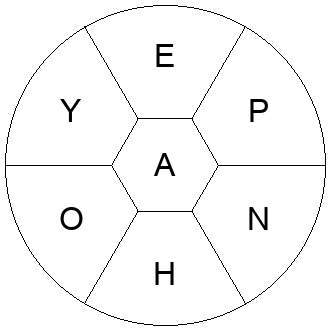
The official answers for today's puzzle are:

Click on the arrow to show the definition.
Click outside the pop-up to close it.


Number of Pangrams: 1

Maximum Puzzle Score: 293

Number of Answers: 64

Points Needed for Genius: 205

Genius requires between 32 and 54 words. You need at least a 6-letter word to reach genius. If you don't get the pangram, you need 73% of the total points to reach genius. If you get the pangram, you only need 68% of the remaining points to reach genius.

The button below will reveal a chart with the number of words by each letter. Red bars indicate that there is a pangram(s) starting with that letter.


How does this puzzle compare to other puzzles?

Today's score of 293 was in the 92nd percentile of all puzzles.
The last time there was a score this high was on February 01, 2026.
The highest score ever was 537 on January 22, 2021.
The lowest score ever was 47 on March 27, 2023.

This puzzle's 64 possible answers rank it in the 95th percentile of all puzzles.
The last time there were more answers than this was on February 01, 2026.
The highest number of answers was 81 on June 08, 2019.
The lowest number of answers was 16 on March 27, 2023.

It takes a 6-letter word for genius.
The last time this happened was on February 06, 2026.

Today's puzzle has an average word length of 5.4.
For all Bees, the average word length has been 5.3.


Haven't I seen these letters before?

Hover over a letter to see its first and most recent appearance in the Bee!


Haven't I seen these words before?

The most common words in the Bee are:

  • noon 230
  • loll 214
  • toot 210
  • nana 191
  • naan 191
  • tilt 152
  • till 152
  • lilt 152
  • nene 150
  • tint 145
  • mamma 143
  • mama 143
  • toon 138
  • onto 138
  • onion 138
  • acai 137
  • acacia 137
  • anon 130
  • anal 130
  • olio 124
  • dodo 123
  • tact 122
  • papa 122
  • baba 120
  • lulu 119
  • lull 119
  • poop 118
  • booboo 118
  • boob 118
  • moon 114
  • mono 114
  • mitt 114
  • cocci 114
  • calla 113
  • call 113
  • tutu 112
  • tattoo 112
  • tartar 112
  • tart 112
  • ratatat 112
  • loon 112
  • attar 111
  • ally 110
  • allay 110
  • tatty 109
  • momma 107
  • meme 107
  • ammo 107
  • roar 105
  • peep 105


How long are words in the Bee?

There have been 113,604 answers ever accepted in the Bee - with 10,911 unique words.
Below are the distributions of the lengths of these words.


Valid dictionary words not in today's official answers

You may be wondering why these words aren't here*:

  • abeam
  • agama
  • agma
  • amain
  • ambage
  • ameban
  • amebean
  • amia
  • amie
  • amiga
  • amin
  • amine
  • ammine
  • amnia
  • anaemia
  • animi
  • bambini
  • bamming
  • bema
  • bemean
  • bemeaning
  • bename
  • benaming
  • bima
  • bimini
  • binman
  • binmen
  • enamine
  • gagman
  • gagmen
  • gama
  • gamb
  • gamba
  • gambe
  • gambia
  • gamming
  • gemma
  • gemmae
  • gemming
  • gimmie
  • imine
  • immane
  • mabe
  • magian
  • mamee
  • mamie
  • mammae
  • mammee
  • mammie
  • mana
  • manana
  • maneb
  • manege
  • manganin
  • mannan
  • meinie
  • menage
  • migg
  • mina
  • minae
  • neem
  • nema
  • nimming

*Because the New York Times considers them obscure or offensive.

aiming

verb
  1. To point or direct a missile, or a weapon which propels as missile, towards an object or spot with the intent of hitting it
  2. To direct the intention or purpose; to attempt the accomplishment of a purpose; to try to gain; to endeavor;—followed by at, or by an infinitive
  3. To direct or point (e.g. a weapon), at a particular object; to direct, as a missile, an act, or a proceeding, at, to, or against an object
  4. To direct (something verbal) towards a certain person, thing, or group
  5. To guess or conjecture.
noun
  1. The act of one who aims.

ameba

noun
  1. A member of the genus Amoeba of unicellular protozoa that moves by means of temporary projections called pseudopodia.
  2. The graph of the real part of the logarithms of a polynomial equation in complex numbers.
  3. An asexual.

amebae

noun
  1. A member of the genus Amoeba of unicellular protozoa that moves by means of temporary projections called pseudopodia.
  2. The graph of the real part of the logarithms of a polynomial equation in complex numbers.
  3. An asexual.

amen

noun
  1. An instance of saying ‘amen’.
  2. A title of Christ; the Faithful One (especially with reference to Revelation 3:14)
verb
  1. To say amen.
  2. To say amen to; to ratify solemnly.
adverb
  1. At the end of religious prayers: so be it.
  2. In many Abrahamic religious texts and creeds: truly, verily.
interjection
  1. An expression of strong agreement. Often, though dated, in the phrase "Amen to that".

anemia

noun
  1. A medical condition in which the capacity of the blood to transport oxygen to the tissues is reduced, either because of too few red blood cells, or because of too little hemoglobin, resulting in pallor and fatigue.
  2. A disease or condition that has anemia as a symptom.
  3. (obsolete) Ischemia.

anima

noun
  1. The soul or animating principle of a living thing, especially as contrasted with the animus.
  2. (Jungian psychology) The inner self (not the external persona) of a person that is in touch with the unconscious as opposed to the persona.
  3. (Jungian psychology) The unconscious feminine aspect of a person.

anime

Etymology 1

noun
  1. An artistic style originating in, and associated with, Japanese animation, and that has also been adopted by a comparatively low number of animated works from other countries.
  2. An animated work that originated in Japan, regardless of the artistic style.
  3. An animated work, regardless of the country of origin.

Etymology 2

noun
  1. The resin of the courbaril (Hymenaea courbaril), used in varnishes.

bagman

noun
  1. A person who collects, transports, or distributes illicit money, especially for the purpose of bribery, extortion, or the making of other improper payments.
  2. An assistant to a police detective, most commonly in the British police force.
  3. A bookmaker.
  4. A travelling salesman.
  5. A caddy.
  6. An officer assigned to travel with the president and carry the "nuclear football".

bagmen

noun
  1. A person who collects, transports, or distributes illicit money, especially for the purpose of bribery, extortion, or the making of other improper payments.
  2. An assistant to a police detective, most commonly in the British police force.
  3. A bookmaker.
  4. A travelling salesman.
  5. A caddy.
  6. An officer assigned to travel with the president and carry the "nuclear football".

beam

noun
  1. Any large piece of timber or iron long in proportion to its thickness, and prepared for use.
  2. One of the principal horizontal timbers of a building; one of the transverse members of a ship's frame on which the decks are laid — supported at the sides by knees in wooden ships and by stringers in steel ones.
  3. The maximum width of a vessel (note that a vessel with a beam of 15 foot can also be said to be 15 foot abeam)
  4. The crossbar of a mechanical balance, from the ends of which the scales are suspended.
  5. The principal stem of the antler of a deer.
  6. The pole of a carriage or chariot.
  7. A cylinder of wood, making part of a loom, on which weavers wind the warp before weaving and the cylinder on which the cloth is rolled, as it is woven.
  8. The straight part or shank of an anchor.
  9. The central bar of a plow, to which the handles and colter are secured, and to the end of which are attached the oxen or horses that draw it.
  10. In steam engines, a heavy iron lever having an oscillating motion on a central axis, one end of which is connected with the piston rod from which it receives motion, and the other with the crank of the wheel shaft.
  11. A ray or collection of approximately parallel rays emitted from the sun or other luminous body.
  12. A ray; a gleam.
  13. One of the long feathers in the wing of a hawk.
  14. A horizontal bar which connects the stems of two or more notes to group them and to indicate metric value.
  15. An elevated rectangular dirt pile used to cheaply build an elevated portion of a railway.
verb
  1. To emit beams of light; shine; radiate.
  2. To smile broadly or especially cheerfully.
  3. To furnish or supply with beams
  4. To give the appearance of beams to.
  5. To transmit matter or information via a high-tech wireless mechanism.
  6. (currying) To stretch something (for example an animal hide) on a beam.
  7. To put (something) on a beam
  8. To connect (musical notes) with a beam, or thick line, in music notation.

beaming

verb
  1. To emit beams of light; shine; radiate.
  2. To smile broadly or especially cheerfully.
  3. To furnish or supply with beams
  4. To give the appearance of beams to.
  5. To transmit matter or information via a high-tech wireless mechanism.
  6. (currying) To stretch something (for example an animal hide) on a beam.
  7. To put (something) on a beam
  8. To connect (musical notes) with a beam, or thick line, in music notation.
noun
  1. The act of someone or something that beams.
adjective
  1. Smilingly happy; showing happy emotion.

begem

No Definition Found.

begemming

No Definition Found.

enema

noun
  1. An injection of fluid into the large intestine by way of the rectum, usually for medical purposes.
  2. The fluid so injected.
  3. A device for administering such an injection.

enigma

noun
  1. Something or someone puzzling, mysterious or inexplicable.
  2. A riddle, or a difficult problem.

game

noun
  1. A playful or competitive activity.
  2. A video game.
  3. (nearly always singular) A field of gainful activity, as an industry or profession.
  4. Something that resembles a game with rules, despite not being designed.
  5. An exercise simulating warfare, whether computerized or involving human participants.
  6. Wild animals hunted for food.
  7. (used mostly of males) The ability to seduce someone, usually by strategy.
  8. Mastery; the ability to excel at something.
  9. A questionable or unethical practice in pursuit of a goal; a scheme.
verb
  1. To gamble.
  2. To play card games, board games, or video games.
  3. To exploit loopholes in a system or bureaucracy in a way which defeats or nullifies the spirit of the rules in effect, usually to obtain a result which otherwise would be unobtainable.
  4. (of males) To perform premeditated seduction strategy.
adjective
  1. Willing to participate.
  2. (of an animal) That shows a tendency to continue to fight against another animal, despite being wounded, often severely.
  3. Persistent, especially in senses similar to the above.
  4. Injured, lame (of a limb).

gamin

noun
  1. A homeless boy; a male street urchin; also (more generally), a cheeky, street-smart boy.

gamine

noun
  1. A (usually female) street urchin; a homeless girl.
  2. A mischievous, playful, elfish, pert girl or young woman.
adjective
  1. (of a girl) Having a boyish, mischievous charm; tomboyish.

gaming

verb
  1. To gamble.
  2. To play card games, board games, or video games.
  3. To exploit loopholes in a system or bureaucracy in a way which defeats or nullifies the spirit of the rules in effect, usually to obtain a result which otherwise would be unobtainable.
  4. (of males) To perform premeditated seduction strategy.
noun
  1. The playing of a game or games, including but not limited to video games and games of chance.
  2. Careful, strategic use of rules to achieve one's purposes, as one would use the rules of a game.

gamma

noun
  1. The third letter of the Greek alphabet (Γ, γ), preceded by beta (Β, β) and followed by delta, (Δ, δ).
  2. The Gamma function, symbolized by Γ.
  3. A constant approximately equal to 0.55721566, symbolized by γ (also known as the Euler–Mascheroni constant).
  4. A non-SI unit of measure of magnetic flux density, equal to 1 nT.
  5. (industries) slope of log-log plot of video input and luminance output.
  6. A second-order measure of derivative price sensitivity, expressed as the rate of change in delta with respect to changes in the underlying asset price.
noun
  1. A nonlinear operation used to encode and decode luminance or tristimulus values in video or still image systems.

gimme

noun
  1. That which is easily obtained, or certain to occur.

iamb

noun
  1. A metrical foot in verse consisting of an unstressed syllable followed by a stressed syllable.

iambi

noun
  1. An iamb

image

noun
  1. An optical or other representation of a real object; a graphic; a picture.
  2. A mental picture of something not real or not present.
  3. A statue or idol.
  4. A file that contains all information needed to produce a live working copy. (See disk image and image copy.)
  5. A characteristic of a person, group or company etc., style, manner of dress, how one is, or wishes to be, perceived by others.
  6. Something mapped to by a function.
  7. The subset of a codomain comprising those elements that are images of something.
  8. A form of interference: a weaker "copy" of a strong signal that occurs at a different frequency.
  9. Show; appearance; cast.
verb
  1. To represent by an image or symbol; to portray.
  2. To reflect, mirror.
  3. To create an image of.
  4. To create a complete backup copy of a file system or other entity.

imagine

noun
  1. A short fanfic or prompt placing a reader insert in a novel scenario with a character or celebrity.
verb
  1. To form a mental image of something; to envision or create something in one's mind.
  2. To believe in something created by one's own mind.
  3. To assume
  4. To conjecture or guess
  5. To use one's imagination
  6. To contrive in purpose; to scheme; to devise.

imaging

verb
  1. To represent by an image or symbol; to portray.
  2. To reflect, mirror.
  3. To create an image of.
  4. To create a complete backup copy of a file system or other entity.
noun
  1. The technique or practice of creating images of otherwise invisible aspects of an object, especially of body parts.
  2. The use of mental images to alter a person's perceptions or behaviors.

imagining

verb
  1. To form a mental image of something; to envision or create something in one's mind.
  2. To believe in something created by one's own mind.
  3. To assume
  4. To conjecture or guess
  5. To use one's imagination
  6. To contrive in purpose; to scheme; to devise.
noun
  1. Something imagined; a figment of the imagination.

imam

noun
  1. (usually capitalized) A Shi'ite Muslim leader.
  2. One who leads the salat prayers in a mosque.

imbibe

verb
  1. To drink (used frequently of alcoholic beverages).
  2. To take in; absorb.

imbibing

verb
  1. To drink (used frequently of alcoholic beverages).
  2. To take in; absorb.
noun
  1. The act by which something is imbibed.

mage

noun
  1. A magician, wizard or sorcerer.

magi

noun
  1. A magician, wizard or sorcerer.
noun
  1. (common usage) magician, and derogatorily sorcerer, trickster, conjurer, charlatan
  2. (special usage) a Zoroastrian priest

magma

noun
  1. The molten matter within the earth, the source of the material of lava flows, dikes of eruptive rocks, etc.
  2. A basic algebraic structure consisting of a set equipped with a single binary operation.
  3. Any soft doughy mass.
  4. The residuum after expressing the juice from fruits.

maim

noun
  1. A serious wound
verb
  1. To wound seriously; to cause permanent loss of function of a limb or part of the body.

maiming

verb
  1. To wound seriously; to cause permanent loss of function of a limb or part of the body.
noun
  1. The act by which somebody is maimed.

main

Etymology 1

verb
  1. Short for mainline.
  2. To mainly play a specific character, or side, during a game.
  3. Of a road: to convert into a main or primary road.
adjective
  1. Of chief or leading importance; prime, principal.
  2. Chief, most important, or principal in extent, size, or strength; consisting of the largest part.
  3. (of force, strength, etc.) Full, sheer, undivided.
  4. Big; angry.
  5. Belonging to or connected with the principal mast in a vessel.
  6. Great in size or degree; important, powerful, strong, vast.
adverb
  1. Exceedingly, extremely, greatly, mightily, very, very much.

Etymology 2

noun
  1. That which is chief or principal; the chief or main portion; the bulk, the greater part, gross.
  2. A large cable or pipe providing utility service to an area or a building, such as a water main or electric main.
  3. Short for main course.
  4. The high seas.
  5. The mainland.
  6. Short for mainsail.
  7. (except in might and main) Force, power, strength, violent effort.

Etymology 3

noun
  1. A hand or match in a game of dice.
  2. The largest throw in a match at dice; in the game of hazard, a number from one to nine called out by a person before the dice are thrown.
  3. A stake played for at dice.
  4. A sporting contest or match, especially a cockfighting match.
  5. A banker's shovel for coins.

Etymology 4

noun
  1. A basket for gathering grapes.

mama

noun
  1. (hypocoristic, usually childish) Mother, female parent.

mamba

noun
  1. Any of various venomous snakes of the genus Dendroaspis, native to Africa, that live in trees.

mamma

Etymology 1

noun
  1. The milk-secreting organ of female humans and other mammals which includes the mammary gland and the nipple or teat; a breast; an udder. (plural: mammae)
  2. An accessory cloud like a mammary in appearance, which can form on the underside of most cloud genera

Etymology 2

noun
  1. (hypocoristic, usually childish) Mother, female parent.

manage

noun
  1. The act of managing or controlling something.
  2. (horseriding) Manège.
verb
  1. To direct or be in charge of.
  2. To handle or control (a situation, job).
  3. To handle with skill, wield (a tool, weapon etc.).
  4. To succeed at an attempt.
  5. To achieve (something) without fuss, or without outside help.
  6. To train (a horse) in the manège; to exercise in graceful or artful action.
  7. To treat with care; to husband.
  8. To bring about; to contrive.

managing

verb
  1. To direct or be in charge of.
  2. To handle or control (a situation, job).
  3. To handle with skill, wield (a tool, weapon etc.).
  4. To succeed at an attempt.
  5. To achieve (something) without fuss, or without outside help.
  6. To train (a horse) in the manège; to exercise in graceful or artful action.
  7. To treat with care; to husband.
  8. To bring about; to contrive.
noun
  1. Management

mane

noun
  1. Longer hair growth on back of neck of an animal, especially a horse or lion
  2. Long or thick hair of a person's head.

manga

Etymology 1

noun
  1. A comic originating in Japan.
  2. An artistic style heavily used in, and associated with, Japanese comics, and that has also been adopted by a comparatively low number of comics from other countries.
  3. A comic in manga style, regardless of the country of origin.

Etymology 2

noun
  1. A covering for a crucifix.

mange

noun
  1. A skin disease of mammals caused by parasitic mites (Sarcoptes spp., Demodecidae spp.).

mania

noun
  1. Violent derangement of mind; madness; insanity.
  2. Excessive or unreasonable desire; insane passion affecting one or many people; fanaticism.
  3. The state of abnormally elevated or irritable mood, arousal, and/or energy levels.

manna

noun
  1. Food miraculously produced for the Israelites in the desert in the book of Exodus.
  2. (by extension) Any boon which comes into one's hands by good luck.
  3. The sugary sap of the manna gum tree which oozes out from holes drilled by insects and falls to the ground around the tree.http//www.museum.vic.gov.au/forest/plants/gum.html

manning

verb
  1. To supply (something) with staff or crew (of either sex).
  2. To take up position in order to operate (something).
  3. (possibly obsolete) To brace (oneself), to fortify or steel (oneself) in a manly way. (Compare man up.)
  4. To wait on, attend to or escort.
  5. To accustom (a raptor or other type of bird) to the presence of people.

mean

Etymology 1

verb
  1. To lament.
verb
  1. To intend.
  2. To convey (a meaning).
  3. To have conviction in (something said or expressed); to be sincere in (what one says).
  4. To cause or produce (a given result); to bring about (a given result).
  5. (usually with to) To be of some level of importance.

Etymology 2

adjective
  1. Common; general.
  2. Of a common or low origin, grade, or quality; common; humble.
  3. Low in quality or degree; inferior; poor; shabby.
  4. Without dignity of mind; destitute of honour; low-minded; spiritless; base.
  5. Of little value or worth; worthy of little or no regard; contemptible; despicable.
  6. Ungenerous; stingy; tight-fisted.
  7. Disobliging; pettily offensive or unaccommodating
  8. Selfish; acting without consideration of others; unkind.
  9. Intending to cause harm, successfully or otherwise; bearing ill will towards another
  10. Powerful; fierce; strong
  11. Accomplished with great skill; deft; hard to compete with.
  12. Difficult, tricky.

Etymology 3

noun
  1. (now chiefly in the plural) A method or course of action used to achieve some result.
  2. (in the singular) An intermediate step or intermediate steps.
  3. Something which is intermediate or in the middle; an intermediate value or range of values; a medium.
  4. The middle part of three-part polyphonic music; now specifically, the alto part in polyphonic music; an alto instrument.
  5. The average of a set of values, calculated by summing them together and dividing by the number of terms; the arithmetic mean.
  6. Any function of multiple variables that satisfies certain properties and yields a number representative of its arguments; or, the number so yielded; a measure of central tendency.
  7. Either of the two numbers in the middle of a conventionally presented proportion, as 2 and 3 in 1:2=3:6.
adjective
  1. Having the mean (see noun below) as its value.
  2. Middling; intermediate; moderately good, tolerable.

meanie

noun
  1. A mean (unkind or miserly) person; a killjoy.
  2. A villain.

meaning

Etymology 1

noun
  1. (of words or symbols) The entity, perception, feeling or concept thereby represented or evoked.
  2. The value, purpose, importance, point or significance (of something beyond the fact of that thing's existence).
  3. The object or concept that a word or phrase denotes, or that which a sentence says.
  4. Intention.

Etymology 2

verb
  1. To lament.
verb
  1. To intend.
  2. To convey (a meaning).
  3. To have conviction in (something said or expressed); to be sincere in (what one says).
  4. To cause or produce (a given result); to bring about (a given result).
  5. (usually with to) To be of some level of importance.
adjective
  1. Having a (specified) intention.
  2. Expressing some intention or significance; meaningful.

mega

adjective
  1. Very large.
  2. Great; excellent

meme

noun
  1. Any unit of cultural information, such as a practice or idea, that is transmitted verbally or by repeated action from one mind to another in a comparable way to the transmission of genes.
  2. Something, usually humorous, which is copied and circulated online with slight adaptations, including quizzes, basic pictures, video templates etc.
  3. A myth circulating as truth; something ineffective presented as effective, or similar.
verb
  1. To turn into a meme; to use a meme, especially to achieve something in real life.
  2. To create and use humorous memes.
  3. To joke around.

mien

noun
  1. Demeanor; facial expression or attitude, especially one which is intended by its bearer.
  2. A specific facial expression.

mime

noun
  1. A form of acting without words; pantomime.
  2. A pantomime actor.
  3. A classical theatrical entertainment in the form of farce.
  4. A performer of such a farce.
  5. A person who mimics others in a comical manner.
  6. Any of various papilionid butterflies of the genus Chilasa or Papilio, that mimic other species in appearance.
verb
  1. To mimic.
  2. To act without words.
  3. To represent an action or object through gesture, without the use of sound.

miming

verb
  1. To mimic.
  2. To act without words.
  3. To represent an action or object through gesture, without the use of sound.
noun
  1. A performance in mime.

mine

Etymology 1

pronoun
  1. My; belonging to me; that which belongs to me.

Etymology 2

noun
  1. An excavation from which ore or solid minerals are taken, especially one consisting of underground tunnels.
  2. Any source of wealth or resources.
  3. A passage dug toward or underneath enemy lines, which is then packed with explosives.
  4. A device intended to explode when stepped upon or touched, or when approached by a ship, vehicle, or person.
  5. A type of firework that explodes on the ground, shooting sparks upward.
  6. The cavity made by a caterpillar while feeding inside a leaf.
  7. A machine or network of machines used to extract units of a cryptocurrency.
verb
  1. To remove (ore) from the ground.
  2. To dig into, for ore or metal.
  3. To sow mines (the explosive devices) in (an area).
  4. To damage (a vehicle or ship) with a mine (an explosive device).
  5. To dig a tunnel or hole; to burrow in the earth.
  6. To dig away, or otherwise remove, the substratum or foundation of; to lay a mine under; to sap; to undermine.
  7. (by extension) To ruin or destroy by slow degrees or secret means.
  8. To pick one's nose.
  9. To earn new units of cryptocurrency by doing certain calculations.

Etymology 3

noun
  1. Demeanor; facial expression or attitude, especially one which is intended by its bearer.
  2. A specific facial expression.

mini

Etymology 1

adjective
  1. Miniature, tiny, small.

Etymology 2

noun
  1. A miniskirt.
  2. A minicomputer.

minim

noun
  1. A half note, drawn as a semibreve with a stem.
  2. A unit of volume, in the Imperial and U.S. customary systems, 1/60 fluid drachm. Approximately equal to 1 drop, 62 μL or 0.9 grain (weight) of water.
  3. A short vertical stroke used in handwriting.
  4. Anything very minute; applied to animalcula and the like.
  5. The smallest kind of worker in a leaf-cutter ant colony.
  6. A little man or being; a dwarf.
  7. A small fish; a minnow.
  8. A short poetical encomium.

minima

noun
  1. The lowest limit.
  2. The smallest amount.
  3. A period of minimum brightness or energy intensity (of a star).
  4. A lower bound of a set which is also an element of that set.
  5. The smallest member of a batch or sample or the lower bound of a probability distribution.

mining

verb
  1. To remove (ore) from the ground.
  2. To dig into, for ore or metal.
  3. To sow mines (the explosive devices) in (an area).
  4. To damage (a vehicle or ship) with a mine (an explosive device).
  5. To dig a tunnel or hole; to burrow in the earth.
  6. To dig away, or otherwise remove, the substratum or foundation of; to lay a mine under; to sap; to undermine.
  7. (by extension) To ruin or destroy by slow degrees or secret means.
  8. To pick one's nose.
  9. To earn new units of cryptocurrency by doing certain calculations.
noun
  1. The activity of removing solid valuables from the earth.
  2. Any activity that extracts or undermines.
  3. The activity of placing explosives underground, rigged to explode
  4. Creation of new units of cryptocurrency by validating transactions and demonstrating proof-of-work

name

Etymology 1

noun
  1. Any nounal word or phrase which indicates a particular person, place, class, or thing.
  2. Reputation.
  3. An abusive or insulting epithet.
  4. A person (or legal person).
  5. Those of a certain name; a race; a family.
  6. A unique identifier, generally a string of characters.
  7. An investor in Lloyds of London bearing unlimited liability.
  8. Authority.

Etymology 2

verb
  1. (ditransitive) To give a name to.
  2. To mention, specify.
  3. To identify as relevant or important
  4. To publicly implicate.
  5. To designate for a role.
  6. (Westminster system politics) To initiate a process to temporarily remove a member of parliament who is breaking the rules of conduct.

Etymology 3

noun
  1. Any of several types of true yam (Dioscorea) used in Caribbean Spanish cooking.

naming

verb
  1. (ditransitive) To give a name to.
  2. To mention, specify.
  3. To identify as relevant or important
  4. To publicly implicate.
  5. To designate for a role.
  6. (Westminster system politics) To initiate a process to temporarily remove a member of parliament who is breaking the rules of conduct.
noun
  1. The process of giving names to things.
  2. A ritual or ceremony in which a person's name is given or announced.
adjective
  1. Giving a name to a person or thing.

nimbi

noun
  1. A circle of light; a halo.
  2. A gray rain cloud.

meming

No Definition Found.