Monday, July 29, 2024

Answers to yesterday's Bee

Jump to answers for


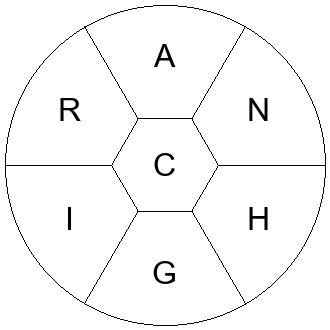
The official answers for today's puzzle are:

Click on the arrow to show the definition.
Click outside the pop-up to close it.


Number of Pangrams: 6

Maximum Puzzle Score: 374

Number of Answers: 61

Points Needed for Genius: 262

Genius requires between 31 and 53 words. You need at least an 8-letter word to reach genius. If you don't get the pangrams, you need 92% of the total points to reach genius. If you get the pangrams, you only need 61% of the remaining points to reach genius.

The button below will reveal a chart with the number of words by each letter. Red bars indicate that there is a pangram(s) starting with that letter.


How does this puzzle compare to other puzzles?

Today's score of 374 was in the 99th percentile of all puzzles.
The last time there was a score this high was on July 7, 2024.
The highest score ever was 537 on January 22, 2021.
The lowest score ever was 47 on March 27, 2023.

This puzzle's 61 possible answers rank it in the 93rd percentile of all puzzles.
The last time there were more answers than this was on July 7, 2024.
The highest number of answers was 81 on June 8, 2019.
The lowest number of answers was 16 on March 27, 2023.

It takes an 8-letter word for genius.
The last time this happened was on July 27, 2024.

Today's puzzle has an average word length of 6.0.
For all Bees, the average word length has been 5.3.


Haven't I seen these letters before?

Hover over a letter to see its first and most recent appearance in the Bee!


Haven't I seen these words before?

The most common words in the Bee are:

  • noon 176
  • loll 170
  • toot 159
  • naan 158
  • nana 158
  • lilt 128
  • till 128
  • tilt 128
  • tint 118
  • mama 113
  • mamma 113
  • acacia 107
  • acai 107
  • nene 107
  • anal 105
  • onto 103
  • toon 103
  • anon 101
  • boob 101
  • booboo 101
  • onion 100
  • lull 99
  • lulu 99
  • olio 99
  • papa 97
  • call 96
  • calla 96
  • poop 94
  • allay 93
  • ally 93
  • baba 93
  • dodo 93
  • mitt 93
  • tatty 93
  • ratatat 91
  • tact 91
  • tart 91
  • tartar 91
  • attar 90
  • nanny 90
  • cocci 89
  • mono 89
  • moon 89
  • radar 89
  • tutu 89
  • loon 88
  • array 87
  • epee 87
  • peep 87
  • tattoo 87


How long are words in the Bee?

There have been 88,564 answers ever accepted in the Bee - with 10,176 unique words.
Below are the distributions of the lengths of these words.


Valid dictionary words not in today's official answers

You may be wondering why these words aren't here*:

  • acari
  • acinar
  • acini
  • acinic
  • agaric
  • anarch
  • archi
  • caca
  • cachaca
  • cain
  • cancha
  • caracara
  • caragana
  • carina
  • carn
  • carr
  • chagrining
  • chagrinning
  • chana
  • chang
  • characin
  • charing
  • charr
  • chicaning
  • chinch
  • chinching
  • ching
  • chining
  • chirr
  • chirring
  • cranch
  • cranching
  • gach
  • gaching
  • ginch
  • inarch
  • inarching
  • incaging
  • naric
  • niching
  • ricrac

*Because the New York Times considers them obscure or offensive.

acacia

Etymology 1

noun
  1. A shrub or tree of the tribe Acacieae.
  2. The thickened or dried juice of several species in Acacieae, in particular Vachellia nilotica (syn. Acacia nilotica), the Egyptian acacia.
  3. A false acacia; robinia tree, Robinia pseudoacacia.
  4. Gum arabic; gum acacia.
  5. Any of several related trees, such as the locust tree.
  6. A light to moderate greenish yellow with a hint of red.

Etymology 2

noun
  1. (history) A roll or bag, filled with dust, borne by Byzantine emperors, as a memento of mortality. It is represented on medals.

acai

noun
  1. Any of several South American palms, of the genus Euterpe, having a dark purple drupe.
  2. The fruit of these trees, harvested for its juice.

aching

verb
  1. To suffer pain; to be the source of, or be in, pain, especially continued dull pain; to be distressed.
  2. To cause someone or something to suffer pain.
noun
  1. The feeling of an ache; a dull pain.
adjective
  1. That aches; continuously painful.

acing

verb
  1. (US) To pass (a test, interviews etc.) perfectly.
  2. To win a point by an ace.
  3. To make an ace (hole in one).

anarchic

adjective
  1. Relating to, supporting, or likely to cause anarchy.
  2. Chaotic, without law or order.

arcana

noun
  1. Specialized knowledge that is mysterious to the uninitiated.
noun
  1. A mystery or deep secret.
  2. An elixir or secret remedy.

arch

Etymology 1

noun
  1. An inverted U shape.
  2. An arch-shaped arrangement of trapezoidal stones, designed to redistribute downward force outward.
  3. An architectural element having the shape of an arch
  4. Any place covered by an arch; an archway.
  5. An arc; a part of a curve.
  6. A natural arch-shaped opening in a rock mass.
  7. Curved part of the bottom of a foot.
verb
  1. To form into an arch shape
  2. To cover with an arch or arches.

Etymology 2

noun
  1. A chief.
adjective
  1. Knowing, clever, mischievous.
  2. Principal; primary.

archaic

noun
  1. (usually capitalized) A general term for the prehistoric period intermediate between the earliest period (‘Paleo-Indian’, ‘Paleo-American’, ‘American‐paleolithic’, &c.) of human presence in the Western Hemisphere, and the most recent prehistoric period (‘Woodland’, etc.).
  2. (paleoanthropology) (A member of) an archaic variety of Homo sapiens.
adjective
  1. Of or characterized by antiquity; old-fashioned, quaint, antiquated.
  2. (of words) No longer in ordinary use, though still used occasionally to give a sense of antiquity.
  3. Belonging to the archaic period

arching

verb
  1. To form into an arch shape
  2. To cover with an arch or arches.
noun
  1. The arched part of a structure.
adjective
  1. Hogging, as opposed to sagging

arcing

verb
  1. To move following a curved path.
  2. To shape into an arc; to hold in the form of an arc.
  3. To form an electrical arc.
noun
  1. The shape or motion of something that arcs.

arnica

noun
  1. Any of several plants, of the genus Arnica, considered to have medicinal properties, especially Arnica montana.

caching

verb
  1. To place in a cache.

caging

verb
  1. To confine in a cage; to put into and keep in a cage.
  2. To restrict someone's movement or creativity.
  3. To track individual responses to direct mail, either to maintain and develop mailing lists or to identify people who are not eligible to vote because they do not reside at the registered addresses.
noun
  1. The act of placing or trapping something in a cage.

cairn

noun
  1. A rounded or conical heap of stones erected by early inhabitants of the British Isles, apparently as a sepulchral monument.
  2. A pile of stones heaped up as a landmark, to guide travelers on land or at sea, or to arrest attention, as in surveying, or in leaving traces of an exploring party, etc.
  3. A cairn terrier.

cancan

noun
  1. A high-kicking chorus line dance originating in France.
  2. (motocross) A trick where one leg is brought over the seat, so that both legs are on one side.
verb
  1. To dance the cancan.

caning

verb
  1. To strike or beat with a cane or similar implement
  2. To destroy; to comprehensively defeat
  3. To do something well, in a competent fashion
  4. To produce extreme pain
  5. To make or furnish with cane or rattan.
noun
  1. A beating with a cane.

canna

Etymology 1

noun
  1. Any member of the genus Canna of tropical plants with large leaves and often showy flowers.

Etymology 2

noun
  1. A measure of length in Italy, varying from six to seven feet.

canning

verb
  1. To seal in a can.
  2. To preserve by heating and sealing in a jar or can.
  3. To discard, scrap or terminate (an idea, project, etc.).
  4. To shut up.
  5. To fire or dismiss an employee.
  6. To hole the ball.
noun
  1. The process of preserving food by heat processing in a sealed vessel (a sealed jar or can).
  2. The practice of collecting aluminum cans or other recyclable objects; making money by collecting and selling such things.

caring

verb
  1. To be concerned (about), to have an interest (in); to feel concern (about).
  2. (polite) To want, to desire; to like; to be inclined towards.
  3. (with for) To look after or look out for.
  4. To mind; to object.
noun
  1. The act of one who cares.
adjective
  1. (of a person) Kind, sensitive, empathetic.

chagrin

noun
  1. Distress of mind caused by a failure of aims or plans, want of appreciation, mistakes etc; vexation or mortification.
  2. A type of leather or skin with a rough surface.
verb
  1. To bother or vex; to mortify.
  2. To be vexed or annoyed.
adjective
  1. Feeling chagrin; annoyed; vexed, fretful.

chai

Etymology 1

noun
  1. A female gypsy.

Etymology 2

noun
  1. Short for masala chai, a beverage made with black teas, steamed milk and sweet spices, based loosely on Indian recipes.

chain

noun
  1. A series of interconnected rings or links usually made of metal.
  2. A series of interconnected things.
  3. A series of stores or businesses with the same brand name.
  4. A number of atoms in a series, which combine to form a molecule.
  5. A series of interconnected links of known length, used as a measuring device.
  6. A long measuring tape.
  7. A unit of length equal to 22 yards. The length of a Gunter's surveying chain. The length of a cricket pitch. Equal to 20.12 metres, 4 rods, or 100 links.
  8. A totally ordered set, especially a totally ordered subset of a poset.
  9. A sequence of linked house purchases, each of which is dependent on the preceding and succeeding purchase (said to be "broken" if a buyer or seller pulls out).
  10. That which confines, fetters, or secures; a bond.
  11. (in the plural) Iron links bolted to the side of a vessel to bold the dead-eyes connected with the shrouds; also, the channels.
  12. The warp threads of a web.
verb
  1. To fasten something with a chain.
  2. To link multiple items together.
  3. To secure someone with fetters.
  4. To obstruct the mouth of a river etc with a chain.
  5. To obligate.
  6. To relate data items with a chain of pointers.
  7. To be chained to another data item.
  8. To measure a distance using a 66-foot long chain, as in land surveying.
  9. (associated with Acorn Computers) To load and automatically run (a program).

chaining

verb
  1. To fasten something with a chain.
  2. To link multiple items together.
  3. To secure someone with fetters.
  4. To obstruct the mouth of a river etc with a chain.
  5. To obligate.
  6. To relate data items with a chain of pointers.
  7. To be chained to another data item.
  8. To measure a distance using a 66-foot long chain, as in land surveying.
  9. (associated with Acorn Computers) To load and automatically run (a program).
noun
  1. The act or process by which something is chained.

chair

noun
  1. An item of furniture used to sit on or in, comprising a seat, legs, back, and sometimes arm rests, for use by one person. Compare stool, couch, sofa, settee, loveseat and bench.
  2. The seating position of a particular musician in an orchestra.
  3. An iron block used on railways to support the rails and secure them to the sleepers, and similar devices.
  4. One of two possible conformers of cyclohexane rings (the other being boat), shaped roughly like a chair.
  5. A distinguished professorship at a university.
  6. A vehicle for one person; either a sedan borne upon poles, or a two-wheeled carriage drawn by one horse; a gig.
  7. The seat or office of a person in authority, such as a judge or bishop.
verb
  1. To act as chairperson at; to preside over.
  2. To carry in a seated position upon one's shoulders, especially in celebration or victory.
  3. To award a chair to (a winning poet) at a Welsh eisteddfod.
noun
  1. A chairman or chairwoman, someone who presides over a meeting, board, etc.
noun
  1. A chair-like device used for performing execution by electrocution.
  2. An electrically powered wheelchair.
  3. A transitional hold in which an attacking wrestler hoists an opponent up onto his/her shoulders so that they are both facing in the same direction.

chairing

verb
  1. To act as chairperson at; to preside over.
  2. To carry in a seated position upon one's shoulders, especially in celebration or victory.
  3. To award a chair to (a winning poet) at a Welsh eisteddfod.

chancing

verb
  1. To happen by chance, to occur.
  2. To befall; to happen to.
  3. To try or risk.
  4. To discover something by chance.
  5. (Belize) To rob, cheat or swindle someone.
noun
  1. Something that happens by chance.

changing

verb
  1. To become something different.
  2. To make something into something else.
  3. To replace.
  4. To replace one's clothing.
  5. To replace the clothing of (the one wearing it).
  6. To transfer to another vehicle (train, bus, etc.)
  7. To exchange.
  8. To change hand while riding (a horse).
noun
  1. Change; alteration.

char

Etymology 1

noun
  1. A charred substance.
verb
  1. To burn something to charcoal.
  2. To burn slightly or superficially so as to affect colour.
noun
  1. One of the several species of fishes of the genus Salvelinus.

Etymology 2

noun
  1. A charred substance.
noun
  1. One of the several species of fishes of the genus Salvelinus.

Etymology 3

noun
  1. A time; a turn or occasion.
  2. A turn of work; a labour or item of business.
  3. An odd job, a chore or piece of housework.
  4. A charlady, a woman employed to do housework; cleaning lady.
verb
  1. To turn, especially away or aside.
  2. To work, especially to do housework; to work by the day, without being a regularly hired servant.
  3. To perform; to do; to finish.
  4. To work or hew (stone, etc.).

Etymology 4

noun
  1. A character (text element such as a letter or symbol).

Etymology 5

noun
  1. Tea, sometimes specifically masala chai
noun
  1. Synonym of Korean foot: a traditional unit of length equivalent to about 30.3 cm.

charging

verb
  1. To assign a duty or responsibility to
  2. To assign (a debit) to an account
  3. To pay on account, as by using a credit card
  4. To require payment (of) (a price or fee, for goods, services, etc.)
  5. (possibly archaic) to sell at a given price.
  6. To formally accuse (a person) of a crime.
  7. To impute or ascribe
  8. To call to account; to challenge
  9. To place a burden or load on or in
  10. To load equipment with material required for its use, as a firearm with powder, a fire hose with water, a chemical reactor with raw materials
  11. To move forward quickly and forcefully, particularly in combat and/or on horseback
  12. (of a hunting dog) to lie on the belly and be still (A command given by a hunter to a dog)
noun
  1. An act or process of charging (as of a battery).
  2. An offensive foul in which the player with the ball moves into a stationary defender.

charring

verb
  1. To burn something to charcoal.
  2. To burn slightly or superficially so as to affect colour.
verb
  1. To turn, especially away or aside.
  2. To work, especially to do housework; to work by the day, without being a regularly hired servant.
  3. To perform; to do; to finish.
  4. To work or hew (stone, etc.).
noun
  1. The incomplete combustion of organic material.

chia

noun
  1. A Mexican sage grown for its edible seeds, Salvia hispanica.
  2. Salvia columbariae, a sage with similar seeds, native to the southwestern US and northwestern Mexico.

chic

Etymology 1

noun
  1. Good form; style.
  2. A person with (a particular type of) chic.
adjective
  1. Elegant, stylish.

Etymology 2

noun
  1. A kind of ritual buffoon or clown in Yucatec Maya culture.

chica

Etymology 1

noun
  1. A Latin-American girl; a Latina.

Etymology 2

noun
  1. An orange-red dyestuff obtained by boiling the leaves of the bignonia.

chichi

Etymology 1

adjective
  1. Affectedly trendy; chic and stylish

Etymology 2

noun
  1. (Latin America, chiefly in the plural) A woman's breast.

chin

Etymology 1

noun
  1. The bottom of a face, (specifically) the typically jutting jawline below the mouth.
  2. Talk.
  3. A lie, a falsehood.
  4. The ability to withstand being punched in the chin without being knocked out.
  5. The lower part of the front of an aircraft, below the nose.
  6. The bottom part of a mobile phone, below the screen.
verb
  1. To talk.
  2. To talk to or with (someone).
  3. To perform a chin-up (exercise in which one lifts one's own weight while hanging from a bar).
  4. To punch or hit (someone)'s chin (part of the body).
  5. To put or hold (a musical instrument) up to one's chin.
  6. To turn on or operate (a device) using one's chin; to select (a particular setting) using one's chin.
  7. To put one's chin on (something).
  8. To indicate or point toward (someone or something) with one's chin.

Etymology 2

noun
  1. A chinchilla.

china

noun
  1. The plant Smilax china, a liana of much of eastern Asia.
noun
  1. A plant or flower of the repeat-blooming Chinese rose species Rosa chinensis.
  2. A plant or flower of one of the class of hybrids developed from Rosa chinensis.
  3. Synonym of elderflower rose, Rosa cymosa.
noun
  1. Hibiscus rosa-sinensis, native to east Asia.
noun
  1. Chinaware: porcelain tableware.
  2. Cheaper and lower-quality ceramic and ceramic tableware, distinguished from porcelain.
  3. Synonym of cheyney: worsted or woolen stuff.
  4. Tea from China, varieties cured by smoking or opposed to Indian cultivars.
  5. (games) A glazed china marble.
  6. A kind of drum cymbal approximating a Chinese style of cymbal, but usually with Turkish influences.
noun
  1. A small gastropod (Monetaria moneta, syn. Cypraea moneta) common in the Indian Ocean; its shell.
  2. (by extension) Any gastropod of the genus Cypraea; its shell.
  3. (by extension) Any gastropod of the family Cypraeidae; its shell.
noun
  1. A person other than a family member, spouse or lover whose company one enjoys and towards whom one feels affection.
  2. An associate who provides assistance.
  3. A person with whom one is vaguely or indirectly acquainted.
  4. A person who backs or supports something.
  5. An object or idea that can be used for good.
  6. (used only in the vocative) Used as a form of address when warning someone.
  7. A function or class granted special access to the private and protected members of another class.
  8. A spring-loaded camming device.
  9. A lover; a boyfriend or girlfriend.
  10. A relative, a relation by blood or marriage.
noun
  1. A fine clay, rich in kaolinite, used in ceramics, paper-making, etc.
noun
  1. (usually uncountable) A hard white translucent ceramic, originally made by firing kaolin, quartz, and feldspar at high temperatures but now also inclusive of similar artificial materials; also often such a material as a symbol of the fragility, elegance, etc. traditionally associated with porcelain goods.
  2. (now usually plural) An object made of porcelain, art objects or items of tableware.
  3. (often capitalized) A kind of pigeon with deep brown and off-white feathers.
noun
  1. Small beads made from polished shells, especially white ones, formerly used as money and jewelry by certain Native American peoples.
  2. A string of such beads.
  3. Money.

chinning

verb
  1. To talk.
  2. To talk to or with (someone).
  3. To perform a chin-up (exercise in which one lifts one's own weight while hanging from a bar).
  4. To punch or hit (someone)'s chin (part of the body).
  5. To put or hold (a musical instrument) up to one's chin.
  6. To turn on or operate (a device) using one's chin; to select (a particular setting) using one's chin.
  7. To put one's chin on (something).
  8. To indicate or point toward (someone or something) with one's chin.

cigar

noun
  1. Tobacco rolled and wrapped with an outer covering of tobacco leaves, intended to be smoked.
  2. Penis

cinch

Etymology 1

noun
  1. A simple saddle girth used in Mexico.
  2. Something that is very easy to do.
  3. A firm hold.
verb
  1. To bring to certain conclusion.
  2. To tighten down.

Etymology 2

noun
  1. A variety of auction pitch in which a draw to improve the hand is added, and the five of trumps (called "right Pedro") and the five of the same colour (called "left Pedro", and ranking between the five and the four of trumps) are each worth five. Fifty-one points make a game.
verb
  1. In the game of cinch, to protect (a trick) by playing a higher trump than the five.

cinching

verb
  1. To bring to certain conclusion.
  2. To tighten down.
verb
  1. In the game of cinch, to protect (a trick) by playing a higher trump than the five.
noun
  1. A fastening.

circa

preposition
  1. Approximately, about, around (typically in relation to time)

cirri

noun
  1. A tendril.
  2. A thin tendril-like appendage.
  3. A principal high-level cloud type characterised by white, delicate filaments or wisps, of white (or mostly white) patches, or of narrow bands, found at an altitude of above 7000 metres.

crag

Etymology 1

noun
  1. A rocky outcrop; a rugged steep rock or cliff.
  2. A rough broken fragment of rock.
  3. A partially compacted bed of gravel mixed with shells, of the Tertiary age.

Etymology 2

noun
  1. The neck or throat.

crania

noun
  1. The braincase or neurocranium; that part of the skull consisting of the bones enclosing the brain, but not including the bones of the face or jaw.
  2. The upper portion of the skull, including the neurocranium and facial bones, but not including the jawbone (mandible).
  3. The skull.

craning

verb
  1. To extend (one's neck).
  2. To raise or lower with, or as if with, a crane.
  3. To pull up before a jump.
noun
  1. The act of one who cranes.

cringing

verb
  1. To shrink, cower, tense or recoil, as in fear, disgust or embarrassment.
  2. To bow or crouch in servility.
  3. To contract; to draw together; to cause to shrink or wrinkle; to distort.
noun
  1. Act of one who cringes.

gracing

verb
  1. To adorn; to decorate; to embellish and dignify.
  2. To dignify or raise by an act of favour; to honour.
  3. To supply with heavenly grace.
  4. To add grace notes, cadenzas, etc., to.
noun
  1. The use of a grace note.

grinch

noun
  1. A grouch or killjoy.
  2. A person who aggressively sets out to ruin the Christmas holidays for others.

highchair

noun
  1. An elevated chair, often including a built-in tray, used for feeding babies and toddlers.

icing

Etymology 1

noun
  1. A sweet glaze made primarily of sugar and often flavored, typically used for baked goods; frosting.
  2. A minor violation of ice hockey rules, occurring when a player shoots the puck from his/her side of the red line so that it crosses the goal line on the opponent's side. A team playing short-handed is not penalized for this.
  3. The process of forming a layer of ice on a surface.

Etymology 2

verb
  1. To cool with ice, as a beverage.
  2. To become ice; to freeze.
  3. To make icy; to freeze.
  4. To murder.
  5. To cover with icing (frosting made of sugar and milk or white of egg); to frost; as cakes, tarts, etc.
  6. To put out a team for a match.
  7. To shoot the puck the length of the playing surface, causing a stoppage in play called icing.

inch

Etymology 1

noun
  1. A unit of length equal to one twelfth of a foot, or exactly 2.54 centimetres.
  2. The amount of water which would cover a surface to the depth of an inch, used as a measurement of rainfall.
  3. The amount of an alcoholic beverage which would fill a glass or bottle to the depth of an inch.
  4. A very short distance.
verb
  1. (followed by a preposition) To advance very slowly, or by a small amount (in a particular direction).
  2. To drive by inches, or small degrees.
  3. To deal out by inches; to give sparingly.

Etymology 2

noun
  1. A small island

inching

verb
  1. (followed by a preposition) To advance very slowly, or by a small amount (in a particular direction).
  2. To drive by inches, or small degrees.
  3. To deal out by inches; to give sparingly.
noun
  1. Very gradual movement.

narc

Etymology 1

noun
  1. A narcotics squad police officer.

Etymology 2

noun
  1. A police spy or informer.
  2. An unpleasant person, especially one who makes things difficult for others.
verb
  1. To watch; to observe.
  2. To serve or behave as a spy or informer.
  3. To annoy or irritate.
  4. To complain.
  5. (often imperative) To stop.

Etymology 3

verb
  1. (underwater diving) To suffer from impaired judgment due to nitrogen narcosis (for example, while scuba diving).

Etymology 4

noun
  1. A narcissist.

niacin

noun
  1. A water-soluble vitamin, a component of vitamin B complex, found in meat, yeast, and dairy products; it is essential to metabolism.

racing

verb
  1. To take part in a race (in the sense of a contest).
  2. To compete against in such a race.
  3. To move or drive at high speed; to hurry or speed.
  4. Of a motor, to run rapidly when not engaged to a transmission.
verb
  1. To assign a race to; to perceive as having a (usually specified) race.
noun
  1. The sport of competing in races.
verb
  1. To demolish; to level to the ground.
  2. To scrape as if with a razor.

ranch

noun
  1. A large plot of land used for raising cattle, sheep or other livestock.
  2. A small farm that cultivates vegetables and/or livestock, especially one in the Southwestern United States.
  3. A house or property on a plot of ranch land.
  4. Ranch dressing.
verb
  1. To operate a ranch; engage in ranching.
  2. To work on a ranch

ranching

verb
  1. To operate a ranch; engage in ranching.
  2. To work on a ranch
noun
  1. The business or activity of operating a ranch, of farming or raising livestock.
  2. A ranch.

rich

verb
  1. To enrich.
  2. To become rich.
adjective
  1. Wealthy: having a lot of money and possessions.
  2. Having an intense fatty or sugary flavour.
  3. Plentiful, abounding, abundant, fulfilling.
  4. Yielding large returns; productive or fertile; fruitful.
  5. Composed of valuable or costly materials or ingredients; procured at great outlay; highly valued; precious; sumptuous; costly.
  6. Not faint or delicate; vivid.
  7. Very amusing.
  8. Ridiculous, absurd, outrageous, preposterous.
  9. Elaborate, having complex formatting, multimedia, or depth of interaction.
  10. Of a fuel-air mixture, having less air than is necessary to burn all of the fuel; less air- or oxygen- rich than necessary for a stoichiometric reaction.
  11. Trading at a price level which is high relative to historical trends, a similar asset, or (for derivatives) a theoretical value.

ricin

noun
  1. An extremely toxic protein extracted from the castor bean.

ricing

verb
  1. To squeeze through a ricer; to mash or make into rice-sized pieces (especially potatoes).
  2. To harvest wild rice (Zizania sp.)
  3. To throw rice at a person (usually at a wedding).
  4. To customize the user interface of a computer system, e.g. a desktop environment.
noun
  1. (soap-making) (Development of) undesirable, hard white granules in soap.

arancini

noun
  1. A baked rice ball, filled with cheese or other sauce, originally from Sicily.