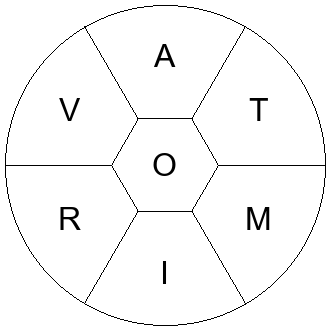
Thursday, June 19, 2025

Answers to yesterday's Bee

Jump to answers for


The official answers for today's puzzle are:

Click on the arrow to show the definition.
Click outside the pop-up to close it.


Number of Pangrams: 1

Maximum Puzzle Score: 198

Number of Answers: 48

Points Needed for Genius: 139

Genius requires between 21 and 42 words. You need at least a 7-letter word to reach genius. If you don't get the pangram, you need 76% of the total points to reach genius. If you get the pangram, you only need 68% of the remaining points to reach genius.

Other days with this pangram:

The button below will reveal a chart with the number of words by each letter. Red bars indicate that there is a pangram(s) starting with that letter.


How does this puzzle compare to other puzzles?

Today's score of 198 was in the 65th percentile of all puzzles.
The last time there was a score this high was on June 18, 2025.
The highest score ever was 537 on January 22, 2021.
The lowest score ever was 47 on March 27, 2023.

This puzzle's 48 possible answers rank it in the 72nd percentile of all puzzles.
The last time there were more answers than this was on June 14, 2025.
The highest number of answers was 81 on June 8, 2019.
The lowest number of answers was 16 on March 27, 2023.

It takes a 7-letter word for genius.
The last time this happened was on June 13, 2025.

Today's puzzle has an average word length of 5.2.
For all Bees, the average word length has been 5.3.


Haven't I seen these letters before?

Hover over a letter to see its first and most recent appearance in the Bee!


Haven't I seen these words before?

The most common words in the Bee are:

  • noon 203
  • loll 198
  • toot 190
  • naan 173
  • nana 173
  • lilt 140
  • till 140
  • tilt 140
  • tint 137
  • nene 134
  • mama 133
  • mamma 133
  • onto 125
  • toon 125
  • acacia 124
  • acai 124
  • onion 122
  • anal 118
  • anon 116
  • olio 116
  • boob 112
  • booboo 112
  • dodo 112
  • baba 109
  • papa 109
  • poop 109
  • tact 109
  • call 106
  • calla 106
  • lull 106
  • lulu 106
  • mitt 105
  • ratatat 105
  • tart 105
  • tartar 105
  • attar 104
  • tatty 104
  • mono 103
  • moon 103
  • tattoo 103
  • allay 102
  • ally 102
  • ammo 102
  • momma 102
  • cocci 101
  • tutu 101
  • epee 99
  • loon 99
  • peep 99
  • roar 97


How long are words in the Bee?

There have been 102,850 answers ever accepted in the Bee - with 10,628 unique words.
Below are the distributions of the lengths of these words.


Valid dictionary words not in today's official answers

You may be wondering why these words aren't here*:

  • amort
  • arvo
  • irritator
  • moira
  • moirai
  • momi
  • mora
  • morro
  • mort
  • motmot
  • mott
  • orra
  • ottar
  • ottava
  • otto
  • rato
  • rota
  • roto
  • tamarao
  • tiro
  • titrator
  • toit
  • toom
  • tora
  • torot
  • torr
  • trimotor
  • tritoma
  • varoom
  • varroa
  • viator
  • vitiator
  • vomito

*Because the New York Times considers them obscure or offensive.

ammo

noun
  1. Ammunition.
verb
  1. To load up on ammunition.

aorta

noun
  1. The great artery which carries the blood from the heart to all parts of the body except the lungs; the main trunk of the arterial system.
  2. The liveliest part of something.

armor

noun
  1. A protective layer over a body, vehicle, or other object intended to deflect or diffuse damaging forces.
  2. A natural form of this kind of protection on an animal's body.
  3. Metal plate, protecting a ship, military vehicle, or aircraft.
  4. A tank, or other heavy mobile assault vehicle.
  5. A military formation consisting primarily of tanks or other armoured fighting vehicles, collectively.
  6. The naturally occurring surface of pebbles, rocks or boulders that line the bed of a waterway or beach and provide protection against erosion.
verb
  1. To equip something with armor or a protective coating or hardening.
  2. To provide something with an analogous form of protection.

aroma

noun
  1. A smell; especially a pleasant spicy or fragrant one.

atom

noun
  1. The smallest possible amount of matter which still retains its identity as a chemical element, now known to consist of a nucleus surrounded by electrons.
  2. (history of science) A hypothetical particle posited by Greek philosophers as an ultimate and indivisible component of matter.
  3. The smallest, indivisible constituent part or unit of something.
  4. In logical atomism, a fundamental fact that cannot be further broken down.
  5. The smallest medieval unit of time, equal to fifteen ninety-fourths of a second.
  6. A mote of dust in a sunbeam.
  7. A very small amount; a whit.
  8. (Lisp) An individual number or symbol, as opposed to a list; a scalar value.
  9. A non-zero member of a Boolean algebra that is not a union of any other elements. Or, a non-zero member of a Boolean lattice that has only zero below it.
  10. An element of a set that is not itself a set; an urelement.
  11. (usually capitalised as "Atom") A member of an age group division in hockey for ten- to 11-year-olds.

aviator

noun
  1. An aircraft pilot. The use of the word may imply claims of superior airmanship, as in navy aviator vs. air force pilot.
  2. An experimenter in aviation.
  3. A flying machine.

imitator

noun
  1. One who imitates or apes another.

iota

noun
  1. The ninth letter of the Greek alphabet.
  2. A jot; a very small, insignificant quantity.

marmot

noun
  1. Any of several large ground-dwelling rodents of the genera Marmota and Cynomys in the squirrel family.

mirror

noun
  1. A smooth surface, usually made of glass with reflective material painted on the underside, that reflects light so as to give an image of what is in front of it.
  2. An object, person, or event that reflects or gives a picture of another.
  3. A disk, website or other resource that contains replicated data.
  4. A mirror carp.
  5. A kind of political self-help book, advising kings, princes, etc. on how to behave.
verb
  1. Of an event, activity, behaviour, etc, to be identical to, to be a copy of.
  2. To create something identical to (a web site, etc.).
  3. To reflect, as in a mirror.

moat

noun
  1. A deep, wide defensive ditch, normally filled with water, surrounding a fortified habitation.
  2. An aspect of a business which makes it more "defensible" from competitors, either because of the nature of its products, services, franchise or other reason.
  3. A circular lowland between a resurgent dome and the walls of the caldera surrounding it.
  4. A hill or mound.
verb
  1. To surround with a moat.

momma

noun
  1. Mother
  2. A voluptuous woman.
  3. One's wife or girlfriend.

moor

Etymology 1

noun
  1. An extensive waste covered with patches of heath, and having a poor, light soil, but sometimes marshy, and abounding in peat; a heath
  2. A game preserve consisting of moorland.

Etymology 2

verb
  1. To cast anchor or become fastened.
  2. To fix or secure (e.g. a vessel) in a particular place by casting anchor, or by fastening with ropes, cables or chains or the like
  3. To secure or fix firmly.

moot

Etymology 1

noun
  1. A moot court.
  2. A system of arbitration in many areas of Africa in which the primary goal is to settle a dispute and reintegrate adversaries into society rather than assess penalties.
  3. A gathering of Rovers, usually in the form of a camp lasting 2 weeks.
  4. A social gathering of pagans, normally held in a public house.
  5. An assembly (usually for decision-making in a locality).
  6. A ring for gauging wooden pins.
adjective
  1. Subject to discussion (originally at a moot); arguable, debatable, unsolved or impossible to solve.
  2. Being an exercise of thought; academic.
  3. Having no practical impact or relevance.

Etymology 2

noun
  1. A whisper, or an insinuation, also gossip or rumors.
  2. (rural) Talk.
verb
  1. To bring up as a subject for debate, to propose.
  2. To discuss or debate.
  3. To make or declare irrelevant.
  4. To argue or plead in a supposed case.
  5. To talk or speak.
  6. To say, utter, also insinuate.

Etymology 3

noun
  1. Vagina.

Etymology 4

noun
  1. The stump of a tree; the roots and bottom end of a felled tree.
verb
  1. To take root and begin to grow.
  2. To turn up soil or dig up roots, especially an animal with the snout.

moratoria

noun
  1. An authorization to a debtor, permitting temporary suspension of payments.
  2. A suspension of an ongoing activity.

mortar

noun
  1. A mixture of lime or cement, sand and water used for bonding building blocks.
  2. A muzzle-loading, indirect fire weapon with a tube length of 10 to 20 calibers and designed to lob shells at very steep trajectories.
  3. A hollow vessel used to pound, crush, rub, grind or mix ingredients with a pestle.
verb
  1. To use mortar or plaster to join two things together.
  2. To pound in a mortar.
  3. To fire a mortar (weapon).

motivator

noun
  1. Agent noun of motivate; one who motivates.

motor

noun
  1. A machine or device that converts other energy forms into mechanical energy, or imparts motion.
  2. A motor car, or automobile.
  3. A source of power for something; an inspiration; a driving force.
  4. Any protein capable of converting chemical energy into mechanical work.
  5. The controller or prime mover of the universe; God.
  6. The fermenting mass of fruit that is the basis of pruno, or "prison wine".
verb
  1. To make a journey by motor vehicle; to drive.
  2. To move at a brisk pace.
  3. To leave.
adjective
  1. Relating to the ability to move
  2. Relating to motor cars
  3. Propelled by an internal combustion engine (as opposed to a steam engine or turbine).

motto

noun
  1. A sentence, phrase, or word, forming part of an heraldic achievement.
  2. A sentence, phrase, or word, prefixed to an essay, discourse, chapter, canto, or the like, suggestive of its subject matter; a short, suggestive expression of a guiding principle; a maxim.
  3. A paper packet containing a sweetmeat, cracker, etc., together with a scrap of paper bearing a motto.

omit

verb
  1. To leave out or exclude.
  2. To fail to perform.
  3. To neglect or take no notice of.

orator

noun
  1. Someone who orates or delivers an oration.
  2. A skilled and eloquent public speaker.

oratorio

noun
  1. A musical composition, often based on a religious theme; similar to opera but with no costume, scenery or acting.

ratio

noun
  1. A number representing a comparison between two named things.
  2. The relative magnitudes of two quantities (usually expressed as a quotient).
  3. Short for ratio decidendi.
  4. The amount of comments to a post or other expression on social media relative to the number of likes.
verb
  1. (social media) To respond to a post or message on social media in a greater number than the number of likes the post receives.

riot

noun
  1. Wanton or unrestrained behavior; uproar; tumult.
  2. The tumultuous disturbance of the public peace by an unlawful assembly of three or more persons in the execution of some private object.
  3. A wide and unconstrained variety.
  4. Excessive and expensive feasting; wild and loose festivity; revelry.
verb
  1. To create or take part in a riot; to raise an uproar or sedition.
  2. To act in an unrestrained or wanton manner; to indulge in excess of feasting, luxury, etc.
  3. To cause to riot; to throw into a tumult.
  4. To annoy.

roam

verb
  1. To wander or travel freely and with no specific destination.
  2. To use a network or service from different locations or devices.
  3. To transmit (resources) between different locations or devices, to allow comparable usage from any of them.
  4. To range or wander over.

roar

noun
  1. A long, loud, deep shout, as of rage or laughter, made with the mouth wide open.
  2. The cry of the lion.
  3. The deep cry of the bull.
  4. A loud resounding noise.
  5. A show of strength or character.
verb
  1. To make a loud, deep cry, especially from pain, anger, or other strong emotion.
  2. To laugh in a particularly loud manner.
  3. Of animals (especially the lion), to make a loud deep noise.
  4. Generally, of inanimate objects etc., to make a loud resounding noise.
  5. To proceed vigorously.
  6. To cry aloud; to proclaim loudly.
  7. To be boisterous; to be disorderly.
  8. To make a loud noise in breathing, as horses do when they have a certain disease.
  9. (North Midlands) to cry

room

Etymology 1

noun
  1. Opportunity or scope (to do something).
  2. Space for something, or to carry out an activity.
  3. A particular portion of space.
  4. Sufficient space for or to do something.
  5. A space between the timbers of a ship's frame.
  6. Place; stead.
  7. A separate part of a building, enclosed by walls, a floor and a ceiling.
  8. (with possessive pronoun) (One's) bedroom.
  9. (in the plural) A set of rooms inhabited by someone; one's lodgings.
  10. (always in the singular, metonymy) The people in a room.
  11. An area for working in a coal mine.
  12. A portion of a cave that is wider than a passage.
  13. A IRC or chat room.
  14. Place or position in society; office; rank; post, sometimes when vacated by its former occupant.
  15. Furniture sufficient to furnish a room.
verb
  1. To reside, especially as a boarder or tenant.
  2. To assign to a room; to allocate a room to.

Etymology 2

adjective
  1. Wide; spacious; roomy.

Etymology 3

adverb
  1. Far; at a distance; wide in space or extent.
  2. Off from the wind.

Etymology 4

noun
  1. A deep blue dye.

root

Etymology 1

noun
  1. The part of a plant, generally underground, that anchors and supports the plant body, absorbs and stores water and nutrients, and in some plants is able to perform vegetative reproduction.
  2. A root vegetable.
  3. The part of a tooth extending into the bone holding the tooth in place.
  4. The part of a hair under the skin that holds the hair in place.
  5. The part of a hair near the skin that has not been dyed, permed, or otherwise treated.
  6. The primary source; origin.
  7. Of a number or expression, a number which, when raised to a specified power, yields the specified number or expression.
  8. A square root (understood if no power is specified; in which case, “the root of” is often abbreviated to “root”).
  9. A zero (of an equation).
  10. The single node of a tree that has no parent.
  11. The primary lexical unit of a word, which carries the most significant aspects of semantic content and cannot be reduced into smaller constituents. Inflectional stems often derive from roots.
  12. (philology) A word from which another word or words are derived.
  13. The fundamental tone of any chord; the tone from whose harmonics, or overtones, a chord is composed.
  14. The lowest place, position, or part.
  15. In UNIX terminology, the first user account with complete access to the operating system and its configuration, found at the root of the directory structure; the person who manages accounts on a UNIX system.
  16. The highest directory of a directory structure which may contain both files and subdirectories.
  17. A penis, especially the base of a penis.
verb
  1. To grow roots; to enter the earth, as roots; to take root and begin to grow.
  2. To prepare, oversee, or otherwise cause the rooting of cuttings
  3. To be firmly fixed; to be established.
  4. To get root or priviledged access on a computer system or mobile phone, often through bypassing some security mechanism.

Etymology 2

noun
  1. An act of sexual intercourse.
  2. A sexual partner.
verb
  1. To turn up or dig with the snout.
  2. (by extension) To seek favour or advancement by low arts or grovelling servility; to fawn.
  3. To rummage; to search as if by digging in soil.
  4. To root out; to abolish.
  5. To have sexual intercourse.

Etymology 3

verb
  1. (with "for" or "on") To cheer (on); to show support (for) and hope for the success of. (See root for.)

rotator

noun
  1. One who or that which rotates.
  2. A muscle by which a joint can be rotated.
  3. A revolving reverberatory furnace.
  4. A banner ad that cycles through multiple advertisements.

roti

noun
  1. A kind of unleavened flatbread commonly consumed in South Asia and the Caribbean.

rotor

noun
  1. A rotating part of a mechanical device, for example in an electric motor, generator, alternator or pump.
  2. The wing of a helicopter or similar aircraft.
  3. A quantity having magnitude, direction and position.

taro

noun
  1. Colocasia esculenta, raised as a food primarily for its corm, which distantly resembles potato.
  2. Any of several other species with similar corms and growth habit in Colocasia, Alocasia etc.
  3. Food from a taro plant.

tarot

noun
  1. (singular or plural) A card game played in various different variations.
  2. Any of the set of 78 playing cards (divided into five suits, including one of permanent trumps), often used for mystical divination.

tattoo

Etymology 1

noun
  1. An image made in the skin with ink and a needle.
  2. A method of decorating the skin by inserting colored substances under the surface with a sharp instrument (usually a solenoid-driven needle).
verb
  1. To apply a tattoo to (someone or something).
  2. To hit the ball hard, as if to figuratively leave a tattoo on the ball.

Etymology 2

noun
  1. A signal played five minutes before taps (lights out).
  2. A signal by drum or bugle ordering soldiers to return to their quarters.
  3. A military display or pageant.
verb
  1. To tap rhythmically on, to drum.

Etymology 3

noun
  1. A breed of pony from India; a pony of that breed.

tomato

noun
  1. A widely cultivated plant, Solanum lycopersicum, having edible fruit.
  2. The savory fruit of this plant, red when ripe, treated as a vegetable in horticulture and cooking.
  3. A shade of red, the colour of a ripe tomato.
  4. A desirable-looking woman.
  5. A stupid act or person.
verb
  1. To pelt with tomatoes
  2. To add tomatoes to (a dish)

tomtit

noun
  1. Petroica macrocephala, the miromiro or New Zealand tit, a bird of the Petroicidae (Australasian robin) family.

toot

Etymology 1

noun
  1. The noise of a horn or whistle.
  2. (by extension) A fart; flatus.
  3. Cocaine.
  4. A portion of cocaine that a person snorts.
  5. A spree of drunkness.
  6. (pronounced /tʊt/) Rubbish; tat.
  7. A message on the social networking software Mastodon.
verb
  1. To stand out, or be prominent.
  2. To peep; to look narrowly.
  3. To see; to spy.
  4. To flatulate.
  5. To make the sound of a horn or whistle.
  6. To cause a horn or whistle to make its sound.
  7. To go on a drinking binge.
  8. To snort (a recreational drug).
  9. To post a message on a Mastodon instance (a self-hosted version of the networking software).

Etymology 2

noun
  1. A toilet.

tori

Etymology 1

noun
  1. A topological space which is a product of two circles.
  2. The standard representation of such a space in 3-dimensional Euclidean space: a shape consisting of a ring with a circular cross-section: the shape of an inner tube or hollow doughnut.
  3. (in combination, n-torus, 4-torus, etc.) The product of the specified number of circles.
  4. A molding which projects at the base of a column and above the plinth.
  5. The end of the peduncle or flower stalk to which the floral parts (or in the Asteraceae, the florets of a flower head) are attached; receptacle, thalamus.
  6. A rounded ridge, especially one on the occipital bone.

Etymology 2

noun
  1. One who executes a technique against the training partner, or uke.

torii

noun
  1. A traditional Japanese gate at Shinto shrines, symbolically marking the transition from the profane to the sacred.

toro

Etymology 1

noun
  1. A traditional Japanese lantern.

Etymology 2

noun
  1. Rapanea salicina, a species of shrub or small tree native to New Zealand.

tort

Etymology 1

noun
  1. An injury or wrong.
  2. A wrongful act, whether intentional or negligent, which causes an injury and can be remedied in civil court, usually through the awarding of damages.
  3. (only in the plural torts) Tort law (the area of law dealing with such wrongful acts).

Etymology 2

adjective
  1. Tart; sharp.

Etymology 3

adjective
  1. Stretched tight; taut.

Etymology 4

noun
  1. A tortoise.

Etymology 5

noun
  1. A tortoiseshell (animal with coloured markings on fur).

torta

noun
  1. A sandwich, served either hot or cold, on an oblong white sandwich roll, derived from Mexican cuisine
  2. A Philippine omelette of ground meat and potatoes.
  3. A flat heap of moist, crushed silver ore, prepared for the patio process.

traitor

noun
  1. Someone who violates an allegiance and betrays their country; someone guilty of treason; one who, in breach of trust, delivers their country to an enemy, or yields up any fort or place entrusted to his defense, or surrenders an army or body of troops to the enemy, unless when vanquished
  2. Someone who takes arms and levies war against their country; or one who aids an enemy in conquering his country.
  3. Hence, one who betrays any confidence or trust.
verb
  1. To act the traitor toward; to betray; to deceive.
adjective
  1. Traitorous

trattoria

noun
  1. A small, informal Italian-style restaurant.

trio

noun
  1. A group of three people or things.
  2. A group of three musicians.
  3. A piece of music written for three musicians.
  4. A passage in the middle of a minuet, frequently in a different key.
  5. Any cocktail made with a spirit, a liqueur, and a creamy ingredient.

trot

Etymology 1

noun
  1. Any of several animals related to Equus ferus caballus.
  2. Equipment with legs.
  3. Type of equipment.
  4. A mass of earthy matter, or rock of the same character as the wall rock, occurring in the course of a vein, as of coal or ore; hence, to take horse (said of a vein) is to divide into branches for a distance.
  5. The sedative, antidepressant, and anxiolytic drug morphine, chiefly when used illicitly.
  6. An informal variant of basketball in which players match shots made by their opponent(s), each miss adding a letter to the word "horse", with 5 misses spelling the whole word and eliminating a player, until only the winner is left. Also HORSE, H-O-R-S-E or H.O.R.S.E. (see Variations of basketball#H-O-R-S-E).
  7. (among students) A translation or other illegitimate aid in study or examination.
  8. (among students) horseplay; tomfoolery
noun
  1. Heroin (drug).
noun
  1. An ugly old woman, a hag.
  2. (chiefly of horses) A gait of a four-legged animal between walk and canter, a diagonal gait (in which diagonally opposite pairs of legs move together).
  3. A gait of a person or animal faster than a walk but slower than a run.
  4. A brisk journey or progression.
  5. A toddler.
  6. A young animal.
  7. A moderately rapid dance.
  8. A succession of heads thrown in a game of two-up.
  9. (with "good" or "bad") A run of luck or fortune.
  10. (as 'the trots') Diarrhoea.
verb
  1. To move along briskly; specifically, to move at a pace between a walk and a run.
  2. (of a horse) To move at a gait between a walk and a canter.
  3. To cause to move, as a horse or other animal, in the pace called a trot; to cause to run without galloping or cantering.

Etymology 2

noun
  1. A genre of Korean pop music employing repetitive rhythm and vocal inflections.

Etymology 3

noun
  1. A supporter of Trotskyism.

vomit

noun
  1. The regurgitated former contents of a stomach; vomitus.
  2. The act of regurgitating.
  3. That which causes vomiting; an emetic.
verb
  1. To regurgitate or eject the contents of the stomach through the mouth; puke.
  2. To regurgitate and discharge (something swallowed); to spew.
  3. To eject from any hollow place; to belch forth; to emit.

vroom

noun
  1. The sound of an engine revving up.
verb
  1. To move with great speed; to zoom.
interjection
  1. The sound of an engine revving up.