Saturday, June 21, 2025

Answers to yesterday's Bee

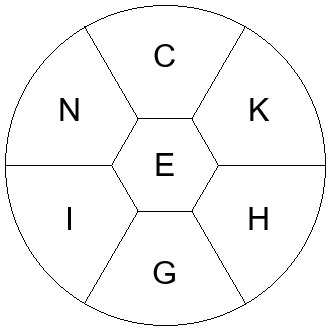
Jump to answers for


The official answers for today's puzzle are:

Click on the arrow to show the definition.
Click outside the pop-up to close it.


Number of Pangrams: 2

Maximum Puzzle Score: 164

Number of Answers: 34

Points Needed for Genius: 115

Genius requires between 16 and 30 words. You need at least a 7-letter word to reach genius. If you don't get the pangrams, you need 87% of the total points to reach genius. If you get the pangrams, you only need 63% of the remaining points to reach genius.

The button below will reveal a chart with the number of words by each letter. Red bars indicate that there is a pangram(s) starting with that letter.


How does this puzzle compare to other puzzles?

Today's score of 164 was in the 48th percentile of all puzzles.
The last time there was a score this low was on June 17, 2025.
The highest score ever was 537 on January 22, 2021.
The lowest score ever was 47 on March 27, 2023.

This puzzle's 34 possible answers rank it in the 37th percentile of all puzzles.
The last time there were fewer answers than this was on June 17, 2025.
The highest number of answers was 81 on June 8, 2019.
The lowest number of answers was 16 on March 27, 2023.

It takes a 7-letter word for genius.
The last time this happened was on June 19, 2025.

Today's puzzle has an average word length of 5.4.
For all Bees, the average word length has been 5.3.


Haven't I seen these letters before?

Hover over a letter to see its first and most recent appearance in the Bee!


Haven't I seen these words before?

The most common words in the Bee are:

  • noon 203
  • loll 198
  • toot 190
  • naan 173
  • nana 173
  • lilt 140
  • till 140
  • tilt 140
  • tint 137
  • nene 135
  • mama 133
  • mamma 133
  • onto 125
  • toon 125
  • acacia 124
  • acai 124
  • onion 122
  • anal 118
  • anon 116
  • olio 116
  • boob 112
  • booboo 112
  • dodo 112
  • papa 110
  • baba 109
  • poop 109
  • tact 109
  • call 106
  • calla 106
  • lull 106
  • lulu 106
  • mitt 105
  • ratatat 105
  • tart 105
  • tartar 105
  • attar 104
  • tatty 104
  • mono 103
  • moon 103
  • tattoo 103
  • allay 102
  • ally 102
  • ammo 102
  • momma 102
  • cocci 101
  • tutu 101
  • epee 100
  • peep 100
  • loon 99
  • roar 97


How long are words in the Bee?

There have been 102,945 answers ever accepted in the Bee - with 10,631 unique words.
Below are the distributions of the lengths of these words.


Valid dictionary words not in today's official answers

You may be wondering why these words aren't here*:

  • cheeking
  • chickee
  • chine
  • ciggie
  • cine
  • eche
  • eching
  • echini
  • engining
  • geck
  • gecking
  • geeing
  • genic
  • genning
  • gieing
  • gien
  • gighe
  • heigh
  • hickie
  • hieing
  • hinnie
  • keck
  • kecking
  • keek
  • keeking
  • kegging
  • kench
  • kenning
  • kike
  • kine

*Because the New York Times considers them obscure or offensive.

check

Etymology 1

noun
  1. A situation in which the king is directly threatened by an opposing piece.
  2. An inspection or examination.
  3. A control; a limit or stop.
  4. A mark (especially a checkmark: ✓) used as an indicator.
  5. An order to a bank to pay money to a named person or entity.
  6. A bill, particularly in a restaurant.
  7. A maneuver performed by a player to take another player out of the play.
  8. A token used instead of cash in gaming machines, or in gambling generally.
  9. A lengthwise separation through the growth rings in wood.
  10. A mark, certificate or token by which errors may be prevented, or a thing or person may be identified.
  11. The forsaking by a hawk of its proper game to follow other birds.
  12. A small chink or crack.

Etymology 2

verb
  1. To inspect; to examine.
  2. To verify the accuracy of a text or translation, usually making some corrections (proofread) or many (copyedit).
  3. (often used with "off") To mark items on a list (with a checkmark or by crossing them out) that have been chosen for keeping or removal or that have been dealt with (for example, completed or verified as correct or satisfactory).
  4. To control, limit, or halt.
  5. To verify or compare with a source of information.
  6. To leave in safekeeping.
  7. To leave with a shipping agent for shipping.
  8. To pass or bounce the ball to an opponent from behind the three-point line and have the opponent pass or bounce it back to start play.
  9. To disrupt another player with the stick or body to obtain possession of the ball or puck.
  10. To remain in a hand without betting. Only legal if no one has yet bet.
  11. To make a move which puts an adversary's king in check; to put in check.
  12. To chide, rebuke, or reprove.
  13. To slack or ease off, as a brace which is too stiffly extended.
  14. To crack or gape open, as wood in drying; or to crack in small checks, as varnish, paint, etc.
  15. To make checks or chinks in; to cause to crack.
  16. To make a stop; to pause; with at.
  17. To clash or interfere.
  18. To act as a curb or restraint.
  19. To turn, when in pursuit of proper game, and fly after other birds.

Etymology 3

noun
  1. (usually pluralized) A pattern made up of a grid of squares of alternating colors; a checkered pattern.
  2. Any fabric woven with such a pattern.
verb
  1. To mark with a check pattern.
adjective
  1. Divided into small squares by transverse, perpendicular, and horizontal lines.

checking

verb
  1. To inspect; to examine.
  2. To verify the accuracy of a text or translation, usually making some corrections (proofread) or many (copyedit).
  3. (often used with "off") To mark items on a list (with a checkmark or by crossing them out) that have been chosen for keeping or removal or that have been dealt with (for example, completed or verified as correct or satisfactory).
  4. To control, limit, or halt.
  5. To verify or compare with a source of information.
  6. To leave in safekeeping.
  7. To leave with a shipping agent for shipping.
  8. To pass or bounce the ball to an opponent from behind the three-point line and have the opponent pass or bounce it back to start play.
  9. To disrupt another player with the stick or body to obtain possession of the ball or puck.
  10. To remain in a hand without betting. Only legal if no one has yet bet.
  11. To make a move which puts an adversary's king in check; to put in check.
  12. To chide, rebuke, or reprove.
  13. To slack or ease off, as a brace which is too stiffly extended.
  14. To crack or gape open, as wood in drying; or to crack in small checks, as varnish, paint, etc.
  15. To make checks or chinks in; to cause to crack.
  16. To make a stop; to pause; with at.
  17. To clash or interfere.
  18. To act as a curb or restraint.
  19. To turn, when in pursuit of proper game, and fly after other birds.
verb
  1. To mark with a check pattern.
noun
  1. The act of physically keeping an opposing player in check.
  2. A checking account.

cheek

noun
  1. The soft skin on each side of the face, below the eyes; the outer surface of the sides of the oral cavity.
  2. (usually in the plural) The lower part of the buttocks that is often exposed beneath very brief underwear, swimwear, or extremely short shorts.
  3. Impudence.
  4. One of the genae, flat areas on the sides of a trilobite's cephalon.
  5. One of the pieces of a machine, or of timber or stonework, that form corresponding sides or a similar pair.
  6. (in plural) The branches of a bridle bit.
  7. Either side of an axehead.
  8. The middle section of a flask, made so that it can be moved laterally, to permit the removal of the pattern from the mould.
verb
  1. To be impudent towards.
  2. To pull a horse's head back toward the saddle using the cheek strap of the bridle.

chicken

Etymology 1

noun
  1. A domestic fowl, Gallus gallus, especially when young.
  2. The meat from this bird eaten as food.
  3. The young of any bird; a chick.
  4. A coward.
  5. A young or inexperienced person.
  6. A young, attractive, slim man, usually having little body hair; compare chickenhawk.
  7. The game of dare.
  8. A simple dance in which the movements of a chicken are imitated.
adjective
  1. Cowardly.

Etymology 2

verb
  1. To avoid a situation one is afraid of.

Etymology 3

noun
  1. A young bird.
  2. A young chicken.
  3. (term of endearment) A young child.
  4. A young, especially attractive, woman or teenage girl.

chickening

verb
  1. To avoid a situation one is afraid of.

egging

verb
  1. To throw eggs at.
  2. To dip in or coat with beaten egg.
  3. To distort a circular cross-section (as in a tube) to an elliptical or oval shape, either inadvertently or intentionally.
verb
  1. To encourage, incite.
noun
  1. The act of pelting with eggs.

eking

Etymology 1

noun
  1. The act or process of adding.
  2. That which is added.
  3. A supplementary piece of timber used to lengthen another.

Etymology 2

verb
  1. Chiefly in the form eke out: to add to, to augment; to increase; to lengthen.

engine

noun
  1. A large construction used in warfare, such as a battering ram, catapult etc.
  2. A tool; a utensil or implement.
  3. A complex mechanical device which converts energy into useful motion or physical effects.
  4. A person or group of people which influence a larger group; a driving force.
  5. The part of a car or other vehicle which provides the force for motion, now especially one powered by internal combustion.
  6. A self-powered vehicle, especially a locomotive, used for pulling cars along a track.
  7. A software or hardware system responsible for a specific technical task (usually with qualifying word).
  8. Ingenuity; cunning, trickery, guile.
  9. The result of cunning; something ingenious, a contrivance; (in negative senses) a plot, a scheme.
  10. Natural talent; genius.
  11. Anything used to effect a purpose; any device or contrivance; an agent.
verb
  1. To equip with an engine; said especially of steam vessels.
  2. To assault with an engine.
  3. To contrive; to put into action.
  4. To rack; to torture.

geek

Etymology 1

noun
  1. A carnival performer specializing in bizarre and unappetizing behavior.
  2. A person who is intensely interested in a particular field or hobby and often having limited or nonstandard social skills. Often used with an attributive noun.
  3. (by extension) An expert in a technical field, particularly one having to do with computers.
  4. The subculture of geeks; an esoteric subject of interest that is marginal to the social mainstream; the philosophy, events, and physical artifacts of geeks; geekness.
  5. An unfashionable or socially undesirable person.
verb
  1. To behave geekishly or in a socially awkward manner, especially when under the influence of drugs or other psycho-active substances, and exhibiting such marked characteristics as hyperactivity, repetitiveness, talkativeness, nervousness, irritability, or paranoia.

Etymology 2

noun
  1. A look.
verb
  1. To look; to peep; to stare about intently.

gene

noun
  1. A theoretical unit of heredity of living organisms; a gene may take several values and in principle predetermines a precise trait of an organism's form (phenotype), such as hair color.
  2. A segment of DNA or RNA from a cell's or an organism's genome, that may take several forms and thus parameterizes a phenomenon, in general the structure of a protein; locus.

genie

noun
  1. A jinn, a being descended from the jann, normally invisible to the human eye, but who may also appear in animal or human form.
  2. A fictional magical being that is typically bound to obey the commands of a mortal possessing its container.

genii

Etymology 1

noun
  1. Someone possessing extraordinary intelligence or skill; especially somebody who has demonstrated this by a creative or original work in science, music, art etc.
  2. Extraordinary mental capacity.
  3. Inspiration, a mental leap, an extraordinary creative process.
  4. The tutelary deity or spirit of a place or person.

Etymology 2

noun
  1. A jinn, a being descended from the jann, normally invisible to the human eye, but who may also appear in animal or human form.
  2. A fictional magical being that is typically bound to obey the commands of a mortal possessing its container.

ghee

noun
  1. A type of clarified butter used in South Asian cooking; usli ghee.
  2. Vegetable oil for cooking.

heck

Etymology 1

noun
  1. Hell.
interjection
  1. Hell.

Etymology 2

noun
  1. The bolt or latch of a door.
  2. A rack for cattle to feed at.
  3. A door, especially one partly of latticework.
  4. A latticework contrivance for catching fish.
  5. An apparatus for separating the threads of warps into sets, as they are wound upon the reel from the bobbins, in a warping machine.
  6. A bend or winding of a stream.

heinie

noun
  1. The buttocks.

hence

adverb
  1. From here, from this place, away
  2. From the living or from this world
  3. (of a length of time) in the future from now
  4. As a result; therefore, for this reason

henge

noun
  1. A prehistoric enclosure in the form of a circle or circular arc defined by a raised circular bank and a circular ditch usually running inside the bank, with one or more entrances leading into the enclosed open space.

hike

noun
  1. A long walk.
  2. An abrupt increase.
  3. The snap of the ball to start a play.
  4. A sharp upward tug to raise something.
verb
  1. To take a long walk for pleasure or exercise.
  2. To unfairly or suddenly raise a price.
  3. To snap the ball to start a play.
  4. To lean out to the windward side of a sailboat in order to counterbalance the effects of the wind on the sails.
  5. To pull up or tug upwards sharply.

hinge

noun
  1. A jointed or flexible device that allows the pivoting of a door etc.
  2. A naturally occurring joint resembling such hardware in form or action, as in the shell of a bivalve.
  3. A stamp hinge, a folded and gummed paper rectangle for affixing postage stamps in an album.
  4. A principle, or a point in time, on which subsequent reasonings or events depend.
  5. The median of the upper or lower half of a batch, sample, or probability distribution.
  6. One of the four cardinal points, east, west, north, or south.
verb
  1. To attach by, or equip with a hinge.
  2. (with on or upon) To depend on something.
  3. The breaking off of the distal end of a knapped stone flake whose presumed course across the face of the stone core was truncated prematurely, leaving not a feathered distal end but instead the scar of a nearly perpendicular break.
  4. To bend.

keen

Etymology 1

verb
  1. To make cold, to sharpen.
adjective
  1. Often with a prepositional phrase, or with to and an infinitive: showing a quick and ardent responsiveness or willingness; eager, enthusiastic, interested.
  2. Fierce, intense, vehement.
  3. Having a fine edge or point; sharp.
  4. Acute of mind, having or expressing mental acuteness; penetrating, sharp.
  5. Acrimonious, bitter, piercing.
  6. Of cold, wind, etc.: cutting, penetrating, piercing, sharp.
  7. Of prices, extremely low as to be competitive.
  8. Marvelous.
  9. Brave, courageous; audacious, bold.

Etymology 2

noun
  1. A prolonged wail for a deceased person.
verb
  1. To utter a keen.
  2. To utter with a loud wailing voice or wordless cry.
  3. To mourn.

keening

verb
  1. To make cold, to sharpen.
verb
  1. To utter a keen.
  2. To utter with a loud wailing voice or wordless cry.
  3. To mourn.
noun
  1. Intense mournful wailing after a death, often at a funeral or wake
  2. (by extension) An unpleasant wailing sound.
adjective
  1. Sharp, shrill, especially of a sound.

knee

noun
  1. In humans, the joint or the region of the joint in the middle part of the leg between the thigh and the shank.
  2. In the horse and allied animals, the carpal joint, corresponding to the wrist in humans.
  3. The part of a garment that covers the knee.
  4. A piece of timber or metal formed with an angle somewhat in the shape of the human knee when bent.
  5. An act of kneeling, especially to show respect or courtesy.
  6. Any knee-shaped item or sharp angle in a line; an inflection point.
  7. A blow made with the knee; a kneeing.
verb
  1. To kneel to.
  2. To poke or strike with the knee.
  3. To move on the knees; to use the knees to move.

kneeing

verb
  1. To kneel to.
  2. To poke or strike with the knee.
  3. To move on the knees; to use the knees to move.
noun
  1. A blow made with the knee

neck

noun
  1. The part of the body connecting the head and the trunk found in humans and some animals.
  2. The corresponding part in some other anatomical contexts.
  3. The part of a shirt, dress etc., which fits a person's neck.
  4. The tapered part of a bottle toward the opening.
  5. The slender tubelike extension atop an archegonium, through which the sperm swim to reach the egg.
  6. The extension of any stringed instrument on which a fingerboard is mounted
  7. A long narrow tract of land projecting from the main body, or a narrow tract connecting two larger tracts.
  8. A reduction in size near the end of an object, formed by a groove around it.
  9. The constriction between the root and crown of a tooth.
  10. The gorgerin of a capital.
  11. The small part of a gun between the chase and the swell of the muzzle.
  12. A person's life.
  13. A falsehood; a lie.
  14. Shapeshifting water spirits in Germanic mythology and folklore
verb
  1. To hang by the neck; strangle; kill, eliminate
  2. To make love; to intently kiss or cuddle; to canoodle.
  3. To drink rapidly.
  4. To decrease in diameter.

necking

verb
  1. To hang by the neck; strangle; kill, eliminate
  2. To make love; to intently kiss or cuddle; to canoodle.
  3. To drink rapidly.
  4. To decrease in diameter.
noun
  1. A behavior among male giraffes where they hold combat for social dominance using their necks as weapons.
  2. A neckmould.
  3. Chugging beer.
  4. Making out; kissing profusely, especially on the neck.

neigh

noun
  1. The cry of a horse.
verb
  1. (of a horse) To make its cry.
  2. To make a sound similar to a horse's cry.
  3. To scoff or sneer.

neighing

verb
  1. (of a horse) To make its cry.
  2. To make a sound similar to a horse's cry.
  3. To scoff or sneer.
noun
  1. The sound made by a horse; an act or instance of the verb neigh.

nene

noun
  1. The Hawaiian goose, Branta sandvicensis, which was designated the state bird of Hawaii in 1957.

nice

Etymology 1

noun
  1. Niceness.
adjective
  1. Pleasant, satisfactory.
  2. Of a person: friendly, attractive.
  3. Respectable; virtuous.
  4. (with and) Shows that the given adjective is desirable, or acts as a mild intensifier; pleasantly, quite.
  5. Silly, ignorant; foolish.
  6. Particular in one's conduct; scrupulous, painstaking; choosy.
  7. Particular as regards rules or qualities; strict.
  8. Showing or requiring great precision or sensitive discernment; subtle.
  9. Easily injured; delicate; dainty.
  10. Doubtful, as to the outcome; risky.
adverb
  1. Nicely.
interjection
  1. Used to signify a job well done.
  2. Used to signify approval.

Etymology 2

verb
  1. To run a process with a specified (usually lower) priority.

niche

noun
  1. A cavity, hollow, or recess, generally within the thickness of a wall, for a statue, bust, or other erect ornament. Hence, any similar position, literal or figurative.
  2. A function within an ecological system to which an organism is especially suited.
  3. (by extension) Any position of opportunity for which one is well-suited, such as a particular market in business.
  4. An arrow woven into a prayer rug pointing in the direction of qibla.
verb
  1. To place in a niche.
  2. To specialize in a niche, or particular narrow section of the market.
adjective
  1. Pertaining to or intended for a market niche; having specific appeal.

niece

noun
  1. A daughter of one’s sibling, brother-in-law, or sister-in-law; either the daughter of one's brother ("fraternal niece"), or of one's sister ("sororal niece").

nine

noun
  1. The digit or figure 9.
  2. A playing card with nine pips.
  3. A nine-millimeter semi-automatic pistol.
  4. (usually in the plural) A statistical unit of proportion (of reliability, purity, etc.).
  5. A baseball club, team, or lineup (composed of nine players).
numeral
  1. A numerical value equal to 9; the number following eight and preceding ten.
  2. Describing a group or set with nine elements.

innie

noun
  1. A navel that is formed of a hollow in the abdomen (as opposed to one that protrudes from the abdomen).
  2. A vagina with inner labia minora

geeking

verb
  1. To behave geekishly or in a socially awkward manner, especially when under the influence of drugs or other psycho-active substances, and exhibiting such marked characteristics as hyperactivity, repetitiveness, talkativeness, nervousness, irritability, or paranoia.
verb
  1. To look; to peep; to stare about intently.