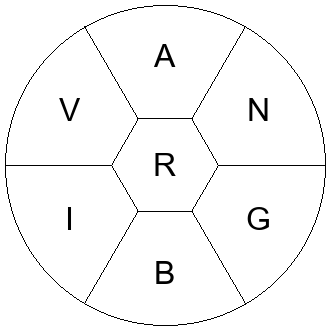
Sunday, June 29, 2025

Answers to yesterday's Bee

Jump to answers for


The official answers for today's puzzle are:

Click on the arrow to show the definition.
Click outside the pop-up to close it.


Number of Pangrams: 1

Maximum Puzzle Score: 362

Number of Answers: 64

Points Needed for Genius: 253

Genius requires between 32 and 53 words. You need at least an 8-letter word to reach genius. If you don't get the pangram, you need 73% of the total points to reach genius. If you get the pangram, you only need 69% of the remaining points to reach genius.

Other days with this pangram:

The button below will reveal a chart with the number of words by each letter. Red bars indicate that there is a pangram(s) starting with that letter.


How does this puzzle compare to other puzzles?

Today's score of 362 was in the 99th percentile of all puzzles.
The last time there was a score this high was on February 23, 2025.
The highest score ever was 537 on January 22, 2021.
The lowest score ever was 47 on March 27, 2023.

This puzzle's 64 possible answers rank it in the 95th percentile of all puzzles.
The last time there were more answers than this was on June 28, 2025.
The highest number of answers was 81 on June 8, 2019.
The lowest number of answers was 16 on March 27, 2023.

It takes an 8-letter word for genius.
The last time this happened was on June 20, 2025.

Today's puzzle has an average word length of 6.3.
For all Bees, the average word length has been 5.3.


Haven't I seen these letters before?

Hover over a letter to see its first and most recent appearance in the Bee!


Haven't I seen these words before?

The most common words in the Bee are:

  • noon 204
  • loll 199
  • toot 191
  • naan 174
  • nana 174
  • lilt 140
  • till 140
  • tilt 140
  • tint 138
  • nene 135
  • mama 133
  • mamma 133
  • acacia 126
  • acai 126
  • onto 126
  • toon 126
  • onion 122
  • anal 118
  • anon 118
  • olio 116
  • boob 112
  • booboo 112
  • dodo 112
  • papa 111
  • poop 110
  • tact 110
  • baba 109
  • call 106
  • calla 106
  • lull 106
  • lulu 106
  • mitt 106
  • ratatat 105
  • tart 105
  • tartar 105
  • attar 104
  • tatty 104
  • mono 103
  • moon 103
  • tattoo 103
  • allay 102
  • ally 102
  • ammo 102
  • momma 102
  • cocci 101
  • tutu 101
  • epee 100
  • loon 100
  • peep 100
  • roar 98


How long are words in the Bee?

There have been 103,302 answers ever accepted in the Bee - with 10,654 unique words.
Below are the distributions of the lengths of these words.


Valid dictionary words not in today's official answers

You may be wondering why these words aren't here*:

  • abri
  • agria
  • airn
  • angaria
  • arriba
  • bairn
  • barbing
  • barning
  • biriani
  • birr
  • birring
  • brannigan
  • branning
  • bravi
  • brin
  • brrr
  • garni
  • garring
  • girn
  • girning
  • gnar
  • gnarr
  • gnarring
  • grana
  • graving
  • grig
  • grigri
  • gringa
  • invar
  • iring
  • naira
  • navar
  • navarin
  • niagara
  • rabbin
  • ragg
  • ragga
  • ragi
  • raia
  • ravin
  • ravining
  • ribavirin
  • rinning
  • riving
  • vair
  • vara
  • varia
  • varna
  • virga
  • vivaria

*Because the New York Times considers them obscure or offensive.

agar

noun
  1. A gelatinous material obtained from red algae, especially Gracilaria species, used as a bacterial culture medium, in electrophoresis and as a food additive.
  2. A culture medium based on this material.

agrarian

noun
  1. A person who advocates the political interests of working farmers
adjective
  1. Of, or relating to, the ownership, tenure and cultivation of land.
  2. Agricultural or rural.
  3. Wild; said of plants growing in a cultivated field.

airbag

noun
  1. A protective system in automobiles in which when a crash occurs, a bag containing nitrogen, formed by the explosive decomposition of sodium azide, quickly inflates in front of the driver or passenger, preventing injury to the head. Side air bags, including the back seat passengers, also prevent injury.
  2. A similar inflated bag used in performing stunts, etc.
  3. A person who talks too much; a windbag or gossip.

airing

verb
  1. To bring (something) into contact with the air, so as to freshen or dry it.
  2. To let fresh air into a room or a building, to ventilate.
  3. To discuss varying viewpoints on a given topic.
  4. To broadcast (a television show etc.).
  5. To be broadcast.
  6. To ignore.
noun
  1. An exposure to warm or fresh air.
  2. The broadcast of a television or radio show.
  3. A public expression of an opinion or discussion of a subject.

aria

noun
  1. A musical piece written typically for a solo voice with orchestral accompaniment in an opera or cantata.

arraign

noun
  1. Arraignment.
verb
  1. To officially charge someone in a court of law.
  2. To call to account, or accuse, before the bar of reason, taste, or any other tribunal.

arraigning

verb
  1. To officially charge someone in a court of law.
  2. To call to account, or accuse, before the bar of reason, taste, or any other tribunal.
noun
  1. An arraignment.

arranging

verb
  1. To set up; to organize; to put into an orderly sequence or arrangement.
  2. To plan; to prepare in advance.
  3. To prepare and adapt an already-written composition for presentation in other than its original form.
noun
  1. Arrangement.

arriving

verb
  1. To reach; to get to a certain place.
  2. To obtain a level of success or fame; to succeed.
  3. To come; said of time.
  4. To happen or occur.
  5. To reach; to come to.
  6. To bring to shore.

barb

Etymology 1

noun
  1. The point that stands backward in an arrow, fishhook, etc., to prevent it from being easily extracted. Hence: Anything which stands out with a sharp point obliquely or crosswise to something else.
  2. A hurtful or disparaging remark.
  3. A beard, or that which resembles it, or grows in the place of it.
  4. Armor for a horse, corrupted from bard.
  5. A horse.
  6. One of the side branches of a feather, which collectively constitute the vane.
  7. Any of various species of freshwater carp-like fish that have barbels and belong to the cyprinid family.
  8. Menticirrhus americanus (Carolina whiting, king whiting, southern kingcroaker, and southern kingfish), found along the Atlantic and Gulf Coasts of the United States.
  9. A hair or bristle ending in a double hook.
  10. A blackish or dun variety of the pigeon, originally brought from Barbary.
  11. A muffler, worn by nuns and mourners.
  12. Paps, or little projections, of the mucous membrane, which mark the opening of the submaxillary glands under the tongue in horses and cattle. The name is mostly applied when the barbs are inflamed and swollen. [Written also barbel and barble.]
  13. A bit for a horse.
  14. A plastic fastener, shaped roughly like a capital I (with serifs), used to attach socks etc. to their packaging.
verb
  1. To furnish with barbs, or with that which will hold or hurt like barbs, as an arrow, fishhook, spear, etc.
  2. To cover a horse in armor, corrupted from bard.
  3. To cut (hair).
  4. To shave or dress the beard of.
  5. To clip; to mow.

Etymology 2

noun
  1. The Barbary horse, a superior breed introduced from Barbary into Spain by the Moors.
  2. A blackish or dun variety of pigeon, originally brought from Barbary.

Etymology 3

noun
  1. A barbiturate.

barbarian

noun
  1. A non-Greek or a non-Roman.
  2. An uncivilized or uncultured person, originally compared to the hellenistic Greco-Roman civilisation; often associated with fighting or other such shows of strength.
  3. Someone from a developing country or backward culture.
  4. A warrior, clad in fur or leather, associated with sword and sorcery stories.
  5. A person destitute of culture; a Philistine.
  6. A cruel, savage, brutal person; one without pity or humanity.
  7. A foreigner, especially with barbaric qualities as in the above definitions.
adjective
  1. Relating to people, countries or customs perceived as uncivilized or inferior.

bargain

noun
  1. An agreement between parties concerning the sale of property; or a contract by which one party binds himself to transfer the right to some property for a consideration, and the other party binds himself to receive the property and pay the consideration.
  2. An agreement or stipulation; mutual pledge.
  3. An item purchased for significantly less than the usual, or recommended, price
  4. A gainful transaction; an advantageous purchase.
  5. The thing stipulated or purchased.
verb
  1. To make a bargain; to make a deal or contract for the exchange of property or services; to negotiate
  2. To transfer for a consideration; to barter; to trade

bargaining

verb
  1. To make a bargain; to make a deal or contract for the exchange of property or services; to negotiate
  2. To transfer for a consideration; to barter; to trade
noun
  1. The act of one who bargains.

barging

verb
  1. To intrude or break through, particularly in an unwelcome or clumsy manner.
  2. To push someone.

baring

verb
  1. To uncover; to reveal.
noun
  1. The act by which something is laid bare.

barn

Etymology 1

noun
  1. A building, often found on a farm, used for storage or keeping animals such as cattle.
  2. A unit of surface area equal to 10−28 square metres.
  3. An arena.
verb
  1. To lay up in a barn.

Etymology 2

noun
  1. A child.

barraging

verb
  1. To direct a barrage at.

barring

verb
  1. To obstruct the passage of (someone or something).
  2. To prohibit.
  3. To lock or bolt with a bar.
  4. To imprint or paint with bars, to stripe.
noun
  1. (collective) Bars; an arrangement or pattern of stripes or bars.
  2. The act of fitting or closing something with bars.
  3. The exclusion of someone; blackballing.
  4. Timber used for supporting the roof or sides of shafts.
  5. The sewing of a decorative bar or tack upon a fabric or leather.
preposition
  1. Unless something happens; excepting; in the absence of.

brag

noun
  1. A boast or boasting; bragging; ostentatious pretence or self-glorification.
  2. The thing which is boasted of.
  3. (by ellipsis) The card game three card brag.
verb
  1. To boast; to talk with excessive pride about what one has, is able to do, or has done; often as an attempt to popularize oneself.
  2. To boast of.
adjective
  1. Excellent; first-rate.
  2. Brisk; full of spirits; boasting; pretentious; conceited.
adverb
  1. Proudly; boastfully

bragging

verb
  1. To boast; to talk with excessive pride about what one has, is able to do, or has done; often as an attempt to popularize oneself.
  2. To boast of.
noun
  1. The act of one who brags.

brain

noun
  1. The control center of the central nervous system of an animal located in the skull which is responsible for perception, cognition, attention, memory, emotion, and action.
  2. An intelligent person.
  3. (in the plural) Intellect.
  4. By analogy with a human brain, the part of a machine or computer that performs calculations.
  5. Oral sex.
  6. Mind.
verb
  1. To dash out the brains of; to kill by smashing the skull.
  2. To strike (someone) on the head.
  3. To destroy; to put an end to.
  4. To conceive in the mind; to understand.

braining

verb
  1. To dash out the brains of; to kill by smashing the skull.
  2. To strike (someone) on the head.
  3. To destroy; to put an end to.
  4. To conceive in the mind; to understand.

bran

noun
  1. The broken coat of the seed of wheat, rye, or other cereal grain, separated from the flour or meal by sifting or bolting; the coarse, chaffy part of ground grain.
  2. The European carrion crow.

brava

No Definition Found.

braving

verb
  1. To encounter with courage and fortitude, to defy, to provoke.
  2. To adorn; to make fine or showy.
noun
  1. A bravado; a boast.

briar

Etymology 1

noun
  1. Any of many plants with thorny stems growing in dense clusters, such as many in the Rosa, Rubus, and Smilax genera.
  2. Anything sharp or unpleasant to the feelings.

Etymology 2

noun
  1. The white heath, Erica arborea, a thorny Mediterranean shrub.
  2. A pipe for smoking, made from the roots of that shrub.

bribing

verb
  1. To give a bribe to; specifically, to ask a person to do something, usually against his/her will, in exchange for some type of reward or relief from potential trouble.
  2. To gain by a bribe; to induce as by a bribe.
noun
  1. Bribery.

brig

Etymology 1

noun
  1. A two-masted vessel, square-rigged on both foremast and mainmast
  2. A jail or guardhouse, especially in a naval military prison or jail on a ship, navy base, or (in fiction) spacecraft.

Etymology 2

noun
  1. Bridge.

Etymology 3

noun
  1. Brigadier.

bring

Etymology 1

verb
  1. (ditransitive) To transport toward somebody/somewhere.
  2. To supply or contribute.
  3. To occasion or bring about.
  4. To raise (a lawsuit, charges, etc.) against somebody.
  5. To persuade; to induce; to draw; to lead; to guide.
  6. To produce in exchange; to sell for; to fetch.
  7. To pitch, often referring to a particularly hard thrown fastball.

Etymology 2

interjection
  1. The sound of a telephone ringing.

bringing

verb
  1. (ditransitive) To transport toward somebody/somewhere.
  2. To supply or contribute.
  3. To occasion or bring about.
  4. To raise (a lawsuit, charges, etc.) against somebody.
  5. To persuade; to induce; to draw; to lead; to guide.
  6. To produce in exchange; to sell for; to fetch.
  7. To pitch, often referring to a particularly hard thrown fastball.
noun
  1. The act by which something is brought.

brining

verb
  1. To preserve food in a salt solution.
  2. To prepare and flavor food (especially meat) for cooking by soaking in a salt solution.

garaging

verb
  1. To store in a garage.
noun
  1. The act of parking a vehicle in a garage.

garb

Etymology 1

noun
  1. Fashion, style of dressing oneself up.
  2. A type of dress or clothing.
  3. A guise, external appearance.
verb
  1. To dress in garb.

Etymology 2

noun
  1. A wheat sheaf.
  2. A measure of arrows in the Middle Ages.

garbing

verb
  1. To dress in garb.

grab

Etymology 1

noun
  1. A sudden snatch at something.
  2. An acquisition by violent or unjust means.
  3. A mechanical device that grabs or clutches.
  4. A sound bite.
  5. That which is seized.
  6. A simple card game.
verb
  1. To grip suddenly; to seize; to clutch.
  2. To make a sudden grasping or clutching motion (at something).
  3. To restrain someone; to arrest.
  4. To grip the attention of; to enthrall or interest.
  5. To quickly collect or retrieve.
  6. To consume something quickly.
  7. To take the opportunity of.

Etymology 2

noun
  1. A two- or three-masted vessel used on the Malabar coast.

grabbing

verb
  1. To grip suddenly; to seize; to clutch.
  2. To make a sudden grasping or clutching motion (at something).
  3. To restrain someone; to arrest.
  4. To grip the attention of; to enthrall or interest.
  5. To quickly collect or retrieve.
  6. To consume something quickly.
  7. To take the opportunity of.
noun
  1. The act of one who grabs; a snatching.

grain

Etymology 1

noun
  1. The harvested seeds of various grass food crops eg: wheat, corn, barley.
  2. Similar seeds from any food crop, e.g., buckwheat, amaranth, quinoa.
  3. A single seed of grass food crops.
  4. The crops from which grain is harvested.
  5. A linear texture of a material or surface.
  6. A single particle of a substance.
  7. A very small unit of weight, in England equal to 1/480 of an ounce troy, 0.0648 grams or, to be more exact, 64.79891 milligrams (0.002285714 avoirdupois ounce). A carat grain or pearl grain is 1/4 carat or 50 milligrams. The old French grain was 1/9216 livre or 53.11 milligrams, and in the mesures usuelles permitted from 1812 to 1839, with the livre redefined as 500 grams, it was 54.25 milligrams.
  8. A former unit of gold purity, also known as carat grain, equal to 1/4 "carat" (karat).
  9. (materials) A region within a material having a single crystal structure or direction.
  10. A reddish dye made from the coccus insect, or kermes; hence, a red color of any tint or hue, as crimson, scarlet, etc.; sometimes used by the poets as equivalent to Tyrian purple.
  11. The hair side of a piece of leather, or the marking on that side.
  12. (in the plural) The remains of grain, etc., after brewing or distillation; hence, any residuum. Also called draff.
  13. A rounded prominence on the back of a sepal, as in the common dock.
  14. Temper; natural disposition; inclination.
  15. (videography) Visual texture in processed photographic film due to the presence of small particles of a metallic silver, or dye clouds, developed from silver halide that have received enough photons.
verb
  1. To feed grain to.
  2. To make granular; to form into grains.
  3. To form grains, or to assume a granular form, as the result of crystallization; to granulate.
  4. To texture a surface in imitation of the grain of a substance such as wood.
  5. (tanning) To remove the hair or fat from a skin.
  6. (tanning) To soften leather.
  7. To yield fruit.

Etymology 2

noun
  1. A branch of a tree; a stalk or stem of a plant.
  2. A tine, prong, or fork.
  3. (founding) A thin piece of metal, used in a mould to steady a core.

graining

Etymology 1

verb
  1. To feed grain to.
  2. To make granular; to form into grains.
  3. To form grains, or to assume a granular form, as the result of crystallization; to granulate.
  4. To texture a surface in imitation of the grain of a substance such as wood.
  5. (tanning) To remove the hair or fat from a skin.
  6. (tanning) To soften leather.
  7. To yield fruit.
noun
  1. The practice of imitating woodgrain on a surface.
  2. Indentation; roughening; milling, as on edges of coins.
  3. A process in dressing leather, by which the skin is softened and the grain raised.
  4. (soap manufacture) The process of separating soap from spent lye, as with salt.

Etymology 2

noun
  1. A small European freshwater fish (Leuciscus leuciscus); the dobule or dace.

gran

noun
  1. (usually affectionate) a grandmother
  2. A grandfather

grin

Etymology 1

noun
  1. A smile in which the lips are parted to reveal the teeth.
verb
  1. To smile, parting the lips so as to show the teeth.
  2. To express by grinning.
  3. To show the teeth, like a snarling dog.
  4. To grin as part of producing a particular facial expression, such as a smile or sneer.

Etymology 2

noun
  1. A snare; a gin.

grinning

verb
  1. To smile, parting the lips so as to show the teeth.
  2. To express by grinning.
  3. To show the teeth, like a snarling dog.
  4. To grin as part of producing a particular facial expression, such as a smile or sneer.
noun
  1. The act or expression of one who grins.

ingrain

noun
  1. An ingrain fabric, such as a carpet.
verb
  1. To dye with a fast or lasting colour.
  2. To make (something) deeply part of something else.
adjective
  1. Dyed with grain, or kermes.
  2. Dyed before manufacture; said of the material of a textile fabric; hence, in general, thoroughly inwrought; forming an essential part of the substance.

ingraining

verb
  1. To dye with a fast or lasting colour.
  2. To make (something) deeply part of something else.

nirvana

noun
  1. Complete cessation of suffering; a blissful state attained through realization of sunyata; enlightened experience.
  2. (non-Buddhist) State of paradise; heightened or great pleasure.

rabbi

noun
  1. A Jewish scholar or teacher of halacha (Jewish law), capable of making halachic decisions.
  2. A Jew who is or is qualified to be the leader of a Jewish congregation.
  3. (police) A senior officer who acts as a mentor.

raga

noun
  1. Any of various melodic forms used in Indian classical music, or a piece of music composed in such a form.
  2. Passion, love, lust.

ragbag

noun
  1. A collection containing a variety of miscellaneous things.

ragging

verb
  1. To decorate (a wall, etc.) by applying paint with a rag.
  2. To become tattered.
verb
  1. To break (ore) into lumps for sorting.
  2. To cut or dress roughly, as a grindstone.
verb
  1. To scold or tell off; to torment; to banter.
  2. To drive a car or another vehicle in a hard, fast or unsympathetic manner.
  3. To tease or torment, especially at a university; to bully, to haze.
verb
  1. To play or compose (a piece, melody, etc.) in syncopated time.
  2. To dance to ragtime music.
  3. To add syncopation (to a tune) and thereby make it appropriate for a ragtime song.
noun
  1. The act of one who rags or teases.
  2. An initiation in educational institutions (e.g. universities) usually involving harassment by upperclassmen.

raging

verb
  1. To act or speak in heightened anger.
  2. (sometimes figurative) To move with great violence, as a storm etc.
  3. To enrage.
noun
  1. A display of rage.
adjective
  1. Volatile, very active or unpredictable.
  2. (of a person) In a state of rage; in a state of extreme, often uncontrollable, anger.

rain

noun
  1. Condensed water falling from a cloud.
  2. Any matter moving or falling, usually through air, and especially if liquid or otherwise figuratively identifiable with raindrops.
  3. An instance of particles or larger pieces of matter moving or falling through air.
verb
  1. To have rain fall from the sky.
  2. To fall as or like rain.
  3. To issue (something) in large quantities.
  4. To reign.

raining

verb
  1. To have rain fall from the sky.
  2. To fall as or like rain.
  3. To issue (something) in large quantities.
  4. To reign.
noun
  1. A fall of rain.

rang

verb
  1. Of a bell, etc., to produce a resonant sound.
  2. To make (a bell, etc.) produce a resonant sound.
  3. To produce (a sound) by ringing.
  4. To produce the sound of a bell or a similar sound.
  5. Of something spoken or written, to appear to be, to seem, to sound.
  6. To telephone (someone).
  7. To resound, reverberate, echo.
  8. To produce music with bells.
  9. To repeat often, loudly, or earnestly.

ranging

verb
  1. To travel over (an area, etc); to roam, wander.
  2. To rove over or through.
  3. To exercise the power of something over something else; to cause to submit to, over.
  4. To bring (something) into a specified position or relationship (especially, of opposition) with something else.
  5. (followed by over) Of a variable, to be able to take any of the values in a specified range.
  6. To classify.
  7. To form a line or a row.
  8. To be placed in order; to be ranked; to admit of arrangement or classification; to rank.
  9. To set in a row, or in rows; to place in a regular line or lines, or in ranks; to dispose in the proper order.
  10. To place among others in a line, row, or order, as in the ranks of an army; usually, reflexively and figuratively, to espouse a cause, to join a party, etc.
  11. To be native to, or live in, a certain district or region.
  12. To separate into parts; to sift.
  13. To sail or pass in a direction parallel to or near.
  14. Of a player, to travel a significant distance for a defensive play.
noun
  1. Act of one who ranges.
  2. A back-and-forth movement

rani

noun
  1. The wife of a rajah.
  2. A Hindu princess or female ruler in India.

raring

verb
  1. To rear, rise up, start backwards.
  2. To rear, bring up, raise.
adjective
  1. Eager.

ravaging

verb
  1. To devastate or destroy something.
  2. To pillage or sack something, to lay waste to something.
  3. To wreak destruction.
noun
  1. The act by which something is ravaged.

raving

verb
  1. To wander in mind or intellect; to be delirious; to talk or act irrationally; to be wild, furious, or raging.
  2. To speak or write wildly or incoherently.
  3. To talk with unreasonable enthusiasm or excessive passion or excitement; followed by about, of, or (formerly) on.
  4. To rush wildly or furiously.
  5. To attend a rave (dance party).
noun
  1. (usually in the plural) Wild, incoherent, or irrational talk.
adjective
  1. Talking wildly.
  2. Causing excitement or wild praise.
adverb
  1. Incoherently

ribbing

verb
  1. To shape, support, or provide something with a rib or ribs.
  2. To tease or make fun of someone in a good-natured way.
  3. To enclose, as if with ribs, and protect; to shut in.
  4. To leave strips of undisturbed ground between the furrows in ploughing (land).
noun
  1. The action of the verb to rib.
  2. A rib, or the collective ribs, on an object.
  3. An instance of teasing.

rigging

verb
  1. To fit out with a harness or other equipment.
  2. To equip and fit (a ship) with sails, shrouds, and yards.
  3. To dress or clothe in some costume.
  4. To make or construct something in haste or in a makeshift manner.
  5. To manipulate something dishonestly for personal gain or discriminatory purposes.
  6. To make free with; hence, to steal; to pilfer.
  7. To outfit a model with controls for animation.
verb
  1. To play the wanton; to act in an unbecoming manner; to play tricks.
noun
  1. Dress; tackle; especially , the ropes, chains, etc., that support the masts and spars of a sailing vessel, and serve as purchases for adjusting the sails, etc.
  2. Similar supporting material used for construction work, or in film, theater, etc.

ring

Etymology 1

noun
  1. (physical) A solid object in the shape of a circle.
  2. (physical) A group of objects arranged in a circle.
  3. A piece of food in the shape of a ring.
  4. A place where some sports or exhibitions take place; notably a circular or comparable arena, such as a boxing ring or a circus ring; hence the field of a political contest.
  5. An exclusive group of people, usually involving some unethical or illegal practices.
  6. A group of atoms linked by bonds to form a closed chain in a molecule.
  7. A planar geometrical figure included between two concentric circles.
  8. A diacritical mark in the shape of a hollow circle placed above or under the letter; a kroužek.
  9. An old English measure of corn equal to the coomb or half a quarter.
  10. A hierarchical level of privilege in a computer system, usually at hardware level, used to protect data and functionality (also protection ring).
  11. Either of the pair of clamps used to hold a telescopic sight to a rifle.
  12. The twenty-fifth Lenormand card.
verb
  1. To enclose or surround.
  2. To make an incision around; to girdle.
  3. To attach a ring to, especially for identification.
  4. To surround or fit with a ring, or as if with a ring.
  5. To rise in the air spirally.
  6. To steal and change the identity of (cars) in order to resell them.

Etymology 2

noun
  1. The resonant sound of a bell, or a sound resembling it.
  2. A pleasant or correct sound.
  3. A sound or appearance that is characteristic of something.
  4. A telephone call.
  5. Any loud sound; the sound of numerous voices; a sound continued, repeated, or reverberated.
  6. A chime, or set of bells harmonically tuned.
verb
  1. Of a bell, etc., to produce a resonant sound.
  2. To make (a bell, etc.) produce a resonant sound.
  3. To produce (a sound) by ringing.
  4. To produce the sound of a bell or a similar sound.
  5. Of something spoken or written, to appear to be, to seem, to sound.
  6. To telephone (someone).
  7. To resound, reverberate, echo.
  8. To produce music with bells.
  9. To repeat often, loudly, or earnestly.

Etymology 3

noun
  1. An algebraic structure which consists of a set with two binary operations: an additive operation and a multiplicative operation, such that the set is an abelian group under the additive operation, a monoid under the multiplicative operation, and such that the multiplicative operation is distributive with respect to the additive operation.
  2. An algebraic structure as above, but only required to be a semigroup under the multiplicative operation, that is, there need not be a multiplicative identity element.

ringing

verb
  1. To enclose or surround.
  2. To make an incision around; to girdle.
  3. To attach a ring to, especially for identification.
  4. To surround or fit with a ring, or as if with a ring.
  5. To rise in the air spirally.
  6. To steal and change the identity of (cars) in order to resell them.
verb
  1. Of a bell, etc., to produce a resonant sound.
  2. To make (a bell, etc.) produce a resonant sound.
  3. To produce (a sound) by ringing.
  4. To produce the sound of a bell or a similar sound.
  5. Of something spoken or written, to appear to be, to seem, to sound.
  6. To telephone (someone).
  7. To resound, reverberate, echo.
  8. To produce music with bells.
  9. To repeat often, loudly, or earnestly.
noun
  1. The sound of something that rings.
  2. The quality of being resonant.
  3. A technique used in the study of wild birds, by attaching a small, individually numbered, metal or plastic tag to their legs or wings.
  4. The theft of cars and illegally changing their identities for resale.
adjective
  1. Loud and clear.
  2. Made forcefully; powerful.

virgin

noun
  1. A person who has never had sexual intercourse, or sometimes, one who has never engaged in any sexual activity at all.
  2. (early Christian Church) a woman noted for religious piety who has never been married.
  3. One who has never used or experienced a specified thing.
  4. Any of several species of gossamer-winged butterflies of the family Lycaenidae.
  5. A female insect producing eggs from which young are hatched, though there has been no fecundation by a male; a parthenogenetic insect.
adjective
  1. (usually not comparable) In a state of virginity; chaste, not having had sexual intercourse.
  2. Of a physical object, untouched.
  3. Not yet cultivated, explored, or exploited by humans or humans of certain civilizations.
  4. Of olive oil, obtained by mechanical means, so that the oil is not altered.
  5. (usually not comparable) Of mixed drinks, not containing alcohol.

nigiri

noun
  1. Regular sushi: a piece of raw fish (or other topping) on top of a small oblong brick of sticky white rice.

birria

No Definition Found.