Wednesday, July 2, 2025

Answers to yesterday's Bee

Jump to answers for


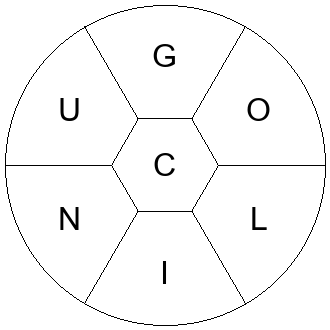
The official answers for today's puzzle are:

Click on the arrow to show the definition.
Click outside the pop-up to close it.


Number of Pangrams: 2

Maximum Puzzle Score: 254

Number of Answers: 44

Points Needed for Genius: 178

Genius requires between 23 and 37 words. You need at least a 7-letter word to reach genius. If you don't get the pangrams, you need 81% of the total points to reach genius. If you get the pangrams, you only need 66% of the remaining points to reach genius.

Other days with this pangram:

The button below will reveal a chart with the number of words by each letter. Red bars indicate that there is a pangram(s) starting with that letter.


How does this puzzle compare to other puzzles?

Today's score of 254 was in the 84th percentile of all puzzles.
The last time there was a score this high was on June 29, 2025.
The highest score ever was 537 on January 22, 2021.
The lowest score ever was 47 on March 27, 2023.

This puzzle's 44 possible answers rank it in the 63rd percentile of all puzzles.
The last time there were more answers than this was on June 30, 2025.
The highest number of answers was 81 on June 8, 2019.
The lowest number of answers was 16 on March 27, 2023.

It takes a 7-letter word for genius.
The last time this happened was on June 28, 2025.

Today's puzzle has an average word length of 6.0.
For all Bees, the average word length has been 5.3.


Haven't I seen these letters before?

Hover over a letter to see its first and most recent appearance in the Bee!


Haven't I seen these words before?

The most common words in the Bee are:

  • noon 204
  • loll 199
  • toot 191
  • naan 174
  • nana 174
  • lilt 140
  • till 140
  • tilt 140
  • tint 138
  • nene 135
  • mama 133
  • mamma 133
  • acacia 126
  • acai 126
  • onto 126
  • toon 126
  • onion 122
  • anal 118
  • anon 118
  • olio 116
  • boob 113
  • booboo 113
  • dodo 112
  • papa 111
  • poop 110
  • tact 110
  • baba 109
  • lull 107
  • lulu 107
  • call 106
  • calla 106
  • mitt 106
  • ratatat 105
  • tart 105
  • tartar 105
  • attar 104
  • tatty 104
  • mono 103
  • moon 103
  • tattoo 103
  • allay 102
  • ally 102
  • ammo 102
  • cocci 102
  • momma 102
  • tutu 101
  • epee 100
  • loon 100
  • peep 100
  • roar 98


How long are words in the Bee?

There have been 103,430 answers ever accepted in the Bee - with 10,658 unique words.
Below are the distributions of the lengths of these words.


Valid dictionary words not in today's official answers

You may be wondering why these words aren't here*:

  • cion
  • clon
  • clonic
  • coccic
  • coco
  • cogging
  • cogon
  • coign
  • coigning
  • colicin
  • colin
  • colloguing
  • colog
  • coloni
  • colugo
  • congii
  • congo
  • congou
  • coni
  • conin
  • coning
  • conn
  • coocoo
  • coon
  • cullion
  • glucinic
  • gonococci
  • incog
  • inconnu
  • locoing
  • loculi
  • nicol
  • noncling
  • nonclogging
  • nonionic
  • oncologic
  • oologic
  • unci
  • uncini
  • unco

*Because the New York Times considers them obscure or offensive.

cling

Etymology 1

noun
  1. Fruit (especially peach) whose flesh adheres strongly to the pit.
  2. Adherence; attachment; devotion
verb
  1. To hold very tightly, as to not fall off.
  2. To adhere to an object, without being affixed, in such a way as to follow its contours. Used especially of fabrics and films.
  3. To cause to adhere to, especially by twining round or embracing.
  4. To cause to dry up or wither.
  5. To dry up or wither.
  6. (with preposition to) to be fond of, to feel strongly about and dependent on

Etymology 2

verb
  1. To produce a high-pitched ringing sound, like a small bell.

clinging

verb
  1. To hold very tightly, as to not fall off.
  2. To adhere to an object, without being affixed, in such a way as to follow its contours. Used especially of fabrics and films.
  3. To cause to adhere to, especially by twining round or embracing.
  4. To cause to dry up or wither.
  5. To dry up or wither.
  6. (with preposition to) to be fond of, to feel strongly about and dependent on
verb
  1. To produce a high-pitched ringing sound, like a small bell.
noun
  1. The act of one who clings.

clinic

noun
  1. A medical facility, such as a hospital, especially one for the treatment and diagnosis of outpatients.
  2. (by extension) A hospital session to diagnose or treat patients.
  3. A school, or a session of a school or class, in which medicine or surgery is taught by the examination and treatment of patients in the presence of the pupils.
  4. A group practice of several physicians.
  5. A meeting for the diagnosis of problems, or training, on a particular subject.
  6. A temporary office arranged on a regular basis to allow politicians to meet their constituents.
  7. A series of workouts used to build skills of practitioners regardless of team affiliation.
  8. One confined to bed by sickness.
  9. One who receives baptism on a sickbed.

clog

noun
  1. A type of shoe with an inflexible, often wooden sole sometimes with an open heel.
  2. A blockage.
  3. A shoe of any type.
  4. A weight, such as a log or block of wood, attached to a person or animal to hinder motion.
  5. That which hinders or impedes motion; an encumbrance, restraint, or impediment of any kind.
verb
  1. To block or slow passage through (often with 'up').
  2. To encumber or load, especially with something that impedes motion; to hamper.
  3. To burden; to trammel; to embarrass; to perplex.
  4. To enforce a mortgage lender right that prevents a borrower from exercising a right to redeem.
  5. To perform a clog dance.

clogging

verb
  1. To block or slow passage through (often with 'up').
  2. To encumber or load, especially with something that impedes motion; to hamper.
  3. To burden; to trammel; to embarrass; to perplex.
  4. To enforce a mortgage lender right that prevents a borrower from exercising a right to redeem.
  5. To perform a clog dance.
noun
  1. The situation of something being clogged.
  2. The material that clogs or obstructs.

cloning

verb
  1. To create a clone of.
noun
  1. The production of an exact copy of an object.
  2. The production of a cloned embryo by transplanting the nucleus of a somatic cell into an ovum.

cluing

No Definition Found.

clung

verb
  1. To hold very tightly, as to not fall off.
  2. To adhere to an object, without being affixed, in such a way as to follow its contours. Used especially of fabrics and films.
  3. To cause to adhere to, especially by twining round or embracing.
  4. To cause to dry up or wither.
  5. To dry up or wither.
  6. (with preposition to) to be fond of, to feel strongly about and dependent on
adjective
  1. Wasted away; shrunken

cocci

Etymology 1

noun
  1. Any approximately spherical bacterium.
  2. One of the carpels or seed-vessels of a dry fruit.

Etymology 2

noun
  1. Coccidioidomycosis

cocoon

noun
  1. The silky protective case spun by the larvae of some insects in which they metamorphose, the pupa.
  2. Any similar protective case, whether real or metaphorical.
verb
  1. To envelop in a protective case
  2. To withdraw into such a case.

cocooning

verb
  1. To envelop in a protective case
  2. To withdraw into such a case.
noun
  1. The formation of a cocoon.

coil

Etymology 1

noun
  1. Something wound in the form of a helix or spiral.
  2. Any intrauterine device (Abbreviation: IUD)—the first IUDs were coil-shaped.
  3. A coil of electrically conductive wire through which electricity can flow.
  4. Entanglement; perplexity.
verb
  1. To wind or reel e.g. a wire or rope into regular rings, often around a centerpiece.
  2. To wind into loops (roughly) around a common center.
  3. To wind cylindrically or spirally.
  4. To encircle and hold with, or as if with, coils.

Etymology 2

noun
  1. A noise, tumult, bustle, or turmoil.

coiling

verb
  1. To wind or reel e.g. a wire or rope into regular rings, often around a centerpiece.
  2. To wind into loops (roughly) around a common center.
  3. To wind cylindrically or spirally.
  4. To encircle and hold with, or as if with, coils.
noun
  1. The pattern or motion of something that coils.
  2. The process of fitting a ship with electromagnetic coils, so that it can be degaussed while travelling.

coin

noun
  1. (money) A piece of currency, usually metallic and in the shape of a disc, but sometimes polygonal, or with a hole in the middle.
  2. A token used in a special establishment like a casino.
  3. That which serves for payment or recompense.
  4. Money in general, not limited to coins.
  5. One of the suits of minor arcana in tarot, or a card of that suit.
  6. A corner or external angle.
  7. A small circular slice of food.
  8. A cryptocurrency.
verb
  1. To make of a definite fineness, and convert into coins, as a mass of metal.
  2. (by extension) To make or fabricate.
  3. To acquire rapidly, as money; to make.

coining

verb
  1. To make of a definite fineness, and convert into coins, as a mass of metal.
  2. (by extension) To make or fabricate.
  3. To acquire rapidly, as money; to make.
noun
  1. A form of alternative medicine from Southeast Asia where a coin is rubbed vigorously on a patient's oiled skin.
  2. A created word or phrase.

colic

noun
  1. Severe pains that grip the abdomen or the disease that causes such pains (due to intestinal or bowel-related problems).
  2. A medicinal plant used to relieve such symptoms.
adjective
  1. Relating to the colon; colonic.

colon

Etymology 1

noun
  1. The punctuation mark ":".
  2. The triangular colon (especially in context of not being able to type the actual triangular colon).
  3. A rhetorical figure consisting of a clause which is grammatically, but not logically, complete.
  4. A clause or group of clauses written as a line, or taken as a standard of measure in ancient manuscripts or texts.

Etymology 2

noun
  1. Part of the large intestine; the final segment of the digestive system, after (distal to) the ileum and before (proximal to) the anus.

Etymology 3

noun
  1. A husbandman.
  2. A European colonial settler, especially in a French colony.

colonic

noun
  1. An enema.
adjective
  1. Of, relating to, affecting or within the colon.

conic

noun
  1. A conic section.
adjective
  1. Of or relating to a cone or cones.
  2. Shaped like a cone.
  3. Describing a map projection in which meridians are mapped to equally spaced lines radiating out from the apex and parallels of latitude are mapped to circular arcs centred on the apex.

conning

verb
  1. To study or examine carefully, especially in order to gain knowledge of; to learn, or learn by heart.
  2. To know, understand, acknowledge.
verb
  1. To trick or defraud, usually for personal gain.
verb
  1. To direct a ship; to superintend the steering of (a vessel); to watch the course of (a vessel) and direct the helmsman how to steer (especially through a channel, etc, rather than steer a compass direction).
noun
  1. Reckoning

cooing

verb
  1. To make a soft murmuring sound, as a pigeon.
  2. To speak in an admiring fashion, to be enthusiastic about.
noun
  1. A coo; a cooing sound.

cool

Etymology 1

noun
  1. A moderate or refreshing state of cold; moderate temperature of the air between hot and cold; coolness.
  2. A calm temperament.
  3. The property of being cool, popular or in fashion.
adjective
  1. Having a slightly low temperature; mildly or pleasantly cold.
  2. Allowing or suggesting heat relief.
  3. Of a color, in the range of violet to green.
  4. Of a person, not showing emotion; calm and in control of oneself.
  5. Unenthusiastic, lukewarm, skeptical.
  6. Calmly audacious.
  7. Applied facetiously to a sum of money, commonly as if to give emphasis to the largeness of the amount.
  8. Of a person, knowing what to do and how to behave; considered popular by others.
  9. In fashion, part of or fitting the in crowd; originally hipster slang.
  10. Of an action, all right; acceptable; that does not present a problem.
  11. Of a person, not upset by circumstances that might ordinarily be upsetting.
  12. Quietly impudent, defiant, or selfish; deliberately presuming: said of persons and acts.

Etymology 2

verb
  1. To lose heat, to get colder.
  2. To make cooler, less warm.
  3. To become less intense, e.g. less amicable or passionate.
  4. To make less intense, e.g. less amicable or passionate.
  5. To kill.

cooling

verb
  1. To lose heat, to get colder.
  2. To make cooler, less warm.
  3. To become less intense, e.g. less amicable or passionate.
  4. To make less intense, e.g. less amicable or passionate.
  5. To kill.
noun
  1. A decrease in temperature.
  2. Refrigeration.
adjective
  1. That cools.
  2. (Asian English). Of food or medicine, according to traditional Chinese medicine: serving to cool or calm the body.

council

noun
  1. A committee that leads or governs (e.g. city council, student council).
  2. Discussion or deliberation.

cuing

No Definition Found.

cull

Etymology 1

noun
  1. A selection.
  2. An organised killing of selected animals.
  3. (farming) An individual animal selected to be killed, or item of produce to be discarded.
  4. (seafood industry) A lobster having only one claw.
  5. A piece unfit for inclusion within a larger group; an inferior specimen.
verb
  1. To pick or take someone or something (from a larger group).
  2. To gather, collect.
  3. To select animals from a group and then kill them in order to reduce the numbers of the group in a controlled manner.
  4. To kill (animals etc).
  5. To lay off in order to reduce the size of, get rid of.

Etymology 2

noun
  1. A fool, gullible person; a dupe.

culling

verb
  1. To pick or take someone or something (from a larger group).
  2. To gather, collect.
  3. To select animals from a group and then kill them in order to reduce the numbers of the group in a controlled manner.
  4. To kill (animals etc).
  5. To lay off in order to reduce the size of, get rid of.
noun
  1. The act by which things are culled; the process of selecting for acceptance or removal.
  2. Anything separated or selected from a mass.

cunning

Etymology 1

adjective
  1. Sly; crafty; clever in surreptitious behaviour.
  2. Skillful, artful.
  3. Wrought with, or exhibiting, skill or ingenuity; ingenious.
  4. Cute, appealing.

Etymology 2

noun
  1. Practical knowledge or experience; aptitude in performance; skill, proficiency; dexterity.
  2. Practical skill employed in a secret or crafty manner; craft; artifice; skillful deceit; art or magic.
  3. The disposition to employ one's skill in an artful manner; craftiness; guile; artifice; skill of being cunning, sly, conniving, or deceitful.
  4. The natural wit or instincts of an animal.
  5. Knowledge; learning; special knowledge (sometimes implying occult or magical knowledge).

icing

Etymology 1

noun
  1. A sweet glaze made primarily of sugar and often flavored, typically used for baked goods; frosting.
  2. A minor violation of ice hockey rules, occurring when a player shoots the puck from his/her side of the red line so that it crosses the goal line on the opponent's side. A team playing short-handed is not penalized for this.
  3. The process of forming a layer of ice on a surface.

Etymology 2

verb
  1. To cool with ice, as a beverage.
  2. To become ice; to freeze.
  3. To make icy; to freeze.
  4. To murder.
  5. To cover with icing (frosting made of sugar and milk or white of egg); to frost; as cakes, tarts, etc.
  6. To put out a team for a match.
  7. To shoot the puck the length of the playing surface, causing a stoppage in play called icing.

icon

noun
  1. An image, symbol, picture, or other representation usually as an object of religious devotion.
  2. (especially Eastern Christianity) A type of religious painting portraying a saint or scene from Scripture, often done on wooden panels.
  3. (by extension) A person or thing that is the best example of a certain profession or some doing.
  4. A small picture that represents something (such as an icon on a computer screen which when clicked performs some function.)
  5. A word, character, or sign whose form reflects and is determined by the referent; onomatopoeic words are necessarily all icons.

iconic

adjective
  1. Relating to, or having the characteristics of, an icon.
  2. Famously and distinctively representative of its type.
  3. Representing something; symbolic.

illogic

noun
  1. Lack of logic; unreasonableness; a fallacy.
adjective
  1. Contrary to logic; lacking sense or sound reasoning.

inclining

verb
  1. To bend or move (something) out of a given plane or direction, often the horizontal or vertical.
  2. To slope.
  3. (chiefly in the passive) To tend to do or believe something, or move or be moved in a certain direction, away from a point of view, attitude, etc.
noun
  1. Inclination

ionic

adjective
  1. Of, relating to, or containing ions

loci

noun
  1. A place or locality, especially a centre of activity or the scene of a crime.
  2. The set of all points whose coordinates satisfy a given equation or condition.
  3. A fixed position on a chromosome that may be occupied by one or more genes.
  4. (chiefly in the plural) A passage in writing, especially in a collection of ancient sacred writings arranged according to a theme.

loco

Etymology 1

adverb
  1. A direction in written or printed music to be returning to the proper pitch after having played an octave higher or lower.

Etymology 2

noun
  1. A certain species of Astragalus or Oxytropis, capable of causing locoism.
verb
  1. To poison with the loco plant; to affect with locoism.
  2. (by extension) To render insane.
adjective
  1. Crazy.
  2. Intoxicated by eating locoweed.

Etymology 3

noun
  1. A locomotive.

logic

noun
  1. A method of human thought that involves thinking in a linear, step-by-step manner about how a problem can be solved. Logic is the basis of many principles including the scientific method.
  2. The study of the principles and criteria of valid inference and demonstration.
  3. The mathematical study of relationships between rigorously defined concepts and of mathematical proof of statements.
  4. A formal or informal language together with a deductive system or a model-theoretic semantics.
  5. Any system of thought, whether rigorous and productive or not, especially one associated with a particular person.
  6. The part of a system (usually electronic) that performs the boolean logic operations, short for logic gates or logic circuit.
verb
  1. To engage in excessive or inappropriate application of logic.
  2. To apply logical reasoning to.
  3. To overcome by logical argument.
adjective
  1. Logical

nuncio

noun
  1. The ecclesiastic title of a permanent diplomatic representative of the Roman Catholic Church to a sovereign state or international organization, who is accorded a rank equivalent to an accredited ambassador, and may also be given additional privileges including recognition as Dean in a country's diplomatic corps.
  2. (by extension) One who bears a message; a messenger.
  3. Any member of any Sejm of the Kingdom of Poland, Polish–Lithuanian Commonwealth, Galicia (of the Austrian Partition), Duchy of Warsaw, Congress Poland, or Grand Duchy of Posen.

oculi

noun
  1. A window or other opening that has an oval or circular shape (as of an eye).

unclog

verb
  1. To remove a blockage from.
  2. To have a blockage removed.

unclogging

verb
  1. To remove a blockage from.
  2. To have a blockage removed.

uncoil

verb
  1. To unwind or untwist (something).
  2. To unwind or untwist oneself.

uncoiling

verb
  1. To unwind or untwist (something).
  2. To unwind or untwist oneself.
noun
  1. The act of something being uncoiled.

uncool

adjective
  1. Not in accord with the current fashion, standards or mores of a particular group; not cool