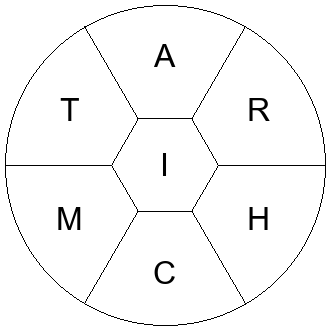
Sunday, July 6, 2025

Answers to yesterday's Bee

Jump to answers for


The official answers for today's puzzle are:

Click on the arrow to show the definition.
Click outside the pop-up to close it.


Number of Pangrams: 1

Maximum Puzzle Score: 221

Number of Answers: 47

Points Needed for Genius: 155

Genius requires between 22 and 40 words. You need at least an 8-letter word to reach genius. If you don't get the pangram, you need 76% of the total points to reach genius. If you get the pangram, you only need 68% of the remaining points to reach genius.

Other days with this pangram:

The button below will reveal a chart with the number of words by each letter. Red bars indicate that there is a pangram(s) starting with that letter.


How does this puzzle compare to other puzzles?

Today's score of 221 was in the 73rd percentile of all puzzles.
The last time there was a score this high was on July 5, 2025.
The highest score ever was 537 on January 22, 2021.
The lowest score ever was 47 on March 27, 2023.

This puzzle's 47 possible answers rank it in the 70th percentile of all puzzles.
The last time there were more answers than this was on July 5, 2025.
The highest number of answers was 81 on June 8, 2019.
The lowest number of answers was 16 on March 27, 2023.

It takes an 8-letter word for genius.
The last time this happened was on July 5, 2025.

Today's puzzle has an average word length of 5.5.
For all Bees, the average word length has been 5.3.


Haven't I seen these letters before?

Hover over a letter to see its first and most recent appearance in the Bee!


Haven't I seen these words before?

The most common words in the Bee are:

  • noon 204
  • loll 199
  • toot 191
  • naan 174
  • nana 174
  • lilt 141
  • till 141
  • tilt 141
  • tint 138
  • nene 135
  • mama 133
  • mamma 133
  • acacia 127
  • acai 127
  • onto 126
  • toon 126
  • onion 122
  • anal 118
  • anon 118
  • olio 116
  • boob 113
  • booboo 113
  • dodo 112
  • papa 111
  • poop 110
  • tact 110
  • baba 109
  • lull 108
  • lulu 108
  • mitt 107
  • call 106
  • calla 106
  • ratatat 105
  • tart 105
  • tartar 105
  • attar 104
  • tatty 104
  • cocci 103
  • mono 103
  • moon 103
  • tattoo 103
  • allay 102
  • ally 102
  • ammo 102
  • momma 102
  • tutu 101
  • epee 100
  • loon 100
  • peep 100
  • roar 98


How long are words in the Bee?

There have been 103,648 answers ever accepted in the Bee - with 10,668 unique words.
Below are the distributions of the lengths of these words.


Valid dictionary words not in today's official answers

You may be wondering why these words aren't here*:

  • acari
  • acmatic
  • acmic
  • acratic
  • acritarch
  • airt
  • airth
  • airtram
  • aitch
  • amia
  • amici
  • amir
  • amrit
  • amrita
  • archi
  • atactic
  • ataractic
  • attrit
  • carritch
  • chimar
  • chirm
  • chirr
  • cithara
  • crit
  • himatia
  • iatric
  • ictic
  • ihram
  • iritic
  • macchia
  • mair
  • mammati
  • maria
  • matric
  • micra
  • miri
  • rachitic
  • raia
  • rami
  • riata
  • ricrac
  • tartaric
  • thairm
  • thir
  • thiram
  • tictac
  • titch
  • titi
  • triac
  • trictrac

*Because the New York Times considers them obscure or offensive.

acacia

Etymology 1

noun
  1. A shrub or tree of the tribe Acacieae.
  2. The thickened or dried juice of several species in Acacieae, in particular Vachellia nilotica (syn. Acacia nilotica), the Egyptian acacia.
  3. A false acacia; robinia tree, Robinia pseudoacacia.
  4. Gum arabic; gum acacia.
  5. Any of several related trees, such as the locust tree.
  6. A light to moderate greenish yellow with a hint of red.

Etymology 2

noun
  1. (history) A roll or bag, filled with dust, borne by Byzantine emperors, as a memento of mortality. It is represented on medals.

acai

noun
  1. Any of several South American palms, of the genus Euterpe, having a dark purple drupe.
  2. The fruit of these trees, harvested for its juice.

archaic

noun
  1. (usually capitalized) A general term for the prehistoric period intermediate between the earliest period (‘Paleo-Indian’, ‘Paleo-American’, ‘American‐paleolithic’, &c.) of human presence in the Western Hemisphere, and the most recent prehistoric period (‘Woodland’, etc.).
  2. (paleoanthropology) (A member of) an archaic variety of Homo sapiens.
adjective
  1. Of or characterized by antiquity; old-fashioned, quaint, antiquated.
  2. (of words) No longer in ordinary use, though still used occasionally to give a sense of antiquity.
  3. Belonging to the archaic period

arctic

noun
  1. A warm waterproof overshoe.
  2. Any of various butterflies of the genus Oeneis.
adjective
  1. (now only in compounds) Pertaining to the celestial north pole, or to the pole star.
  2. Pertaining to the northern polar region of the planet, characterised by extreme cold and an icy landscape.
  3. Extremely cold, snowy, or having other properties of extreme winter associated with the Arctic.
  4. Designed for use in very cold conditions.

aria

noun
  1. A musical piece written typically for a solo voice with orchestral accompaniment in an opera or cantata.

armchair

noun
  1. A chair with supports for the arms or elbows.
verb
  1. To create based on theory or general knowledge rather than data.
  2. To theorize based on analysis of data that was gathered previously; to reflect.
adjective
  1. Remote from actual involvement, including a person retired from previously active involvement.
  2. Unqualified or uninformed but yet giving advice, especially on technical issues, such as law, architecture, medicine, military theory, or sports.

arthritic

noun
  1. A person with arthritis.
adjective
  1. Of, or affected by arthritis.

atria

noun
  1. A central room or space in ancient Roman homes, open to the sky in the middle; a similar space in other buildings.
  2. A square hall lit by daylight from above, into which rooms open at one or more levels.
  3. A cavity, entrance, or passage.
  4. Any enclosed sexine and nexine layers, widening toward the interior of the grain.

attic

noun
  1. The space, often unfinished and with sloped walls, directly below the roof in the uppermost part of a house or other building, generally used for storage or habitation.

cacti

noun
  1. Any member of the family Cactaceae, a family of flowering New World succulent plants suited to a hot, semi-desert climate.
  2. Any succulent plant with a thick fleshy stem bearing spines but no leaves, such as euphorbs.

cami

noun
  1. A camisole.

cathartic

noun
  1. A laxative.
adjective
  1. Purgative; inducing (mental or physical) catharsis
  2. That releases emotional tension, especially after an overwhelming experience

chai

Etymology 1

noun
  1. A female gypsy.

Etymology 2

noun
  1. Short for masala chai, a beverage made with black teas, steamed milk and sweet spices, based loosely on Indian recipes.

chair

noun
  1. An item of furniture used to sit on or in, comprising a seat, legs, back, and sometimes arm rests, for use by one person. Compare stool, couch, sofa, settee, loveseat and bench.
  2. The seating position of a particular musician in an orchestra.
  3. An iron block used on railways to support the rails and secure them to the sleepers, and similar devices.
  4. One of two possible conformers of cyclohexane rings (the other being boat), shaped roughly like a chair.
  5. A distinguished professorship at a university.
  6. A vehicle for one person; either a sedan borne upon poles, or a two-wheeled carriage drawn by one horse; a gig.
  7. The seat or office of a person in authority, such as a judge or bishop.
verb
  1. To act as chairperson at; to preside over.
  2. To carry in a seated position upon one's shoulders, especially in celebration or victory.
  3. To award a chair to (a winning poet) at a Welsh eisteddfod.
noun
  1. A chairman or chairwoman, someone who presides over a meeting, board, etc.
noun
  1. A chair-like device used for performing execution by electrocution.
  2. An electrically powered wheelchair.
  3. A transitional hold in which an attacking wrestler hoists an opponent up onto his/her shoulders so that they are both facing in the same direction.

chia

noun
  1. A Mexican sage grown for its edible seeds, Salvia hispanica.
  2. Salvia columbariae, a sage with similar seeds, native to the southwestern US and northwestern Mexico.

chic

Etymology 1

noun
  1. Good form; style.
  2. A person with (a particular type of) chic.
adjective
  1. Elegant, stylish.

Etymology 2

noun
  1. A kind of ritual buffoon or clown in Yucatec Maya culture.

chica

Etymology 1

noun
  1. A Latin-American girl; a Latina.

Etymology 2

noun
  1. An orange-red dyestuff obtained by boiling the leaves of the bignonia.

chichi

Etymology 1

adjective
  1. Affectedly trendy; chic and stylish

Etymology 2

noun
  1. (Latin America, chiefly in the plural) A woman's breast.

chit

Etymology 1

noun
  1. A child or babe; a young, small, or insignificant person or animal.
  2. A pert or sassy young person, especially a young woman.

Etymology 2

noun
  1. The embryonic growing bud of a plant
  2. An excrescence on the body, as a wart or a pimple.
verb
  1. To sprout; to shoot, as a seed or plant.
  2. To damage the outer layers of a seed such as Lupinus or Sophora to assist germination.
  3. To initiate sprouting of tubers, such as potatoes, by placing them in special environment, before planting into the soil.

Etymology 3

noun
  1. A small sheet or scrap of paper with a hand-written note as a reminder or personal message.
  2. A voucher or token coin used in payrolls under the truck system; scrip.
  3. A small sheet of paper on which is written a prescription to be filled; a scrip.
  4. A smaller cardboard counter generally used not to directly represent something but for another, more transient, purpose such as tracking or randomization.
  5. A signed voucher or memorandum of a small debt, as for food and drinks at a club.
  6. A debt or favor owed in return for a prior loan or favor granted, especially a political favor.

Etymology 4

noun
  1. A small tool used in cleaving laths. Compare: froe.

Etymology 5

noun
  1. Shit.
interjection
  1. Shit.

chitchat

noun
  1. Light conversation; casual talk, usually about trivial matters.
  2. Gossip.
verb
  1. To engage in small talk, to discuss unimportant matters.

circa

preposition
  1. Approximately, about, around (typically in relation to time)

cirri

noun
  1. A tendril.
  2. A thin tendril-like appendage.
  3. A principal high-level cloud type characterised by white, delicate filaments or wisps, of white (or mostly white) patches, or of narrow bands, found at an altitude of above 7000 metres.

citric

adjective
  1. Of, pertaining to, or derived from, the citron or lemon.

critic

noun
  1. A person who appraises the works of others.
  2. A specialist in judging works of art.
  3. One who criticizes; a person who finds fault.
  4. An opponent.
verb
  1. To criticise.
noun
  1. The art of criticism.
  2. An essay in which another piece of work is criticised, reviewed, etc.
  3. A point made to criticize something.
  4. A critic; one who criticises.

hair

noun
  1. A pigmented filament of keratin which grows from a follicle on the skin of humans and other mammals.
  2. The collection or mass of such growths growing from the skin of humans and animals, and forming a covering for a part of the head or for any part or the whole body.
  3. A slender outgrowth from the chitinous cuticle of insects, spiders, crustaceans, and other invertebrates. Such hairs are totally unlike those of vertebrates in structure, composition, and mode of growth.
  4. A cellular outgrowth of the epidermis, consisting of one or of several cells, whether pointed, hooked, knobbed, or stellated.
  5. A locking spring or other safety device in the lock of a rifle, etc., capable of being released by a slight pressure on a hair-trigger.
  6. Haircloth; a hair shirt.
  7. Any very small distance, or degree; a hairbreadth.
  8. Complexity; difficulty; quality of being hairy
verb
  1. To remove the hair from.
  2. To grow hair (where there was a bald spot).
  3. To cause to have hair; to provide with hair
  4. To string the bow for a violin.

hamartia

noun
  1. The tragic flaw of the protagonist in a literary tragedy.
  2. Sin.

hitch

noun
  1. A sudden pull.
  2. Any of various knots used to attach a rope to an object other than another rope.
  3. A fastener or connection point, as for a trailer.
  4. A problem, delay or source of difficulty.
  5. A hidden or unfavorable condition or element; a catch.
  6. A period of time spent in the military.
verb
  1. To pull with a jerk.
  2. To attach, tie or fasten.
  3. To marry oneself to; especially to get hitched.
  4. Contraction of hitchhike, to thumb a ride.
  5. To become entangled or caught; to be linked or yoked; to unite; to cling.
  6. To move interruptedly or with halts, jerks, or steps; said of something obstructed or impeded.
  7. To strike the legs together in going, as horses; to interfere.

imam

noun
  1. (usually capitalized) A Shi'ite Muslim leader.
  2. One who leads the salat prayers in a mosque.

itch

Etymology 1

noun
  1. A sensation felt on an area of the skin that causes a person or animal to want to scratch.
  2. A constant teasing desire or want.

Etymology 2

verb
  1. To feel itchy; to feel a need to be scratched.
  2. To have a constant, teasing urge; to feel strongly motivated; to want or desire something.
  3. To cause to feel an itch.
  4. To scratch or rub so as to relieve an itch.

mahimahi

noun
  1. A large food and game fish of the family Coryphaenidae which is commonly found in tropical and subtropical waters.

maim

noun
  1. A serious wound
verb
  1. To wound seriously; to cause permanent loss of function of a limb or part of the body.

mariachi

noun
  1. A traditional form of Mexican music, either sung or purely instrumental.
  2. A group that plays mariachi music.
  3. A member of such a group.
adjective
  1. Of or pertaining to a traditional form of Mexican music, either sung or purely instrumental.
  2. Of or pertaining to a band playing such music, or to the singers of such songs.

matriarch

noun
  1. A female leader of a family, a tribe or an ethnic or religious group.
  2. A female founder of a political or religious movement, an organization or an enterprise.

mica

noun
  1. Any of a group of hydrous aluminosilicate minerals characterized by highly perfect cleavage, so that they readily separate into very thin leaves, more or less elastic.

mimic

noun
  1. A person who practices mimicry, or mime.
  2. An imitation.
verb
  1. To imitate, especially in order to ridicule.
  2. To take on the appearance of another, for protection or camouflage.
adjective
  1. Pertaining to mimicry; imitative.
  2. Mock, pretended.
  3. Imitative; characterized by resemblance to other forms; applied to crystals which by twinning resemble simple forms of a higher grade of symmetry.

mirth

noun
  1. The emotion usually following humour and accompanied by laughter; merriment; jollity; gaiety.
  2. That which causes merriment.

mitt

noun
  1. A mitten
  2. An oversized, protective glove such as an oven mitt or a baseball mitt.
  3. (especially in plural) A hand.

raita

noun
  1. A condiment used as a dip or sauce in the cuisine of southern Asia, made from seasoned yogurt.

rich

verb
  1. To enrich.
  2. To become rich.
adjective
  1. Wealthy: having a lot of money and possessions.
  2. Having an intense fatty or sugary flavour.
  3. Plentiful, abounding, abundant, fulfilling.
  4. Yielding large returns; productive or fertile; fruitful.
  5. Composed of valuable or costly materials or ingredients; procured at great outlay; highly valued; precious; sumptuous; costly.
  6. Not faint or delicate; vivid.
  7. Very amusing.
  8. Ridiculous, absurd, outrageous, preposterous.
  9. Elaborate, having complex formatting, multimedia, or depth of interaction.
  10. Of a fuel-air mixture, having less air than is necessary to burn all of the fuel; less air- or oxygen- rich than necessary for a stoichiometric reaction.
  11. Trading at a price level which is high relative to historical trends, a similar asset, or (for derivatives) a theoretical value.

tacit

adjective
  1. Expressed in silence; implied, but not made explicit; silent.
  2. Not derived from formal principles of reasoning; based on induction rather than deduction.

tactic

noun
  1. A maneuver, or action calculated to achieve some end.
  2. A maneuver used against an enemy.
  3. A sequence of moves that limits the opponent's options and results in an immediate and tangible advantage, typically in the form of material.
adjective
  1. Tactical; of or relating to the art of military and naval tactics.
  2. Describing a polymer whose repeat units are identical.

tamari

noun
  1. A type of soy sauce made without wheat, having a rich flavor.

tatami

noun
  1. Straw matting, in a standard size, used as a floor covering in Japanese houses

tiara

noun
  1. The papal crown.
  2. An ornamental coronet.

trait

noun
  1. An identifying characteristic, habit or trend.
  2. An uninstantiable collection of methods that provides functionality to a class by using the class’s own interface.

trim

noun
  1. Decoration; especially, decoration placed along edges or borders.
  2. A haircut, especially a moderate one to touch up an existing style.
  3. Dress; gear; ornaments.
  4. The manner in which something is equipped or adorned; order; disposition.
  5. Sexual intercourse.
  6. The fore-and-aft angle of the vessel to the water, with reference to the cargo and ballast; the manner in which a vessel floats on the water, whether on an even keel or down by the head or stern.
  7. The arrangement of the sails with reference to the wind.
verb
  1. To reduce slightly; to cut; especially, to remove excess.
  2. To decorate or adorn; especially of a Christmas tree.
  3. (of an aircraft) To adjust pitch using trim tabs.
  4. (of a vessel) To modify the angle relative to the water by shifting cargo or ballast; to adjust for sailing; to assume, or cause to assume a certain position, or trim, in the water.
  5. (of a vessel's sails) To modify the angle (of the sails) relative to the wind, especially to set them at the most advantageous angle.
  6. To balance; to fluctuate between parties, so as to appear to favour each.
  7. To make trim; to put in due order for any purpose; to make right, neat, or pleasing; to adjust.
  8. (of timber) To dress; to make smooth.
  9. To rebuke; to reprove.
  10. To beat or thrash.
adjective
  1. Physically fit.
  2. Slender, lean.
  3. Neat or smart in appearance.
adverb
  1. In good order; properly managed or maintained.
  2. With sails well trimmed.

hamachi

noun
  1. Japanese amberjack, Pacific yellowtail (Seriola quinqueradiata)