Wednesday, July 9, 2025

Answers to yesterday's Bee

Jump to answers for


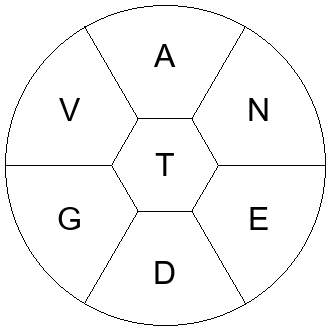
The official answers for today's puzzle are:

Click on the arrow to show the definition.
Click outside the pop-up to close it.


Number of Pangrams: 2

Maximum Puzzle Score: 337

Number of Answers: 61

Points Needed for Genius: 236

Genius requires between 31 and 51 words. You need at least an 8-letter word to reach genius. If you don't get the pangrams, you need 78% of the total points to reach genius. If you get the pangrams, you only need 67% of the remaining points to reach genius.

Other days with this pangram:

The button below will reveal a chart with the number of words by each letter. Red bars indicate that there is a pangram(s) starting with that letter.


How does this puzzle compare to other puzzles?

Today's score of 337 was in the 97th percentile of all puzzles.
The last time there was a score this high was on July 5, 2025.
The highest score ever was 537 on January 22, 2021.
The lowest score ever was 47 on March 27, 2023.

This puzzle's 61 possible answers rank it in the 93rd percentile of all puzzles.
The last time there were more answers than this was on July 5, 2025.
The highest number of answers was 81 on June 8, 2019.
The lowest number of answers was 16 on March 27, 2023.

It takes an 8-letter word for genius.
The last time this happened was on July 6, 2025.

Today's puzzle has an average word length of 6.0.
For all Bees, the average word length has been 5.3.


Haven't I seen these letters before?

Hover over a letter to see its first and most recent appearance in the Bee!


Haven't I seen these words before?

The most common words in the Bee are:

  • noon 205
  • loll 199
  • toot 192
  • naan 174
  • nana 174
  • lilt 141
  • till 141
  • tilt 141
  • tint 138
  • nene 135
  • mama 133
  • mamma 133
  • acacia 127
  • acai 127
  • onto 127
  • toon 127
  • onion 123
  • anon 119
  • anal 118
  • olio 116
  • boob 113
  • booboo 113
  • dodo 113
  • papa 111
  • poop 110
  • tact 110
  • baba 109
  • lull 108
  • lulu 108
  • mitt 107
  • call 106
  • calla 106
  • ratatat 106
  • tart 106
  • tartar 106
  • attar 105
  • tattoo 104
  • tatty 104
  • cocci 103
  • mono 103
  • moon 103
  • allay 102
  • ally 102
  • ammo 102
  • momma 102
  • tutu 102
  • epee 100
  • loon 100
  • peep 100
  • roar 98


How long are words in the Bee?

There have been 103,775 answers ever accepted in the Bee - with 10,668 unique words.
Below are the distributions of the lengths of these words.


Valid dictionary words not in today's official answers

You may be wondering why these words aren't here*:

  • adnate
  • agented
  • agnate
  • anent
  • anta
  • antae
  • anteed
  • attent
  • avadavat
  • avant
  • deet
  • dentate
  • dentated
  • detent
  • edentate
  • enate
  • etna
  • genet
  • genette
  • geta
  • navette
  • nett
  • taggant
  • tanga
  • tanged
  • tannage
  • tannate
  • tate
  • teated
  • tedded
  • teevee
  • tegg
  • tenanted
  • tenge
  • tenne
  • tentage
  • vanadate
  • vatted
  • vedette
  • vegetant
  • vegete
  • venenate
  • venenated
  • ventage

*Because the New York Times considers them obscure or offensive.

advantage

noun
  1. Any condition, circumstance, opportunity or means, particularly favorable to success, or to any desired end.
  2. Superiority; mastery; — used with of to specify its nature or with over to specify the other party.
  3. Superiority of state, or that which gives it; benefit; gain; profit
  4. The score where one player wins a point after deuce but needs the next to carry the game.
  5. The continuation of the game after a foul against the attacking team, because the attacking team are in an advantageous position.
  6. Interest of money; increase; overplus (as the thirteenth in the baker's dozen).
verb
  1. To provide (someone) with an advantage, to give an edge to
  2. To do something for one's own benefit; to take advantage of

advantaged

verb
  1. To provide (someone) with an advantage, to give an edge to
  2. To do something for one's own benefit; to take advantage of
adjective
  1. Having been given an advantage, such as by biased referees in a competition.
  2. (of a person) Financially secure; elite and economically successful.

advent

noun
  1. Arrival; onset; a time when something first comes or appears

agate

Etymology 1

noun
  1. A semi-pellucid, uncrystallized variety of quartz, presenting various tints in the same specimen, with colors delicately arranged in stripes or bands, or blended in clouds.
  2. The size of type between pearl and nonpareil, standardized as 5 1/2-point.
  3. One fourteenth of an inch
  4. A diminutive person; so called in allusion to the small figures cut in agate for rings and seals.
  5. A tool used by gold-wire drawers, bookbinders, etc.;—so called from the agate fixed in it for burnishing.
  6. A marble made from agate.
  7. (usually in the plural) A testicle.

Etymology 2

adverb
  1. On the way; agoing.

agent

noun
  1. One who exerts power, or has the power to act
  2. One who acts for, or in the place of, another (the principal), by authority from him/her; someone entrusted to do the business of another
  3. A person who looks for work for another person
  4. Someone who works for an intelligence agency
  5. An active power or cause or substance; something which has the power to produce an effect
  6. In the client-server model, the part of the system that performs information preparation and exchange on behalf of a client or server. Especially in the phrase “intelligent agent” it implies some kind of autonomous process which can communicate with other agents to perform some collective task on behalf of one or more humans.
  7. (grammar) The participant of a situation that carries out the action in this situation, e.g. "the boy" in the sentences "The boy kicked the ball" and "The ball was kicked by the boy".
  8. A cheat who is assisted by dishonest casino staff.

andante

noun
  1. A tempo mark directing that a passage is to be played in a moderately slow tempo; faster than adagio but slower than moderato.
  2. A passage having this mark.
adjective
  1. Describing a passage having this mark.
adverb
  1. Played at a moderately slow tempo.

ante

noun
  1. A price or cost, as in up the ante.
  2. In poker and other games, the contribution made by all players to the pot before dealing the cards.
verb
  1. To pay the ante in poker. Often used as ante up.
  2. To make an investment in money, effort, or time before knowing one's chances.

anted

Etymology 1

verb
  1. To pay the ante in poker. Often used as ante up.
  2. To make an investment in money, effort, or time before knowing one's chances.

Etymology 2

verb
  1. To rub insects, especially ants, on one's body, perhaps to control parasites or clean feathers.

antedate

noun
  1. Prior date; a date antecedent to another which is the actual date.
  2. Anticipation
verb
  1. To occur before an event or time; to exist further back in time.
  2. To assign a date to a document or action earlier than the actual date; to backdate.
  3. To find earlier citational evidence for a term.

antedated

verb
  1. To occur before an event or time; to exist further back in time.
  2. To assign a date to a document or action earlier than the actual date; to backdate.
  3. To find earlier citational evidence for a term.

antenna

noun
  1. A feeler organ on the head of an insect, crab, or other animal.
  2. An apparatus to receive or transmit electromagnetic waves and convert respectively to or from an electrical signal.
  3. The faculty of intuitive astuteness.
  4. A fragment of an oligosaccharide
  5. The spar to which a lateen sail is attached, which is then hoisted up the mast.

antennae

noun
  1. A feeler organ on the head of an insect, crab, or other animal.
  2. An apparatus to receive or transmit electromagnetic waves and convert respectively to or from an electrical signal.
  3. The faculty of intuitive astuteness.
  4. A fragment of an oligosaccharide
  5. The spar to which a lateen sail is attached, which is then hoisted up the mast.

attend

Etymology 1

verb
  1. To listen to (something or someone); to pay attention to; regard; heed.
  2. To listen (to, unto).
  3. To turn one's consideration (to); to deal with (a task, problem, concern etc.), to look after.
  4. To wait upon as a servant etc.; to accompany to assist (someone).
  5. To be present at (an event or place) in order to take part in some action or proceedings; to regularly go to (an event or place).
  6. To go to (a place) for some purpose (with at).
  7. To be present with; to accompany; to be united or consequent to.
  8. To wait for; to await; to remain, abide, or be in store for.

Etymology 2

verb
  1. To set on fire; kindle.
  2. To take or catch fire.

attendant

noun
  1. One who attends; one who works with or watches over something.
  2. A servant or valet.
  3. A visitor or caller.
  4. That which accompanies or follows.
  5. One who owes a duty or service to another.
adjective
  1. Going with; associated; concomitant.
  2. Depending on, or owing duty or service to.

attended

verb
  1. To set on fire; kindle.
  2. To take or catch fire.
verb
  1. To listen to (something or someone); to pay attention to; regard; heed.
  2. To listen (to, unto).
  3. To turn one's consideration (to); to deal with (a task, problem, concern etc.), to look after.
  4. To wait upon as a servant etc.; to accompany to assist (someone).
  5. To be present at (an event or place) in order to take part in some action or proceedings; to regularly go to (an event or place).
  6. To go to (a place) for some purpose (with at).
  7. To be present with; to accompany; to be united or consequent to.
  8. To wait for; to await; to remain, abide, or be in store for.
adjective
  1. Attending

attendee

noun
  1. A person who is in attendance or in the audience of an event.
  2. A visitor or participant of an event.
  3. A person who is attended.

data

noun
  1. (plural: data) A measurement of something on a scale understood by both the recorder (a person or device) and the reader (another person or device). The scale is arbitrarily defined, such as from 1 to 10 by ones, 1 to 100 by 0.1, or simply true or false, on or off, yes, no, or maybe, etc.
  2. (plural: data) A fact known from direct observation.
  3. (plural: data) A premise from which conclusions are drawn.
  4. (plural: datums) A fixed reference point, or a coordinate system.

date

Etymology 1

noun
  1. The fruit of the date palm, Phoenix dactylifera, somewhat in the shape of an olive, containing a soft, sweet pulp and enclosing a hard kernel.
  2. The date palm.

Etymology 2

noun
  1. The addition to a writing, inscription, coin, etc., which specifies the time (especially the day, month, and year) when the writing or inscription was given, executed, or made.
  2. A specific day in time at which a transaction or event takes place, or is appointed to take place; a given point of time.
  3. A point in time.
  4. Assigned end; conclusion.
  5. Given or assigned length of life; duration.
  6. A pre-arranged meeting.
  7. One's companion for social activities or occasions.
  8. A romantic meeting or outing with a lover or potential lover, or the person so met.
verb
  1. To note the time or place of writing or executing; to express in an instrument the time of its execution.
  2. To note or fix the time of (an event); to give the date of.
  3. To determine the age of something.
  4. To take (someone) on a date, or a series of dates.
  5. (by extension) To have a steady relationship with; to be romantically involved with.
  6. (by extension) To have a steady relationship with each other; to be romantically involved with each other.
  7. To make or become old, especially in such a way as to fall out of fashion, become less appealing or attractive, etc.
  8. (with from) To have beginning; to begin; to be dated or reckoned.

dated

verb
  1. To note the time or place of writing or executing; to express in an instrument the time of its execution.
  2. To note or fix the time of (an event); to give the date of.
  3. To determine the age of something.
  4. To take (someone) on a date, or a series of dates.
  5. (by extension) To have a steady relationship with; to be romantically involved with.
  6. (by extension) To have a steady relationship with each other; to be romantically involved with each other.
  7. To make or become old, especially in such a way as to fall out of fashion, become less appealing or attractive, etc.
  8. (with from) To have beginning; to begin; to be dated or reckoned.
adjective
  1. Marked with a date.
  2. Outdated.
  3. Anachronistic; being obviously inappropriate for its present context.
  4. No longer fashionable.

dent

Etymology 1

noun
  1. A shallow deformation in the surface of an object, produced by an impact.
  2. A type of maize/corn with a relatively soft outer hull, and a soft type of starch that shrinks at maturity to leave an indentation in the surface of the kernel.
  3. (by extension) A sudden negative change, such as loss, damage, weakening, consumption or diminution, especially one produced by an external force, event or action
verb
  1. To impact something, producing a dent.
  2. To develop a dent or dents.

Etymology 2

noun
  1. A tooth, as of a card, a gear wheel, etc.
  2. A slot or a wire in a reed

dented

verb
  1. To impact something, producing a dent.
  2. To develop a dent or dents.

detente

noun
  1. A relaxing of tension, especially between countries.

eaten

verb
  1. To ingest; to be ingested.
  2. To use up.
  3. To cause (someone) to worry.
  4. To take the loss in a transaction.
  5. To be injured or killed by (something such as a firearm or its projectile), especially in the mouth.
  6. To corrode or erode.
  7. To perform oral sex (on a person or body part).
adjective
  1. (especially in combination) That has been consumed by eating

entente

noun
  1. An informal alliance or friendly understanding between two states.

event

Etymology 1

noun
  1. An occurrence; something that happens.
  2. A prearranged social activity (function, etc.)
  3. One of several contests that combine to make up a competition.
  4. An end result; an outcome (now chiefly in phrases).
  5. A point in spacetime having three spatial coordinates and one temporal coordinate.
  6. A possible action that the user can perform that is monitored by an application or the operating system (event listener). When an event occurs an event handler is called which performs a specific task.
  7. A set of some of the possible outcomes; a subset of the sample space.
  8. An affair in hand; business; enterprise.
  9. An episode of severe health conditions.
verb
  1. To occur, take place.

Etymology 2

verb
  1. To be emitted or breathed out; to evaporate.
  2. To expose to the air, ventilate.

gadget

noun
  1. A thing whose name cannot be remembered; thingamajig, doohickey.
  2. Any device or machine, especially one whose name cannot be recalled. Often either clever or complicated.
  3. Any consumer electronics product.
  4. A sequence of machine code instructions crafted as part of an exploit that attempts to divert execution to a memory location chosen by the attacker.

gannet

noun
  1. Any of three species of large seabird in the genus Morus, of the family Sulidae. They have black and white bodies and long pointed wings, and hunt for fish by plunge diving and pursuing their prey underwater.
  2. A voracious eater; a glutton.

gate

Etymology 1

noun
  1. A doorlike structure outside a house.
  2. Doorway, opening, or passage in a fence or wall.
  3. Movable barrier.
  4. A logical pathway made up of switches which turn on or off. Examples are and, or, nand, etc.
  5. The gap between a batsman's bat and pad.
  6. The amount of money made by selling tickets to a concert or a sports event.
  7. (flow cytometry) A line that separates particle type-clusters on two-dimensional dot plots.
  8. Passageway (as in an air terminal) where passengers can embark or disembark.
  9. The controlling terminal of a field effect transistor (FET).
  10. In a lock tumbler, the opening for the stump of the bolt to pass through or into.
  11. The channel or opening through which metal is poured into the mould; the ingate.
  12. The waste piece of metal cast in the opening; a sprue or sullage piece. Also written geat and git.
  13. A mechanism, in a film camera and projector, that holds each frame momentarily stationary behind the aperture.
  14. A tally mark consisting of four vertical bars crossed by a diagonal, representing a count of five.
verb
  1. To keep something inside by means of a closed gate.
  2. To punish, especially a child or teenager, by not allowing them to go out.
  3. To open a closed ion channel.
  4. To furnish with a gate.
  5. To turn (an image intensifier) on and off selectively as needed, or to avoid damage. See autogating.

Etymology 2

noun
  1. A way, path.
  2. A journey.
  3. A street; now used especially as a combining form to make the name of a street e.g. "Briggate" (a common street name in the north of England meaning "Bridge Street") or Kirkgate meaning "Church Street".
  4. Manner; gait.

gated

verb
  1. To keep something inside by means of a closed gate.
  2. To punish, especially a child or teenager, by not allowing them to go out.
  3. To open a closed ion channel.
  4. To furnish with a gate.
  5. To turn (an image intensifier) on and off selectively as needed, or to avoid damage. See autogating.
adjective
  1. Capable of being switched on and off (normally by means of a signal).
  2. Have a gate or other restricted access.

gent

Etymology 1

noun
  1. A gentleman.

Etymology 2

adjective
  1. Noble; well-bred, courteous; graceful.
  2. Neat; pretty; elegant

Etymology 3

noun
  1. Short for gentamicin.

gnat

noun
  1. Any small insect of the order Diptera, specifically within the suborder Nematocera.

natant

adjective
  1. Floating or swimming (in water)
  2. In a horizontal position, as if swimming

neat

Etymology 1

noun
  1. An artificial intelligence researcher who believes that solutions should be elegant, clear and provably correct. Compare scruffy.
adjective
  1. Clean, tidy; free from dirt or impurities.
  2. Free from contaminants; unadulterated, undiluted. Particularly of liquor and cocktails; see usage below.
  3. Conditions with a liquid reagent or gas performed with no standard solvent or cosolvent.
  4. With all deductions or allowances made; net.
  5. Having a simple elegance or style; clean, trim, tidy, tasteful.
  6. Well-executed or delivered; clever, skillful, precise.
  7. Facile; missing complexity or details in the favor of convenience or simplicity.
  8. Good, excellent, desirable.

Etymology 2

noun
  1. A bull or cow.
  2. Cattle collectively.

neaten

verb
  1. To make neat; arrange in an orderly, tidy way; to tidy.

neatened

verb
  1. To make neat; arrange in an orderly, tidy way; to tidy.

negate

verb
  1. To deny the existence, evidence, or truth of; to contradict.
  2. To nullify or cause to be ineffective.
  3. To be negative; bring or cause negative results.
  4. To perform the NOT operation on.

negated

verb
  1. To deny the existence, evidence, or truth of; to contradict.
  2. To nullify or cause to be ineffective.
  3. To be negative; bring or cause negative results.
  4. To perform the NOT operation on.

netted

verb
  1. To catch by means of a net.
  2. To catch in a trap, or by stratagem.
  3. To enclose or cover with a net.
  4. To score (a goal).
  5. To hit the ball into the net.
  6. To form network or netting; to knit.
verb
  1. To receive as profit.
  2. To yield as profit for.
  3. To fully hedge a position.

tagged

verb
  1. To label (something).
  2. (graffiti) To mark (something) with one’s tag.
  3. To remove dung tags from a sheep.
  4. To hit the ball hard.
  5. To put a runner out by touching them with the ball or the ball in a gloved hand.
  6. To mark with a tag (metadata for classification).
  7. To follow closely, accompany, tag along.
  8. To catch and touch (a player in the game of tag).
  9. To fit with, or as if with, a tag or tags.
  10. To fasten; to attach.
adjective
  1. Having a tag; labeled.
  2. (graffiti) Having been marked with the signature graffiti of an individual.

tang

Etymology 1

noun
  1. A refreshingly sharp aroma or flavor.
  2. A strong or offensive taste; especially, a taste of something extraneous to the thing itself.
  3. A sharp, specific flavor or tinge.
  4. A projecting part of an object by means of which it is secured to a handle, or to some other part.
  5. The part of a knife, fork, file, or other small instrument, which is inserted into the handle.
  6. The projecting part of the breech of a musket barrel, by which the barrel is secured to the stock.
  7. The part of a sword blade to which the handle is fastened.
  8. A group of saltwater fish from the Acanthuridae family, especially the Zebrasoma genus.
  9. (games) A shuffleboard paddle.
  10. Tongue
  11. (by extension) Anything resembling a tongue in form or position such as the tongue of a buckle.

Etymology 2

noun
  1. A sharp, twanging sound; an unpleasant tone; a twang.
verb
  1. To strike two metal objects together loudly in order to persuade a swarm of honeybees to land so it may be captured by the beekeeper.
  2. To make a ringing sound; to ring.

Etymology 3

noun
  1. Knotted wrack, Ascophyllum nodosum (coarse blackish seaweed)

Etymology 4

noun
  1. The vagina.
  2. Intercourse with a woman

tangent

noun
  1. A straight line touching a curve at a single point without crossing it there.
  2. A function of an angle that gives the ratio of the sine to the cosine, in either the real or complex numbers. Symbols: tan, tg.
  3. A topic nearly unrelated to the main topic, but having a point in common with it.
  4. A small metal blade in a clavichord that strikes the strings to produce sound.
adjective
  1. Touching a curve at a single point but not crossing it at that point.
  2. Of a topic, only loosely related to a main topic.

tanned

verb
  1. To change to a tan colour due to exposure to the sun.
  2. To change an animal hide into leather by soaking it in tannic acid. To work as a tanner.
  3. To spank or beat.
adjective
  1. Having a suntan.
  2. (of leather) Finished, made using tannic acid (as opposed to abrasion).

tatted

Etymology 1

verb
  1. To make (something by) tatting.
verb
  1. To apply a tattoo.

Etymology 2

adjective
  1. Tattooed.

teat

noun
  1. The projection of a mammary gland from which, on female mammals, milk is secreted.
  2. Something resembling a teat, such as a small protuberance or nozzle.
  3. An artificial nipple used for bottle-feeding infants.

teed

verb
  1. To draw; lead.
  2. To draw away; go; proceed.
verb
  1. To place a ball on a tee

teen

Etymology 1

noun
  1. A teenager.
adjective
  1. Of or having to do with teenagers; teenage

Etymology 2

noun
  1. Grief; sorrow; trouble.
  2. Vexation; anger; hate.

Etymology 3

verb
  1. To excite; to provoke; to vex; to afflict; to injure.
  2. To become angry or distressed.

Etymology 4

verb
  1. (provincial) To hedge or fence in; to enclose.

teenage

Etymology 1

noun
  1. Brushwood for fences and hedges.

Etymology 2

adjective
  1. Of or relating to an age between thirteen and nineteen years old.

teenaged

adjective
  1. Aged between thirteen and nineteen inclusive; teenage

tenant

noun
  1. One who pays a fee (rent) in return for the use of land, buildings, or other property owned by others.
  2. One who has possession of any place.
  3. One who holds a property by any kind of right, including ownership.
  4. Any of a number of customers serviced through the same instance of an application.
verb
  1. To hold as, or be, a tenant.
  2. To inhabit.

tend

Etymology 1

verb
  1. (Old English law) To make a tender of; to offer or tender.
  2. (followed by a to-infinitive) To be likely, or probable to do something, or to have a certain habit or leaning.
  3. To contribute to or toward some outcome.

Etymology 2

verb
  1. (with to) To look after (e.g. an ill person.)
  2. To accompany as an assistant or protector; to care for the wants of; to look after; to watch; to guard.
  3. To wait (upon), as attendants or servants; to serve; to attend.
  4. To await; to expect.
  5. To be attentive to; to note carefully; to attend to.
  6. To manage (an anchored vessel) when the tide turns, to prevent it from entangling the cable when swinging.

Etymology 3

verb
  1. To kindle; ignite; set on fire; light; inflame; burn.

tended

verb
  1. (Old English law) To make a tender of; to offer or tender.
  2. (followed by a to-infinitive) To be likely, or probable to do something, or to have a certain habit or leaning.
  3. To contribute to or toward some outcome.
verb
  1. (with to) To look after (e.g. an ill person.)
  2. To accompany as an assistant or protector; to care for the wants of; to look after; to watch; to guard.
  3. To wait (upon), as attendants or servants; to serve; to attend.
  4. To await; to expect.
  5. To be attentive to; to note carefully; to attend to.
  6. To manage (an anchored vessel) when the tide turns, to prevent it from entangling the cable when swinging.
verb
  1. To kindle; ignite; set on fire; light; inflame; burn.

tenet

noun
  1. An opinion, belief, or principle that is held as absolute truth by someone or especially an organization.

tent

Etymology 1

noun
  1. A pavilion or portable lodge consisting of skins, canvas, or some strong cloth, stretched and sustained by poles, used for sheltering people from the weather.
  2. The representation of a tent used as a bearing.
  3. A portable pulpit set up outside to accommodate worshippers who cannot fit into a church.
  4. A trouser tent; a piece of fabric, etc. protruding outward like a tent.
verb
  1. To go camping.
  2. To prop up aluminum foil in an inverted "V" (reminiscent of a pop-up tent) over food to reduce splatter, before putting it in the oven.
  3. To form into a tent-like shape.

Etymology 2

noun
  1. Attention; regard, care.
  2. Intention; design.
verb
  1. To attend to; to heed
  2. To guard; to hinder.

Etymology 3

noun
  1. A roll of lint or linen, or a conical or cylindrical piece of sponge or other absorbent, used chiefly to dilate a natural canal, to keep open the orifice of a wound, or to absorb discharges.
  2. A probe for searching a wound.
verb
  1. (sometimes figurative) To probe or to search with a tent; to keep open with a tent.

Etymology 4

noun
  1. A kind of wine of a deep red color, chiefly from Galicia or Malaga in Spain; called also tent wine, and tinta.

tented

verb
  1. To go camping.
  2. To prop up aluminum foil in an inverted "V" (reminiscent of a pop-up tent) over food to reduce splatter, before putting it in the oven.
  3. To form into a tent-like shape.
verb
  1. To attend to; to heed
  2. To guard; to hinder.
verb
  1. (sometimes figurative) To probe or to search with a tent; to keep open with a tent.
adjective
  1. Covered with tents.

vantage

noun
  1. Any condition, circumstance, opportunity or means, particularly favorable to success, or to any desired end.
  2. Superiority; mastery; — used with of to specify its nature or with over to specify the other party.
  3. Superiority of state, or that which gives it; benefit; gain; profit
  4. The score where one player wins a point after deuce but needs the next to carry the game.
  5. The continuation of the game after a foul against the attacking team, because the attacking team are in an advantageous position.
  6. Interest of money; increase; overplus (as the thirteenth in the baker's dozen).
noun
  1. An advantage.
  2. A place or position affording a good view; a vantage point.
  3. A superior or more favorable situation or opportunity; gain; profit; advantage.
verb
  1. To profit; to aid.

vegetate

verb
  1. (of a plant) To grow or sprout.
  2. (of a wart etc) To spread abnormally.
  3. To live or spend a period of time in a dull, inactive, unchallenging way.

vegetated

verb
  1. (of a plant) To grow or sprout.
  2. (of a wart etc) To spread abnormally.
  3. To live or spend a period of time in a dull, inactive, unchallenging way.
adjective
  1. On which vegetation is growing.

vendetta

noun
  1. A bitter, destructive feud, normally between two families, clans or factions, in which each injury or slaying is revenged: a blood feud.
  2. (often preceded by personal) A motivational grudge against a person or faction, which may or may not be reciprocated; the state of having it in for someone.

vent

Etymology 1

noun
  1. An opening through which gases, especially air, can pass.
  2. A small aperture.
  3. The opening of a volcano from which lava flows.
  4. A verbalized frustration.
  5. The excretory opening of lower orders of vertebrates.
  6. A slit in the seam of a garment.
  7. The opening at the breech of a firearm, through which fire is communicated to the powder of the charge; touchhole.
  8. In steam boilers, a sectional area of the passage for gases divided by the length of the same passage in feet.
  9. Opportunity of escape or passage from confinement or privacy; outlet.
  10. Emission; escape; passage to notice or expression; publication; utterance.
verb
  1. To allow gases to escape.
  2. To allow to escape through a vent.
  3. To express a strong emotion.
  4. To snuff; to breathe or puff out; to snort.

Etymology 2

noun
  1. Ventriloquism.

Etymology 3

noun
  1. Sale; opportunity to sell; market
verb
  1. To sell; to vend.

Etymology 4

noun
  1. A baiting place; an inn.

Etymology 5

noun
  1. Ventilation or ventilator.
verb
  1. To ventilate; to use a ventilator; to use ventilation.

vented

verb
  1. To allow gases to escape.
  2. To allow to escape through a vent.
  3. To express a strong emotion.
  4. To snuff; to breathe or puff out; to snort.
verb
  1. To sell; to vend.
verb
  1. To ventilate; to use a ventilator; to use ventilation.

vetted

verb
  1. To thoroughly check or investigate particularly with regard to providing formal approval.
adjective
  1. Having undergone an investigation and been approved.