Friday, July 11, 2025

Answers to yesterday's Bee

Jump to answers for


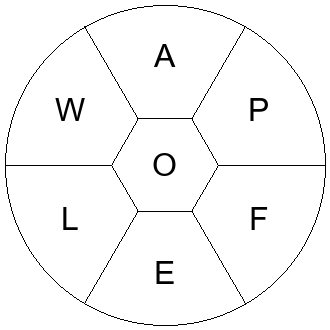
The official answers for today's puzzle are:

Click on the arrow to show the definition.
Click outside the pop-up to close it.


Number of Pangrams: 1

Maximum Puzzle Score: 129

Number of Answers: 42

Points Needed for Genius: 90

Genius requires between 15 and 37 words. You need at least a 6-letter word to reach genius. If you don't get the pangram, you need 78% of the total points to reach genius. If you get the pangram, you only need 66% of the remaining points to reach genius.

Other days with this pangram:

The button below will reveal a chart with the number of words by each letter. Red bars indicate that there is a pangram(s) starting with that letter.


How does this puzzle compare to other puzzles?

Today's score of 129 was in the 29th percentile of all puzzles.
The last time there was a score this low was on July 7, 2025.
The highest score ever was 537 on January 22, 2021.
The lowest score ever was 47 on March 27, 2023.

This puzzle's 42 possible answers rank it in the 57th percentile of all puzzles.
The last time there were more answers than this was on July 8, 2025.
The highest number of answers was 81 on June 8, 2019.
The lowest number of answers was 16 on March 27, 2023.

It takes a 6-letter word for genius.
The last time this happened was on July 3, 2025.

Today's puzzle has an average word length of 4.7.
For all Bees, the average word length has been 5.3.


Haven't I seen these letters before?

Hover over a letter to see its first and most recent appearance in the Bee!


Haven't I seen these words before?

The most common words in the Bee are:

  • noon 205
  • loll 200
  • toot 192
  • naan 174
  • nana 174
  • lilt 142
  • till 142
  • tilt 142
  • tint 138
  • nene 135
  • mama 133
  • mamma 133
  • acacia 127
  • acai 127
  • onto 127
  • toon 127
  • onion 123
  • anon 119
  • anal 118
  • olio 116
  • boob 113
  • booboo 113
  • dodo 113
  • papa 111
  • poop 111
  • tact 110
  • baba 109
  • lull 108
  • lulu 108
  • mitt 107
  • call 106
  • calla 106
  • ratatat 106
  • tart 106
  • tartar 106
  • attar 105
  • tattoo 104
  • tatty 104
  • cocci 103
  • mono 103
  • moon 103
  • allay 102
  • ally 102
  • ammo 102
  • momma 102
  • tutu 102
  • epee 100
  • loon 100
  • peep 100
  • roar 98


How long are words in the Bee?

There have been 103,870 answers ever accepted in the Bee - with 10,668 unique words.
Below are the distributions of the lengths of these words.


Valid dictionary words not in today's official answers

You may be wondering why these words aren't here*:

  • alow
  • apollo
  • awol
  • epopee
  • felloe
  • feoff
  • feoffee
  • loof
  • lowe
  • offa
  • olea
  • olla
  • pepo
  • pollee
  • popple
  • woolfell
  • wowee

*Because the New York Times considers them obscure or offensive.

allow

verb
  1. To grant, give, admit, accord, afford, or yield; to let one have.
  2. To acknowledge; to accept as true; to concede; to accede to an opinion.
  3. To grant (something) as a deduction or an addition; especially to abate or deduct.
  4. To grant license to; to permit; to consent to.
  5. To not bar or obstruct.
  6. To acknowledge or concede.
  7. To take into account by making an allowance.
  8. To render physically possible.
  9. To praise; to approve of; hence, to sanction.
  10. To sanction; to invest; to entrust.
  11. To like; to be suited or pleased with.

aloe

noun
  1. (in the plural) The resins of the tree Aquilaria malaccensis (syn. Aquilaria agallocha), known for their fragrant aroma, produced after infection by the fungus Phialophora parasitica.
  2. A plant of the genus Aloe.
  3. A strong, bitter drink made from the juice of such plants, used as a purgative.

aloof

adjective
  1. Reserved and remote; either physically or emotionally distant; standoffish.
adverb
  1. At or from a distance, but within view, or at a small distance; apart; away.
  2. Without sympathy; unfavorably.
preposition
  1. Away from; clear of.

elope

verb
  1. (of a married person) To run away from home with a paramour.
  2. (of an unmarried person) To run away secretly for the purpose of getting married with one's intended spouse; to marry in a quick or private fashion, especially without a public period of engagement.
  3. To run away from home (for any reason).

falloff

noun
  1. A reduction or decline.

fallow

Etymology 1

noun
  1. Ground ploughed and harrowed but left unseeded for one year.
  2. Uncultivated land.
  3. The ploughing or tilling of land, without sowing it for a season.
adjective
  1. (of agricultural land) Ploughed but left unseeded for more than one planting season.
  2. (of agricultural land) Left unworked and uncropped for some amount of time.
  3. Inactive; undeveloped.

Etymology 2

verb
  1. To make land fallow for agricultural purposes.

Etymology 3

adjective
  1. (color) Of a pale red or yellow, light brown; dun.

fellow

noun
  1. A colleague or partner.
  2. A companion; a comrade.
  3. A man without good breeding or worth; an ignoble or mean man.
  4. An equal in power, rank, character, etc.
  5. One of a pair, or of two things used together or suited to each other; a mate.
  6. A person with common characteristics, being of the same kind, or in the same group.
  7. A male person; a man.
  8. A person; an individual, male or female.
  9. A rank or title in the professional world, usually given as "Fellow".
  10. (Aboriginal English) Used as a general intensifier
verb
  1. To suit with; to pair with; to match.
noun
  1. A person who was a fellow attendee at one's school.

floe

noun
  1. A low, flat mass of floating ice.

flop

Etymology 1

noun
  1. An incident of a certain type of fall; a plopping down.
  2. A complete failure, especially in the entertainment industry.
  3. The first three cards turned face-up by the dealer in a community card poker game.
  4. A ponded package of dung, as in a cow-flop.
  5. A flophouse.
verb
  1. To fall heavily due to lack of energy.
  2. To cause to drop heavily.
  3. To fail completely; not to be successful at all (of a movie, play, book, song etc.).
  4. To pretend to be fouled in sports, such as basketball, hockey (the same as to dive in soccer)
  5. To strike about with something broad and flat, as a fish with its tail, or a bird with its wings; to rise and fall; to flap.
  6. To have (a hand) using the community cards dealt on the flop.
  7. To stay, sleep or live in a place.
adverb
  1. Right, squarely, flat-out.
  2. With a flopping sound.

Etymology 2

noun
  1. Any simple operation, such as addition, multiplication or division, performed on floating point numbers using a single operation.
noun
  1. One floating-point operation per second, a unit of measure of processor speed.

flow

Etymology 1

noun
  1. A movement in people or things with a particular way in large numbers or amounts
  2. The movement of a real or figurative fluid.
  3. A formalization of the idea of the motion of particles in a fluid, as a group action of the real numbers on a set.
  4. The rising movement of the tide.
  5. Smoothness or continuity.
  6. The amount of a fluid that moves or the rate of fluid movement.
  7. A flow pipe, carrying liquid away from a boiler or other central plant (compare with return pipe which returns fluid to central plant).
  8. A mental state characterized by concentration, focus and enjoyment of a given task.
  9. The emission of blood during menstruation.
  10. The ability to skilfully rap along to a beat.
verb
  1. To move as a fluid from one position to another.
  2. To proceed; to issue forth.
  3. To move or match smoothly, gracefully, or continuously.
  4. To have or be in abundance; to abound, so as to run or flow over.
  5. To hang loosely and wave.
  6. To rise, as the tide; opposed to ebb.
  7. To arrange (text in a wordprocessor, etc.) so that it wraps neatly into a designated space; to reflow.
  8. To cover with water or other liquid; to overflow; to inundate; to flood.
  9. To cover with varnish.
  10. To discharge excessive blood from the uterus.

Etymology 2

noun
  1. A morass or marsh.

foal

noun
  1. A young horse or related animal, especially just after birth or less than a year old.
  2. A young boy who assisted the headsman by pushing or pulling the tub.
verb
  1. To give birth to (a foal); to bear offspring.

follow

noun
  1. (sometimes attributive) In billiards and similar games, a stroke causing a ball to follow another ball after hitting it.
  2. The act of following another user's online activity.
verb
  1. To go after; to pursue; to move behind in the same path or direction.
  2. To go or come after in a sequence.
  3. To carry out (orders, instructions, etc.).
  4. To live one's life according to (religion, teachings, etc).
  5. To understand, to pay attention to.
  6. To watch, to keep track of (reports of) some event or person.
  7. To subscribe to see content from an account on a social media platform.
  8. To be a logical consequence of something.
  9. To walk in, as a road or course; to attend upon closely, as a profession or calling.

fool

noun
  1. A person with poor judgment or little intelligence.
  2. A jester; a person whose role was to entertain a sovereign and the court (or lower personages).
  3. Someone who derives pleasure from something specified.
  4. Buddy, dude, man.
  5. A type of dessert made of puréed fruit and custard or cream.
  6. (often capitalized, Fool) A particular card in a tarot deck, representing a jester.
verb
  1. To trick; to deceive
  2. To act in an idiotic manner; to act foolishly
adjective
  1. Foolish.

fowl

Etymology 1

noun
  1. A bird.
  2. A bird of the order Galliformes, including chickens, turkeys, pheasant, partridges and quail.
  3. Birds which are hunted or kept for food, including Galliformes and also waterfowl of the order Anseriformes such as ducks, geese and swans.
verb
  1. To hunt fowl.

Etymology 2

adjective
  1. Foul

loaf

Etymology 1

noun
  1. (also loaf of bread) A block of bread after baking.
  2. Any solid block of food, such as meat or sugar.
  3. Shortened from "loaf of bread", the brain or the head (mainly in the phrase use one's loaf).
  4. A solid block of soap, from which standard bars are cut.

Etymology 2

verb
  1. To do nothing, to be idle.
  2. (Cockney rhyming slang) To headbutt, (from loaf of bread)

loll

verb
  1. To act lazily or indolently while reclining; to lean; to lie at ease.
  2. To hang extended from the mouth, like the tongue of an animal heated from exertion.
  3. To let (the tongue) hang from the mouth in this way.

lollop

verb
  1. To walk or move with a bouncing or undulating motion and at an unhurried pace.
  2. To act lazily, loll, lie around.

loofa

noun
  1. A tropical vine, of the genus Luffa, having almost cylindrical fruit with a spongy, fibrous interior; the dishcloth gourd
  2. The dried fibrous interior used as a sponge for bathing
  3. Any bathing sponge

loop

Etymology 1

noun
  1. A length of thread, line or rope that is doubled over to make an opening.
  2. The opening so formed.
  3. A shape produced by a curve that bends around and crosses itself.
  4. A ring road or beltway.
  5. An endless strip of tape or film allowing continuous repetition.
  6. A complete circuit for an electric current.
  7. A programmed sequence of instructions that is repeated until or while a particular condition is satisfied.
  8. An edge that begins and ends on the same vertex.
  9. A path that starts and ends at the same point.
  10. A bus or rail route, walking route, etc. that starts and ends at the same point.
  11. A place at a terminus where trains or trams can turn round and go back the other way without having to reverse; a balloon loop, turning loop, or reversing loop.
  12. A quasigroup with an identity element.
  13. A loop-shaped intrauterine device.
  14. An aerobatic maneuver in which an aircraft flies a circular path in a vertical plane.
  15. A small, narrow opening; a loophole.
  16. A flexible region in a protein's secondary structure.
noun
  1. A mass of iron in a pasty condition gathered into a ball for the tilt hammer or rolls.

Etymology 2

verb
  1. To form something into a loop.
  2. To fasten or encircle something with a loop.
  3. To fly an aircraft in a loop.
  4. To move something in a loop.
  5. To join electrical components to complete a circuit.
  6. To duplicate the route of a pipeline.
  7. To create an error in a computer program so that it runs in an endless loop and the computer freezes up.
  8. To form a loop.
  9. To move in a loop.

lope

noun
  1. An easy pace with long strides.
verb
  1. To travel an easy pace with long strides.
  2. To jump, leap.

offal

noun
  1. The internal organs of an animal, used as animal food.
  2. A by-product of the grain milling process, which may include bran, husks, etc.
  3. A dead body; carrion.
  4. That which is thrown away as worthless or unfit for use; refuse; rubbish.

oleo

Etymology 1

noun
  1. The various fats and oils that go into the making of margarine.

Etymology 2

noun
  1. Margarine

opal

noun
  1. A mineral consisting, like quartz, of silica, but inferior to quartz in hardness and specific gravity, of the chemical formula SiO2·nH2O.
  2. A colloquial name used in molecular biology referring to a particular stop codon sequence, "UGA."
  3. Any of various lycaenid butterflies of the genus Nesolycaena.

peafowl

noun
  1. A pheasant of the genus Pavo or Afropavo, notable for the extravagant tails of the males; a peacock (unspecified sex).

people

noun
  1. Used as plural of person; a body of human beings considered generally or collectively; a group of two or more persons.
  2. Persons forming or belonging to a particular group, such as a nation, class, ethnic group, country, family, etc.
  3. A group of persons regarded as being employees, followers, companions or subjects of a ruler.
  4. One's colleagues or employees.
  5. A person's ancestors, relatives or family.
  6. The mass of a community as distinguished from a special class (elite); the commonalty; the populace; the vulgar; the common crowd; the citizens.
verb
  1. To stock with people or inhabitants; to fill as with people; to populate.
  2. To become populous or populated.
  3. To inhabit; to occupy; to populate.
  4. To interact with people; to socialize.
noun
  1. An individual; usually a human being.
  2. The physical body of a being seen as distinct from the mind, character, etc.
  3. Any individual or formal organization with standing before the courts.
  4. The human genitalia; specifically, the penis.
  5. (grammar) A linguistic category used to distinguish between the speaker of an utterance and those to whom or about whom he or she is speaking. See grammatical person.
  6. A shoot or bud of a plant; a polyp or zooid of the compound Hydrozoa, Anthozoa, etc.; also, an individual, in the narrowest sense, among the higher animals.

plop

noun
  1. A sound or action like liquid hitting a hard surface, or an object falling into a body of water.
  2. Excrement; derived from the "plop" sound made when it hits water in a toilet.
verb
  1. To make the sound of an object dropping into a body of liquid.
  2. To land heavily or loosely.
  3. To defecate; derived from the "plop" sound made when excrement hits water in a toilet.

plow

noun
  1. The notional area of land able to be farmed in a year by a team of 8 oxen pulling a carruca plow, usually reckoned at 120 acres.
noun
  1. A device pulled through the ground in order to break it open into furrows for planting.
  2. The use of a plough; tillage.
  3. Alternative form of Plough (Synonym of Ursa Major)
  4. A joiner's plane for making grooves.
  5. A bookbinder's implement for trimming or shaving off the edges of books.
verb
  1. To use a plough on to prepare for planting.
  2. To use a plough.
  3. To have sex with, penetrate.
  4. To move with force.
  5. To furrow; to make furrows, grooves, or ridges in.
  6. To run through, as in sailing.
  7. To trim, or shave off the edges of, as a book or paper, with a plough.
  8. (joinery) To cut a groove in, as in a plank, or the edge of a board; especially, a rectangular groove to receive the end of a shelf or tread, the edge of a panel, a tongue, etc.
  9. (university slang) To fail (a student).
noun
  1. Land that has been or is meant to be ploughed

pole

Etymology 1

noun
  1. Originally, a stick; now specifically, a long and slender piece of metal or (especially) wood, used for various construction or support purposes.
  2. A type of basic fishing rod.
  3. A long sports implement used for pole-vaulting; now made of glassfiber or carbon fiber, formerly also metal, bamboo and wood have been used.
  4. (spotting) A telescope used to identify birds, aeroplanes or wildlife.
  5. A unit of length, equal to a rod (1/4 chain or 5 1/2 yards).
  6. Pole position.
  7. A gun.
  8. A penis
verb
  1. To propel by pushing with poles, to push with a pole.
  2. To identify something quite precisely using a telescope.
  3. To furnish with poles for support.
  4. To convey on poles.
  5. To stir, as molten glass, with a pole.
  6. To strike (the ball) very hard.

Etymology 2

noun
  1. Either of the two points on the earth's surface around which it rotates; also, similar points on any other rotating object.
  2. A point of magnetic focus, especially each of the two opposing such points of a magnet (designated north and south).
  3. A fixed point relative to other points or lines.
  4. A contact on an electrical device (such as a battery) at which electric current enters or leaves.
  5. For a meromorphic function f(z), any point a for which f(z) \rightarrow \infty as z \rightarrow a.
  6. The firmament; the sky.
  7. Either of the states that characterize a bipolar disorder.
verb
  1. To induce piezoelectricity in (a substance) by aligning the dipoles.

poll

Etymology 1

noun
  1. A survey of people, usually statistically analyzed to gauge wider public opinion.
  2. A formal election.
  3. A polling place (usually as plural, polling places)
  4. (now rare outside veterinary medicine contexts) The head, particularly the scalp or pate upon which hair (normally) grows.
  5. (in extended senses of the above) A mass of people, a mob or muster, considered as a head count.
  6. The broad or butt end of an axe or a hammer.
  7. The pollard or European chub, a kind of fish.
verb
  1. To take, record the votes of (an electorate).
  2. To solicit mock votes from (a person or group).
  3. To vote at an election.
  4. To register or deposit, as a vote; to elicit or call forth, as votes or voters.
  5. To cut off; to remove by clipping, shearing, etc.; to mow or crop.
  6. To cut the hair of (a creature).
  7. To remove the horns of (an animal).
  8. To remove the top or end of; to clip; to lop.
  9. (communication) To (repeatedly) request the status of something (such as a computer or printer on a network).
  10. (with adverb) To be judged in a poll.
  11. To extort from; to plunder; to strip.
  12. To impose a tax upon.
  13. To pay as one's personal tax.
  14. To enter, as polls or persons, in a list or register; to enroll, especially for purposes of taxation; to enumerate one by one.
  15. To cut or shave smooth or even; to cut in a straight line without indentation.
adjective
  1. (of kinds of livestock which typically have horns) Bred without horns, and thus hornless.

Etymology 2

noun
  1. A pet parrot.

Etymology 3

noun
  1. (Cambridge University) One who does not try for honors at university, but is content to take a degree merely; a passman.

polo

Etymology 1

noun
  1. A ball game where two teams of players on horseback use long-handled mallets to propel the ball along the ground and into their opponent's goal.
  2. The ice polo, one of the ancestors of ice hockey; a similar game played on the ice, or on a prepared floor, by players wearing skates.
  3. A polo shirt.

Etymology 2

noun
  1. A Spanish gypsy dance characterized by energetic movements of the body while the feet merely shuffle or glide, with unison singing and rhythmic clapping of hands.

Etymology 3

noun
  1. A dress shirt.

poof

Etymology 1

noun
  1. The product of flatulence, or the sound of breaking wind.
verb
  1. To vanish or disappear.
  2. To break wind; to fart.
interjection
  1. Onomatopoeia indicating a small explosion with a cloud of smoke; as caused by a deflating object, or a magical disappearance.

Etymology 2

noun
  1. A male homosexual, especially one who is effeminate.

pool

Etymology 1

noun
  1. A small and rather deep collection of (usually) fresh water, as one supplied by a spring, or occurring in the course of a stream; a reservoir for water.
  2. A small body of standing or stagnant water; a puddle.
  3. A supply of resources.
  4. (by extension) A set of resources that are kept ready to use.
  5. A small amount of liquid on a surface.
  6. A localized glow of light.
verb
  1. (of a liquid) To form a pool.
noun
  1. A pool of water used for swimming, usually one which has been artificially constructed.

Etymology 2

noun
  1. (game) A game at billiards, in which each of the players stakes a certain sum, the winner taking the whole; also, in public billiard rooms, a game in which the loser pays the entrance fee for all who engage in the game.
  2. A cue sport played on a pool table. There are 15 balls, 7 of one colour, 7 of another, and the black ball (also called the 8 ball). A player must pocket all their own colour balls and then the black ball in order to win.
  3. In rifle shooting, a contest in which each competitor pays a certain sum for every shot he makes, the net proceeds being divided among the winners.
  4. Any gambling or commercial venture in which several persons join.
  5. The stake played for in certain games of cards, billiards, etc.; an aggregated stake to which each player has contributed a share; also, the receptacle for the stakes.
  6. A combination of persons contributing money to be used for the purpose of increasing or depressing the market price of stocks, grain, or other commodities; also, the aggregate of the sums so contributed.
  7. A set of players in quadrille etc.
  8. A mutual arrangement between competing lines, by which the receipts of all are aggregated, and then distributed pro rata according to agreement.
  9. An aggregation of properties or rights, belonging to different people in a community, in a common fund, to be charged with common liabilities.
verb
  1. To put together; contribute to a common fund, on the basis of a mutual division of profits or losses; to make a common interest of.
  2. To combine or contribute with others, as for a commercial, speculative, or gambling transaction.

poop

Etymology 1

noun
  1. Fecal matter, feces.
  2. The sound of a steam engine's whistle; typically low pitch.
verb
  1. To make a short blast on a horn
  2. To break wind.
  3. To defecate.

Etymology 2

noun
  1. A set of data or general information, written or spoken, usually concerning machinery or a process.

Etymology 3

verb
  1. To tire, exhaust. Often used with out.

Etymology 4

noun
  1. The stern of a ship.
  2. The poop deck.
verb
  1. To break seawater with the poop of a vessel, especially the poop deck.
  2. To embark a ship over the stern.

Etymology 5

noun
  1. A slothful person.

pope

Etymology 1

noun
  1. An honorary title of the Roman Catholic bishop of Rome as father and head of his church, a sovereign of the Vatican city state.
  2. (Coptic Church) An honorary title of the Coptic bishop of Alexandria as father and head of his church.
  3. An honorary title of the Orthodox bishop of Alexandria as father and head of his autocephalous church.
  4. Any bishop of the early Christian church.
  5. The ruffe, a small Eurasian freshwater fish (Gymnocephalus cernua); others of its genus.
  6. (Cumberland) The Atlantic puffin (Fratercula arctica).
  7. The painted bunting (Passerina ciris).
  8. The red-cowled cardinal (Paroaria dominicana).
verb
  1. To act as or like a pope.
  2. To convert to Roman Catholicism.

Etymology 2

noun
  1. (alcoholic beverages) Any mulled wine (traditionally including tokay) considered similar and superior to bishop.

Etymology 3

noun
  1. (Russian Orthodoxy) A Russian Orthodox priest; a parson.

Etymology 4

noun
  1. The whippoorwill (Caprimulgus vociferus).
  2. The nighthawk (Chordeiles minor).

poppa

noun
  1. (sometimes childish) father, papa.

powwow

noun
  1. A ritual conducted by a Native American shaman.
  2. A Native American shaman.
  3. A Native American council or meeting.
  4. A short, private conference.
  5. A large gathering during which Indigenous songs and dances are showcased for an audience, essentially a recital or concert. Often also doubles as a fundraiser, or can be held in conjunction with a non-indigneous fair or exhibition in order to attract a large crowd, as at the Calgary Stampede and K-Days.
verb
  1. (of Native Americans) To hold a meeting; to gather together in council.
  2. (of Native Americans and by extension other groups, such as the Pennsylvania Dutch) To conduct a ritual in which magic is used.
  3. To hold a private conference.

wallop

Etymology 1

noun
  1. A heavy blow, punch.
  2. A person's ability to throw such punches.
  3. An emotional impact, psychological force.
  4. A thrill, emotionally excited reaction.
  5. Anything produced by a process that involves boiling; beer, tea, whitewash.
  6. A thick piece of fat.
  7. A quick rolling movement; a gallop.
verb
  1. To rush hastily.
  2. To flounder, wallow.
  3. To boil with a continued bubbling or heaving and rolling, with noise.
  4. To strike heavily, thrash soundly.
  5. To trounce, beat by a wide margin.
  6. To wrap up temporarily.
  7. To move in a rolling, cumbersome manner; to waddle.
  8. To be slatternly.

Etymology 2

verb
  1. To send a message to all operators on an Internet Relay Chat server.

wallow

Etymology 1

noun
  1. An instance of wallowing.
  2. A pool of water or mud in which animals wallow, or the depression left by them in the ground.
  3. A kind of rolling walk.
verb
  1. To roll oneself about in something dirty, for example in mud.
  2. To move lazily or heavily in any medium.
  3. To immerse oneself in, to occupy oneself with, metaphorically.
  4. To live or exist in filth or in a sickening manner.
  5. To wither; to fade.

Etymology 2

adjective
  1. Tasteless, flat.

wolf

noun
  1. The gray wolf, specifically all subspecies of the gray wolf (Canis lupus) that are not dingoes or dogs.
  2. A man who makes amorous advances to many women.
  3. A wolf tone or wolf note.
  4. Any very ravenous, rapacious, or destructive person or thing; especially, want; starvation.
  5. One of the destructive, and usually hairy, larvae of several species of beetles and grain moths.
  6. A white worm, or maggot, which infests granaries.
  7. An eating ulcer or sore. See lupus.
  8. A willying machine.
verb
  1. To devour; to gobble; to eat (something) voraciously.
  2. To make amorous advances to many women; to hit on women; to cruise for sex.
  3. To hunt for wolves.

woof

Etymology 1

noun
  1. The set of yarns placed crosswise in a loom, interlaced with the warp, carried by the shuttle; weft.
  2. A fabric; the texture of a fabric.

Etymology 2

noun
  1. The sound a dog makes when barking.
verb
  1. To make a woofing sound.
interjection
  1. The sound of a dog barking.
  2. Expression of strong physical attraction for someone.

Etymology 3

noun
  1. Initialism of well-off older folks.
  2. Initialism of work on an organic farm.

wool

noun
  1. The hair of the sheep, llama and some other ruminants.
  2. A cloth or yarn made from the wool of sheep.
  3. Anything with a texture like that of wool.
  4. A fine fiber obtained from the leaves of certain trees, such as firs and pines.
  5. Short, thick hair, especially when crisped or curled.
  6. Yarn (including that which is made from synthetic fibers.)
  7. Derogatory term for residents of the satellite towns outside Liverpool, such as St Helens or Warrington. See also Yonner.

paleo

No Definition Found.