Saturday, July 19, 2025

Answers to yesterday's Bee

Jump to answers for


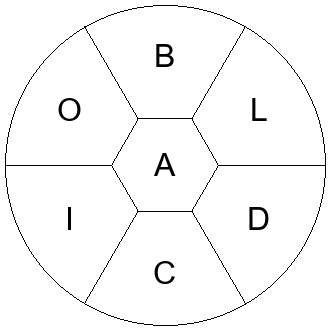
The official answers for today's puzzle are:

Click on the arrow to show the definition.
Click outside the pop-up to close it.


Number of Pangrams: 2

Maximum Puzzle Score: 239

Number of Answers: 54

Points Needed for Genius: 167

Genius requires between 24 and 47 words. You need at least a 7-letter word to reach genius. If you don't get the pangrams, you need 81% of the total points to reach genius. If you get the pangrams, you only need 65% of the remaining points to reach genius.

Other days with this pangram:

The button below will reveal a chart with the number of words by each letter. Red bars indicate that there is a pangram(s) starting with that letter.


How does this puzzle compare to other puzzles?

Today's score of 239 was in the 79th percentile of all puzzles.
The last time there was a score this high was on July 17, 2025.
The highest score ever was 537 on January 22, 2021.
The lowest score ever was 47 on March 27, 2023.

This puzzle's 54 possible answers rank it in the 83rd percentile of all puzzles.
The last time there were more answers than this was on July 13, 2025.
The highest number of answers was 81 on June 8, 2019.
The lowest number of answers was 16 on March 27, 2023.

It takes a 7-letter word for genius.
The last time this happened was on July 16, 2025.

Today's puzzle has an average word length of 5.3.
For all Bees, the average word length has been 5.3.


Haven't I seen these letters before?

Hover over a letter to see its first and most recent appearance in the Bee!


Haven't I seen these words before?

The most common words in the Bee are:

  • noon 205
  • loll 200
  • toot 193
  • naan 175
  • nana 175
  • lilt 143
  • till 143
  • tilt 143
  • tint 138
  • nene 135
  • mama 134
  • mamma 134
  • acacia 129
  • acai 129
  • onto 127
  • toon 127
  • onion 123
  • anon 119
  • anal 118
  • olio 116
  • boob 113
  • booboo 113
  • dodo 113
  • tact 112
  • papa 111
  • poop 111
  • baba 110
  • call 108
  • calla 108
  • lull 108
  • lulu 108
  • mitt 107
  • ratatat 106
  • tart 106
  • tartar 106
  • attar 105
  • tatty 105
  • tattoo 104
  • ammo 103
  • cocci 103
  • momma 103
  • mono 103
  • moon 103
  • tutu 103
  • allay 102
  • ally 102
  • epee 100
  • loon 100
  • peep 100
  • roar 98


How long are words in the Bee?

There have been 104,247 answers ever accepted in the Bee - with 10,677 unique words.
Below are the distributions of the lengths of these words.


Valid dictionary words not in today's official answers

You may be wondering why these words aren't here*:

  • aalii
  • abaca
  • abba
  • abolla
  • accidia
  • acold
  • alba
  • alcaic
  • alcid
  • alcool
  • aldol
  • alidad
  • allod
  • allodia
  • allodial
  • alodia
  • alodial
  • baal
  • baboo
  • babool
  • bacalao
  • bacca
  • baccala
  • balboa
  • balladic
  • biali
  • bilboa
  • biocidal
  • bocaccio
  • boccia
  • cabbala
  • cabildo
  • cabob
  • caca
  • cadi
  • caid
  • calcic
  • calo
  • cicala
  • cladodial
  • cloacal
  • coala
  • cobia
  • coccal
  • coccidia
  • coccoidal
  • cocobola
  • colloidal
  • dada
  • dado
  • diacid
  • diacidic
  • dobla
  • ilia
  • iliad
  • ilial
  • lall
  • liblab
  • loca
  • obia
  • oidia
  • olla

*Because the New York Times considers them obscure or offensive.

abaci

No Definition Found.

aboil

No Definition Found.

acacia

Etymology 1

noun
  1. A shrub or tree of the tribe Acacieae.
  2. The thickened or dried juice of several species in Acacieae, in particular Vachellia nilotica (syn. Acacia nilotica), the Egyptian acacia.
  3. A false acacia; robinia tree, Robinia pseudoacacia.
  4. Gum arabic; gum acacia.
  5. Any of several related trees, such as the locust tree.
  6. A light to moderate greenish yellow with a hint of red.

Etymology 2

noun
  1. (history) A roll or bag, filled with dust, borne by Byzantine emperors, as a memento of mortality. It is represented on medals.

acai

noun
  1. Any of several South American palms, of the genus Euterpe, having a dark purple drupe.
  2. The fruit of these trees, harvested for its juice.

acid

noun
  1. A sour substance.
  2. Any of several classes of compound having the following properties:
  3. Lysergic acid diethylamide (LSD)
adjective
  1. Sour, sharp, or biting to the taste; tart; having the taste of vinegar.
  2. Sour-tempered.
  3. Of or pertaining to an acid; acidic.
  4. Denoting a musical genre that is a distortion (as if hallucinogenic) of an existing genre, as in acid house, acid jazz, acid rock.

acidic

adjective
  1. Having a pH less than 7, or being sour, or having the strength to neutralize alkalis, or turning a litmus paper red.
  2. Containing a high percentage of silica; opposed to basic.
  3. Of or relating to acid; having the character of an acid.

adobo

noun
  1. A Philippine dish in which pork or chicken is slowly cooked in a sauce including soy sauce, vinegar, and crushed garlic.
  2. A marinade.

aioli

noun
  1. A type of sauce, similar to mayonnaise, made from garlic, egg, lemon juice and olive oil.

alibi

noun
  1. The plea or mode of defense under which a person on trial for a crime proves or attempts to prove being in another place when the alleged act was committed
verb
  1. To provide an alibi for.
  2. To provide an excuse for.

baba

noun
  1. A kind of sponge cake soaked in rum-flavoured syrup.
  2. (esp. among people of East European ancestry) A grandmother.
  3. An old woman, especially a traditional old woman from an eastern European culture.
  4. (esp. among people of Indian ancestry) A father.
  5. (Hinduism, Islam, Sikhism) A holy man, a spiritual leader.
  6. A baby, child.
  7. In baby talk, often used for a variety of words beginning with b, such as bottle or blanket.

bacilli

noun
  1. Any of various rod-shaped, spore-forming aerobic bacteria in the genus Bacillus, some of which cause disease.
  2. Any bacilliform (rod-shaped) bacterium.
  3. (by extension) Something which spreads like bacterial infection.

bail

Etymology 1

noun
  1. Security, usually a sum of money, exchanged for the release of an arrested person as a guarantee of that person's appearance for trial.
  2. Release from imprisonment on payment of such money.
  3. The person providing such payment.
  4. A bucket or scoop used for removing water from a boat etc.
  5. A person who bails water out of a boat.
  6. Custody; keeping.
verb
  1. To secure the release of an arrested person by providing bail.
  2. To release a person under such guarantee.
  3. To hand over personal property to be held temporarily by another as a bailment.
  4. To remove (water) from a boat by scooping it out.
  5. To remove water from (a boat) by scooping it out.
  6. To set free; to deliver; to release.

Etymology 2

verb
  1. To exit quickly.
  2. To fail to meet a commitment.

Etymology 3

noun
  1. A hoop, ring or handle (especially of a kettle or bucket).
  2. A stall for a cow (or other animal) (usually tethered with a semi-circular hoop).
  3. A hinged bar as a restraint for animals, or on a typewriter.
  4. A frame to restrain a cow during milking or feeding.
  5. A hoop, ring, or other object used to connect a pendant to a necklace.
  6. One of the two wooden crosspieces that rest on top of the stumps to form a wicket.
  7. (furniture) Normally curved handle suspended between sockets as a drawer pull. This may also be on a kettle or pail.
verb
  1. To secure the head of a cow during milking.

Etymology 4

verb
  1. To confine.
  2. To secure (a cow) by placing its head in a bail for milking.
  3. To keep (a traveller) detained in order to rob them; to corner (a wild animal); loosely, to detain, hold up. (Usually with up.)

bald

noun
  1. A mountain summit or crest that lacks forest growth despite a warm climate conducive to such, as is found in many places in the Southern Appalachian Mountains.
verb
  1. To become bald.
adjective
  1. Having no hair, fur or feathers.
  2. (by extension) Denuded of any hair- or fur-like covering.
  3. Of tyres: whose surface is worn away.
  4. (of a statement or account) Unembellished.
  5. (of a statement) Without evidence or support being provided.

ball

Etymology 1

noun
  1. A solid or hollow sphere, or roughly spherical mass.
  2. A round or ellipsoidal object.
  3. (mildly, usually in the plural) A testicle.
  4. A leather-covered cushion, fastened to a handle called a ballstock; formerly used by printers for inking the form, then superseded by the roller.
  5. A large pill, a form in which medicine was given to horses; a bolus.
verb
  1. To form or wind into a ball.
  2. To heat in a furnace and form into balls for rolling.
  3. To have sexual intercourse with.
  4. To gather balls which cling to the feet, as of damp snow or clay; to gather into balls.
  5. (usually in present participle) To be hip or cool.
  6. To play basketball.
  7. To punish by affixing a ball and chain
interjection
  1. An appeal by the crowd for holding the ball against a tackled player. This is heard almost any time an opposition player is tackled, without regard to whether the rules about "prior opportunity" to dispose of the ball are fulfilled.

Etymology 2

noun
  1. A formal dance.
  2. A very enjoyable time.

ballad

noun
  1. A kind of narrative poem, adapted for recitation or singing; especially, a sentimental or romantic poem in short stanzas.
  2. A slow romantic song.
verb
  1. To make mention of in ballads.
  2. To compose or sing ballads.

baobab

noun
  1. A tree, Adansonia digitata (and similar species), native to tropical Africa, having a broad swollen trunk and edible gourd-like hanging fruits.

biblical

adjective
  1. Of or relating to the Bible.
  2. In accordance with the teachings of the Bible (according to some interpretation of it).
  3. Very great; especially, exceeding previous records in scale.

bilabial

noun
  1. A speech sound articulated with both lips.
adjective
  1. Articulated with both lips.

blab

noun
  1. One who blabs; a babbler; a telltale; a gossip or gossiper.
  2. Gossip; prattle.
verb
  1. To tell tales; to gossip without reserve or discretion.

bola

noun
  1. A throwing weapon made of weights on the ends of a cord.

cabal

noun
  1. # A putative, secret organization of individuals gathered for a political purpose.
  2. A secret plot.
  3. An identifiable group within the tradition of Discordianism.
verb
  1. To engage in the activities of a cabal.

cabala

proper noun
  1. A body of mystical Jewish teachings based on an esoteric reading of the Hebrew scriptures.

cacao

noun
  1. A tree, Theobroma cacao, whose seed is used to make chocolate.
  2. This tree's seed, the cocoa bean.

calico

noun
  1. A kind of rough cloth made from unbleached and not fully processed cotton, often printed with a bright pattern.
adjective
  1. Having a pattern of red and contrasting areas, resembling the color of calico cloth.
noun
  1. A tortoiseshell and white domestic cat.

call

noun
  1. A telephone conversation.
  2. A short visit, usually for social purposes.
  3. A visit by a ship or boat to a port.
  4. A cry or shout.
  5. A decision or judgement.
  6. The characteristic cry of a bird or other animal.
  7. A beckoning or summoning.
  8. The right to speak at a given time during a debate or other public event; the floor.
  9. An option to buy stock at a specified price during or at a specified time.
  10. The act of calling to the other batsman.
  11. The state of being the batsman whose role it is to call (depends on where the ball goes.)
  12. A work shift which requires one to be available when requested (see on call).
  13. The act of jumping to a subprogram, saving the means to return to the original point.
  14. A statement of a particular state, or rule, made in many games such as bridge, craps, jacks, and so on.
  15. The act of matching a bet made by a player who has previously bet in the same round of betting.
  16. A note blown on the horn to encourage the dogs in a hunt.
  17. A whistle or pipe, used by the boatswain and his mate to summon the sailors to duty.
  18. A pipe or other instrument to call birds or animals by imitating their note or cry. A game call.
  19. An invitation to take charge of or serve a church as its pastor.
  20. Vocation; employment; calling.
  21. A reference to, or statement of, an object, course, distance, or other matter of description in a survey or grant requiring or calling for a corresponding object, etc., on the land.
  22. (prostitution) A meeting with a client for paid sex; hookup; job.
verb
  1. (heading) To use one's voice.
  2. (heading) To visit.
  3. (heading) To name, identify or describe.
  4. (heading) Direct or indirect use of the voice.
  5. (sometimes with for) To require, demand.
  6. To announce the early extinction of a debt by prepayment, usually at a premium.
  7. To demand repayment of a loan.
  8. To jump to (another part of a program) to perform some operation, returning to the original point on completion.

calla

noun
  1. A marsh plant native to cooler areas throughout the northern hemisphere, Calla palustris, having pale green flowers in a white spathe.
  2. The calla lily, Zantedeschia aethiopica.

callaloo

noun
  1. Any of various tropical plants grown in the Americas, especially of the genus Xanthosoma, cultivated for their edible leaves.
  2. A spicy soup or stew made from such leaves.

ciao

noun
  1. A greeting or farewell using the word "ciao".
interjection
  1. Hello, hi.
  2. Bye, goodbye.

cicada

noun
  1. Any of several insects in the superfamily Cicadoidea, with small eyes wide apart on the head and transparent well-veined wings.

cilia

noun
  1. Hairs or similar protrusions along the margin of a plant organ.
  2. A hairlike organelle projecting from a eukaryotic cell (such as a unicellular organism or one cell of a multicelled organism). These structures serve either for locomotion by moving or as sensors.
  3. One of the fine hairs along an insect's wing.

clad

verb
  1. (past tense clad) To clothe.
  2. (past tense clad or cladded) To cover (with insulation or another material); to surround, envelop.
  3. (figuratively) To imbue (with a specified quality)
adjective
  1. (in compounds) Wearing clothing of a specified type.
  2. (in compounds) Covered, enveloped in or surrounded by a specified material or substance.
verb
  1. To adorn or cover with clothing; to dress; to supply clothes or clothing.
  2. To cover or invest, as if with a garment.

cloaca

noun
  1. (sometimes figurative) A sewer.
  2. The duct in reptiles, amphibians and birds, as well as most fish and some mammals, which serves as the common outlet for urination, defecation, and reproduction.
  3. An outhouse or lavatory.
  4. A duct through which gangrenous material escapes a body.

coal

noun
  1. A black rock formed from prehistoric plant remains, composed largely of carbon and burned as a fuel.
  2. A piece of coal used for burning (this use is less common in American English)
  3. A type of coal, such as bituminous, anthracite, or lignite, and grades and varieties thereof.
  4. A glowing or charred piece of coal, wood, or other solid fuel.
  5. Charcoal.
verb
  1. To take on a supply of coal (usually of steam ships).
  2. To supply with coal.
  3. To be converted to charcoal.
  4. To burn to charcoal; to char.
  5. To mark or delineate with charcoal.

coca

Etymology 1

noun
  1. Any of the four cultivated plants which belong to the family Erythroxylaceae, native to western South America.
  2. The dried leaf of one of these plants, the South American shrub (Erythroxylum coca), widely cultivated in Andean countries, which is the source of cocaine.

Etymology 2

noun
  1. A pastry typically made and consumed in the Spanish Mediterranean coast.

cocoa

Etymology 1

noun
  1. The dried and partially fermented fatty seeds of the cacao tree from which chocolate is made.
  2. An unsweetened brown powder made from roasted, ground cocoa beans, used in making chocolate, and in cooking.
  3. A hot drink made with milk, cocoa powder, and sugar.
  4. A serving of this drink.
  5. A light to medium brown colour.
adjective
  1. Of a light to medium brown colour, like that of cocoa powder.

Etymology 2

noun
  1. Coconut palm.
  2. Coconut, the fruit of the coconut palm.

coda

noun
  1. A person born hearing to deaf parents.
noun
  1. A passage that brings a movement or piece to a conclusion through prolongation.
  2. The optional final part of a syllable, placed after its nucleus, and usually composed of one or more consonants.
  3. In seismograms, the gradual return to baseline after a seismic event. The length of the coda can be used to estimate event magnitude, and the shape sometimes reveals details of subsurface structures.
  4. A conclusion (of a statement or event, for example), final portion, tail end.

cola

Etymology 1

noun
  1. The kola plant, genus Cola, famous for its nut, or one of these nuts.
  2. A beverage or a drink made with kola nut flavoring, caramel and carbonated water.

Etymology 2

noun
  1. The punctuation mark ":".
  2. The triangular colon (especially in context of not being able to type the actual triangular colon).
  3. A rhetorical figure consisting of a clause which is grammatically, but not logically, complete.
  4. A clause or group of clauses written as a line, or taken as a standard of measure in ancient manuscripts or texts.
noun
  1. Part of the large intestine; the final segment of the digestive system, after (distal to) the ileum and before (proximal to) the anus.

Etymology 3

noun
  1. A cluster of buds on a cannabis plant.

diabolic

adjective
  1. Showing wickedness typical of a devil.
  2. Extremely evil or cruel.

diabolical

adjective
  1. Extremely wicked or cruel.
  2. Of or concerning the devil; satanic.

diabolo

noun
  1. A juggling apparatus consisting of a spool which is whirled and tossed on a string attached to handsticks.

dial

noun
  1. A graduated, circular scale over which a needle moves to show a measurement (such as speed).
  2. A clock face.
  3. A sundial.
  4. A panel on a radio etc showing wavelengths or channels; a knob that is turned to change the wavelength etc.
  5. A disk with finger holes on a telephone; used to select the number to be called.
  6. A person's face.
  7. A miner's compass.
verb
  1. To control or select something with a dial, or (figuratively) as if with a dial.
  2. To select a number, or to call someone, on a telephone.
  3. To use a dial or a telephone.

doodad

noun
  1. A thing (used in a vague way to refer to something whose name one cannot recall); especially an unspecified gadget, device, or part.

iliac

adjective
  1. Of or pertaining to the ilium.

labia

noun
  1. The folds of tissue at the opening of the vulva, at either side of the vagina.
noun
  1. A liplike structure; especially one of the two pairs of folds of skin either side of the vulva.
  2. The lip of a labiate corolla.
  3. The lip against which pressured air is driven to produce sound in a recorder and in a pipe organ with flue pipes.

labial

noun
  1. A consonant articulated by the lips.
  2. An organ pipe having a lip that influences its sound.
  3. Any of the scales bordering the mouth opening of a reptile.
adjective
  1. Of or pertaining to the lips or labia.
  2. Articulated by the lips, as the consonants b, m and w.
  3. Of an incisor or canine, on the side facing the lips. See mesial.
  4. Furnished with lips.

laic

noun
  1. A layperson, as opposed to a member of the clergy.
adjective
  1. Lay, relating to laypersons, as opposed to clerical.

laical

No Definition Found.

laid

adjective
  1. (of paper) Marked with parallel lines, as if ribbed, from wires in the mould.
verb
  1. To place down in a position of rest, or in a horizontal position.
  2. To cause to subside or abate.
  3. To prepare (a plan, project etc.); to set out, establish (a law, principle).
  4. To install certain building materials, laying one thing on top of another.
  5. To produce and deposit an egg.
  6. To bet (that something is or is not the case).
  7. To deposit (a stake) as a wager; to stake; to risk.
  8. To have sex with.
  9. To take a position; to come or go.
  10. To state; to allege.
  11. To point; to aim.
  12. (ropemaking) To put the strands of (a rope, a cable, etc.) in their proper places and twist or unite them.
  13. To place and arrange (pages) for a form upon the imposing stone.
  14. To place (new type) properly in the cases.
  15. To apply; to put.
  16. To impose (a burden, punishment, command, tax, etc.).
  17. To impute; to charge; to allege.
  18. To present or offer.
verb
  1. To don or put on (tefillin (phylacteries)).

lilac

noun
  1. A large shrub of the genus Syringa, especially Syringa vulgaris, bearing white, pale-pink or purple flowers.
  2. A flower of the lilac shrub.
  3. (color) A pale purple color, the color of some lilac flowers.
adjective
  1. Having a pale purple colour.

load

noun
  1. A burden; a weight to be carried.
  2. A worry or concern to be endured, especially in the phrase a load off one's mind.
  3. A certain number of articles or quantity of material that can be transported or processed at one time.
  4. A quantity of washing put into a washing machine for a wash cycle.
  5. (in combination) Used to form nouns that indicate a large quantity, often corresponding to the capacity of a vehicle
  6. (often in the plural) A large number or amount.
  7. The volume of work required to be performed.
  8. The force exerted on a structural component such as a beam, girder, cable etc.
  9. The electrical current or power delivered by a device.
  10. A resistive force encountered by a prime mover when performing work.
  11. Any component that draws current or power from an electrical circuit.
  12. A unit of measure for various quantities.
  13. The viral load
  14. A very small explosive inserted as a gag into a cigarette or cigar.
  15. The charge of powder for a firearm.
  16. Weight or violence of blows.
  17. The contents (e.g. semen) of an ejaculation.
  18. Nonsense; rubbish.
  19. The process of loading something, i.e. transferring it into memory or over a network, etc.
verb
  1. To put a load on or in (a means of conveyance or a place of storage).
  2. To place in or on a conveyance or a place of storage.
  3. To put a load on something.
  4. To receive a load.
  5. To be placed into storage or conveyance.
  6. To fill (a firearm or artillery) with munition.
  7. To insert (an item or items) into an apparatus so as to ready it for operation, such as a reel of film into a camera, sheets of paper into a printer etc.
  8. To fill (an apparatus) with raw material.
  9. To be put into use in an apparatus.
  10. To read (data or a program) from a storage medium into computer memory.
  11. To transfer from a storage medium into computer memory.
  12. To put runners on first, second and third bases
  13. To tamper with so as to produce a biased outcome.
  14. To ask or adapt a question so that it will be more likely to be answered in a certain way.
  15. To encumber with something negative, to place as an encumbrance.
  16. To provide in abundance.
  17. To weight (a cane, whip, etc.) with lead or similar.
  18. To adulterate or drug.
  19. To magnetize.

local

noun
  1. A person who lives near a given place.
  2. A branch of a nationwide organization such as a trade union.
  3. A train that stops at all, or almost all, stations between its origin and destination, including very small ones.
  4. One's nearest or regularly frequented public house or bar.
  5. A locally scoped identifier.
  6. An item of news relating to the place where the newspaper is published.
adjective
  1. From or in a nearby location.
  2. (of a variable or identifier) Having limited scope (either lexical or dynamic); only being accessible within a certain portion of a program.
  3. (of a condition or state) Applying to each point in a space rather than the space as a whole.
  4. Of or pertaining to a restricted part of an organism.
  5. Descended from an indigenous population.
adverb
  1. In the local area; within a city, state, country, etc.
noun
  1. An anesthetic (anesthetic substance) that causes loss of sensation only to the area to which it is applied.

oddball

noun
  1. An eccentric or unusual person.
  2. A deviant stimulus that appears among repetitive stimuli during an experiment, to trigger an event-related potential in the participant.
adjective
  1. Exotic, not mainstream.

boba

noun
  1. Short for boba tea.
noun
  1. A small edible ball made primarily from tapioca starch; used in bubble tea.

collab

noun
  1. A collaboration, especially a work produced by several musicians who do not usually work together.
verb
  1. To collaborate.