Wednesday, July 23, 2025

Answers to yesterday's Bee

Jump to answers for


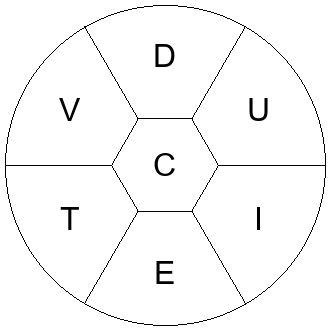
The official answers for today's puzzle are:

Click on the arrow to show the definition.
Click outside the pop-up to close it.


Number of Pangrams: 1

Maximum Puzzle Score: 223

Number of Answers: 41

Points Needed for Genius: 156

Genius requires between 22 and 34 words. You need at least a 7-letter word to reach genius. If you don't get the pangram, you need 75% of the total points to reach genius. If you get the pangram, you only need 68% of the remaining points to reach genius.

Other days with this pangram:

The button below will reveal a chart with the number of words by each letter. Red bars indicate that there is a pangram(s) starting with that letter.


How does this puzzle compare to other puzzles?

Today's score of 223 was in the 74th percentile of all puzzles.
The last time there was a score this high was on July 20, 2025.
The highest score ever was 537 on January 22, 2021.
The lowest score ever was 47 on March 27, 2023.

This puzzle's 41 possible answers rank it in the 54th percentile of all puzzles.
The last time there were more answers than this was on July 21, 2025.
The highest number of answers was 81 on June 8, 2019.
The lowest number of answers was 16 on March 27, 2023.

It takes a 7-letter word for genius.
The last time this happened was on July 19, 2025.

Today's puzzle has an average word length of 5.9.
For all Bees, the average word length has been 5.3.


Haven't I seen these letters before?

Hover over a letter to see its first and most recent appearance in the Bee!


Haven't I seen these words before?

The most common words in the Bee are:

  • noon 205
  • loll 200
  • toot 193
  • naan 175
  • nana 175
  • lilt 143
  • till 143
  • tilt 143
  • tint 138
  • nene 135
  • mama 134
  • mamma 134
  • acacia 129
  • acai 129
  • onto 127
  • toon 127
  • onion 123
  • anon 119
  • anal 118
  • olio 116
  • boob 113
  • booboo 113
  • dodo 113
  • poop 112
  • tact 112
  • papa 111
  • baba 110
  • call 108
  • calla 108
  • lull 108
  • lulu 108
  • mitt 107
  • ratatat 106
  • tart 106
  • tartar 106
  • attar 105
  • tatty 105
  • tattoo 104
  • ammo 103
  • cocci 103
  • momma 103
  • mono 103
  • moon 103
  • tutu 103
  • allay 102
  • ally 102
  • epee 100
  • loon 100
  • peep 100
  • roar 99


How long are words in the Bee?

There have been 104,441 answers ever accepted in the Bee - with 10,684 unique words.
Below are the distributions of the lengths of these words.


Valid dictionary words not in today's official answers

You may be wondering why these words aren't here*:

  • cedi
  • cete
  • citied
  • civie
  • cuddie
  • cuvee
  • cuvette
  • deictic
  • deuced
  • duce
  • duci
  • educt
  • eductive
  • etic
  • eutectic
  • ictic
  • tectite
  • ticced
  • uveitic
  • viced

*Because the New York Times considers them obscure or offensive.

cede

verb
  1. To give up; yield to another.
  2. To give way.

ceded

verb
  1. To give up; yield to another.
  2. To give way.

cite

Etymology 1

verb
  1. To quote; to repeat, as a passage from a book, or the words of another.
  2. To list the source(s) from which one took information, words or literary or verbal context.
  3. To summon officially or authoritatively to appear in court.

Etymology 2

noun
  1. A citation

cited

verb
  1. To quote; to repeat, as a passage from a book, or the words of another.
  2. To list the source(s) from which one took information, words or literary or verbal context.
  3. To summon officially or authoritatively to appear in court.

civet

noun
  1. A carnivorous catlike animal, Civettictis civetta, that produces a musky secretion. It is two to three feet long, with black bands and spots on the body and tail.
  2. The musky perfume produced by the animal.
  3. Any animal in the family Viverridae or the similar family Nandiniidae
  4. Any of several species of spotted skunk, in the genus Spilogale.

civic

adjective
  1. Of, relating to, or belonging to a city, a citizen, or citizenship; municipal or civil.
  2. Of or relating to the citizen, or of good citizenship and its rights and duties.

cued

No Definition Found.

cute

adjective
  1. Possessing physical features, behaviors, personality traits or other properties that are mainly attributed to infants and small or cuddly animals; e.g. fair, dainty, round, and soft physical features, disproportionately large eyes and head, playfulness, fragility, helplessness, curiosity or shyness, innocence, affectionate behavior.
  2. Generally, attractive or pleasing, especially in a youthful, dainty, quaint or fun-spirited way.
  3. Affected or contrived to charm; mincingly clever; precious; cutesy.
  4. Mentally keen or discerning (See also acute)

cutie

Etymology 1

noun
  1. A cute person or animal.

Etymology 2

noun
  1. A clementine: a small, waxy-peeled orange hybrid cultivar that is easy to peel by hand.
  2. (by extension) Any small mandarin orange variety such as a tangerine or a satsuma.

deceit

noun
  1. An act or practice intended to deceive; a trick.
  2. An act of deceiving someone.
  3. The state of being deceitful or deceptive.
  4. The tort or fraudulent representation of a material fact made with knowledge of its falsity, or recklessly, or without reasonable grounds for believing its truth and with intent to induce reliance on it; the plaintiff justifiably relies on the deception, to his injury.

deceive

verb
  1. To trick or mislead.

deceived

verb
  1. To trick or mislead.

decide

verb
  1. To resolve (a contest, problem, dispute, etc.); to choose, determine, or settle
  2. To make a judgment, especially after deliberation
  3. To cause someone to come to a decision
  4. To cut off; to separate

decided

verb
  1. To resolve (a contest, problem, dispute, etc.); to choose, determine, or settle
  2. To make a judgment, especially after deliberation
  3. To cause someone to come to a decision
  4. To cut off; to separate
adjective
  1. Determined; resolute
  2. Clear; unmistakable

deduce

verb
  1. To reach a conclusion by applying rules of logic to given premises.
  2. To take away; to deduct; to subtract.
  3. (Latinism) To lead forth.

deduced

verb
  1. To reach a conclusion by applying rules of logic to given premises.
  2. To take away; to deduct; to subtract.
  3. (Latinism) To lead forth.

deduct

verb
  1. To take one thing from another; remove from; make smaller by some amount.

deducted

verb
  1. To take one thing from another; remove from; make smaller by some amount.

deductive

adjective
  1. Of, pertaining to, or based on deduction (process of reasoning).
  2. Based on inferences from general principles.

deice

No Definition Found.

deiced

No Definition Found.

deicide

noun
  1. The killing of a god or goddess; godslaughter.
  2. The killer of a god or goddess.
  3. The crucifixion of Jesus viewed as a crime.

detect

verb
  1. To discover or find by careful search, examination, or probing
adjective
  1. Detected.

detected

verb
  1. To discover or find by careful search, examination, or probing
adjective
  1. Having been noticed.

detective

noun
  1. (law enforcement) A police officer who looks for evidence as part of solving a crime; an investigator.
  2. A person employed to find information not otherwise available to the public.
adjective
  1. Employed in detecting.

deuce

Etymology 1

noun
  1. A card with two pips, one of four in a standard deck of playing cards.
  2. A side of a die with two spots.
  3. A cast of dice totalling two.
  4. The number two.
  5. A tied game where either player can win by scoring two consecutive points.
  6. A curveball.
  7. A '32 Ford.
  8. (in the plural) 2-barrel (twin choke) carburetors (in the phrase 3 deuces: an arrangement on a common intake manifold).
  9. (restaurants) A table seating two diners.
  10. A piece of excrement.

Etymology 2

noun
  1. (epithet) The Devil, used in exclamations of confusion or anger.

device

noun
  1. Any piece of equipment made for a particular purpose, especially a mechanical or electrical one.
  2. A peripheral device; an item of hardware.
  3. A project or scheme, often designed to deceive; a stratagem; an artifice.
  4. An improvised explosive device, home-made bomb
  5. A technique that an author or speaker uses to evoke an emotional response in the audience; a rhetorical device.
  6. A motto, emblem, or other mark used to distinguish the bearer from others. A device differs from a badge or cognizance primarily because as it is a personal distinction, and not a badge borne by members of the same house successively.
  7. Power of devising; invention; contrivance.
  8. An image used in whole or in part as a trademark or service mark.
  9. An image or logo denoting official or proprietary authority or provenience.
  10. A spectacle or show.
  11. Opinion; decision.

dice

Etymology 1

noun
  1. Gaming with one or more dice.
  2. A die.
  3. That which has been diced.
verb
  1. To play dice.
  2. To cut into small cubes.
  3. To ornament with squares, diamonds, or cubes.

Etymology 2

noun
  1. A regular polyhedron, usually a cube, with numbers or symbols on each side and used in games of chance.
  2. That which is, or might be, determined, by a throw of the die; hazard; chance.
  3. (plural also dies) An oblong chip fractured from a semiconductor wafer engineered to perform as an independent device or integrated circuit.

diced

verb
  1. To play dice.
  2. To cut into small cubes.
  3. To ornament with squares, diamonds, or cubes.

dietetic

adjective
  1. Relating to diet.
  2. Relating to preparation for those on a restricted diet.

duct

noun
  1. A pipe, tube or canal which carries gas or liquid from one place to another.
  2. An enclosure or channel for electrical cable runs.
  3. Guidance; direction.
verb
  1. To channel something through a duct (or series of ducts).

ducted

verb
  1. To channel something through a duct (or series of ducts).
adjective
  1. Fitted with a duct

edict

noun
  1. A proclamation of law or other authoritative command.

educe

noun
  1. An inference.
verb
  1. To direct the course of (a flow, journey etc.); to lead in a particular direction.
  2. To infer or deduce (a result, theory etc.) from existing data or premises.
  3. To draw out or bring forth from some basic or potential state; to elicit, to develop.
  4. To isolate (a substance) from a compound; to extract.
  5. To cause or generate; to bring about.

educed

verb
  1. To direct the course of (a flow, journey etc.); to lead in a particular direction.
  2. To infer or deduce (a result, theory etc.) from existing data or premises.
  3. To draw out or bring forth from some basic or potential state; to elicit, to develop.
  4. To isolate (a substance) from a compound; to extract.
  5. To cause or generate; to bring about.
adjective
  1. Evoked
  2. Deduced

eidetic

adjective
  1. Marked by or resulting from extraordinary ability to recall detailed and vivid mental images of visual images.

evict

verb
  1. To expel (one or more people) from their property; to force (one or more people) to move out.

evicted

verb
  1. To expel (one or more people) from their property; to force (one or more people) to move out.

evictee

No Definition Found.

iced

Etymology 1

adjective
  1. With ice added.
  2. Very cold, but not necessarily containing ice.
  3. Covered with icing.

Etymology 2

verb
  1. To cool with ice, as a beverage.
  2. To become ice; to freeze.
  3. To make icy; to freeze.
  4. To murder.
  5. To cover with icing (frosting made of sugar and milk or white of egg); to frost; as cakes, tarts, etc.
  6. To put out a team for a match.
  7. To shoot the puck the length of the playing surface, causing a stoppage in play called icing.

vice

Etymology 1

noun
  1. A bad habit.
  2. Any of various crimes related (depending on jurisdiction) to prostitution, pornography, gambling, alcohol, or drugs.
  3. A defect in the temper or behaviour of a horse, such as to make the animal dangerous, to injure its health, or to diminish its usefulness.

Etymology 2

noun
  1. A mechanical screw apparatus used for clamping or holding (also spelled vise).
  2. A tool for drawing lead into cames, or flat grooved rods, for casements.
  3. A grip or grasp.
  4. A winding or spiral staircase.
verb
  1. To hold or squeeze with a vice, or as if with a vice.

Etymology 3

noun
  1. One who acts in place of a superior.
adjective
  1. In place of; subordinate to; designating a person below another in rank
preposition
  1. Instead of, in place of