Monday, July 28, 2025

Answers to yesterday's Bee

Jump to answers for


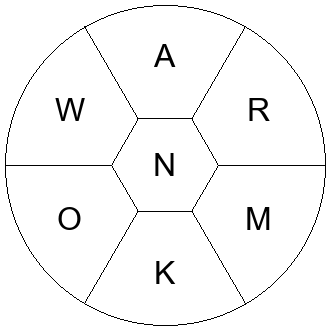
The official answers for today's puzzle are:

Click on the arrow to show the definition.
Click outside the pop-up to close it.


Number of Pangrams: 2

Maximum Puzzle Score: 126

Number of Answers: 35

Points Needed for Genius: 88

Genius requires between 13 and 32 words. You need at least a 6-letter word to reach genius. If you don't get the pangrams, you need 92% of the total points to reach genius. If you get the pangrams, you only need 60% of the remaining points to reach genius.

Other days with this pangram:

The button below will reveal a chart with the number of words by each letter. Red bars indicate that there is a pangram(s) starting with that letter.


How does this puzzle compare to other puzzles?

Today's score of 126 was in the 27th percentile of all puzzles.
The last time there was a score this low was on July 22, 2025.
The highest score ever was 537 on January 22, 2021.
The lowest score ever was 47 on March 27, 2023.

This puzzle's 35 possible answers rank it in the 39th percentile of all puzzles.
The last time there were fewer answers than this was on July 22, 2025.
The highest number of answers was 81 on June 8, 2019.
The lowest number of answers was 16 on March 27, 2023.

It takes a 6-letter word for genius.
The last time this happened was on July 22, 2025.

Today's puzzle has an average word length of 4.8.
For all Bees, the average word length has been 5.3.


Haven't I seen these letters before?

Hover over a letter to see its first and most recent appearance in the Bee!


Haven't I seen these words before?

The most common words in the Bee are:

  • noon 206
  • loll 201
  • toot 193
  • naan 176
  • nana 176
  • lilt 143
  • till 143
  • tilt 143
  • tint 138
  • mama 135
  • mamma 135
  • nene 135
  • acacia 130
  • acai 130
  • onto 127
  • toon 127
  • onion 123
  • anon 120
  • anal 119
  • olio 116
  • boob 113
  • booboo 113
  • dodo 113
  • tact 113
  • poop 112
  • papa 111
  • baba 110
  • call 108
  • calla 108
  • lull 108
  • lulu 108
  • mitt 108
  • ratatat 106
  • tart 106
  • tartar 106
  • attar 105
  • mono 105
  • moon 105
  • tatty 105
  • ammo 104
  • momma 104
  • tattoo 104
  • allay 103
  • ally 103
  • cocci 103
  • tutu 103
  • loon 101
  • epee 100
  • peep 100
  • roar 99


How long are words in the Bee?

There have been 104,663 answers ever accepted in the Bee - with 10,696 unique words.
Below are the distributions of the lengths of these words.


Valid dictionary words not in today's official answers

You may be wondering why these words aren't here*:

  • amarna
  • ammono
  • anna
  • annona
  • anoa
  • kana
  • kanaka
  • kaon
  • karn
  • knar
  • konk
  • kroon
  • mana
  • manana
  • mannan
  • mano
  • marrano
  • marron
  • mawn
  • nanna
  • nano
  • nark
  • noma
  • nona
  • nonman
  • nonwar
  • ramona
  • roman
  • romano
  • wank
  • warworn

*Because the New York Times considers them obscure or offensive.

anon

Etymology 1

adverb
  1. Straight away; at once.
  2. Soon; in a little while.
  3. At another time; then; again.

Etymology 2

noun
  1. An anonymous person, especially an author.
  2. A work with an unknown author.
  3. A work without a title.
adjective
  1. Anonymous

anorak

noun
  1. A heavy weatherproof jacket with an attached hood; a parka or windcheater.
  2. A geek or nerd, possibly originally either a train spotter or a fan of off-shore pirate radio.

know

noun
  1. Knowledge; the state of knowing.
verb
  1. To perceive the truth or factuality of; to be certain of or that.
  2. To be aware of; to be cognizant of.
  3. To be acquainted or familiar with; to have encountered.
  4. To experience.
  5. To be able to distinguish, to discern, particularly by contrast or comparison; to recognize the nature of.
  6. To recognize as the same (as someone or something previously encountered) after an absence or change.
  7. To understand or have a grasp of through experience or study.
  8. To have sexual relations with. This meaning normally specified in modern English as e.g. to ’know someone in the biblical sense’ or to ‘know Biblically.’
  9. To have knowledge; to have information, be informed.
  10. To be or become aware or cognizant.
  11. To be acquainted (with another person).
  12. To be able to play or perform (a song or other piece of music).

known

verb
  1. To perceive the truth or factuality of; to be certain of or that.
  2. To be aware of; to be cognizant of.
  3. To be acquainted or familiar with; to have encountered.
  4. To experience.
  5. To be able to distinguish, to discern, particularly by contrast or comparison; to recognize the nature of.
  6. To recognize as the same (as someone or something previously encountered) after an absence or change.
  7. To understand or have a grasp of through experience or study.
  8. To have sexual relations with. This meaning normally specified in modern English as e.g. to ’know someone in the biblical sense’ or to ‘know Biblically.’
  9. To have knowledge; to have information, be informed.
  10. To be or become aware or cognizant.
  11. To be acquainted (with another person).
  12. To be able to play or perform (a song or other piece of music).
noun
  1. Any fact or situation which is known or familiar.
  2. A constant or variable the value of which is already determined.
adjective
  1. Identified as a specific type; famous, renowned.
  2. Accepted, familiar, researched.

koan

noun
  1. A story about a Zen master and his student, sometimes like a riddle, other times like a fable, which has become an object of Zen study, and which, when meditated upon, may unlock mechanisms in the Zen student’s mind leading to satori.
  2. A riddle with no solution, used to provoke reflection on the inadequacy of logical reasoning, and to lead to enlightenment.

krona

noun
  1. The official currency of Sweden.

kronor

noun
  1. The official currency of Sweden.

mammon

noun
  1. The desire for wealth personified as an evil spirit or a malign influence.
  2. Often mammon: wealth, material avarice, profit.

manna

noun
  1. Food miraculously produced for the Israelites in the desert in the book of Exodus.
  2. (by extension) Any boon which comes into one's hands by good luck.
  3. The sugary sap of the manna gum tree which oozes out from holes drilled by insects and falls to the ground around the tree.http//www.museum.vic.gov.au/forest/plants/gum.html

manor

noun
  1. A landed estate.
  2. The main house of such an estate or a similar residence; a mansion.
  3. A district over which a feudal lord could exercise certain rights and privileges in medieval western Europe.
  4. The lord's residence and seat of control in such a district.
  5. Any home area or territory in which authority is exercised, often in a police or criminal context.
  6. One's neighbourhood.

maroon

Etymology 1

noun
  1. An escaped negro slave of the Caribbean and the Americas or a descendant of escaped slaves.
  2. A castaway; a person who has been marooned.
verb
  1. To abandon in a remote, desolate place, as on a desert island.
adjective
  1. Associated with Maroon culture, communities or peoples.

Etymology 2

noun
  1. A rich dark red, somewhat brownish, color.
adjective
  1. Of a maroon color

Etymology 3

noun
  1. A rocket-propelled firework or skyrocket, often one used as a signal (e.g. to summon the crew of a lifeboat or warn of an air raid).

Etymology 4

noun
  1. An idiot; a fool.

moan

noun
  1. A low, mournful cry of pain, sorrow or pleasure
verb
  1. To complain about; to bemoan, to bewail; to mourn.
  2. To grieve.
  3. To distress (someone); to sadden.
  4. To make a moan or similar sound.
  5. To say in a moan, or with a moaning voice.
  6. To complain; to grumble.

monk

Etymology 1

noun
  1. A male member of a monastic order who has devoted his life for religious service.
  2. In earlier usage, an eremite or hermit devoted to solitude, as opposed to a cenobite, who lived communally.
  3. A male who leads an isolated life; a loner, a hermit.
  4. An unmarried man who does not have sexual relationships.
  5. A judge.
  6. A blotch or spot of ink on a printed page, caused by the ink not being properly distributed; distinguished from a friar, or white spot caused by a deficiency of ink.
  7. A piece of tinder made of agaric, used in firing the powder hose or train of a mine.
  8. A South American monkey (Pithecia monachus); also applied to other species, as Cebus xanthosternos.
  9. The bullfinch, common bullfinch, European bullfinch, or Eurasian bullfinch (Pyrrhula pyrrhula).
  10. The monkfish.
  11. A fuse for firing mines.
verb
  1. To be a monk.
  2. To act like a monk; especially to be contemplative.
  3. To monkey or meddle; to behave in a manner that is not systematic.
  4. To be intoxicated or confused.
  5. To be attached in a way that sticks out.

Etymology 2

noun
  1. A monkey.

mono

Etymology 1

noun
  1. A viral infection marked by extreme fatigue, high fever, and swollen lymph nodes.

Etymology 2

noun
  1. A bicycle or motorcycle trick where the front wheel is lifted off the ground while riding

Etymology 3

adjective
  1. Monaural or monophonic; having only a single audio channel.

Etymology 4

adjective
  1. Monochrome.

Etymology 5

noun
  1. An injective homomorphism
  2. The absence of sexual dimorphism
  3. A morphism n such that for any other morphisms f and g, if n \circ f = n \circ g then f = g.

Etymology 6

noun
  1. A monogamous person.
adjective
  1. Monoamorous, monogamous.

Etymology 7

adjective
  1. Monosexual.

moon

proper noun
  1. The Earth's moon Luna; the sole natural satellite of the Earth, represented in astronomy and astrology by ☾.
  2. The god of the Moon in Heathenry.
  3. A surname.
  4. The 54th sura (chapter) of the Qur'an.
noun
  1. (by extension of Moon) Any natural satellite of a planet.
  2. A month, particularly a lunar month.
  3. A crescent-like outwork in a fortification.
  4. The eighteenth trump/major arcana card of the Tarot.
  5. The thirty-second Lenormand card.
  6. In hearts, the action of taking all the point cards in one hand.
verb
  1. To display one's buttocks to, typically as a jest, insult, or protest.
  2. (usually followed by over or after) To fuss over something adoringly; to be infatuated with someone.
  3. To spend time idly, absent-mindedly.
  4. To expose to the rays of the Moon.
  5. To adorn with moons or crescents.
  6. (cryptocurrency) Of a coin or token: to rise in price rapidly.
  7. To shoot the moon.

morn

noun
  1. Morning.

moron

noun
  1. A stupid person; an idiot; a fool.
  2. A person of mild mental subnormality in the former classification of mental retardation, having an intelligence quotient of 50–70.

mown

verb
  1. To cut down grass or crops.
  2. To cut down or slaughter in great numbers.

naan

noun
  1. A type of round, flat bread baked in a tandoor popular in South and Central Asian cuisine.

nana

Etymology 1

noun
  1. A banana
  2. A fool

Etymology 2

noun
  1. (term of endearment) one's grandmother
  2. A nanny

narrow

Etymology 1

noun
  1. (chiefly in the plural) A narrow passage, especially a contracted part of a stream, lake, or sea; a strait connecting two bodies of water.
adjective
  1. Having a small width; not wide; having opposite edges or sides that are close, especially by comparison to length or depth.
  2. Of little extent; very limited; circumscribed.
  3. Restrictive; without flexibility or latitude.
  4. Contracted; of limited scope; bigoted
  5. Having a small margin or degree.
  6. Limited as to means; straitened
  7. Parsimonious; niggardly; covetous; selfish.
  8. Scrutinizing in detail; close; accurate; exact.
  9. Formed (as a vowel) by a close position of some part of the tongue in relation to the palate; or (according to Bell) by a tense condition of the pharynx; distinguished from wide.

Etymology 2

verb
  1. To reduce in width or extent; to contract.
  2. To get narrower.
  3. (of a person or eyes) To partially lower one's eyelids in a way usually taken to suggest a defensive, aggressive or penetrating look.
  4. To contract the size of, as a stocking, by taking two stitches into one.
  5. To convert to a data type that cannot hold as many distinct values.

nonwork

No Definition Found.

nook

noun
  1. A small corner formed by two walls; an alcove.
  2. A hidden or secluded spot; a secluded retreat.
  3. A recess, cove or hollow.
  4. An English unit of land area, originally 1/4 of a yardland but later 12 1/2 or 20 acres.
  5. A corner of a piece of land; an angled piece of land, especially one extending into other land.
verb
  1. To withdraw into a nook.
  2. To situate in a nook.

noon

Etymology 1

noun
  1. The ninth hour of the day counted from sunrise; around three o'clock in the afternoon.
  2. Time of day when the sun is in its zenith; twelve o'clock in the day, midday.
  3. The corresponding time in the middle of the night; midnight.
  4. The highest point; culmination.
verb
  1. To relax or sleep around midday

Etymology 2

noun
  1. The letter ن in the Arabic script.

norm

Etymology 1

noun
  1. That which is normal or typical.
  2. A rule that is enforced by members of a community.
  3. A sentence with non-descriptive meaning, such as a command, permission or prohibition.
  4. A function, generally denoted v\mapsto\left|v\right| or v\mapsto\left\|v\right\|, that maps vectors to non-negative scalars and has the following properties:
  5. A high level of performance in a chess tournament, several of which are required for a player to receive a title.

Etymology 2

verb
  1. To endow (a vector space, etc) with a norm.

rank

Etymology 1

adjective
  1. Strong of its kind or in character; unmitigated; virulent; thorough; utter (used of negative things).
  2. Strong in growth; growing with vigour or rapidity, hence, coarse or gross.
  3. Suffering from overgrowth or hypertrophy; plethoric.
  4. Causing strong growth; producing luxuriantly; rich and fertile.
  5. Strong to the senses; offensive; noisome.
  6. Having a very strong and bad taste or odor.
  7. Complete, used as an intensifier (usually negative, referring to incompetence).
  8. Gross, disgusting.
  9. Strong; powerful; capable of acting or being used with great effect; energetic; vigorous; headstrong.
  10. Inflamed with venereal appetite; ruttish.
adverb
  1. Quickly, eagerly, impetuously.

Etymology 2

noun
  1. A row of people or things organized in a grid pattern, often soldiers [the corresponding term for the perpendicular columns in such a pattern is "file"].
  2. In a pipe organ, a set of pipes of a certain quality for which each pipe corresponds to one key or pedal.
  3. One's position in a list sorted by a shared property such as physical location, population, or quality
  4. The level of one's position in a class-based society
  5. A hierarchical level in an organization such as the military
  6. A level in a scientific taxonomy system
  7. Maximal number of linearly independent columns (or rows) of a matrix.
  8. The dimensionality of an array or tensor.
  9. The maximum quantity of D-linearly independent elements of a module (over an integral domain D).
  10. The size of any basis of a given matroid.
  11. One of the eight horizontal lines of squares on a chessboard (i.e., those identified by a number). The analog vertical lines are the files.
  12. (typically in the plural) A category of people, such as those who share an occupation.
verb
  1. To place abreast, or in a line.
  2. To have a ranking.
  3. To assign a suitable place in a class or order; to classify.
  4. To take rank of; to outrank.

roan

Etymology 1

noun
  1. An animal such as a horse that has a coat of a dark base color with individual white hairs mixed in.
  2. The color of such an animal.
  3. A kind of leather used for slippers, bookbinding, etc., made from sheepskin, tanned with sumac and colored to imitate ungrained morocco.
adjective
  1. Especially of a horse, having a coat of a dark base color with individual white hairs mixed in
  2. Made of the leather called roan.

Etymology 2

noun
  1. Sorbus aucuparia, the European rowan.
  2. Any of various small deciduous trees or shrubs of genus Sorbus, belonging to the rose family, with pinnate leaves, corymbs of white flowers, and usually with orange-red berries.

rowan

Etymology 1

noun
  1. Sorbus aucuparia, the European rowan.
  2. Any of various small deciduous trees or shrubs of genus Sorbus, belonging to the rose family, with pinnate leaves, corymbs of white flowers, and usually with orange-red berries.

Etymology 2

noun
  1. A second crop of hay; aftermath.
  2. A stubble field left unploughed until late in the autumn, so that it can be cropped by cattle.

warn

verb
  1. To make (someone) aware of (something impending); especially:
  2. To caution or admonish (someone) against unwise or unacceptable behaviour.
  3. (chiefly with "off", "away", and similar words) To advise or order to go or stay away.
  4. To give warning.

woman

noun
  1. An adult female human.
  2. (collective) All females collectively; womankind.
  3. A female person, usually an adult; a (generally adult) female sentient being, whether human, supernatural, elf, alien, etc.
  4. A wife (or sometimes a fiancée or girlfriend).
  5. A female who is extremely fond of or devoted to a specified type of thing. (Used as the last element of a compound.)
  6. A female attendant or servant.
verb
  1. To staff with female labor.
  2. To make effeminate or womanish.
  3. To furnish with, or unite to, a woman.
  4. To call (a person) "woman" in a disrespectful fashion.

wonk

noun
  1. An overly studious person, particularly student.
  2. (by extension) A policy wonk or other intellectual expert.

workman

noun
  1. A man who labours for wages.
  2. An artisan or craftsman.

workwoman

No Definition Found.

worn

verb
  1. To carry or have equipped on or about one's body, as an item of clothing, equipment, decoration, etc.
  2. To have or carry on one's person habitually, consistently; or, to maintain in a particular fashion or manner.
  3. To bear or display in one's aspect or appearance.
  4. (with "it") To overcome one's reluctance and endure a (previously specified) situation.
  5. To eat away at, erode, diminish, or consume gradually; to cause a gradual deterioration in; to produce (some change) through attrition, exposure, or constant use.
  6. To undergo gradual deterioration; become impaired; be reduced or consumed gradually due to any continued process, activity, or use.
  7. To exhaust, fatigue, expend, or weary.
  8. To last or remain durable under hard use or over time; to retain usefulness, value, or desirable qualities under any continued strain or long period of time; sometimes said of a person, regarding the quality of being easy or difficult to tolerate.
  9. (in the phrase "wearing on (someone)") To cause annoyance, irritation, fatigue, or weariness near the point of an exhaustion of patience.
  10. (of time) To pass slowly, gradually or tediously.
  11. To bring (a sailing vessel) onto the other tack by bringing the wind around the stern (as opposed to tacking when the wind is brought around the bow); to come round on another tack by turning away from the wind. Also written "ware". Past: weared, or wore/worn.
verb
  1. To guard; watch; keep watch, especially from entry or invasion.
  2. To defend; protect.
  3. To ward off; prevent from approaching or entering; drive off; repel.
  4. To conduct or guide with care or caution, as into a fold or place of safety.
adjective
  1. Damaged and shabby as a result of much use

wanna

No Definition Found.