Sunday, August 10, 2025

Answers to yesterday's Bee

Jump to answers for


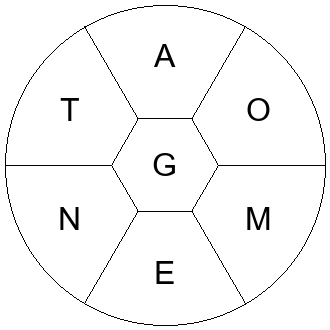
The official answers for today's puzzle are:

Click on the arrow to show the definition.
Click outside the pop-up to close it.


Number of Pangrams: 3

Maximum Puzzle Score: 267

Number of Answers: 56

Points Needed for Genius: 187

Genius requires between 25 and 49 words. You need at least a 7-letter word to reach genius. If you don't get the pangrams, you need 83% of the total points to reach genius. If you get the pangrams, you only need 64% of the remaining points to reach genius.

The button below will reveal a chart with the number of words by each letter. Red bars indicate that there is a pangram(s) starting with that letter.


How does this puzzle compare to other puzzles?

Today's score of 267 was in the 88th percentile of all puzzles.
The last time there was a score this high was on July 31, 2025.
The highest score ever was 537 on January 22, 2021.
The lowest score ever was 47 on March 27, 2023.

This puzzle's 56 possible answers rank it in the 86th percentile of all puzzles.
The last time there were more answers than this was on July 31, 2025.
The highest number of answers was 81 on June 8, 2019.
The lowest number of answers was 16 on March 27, 2023.

It takes a 7-letter word for genius.
The last time this happened was on August 8, 2025.

Today's puzzle has an average word length of 5.4.
For all Bees, the average word length has been 5.3.


Haven't I seen these letters before?

Hover over a letter to see its first and most recent appearance in the Bee!


Haven't I seen these words before?

The most common words in the Bee are:

  • noon 207
  • loll 201
  • toot 193
  • naan 177
  • nana 177
  • lilt 144
  • till 144
  • tilt 144
  • tint 138
  • nene 137
  • mama 135
  • mamma 135
  • acacia 130
  • acai 130
  • onto 127
  • toon 127
  • onion 124
  • anon 120
  • anal 119
  • olio 116
  • tact 114
  • boob 113
  • booboo 113
  • dodo 113
  • papa 112
  • poop 112
  • baba 111
  • lull 110
  • lulu 110
  • call 108
  • calla 108
  • mitt 108
  • ratatat 106
  • tart 106
  • tartar 106
  • attar 105
  • mono 105
  • moon 105
  • tatty 105
  • tutu 105
  • ammo 104
  • cocci 104
  • momma 104
  • tattoo 104
  • allay 103
  • ally 103
  • loon 101
  • epee 100
  • peep 100
  • roar 99


How long are words in the Bee?

There have been 105,241 answers ever accepted in the Bee - with 10,716 unique words.
Below are the distributions of the lengths of these words.


Valid dictionary words not in today's official answers

You may be wondering why these words aren't here*:

  • agama
  • agamete
  • agee
  • agemate
  • agene
  • agma
  • agnate
  • agnomen
  • agon
  • agone
  • anagoge
  • anga
  • enneagon
  • gaen
  • gagman
  • gagmen
  • gama
  • gammon
  • gane
  • gateman
  • gatemen
  • gean
  • gemma
  • gemmae
  • gemmate
  • gemot
  • gemote
  • genet
  • genette
  • genoa
  • genom
  • gentoo
  • geta
  • gnomon
  • goanna
  • gogo
  • magmata
  • magneton
  • magot
  • manege
  • manganate
  • megagamete
  • megatonnage
  • menage
  • metage
  • metatag
  • mongo
  • mongoe
  • monogenean
  • moongate
  • naga
  • nagana
  • negaton
  • neogene
  • nogg
  • nonage
  • nonego
  • nonengagement
  • nongame
  • nonmanagement
  • ogam
  • oogamete
  • taggant
  • tagmeme
  • tanga
  • tannage
  • tegg
  • tegmen
  • tegmenta
  • tenge
  • tentage
  • togae
  • togate
  • tonga
  • tongman
  • tongmen

*Because the New York Times considers them obscure or offensive.

agate

Etymology 1

noun
  1. A semi-pellucid, uncrystallized variety of quartz, presenting various tints in the same specimen, with colors delicately arranged in stripes or bands, or blended in clouds.
  2. The size of type between pearl and nonpareil, standardized as 5 1/2-point.
  3. One fourteenth of an inch
  4. A diminutive person; so called in allusion to the small figures cut in agate for rings and seals.
  5. A tool used by gold-wire drawers, bookbinders, etc.;—so called from the agate fixed in it for burnishing.
  6. A marble made from agate.
  7. (usually in the plural) A testicle.

Etymology 2

adverb
  1. On the way; agoing.

agent

noun
  1. One who exerts power, or has the power to act
  2. One who acts for, or in the place of, another (the principal), by authority from him/her; someone entrusted to do the business of another
  3. A person who looks for work for another person
  4. Someone who works for an intelligence agency
  5. An active power or cause or substance; something which has the power to produce an effect
  6. In the client-server model, the part of the system that performs information preparation and exchange on behalf of a client or server. Especially in the phrase “intelligent agent” it implies some kind of autonomous process which can communicate with other agents to perform some collective task on behalf of one or more humans.
  7. (grammar) The participant of a situation that carries out the action in this situation, e.g. "the boy" in the sentences "The boy kicked the ball" and "The ball was kicked by the boy".
  8. A cheat who is assisted by dishonest casino staff.

agog

adjective
  1. In eager desire, eager, astir.
  2. (chiefly of eyes) Wide open.
adverb
  1. In a state of high anticipation, excitement, or interest.

among

preposition
  1. Denotes a mingling or intermixing with distinct or separable objects. (See Usage Note at amidst.)
  2. Denotes a belonging of a person or a thing to a group.
  3. Denotes a sharing of a common feature in a group.

eggnog

noun
  1. A beverage based on milk, eggs, sugar, and nutmeg; often made alcoholic with rum, brandy or whisky; popular at Christmas.

engage

verb
  1. (heading) To interact socially.
  2. (heading) To interact antagonistically.
  3. (heading) To interact contractually.
  4. (heading) To interact mechanically.
  5. To enter into (an activity), to participate (construed with in).
  6. To entangle.

engagement

noun
  1. An appointment, especially to speak or perform.
  2. Connection or attachment.
  3. (by extension, about human emotional state) The feeling of being compelled, drawn in, connected to what is happening, interested in what will happen next.
  4. The period of time when marriage is planned or promised.
  5. In any situation of conflict, an actual instance of active hostilities.
  6. The point at which the fencers are close enough to join blades, or to make an effective attack during an encounter.

gaga

Etymology 1

adjective
  1. Mentally senile.
  2. Crazy.
  3. Infatuated.

Etymology 2

noun
  1. A variant of dodgeball played inside a fenced area, usually a hexagon or octagon.

gage

Etymology 1

noun
  1. Something, such as a glove or other pledge, thrown down as a challenge to combat (now usually figurative).
  2. Something valuable deposited as a guarantee or pledge; security, ransom.
verb
  1. To give or deposit as a pledge or security; to pawn.
  2. To wager, to bet.
  3. To bind by pledge, or security; to engage.

Etymology 2

noun
  1. A measure; a standard of measure; an instrument to determine dimensions, distance, or capacity; a standard
  2. An act of measuring.
  3. An estimate.
  4. Any instrument for ascertaining or regulating the level, state, dimensions or forms of things
  5. A thickness of sheet metal or wire designated by any of several numbering schemes.
  6. The distance between the rails of a railway.
  7. A semi-norm; a function that assigns a non-negative size to all vectors in a vector space.
  8. The number of stitches per inch, centimetre, or other unit of distance.
  9. Relative positions of two or more vessels with reference to the wind.
  10. The depth to which a vessel sinks in the water.
  11. (plastering) The quantity of plaster of Paris used with common plaster to make it set more quickly.
  12. That part of a shingle, slate, or tile, which is exposed to the weather, when laid; also, one course of such shingles, slates, or tiles.
  13. A unit of measurement which describes how many spheres of bore diameter of a shotgun can be had from one pound of lead; 12 gauge is roughly equivalent to .75 caliber.
  14. (by extension) A shotgun (synecdoche for 12 gauge shotgun, the most common chambering for combat and hunting shotguns).
  15. A tunnel-like ear piercing consisting of a hollow ring embedded in the lobe.
verb
  1. To measure or determine with a gauge; to measure the capacity of.
  2. To estimate.
  3. To appraise the character or ability of; to judge of.
  4. To draw into equidistant gathers by running a thread through it.
  5. To mix (a quantity of ordinary plaster) with a quantity of plaster of Paris.
  6. To chip, hew or polish (stones, bricks, etc) to a standard size and/or shape.

Etymology 3

noun
  1. A subspecies of plum, Prunus domestica subsp. italica.

Etymology 4

noun
  1. A quart pot.
  2. A pint pot.
  3. (metonymically) A drink.
  4. A tobacco pipe.
  5. A chamberpot.
  6. A small quantity of anything.
  7. Marijuana

game

noun
  1. A playful or competitive activity.
  2. A video game.
  3. (nearly always singular) A field of gainful activity, as an industry or profession.
  4. Something that resembles a game with rules, despite not being designed.
  5. An exercise simulating warfare, whether computerized or involving human participants.
  6. Wild animals hunted for food.
  7. (used mostly of males) The ability to seduce someone, usually by strategy.
  8. Mastery; the ability to excel at something.
  9. A questionable or unethical practice in pursuit of a goal; a scheme.
verb
  1. To gamble.
  2. To play card games, board games, or video games.
  3. To exploit loopholes in a system or bureaucracy in a way which defeats or nullifies the spirit of the rules in effect, usually to obtain a result which otherwise would be unobtainable.
  4. (of males) To perform premeditated seduction strategy.
adjective
  1. Willing to participate.
  2. (of an animal) That shows a tendency to continue to fight against another animal, despite being wounded, often severely.
  3. Persistent, especially in senses similar to the above.
  4. Injured, lame (of a limb).

gamete

noun
  1. A reproductive cell (sperm in males or eggs in females), having only half of a complete set of chromosomes.

gamma

noun
  1. The third letter of the Greek alphabet (Γ, γ), preceded by beta (Β, β) and followed by delta, (Δ, δ).
  2. The Gamma function, symbolized by Γ.
  3. A constant approximately equal to 0.55721566, symbolized by γ (also known as the Euler–Mascheroni constant).
  4. A non-SI unit of measure of magnetic flux density, equal to 1 nT.
  5. (industries) slope of log-log plot of video input and luminance output.
  6. A second-order measure of derivative price sensitivity, expressed as the rate of change in delta with respect to changes in the underlying asset price.
noun
  1. A nonlinear operation used to encode and decode luminance or tristimulus values in video or still image systems.

gang

Etymology 1

verb
  1. To go; walk; proceed.

Etymology 2

noun
  1. A number going in company; a number of friends or persons associated for a particular purpose.
  2. A group of laborers under one foreman; a squad.
  3. A criminal group with a common cultural background and identifying features, often associated with a particular section of a city.
  4. A group of criminals or alleged criminals who band together for mutual protection and profit.
  5. A group of politicians united in furtherance of a political goal.
  6. A chain gang.
  7. A combination of similar tools or implements arranged so as, by acting together, to save time or labor; a set.
  8. A set; all required for an outfit.
  9. (electrics) A number of switches or other electrical devices wired into one unit and covered by one faceplate.
  10. (electrics) A group of wires attached as a bundle.
  11. A going, journey; a course, path, track.
  12. An outhouse: an outbuilding used as a lavatory.
verb
  1. To attach similar items together to form a larger unit.

Etymology 3

verb
  1. (obsolete outside Northumbria) To go.

Etymology 4

verb
  1. To participate in a gangbang.
  2. To beat one or a smaller amount of people as a gang.
  3. To belong to a gang; to commit criminal acts as part of a gang.

Etymology 5

noun
  1. The earthy waste substances occurring in metallic ore.

gannet

noun
  1. Any of three species of large seabird in the genus Morus, of the family Sulidae. They have black and white bodies and long pointed wings, and hunt for fish by plunge diving and pursuing their prey underwater.
  2. A voracious eater; a glutton.

gate

Etymology 1

noun
  1. A doorlike structure outside a house.
  2. Doorway, opening, or passage in a fence or wall.
  3. Movable barrier.
  4. A logical pathway made up of switches which turn on or off. Examples are and, or, nand, etc.
  5. The gap between a batsman's bat and pad.
  6. The amount of money made by selling tickets to a concert or a sports event.
  7. (flow cytometry) A line that separates particle type-clusters on two-dimensional dot plots.
  8. Passageway (as in an air terminal) where passengers can embark or disembark.
  9. The controlling terminal of a field effect transistor (FET).
  10. In a lock tumbler, the opening for the stump of the bolt to pass through or into.
  11. The channel or opening through which metal is poured into the mould; the ingate.
  12. The waste piece of metal cast in the opening; a sprue or sullage piece. Also written geat and git.
  13. A mechanism, in a film camera and projector, that holds each frame momentarily stationary behind the aperture.
  14. A tally mark consisting of four vertical bars crossed by a diagonal, representing a count of five.
verb
  1. To keep something inside by means of a closed gate.
  2. To punish, especially a child or teenager, by not allowing them to go out.
  3. To open a closed ion channel.
  4. To furnish with a gate.
  5. To turn (an image intensifier) on and off selectively as needed, or to avoid damage. See autogating.

Etymology 2

noun
  1. A way, path.
  2. A journey.
  3. A street; now used especially as a combining form to make the name of a street e.g. "Briggate" (a common street name in the north of England meaning "Bridge Street") or Kirkgate meaning "Church Street".
  4. Manner; gait.

gene

noun
  1. A theoretical unit of heredity of living organisms; a gene may take several values and in principle predetermines a precise trait of an organism's form (phenotype), such as hair color.
  2. A segment of DNA or RNA from a cell's or an organism's genome, that may take several forms and thus parameterizes a phenomenon, in general the structure of a protein; locus.

genome

noun
  1. The complete genetic information (either DNA or, in some viruses, RNA) of an organism.

gent

Etymology 1

noun
  1. A gentleman.

Etymology 2

adjective
  1. Noble; well-bred, courteous; graceful.
  2. Neat; pretty; elegant

Etymology 3

noun
  1. Short for gentamicin.

gnat

noun
  1. Any small insect of the order Diptera, specifically within the suborder Nematocera.

gnome

Etymology 1

noun
  1. A brief reflection or maxim; a pithy saying.

Etymology 2

noun
  1. (magic, Rosicrucianism) An elemental (spirit or corporeal creature associated with a classical element) associated with earth.
  2. (fantasy literature) One of a race of imaginary human-like beings, usually depicted as short and typically bearded males, who inhabit the inner parts of the earth and act as guardians of mines, mineral treasure, etc.; in modern fantasy literature, when distinguished from dwarves, gnomes are usually even smaller than dwarves and more focussed on engineering than mining.
  3. A dwarf; a goblin; a person of small stature or misshapen features, or of strange appearance.
  4. The northern pygmy owl, Glaucidium gnoma, a small owl of the western United States.
  5. A small statue of a dwarf-like character, often bearded, placed in a garden.
  6. An upper atmospheric optical phenomenon associated with thunderstorms, a compact blue starter.
  7. A banker, especially a secretive international one.

goat

noun
  1. A mammal, Capra aegagrus hircus, and similar species of the genus Capra.
  2. A lecherous man.
  3. A scapegoat.
  4. A Pontiac GTO car.
  5. (speech recognition) A person who is not easily understood by a speech recognition system; contrasted with sheep.
  6. A fool, loser, or object of ridicule.
verb
  1. To allow goats to feed on.
  2. To scapegoat.

goatee

noun
  1. A beard trimmed to grow only at the center of the chin.

gone

verb
  1. To move:
  2. (chiefly of a machine) To work or function (properly); to move or perform (as required).
  3. To start; to begin (an action or process).
  4. To take a turn, especially in a game.
  5. To attend.
  6. To proceed:
  7. To follow or travel along (a path):
  8. To extend (from one point in time or space to another).
  9. To lead (to a place); to give access to.
  10. To become. (The adjective that follows usually describes a negative state.)
  11. To assume the obligation or function of; to be, to serve as.
  12. To continuously or habitually be in a state.
  13. To come to (a certain condition or state).
  14. To change (from one value to another) in the meaning of wend.
  15. To turn out, to result; to come to (a certain result).
  16. To tend (toward a result).
  17. To contribute to a (specified) end product or result.
  18. To pass, to be used up:
  19. To die.
  20. To be discarded.
  21. To be lost or out:
  22. To break down or apart:
  23. To be sold.
  24. To be given, especially to be assigned or allotted.
  25. To survive or get by; to last or persist for a stated length of time.
  26. To have a certain record.
  27. To be authoritative, accepted, or valid:
  28. To say (something), to make a sound:
  29. To be expressed or composed (a certain way).
  30. To resort (to).
  31. To apply or subject oneself to:
  32. To fit (in a place, or together with something):
  33. To date.
  34. To attack:
  35. To be in general; to be usually.
  36. To take (a particular part or share); to participate in to the extent of.
  37. To yield or weigh.
  38. To offer, bid or bet an amount; to pay.
  39. To enjoy. (Compare go for.)
  40. To urinate or defecate.
adjective
  1. Away, having left.
  2. No longer part of the present situation.
  3. No longer existing, having passed.
  4. Used up.
  5. Dead.
  6. Intoxicated to the point of being unaware of one's surroundings.
  7. Entirely given up to; infatuated with; used with on.
  8. Excellent; wonderful.
  9. Ago (used post-positionally).
  10. Weak; faint; feeling a sense of goneness.
  11. Of an arrow: wide of the mark.
preposition
  1. Past, after, later than (a time).

gong

Etymology 1

noun
  1. A percussion instrument consisting of a metal disk that emits a sonorous sound when struck with a soft hammer.
  2. A medal or award, particularly Knight Bachelor.
verb
  1. To make the sound of a gong; to ring a gong.
  2. To send a signal to, using a gong or similar device.
  3. To give an award or medal to.

Etymology 2

noun
  1. An outhouse: an outbuilding used as a lavatory.
  2. The contents of an outhouse pit: shit.

Etymology 3

noun
  1. A kind of cultivation energy, more powerful than qi.
  2. An advanced practice that cultivates such energy.

goon

Etymology 1

noun
  1. A thug; a usually muscular henchman with little intelligence (also known as a 'hired goon').
  2. A fool; someone considered silly, stupid, awkward, or outlandish.
  3. An enforcer or fighter.
  4. (WWII, PoW slang) A German guard in a prisoner-of-war camp.
  5. A member of the comedy web site Something Awful.

Etymology 2

noun
  1. A wine flagon or cask.
  2. Cheap or inferior cask wine.

gotten

verb
  1. (ditransitive) To obtain; to acquire.
  2. To receive.
  3. (in a perfect construction, with present-tense meaning) To have. See usage notes.
  4. To fetch, bring, take.
  5. To become, or cause oneself to become.
  6. To cause to become; to bring about.
  7. To cause to do.
  8. To cause to come or go or move.
  9. To cause to be in a certain status or position.
  10. (with various prepositions, such as into, over, or behind; for specific idiomatic senses see individual entries get into, get over, etc.) To adopt, assume, arrive at, or progress towards (a certain position, location, state).
  11. To cover (a certain distance) while travelling.
  12. To begin (doing something or to do something).
  13. To take or catch (a scheduled transportation service).
  14. To respond to (a telephone call, a doorbell, etc).
  15. (followed by infinitive) To be able, be permitted, or have the opportunity (to do something desirable or ironically implied to be desirable).
  16. To understand. (compare get it)
  17. To be told; be the recipient of (a question, comparison, opinion, etc.).
  18. To be. Used to form the passive of verbs.
  19. To become ill with or catch (a disease).
  20. To catch out, trick successfully.
  21. To perplex, stump.
  22. To find as an answer.
  23. To bring to reckoning; to catch (as a criminal); to effect retribution.
  24. To hear completely; catch.
  25. To getter.
  26. To beget (of a father).
  27. To learn; to commit to memory; to memorize; sometimes with out.
  28. Used with a personal pronoun to indicate that someone is being pretentious or grandiose.
  29. To go, to leave; to scram.
  30. To kill.
  31. To make acquisitions; to gain; to profit.
  32. To measure.
adjective
  1. (mostly in combination) obtained, acquired

mage

noun
  1. A magician, wizard or sorcerer.

magenta

noun
  1. A vibrant light purple, purplish-red, reddish-purple, or pinkish purple colour obtained by mixing red and blue light (thus a secondary colour), but primary in the CMYK colour system used in printing.
adjective
  1. Having the colour of fuchsia, fuchsine, light purple.

maggot

noun
  1. A soft, legless larva of a fly or other dipterous insect, that often eats decomposing organic matter.
  2. A worthless person.
  3. A whimsy or fancy.
  4. A fan of the American metal band Slipknot.

magma

noun
  1. The molten matter within the earth, the source of the material of lava flows, dikes of eruptive rocks, etc.
  2. A basic algebraic structure consisting of a set equipped with a single binary operation.
  3. Any soft doughy mass.
  4. The residuum after expressing the juice from fruits.

magnate

noun
  1. Powerful industrialist; captain of industry.
  2. A person of rank, influence or distinction in any sphere.

magnet

noun
  1. A piece of material that attracts some metals by magnetism.
  2. (preceded by a noun) A person or thing that attracts what is denoted by the preceding noun.

magneto

noun
  1. A small magnetic dynamo, especially one that provides power to the spark plugs of a small internal combustion engine.

manage

noun
  1. The act of managing or controlling something.
  2. (horseriding) Manège.
verb
  1. To direct or be in charge of.
  2. To handle or control (a situation, job).
  3. To handle with skill, wield (a tool, weapon etc.).
  4. To succeed at an attempt.
  5. To achieve (something) without fuss, or without outside help.
  6. To train (a horse) in the manège; to exercise in graceful or artful action.
  7. To treat with care; to husband.
  8. To bring about; to contrive.

management

noun
  1. Administration; the use of limited resources combined with forecasting, planning, leadership and execution skills to achieve predetermined specific goals.
  2. The executives of an organisation, especially senior executives.
  3. Judicious use of means to accomplish an end.

manga

Etymology 1

noun
  1. A comic originating in Japan.
  2. An artistic style heavily used in, and associated with, Japanese comics, and that has also been adopted by a comparatively low number of comics from other countries.
  3. A comic in manga style, regardless of the country of origin.

Etymology 2

noun
  1. A covering for a crucifix.

mange

noun
  1. A skin disease of mammals caused by parasitic mites (Sarcoptes spp., Demodecidae spp.).

mango

noun
  1. A tropical Asian fruit tree, Mangifera indica.
  2. The fruit of the mango tree.
  3. A pickled vegetable or fruit with a spicy stuffing; a vegetable or fruit which has been mangoed.
  4. (chiefly southern Midwest US) A green bell pepper suitable for pickling.
  5. A type of muskmelon, Cucumis melo.
  6. Any of various hummingbirds of the genus Anthracothorax.
  7. A yellow-orange color, like that of mango flesh.
verb
  1. To stuff and pickle (a fruit).

mega

adjective
  1. Very large.
  2. Great; excellent

megaton

noun
  1. A measure of the strength of an explosion or a bomb based on how many million tons of TNT would be needed to produce the same energy.

montage

noun
  1. A composite work, particularly an artwork, created by assembling or putting together other elements such as pieces of music, pictures, texts, videos, etc.
  2. The art or process of doing this.
verb
  1. To combine into, or depict as, a montage.

nametag

noun
  1. A tag with one's name inscribed on it.

negate

verb
  1. To deny the existence, evidence, or truth of; to contradict.
  2. To nullify or cause to be ineffective.
  3. To be negative; bring or cause negative results.
  4. To perform the NOT operation on.

nonagon

noun
  1. A polygon with nine sides and nine angles; an enneagon

ogee

noun
  1. A double curve in the shape of an elongated S; an object of that shape
  2. A pointed arch made from two ogees
  3. An inflection point.
  4. (aesthetic facial surgery) The malar or cheekbone prominence transitioning into the mid-cheek hollow.
  5. (distillation) The bubble-shaped chamber of a pot still that connects the swan neck to the pot and allows distillate to expand, condense, and fall back into the pot.

omega

noun
  1. The twenty-fourth letter of the Classical and the Modern Greek alphabet, and the twenty-eighth letter of the Old and the Ancient Greek alphabet, i.e. the last letter of every Greek alphabet. Uppercase version: Ω; lowercase: ω.
  2. (often capitalized) The end; the final, last or ultimate in a sequence.
  3. Angular velocity; symbol: ω.
  4. An omega male.
  5. The percentage change in an option value divided by the percentage change in the underlying asset's price.
  6. In omegaverse fiction, a person of a sexually-submissive (and sometimes secondary) gender/sex that is driven by biology, magic, or other means to bond with an alpha, with males of this type often being able to get pregnant.

tang

Etymology 1

noun
  1. A refreshingly sharp aroma or flavor.
  2. A strong or offensive taste; especially, a taste of something extraneous to the thing itself.
  3. A sharp, specific flavor or tinge.
  4. A projecting part of an object by means of which it is secured to a handle, or to some other part.
  5. The part of a knife, fork, file, or other small instrument, which is inserted into the handle.
  6. The projecting part of the breech of a musket barrel, by which the barrel is secured to the stock.
  7. The part of a sword blade to which the handle is fastened.
  8. A group of saltwater fish from the Acanthuridae family, especially the Zebrasoma genus.
  9. (games) A shuffleboard paddle.
  10. Tongue
  11. (by extension) Anything resembling a tongue in form or position such as the tongue of a buckle.

Etymology 2

noun
  1. A sharp, twanging sound; an unpleasant tone; a twang.
verb
  1. To strike two metal objects together loudly in order to persuade a swarm of honeybees to land so it may be captured by the beekeeper.
  2. To make a ringing sound; to ring.

Etymology 3

noun
  1. Knotted wrack, Ascophyllum nodosum (coarse blackish seaweed)

Etymology 4

noun
  1. The vagina.
  2. Intercourse with a woman

tangent

noun
  1. A straight line touching a curve at a single point without crossing it there.
  2. A function of an angle that gives the ratio of the sine to the cosine, in either the real or complex numbers. Symbols: tan, tg.
  3. A topic nearly unrelated to the main topic, but having a point in common with it.
  4. A small metal blade in a clavichord that strikes the strings to produce sound.
adjective
  1. Touching a curve at a single point but not crossing it at that point.
  2. Of a topic, only loosely related to a main topic.

tango

noun
  1. A Standard ballroom dance in 4/4 time; or a social dance, the Argentine tango.
  2. A piece of music suited to such a dance.
  3. The letter T in the ICAO spelling alphabet.
  4. Enemy, used amongst special police forces, derived from the abbreviation of target using the NATO phonetic alphabet.
  5. A dark orange colour shade; deep tangerine
verb
  1. To dance the tango.
  2. To mingle or interact (with each other).

teenage

Etymology 1

noun
  1. Brushwood for fences and hedges.

Etymology 2

adjective
  1. Of or relating to an age between thirteen and nineteen years old.

toga

noun
  1. A loose outer garment worn by the citizens of Ancient Rome.
  2. A loose wrap gown.
  3. An academic gown.

tong

Etymology 1

noun
  1. An instrument or tool used for manipulating things in a fire without touching them with the hands.
verb
  1. To use tongs.
  2. To grab, manipulate or transport something using tongs.

Etymology 2

noun
  1. A Chinese secret society or gang.

Etymology 3

noun
  1. The flexible muscular organ in the mouth that is used to move food around, for tasting and that is moved into various positions to modify the flow of air from the lungs in order to produce different sounds in speech.
  2. This organ, as taken from animals used for food (especially cows).−
  3. (metonym) A language.
  4. Speakers of a language, collectively.
  5. Voice (the distinctive sound of a person's speech); accent (distinctive manner of pronouncing a language).
  6. Manner of speaking, often habitually.
  7. (metonym) A person speaking in a specified manner (most often plural).
  8. The power of articulate utterance; speech generally.
  9. Discourse; fluency of speech or expression.
  10. Discourse; fluency of speech or expression.
  11. Honourable discourse; eulogy.
  12. (often in the plural) Glossolalia.
  13. In a shoe, the flap of material that goes between the laces and the foot (so called because it resembles a tongue in the mouth).
  14. Any large or long physical protrusion on an automotive or machine part or any other part that fits into a long groove on another part.
  15. A projection, or slender appendage or fixture.
  16. A long, narrow strip of land, projecting from the mainland into a sea or lake.
  17. The pole of a vehicle; especially, the pole of an ox cart, to the end of which the oxen are yoked.
  18. The clapper of a bell.
  19. An individual point of flame from a fire.
  20. A small sole (type of fish).
  21. A short piece of rope spliced into the upper part of standing backstays, etc.; also, the upper main piece of a mast composed of several pieces.
  22. A reed.
  23. A division of formation; A layer or member of a formation that pinches out in one direction.

tonnage

noun
  1. The number of tons of water that a floating ship displaces.
  2. The capacity of a ship's hold etc in units of 100 cubic feet.
  3. The number of tons of bombs dropped in a particular region over a particular period of time.
  4. A charge made on each ton of cargo when landed etc.
  5. The total shipping of a fleet or nation.

gotta

No Definition Found.

gonna

No Definition Found.

geotag

verb
  1. To augment (photographs or other items) with metadata indicating a geographic location.