Wednesday, August 20, 2025

Answers to yesterday's Bee

Jump to answers for


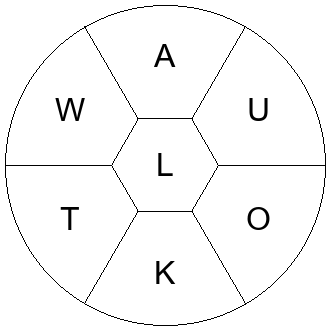
The official answers for today's puzzle are:

Click on the arrow to show the definition.
Click outside the pop-up to close it.


Number of Pangrams: 1

Maximum Puzzle Score: 100

Number of Answers: 30

Points Needed for Genius: 70

Genius requires between 11 and 27 words. You need at least a 7-letter word to reach genius. If you don't get the pangram, you need 81% of the total points to reach genius. If you get the pangram, you only need 65% of the remaining points to reach genius.

Other days with this pangram:

The button below will reveal a chart with the number of words by each letter. Red bars indicate that there is a pangram(s) starting with that letter.


How does this puzzle compare to other puzzles?

Today's score of 100 was in the 13th percentile of all puzzles.
The last time there was a score this low was on August 5, 2025.
The highest score ever was 537 on January 22, 2021.
The lowest score ever was 47 on March 27, 2023.

This puzzle's 30 possible answers rank it in the 25th percentile of all puzzles.
The last time there were fewer answers than this was on August 14, 2025.
The highest number of answers was 81 on June 8, 2019.
The lowest number of answers was 16 on March 27, 2023.

It takes a 7-letter word for genius.
The last time this happened was on August 18, 2025.

Today's puzzle has an average word length of 4.8.
For all Bees, the average word length has been 5.3.


Haven't I seen these letters before?

Hover over a letter to see its first and most recent appearance in the Bee!


Haven't I seen these words before?

The most common words in the Bee are:

  • noon 210
  • loll 202
  • toot 194
  • naan 177
  • nana 177
  • lilt 144
  • till 144
  • tilt 144
  • nene 138
  • tint 138
  • mama 135
  • mamma 135
  • acacia 131
  • acai 131
  • onto 129
  • toon 129
  • onion 125
  • anon 120
  • anal 119
  • olio 116
  • dodo 115
  • tact 115
  • boob 113
  • booboo 113
  • papa 112
  • poop 112
  • baba 111
  • lull 111
  • lulu 111
  • call 108
  • calla 108
  • mitt 108
  • mono 106
  • moon 106
  • ratatat 106
  • tart 106
  • tartar 106
  • tutu 106
  • attar 105
  • tatty 105
  • ammo 104
  • cocci 104
  • momma 104
  • tattoo 104
  • allay 103
  • ally 103
  • loon 102
  • epee 100
  • peep 100
  • roar 99


How long are words in the Bee?

There have been 105,677 answers ever accepted in the Bee - with 10,717 unique words.
Below are the distributions of the lengths of these words.


Valid dictionary words not in today's official answers

You may be wondering why these words aren't here*:

  • alow
  • alula
  • atlatl
  • awol
  • kolo
  • kulak
  • lall
  • latu
  • lota
  • loto
  • lotta
  • olla
  • outwalk
  • tala
  • tallol
  • talooka
  • taluk
  • taluka
  • tola
  • tolt
  • tolu
  • toluol
  • walla
  • wawl

*Because the New York Times considers them obscure or offensive.

allot

verb
  1. To distribute or apportion by (or as if by) lot.
  2. To assign or designate as a task or for a purpose.

allow

verb
  1. To grant, give, admit, accord, afford, or yield; to let one have.
  2. To acknowledge; to accept as true; to concede; to accede to an opinion.
  3. To grant (something) as a deduction or an addition; especially to abate or deduct.
  4. To grant license to; to permit; to consent to.
  5. To not bar or obstruct.
  6. To acknowledge or concede.
  7. To take into account by making an allowance.
  8. To render physically possible.
  9. To praise; to approve of; hence, to sanction.
  10. To sanction; to invest; to entrust.
  11. To like; to be suited or pleased with.

alto

noun
  1. A musical part or section higher than tenor and lower than soprano, formerly the part that performed a countermelody above the tenor or main melody.
  2. A person or musical instrument that performs the alto part.
  3. An alto saxophone

atoll

noun
  1. A type of island consisting of a ribbon reef that nearly or entirely surrounds a lagoon and supports, in most cases, one to many islets on the reef platform. Atolls have a unique geology, so not all islands with a reef and a lagoon are atolls

koala

noun
  1. A tree-dwelling marsupial, Phascolarctos cinereus, that resembles a small bear with a broad head, large ears and sharp claws, mainly found in eastern Australia.

kola

noun
  1. The kola plant, genus Cola, famous for its nut, or one of these nuts.
  2. A beverage or a drink made with kola nut flavoring, caramel and carbonated water.
noun
  1. A tree, genus Cola, bearing large brown seeds ("nuts") that are the source of cola extract.
  2. A nut of this tree.

loll

verb
  1. To act lazily or indolently while reclining; to lean; to lie at ease.
  2. To hang extended from the mouth, like the tongue of an animal heated from exertion.
  3. To let (the tongue) hang from the mouth in this way.

look

No Definition Found.

lookout

noun
  1. A vantage point with a view of the surrounding area.
  2. A session of watching for an approaching enemy, police, etc.
  3. A person on watch for approaching enemy, police, danger, etc.
  4. A subject for observation; a prospect or view.
  5. One's perspective, outlook; hence, one's responsibility. (used with a possessive pronoun or a noun in a possessive form).

loot

Etymology 1

noun
  1. A kind of scoop or ladle, chiefly used to remove the scum from brine-pans in saltworks.

Etymology 2

noun
  1. The act of plundering.
  2. Plunder, booty, especially from a ransacked city.
  3. Any prize or profit received for free, especially Christmas presents
  4. Items dropped by defeated enemies.
verb
  1. To steal, especially as part of war, riot or other group violence.
  2. To steal from.
  3. To examine the corpse of a fallen enemy for loot.

lotto

noun
  1. A game of chance similar to bingo
  2. A lottery

lout

Etymology 1

noun
  1. A troublemaker, often violent; a rude violent person; a yob.
  2. A clownish, awkward fellow; a bumpkin.
verb
  1. To treat as a lout or fool; to neglect; to disappoint.

Etymology 2

verb
  1. To bend, bow, stoop.

luau

noun
  1. An elaborate Hawaiian feast featuring traditional foods and entertainment.

lull

noun
  1. A period of rest or soothing.
  2. A period of reduced activity; a respite
  3. A period without waves or wind.
  4. An extended pause between sets of waves.
verb
  1. To cause to rest by soothing influences; to compose; to calm
  2. To become gradually calm; to subside; to cease or abate.

lulu

noun
  1. A remarkable person, object or idea.
  2. A very attractive or alluring person.
  3. A very bad mistake or error.
  4. A fixed allowance paid to a legislator in lieu of reimbursement for actual expenses.

outlaw

noun
  1. A fugitive from the law.
  2. (history) A criminal who is excluded from normal legal rights; one who can be killed at will without legal penalty.
  3. A person who operates outside established norms.
  4. A wild horse.
  5. An in-law: a relative by marriage.
  6. One who would be an in-law except that the marriage-like relationship is unofficial.
  7. A prostitute who works alone, without a pimp.
verb
  1. To declare illegal.
  2. To place a ban upon.
  3. To remove from legal jurisdiction or enforcement.
  4. To deprive of legal force.

outlook

noun
  1. A place from which something can be viewed.
  2. The view from such a place.
  3. An attitude or point of view.
  4. Expectation for the future.
verb
  1. To face or look in an outward direction.
  2. To look at (someone) so long or intently that they look away; to win or prevail over (someone or something).
  3. To be more attractive than (someone or something).
  4. To inspect throughly; to select.
  5. To look beyond (something).

outtalk

verb
  1. To overpower, outdo, or surpass in talking.
  2. To outwit by talking.

talk

Etymology 1

verb
  1. To communicate, usually by means of speech.
  2. To discuss; to talk about.
  3. To speak (a certain language).
  4. (chiefly used in progressive tenses) Used to emphasise the importance, size, complexity etc. of the thing mentioned.
  5. To confess, especially implicating others.
  6. To criticize someone for something of which one is guilty oneself.
  7. To gossip; to create scandal.
  8. (chiefly used in progressive tenses) To influence someone to express something, especially a particular stance or viewpoint or in a particular manner.

Etymology 2

noun
  1. A conversation or discussion; usually serious, but informal.
  2. A lecture.
  3. Gossip; rumour.
  4. (preceded by the; often qualified by a following of) A major topic of social discussion.
  5. (preceded by the) A customary conversation by parent(s) or guardian(s) with their (often teenaged) child about a reality of life; in particular:
  6. (not preceded by an article) Empty boasting, promises or claims.
  7. (usually plural) Meeting to discuss a particular matter.

tall

noun
  1. (possibly nonstandard) Someone or something that is tall.
adjective
  1. (of a person) Having a vertical extent greater than the average. For example, somebody with a height of over 6 feet would generally be considered to be tall.
  2. (of a building, etc.) Having its top a long way up; having a great vertical (and often greater than horizontal) extent; high.
  3. (of a story) Hard to believe, such as a tall story or a tall tale.
  4. (of a cup of coffee) A cup of coffee smaller than grande, usually 8 ounces.
  5. Obsequious; obedient.
  6. Seemly; suitable; fitting, becoming, comely; attractive, handsome.
  7. Bold; brave; courageous; valiant.
  8. Fine; proper; admirable; great; excellent.

tallow

noun
  1. A hard animal fat obtained from suet, etc.; used in cooking as well as to make candles, soap and lubricants
verb
  1. To grease or smear with tallow.
  2. To cause to have a large quantity of tallow; to fatten.

toll

Etymology 1

noun
  1. Loss or damage incurred through a disaster.
  2. A fee paid for some liberty or privilege, particularly for the privilege of passing over a bridge or on a highway, or for that of vending goods in a fair, market, etc.
  3. A fee for using any kind of material processing service.
  4. A tollbooth.
  5. A liberty to buy and sell within the bounds of a manor.
  6. A portion of grain taken by a miller as a compensation for grinding.
verb
  1. To impose a fee for the use of.
  2. To levy a toll on (someone or something).
  3. To take as a toll.
  4. To pay a toll or tallage.

Etymology 2

noun
  1. The act or sound of tolling
verb
  1. To ring (a bell) slowly and repeatedly.
  2. To summon by ringing a bell.
  3. To announce by tolling.

Etymology 3

verb
  1. To draw; pull; tug; drag.
  2. To tear in pieces.
  3. To draw; entice; invite; allure.
  4. To lure with bait; tole (especially, fish and animals).

Etymology 4

verb
  1. To take away; to vacate; to annul.
  2. To suspend.

tool

noun
  1. A mechanical device intended to make a task easier.
  2. Equipment used in a profession, e.g., tools of the trade.
  3. Something to perform an operation; an instrument; a means.
  4. A piece of software used to develop software or hardware, or to perform low-level operations.
  5. A person or group which is used or controlled, usually unwittingly, by another person or group.
  6. Penis.
  7. (by extension) An obnoxious or uptight person.
verb
  1. To work on or shape with tools, e.g., hand-tooled leather.
  2. To equip with tools.
  3. To work very hard.
  4. To put down another person (possibly in a subtle, hidden way), and in that way to use him or her to meet a goal.
  5. To intentionally attack the ball so that it deflects off a blocker out of bounds.
  6. To drive (a coach or other vehicle).
  7. To carry or convey in a coach or other vehicle.
  8. To travel in a vehicle; to ride or drive.

total

noun
  1. An amount obtained by the addition of smaller amounts.
  2. Sum.
verb
  1. To add up; to calculate the sum of.
  2. To equal a total of; to amount to.
  3. To demolish; to wreck completely. (from total loss)
  4. To amount to; to add up to.
adjective
  1. Entire; relating to the whole of something.
  2. (used as an intensifier) Complete; absolute.

walk

Etymology 1

verb
  1. To move on the feet by alternately setting each foot (or pair or group of feet, in the case of animals with four or more feet) forward, with at least one foot on the ground at all times. Compare run.
  2. To "walk free", i.e. to win, or avoid, a criminal court case, particularly when actually guilty.
  3. Of an object, to go missing or be stolen.
  4. (of a batsman) To walk off the field, as if given out, after the fielding side appeals and before the umpire has ruled; done as a matter of sportsmanship when the batsman believes he is out.
  5. To travel (a distance) by walking.
  6. To take for a walk or accompany on a walk.
  7. To allow a batter to reach base by pitching four balls.
  8. To move something by shifting between two positions, as if it were walking.
  9. To full; to beat cloth to give it the consistency of felt.
  10. To traverse by walking (or analogous gradual movement).
  11. To operate the left and right throttles of (an aircraft) in alternation.
  12. To leave, resign.
  13. To push (a vehicle) alongside oneself as one walks.
  14. To behave; to pursue a course of life; to conduct oneself.
  15. To be stirring; to be abroad; to go restlessly about; said of things or persons expected to remain quiet, such as a sleeping person, or the spirit of a dead person.
  16. To be in motion; to act; to move.
  17. To put, keep, or train (a puppy) in a walk, or training area for dogfighting.
  18. (hotel) To move a guest to another hotel if their confirmed reservation is not available on day of check-in.

Etymology 2

noun
  1. A trip made by walking.
  2. A distance walked.
  3. An Olympic Games track event requiring that the heel of the leading foot touch the ground before the toe of the trailing foot leaves the ground.
  4. A manner of walking; a person's style of walking.
  5. A path, sidewalk/pavement or other maintained place on which to walk. Compare trail.
  6. A situation where all players fold to the big blind, as their first action (instead of calling or raising), once they get their cards.
  7. An award of first base to a batter following four balls being thrown by the pitcher; known in the rules as a "base on balls".
  8. In coffee, coconut, and other plantations, the space between them.
  9. (Belize) An area of an estate planted with fruit-bearing trees.
  10. A place for keeping and training puppies for dogfighting.
  11. An enclosed area in which a gamecock is confined to prepare him for fighting.
  12. A sequence of alternating vertices and edges, where each edge's endpoints are the preceding and following vertices in the sequence.
  13. Something very easily accomplished; a walk in the park.
  14. A cheque drawn on a bank that was not a member of the London Clearing and whose sort code was allocated on a one-off basis; they had to be "walked" (hand-delivered by messengers).

walkout

noun
  1. A sudden stoppage of work.
  2. A similar mass action of people leaving a place as a form of protest.

wall

Etymology 1

noun
  1. A rampart of earth, stones etc. built up for defensive purposes.
  2. A structure built for defense surrounding a city, castle etc.
  3. Each of the substantial structures acting either as the exterior of or divisions within a structure.
  4. A point of desperation.
  5. A point of defeat or extinction.
  6. An impediment to free movement.
  7. A type of butterfly (Lasiommata megera).
  8. (often in combination) A barrier.
  9. A barrier to vision.
  10. Something with the apparent solidity and dimensions of a building wall.
  11. A divisive or containing structure in an organ or cavity.
  12. (auction) A fictional bidder used to increase the price at an auction.
  13. A doctor who tries to admit as few patients as possible.
  14. A line of defenders set up between an opposing free-kick taker and the goal.
  15. A personal notice board listing messages of interest to a particular user.
verb
  1. To enclose with, or as if with, a wall or walls.

Etymology 2

verb
  1. To boil.
  2. To well, as water; spring.

Etymology 3

noun
  1. A spring of water.

Etymology 4

noun
  1. A kind of knot often used at the end of a rope; a wall knot or wale.
verb
  1. To make a wall knot on the end of (a rope).

Etymology 5

interjection
  1. Used to acknowledge a statement or situation.
  2. An exclamation of surprise (often doubled or tripled).
  3. An exclamation of indignance.
  4. Used in speech to express the overcoming of reluctance to say something.
  5. Used in speech to fill gaps, particularly at the beginning of a response to a question; filled pause.
  6. (Hiberno-English) Used as a greeting

wallow

Etymology 1

noun
  1. An instance of wallowing.
  2. A pool of water or mud in which animals wallow, or the depression left by them in the ground.
  3. A kind of rolling walk.
verb
  1. To roll oneself about in something dirty, for example in mud.
  2. To move lazily or heavily in any medium.
  3. To immerse oneself in, to occupy oneself with, metaphorically.
  4. To live or exist in filth or in a sickening manner.
  5. To wither; to fade.

Etymology 2

adjective
  1. Tasteless, flat.

waul

verb
  1. To wail, to cry plaintively.

wool

noun
  1. The hair of the sheep, llama and some other ruminants.
  2. A cloth or yarn made from the wool of sheep.
  3. Anything with a texture like that of wool.
  4. A fine fiber obtained from the leaves of certain trees, such as firs and pines.
  5. Short, thick hair, especially when crisped or curled.
  6. Yarn (including that which is made from synthetic fibers.)
  7. Derogatory term for residents of the satellite towns outside Liverpool, such as St Helens or Warrington. See also Yonner.