Saturday, August 23, 2025

Answers to yesterday's Bee

Jump to answers for


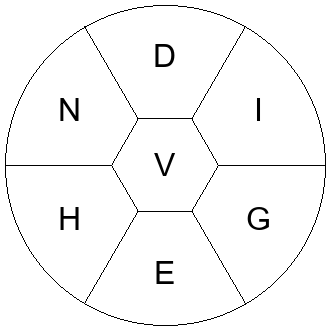
The official answers for today's puzzle are:

Click on the arrow to show the definition.
Click outside the pop-up to close it.


Number of Pangrams: 1

Maximum Puzzle Score: 234

Number of Answers: 41

Points Needed for Genius: 164

Genius requires between 22 and 34 words. You need at least a 7-letter word to reach genius. If you don't get the pangram, you need 75% of the total points to reach genius. If you get the pangram, you only need 68% of the remaining points to reach genius.

The button below will reveal a chart with the number of words by each letter. Red bars indicate that there is a pangram(s) starting with that letter.


How does this puzzle compare to other puzzles?

Today's score of 234 was in the 77th percentile of all puzzles.
The last time there was a score this high was on August 19, 2025.
The highest score ever was 537 on January 22, 2021.
The lowest score ever was 47 on March 27, 2023.

This puzzle's 41 possible answers rank it in the 54th percentile of all puzzles.
The last time there were more answers than this was on August 19, 2025.
The highest number of answers was 81 on June 8, 2019.
The lowest number of answers was 16 on March 27, 2023.

It takes a 7-letter word for genius.
The last time this happened was on August 22, 2025.

Today's puzzle has an average word length of 6.1.
For all Bees, the average word length has been 5.3.


Haven't I seen these letters before?

Hover over a letter to see its first and most recent appearance in the Bee!


Haven't I seen these words before?

The most common words in the Bee are:

  • noon 210
  • loll 202
  • toot 194
  • naan 177
  • nana 177
  • lilt 144
  • till 144
  • tilt 144
  • nene 138
  • tint 138
  • mama 135
  • mamma 135
  • acacia 131
  • acai 131
  • onto 129
  • toon 129
  • onion 125
  • anon 120
  • anal 119
  • olio 116
  • dodo 115
  • tact 115
  • boob 113
  • booboo 113
  • papa 112
  • poop 112
  • baba 111
  • lull 111
  • lulu 111
  • call 108
  • calla 108
  • mitt 108
  • mono 106
  • moon 106
  • ratatat 106
  • tart 106
  • tartar 106
  • tutu 106
  • attar 105
  • cocci 105
  • tatty 105
  • ammo 104
  • momma 104
  • tattoo 104
  • allay 103
  • ally 103
  • loon 102
  • epee 100
  • peep 100
  • roar 99


How long are words in the Bee?

There have been 105,780 answers ever accepted in the Bee - with 10,726 unique words.
Below are the distributions of the lengths of these words.


Valid dictionary words not in today's official answers

You may be wondering why these words aren't here*:

  • devi
  • neve
  • nevi
  • nieve
  • vegie
  • vendee
  • venene
  • venge
  • venged
  • venging
  • venin
  • venine
  • vide
  • vined
  • vining
  • vive

*Because the New York Times considers them obscure or offensive.

devein

verb
  1. To remove the vein-like colon from (shrimp).

deveined

verb
  1. To remove the vein-like colon from (shrimp).
adjective
  1. Having had the veins removed.

deveining

verb
  1. To remove the vein-like colon from (shrimp).

dive

Etymology 1

noun
  1. A jump or plunge into water.
  2. A headfirst jump toward the ground or into another substance.
  3. A downward swooping motion.
  4. A swim under water.
  5. A decline.
  6. A seedy bar, nightclub, etc.
  7. Aerial descent with the nose pointed down.
  8. A deliberate fall after a challenge.
verb
  1. To swim under water.
  2. To jump into water head-first.
  3. To jump headfirst toward the ground or into another substance.
  4. To descend sharply or steeply.
  5. (especially with in) To undertake with enthusiasm.
  6. To deliberately fall down after a challenge, imitating being fouled, in the hope of getting one's opponent penalised.
  7. To cause to descend, dunk; to plunge something into water.
  8. To explore by diving; to plunge into.
  9. To plunge or to go deeply into any subject, question, business, etc.; to penetrate; to explore.

Etymology 2

noun
  1. Any female celebrity, usually a well known singer or actress.
  2. A person who may be considered or who considers herself (or by extension himself) much more important than others, has high expectations of others and who is extremely demanding and fussy when it comes to personal privileges.

Etymology 3

noun
  1. A supernatural entity of disagreeable nature.

dived

verb
  1. To swim under water.
  2. To jump into water head-first.
  3. To jump headfirst toward the ground or into another substance.
  4. To descend sharply or steeply.
  5. (especially with in) To undertake with enthusiasm.
  6. To deliberately fall down after a challenge, imitating being fouled, in the hope of getting one's opponent penalised.
  7. To cause to descend, dunk; to plunge something into water.
  8. To explore by diving; to plunge into.
  9. To plunge or to go deeply into any subject, question, business, etc.; to penetrate; to explore.

divide

noun
  1. A thing that divides.
  2. An act of dividing.
  3. A distancing between two people or things.
  4. A large chasm, gorge, or ravine between two areas of land.
  5. The topographical boundary dividing two adjacent catchment basins, such as a ridge or a crest.
verb
  1. To split or separate (something) into two or more parts.
  2. To share (something) by dividing it.
  3. (with by) To calculate the number (the quotient) by which you must multiply one given number (the divisor) to produce a second given number (the dividend).
  4. To be a divisor of.
  5. To separate into two or more parts.
  6. Of a cell, to reproduce by dividing.
  7. To disunite in opinion or interest; to make discordant or hostile; to set at variance.
  8. To break friendship; to fall out.
  9. To have a share; to partake.
  10. To vote, as in the British parliament and other legislatures, by the members separating themselves into two parties (as on opposite sides of the hall or in opposite lobbies), that is, the ayes dividing from the noes.
  11. To mark divisions on; to graduate.
  12. To play or sing in a florid style, or with variations.

divided

verb
  1. To split or separate (something) into two or more parts.
  2. To share (something) by dividing it.
  3. (with by) To calculate the number (the quotient) by which you must multiply one given number (the divisor) to produce a second given number (the dividend).
  4. To be a divisor of.
  5. To separate into two or more parts.
  6. Of a cell, to reproduce by dividing.
  7. To disunite in opinion or interest; to make discordant or hostile; to set at variance.
  8. To break friendship; to fall out.
  9. To have a share; to partake.
  10. To vote, as in the British parliament and other legislatures, by the members separating themselves into two parties (as on opposite sides of the hall or in opposite lobbies), that is, the ayes dividing from the noes.
  11. To mark divisions on; to graduate.
  12. To play or sing in a florid style, or with variations.
adjective
  1. Separated or split into pieces
  2. Having conflicting interests or emotions
  3. Disunited
  4. (of a road) separated into lanes, that move in opposite directions, by a median

dividend

noun
  1. A number or expression that is to be divided by another.
  2. A pro rata payment of money by a company to its shareholders, usually made periodically (eg, quarterly or annually).
  3. Beneficial results from a metaphorical investment (of time, effort, etc.)

dividing

verb
  1. To split or separate (something) into two or more parts.
  2. To share (something) by dividing it.
  3. (with by) To calculate the number (the quotient) by which you must multiply one given number (the divisor) to produce a second given number (the dividend).
  4. To be a divisor of.
  5. To separate into two or more parts.
  6. Of a cell, to reproduce by dividing.
  7. To disunite in opinion or interest; to make discordant or hostile; to set at variance.
  8. To break friendship; to fall out.
  9. To have a share; to partake.
  10. To vote, as in the British parliament and other legislatures, by the members separating themselves into two parties (as on opposite sides of the hall or in opposite lobbies), that is, the ayes dividing from the noes.
  11. To mark divisions on; to graduate.
  12. To play or sing in a florid style, or with variations.
noun
  1. An act of division.
adjective
  1. Serving to divide or separate.

divine

Etymology 1

noun
  1. One skilled in divinity; a theologian.
  2. A minister of the gospel; a priest; a clergyman.
  3. (often capitalized, with 'the') God or a god, particularly in its aspect as a transcendental concept.
adjective
  1. Of or pertaining to a god.
  2. Eternal, holy, or otherwise godlike.
  3. Of superhuman or surpassing excellence.
  4. Beautiful, heavenly.
  5. Foreboding; prescient.
  6. (of souls) immortal; elect or saved after death
  7. Relating to divinity or theology.

Etymology 2

verb
  1. To foretell (something), especially by the use of divination.
  2. To guess or discover (something) through intuition or insight.
  3. To search for (underground objects or water) using a divining rod.
  4. To render divine; to deify.

divined

verb
  1. To foretell (something), especially by the use of divination.
  2. To guess or discover (something) through intuition or insight.
  3. To search for (underground objects or water) using a divining rod.
  4. To render divine; to deify.
adjective
  1. Made divine, made holy.

diving

verb
  1. To swim under water.
  2. To jump into water head-first.
  3. To jump headfirst toward the ground or into another substance.
  4. To descend sharply or steeply.
  5. (especially with in) To undertake with enthusiasm.
  6. To deliberately fall down after a challenge, imitating being fouled, in the hope of getting one's opponent penalised.
  7. To cause to descend, dunk; to plunge something into water.
  8. To explore by diving; to plunge into.
  9. To plunge or to go deeply into any subject, question, business, etc.; to penetrate; to explore.
noun
  1. The action of the verb to dive in any sense.
  2. The sport of jumping into water, often acrobatically.
  3. Descending below the surface of the water to interact with the environment.
  4. The act of pretending to be tripped or brought to the ground by an opposition player in order to secure a undeserved penalty.
adjective
  1. That or who dives or dive.

divining

verb
  1. To foretell (something), especially by the use of divination.
  2. To guess or discover (something) through intuition or insight.
  3. To search for (underground objects or water) using a divining rod.
  4. To render divine; to deify.
noun
  1. The action of the verb to divine in any sense.
adjective
  1. That or who divines (in any sense of the verb).

divvied

verb
  1. To divide into portions.

endive

noun
  1. A leafy salad vegetable, Cichorium endivia, which is often confused with common chicory (Cichorium intybus).

envied

adjective
  1. That is the object of envy.
verb
  1. To feel displeasure or hatred towards (someone) for their good fortune or possessions.
  2. To have envious feelings (at).
  3. To give (something) to (someone) grudgingly or reluctantly; to begrudge.
  4. To show malice or ill will; to rail.
  5. To do harm to; to injure; to disparage.
  6. To hate.
  7. To emulate.

even

Etymology 1

noun
  1. (diminutive) An even number.
verb
  1. To make flat and level.
  2. To equal.
  3. To be equal.
  4. To place in an equal state, as to obligation, or in a state in which nothing is due on either side; to balance, as accounts; to make quits.
  5. To set right; to complete.
  6. To act up to; to keep pace with.
adjective
  1. Flat and level.
  2. Without great variation.
  3. Equal in proportion, quantity, size, etc.
  4. (of an integer) Divisible by two.
  5. (of a number) Convenient for rounding other numbers to; for example, ending in a zero.
  6. On equal monetary terms; neither owing nor being owed.
  7. On equal terms of a moral sort; quits.
  8. Parallel; on a level; reaching the same limit.
  9. Without an irregularity, flaw, or blemish; pure.
  10. Associate; fellow; of the same condition.
adverb
  1. Exactly, just, fully.
  2. In reality; implying an extreme example in the case mentioned, as compared to the implied reality.
  3. Emphasizing a comparative.
  4. Signalling a correction of one's previous utterance; rather, that is.

Etymology 2

noun
  1. Evening.

evened

Etymology 1

verb
  1. To make flat and level.
  2. To equal.
  3. To be equal.
  4. To place in an equal state, as to obligation, or in a state in which nothing is due on either side; to balance, as accounts; to make quits.
  5. To set right; to complete.
  6. To act up to; to keep pace with.

Etymology 2

verb
  1. To occur; to happen; to come to pass.

evening

Etymology 1

noun
  1. The time of the day between dusk and night, when it gets dark.
  2. The time of the day between the approximate time of midwinter dusk and midnight (compare afternoon); the period after the end of regular office working hours.
  3. A concluding time period; a point in time near the end of something; the beginning of the end of something.
  4. A party or gathering held in the evening.

Etymology 2

verb
  1. To make flat and level.
  2. To equal.
  3. To be equal.
  4. To place in an equal state, as to obligation, or in a state in which nothing is due on either side; to balance, as accounts; to make quits.
  5. To set right; to complete.
  6. To act up to; to keep pace with.

Etymology 3

verb
  1. To occur; to happen; to come to pass.

give

Etymology 1

noun
  1. The amount of bending that something undergoes when a force is applied to it; a tendency to yield under pressure; resilence.
verb
  1. (ditransitive) To move, shift, provide something abstract or concrete to someone or something or somewhere.
  2. (ditransitive) To estimate or predict (a duration or probability) for (something).
  3. To yield slightly when a force is applied.
  4. To collapse under pressure or force.
  5. To provide, as, a service or a broadcast.
  6. To lead (onto or into).
  7. To provide a view of.
  8. To exhibit as a product or result; to produce; to yield.
  9. To cause; to make; used with the infinitive.
  10. To cause (someone) to have; produce in (someone); effectuate.
  11. To allow or admit by way of supposition; to concede.
  12. To attribute; to assign; to adjudge.
  13. To communicate or announce (advice, tidings, etc.); to pronounce or utter (an opinion, a judgment, a shout, etc.).
  14. To grant power or permission to; to allow.
  15. To devote or apply (oneself).
  16. To become soft or moist.
  17. To shed tears; to weep.
  18. To have a misgiving.
  19. To be going on, to be occurring

Etymology 2

noun
  1. A shackle or fetter, especially for the leg.

given

verb
  1. (ditransitive) To move, shift, provide something abstract or concrete to someone or something or somewhere.
  2. (ditransitive) To estimate or predict (a duration or probability) for (something).
  3. To yield slightly when a force is applied.
  4. To collapse under pressure or force.
  5. To provide, as, a service or a broadcast.
  6. To lead (onto or into).
  7. To provide a view of.
  8. To exhibit as a product or result; to produce; to yield.
  9. To cause; to make; used with the infinitive.
  10. To cause (someone) to have; produce in (someone); effectuate.
  11. To allow or admit by way of supposition; to concede.
  12. To attribute; to assign; to adjudge.
  13. To communicate or announce (advice, tidings, etc.); to pronounce or utter (an opinion, a judgment, a shout, etc.).
  14. To grant power or permission to; to allow.
  15. To devote or apply (oneself).
  16. To become soft or moist.
  17. To shed tears; to weep.
  18. To have a misgiving.
  19. To be going on, to be occurring
noun
  1. A condition that is assumed to be true without further evaluation.
adjective
  1. Already arranged.
  2. Currently discussed.
  3. Particular, specific.
  4. Assumed as fact or hypothesis.
  5. (with to) Prone, disposed.
preposition
  1. Considering; taking into account.

giving

verb
  1. (ditransitive) To move, shift, provide something abstract or concrete to someone or something or somewhere.
  2. (ditransitive) To estimate or predict (a duration or probability) for (something).
  3. To yield slightly when a force is applied.
  4. To collapse under pressure or force.
  5. To provide, as, a service or a broadcast.
  6. To lead (onto or into).
  7. To provide a view of.
  8. To exhibit as a product or result; to produce; to yield.
  9. To cause; to make; used with the infinitive.
  10. To cause (someone) to have; produce in (someone); effectuate.
  11. To allow or admit by way of supposition; to concede.
  12. To attribute; to assign; to adjudge.
  13. To communicate or announce (advice, tidings, etc.); to pronounce or utter (an opinion, a judgment, a shout, etc.).
  14. To grant power or permission to; to allow.
  15. To devote or apply (oneself).
  16. To become soft or moist.
  17. To shed tears; to weep.
  18. To have a misgiving.
  19. To be going on, to be occurring
noun
  1. The act of bestowing as a gift; a conferring or imparting.
  2. A gift; a benefaction.
  3. The act of softening, breaking, or yielding.
adjective
  1. Having the tendency to give; generous

hive

noun
  1. A structure, whether artificial or natural, for housing a swarm of honeybees.
  2. The bees of one hive; a swarm of bees.
  3. A place swarming with busy occupants; a crowd.
  4. A section of the registry.
verb
  1. To enter or possess a hive.
  2. To form a hive-like entity.
  3. To collect into a hive.
  4. To store in a hive or similarly.
  5. To take shelter or lodgings together; to reside in a collective body.

hived

verb
  1. To enter or possess a hive.
  2. To form a hive-like entity.
  3. To collect into a hive.
  4. To store in a hive or similarly.
  5. To take shelter or lodgings together; to reside in a collective body.

hiving

verb
  1. To enter or possess a hive.
  2. To form a hive-like entity.
  3. To collect into a hive.
  4. To store in a hive or similarly.
  5. To take shelter or lodgings together; to reside in a collective body.

inveigh

verb
  1. (with against or occasionally about, formerly also with on, at, upon) To complain loudly, to give voice to one's censure or criticism
  2. To draw in or away; to entice, inveigle.

inveighed

verb
  1. (with against or occasionally about, formerly also with on, at, upon) To complain loudly, to give voice to one's censure or criticism
  2. To draw in or away; to entice, inveigle.

inveighing

verb
  1. (with against or occasionally about, formerly also with on, at, upon) To complain loudly, to give voice to one's censure or criticism
  2. To draw in or away; to entice, inveigle.
noun
  1. The act of one who complains or censures.

ivied

adjective
  1. Overgrown with ivy or another climbing plant.

vegged

verb
  1. To vegetate; to engage in complete inactivity; to rest

veggie

noun
  1. A vegetable.
  2. A vegetarian.
adjective
  1. Vegetarian; suitable for vegetarians
  2. Vegetable-like.

vegging

verb
  1. To vegetate; to engage in complete inactivity; to rest

vein

noun
  1. A blood vessel that transports blood from the capillaries back to the heart.
  2. (in plural) The entrails of a shrimp.
  3. In leaves, a thickened portion of the leaf containing the vascular bundle.
  4. The nervure of an insect’s wing.
  5. A stripe or streak of a different colour or composition in materials such as wood, cheese, marble or other rocks.
  6. A topic of discussion; a train of association, thoughts, emotions, etc.
  7. A style, tendency, or quality.
  8. A fissure, cleft or cavity, as in the earth or other substance.
verb
  1. To mark with veins or a vein-like pattern.

veined

verb
  1. To mark with veins or a vein-like pattern.
adjective
  1. (sometimes in combination) Having veins or veinlike markings.

veining

verb
  1. To mark with veins or a vein-like pattern.
noun
  1. An arrangement of veins or veinlike markings.

vend

Etymology 1

noun
  1. The act of vending or selling; a sale.
  2. The total sales of coal from a colliery.
verb
  1. To hawk or to peddle merchandise.
  2. To sell wares through a vending machine.

Etymology 2

noun
  1. The letter Ꝩ/ꝩ, used in Old Norse, related to the rune wynn (ᚹ, whence also Latin-script Ƿ/ƿ) but with the bowl open at the top, like a y.

vended

verb
  1. To hawk or to peddle merchandise.
  2. To sell wares through a vending machine.

vending

verb
  1. To hawk or to peddle merchandise.
  2. To sell wares through a vending machine.

vied

verb
  1. To fight for superiority; to contend; to compete eagerly so as to gain something.
  2. To rival (something), etc.
  3. To do or produce in emulation, competition, or rivalry; to put in competition; to bandy.
  4. To stake; to wager.
  5. To stake a sum of money upon a hand of cards, as in the old game of gleek. See revie.

vine

noun
  1. The climbing plant that produces grapes.
  2. Any plant of the genus Vitis.
  3. (by extension) Any similar climbing or trailing plant.

vivid

noun
  1. A felt-tipped permanent marker.
adjective
  1. (of perception) Clear, detailed or powerful.
  2. (of an image) Bright, intense or colourful.
  3. Full of life, strikingly alive.