Thursday, August 28, 2025

Answers to yesterday's Bee

Jump to answers for


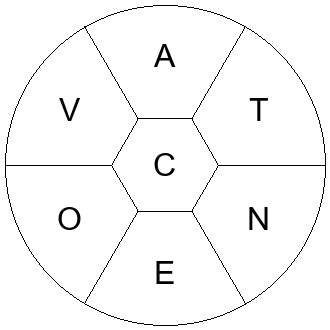
The official answers for today's puzzle are:

Click on the arrow to show the definition.
Click outside the pop-up to close it.


Number of Pangrams: 1

Maximum Puzzle Score: 312

Number of Answers: 61

Points Needed for Genius: 218

Genius requires between 31 and 50 words. You need at least a 7-letter word to reach genius. If you don't get the pangram, you need 73% of the total points to reach genius. If you get the pangram, you only need 68% of the remaining points to reach genius.

Other days with this pangram:

The button below will reveal a chart with the number of words by each letter. Red bars indicate that there is a pangram(s) starting with that letter.


How does this puzzle compare to other puzzles?

Today's score of 312 was in the 95th percentile of all puzzles.
The last time there was a score this high was on August 17, 2025.
The highest score ever was 537 on January 22, 2021.
The lowest score ever was 47 on March 27, 2023.

This puzzle's 61 possible answers rank it in the 93rd percentile of all puzzles.
The last time there were more answers than this was on August 16, 2025.
The highest number of answers was 81 on June 8, 2019.
The lowest number of answers was 16 on March 27, 2023.

It takes a 7-letter word for genius.
The last time this happened was on August 27, 2025.

Today's puzzle has an average word length of 5.7.
For all Bees, the average word length has been 5.3.


Haven't I seen these letters before?

Hover over a letter to see its first and most recent appearance in the Bee!


Haven't I seen these words before?

The most common words in the Bee are:

  • noon 210
  • loll 202
  • toot 195
  • naan 177
  • nana 177
  • lilt 144
  • till 144
  • tilt 144
  • nene 138
  • tint 138
  • mama 135
  • mamma 135
  • acacia 131
  • acai 131
  • onto 129
  • toon 129
  • onion 125
  • anal 120
  • anon 120
  • olio 116
  • tact 116
  • dodo 115
  • boob 113
  • booboo 113
  • baba 112
  • papa 112
  • poop 112
  • lull 111
  • lulu 111
  • call 108
  • calla 108
  • mitt 108
  • tutu 107
  • mono 106
  • moon 106
  • ratatat 106
  • tart 106
  • tartar 106
  • attar 105
  • cocci 105
  • tattoo 105
  • tatty 105
  • allay 104
  • ally 104
  • ammo 104
  • momma 104
  • loon 102
  • epee 100
  • peep 100
  • roar 99


How long are words in the Bee?

There have been 106,014 answers ever accepted in the Bee - with 10,736 unique words.
Below are the distributions of the lengths of these words.


Valid dictionary words not in today's official answers

You may be wondering why these words aren't here*:

  • aceta
  • acta
  • ancon
  • ancone
  • caca
  • caeca
  • canto
  • cate
  • catena
  • catenae
  • catenate
  • cavetto
  • ceca
  • cenote
  • centavo
  • cento
  • cetane
  • cete
  • coact
  • coatee
  • coco
  • cocotte
  • coenact
  • concent
  • conn
  • connate
  • contactee
  • conte
  • conto
  • coocoo
  • cooee
  • coon
  • cooncan
  • cotan
  • cotta
  • cottae
  • covenantee
  • eocene
  • nance
  • nocent
  • noncontact
  • nonvacant
  • octan
  • octavo
  • octette
  • oncet
  • tacan
  • tace
  • tecta
  • tenace
  • toccate
  • toco

*Because the New York Times considers them obscure or offensive.

accent

Etymology 1

noun
  1. A higher-pitched or stronger articulation of a particular syllable of a word or phrase in order to distinguish it from the others or to emphasize it.
  2. Emphasis or importance in general.
  3. A mark or character used in writing, in order to indicate the place of the spoken accent, or to indicate the nature or quality of the vowel marked.
  4. Modulation of the voice in speaking; the manner of speaking or pronouncing; a peculiar or characteristic modification of the voice, expressing emotion; tone.
  5. The distinctive manner of pronouncing a language associated with a particular region, social group, etc., whether of a native speaker or a foreign speaker; the phonetic and phonological aspects of a dialect.
  6. (sign languages) A distinctive manner of producing a sign language, such as someone who does not normally use a certain sign language might have when using it.
  7. A word; a significant tone or sound.
  8. (usually plurale tantum) Expressions in general; speech.
  9. Stress laid on certain syllables of a verse.
  10. A regularly recurring stress upon the tone to mark the beginning, and, more feebly, the third part of the measure.
  11. A special emphasis of a tone, even in the weaker part of the measure.
  12. The rhythmical accent, which marks phrases and sections of a period.
  13. The expressive emphasis and shading of a passage.
  14. A mark used to represent specific stress on a note.
  15. A mark placed at the right hand of a letter, and a little above it, to distinguish magnitudes of a similar kind expressed by the same letter, but differing in value, as y', y''.
  16. A mark at the right hand of a number, indicating minutes of a degree, seconds, etc., as in 12' 27'', meaning twelve minutes and twenty-seven seconds.
  17. A mark used to denote feet and inches, as in 6' 10'', meaning six feet ten inches.
  18. Emphasis laid on a part of an artistic design or composition; an emphasized detail, in particular a detail in sharp contrast to its surroundings.
  19. A very small gemstone set into a piece of jewellery.
  20. A distinctive feature or quality.
  21. Utterance.

Etymology 2

verb
  1. To express the accent of vocally; to utter with accent.
  2. To mark emphatically; to emphasize; to accentuate; to make prominent.
  3. To mark with written accents.

acetate

noun
  1. Any salt or ester of acetic acid.
  2. Cellulose acetate.
  3. A transparent sheet used for overlays.
  4. Ellipsis of acetate disc: a disc of aluminium covered in a wax used to make demonstration copies of a phonograph record.

acetone

noun
  1. A colourless, volatile, flammable liquid ketone, (CH3)2CO, used as a solvent.

acne

noun
  1. A skin condition, usually of the face, that is common in adolescents. It is characterised by red pimples, and is caused by the inflammation of sebaceous glands through bacterial infection.
  2. A pattern of blemishes in an area of skin resulting from the skin condition.

avocet

noun
  1. Any of four species of wading birds in the genus Recurvirostra, of the family Recurvirostridae, with long, slender recurved bills, long legs, and webbed feet.

cacao

noun
  1. A tree, Theobroma cacao, whose seed is used to make chocolate.
  2. This tree's seed, the cocoa bean.

cancan

noun
  1. A high-kicking chorus line dance originating in France.
  2. (motocross) A trick where one leg is brought over the seat, so that both legs are on one side.
verb
  1. To dance the cancan.

cane

noun
  1. A plant with simple stems, like bamboo or sugar cane, or the stem thereof
  2. The stem of such a plant adapted for use as a tool
  3. A rod-shaped tool or device, somewhat like a cane
  4. Split rattan, as used in wickerwork, basketry and the like
  5. A local European measure of length; the canna.
verb
  1. To strike or beat with a cane or similar implement
  2. To destroy; to comprehensively defeat
  3. To do something well, in a competent fashion
  4. To produce extreme pain
  5. To make or furnish with cane or rattan.

canna

Etymology 1

noun
  1. Any member of the genus Canna of tropical plants with large leaves and often showy flowers.

Etymology 2

noun
  1. A measure of length in Italy, varying from six to seven feet.

cannon

noun
  1. A complete assembly, consisting of an artillery tube and a breech mechanism, firing mechanism or base cap, which is a component of a gun, howitzer or mortar. It may include muzzle appendages.
  2. Any similar device for shooting material out of a tube.
  3. A bone of a horse's leg, between the fetlock joint and the knee or hock.
  4. A cannon bit.
  5. A large muzzle-loading artillery piece.
  6. A carom.
  7. The arm of a player that can throw well.
  8. A hollow cylindrical piece carried by a revolving shaft, on which it may, however, revolve independently.
  9. (Chinese chess) A piece which moves horizontally and vertically like a rook but captures another piece by jumping over a different piece in the line of attack.
verb
  1. To bombard with cannons.
  2. To play the carom billiard shot. To strike two balls with the cue ball
  3. To fire something, especially spherical, rapidly.
  4. To collide or strike violently, especially so as to glance off or rebound.
noun
  1. A generally accepted principle; a rule.
  2. A group of literary works that are generally accepted as representing a field.
  3. The works of a writer that have been accepted as authentic.
  4. A eucharistic prayer, particularly the Roman Canon.
  5. A religious law or body of law decreed by the church.
  6. A catalogue of saints acknowledged and canonized in the Roman Catholic Church.
  7. In monasteries, a book containing the rules of a religious order.
  8. A member of a cathedral chapter; one who possesses a prebend in a cathedral or collegiate church.
  9. A piece of music in which the same melody is played by different voices, but beginning at different times; a round.
  10. (Roman law) A rent or stipend payable at some regular time, generally annual, e.g., canon frumentarius
  11. Those sources, especially including literary works, which are considered part of the main continuity regarding a given fictional universe.
  12. A rolled and filleted loin of meat; also called cannon.
  13. A large size of type formerly used for printing the church canons, standardized as 48-point.
  14. The part of a bell by which it is suspended; the ear or shank of a bell.
  15. A carom.
noun
  1. A clergy member serving a cathedral or collegiate church.
  2. A canon regular, a member of any of several Roman Catholic religious orders.
noun
  1. A Near Eastern and Caucasian musical instrument related to the zither, dulcimer, or harp having either 26 strings and a single bridge, or twice that number and two bridges.

cannot

noun
  1. Something that cannot be done.
verb
  1. Can not (be unable to).
  2. Be forbidden or not permitted to

canoe

noun
  1. A small long and narrow boat, propelled by one or more people (depending on the size of canoe), using single-bladed paddles. The paddlers face in the direction of travel, in either a seated position, or kneeling on the bottom of the boat. Canoes are open on top, and pointed at both ends.
  2. An oversize, usually older, luxury car.
  3. Any of the deflectors positioned around a roulette wheel, shaped like upside-down boats.
verb
  1. To ride or paddle a canoe.

canon

Etymology 1

noun
  1. A generally accepted principle; a rule.
  2. A group of literary works that are generally accepted as representing a field.
  3. The works of a writer that have been accepted as authentic.
  4. A eucharistic prayer, particularly the Roman Canon.
  5. A religious law or body of law decreed by the church.
  6. A catalogue of saints acknowledged and canonized in the Roman Catholic Church.
  7. In monasteries, a book containing the rules of a religious order.
  8. A member of a cathedral chapter; one who possesses a prebend in a cathedral or collegiate church.
  9. A piece of music in which the same melody is played by different voices, but beginning at different times; a round.
  10. (Roman law) A rent or stipend payable at some regular time, generally annual, e.g., canon frumentarius
  11. Those sources, especially including literary works, which are considered part of the main continuity regarding a given fictional universe.
  12. A rolled and filleted loin of meat; also called cannon.
  13. A large size of type formerly used for printing the church canons, standardized as 48-point.
  14. The part of a bell by which it is suspended; the ear or shank of a bell.
  15. A carom.

Etymology 2

noun
  1. A clergy member serving a cathedral or collegiate church.
  2. A canon regular, a member of any of several Roman Catholic religious orders.

Etymology 3

noun
  1. A Near Eastern and Caucasian musical instrument related to the zither, dulcimer, or harp having either 26 strings and a single bridge, or twice that number and two bridges.

cant

Etymology 1

noun
  1. An argot, the jargon of a particular class or subgroup.
  2. A private or secret language used by a religious sect, gang, or other group.
  3. A language spoken by some Irish Travellers; Shelta.
  4. Empty, hypocritical talk.
  5. Whining speech, such as that used by beggars.
  6. A blazon of a coat of arms that makes a pun upon the name (or, less often, some attribute or function) of the bearer, canting arms.
  7. A call for bidders at a public fair; an auction.
verb
  1. To speak with the jargon of a class or subgroup.
  2. To speak in set phrases.
  3. To preach in a singsong fashion, especially in a false or empty manner.
  4. Of a blazon, to make a pun that references the bearer of a coat of arms.
  5. To sell by auction, or bid at an auction.

Etymology 2

noun
  1. Side, edge, corner, niche.
  2. Slope, the angle at which something is set.
  3. A corner (of a building).
  4. An outer or external angle.
  5. An inclination from a horizontal or vertical line; a slope or bevel; a tilt.
  6. A movement or throw that overturns something.
  7. A sudden thrust, push, kick, or other impulse, producing a bias or change of direction; also, the bias or turn so given.
  8. (coopering) A segment forming a side piece in the head of a cask.
  9. A segment of the rim of a wooden cogwheel.
  10. A piece of wood laid upon the deck of a vessel to support the bulkheads.
verb
  1. To set (something) at an angle.
  2. To give a sudden turn or new direction to.
  3. To bevel an edge or corner.
  4. To overturn so that the contents are emptied.

Etymology 3

noun
  1. A parcel, a division.
verb
  1. To divide or parcel out.

Etymology 4

adjective
  1. Lively, lusty.

cantata

noun
  1. A vocal composition accompanied by instruments and generally containing more than one movement, typical of 17th and 18th century Italian music.

canteen

noun
  1. A small cafeteria or snack bar, especially one in a military establishment, school, or place of work.
  2. A temporary or mobile café used in an emergency or on a film location etc.
  3. A box with compartments for storing eating utensils, silverware etc.
  4. A military mess kit.
  5. A water bottle used by a soldier or camper.

canton

Etymology 1

noun
  1. A division of a political unit.
  2. A small community or clan.
  3. A subdivision of a flag, the rectangular inset on the upper hoist (i.e., flagpole) side (e.g., the stars of the US national flag are in a canton).
  4. A division of a shield occupying one third of the chief, usually on the dexter side, formed by a perpendicular line from the top meeting a horizontal line from the side.
verb
  1. To delineate as a separate district.
  2. To divide into cantons.
  3. To allot quarters to troops.

Etymology 2

noun
  1. A song or canto.

cava

Etymology 1

noun
  1. A Spanish white sparkling wine made using the méthode champenoise.

Etymology 2

noun
  1. The vena cava.

Etymology 3

noun
  1. A cavity

cave

Etymology 1

noun
  1. A large, naturally-occurring cavity formed underground or in the face of a cliff or a hillside.
  2. A hole, depression, or gap in earth or rock, whether natural or man-made.
  3. A storage cellar, especially for wine or cheese.
  4. A place of retreat, such as a man cave.
  5. A naturally-occurring cavity in bedrock which is large enough to be entered by an adult.
  6. A shielded area where nuclear experiments can be carried out.
  7. (drilling) Debris, particularly broken rock, which falls into a drill hole and interferes with drilling.
  8. A collapse or cave-in.
  9. The vagina.
  10. (often "Cave") A group that breaks from a larger political party or faction on a particular issue.
  11. Any hollow place, or part; a cavity.
  12. A code cave.
verb
  1. To surrender.
  2. To collapse.
  3. To hollow out or undermine.
  4. To engage in the recreational exploration of caves.
  5. In room-and-pillar mining, to extract a deposit of rock by breaking down a pillar which had been holding it in place.
  6. To work over tailings to dress small pieces of marketable ore.
  7. To dwell in a cave.

Etymology 2

interjection
  1. (public school slang) look out!; beware!

caveat

noun
  1. A warning.
  2. A qualification or exemption.
  3. A formal objection.
  4. A notice requesting a postponement of a court proceeding.
verb
  1. To qualify a statement with a caveat or proviso.
  2. To formally object to something.
  3. To issue a notice requesting that proceedings be suspended.
  4. To warn or caution against some event.

cent

noun
  1. (money) A subunit of currency equal to one-hundredth of the main unit of currency in many countries. Symbol: ¢.
  2. A small sum of money.
  3. (money) A subunit of currency equal to one-hundredth of the euro.
  4. (money) A coin having face value of one cent (in either of the above senses).
  5. A hundredth of a semitone or half step.
noun
  1. The point in the interior of a circle that is equidistant from all points on the circumference.
  2. The point in the interior of a sphere that is equidistant from all points on the circumference.
  3. The middle portion of something; the part well away from the edges.
  4. The point on a line that is midway between the ends.
  5. The point in the interior of any figure of any number of dimensions that has as its coordinates the arithmetic mean of the coordinates of all points on the perimeter of the figure (or of all points in the interior for a center of volume).
  6. The subgroup (respectively, subring), denoted Z(G), of those elements of a given group (respectively, ring) G that commute with every element of G.
  7. A place where the greater part of some function or activity occurs.
  8. A topic that is particularly important in a given context.
  9. A player in the middle of the playing area
  10. A player who can go all over the court, except the shooting circles.
  11. A pass played into the centre of the pitch.
  12. One of the backs operating in a central area of the pitch, either the inside centre or outside centre.
  13. A temporary structure upon which the materials of a vault or arch are supported in position until the work becomes self-supporting.
  14. One of the two conical steel pins in a lathe, etc., upon which the work is held, and about which it revolves.
  15. A conical recess or indentation in the end of a shaft or other work, to receive the point of a center, on which the work can turn, as in a lathe.
  16. The ensemble of moderate or centrist political parties.
noun
  1. A centigrade temperature scale having the freezing point of water defined as 0° and its boiling point defined as 100° at standard atmospheric pressure. Known as the Celsius scale since 1948.
  2. A single degree on this scale.
  3. A unit of angle equal to the hundredth part of a quadrant. Its symbol is gon.
noun
  1. (Sanskrit and other Indian philology) satakam, set of one hundred verses connected by the same metre or topic
  2. Perfect score on a board exam
noun
  1. A period of 100 consecutive years; often specifically a numbered period with conventional start and end dates, e.g., the twentieth century, which stretches from (strictly) 1901 through 2000, or (informally) 1900 through 1999. The first century AD was from 1 to 100.
  2. A unit in ancient Roman army, originally of 100 army soldiers as part of a cohort, later of more varied sizes (but typically containing 60 to 70 or 80) soldiers or other men (guards, police, firemen), commanded by a centurion.
  3. A political division of ancient Rome, meeting in the Centuriate Assembly.
  4. A hundred things of the same kind; a hundred.
  5. A hundred runs scored either by a single player in one innings, or by two players in a partnership.
  6. A score of one hundred points.
  7. A race a hundred units (as meters, kilometres, miles) in length.
  8. A banknote in the denomination of one hundred dollars.

cetacean

noun
  1. An animal belonging to the order Cetacea, including dolphins, porpoises, and whales.
adjective
  1. Pertaining to the zoologic order Cetacea, or associated with species falling under that taxonomic hierarchy.
  2. (by extension, sometimes figurative) Resembling or relating to large aquatic mammals.

coat

noun
  1. An outer garment covering the upper torso and arms.Wp
  2. A covering of material, such as paint.Wp
  3. The fur or feathers covering an animal's skin.Wp
  4. Canvas painted with thick tar and secured round a mast or bowsprit to prevent water running down the sides into the hold (now made of rubber or leather).
  5. A petticoat.
  6. The habit or vesture of an order of men, indicating the order or office; cloth.
  7. A coat of arms.Wp
  8. A coat card.
verb
  1. To cover with a coating of some material.
  2. To cover like a coat.
  3. To clothe.

coca

Etymology 1

noun
  1. Any of the four cultivated plants which belong to the family Erythroxylaceae, native to western South America.
  2. The dried leaf of one of these plants, the South American shrub (Erythroxylum coca), widely cultivated in Andean countries, which is the source of cocaine.

Etymology 2

noun
  1. A pastry typically made and consumed in the Spanish Mediterranean coast.

cocoa

Etymology 1

noun
  1. The dried and partially fermented fatty seeds of the cacao tree from which chocolate is made.
  2. An unsweetened brown powder made from roasted, ground cocoa beans, used in making chocolate, and in cooking.
  3. A hot drink made with milk, cocoa powder, and sugar.
  4. A serving of this drink.
  5. A light to medium brown colour.
adjective
  1. Of a light to medium brown colour, like that of cocoa powder.

Etymology 2

noun
  1. Coconut palm.
  2. Coconut, the fruit of the coconut palm.

cocoon

noun
  1. The silky protective case spun by the larvae of some insects in which they metamorphose, the pupa.
  2. Any similar protective case, whether real or metaphorical.
verb
  1. To envelop in a protective case
  2. To withdraw into such a case.

concatenate

verb
  1. To join or link together, as though in a chain.
  2. To join (text strings) together.
adjective
  1. Joined together as if in a chain.

concave

noun
  1. A concave surface or curve.
  2. The vault of the sky.
  3. One of the celestial spheres of the Ptolemaic or geocentric model of the world.
  4. An element of a curved grid used to separate desirable material from tailings or chaff in mining and harvesting.
  5. An indentation running along the base of a surfboard, intended to increase lift.
  6. An indented area on the top of a skateboard, providing a position for foot placement and increasing board strength.
verb
  1. To render concave, or increase the degree of concavity.
adjective
  1. Curved like the inner surface of a sphere or bowl
  2. (of a polygon) not convex; having at least one internal angle greater than 180 degrees.
  3. (of a real-valued function on the reals) satisfying the property that all segments connecting two points on the function's graph lie below the function.
  4. Hollow; empty

concoct

verb
  1. To prepare something by mixing various ingredients, especially to prepare food for cooking.
  2. To contrive something using skill or ingenuity.
  3. To digest.

cone

noun
  1. A surface of revolution formed by rotating a segment of a line around another line that intersects the first line.
  2. A solid of revolution formed by rotating a triangle around one of its altitudes.
  3. A space formed by taking the direct product of a given space with a closed interval and identifying all of one end to a point.
  4. Anything shaped like a cone.
  5. The fruit of a conifer.
  6. A cone-shaped flower head of various plants, such as banksias and proteas.
  7. An ice cream cone.
  8. A traffic cone
  9. A unit of volume, applied solely to marijuana and only while it is in a smokable state; roughly 1.5 cubic centimetres, depending on use.
  10. Any of the small cone-shaped structures in the retina.
  11. The bowl piece on a bong.
  12. The process of smoking cannabis in a bong.
  13. A cone-shaped cannabis joint.
  14. A passenger on a cruise ship (so-called by employees after traffic cones, from the need to navigate around them)
  15. An object V together with an arrow going from V to each object of a diagram such that for any arrow A in the diagram, the pair of arrows from V which subtend A also commute with it. (Then V can be said to be the cone’s vertex and the diagram which the cone subtends can be said to be its base.)
  16. A shell of the genus Conus, having a conical form.
  17. A set of formal languages with certain desirable closure properties, in particular those of the regular languages, the context-free languages and the recursively enumerable languages.
verb
  1. To fashion into the shape of a cone.
  2. To form a cone shape.
  3. (frequently followed by "off") To segregate or delineate an area using traffic cones

connect

verb
  1. (of an object) To join (to another object): to attach, or to be intended to attach or capable of attaching, to another object.
  2. (of two objects) To join: to attach, or to be intended to attach or capable of attaching, to each other.
  3. (of an object) To join (two other objects), or to join (one object) to (another object): to be a link between two objects, thereby attaching them to each other.
  4. (of a person) To join (two other objects), or to join (one object) to (another object): to take one object and attach it to another.
  5. To join an electrical or telephone line to a circuit or network.
  6. To associate; to establish a relation between.
  7. To make a travel connection; to switch from one means of transport to another as part of the same trip.

connote

verb
  1. To signify beyond its literal or principal meaning.
  2. To possess an inseparable related condition; to imply as a logical consequence.
  3. To express without overt reference; to imply.
  4. To require as a logical predicate to consequence.

contact

noun
  1. The act of touching physically; being in close association.
  2. The establishment of communication (with).
  3. A nodule designed to connect a device with something else.
  4. Someone with whom one is in communication.
  5. A contact lens.
  6. A device designed for repetitive connections.
  7. (by ellipsis) Contact juggling.
  8. The plane between two adjacent bodies of dissimilar rock.
verb
  1. To touch; to come into physical contact with.
  2. To establish communication with something or someone

content

Etymology 1

noun
  1. (except in phrases) Satisfaction, contentment; pleasure.
verb
  1. To give contentment or satisfaction; to satisfy; to make happy.
  2. To satisfy the expectations of; to pay; to requite
adjective
  1. Satisfied
interjection
  1. Alright, agreed

Etymology 2

noun
  1. That which is contained.
  2. Subject matter; that which is contained in writing or speech.
  3. The amount of material contained; contents
  4. Capacity for holding
  5. The n-dimensional space contained by an n-dimensional polytope (called volume in the case of a polyhedron and area in the case of a polygon)
  6. (of a polynomial with coefficients in a GCD domain) the greatest common divisor of the coefficients; (of a polynomial with coefficients in an integral domain) the common factor of the coefficients which, when removed, leaves the adjusted coefficients with no common factor that is noninvertible
  7. Satisfaction; contentment.
  8. Acquiescence without examination
  9. That which contents or satisfies; that which if attained would make one happy.
  10. (House of Lords) an expression of assent to a bill or motion; an affirmate vote
  11. (House of Lords) a member who votes in assent
adjective
  1. Contained.

convect

verb
  1. To carry or convey; to move (a warm fluid) upward through a cooler fluid, to transfer heat or a fluid by convection.

convene

verb
  1. To come together; to meet; to unite.
  2. To come together, as in one body or for a public purpose; to meet; to assemble.
  3. To cause to assemble; to call together; to convoke.
  4. To summon judicially to meet or appear.

convent

noun
  1. A religious community whose members (especially nuns) live under strict observation of religious rules and self-imposed vows.
  2. The buildings and pertaining surroundings in which such a community lives.
  3. A Christian school.
  4. A gathering of people lasting several days for the purpose of discussing or working on topics previously selected.
  5. A coming together; a meeting.
verb
  1. To call before a judge or judicature; to summon; to convene.
  2. To meet together; to concur.
  3. To be convenient; to serve.

coot

noun
  1. Any of various aquatic birds of the genus Fulica that are mainly black with a prominent frontal shield on the forehead.
  2. A foolish or eccentric fellow
  3. (with the) A success; something excellent.
  4. Body louse (Pediculus humanus).

cote

Etymology 1

noun
  1. A cottage or hut.
  2. A small structure built to contain domesticated animals such as sheep, pigs or pigeons.

Etymology 2

verb
  1. To quote.

Etymology 3

verb
  1. To go side by side with; hence, to pass by; to outrun and get before.

cotenant

No Definition Found.

cotton

Etymology 1

noun
  1. Gossypium, a genus of plant used as a source of cotton fiber.
  2. Any plant that encases its seed in a thin fiber that is harvested and used as a fabric or cloth.
  3. Any fiber similar in appearance and use to Gossypium fiber.
  4. The textile made from the fiber harvested from a cotton plant, especially Gossypium.
  5. An item of clothing made from cotton.
verb
  1. To provide with cotton.
  2. To make or become cotton-like
  3. To protect from harsh stimuli, coddle, or muffle.
  4. To rub or burnish with cotton.
adjective
  1. Made of cotton.

Etymology 2

verb
  1. To get on with someone or something; to have a good relationship with someone.

cove

Etymology 1

noun
  1. A hollow in a rock; a cave or cavern.
  2. A concave vault or archway, especially the arch of a ceiling.
  3. A small coastal inlet, especially one having high cliffs protecting vessels from prevailing winds.
  4. A strip of prairie extending into woodland.
  5. A recess or sheltered area on the slopes of a mountain.
  6. The wooden roof of the stern gallery of an old sailing warship.
  7. A thin line, sometimes gilded, along a yacht's strake below deck level.
verb
  1. To arch over; to build in a hollow concave form; to make in the form of a cove.

Etymology 2

noun
  1. (thieves' cant) A fellow; a man.
  2. A friend; a mate.

Etymology 3

verb
  1. To brood, cover, over, or sit over, as birds their eggs.

coven

noun
  1. A formal group or assembly of witches.
  2. A family, group or assembly of vampires.
  3. A clique that shares common interests or activities.

covenant

noun
  1. An agreement to do or not do a particular thing.
  2. A promise, incidental to a deed or contract, either express or implied.
  3. A pact or binding agreement between two or more parties.
  4. An incidental clause in an agreement.
verb
  1. To enter into, or promise something by, a covenant.
  2. To enter a formal agreement.
  3. To bind oneself in contract.
  4. To make a stipulation.

covet

verb
  1. To wish for with eagerness; to desire possession of, often enviously.
  2. To long for inordinately or unlawfully; to hanker after (something forbidden).
  3. To yearn; to have or indulge an inordinate desire, especially for another's possession.

ecotone

noun
  1. A transition area between two adjacent ecological communities (ecosystems).

enact

noun
  1. Purpose; determination
verb
  1. To make (a bill) into law
  2. To act the part of; to play
  3. To do; to effect

neocon

noun
  1. A neoconservative.

nonce

Etymology 1

noun
  1. The one or single occasion; the present reason or purpose (now only in for the nonce).
  2. A nonce word.
  3. A value constructed so as to be unique to a particular message in a stream, in order to prevent replay attacks.
adjective
  1. One-off; produced or created for a single occasion or use. Denoting something occurring once.

Etymology 2

noun
  1. (prisons) A sex offender, especially one who is guilty of sexual offences against children.
  2. (prisons) A police informer, one who betrays a criminal enterprise
  3. A stupid or worthless person.

ocean

noun
  1. One of the large bodies of water separating the continents.
  2. Water belonging to an ocean.
  3. An immense expanse; any vast space or quantity without apparent limits.
  4. A blue colour, like that of the ocean (also called ocean blue).

octane

noun
  1. Any of the eighteen isomeric aliphatic hydrocarbons (C8H18) found in petroleum, especially an iso-octane 2,2,4 trimethyl-pentane; they are used as fuels and solvents.

octant

noun
  1. The eighth part of a circle; an arc of 45 degrees.
  2. The aspect of two planets that are 45°, or one-eighth of a circle, apart.
  3. The eighth part of a disc; a sector of 45 degrees; half a quadrant.
  4. An instrument for measuring angles, particularly of elevation.

octave

noun
  1. An interval of twelve semitones spanning eight degrees of the diatonic scale, representing a doubling or halving in pitch frequency.
  2. The pitch an octave higher than a given pitch.
  3. A coupler on an organ which allows the organist to sound the note an octave above the note of the key pressed (cf sub-octave)
  4. A poetic stanza consisting of eight lines; usually used as one part of a sonnet.
  5. The eighth defensive position, with the sword hand held at waist height, and the tip of the sword out straight at knee level.
  6. The day that is one week after a feast day in the Latin rite of the Catholic Church.
  7. An eight-day period beginning on a feast day in the Latin rite of the Catholic Church.
  8. An octonion.
  9. Any of a number of coherent-noise functions of differing frequency that are added together to form Perlin noise.
  10. The subjective vibration of a planet.
adjective
  1. Consisting of eight; eight in number.

octet

noun
  1. A group or set of eight of something.
  2. A group of eight musicians performing together.
  3. A composition for such a group of musicians.
  4. A byte of eight bits. Abbreviation: o
  5. A group of three bits, representing any of eight possible values.

once

adverb
  1. (frequency) One and only one time.
  2. (temporal location) Formerly; during some period in the past.
  3. Multiplied by one: indicating that a number is multiplied by one.
  4. As soon as.
  5. At a future time.
conjunction
  1. As soon as; when; after.

tacet

No Definition Found.

taco

noun
  1. A Mexican snack food; a small tortilla (soft or hard shelled), with typically some type of meat, rice, beans, cheese, diced vegetables (usually tomatoes and lettuce, as served in the United States, and cilantro, onion, and avocado, as served in México) and salsa.
  2. The vulva.
  3. A yellow stain on a shirt armpit caused by sweat or deodorant.
verb
  1. To fold or cause to buckle in half, similar to the way a taco is folded.

tact

noun
  1. The sense of touch; feeling.
  2. The stroke in beating time.
  3. Sensitive mental touch; special skill or faculty; keen perception or discernment; ready power of appreciating and doing what is required by circumstances; the ability to say the right thing.
  4. A verbal operant which is controlled by a nonverbal stimulus (such as an object, event, or property of an object) and is maintained by nonspecific social reinforcement (praise).
verb
  1. To use a tact (a kind of verbal operant; see noun sense).
noun
  1. A maneuver, or action calculated to achieve some end.
  2. A maneuver used against an enemy.
  3. A sequence of moves that limits the opponent's options and results in an immediate and tangible advantage, typically in the form of material.

toccata

noun
  1. A piece of music (usually for a keyboard instrument) designed to emphasise the dexterity of the performer.

vacant

adjective
  1. Not occupied; empty.
  2. Showing no intelligence or interest.

vacate

verb
  1. To move out of a dwelling, either by choice or by eviction.
  2. To leave an office or position.
  3. To have a court judgement set aside; to annul.
  4. To leave an area, usually as a result of orders from public authorities in the event of a riot or natural disaster.