Wednesday, September 3, 2025

Answers to yesterday's Bee

Jump to answers for


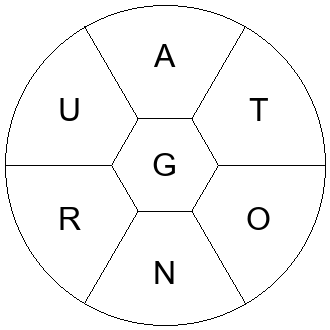
The official answers for today's puzzle are:

Click on the arrow to show the definition.
Click outside the pop-up to close it.


Number of Pangrams: 3

Maximum Puzzle Score: 250

Number of Answers: 55

Points Needed for Genius: 175

Genius requires between 24 and 49 words. You need at least a 7-letter word to reach genius. If you don't get the pangrams, you need 86% of the total points to reach genius. If you get the pangrams, you only need 63% of the remaining points to reach genius.

Other days with this pangram:

The button below will reveal a chart with the number of words by each letter. Red bars indicate that there is a pangram(s) starting with that letter.


How does this puzzle compare to other puzzles?

Today's score of 250 was in the 83rd percentile of all puzzles.
The last time there was a score this high was on August 30, 2025.
The highest score ever was 537 on January 22, 2021.
The lowest score ever was 47 on March 27, 2023.

This puzzle's 55 possible answers rank it in the 85th percentile of all puzzles.
The last time there were more answers than this was on August 30, 2025.
The highest number of answers was 81 on June 8, 2019.
The lowest number of answers was 16 on March 27, 2023.

It takes a 7-letter word for genius.
The last time this happened was on September 1, 2025.

Today's puzzle has an average word length of 5.3.
For all Bees, the average word length has been 5.3.


Haven't I seen these letters before?

Hover over a letter to see its first and most recent appearance in the Bee!


Haven't I seen these words before?

The most common words in the Bee are:

  • noon 210
  • loll 202
  • toot 195
  • naan 178
  • nana 178
  • lilt 144
  • till 144
  • tilt 144
  • nene 138
  • tint 138
  • mama 136
  • mamma 136
  • acacia 132
  • acai 132
  • onto 129
  • toon 129
  • onion 125
  • anal 120
  • anon 120
  • tact 117
  • olio 116
  • dodo 115
  • boob 114
  • booboo 114
  • baba 112
  • papa 112
  • poop 112
  • lull 111
  • lulu 111
  • call 108
  • calla 108
  • mitt 108
  • tutu 107
  • cocci 106
  • mono 106
  • moon 106
  • ratatat 106
  • tart 106
  • tartar 106
  • attar 105
  • tattoo 105
  • tatty 105
  • allay 104
  • ally 104
  • ammo 104
  • momma 104
  • loon 102
  • epee 100
  • peep 100
  • roar 99


How long are words in the Bee?

There have been 106,303 answers ever accepted in the Bee - with 10,774 unique words.
Below are the distributions of the lengths of these words.


Valid dictionary words not in today's official answers

You may be wondering why these words aren't here*:

  • aggro
  • agon
  • agorot
  • agro
  • anga
  • arrogator
  • gargantua
  • garron
  • gaun
  • gaur
  • gnar
  • gnarr
  • goanna
  • gogo
  • grana
  • grat
  • grot
  • grugru
  • guan
  • guarana
  • gutta
  • naga
  • nagana
  • nogg
  • organa
  • organon
  • ourang
  • outrang
  • outrung
  • ragg
  • ragga
  • ruga
  • rugrat
  • taggant
  • tagrag
  • tanga
  • targa
  • tautaug
  • tautog
  • tonga
  • trog
  • trogon
  • trug
  • tung
  • turgor
  • unarrogant
  • ungag
  • ungot

*Because the New York Times considers them obscure or offensive.

agar

noun
  1. A gelatinous material obtained from red algae, especially Gracilaria species, used as a bacterial culture medium, in electrophoresis and as a food additive.
  2. A culture medium based on this material.

agog

adjective
  1. In eager desire, eager, astir.
  2. (chiefly of eyes) Wide open.
adverb
  1. In a state of high anticipation, excitement, or interest.

agora

Etymology 1

noun
  1. A place for gathering.
  2. A marketplace, especially in Classical Greece.

Etymology 2

noun
  1. Since 1960, a monetary unit and coin of Israel, the 100th part of a shekel / sheqel.

angora

noun
  1. An angora cat.
  2. A goat of a domesticated breed that produces mohair.
  3. A rabbit belonging to the Angora rabbit breed, one of the oldest domestic breeds of rabbits in the world, raised chiefly in Europe for its silky and long hair (a subspecies of the European rabbit, Oryctolagus cuniculus)
  4. The hair of angora rabbits or angora goats, used to make textiles.
  5. The fabric made from the hair of angora rabbits or angora goats.

argon

noun
  1. The chemical element (symbol Ar) with an atomic number of 18. The third most abundant gas in the Earth's atmosphere, it is a colourless, odourless, inert noble gas.
  2. A single atom of this element.

argonaut

noun
  1. Any of several species of shelled octopods of the family Argonautidae (of which only the genus Argonauta is not extinct).
  2. An adventurer on a dangerous but rewarding quest.

argot

noun
  1. A secret language or conventional slang peculiar to thieves, tramps and vagabonds.
  2. The specialized informal vocabulary and terminology used between people with special skill in a field, such as between doctors, mathematicians or hackers.

arrogant

adjective
  1. Having excessive pride in oneself, often with contempt or disrespect for others.

augur

noun
  1. A diviner who foretells events by the behaviour of birds or other animals, or by signs derived from celestial phenomena, or unusual occurrences.
  2. An official who interpreted omens before the start of public events.
verb
  1. To foretell events; to exhibit signs of future events.
  2. To anticipate, to foretell, or to indicate a favorable or an unfavorable issue.

gaga

Etymology 1

adjective
  1. Mentally senile.
  2. Crazy.
  3. Infatuated.

Etymology 2

noun
  1. A variant of dodgeball played inside a fenced area, usually a hexagon or octagon.

gang

Etymology 1

verb
  1. To go; walk; proceed.

Etymology 2

noun
  1. A number going in company; a number of friends or persons associated for a particular purpose.
  2. A group of laborers under one foreman; a squad.
  3. A criminal group with a common cultural background and identifying features, often associated with a particular section of a city.
  4. A group of criminals or alleged criminals who band together for mutual protection and profit.
  5. A group of politicians united in furtherance of a political goal.
  6. A chain gang.
  7. A combination of similar tools or implements arranged so as, by acting together, to save time or labor; a set.
  8. A set; all required for an outfit.
  9. (electrics) A number of switches or other electrical devices wired into one unit and covered by one faceplate.
  10. (electrics) A group of wires attached as a bundle.
  11. A going, journey; a course, path, track.
  12. An outhouse: an outbuilding used as a lavatory.
verb
  1. To attach similar items together to form a larger unit.

Etymology 3

verb
  1. (obsolete outside Northumbria) To go.

Etymology 4

verb
  1. To participate in a gangbang.
  2. To beat one or a smaller amount of people as a gang.
  3. To belong to a gang; to commit criminal acts as part of a gang.

Etymology 5

noun
  1. The earthy waste substances occurring in metallic ore.

gargantuan

adjective
  1. Of the giant Gargantua or his appetite.
  2. Huge; immense; tremendous.

gator

noun
  1. Alligator.

gaunt

adjective
  1. Lean, angular and bony
  2. Haggard, drawn and emaciated
  3. Bleak, barren and desolate

gnat

noun
  1. Any small insect of the order Diptera, specifically within the suborder Nematocera.

goat

noun
  1. A mammal, Capra aegagrus hircus, and similar species of the genus Capra.
  2. A lecherous man.
  3. A scapegoat.
  4. A Pontiac GTO car.
  5. (speech recognition) A person who is not easily understood by a speech recognition system; contrasted with sheep.
  6. A fool, loser, or object of ridicule.
verb
  1. To allow goats to feed on.
  2. To scapegoat.

gong

Etymology 1

noun
  1. A percussion instrument consisting of a metal disk that emits a sonorous sound when struck with a soft hammer.
  2. A medal or award, particularly Knight Bachelor.
verb
  1. To make the sound of a gong; to ring a gong.
  2. To send a signal to, using a gong or similar device.
  3. To give an award or medal to.

Etymology 2

noun
  1. An outhouse: an outbuilding used as a lavatory.
  2. The contents of an outhouse pit: shit.

Etymology 3

noun
  1. A kind of cultivation energy, more powerful than qi.
  2. An advanced practice that cultivates such energy.

goon

Etymology 1

noun
  1. A thug; a usually muscular henchman with little intelligence (also known as a 'hired goon').
  2. A fool; someone considered silly, stupid, awkward, or outlandish.
  3. An enforcer or fighter.
  4. (WWII, PoW slang) A German guard in a prisoner-of-war camp.
  5. A member of the comedy web site Something Awful.

Etymology 2

noun
  1. A wine flagon or cask.
  2. Cheap or inferior cask wine.

gorgon

noun
  1. A vicious female monster from Greek mythology with sharp fangs and hair of living, venomous snakes. One of the three sisters: Medusa, Stheno and Euryale
  2. An intimidating, ugly, or disgusting woman; anything hideous or horrid.
adjective
  1. Like a gorgon; very ugly or terrifying.

gout

Etymology 1

noun
  1. An extremely painful inflammation of joints, especially of the big toe, caused by a metabolic defect resulting in the accumulation of uric acid in the blood and the deposition of urates around the joints.
  2. (usually followed by of) A spurt or splotch.
  3. A disease of wheat and cornstalks, caused by insect larvae.
verb
  1. To spurt.

Etymology 2

noun
  1. Taste; relish

gran

noun
  1. (usually affectionate) a grandmother
  2. A grandfather

grant

noun
  1. The act of granting; a bestowing or conferring; concession; allowance; permission.
  2. The yielding or admission of something in dispute.
  3. The thing or property granted; a gift; a boon.
  4. A transfer of property by deed or writing; especially, an appropriation or conveyance made by the government.
  5. The deed or writing by which such a transfer is made.
  6. An application for a grant (monetary boon to aid research or the like).
verb
  1. (ditransitive) to give (permission or wish)
  2. (ditransitive) To bestow or confer, with or without compensation, particularly in answer to prayer or request; to give.
  3. To agree with (someone) on (something); to accept (something) for the sake of argument; to admit to (someone) that (something) is true.
  4. To assent; to consent.

grantor

noun
  1. A person who grants something.

groan

noun
  1. A low, mournful sound uttered in pain or grief.
  2. A low, guttural sound uttered in frustration, disapproval, or ecstasy.
  3. (of an object) A low creaking sound from applied pressure or weight.
verb
  1. To make a groan.
  2. To strive after earnestly, as if with groans.

groat

Etymology 1

noun
  1. (chiefly in the plural) Hulled grain.

Etymology 2

noun
  1. Any of various old coins of England and Scotland.
  2. A historical English silver coin worth four English pennies, still minted as one of the set of Maundy coins.
  3. A proverbial small sum; a whit or jot.

grog

noun
  1. (original meaning) An alcoholic beverage made with rum and water, especially that once issued to sailors of the Royal Navy.
  2. (by extension) Any alcoholic beverage.
  3. A glass or serving of an alcoholic beverage.
  4. An alcoholic beverage made with hot water or tea, sugar and rum, sometimes also with lemon or lime juice and spices, particularly cinnamon.
  5. A type of pre-fired clay that has been ground and screened to a specific particle size.

grotto

noun
  1. A small cave.
  2. An artificial cavern-like retreat.
  3. A Marian shrine, usually built in a cavern-like structure.
  4. A local organization of cavers that typically organizes trips to caves and provides information and training for caving; a caving club.
  5. (Satanism) A secretive name for a local group of underground Satanists.

grout

noun
  1. A thin mortar used to fill the gaps between tiles and cavities in masonry.
  2. Coarse meal; groats.
  3. (typically used in the plural) Dregs, sediment.
  4. A kind of beer or ale.
verb
  1. To insert mortar between tiles.

grunt

noun
  1. A short snorting sound, often to show disapproval, or used as a reply when one is reluctant to speak.
  2. The snorting cry of a pig.
  3. Any fish of the perciform family Haemulidae.
  4. A person who does ordinary and boring work.
  5. (United States Army and Marine Corps slang) An infantry soldier.
  6. The amount of power of which a vehicle is capable.
  7. A dessert of steamed berries and dough, usually blueberries; blueberry grunt.
verb
  1. (of a person) To make a grunt or grunts.
  2. (of a pig) To make a grunt or grunts.
  3. To break wind; to fart.

guano

noun
  1. Dung from a sea bird or from a bat.
  2. A variety of seabird.

guar

noun
  1. An annual legume (Cyamopsis tetragonoloba), used as a food for cattle and humans.

guarantor

noun
  1. A person or company that provides a guarantee.

guru

noun
  1. A Hindu or Sikh spiritual teacher.
  2. (sometimes humorous) An influential advisor or mentor.

nonagon

noun
  1. A polygon with nine sides and nine angles; an enneagon

nougat

noun
  1. A confection of honey or sugar and roasted nuts, often with other ingredients.

orang

noun
  1. An orangutan.

orangutan

noun
  1. An arboreal anthropoid ape genus Pongo consisting of two species, Pongo pygmaeus of Borneo and Pongo abelii of Sumatra, having a shaggy reddish-brown coat, long arms, and no tail.

organ

noun
  1. A larger part of an organism, composed of tissues that perform similar functions.
  2. (by extension) A body of an organization dedicated to the performing of certain functions.
  3. A musical instrument that has multiple pipes which play when a key is pressed (the pipe organ), or an electronic instrument designed to replicate such.
  4. An official magazine, newsletter, or similar publication of an organization.
  5. Short for organ pipe cactus.
  6. The penis.
verb
  1. To supply with an organ or organs; to fit with organs.

outgo

noun
  1. The act or process of going out.
  2. A quantity of a substance or thing that has flowed out; an outflow.
  3. An expenditure, cost or outlay.
verb
  1. To go out, to set forth.
  2. To go further; to exceed or surpass; go beyond.
  3. To overtake; to travel faster than.
  4. To outdo; exceed; surpass.
  5. To come to an end.

outgun

verb
  1. To defeat in terms of firepower.

raga

noun
  1. Any of various melodic forms used in Indian classical music, or a piece of music composed in such a form.
  2. Passion, love, lust.

ragout

noun
  1. A stew of meat and vegetables mixed together
  2. (by extension) any stew, soup, or sauce
verb
  1. To prepare (food) as a ragout.

ragtag

adjective
  1. Unkempt, shabby, or in a state of disrepair.
  2. Very diverse; having irregular and dissimilar components.

rang

verb
  1. Of a bell, etc., to produce a resonant sound.
  2. To make (a bell, etc.) produce a resonant sound.
  3. To produce (a sound) by ringing.
  4. To produce the sound of a bell or a similar sound.
  5. Of something spoken or written, to appear to be, to seem, to sound.
  6. To telephone (someone).
  7. To resound, reverberate, echo.
  8. To produce music with bells.
  9. To repeat often, loudly, or earnestly.

rotgut

noun
  1. Raw or poor-quality alcoholic liquor

rung

Etymology 1

noun
  1. A crosspiece forming a step of a ladder; a round.
  2. A crosspiece between legs of a chair.
  3. A position in a hierarchy.
  4. A floor timber in a ship.
  5. One of the stakes of a cart; a spar; a heavy staff.
  6. One of the radial handles projecting from the rim of a steering wheel.
  7. One of the pins or trundles of a lantern wheel.

Etymology 2

verb
  1. Of a bell, etc., to produce a resonant sound.
  2. To make (a bell, etc.) produce a resonant sound.
  3. To produce (a sound) by ringing.
  4. To produce the sound of a bell or a similar sound.
  5. Of something spoken or written, to appear to be, to seem, to sound.
  6. To telephone (someone).
  7. To resound, reverberate, echo.
  8. To produce music with bells.
  9. To repeat often, loudly, or earnestly.
adjective
  1. Of a pig: having a ring through the nose.

tang

Etymology 1

noun
  1. A refreshingly sharp aroma or flavor.
  2. A strong or offensive taste; especially, a taste of something extraneous to the thing itself.
  3. A sharp, specific flavor or tinge.
  4. A projecting part of an object by means of which it is secured to a handle, or to some other part.
  5. The part of a knife, fork, file, or other small instrument, which is inserted into the handle.
  6. The projecting part of the breech of a musket barrel, by which the barrel is secured to the stock.
  7. The part of a sword blade to which the handle is fastened.
  8. A group of saltwater fish from the Acanthuridae family, especially the Zebrasoma genus.
  9. (games) A shuffleboard paddle.
  10. Tongue
  11. (by extension) Anything resembling a tongue in form or position such as the tongue of a buckle.

Etymology 2

noun
  1. A sharp, twanging sound; an unpleasant tone; a twang.
verb
  1. To strike two metal objects together loudly in order to persuade a swarm of honeybees to land so it may be captured by the beekeeper.
  2. To make a ringing sound; to ring.

Etymology 3

noun
  1. Knotted wrack, Ascophyllum nodosum (coarse blackish seaweed)

Etymology 4

noun
  1. The vagina.
  2. Intercourse with a woman

tango

noun
  1. A Standard ballroom dance in 4/4 time; or a social dance, the Argentine tango.
  2. A piece of music suited to such a dance.
  3. The letter T in the ICAO spelling alphabet.
  4. Enemy, used amongst special police forces, derived from the abbreviation of target using the NATO phonetic alphabet.
  5. A dark orange colour shade; deep tangerine
verb
  1. To dance the tango.
  2. To mingle or interact (with each other).

tarragon

noun
  1. A perennial herb, the wormwood species Artemisia dracunculus, from Europe and parts of Asia.
  2. The leaves of this plant (either fresh, or preserved in vinegar / oil mixture) used as a seasoning.

toga

noun
  1. A loose outer garment worn by the citizens of Ancient Rome.
  2. A loose wrap gown.
  3. An academic gown.

tong

Etymology 1

noun
  1. An instrument or tool used for manipulating things in a fire without touching them with the hands.
verb
  1. To use tongs.
  2. To grab, manipulate or transport something using tongs.

Etymology 2

noun
  1. A Chinese secret society or gang.

Etymology 3

noun
  1. The flexible muscular organ in the mouth that is used to move food around, for tasting and that is moved into various positions to modify the flow of air from the lungs in order to produce different sounds in speech.
  2. This organ, as taken from animals used for food (especially cows).−
  3. (metonym) A language.
  4. Speakers of a language, collectively.
  5. Voice (the distinctive sound of a person's speech); accent (distinctive manner of pronouncing a language).
  6. Manner of speaking, often habitually.
  7. (metonym) A person speaking in a specified manner (most often plural).
  8. The power of articulate utterance; speech generally.
  9. Discourse; fluency of speech or expression.
  10. Discourse; fluency of speech or expression.
  11. Honourable discourse; eulogy.
  12. (often in the plural) Glossolalia.
  13. In a shoe, the flap of material that goes between the laces and the foot (so called because it resembles a tongue in the mouth).
  14. Any large or long physical protrusion on an automotive or machine part or any other part that fits into a long groove on another part.
  15. A projection, or slender appendage or fixture.
  16. A long, narrow strip of land, projecting from the mainland into a sea or lake.
  17. The pole of a vehicle; especially, the pole of an ox cart, to the end of which the oxen are yoked.
  18. The clapper of a bell.
  19. An individual point of flame from a fire.
  20. A small sole (type of fish).
  21. A short piece of rope spliced into the upper part of standing backstays, etc.; also, the upper main piece of a mast composed of several pieces.
  22. A reed.
  23. A division of formation; A layer or member of a formation that pinches out in one direction.

gotta

No Definition Found.

gonna

No Definition Found.

untag

verb
  1. To remove a tag from.

ragu

noun
  1. An Italian pasta sauce containing ground meat cooked with sautéed vegetables in tomato sauce or some other kind of liquid.