Sunday, September 7, 2025

Answers to yesterday's Bee

Jump to answers for


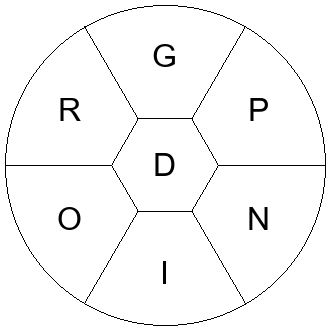
The official answers for today's puzzle are:

Click on the arrow to show the definition.
Click outside the pop-up to close it.


Number of Pangrams: 3

Maximum Puzzle Score: 255

Number of Answers: 49

Points Needed for Genius: 179

Genius requires between 23 and 42 words. You need at least a 7-letter word to reach genius. If you don't get the pangrams, you need 85% of the total points to reach genius. If you get the pangrams, you only need 64% of the remaining points to reach genius.

Other days with this pangram:

The button below will reveal a chart with the number of words by each letter. Red bars indicate that there is a pangram(s) starting with that letter.


How does this puzzle compare to other puzzles?

Today's score of 255 was in the 84th percentile of all puzzles.
The last time there was a score this high was on August 30, 2025.
The highest score ever was 537 on January 22, 2021.
The lowest score ever was 47 on March 27, 2023.

This puzzle's 49 possible answers rank it in the 74th percentile of all puzzles.
The last time there were more answers than this was on September 4, 2025.
The highest number of answers was 81 on June 8, 2019.
The lowest number of answers was 16 on March 27, 2023.

It takes a 7-letter word for genius.
The last time this happened was on September 3, 2025.

Today's puzzle has an average word length of 5.7.
For all Bees, the average word length has been 5.3.


Haven't I seen these letters before?

Hover over a letter to see its first and most recent appearance in the Bee!


Haven't I seen these words before?

The most common words in the Bee are:

  • noon 211
  • loll 203
  • toot 195
  • naan 179
  • nana 179
  • lilt 144
  • till 144
  • tilt 144
  • nene 138
  • tint 138
  • mama 136
  • mamma 136
  • acacia 132
  • acai 132
  • onto 129
  • toon 129
  • onion 125
  • anal 121
  • anon 121
  • tact 117
  • dodo 116
  • olio 116
  • boob 114
  • booboo 114
  • baba 113
  • papa 112
  • poop 112
  • lull 111
  • lulu 111
  • call 108
  • calla 108
  • mitt 108
  • tutu 107
  • cocci 106
  • mono 106
  • moon 106
  • ratatat 106
  • tart 106
  • tartar 106
  • allay 105
  • ally 105
  • attar 105
  • tattoo 105
  • tatty 105
  • ammo 104
  • momma 104
  • loon 103
  • epee 100
  • peep 100
  • roar 99


How long are words in the Bee?

There have been 106,476 answers ever accepted in the Bee - with 10,777 unique words.
Below are the distributions of the lengths of these words.


Valid dictionary words not in today's official answers

You may be wondering why these words aren't here*:

  • dido
  • dingdong
  • dingdonging
  • dinning
  • doggoning
  • donging
  • doodoo
  • dorp
  • dorr
  • drongo
  • godding
  • godroon
  • gridding
  • griding
  • gridironing
  • indign
  • indigoid
  • indri
  • iodid
  • iodin
  • irid
  • nidi
  • niding
  • nodi
  • nondrip
  • nonrigid
  • noodging
  • oidioid
  • ordo
  • podding
  • poind
  • poinding
  • ponding
  • pongid
  • pood
  • rinding
  • rodding

*Because the New York Times considers them obscure or offensive.

digging

verb
  1. To move hard-packed earth out of the way, especially downward to make a hole with a shovel. Or to drill, or the like, through rocks, roads, or the like. More generally, to make any similar hole by moving material out of the way.
  2. To get by digging; to take from the ground; often with up.
  3. To take ore from its bed, in distinction from making excavations in search of ore.
  4. To work like a digger; to study ploddingly and laboriously.
  5. To investigate, to research, often followed by out or up.
  6. To thrust; to poke.
  7. To defend against an attack hit by the opposing team by successfully passing the ball
verb
  1. To understand or show interest in.
  2. To appreciate, or like.
noun
  1. The action performed by a person or thing that digs.
  2. A place where ore is dug, especially certain localities in California, Australia, etc. where gold is obtained.
  3. Region; locality

ding

Etymology 1

noun
  1. Very minor damage, a small dent or chip.
  2. A rejection.
verb
  1. To hit or strike.
  2. To dash; to throw violently.
  3. To inflict minor damage upon, especially by hitting or striking.
  4. To fire or reject.
  5. To deduct, as points, from another, in the manner of a penalty; to penalize.
  6. To mishit (a golf ball).

Etymology 2

noun
  1. The high-pitched resonant sound of a bell.
  2. The act of levelling up.
verb
  1. To make high-pitched sound like a bell.
  2. To keep repeating; impress by reiteration, with reference to the monotonous striking of a bell.
  3. To level up.

Etymology 3

noun
  1. An ancient Chinese vessel with legs and a lid.

dinging

verb
  1. To hit or strike.
  2. To dash; to throw violently.
  3. To inflict minor damage upon, especially by hitting or striking.
  4. To fire or reject.
  5. To deduct, as points, from another, in the manner of a penalty; to penalize.
  6. To mishit (a golf ball).
verb
  1. To make high-pitched sound like a bell.
  2. To keep repeating; impress by reiteration, with reference to the monotonous striking of a bell.
  3. To level up.

dingo

noun
  1. Canis lupus dingo, a wild dog native to Australia.

dining

verb
  1. To eat; to eat dinner or supper.
  2. To give a dinner to; to furnish with the chief meal; to feed.
  3. To dine upon; to have to eat.
noun
  1. Eating dinner as a social function.
  2. Entertaining someone to dinner.

dino

noun
  1. Dinosaur.

dipping

verb
  1. To lower into a liquid.
  2. To immerse oneself; to become plunged in a liquid; to sink.
  3. (of a value or rate) To decrease slightly.
  4. To lower a light's beam.
  5. To lower (a flag), particularly a national ensign, to a partially hoisted position in order to render or to return a salute. While lowered, the flag is said to be “at the dip.” A flag being carried on a staff may be dipped by leaning it forward at an approximate angle of 45 degrees.
  6. To treat cattle or sheep by immersion in chemical solution.
  7. To use a dip stick to check oil level in an engine.
  8. To consume snuff by placing a pinch behind the lip or under the tongue so that the active chemical constituents of the snuff may be absorbed into the system for their narcotic effect.
  9. To immerse for baptism.
  10. To wet, as if by immersing; to moisten.
  11. To plunge or engage thoroughly in any affair.
  12. To take out, by dipping a dipper, ladle, or other receptacle, into a fluid and removing a part; often with out.
  13. To perform the action of plunging a dipper, ladle. etc. into a liquid or soft substance and removing a part.
  14. To engage as a pledge; to mortgage.
  15. To perform (a bow or curtsey) by inclining the body.
  16. To incline downward from the plane of the horizon.
  17. To perform a dip dance move (often phrased with the leader as the subject noun and the follower as the subject noun being dipped)
  18. To lower the body by bending the knees while keeping the body in an upright position, as in movement to the rhythm of music.
  19. To leave.
  20. To miss out on seeing a sought after bird.
noun
  1. An act or process of immersing.
  2. The act of inclining downward.
  3. The act of lifting or moving a liquid with a dipper, ladle, or the like.
  4. The process of cleaning or brightening sheet metal or metalware, especially brass, by dipping it in acids, etc.
  5. The use of dipping tobacco (moist snuff) in the mouth, usually between the lip and gum or cheek and gum in the lower or upper part of the mouth.
  6. The act or fact of missing out on seeing a bird.

dodging

verb
  1. To avoid (something) by moving suddenly out of the way.
  2. To avoid; to sidestep.
  3. To go hither and thither.
  4. (videography) To decrease the exposure for certain areas of an image in order to make them darker (compare burn).
  5. To follow by dodging, or suddenly shifting from place to place.
  6. To trick somebody.
noun
  1. The act of dodging; a dodge.

dodo

Etymology 1

noun
  1. A large, flightless bird, †Raphus cucullatus, related to the pigeon, that is now extinct (since the 1600s) and was native to Mauritius.
  2. A person or organisation which is very old or has very old-fashioned views or is not willing to change and adapt.

Etymology 2

noun
  1. Fried plantain.

dogging

verb
  1. To pursue with the intent to catch.
  2. To follow in an annoying or harassing way.
  3. To fasten a hatch securely.
  4. To watch, or participate, in sexual activity in a public place.
  5. To intentionally restrict one's productivity as employee; to work at the slowest rate that goes unpunished.
  6. To criticize.
  7. To divide (a watch) with a comrade.
noun
  1. The act of one who dogs or harasses.
  2. The practice of having sexual intercourse in public places, especially parks, deliberately taking the chance of being watched.

doggo

noun
  1. A dog.

doing

Etymology 1

verb
  1. (auxiliary) A syntactic marker.
  2. To perform; to execute.
  3. To cause, make (someone) (do something).
  4. To suffice.
  5. To be reasonable or acceptable.
  6. (ditransitive) To have (as an effect).
  7. To fare, perform (well or poorly).
  8. (chiefly in questions) To have as one's job.
  9. To perform the tasks or actions associated with (something).
  10. To cook.
  11. To travel in, to tour, to make a circuit of.
  12. To treat in a certain way.
  13. To work for or on, by way of caring for, looking after, preparing, cleaning, keeping in order, etc.
  14. To act or behave in a certain manner; to conduct oneself.
  15. To spend (time) in jail. (See also do time)
  16. To impersonate or depict.
  17. (with 'a' and the name of a person, place, event, etc.) To copy or emulate the actions or behaviour that is associated with the person or thing mentioned.
  18. To kill.
  19. To deal with for good and all; to finish up; to undo; to ruin; to do for.
  20. To punish for a misdemeanor.
  21. To have sex with. (See also do it)
  22. To cheat or swindle.
  23. To convert into a certain form; especially, to translate.
  24. To finish.
  25. To work as a domestic servant (with for).
  26. (auxiliary) Used to form the present progressive of verbs.
  27. To cash or to advance money for, as a bill or note.
  28. (ditransitive) To make or provide.
  29. To injure (one's own body part).
  30. To take drugs.
  31. (in the form be doing [somewhere]) To exist with a purpose or for a reason.
noun
  1. A deed or action, especially when somebody is held responsible for it.

Etymology 2

interjection
  1. The sound made by an elastic object when struck by or striking a hard object.

dong

Etymology 1

noun
  1. The currency of Vietnam, 100 xus. Symbol: ₫

Etymology 2

noun
  1. A penis.
  2. (by extension) A dildo, specifically a synthetic anatomical replica of the penis.

Etymology 3

noun
  1. Onomatopoeia for the ringing sound made by a bell with a low pitch.
verb
  1. Of a bell: to make a low-pitched ringing sound.

Etymology 4

noun
  1. A submunicipal administrative unit of a city in North or South Korea.

donning

verb
  1. (clothing) To put on, to dress in.

donor

noun
  1. One who makes a donation.
  2. A group or molecule that donates either a radical, electrons or a moiety in a chemical reaction. Compare acceptor.

door

noun
  1. A portal of entry into a building, room, or vehicle, consisting of a rigid plane movable on a hinge. Doors are frequently made of wood or metal. May have a handle to help open and close, a latch to hold the door closed and a lock that ensures the door cannot be opened without the key.
  2. Any flap, etc. that opens like a door.
  3. (immigration) An entry point.
  4. A means of approach or access.
  5. A barrier.
  6. A software mechanism by which a user can interact with a program running remotely on a bulletin board system. See BBS door.
verb
  1. To cause a collision by opening the door of a vehicle in front of an oncoming cyclist or pedestrian.

doping

verb
  1. To affect with drugs.
  2. To treat with dope (lubricant, etc.).
  3. To add a dopant such as arsenic to (a pure semiconductor such as silicon).
  4. To use drugs; especially, to use prohibited performance-enhancing drugs in sporting competitions.
  5. To judge or guess; to predict the result of.
noun
  1. The use of drugs to improve athletic performance.
  2. The addition of small quantities of an element (a dopant) to a semiconductor to change its characteristics.

drip

Etymology 1

verb
  1. To fall one drop at a time.
  2. To leak slowly.
  3. To let fall in drops.
  4. (usually with with) To have a superabundance of valuable things.
  5. (of the weather) To rain lightly.
  6. To be wet, to be soaked.
  7. To whine or complain consistently; to grumble.

Etymology 2

noun
  1. A drop of a liquid.
  2. A falling or letting fall in drops; act of dripping.
  3. An apparatus that slowly releases a liquid, especially one that intravenously releases drugs into a patient's bloodstream.
  4. A limp, ineffectual, or uninteresting person.
  5. That part of a cornice, sill course, or other horizontal member, which projects beyond the rest, and has a section designed to throw off rainwater.

Etymology 3

noun
  1. A dividend reinvestment program; a type of financial investing.

dripping

verb
  1. To fall one drop at a time.
  2. To leak slowly.
  3. To let fall in drops.
  4. (usually with with) To have a superabundance of valuable things.
  5. (of the weather) To rain lightly.
  6. To be wet, to be soaked.
  7. To whine or complain consistently; to grumble.
noun
  1. Solid animal fat, traditionally collected from dripping off roasting meat.
  2. The sound or action of something that drips.
  3. The use of a drip tip to drip e-liquid directly onto the atomizer of an e-cigarette.

droid

noun
  1. A robot, especially one made with some physical resemblance to a human.

droning

verb
  1. To kill with a missile fired by unmanned aircraft.
verb
  1. To produce a low-pitched hum or buzz.
  2. To speak in a monotone way.
noun
  1. A dull humming.

droop

noun
  1. Something which is limp or sagging
  2. A condition or posture of drooping
verb
  1. To hang downward; to sag.
  2. To slowly become limp; to bend gradually.
  3. To lose all energy, enthusiasm or happiness; to flag.
  4. To allow to droop or sink.
  5. To proceed downward, or toward a close; to decline.

drooping

verb
  1. To hang downward; to sag.
  2. To slowly become limp; to bend gradually.
  3. To lose all energy, enthusiasm or happiness; to flag.
  4. To allow to droop or sink.
  5. To proceed downward, or toward a close; to decline.
noun
  1. An instance of something drooping.
adjective
  1. That droops or droop.

drop

noun
  1. A small quantity of liquid, just large enough to hold its own round shape via surface tension, especially one that falls from a source of liquid.
  2. A very small quantity of liquid, or (by extension) of anything.
  3. (now especially with "the") Alcoholic spirits in general.
  4. That which resembles or hangs like a liquid globule: a hanging diamond ornament or earring, a glass pendant on a chandelier, etc.
  5. A thing which drops or hangs down:
  6. A fall, descent; an act or instance of dropping.
  7. A release (of music, a vdeo game, etc).
  8. A decline in quantity, quality, rate, or degree; a decline (when going from one value to another).
  9. A thing, person, etc which is dropped:
  10. An unsolicited credit card issue.
  11. The amount of money that a gambler exchanges for chips in a casino.
  12. The distance below a cliff or other high position into which someone or something could fall; the distance to which someone or something drops; a steep slope.
  13. The vertical length of a hanging curtain.
  14. The depth of a (square) sail (generally applied to the courses only); the vertical dimension of a sail.
  15. The distance of the axis of a shaft below the base of a hanger.
  16. A place where items or supplies may be left for others to collect, whether openly (as with a mail drop) or secretly or illegaly (as in espionage or crime); a drop-off point.
  17. A drop-back.
  18. (Rugby football) A drop-kick.
  19. A drop target.
verb
  1. To fall in droplets (of a liquid).
  2. To drip (a liquid).
  3. Generally, to fall (straight down).
  4. To let fall; to allow to fall (either by releasing hold of, or losing one's grip on).
  5. To let drops fall; to discharge itself in drops.
  6. To lower; to move to a lower position.
  7. To set down from a vehicle; to deliver or deposit by stopping.
  8. To sink quickly to the ground.
  9. To fall dead, or to fall in death.
  10. To come to an end (by not being kept up); to stop.
  11. To mention casually or incidentally, usually in conversation.
  12. To part with or spend (money).
  13. To cease concerning oneself over; to have nothing more to do with (a subject, discussion etc.).
  14. To lessen, decrease, or diminish in value, condition, degree, etc.
  15. To let (a letter etc.) fall into a postbox; to send (a letter or message) in an offhand manner.
  16. To make (someone or something) fall to the ground from a blow, gunshot etc.; to bring down, to shoot down.
  17. To fail to write, or (especially) to pronounce (a syllable, letter etc.).
  18. (of a fielder) To fail to make a catch from a batted ball that would have led to the batsman being out.
  19. To swallow (a drug), particularly LSD.
  20. To dispose (of); get rid of; to remove; to lose.
  21. To eject; to dismiss; to cease to include, as if on a list.
  22. To drop out of the betting.
  23. (rugby football) To score (a goal) by means of a drop kick.
  24. To impart.
  25. To release to the public.
  26. To play a portion of music in the manner of a disc jockey.
  27. To enter public distribution.
  28. To tune (a guitar string, etc.) to a lower note.
  29. To cancel or end a scheduled event, project or course.
  30. (fast food) To cook, especially by deep-frying or grilling.
  31. (of a voice) To lower in timbre, often relating to puberty.
  32. (of a sound or song) To lower in pitch, tempo, key, or other quality.
  33. (of people) To visit informally; used with in or by.
  34. To give birth to.
  35. To cover with drops; to variegate; to bedrop.
  36. (of the testicles) To hang lower and begin producing sperm due to puberty.

dropping

verb
  1. To fall in droplets (of a liquid).
  2. To drip (a liquid).
  3. Generally, to fall (straight down).
  4. To let fall; to allow to fall (either by releasing hold of, or losing one's grip on).
  5. To let drops fall; to discharge itself in drops.
  6. To lower; to move to a lower position.
  7. To set down from a vehicle; to deliver or deposit by stopping.
  8. To sink quickly to the ground.
  9. To fall dead, or to fall in death.
  10. To come to an end (by not being kept up); to stop.
  11. To mention casually or incidentally, usually in conversation.
  12. To part with or spend (money).
  13. To cease concerning oneself over; to have nothing more to do with (a subject, discussion etc.).
  14. To lessen, decrease, or diminish in value, condition, degree, etc.
  15. To let (a letter etc.) fall into a postbox; to send (a letter or message) in an offhand manner.
  16. To make (someone or something) fall to the ground from a blow, gunshot etc.; to bring down, to shoot down.
  17. To fail to write, or (especially) to pronounce (a syllable, letter etc.).
  18. (of a fielder) To fail to make a catch from a batted ball that would have led to the batsman being out.
  19. To swallow (a drug), particularly LSD.
  20. To dispose (of); get rid of; to remove; to lose.
  21. To eject; to dismiss; to cease to include, as if on a list.
  22. To drop out of the betting.
  23. (rugby football) To score (a goal) by means of a drop kick.
  24. To impart.
  25. To release to the public.
  26. To play a portion of music in the manner of a disc jockey.
  27. To enter public distribution.
  28. To tune (a guitar string, etc.) to a lower note.
  29. To cancel or end a scheduled event, project or course.
  30. (fast food) To cook, especially by deep-frying or grilling.
  31. (of a voice) To lower in timbre, often relating to puberty.
  32. (of a sound or song) To lower in pitch, tempo, key, or other quality.
  33. (of people) To visit informally; used with in or by.
  34. To give birth to.
  35. To cover with drops; to variegate; to bedrop.
  36. (of the testicles) To hang lower and begin producing sperm due to puberty.
noun
  1. Something dropped.
  2. (usually in the plural) A piece of animal excrement; dung.
  3. The act of something that drops or falls.

gird

Etymology 1

verb
  1. To bind with a flexible rope or cord.
  2. To encircle with, or as if with a belt.
  3. To prepare oneself for an action.

Etymology 2

noun
  1. A sarcastic remark.
  2. A stroke with a rod or switch.
  3. A severe spasm; a twinge; a pang.
verb
  1. To jeer at.
  2. To jeer.

girding

verb
  1. To bind with a flexible rope or cord.
  2. To encircle with, or as if with a belt.
  3. To prepare oneself for an action.
verb
  1. To jeer at.
  2. To jeer.
noun
  1. A binding or encircling.

good

Etymology 1

adjective
  1. (of people)
  2. (of capabilities)
  3. (properties and qualities)
  4. (when with and) Very, extremely. See good and.
  5. Holy (especially when capitalized) .
  6. (of quantities)
interjection
  1. That is good; an elliptical exclamation of satisfaction or commendation.

Etymology 2

adverb
  1. Well; satisfactorily or thoroughly.

Etymology 3

noun
  1. The forces or behaviours that are the enemy of evil. Usually consists of helping others and general benevolence.
  2. A result that is positive in the view of the speaker.
  3. The abstract instantiation of goodness; that which possesses desirable qualities, promotes success, welfare, or happiness, is serviceable, fit, excellent, kind, benevolent, etc.
  4. (usually in the plural) An item of merchandise.

Etymology 4

verb
  1. To thrive; fatten; prosper; improve.
  2. To make good; turn to good; improve.
  3. To make improvements or repairs.
  4. To benefit; gain.
  5. To do good to (someone); benefit; cause to improve or gain.
  6. To satisfy; indulge; gratify.
  7. To flatter; congratulate oneself; anticipate.

Etymology 5

verb
  1. To furnish with dung; manure; fatten with manure; fertilise.

grid

noun
  1. A rectangular array of squares or rectangles of equal size, such as in a crossword puzzle.
  2. A system for delivery of electricity, consisting of various substations, transformers and generators, connected by wire.
  3. A system or structure of distributed computers working mostly on a peer-to-peer basis, used mainly to solve single and complex scientific or technical problems or to process data at high speeds (as in clusters).
  4. A method of marking off maps into areas.
  5. The pattern of starting positions of the drivers for a race.
  6. The third (or higher) electrode of a vacuum tube (triode or higher).
  7. A battery-plate somewhat like a grating, especially a zinc plate in a primary battery, or a lead plate in a secondary or storage battery.
  8. A grating of parallel bars; a gridiron.
verb
  1. To mark with a grid.
  2. To assign a reference grid to.

gridiron

Etymology 1

noun
  1. An instrument of torture on which people were secured before being burned by fire.
  2. An iron rack or grate used for broiling meat and fish over coals.

Etymology 2

noun
  1. Any object resembling the rack or grate.
  2. An openwork frame on which vessels are placed for examination, cleaning, and repairs.
  3. A raised framework from which lighting is suspended.
  4. The field on which American football is played.
  5. American and Canadian football, particularly when used to distinguish from other codes of football.
verb
  1. To mark or cover with lines; to crisscross.
  2. To purchase land so that the remaining adjacent sections are smaller than the minimum area purchasable as freehold, thus excluding potential freeholders.

grind

Etymology 1

noun
  1. The act of reducing to powder, or of sharpening, by friction.
  2. Something that has been reduced to powder, something that has been ground.
  3. A specific degree of pulverization of coffee beans.
  4. A tedious and laborious task.
  5. A grinding trick on a skateboard or snowboard.
  6. One who studies hard; a swot.
  7. Grindcore (subgenre of heavy metal)
  8. Hustle
verb
  1. To reduce to smaller pieces by crushing with lateral motion.
  2. To shape with the force of friction.
  3. To remove material by rubbing with an abrasive surface.
  4. To become ground, pulverized, or polished by friction.
  5. To move with much difficulty or friction; to grate.
  6. To slide the flat portion of a skateboard or snowboard across an obstacle such as a railing.
  7. To oppress, hold down or weaken.
  8. To rotate the hips erotically.
  9. To dance in a sexually suggestive way with both partners in very close proximity, often pressed against each other.
  10. To repeat a task a large number of times in a row to achieve a specific goal.
  11. To operate by turning a crank.
  12. To produce mechanically and repetitively as if by turning a crank.
  13. To automatically format and indent code.
  14. To instill through repetitive teaching.
  15. To eat.
  16. To work or study hard; to hustle or drudge.
  17. To annoy or irritate (a person); to grind one's gears.

Etymology 2

noun
  1. A traditional communal pilot whale hunt in the Faroe Islands.

grinding

verb
  1. To reduce to smaller pieces by crushing with lateral motion.
  2. To shape with the force of friction.
  3. To remove material by rubbing with an abrasive surface.
  4. To become ground, pulverized, or polished by friction.
  5. To move with much difficulty or friction; to grate.
  6. To slide the flat portion of a skateboard or snowboard across an obstacle such as a railing.
  7. To oppress, hold down or weaken.
  8. To rotate the hips erotically.
  9. To dance in a sexually suggestive way with both partners in very close proximity, often pressed against each other.
  10. To repeat a task a large number of times in a row to achieve a specific goal.
  11. To operate by turning a crank.
  12. To produce mechanically and repetitively as if by turning a crank.
  13. To automatically format and indent code.
  14. To instill through repetitive teaching.
  15. To eat.
  16. To work or study hard; to hustle or drudge.
  17. To annoy or irritate (a person); to grind one's gears.
noun
  1. The action of grinding together or crushing into small particles.
  2. A form of dance in which two people rub their bodies together.
  3. Repeatedly performing the same quest or similar in-game activity in order to amass points or wealth.
adjective
  1. Of or pertaining to the act or sound of grinding.
  2. Hard and tedious.

indigo

noun
  1. A purplish-blue colour
  2. An indigo-colored dye obtained from certain plants (the indigo plant or woad), or a similar synthetic dye.
  3. An indigo plant, such as from species in genera Indigofera, Amorpha (false indigo), Baptisia (wild indigo), and Psorothamnus and Dalea (indigo bush).
adjective
  1. Having a deep purplish-blue colour

indoor

adjective
  1. Situated in, or designed to be used in, or carried on within, the interior of a building.

nodding

verb
  1. To incline the head up and down, as to indicate agreement.
  2. To briefly incline the head downwards as a cursory greeting.
  3. To sway, move up and down.
  4. To gradually fall asleep.
  5. To signify by a nod.
  6. To make a mistake by being temporarily inattentive or tired
  7. To head; to strike the ball with one's head.
  8. To allude to something.
  9. To fall asleep while under the influence of opiates.
noun
  1. The act by which one nods.
adjective
  1. Having the flower facing downwards.

odor

noun
  1. Any smell, whether fragrant or offensive.
  2. A strong, pervasive quality.
  3. Esteem.
  4. Something which produces a scent; incense, a perfume.

opioid

noun
  1. A substance that has effects similar to opium.
  2. Any of the natural substances, such as an endorphin, released in the body in response to pain.
  3. Any of a group of synthetic compounds that exhibit similarities to the opium alkaloids that occur in nature.

pidgin

noun
  1. An amalgamation of two disparate languages, used by two populations having no common language as a lingua franca to communicate with each other, lacking formalized grammar and having a small, utilitarian vocabulary and no native speakers.
  2. A person's business, occupation, work, or trade.

pond

Etymology 1

noun
  1. An inland body of standing water, either natural or man-made, that is smaller than a lake.
  2. An inland body of standing water of any size that is fed by springs rather than by a river.
  3. The Atlantic Ocean. Especially in across the pond.
verb
  1. To block the flow of water so that it can escape only through evaporation or seepage; to dam.
  2. To make into a pond; to collect, as water, in a pond by damming.
  3. To form a pond; to pool.

Etymology 2

verb
  1. To ponder.

priding

verb
  1. To take or experience pride in something; to be proud of it.

prod

Etymology 1

noun
  1. A device (now often electrical) used to goad livestock into moving.
  2. A prick or stab with such a pointed instrument.
  3. A poke.
  4. A light kind of crossbow; a prodd.
verb
  1. To poke, to push, to touch.
  2. To encourage, to prompt.
  3. To prick with a goad.

Etymology 2

noun
  1. A production.

prodding

verb
  1. To poke, to push, to touch.
  2. To encourage, to prompt.
  3. To prick with a goad.
noun
  1. The act of giving a prod.

ridding

verb
  1. To free (something) from a hindrance or annoyance.
  2. To banish.
  3. To kill.

ridging

verb
  1. To form into a ridge
  2. To extend in ridges
noun
  1. A pattern of ridges.

riding

Etymology 1

verb
  1. To transport oneself by sitting on and directing a horse, later also a bicycle etc.
  2. To be transported in a vehicle; to travel as a passenger.
  3. (chiefly US and South Africa) To transport (someone) in a vehicle.
  4. Of a ship: to sail, to float on the water.
  5. To be carried or supported by something lightly and quickly; to travel in such a way, as though on horseback.
  6. To traverse by riding.
  7. To convey, as by riding; to make or do by riding.
  8. To support a rider, as a horse; to move under the saddle.
  9. To mount (someone) to have sex with them; to have sexual intercourse with.
  10. To nag or criticize; to annoy (someone).
  11. Of clothing: to gradually move (up) and crease; to ruckle.
  12. To rely, depend (on).
  13. Of clothing: to rest (in a given way on a part of the body).
  14. To play defense on the defensemen or midfielders, as an attackman.
  15. To manage insolently at will; to domineer over.
  16. To overlap (each other); said of bones or fractured fragments.
  17. To monitor (some component of an audiovisual signal) in order to keep it within acceptable bounds.
  18. In jazz, a steady rhythmical style.
noun
  1. A path cut through woodland.
  2. The act of one who rides; a mounted excursion.
  3. A festival procession.

Etymology 2

noun
  1. Any of the three administrative divisions of Yorkshire and some other northern counties of England.
  2. Electoral district or constituency.

rigid

noun
  1. A bicycle with no suspension system.
adjective
  1. Stiff, rather than flexible.
  2. Fixed, rather than moving.
  3. Rigorous and unbending.
  4. Uncompromising.

rind

Etymology 1

noun
  1. Tree bark
  2. A hard, tough outer layer, particularly on food such as fruit, cheese, etc
  3. (usually "the") The gall, the crust, the insolence; often as "the immortal rind"
verb
  1. To remove the rind from.

Etymology 2

noun
  1. An iron support fitting used on the upper millstone of a grist mill.

rondo

noun
  1. A musical composition, commonly of a lively, cheerful character, in which the first strain recurs after each of the other strains.
  2. A small, disk-shaped piece of food, especially a single-serving dessert or small piece of candy.
  3. A dark-skinned grape, a hybrid of Vitis vinifera with Vitis amurensis and others.
  4. A game resembling keep-away, used to train soccer players: one group is tasked with completing a number of passes while the other group tries to take possession of the ball.
  5. A gambling game played with small balls on a table.

rood

noun
  1. A crucifix, cross, especially in a church.
  2. A measure of land area, equal to a quarter of an acre.
  3. A measure of five and a half yards in length.