Tuesday, September 16, 2025

Answers to yesterday's Bee

Jump to answers for


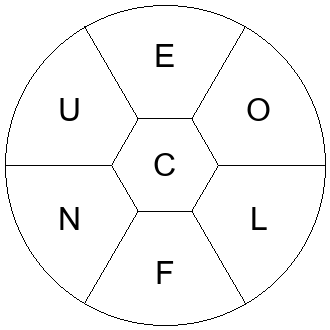
The official answers for today's puzzle are:

Click on the arrow to show the definition.
Click outside the pop-up to close it.


Number of Pangrams: 2

Maximum Puzzle Score: 154

Number of Answers: 30

Points Needed for Genius: 108

Genius requires between 14 and 27 words. You need at least a 7-letter word to reach genius. If you don't get the pangrams, you need 88% of the total points to reach genius. If you get the pangrams, you only need 63% of the remaining points to reach genius.

Other days with this pangram:

The button below will reveal a chart with the number of words by each letter. Red bars indicate that there is a pangram(s) starting with that letter.


How does this puzzle compare to other puzzles?

Today's score of 154 was in the 42nd percentile of all puzzles.
The last time there was a score this low was on September 15, 2025.
The highest score ever was 537 on January 22, 2021.
The lowest score ever was 47 on March 27, 2023.

This puzzle's 30 possible answers rank it in the 25th percentile of all puzzles.
The last time there were fewer answers than this was on September 12, 2025.
The highest number of answers was 81 on June 8, 2019.
The lowest number of answers was 16 on March 27, 2023.

It takes a 7-letter word for genius.
The last time this happened was on September 13, 2025.

Today's puzzle has an average word length of 5.6.
For all Bees, the average word length has been 5.3.


Haven't I seen these letters before?

Hover over a letter to see its first and most recent appearance in the Bee!


Haven't I seen these words before?

The most common words in the Bee are:

  • noon 212
  • loll 203
  • toot 196
  • naan 179
  • nana 179
  • lilt 144
  • till 144
  • tilt 144
  • nene 139
  • tint 138
  • mama 137
  • mamma 137
  • acacia 133
  • acai 133
  • onto 129
  • toon 129
  • onion 125
  • anal 121
  • anon 121
  • dodo 117
  • tact 117
  • olio 116
  • boob 115
  • booboo 115
  • baba 114
  • papa 113
  • poop 113
  • lull 111
  • lulu 111
  • call 109
  • calla 109
  • mitt 108
  • mono 107
  • moon 107
  • ratatat 107
  • tart 107
  • tartar 107
  • tutu 107
  • attar 106
  • cocci 106
  • tattoo 106
  • allay 105
  • ally 105
  • tatty 105
  • ammo 104
  • loon 104
  • momma 104
  • epee 100
  • peep 100
  • cancan 99


How long are words in the Bee?

There have been 106,848 answers ever accepted in the Bee - with 10,784 unique words.
Below are the distributions of the lengths of these words.


Valid dictionary words not in today's official answers

You may be wondering why these words aren't here*:

  • clon
  • coco
  • coff
  • coffle
  • cole
  • colone
  • conn
  • coocoo
  • cooee
  • coof
  • coon
  • enounce
  • eocene
  • feculence
  • fennec
  • floc
  • floccule
  • leucon
  • locofoco
  • locule
  • luce
  • lucence
  • nucleole
  • nuncle
  • offence
  • unco
  • unfence

*Because the New York Times considers them obscure or offensive.

cell

Etymology 1

noun
  1. A single-room dwelling for a hermit.
  2. A small monastery or nunnery dependent on a larger religious establishment.
  3. A small room in a monastery or nunnery accommodating one person.
  4. A room in a prison or jail for one or more inmates.
  5. Each of the small hexagonal compartments in a honeycomb.
  6. Any of various chambers in a tissue or organism having specific functions.
  7. The discal cell of the wing of a lepidopteran insect.
  8. Specifically, any of the supposed compartments of the brain, formerly thought to be the source of specific mental capacities, knowledge, or memories.
  9. A section or compartment of a larger structure.
  10. Any small dwelling; a remote nook, a den.
  11. A device which stores electrical power; used either singly or together in batteries; the basic unit of a battery.
  12. The basic unit of a living organism, consisting of a quantity of protoplasm surrounded by a cell membrane, which is able to synthesize proteins and replicate itself.
  13. A small thunderstorm, caused by convection, that forms ahead of a storm front.
  14. The minimal unit of a cellular automaton that can change state and has an associated behavior.
  15. In FreeCell-type games, a space where one card can be placed.
  16. A small group of people forming part of a larger organization, often an outlawed one.
  17. (communication) A short, fixed-length packet as in asynchronous transfer mode.
  18. (communication) A region of radio reception that is a part of a larger radio network.
  19. A three-dimensional facet of a polytope.
  20. The unit in a statistical array (a spreadsheet, for example) where a row and a column intersect.
  21. The space between the ribs of a vaulted roof.
  22. A cella.
  23. An area of an insect wing bounded by veins
verb
  1. To place or enclose in a cell.

Etymology 2

noun
  1. A cellular phone.

cello

Etymology 1

noun
  1. A large stringed instrument of the violin family with four strings, tuned from lowest to highest C-G-D-A, and played with a bow, also possessing an endpin to support the instrument's weight.

Etymology 2

noun
  1. Cellophane

cellule

No Definition Found.

clef

noun
  1. A symbol found on a musical staff that indicates the pitches represented by the lines and the spaces on the staff

clone

noun
  1. A living organism (originally a plant) produced asexually from a single ancestor, to which it is genetically identical.
  2. A group of identical cells derived from a single cell.http//www.medterms.com/script/main/art.asp?articlekey=2754
  3. A copy or imitation of something already existing, especially when designed to simulate it.
  4. Two people who are exactly alike, as far as looks or behavior.
verb
  1. To create a clone of.

clue

noun
  1. A strand of yarn etc. as used to guide one through a labyrinth; something which points the way, a guide.
  2. Information which may lead one to a certain point or conclusion.
  3. An object or a kind of indication which may be used as evidence.
  4. Insight or understanding ("to have a clue [about]" or "to have clue". See have a clue, clue stick)
verb
  1. To provide with a clue.
  2. To provide someone with information which he or she lacks (often used with "in" or "up").

cocoon

noun
  1. The silky protective case spun by the larvae of some insects in which they metamorphose, the pupa.
  2. Any similar protective case, whether real or metaphorical.
verb
  1. To envelop in a protective case
  2. To withdraw into such a case.

coffee

noun
  1. A beverage made by infusing the beans of the coffee plant in hot water.
  2. A serving of this beverage.
  3. The seeds of the plant used to make coffee, misnamed ‘beans’ due to their shape.
  4. The powder made by roasting and grinding the seeds.
  5. A tropical plant of the genus Coffea.
  6. A pale brown colour, like that of milk coffee.
  7. The end of a meal, when coffee is served.
verb
  1. To drink coffee.
adjective
  1. Of a pale brown colour, like that of milk coffee.
  2. Of a table: a small, low table suitable for people in lounge seating to put coffee cups on.

colleen

noun
  1. Girl
  2. Young single woman

colon

Etymology 1

noun
  1. The punctuation mark ":".
  2. The triangular colon (especially in context of not being able to type the actual triangular colon).
  3. A rhetorical figure consisting of a clause which is grammatically, but not logically, complete.
  4. A clause or group of clauses written as a line, or taken as a standard of measure in ancient manuscripts or texts.

Etymology 2

noun
  1. Part of the large intestine; the final segment of the digestive system, after (distal to) the ileum and before (proximal to) the anus.

Etymology 3

noun
  1. A husbandman.
  2. A European colonial settler, especially in a French colony.

colonel

noun
  1. A commissioned officer in an armed military organization, typically the highest rank before flag officer ranks (generals). It is generally found in armies, air forces or naval infantry (marines).
verb
  1. To act as or like a colonel.

cone

noun
  1. A surface of revolution formed by rotating a segment of a line around another line that intersects the first line.
  2. A solid of revolution formed by rotating a triangle around one of its altitudes.
  3. A space formed by taking the direct product of a given space with a closed interval and identifying all of one end to a point.
  4. Anything shaped like a cone.
  5. The fruit of a conifer.
  6. A cone-shaped flower head of various plants, such as banksias and proteas.
  7. An ice cream cone.
  8. A traffic cone
  9. A unit of volume, applied solely to marijuana and only while it is in a smokable state; roughly 1.5 cubic centimetres, depending on use.
  10. Any of the small cone-shaped structures in the retina.
  11. The bowl piece on a bong.
  12. The process of smoking cannabis in a bong.
  13. A cone-shaped cannabis joint.
  14. A passenger on a cruise ship (so-called by employees after traffic cones, from the need to navigate around them)
  15. An object V together with an arrow going from V to each object of a diagram such that for any arrow A in the diagram, the pair of arrows from V which subtend A also commute with it. (Then V can be said to be the cone’s vertex and the diagram which the cone subtends can be said to be its base.)
  16. A shell of the genus Conus, having a conical form.
  17. A set of formal languages with certain desirable closure properties, in particular those of the regular languages, the context-free languages and the recursively enumerable languages.
verb
  1. To fashion into the shape of a cone.
  2. To form a cone shape.
  3. (frequently followed by "off") To segregate or delineate an area using traffic cones

confluence

noun
  1. The place where two rivers, streams, or other continuously flowing bodies of water meet and become one, especially where a tributary joins a river.
  2. The act of combining which occurs at the place where rivers and the lake meet.
  3. A convergence or combination of forces, people, or things.
  4. The proportion of cells, in a culture medium, that adhere to each other
  5. In rewriting systems, property describing which terms can be rewritten with other, equivalent terms.

cool

Etymology 1

noun
  1. A moderate or refreshing state of cold; moderate temperature of the air between hot and cold; coolness.
  2. A calm temperament.
  3. The property of being cool, popular or in fashion.
adjective
  1. Having a slightly low temperature; mildly or pleasantly cold.
  2. Allowing or suggesting heat relief.
  3. Of a color, in the range of violet to green.
  4. Of a person, not showing emotion; calm and in control of oneself.
  5. Unenthusiastic, lukewarm, skeptical.
  6. Calmly audacious.
  7. Applied facetiously to a sum of money, commonly as if to give emphasis to the largeness of the amount.
  8. Of a person, knowing what to do and how to behave; considered popular by others.
  9. In fashion, part of or fitting the in crowd; originally hipster slang.
  10. Of an action, all right; acceptable; that does not present a problem.
  11. Of a person, not upset by circumstances that might ordinarily be upsetting.
  12. Quietly impudent, defiant, or selfish; deliberately presuming: said of persons and acts.

Etymology 2

verb
  1. To lose heat, to get colder.
  2. To make cooler, less warm.
  3. To become less intense, e.g. less amicable or passionate.
  4. To make less intense, e.g. less amicable or passionate.
  5. To kill.

coulee

noun
  1. A stream.
  2. A lava flow.
  3. A deep gulch or ravine, frequently dry in summer.

cuff

Etymology 1

noun
  1. Glove; mitten
  2. The end of a shirt sleeve that covers the wrist
  3. The end of a pants leg, folded up
  4. Handcuffs
verb
  1. To furnish with cuffs.
  2. To handcuff.

Etymology 2

noun
  1. A blow, especially with the open hand; a box; a slap.
verb
  1. To hit, as a reproach, particularly with the open palm to the head; to slap.
  2. To fight; to scuffle; to box.
  3. To buffet.

Etymology 3

noun
  1. The scruff of the neck.

cull

Etymology 1

noun
  1. A selection.
  2. An organised killing of selected animals.
  3. (farming) An individual animal selected to be killed, or item of produce to be discarded.
  4. (seafood industry) A lobster having only one claw.
  5. A piece unfit for inclusion within a larger group; an inferior specimen.
verb
  1. To pick or take someone or something (from a larger group).
  2. To gather, collect.
  3. To select animals from a group and then kill them in order to reduce the numbers of the group in a controlled manner.
  4. To kill (animals etc).
  5. To lay off in order to reduce the size of, get rid of.

Etymology 2

noun
  1. A fool, gullible person; a dupe.

effluence

noun
  1. The process of flowing out.
  2. Something that flows out; the issue.

fence

noun
  1. A thin artificial barrier that separates two pieces of land or a house perimeter.
  2. Someone who hides or buys and sells stolen goods, a criminal middleman for transactions of stolen goods.
  3. Skill in oral debate.
  4. The art or practice of fencing.
  5. A guard or guide on machinery.
  6. A barrier, for example an emotional barrier.
  7. A memory barrier.
verb
  1. To enclose, contain or separate by building fence.
  2. To defend or guard.
  3. To engage in the selling or buying of stolen goods.
  4. To engage in the sport of fencing.
  5. To jump over a fence.
  6. To conceal the truth by giving equivocal answers; to hedge; to be evasive.

fleece

noun
  1. Hair or wool of a sheep or similar animal
  2. Insulating skin with the wool attached
  3. A textile similar to velvet, but with a longer pile that gives it a softness and a higher sheen.
  4. An insulating wooly jacket
  5. (roofing) Mat or felts composed of fibers, sometimes used as a membrane backer.
  6. Any soft woolly covering resembling a fleece.
  7. The fine web of cotton or wool removed by the doffing knife from the cylinder of a carding machine.
verb
  1. To con or trick (someone) out of money.
  2. To shear the fleece from (a sheep or other animal).
  3. To cover with, or as if with, wool.

flounce

noun
  1. A strip of decorative material, usually pleated, attached along one edge; a ruffle.W
  2. The act of flouncing.
verb
  1. To move in an exaggerated, bouncy manner.
  2. To flounder; to make spastic motions.
  3. To decorate with a flounce.
  4. To depart in a haughty, dramatic way that draws attention to oneself.

loco

Etymology 1

adverb
  1. A direction in written or printed music to be returning to the proper pitch after having played an octave higher or lower.

Etymology 2

noun
  1. A certain species of Astragalus or Oxytropis, capable of causing locoism.
verb
  1. To poison with the loco plant; to affect with locoism.
  2. (by extension) To render insane.
adjective
  1. Crazy.
  2. Intoxicated by eating locoweed.

Etymology 3

noun
  1. A locomotive.

neocon

noun
  1. A neoconservative.

nonce

Etymology 1

noun
  1. The one or single occasion; the present reason or purpose (now only in for the nonce).
  2. A nonce word.
  3. A value constructed so as to be unique to a particular message in a stream, in order to prevent replay attacks.
adjective
  1. One-off; produced or created for a single occasion or use. Denoting something occurring once.

Etymology 2

noun
  1. (prisons) A sex offender, especially one who is guilty of sexual offences against children.
  2. (prisons) A police informer, one who betrays a criminal enterprise
  3. A stupid or worthless person.

nucleon

noun
  1. One of the subatomic particles of the atomic nucleus, i.e. a proton or a neutron.

once

adverb
  1. (frequency) One and only one time.
  2. (temporal location) Formerly; during some period in the past.
  3. Multiplied by one: indicating that a number is multiplied by one.
  4. As soon as.
  5. At a future time.
conjunction
  1. As soon as; when; after.

ounce

Etymology 1

noun
  1. An avoirdupois ounce, weighing 1/16 of an avoirdupois pound, or 28.3495 grams.
  2. A troy ounce, weighing 1/12 of a troy pound, or 480 grains, or 31.1035 grams.
  3. A US fluid ounce, with a volume of 1/16 of a US pint, 1.8047 cubic inches or 29.5735 millilitres.
  4. A British imperial fluid ounce, with a volume of 1/20 of an imperial pint, 1.7339 cubic inches or 28.4131 millilitres.
  5. A little bit.

Etymology 2

noun
  1. A large wild feline, such as a lynx or cougar.
  2. Now specifically, the snow leopard, Uncia uncia.

uncle

noun
  1. The brother or brother-in-law of one’s parent.
  2. The male cousin of one’s parent.
  3. A companion to one's (usually unmarried) mother.
  4. A source of advice, encouragement, or help.
  5. A pawnbroker.
  6. An affectionate term for a man of an older generation than oneself, especially a friend of one's parents, by means of fictive kin.
  7. An older male African-American person.
verb
  1. To address somebody by the term uncle.
  2. To act like, or as, an uncle.
interjection
  1. A cry used to indicate surrender.

uncool

adjective
  1. Not in accord with the current fashion, standards or mores of a particular group; not cool

uncuff

No Definition Found.