Saturday, September 20, 2025

Answers to yesterday's Bee

Jump to answers for


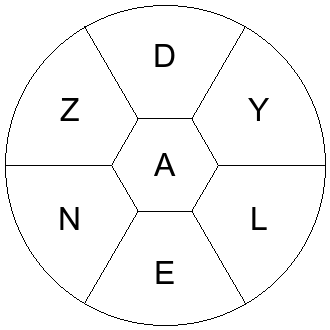
The official answers for today's puzzle are:

Click on the arrow to show the definition.
Click outside the pop-up to close it.


Number of Pangrams: 1

Maximum Puzzle Score: 308

Number of Answers: 69

Points Needed for Genius: 216

Genius requires between 33 and 58 words. You need at least a 7-letter word to reach genius. If you don't get the pangram, you need 74% of the total points to reach genius. If you get the pangram, you only need 69% of the remaining points to reach genius.

Other days with this pangram:

The button below will reveal a chart with the number of words by each letter. Red bars indicate that there is a pangram(s) starting with that letter.


How does this puzzle compare to other puzzles?

Today's score of 308 was in the 95th percentile of all puzzles.
The last time there was a score this high was on September 11, 2025.
The highest score ever was 537 on January 22, 2021.
The lowest score ever was 47 on March 27, 2023.

This puzzle's 69 possible answers rank it in the 98th percentile of all puzzles.
The last time there were more answers than this was on August 30, 2025.
The highest number of answers was 81 on June 8, 2019.
The lowest number of answers was 16 on March 27, 2023.

It takes a 7-letter word for genius.
The last time this happened was on September 17, 2025.

Today's puzzle has an average word length of 5.4.
For all Bees, the average word length has been 5.3.


Haven't I seen these letters before?

Hover over a letter to see its first and most recent appearance in the Bee!


Haven't I seen these words before?

The most common words in the Bee are:

  • noon 213
  • loll 203
  • toot 196
  • naan 180
  • nana 180
  • lilt 144
  • till 144
  • tilt 144
  • nene 139
  • tint 139
  • mama 137
  • mamma 137
  • acacia 133
  • acai 133
  • onto 130
  • toon 130
  • onion 126
  • anal 122
  • anon 121
  • dodo 117
  • tact 117
  • olio 116
  • boob 115
  • booboo 115
  • baba 114
  • papa 113
  • poop 113
  • lull 111
  • lulu 111
  • call 109
  • calla 109
  • mitt 108
  • mono 107
  • moon 107
  • ratatat 107
  • tart 107
  • tartar 107
  • tutu 107
  • allay 106
  • ally 106
  • attar 106
  • cocci 106
  • tattoo 106
  • loon 105
  • tatty 105
  • ammo 104
  • momma 104
  • epee 101
  • peep 101
  • cancan 99


How long are words in the Bee?

There have been 107,025 answers ever accepted in the Bee - with 10,793 unique words.
Below are the distributions of the lengths of these words.


Valid dictionary words not in today's official answers

You may be wondering why these words aren't here*:

  • addedly
  • adenyl
  • adland
  • adzed
  • alae
  • alan
  • aland
  • alane
  • alanyl
  • alee
  • allee
  • allyl
  • ananda
  • anele
  • aneled
  • anna
  • ayaya
  • azan
  • dada
  • daddle
  • daddled
  • daedal
  • daedalean
  • deaned
  • dedal
  • dedenda
  • delead
  • deleaded
  • laddy
  • ladened
  • lall
  • lallan
  • lalland
  • lalled
  • lanely
  • layed
  • leadened
  • leady
  • leal
  • leally
  • nala
  • naled
  • nanna
  • nyala
  • yald
  • yean
  • yeaned
  • zanana
  • zanza
  • zazen
  • zeda
  • zenana

*Because the New York Times considers them obscure or offensive.

added

verb
  1. To join or unite (e.g. one thing to another, or as several particulars) so as to increase the number, augment the quantity or enlarge the magnitude, or so as to form into one aggregate.
  2. To sum up; to put together mentally.
  3. To combine elements of (something) into one quantity.
  4. To give by way of increased possession (to someone); to bestow (on).
  5. To append (e,g, a statement); to say further information.
  6. To make an addition; to augment; to increase.
  7. To perform the arithmetical operation of addition.
  8. To summon minions or reinforcements.

addend

noun
  1. Any one of two or more numbers or other terms that are to be added together.
  2. A moiety added to another molecule.
verb
  1. To furnish with an addendum.
  2. To furnish with an addend.

addenda

noun
  1. Something to be added; especially text added as an appendix or supplement to a document.
  2. A postscript.
  3. The height by which the tooth of a gear projects beyond (outside for external, or inside for internal) the standard pitch circle or pitch line.

addle

Etymology 1

verb
  1. (provincial) To earn, earn by labor; earn money or one's living.
  2. (provincial) To thrive or grow; to ripen.

Etymology 2

noun
  1. A foolish or dull-witted fellow.
noun
  1. Liquid filth; mire.
  2. (provincial) Lees; dregs.
verb
  1. To make addle; to grow addle; to muddle
  2. To cause fertilised eggs to lose viability, by killing the developing embryo within through shaking, piercing, freezing or oiling, without breaking the shell.
adjective
  1. Having lost the power of development, and become rotten; putrid.
  2. (by extension) Unfruitful or confused; muddled.

addled

verb
  1. (provincial) To earn, earn by labor; earn money or one's living.
  2. (provincial) To thrive or grow; to ripen.
verb
  1. To make addle; to grow addle; to muddle
  2. To cause fertilised eggs to lose viability, by killing the developing embryo within through shaking, piercing, freezing or oiling, without breaking the shell.
adjective
  1. (of eggs) Bad, rotten; inviable, containing a dead embryo.
  2. Confused; mixed up.
  3. Morbid, corrupt, putrid, or barren.

adze

noun
  1. A cutting tool that has a curved blade set at a right angle to the handle and is used in shaping wood.
verb
  1. To shape a material using an adze.

allay

noun
  1. Alleviation; abatement; check.
  2. An alloy.
verb
  1. To make quiet or put at rest; to pacify or appease; to quell; to calm.
  2. To alleviate; to abate; to mitigate.
  3. To subside, abate, become peaceful.
  4. To mix (metals); to mix with a baser metal; to alloy; to deteriorate.
  5. (by extension) To make worse by the introduction of inferior elements.

allayed

verb
  1. To make quiet or put at rest; to pacify or appease; to quell; to calm.
  2. To alleviate; to abate; to mitigate.
  3. To subside, abate, become peaceful.
  4. To mix (metals); to mix with a baser metal; to alloy; to deteriorate.
  5. (by extension) To make worse by the introduction of inferior elements.

allele

noun
  1. One of a number of alternative forms of the same gene occupying a given position, or locus, on a chromosome.

alley

Etymology 1

noun
  1. A narrow street or passageway, especially one through the middle of a block giving access to the rear of lots or buildings.
  2. The area between the outfielders.
  3. An establishment where bowling is played.
  4. An elongated wooden strip of floor along which a bowling ball is rolled.
  5. The extra area between the sidelines or tramlines on a tennis court that is used for doubles matches.
  6. A walk or passage in a garden or park, bordered by rows of trees or bushes.
  7. A passageway between rows of pews in a church.
  8. (perspective drawing) Any passage having the entrance represented as wider than the exit, so as to give the appearance of length.
  9. The space between two rows of compositors' stands in a printing office.

Etymology 2

noun
  1. A glass marble or taw.

ally

Etymology 1

noun
  1. A person, group, or state (etc) which is associated with another for a common cause; one united to another by treaty or common purpose; a confederate.
  2. A person, group, concept (etc) which is associated with another as a helper; a supporter; an auxiliary.
  3. Anything akin to something else by structure, etc.
  4. A closely related species, usually within the same family.
  5. A relative; a kinsman.
verb
  1. To unite, or form a connection between, as between families by marriage, or between princes and states by treaty, league, or confederacy.
  2. To connect or form a relation between by similitude, resemblance, friendship, or love.

Etymology 2

noun
  1. A narrow street or passageway, especially one through the middle of a block giving access to the rear of lots or buildings.
  2. The area between the outfielders.
  3. An establishment where bowling is played.
  4. An elongated wooden strip of floor along which a bowling ball is rolled.
  5. The extra area between the sidelines or tramlines on a tennis court that is used for doubles matches.
  6. A walk or passage in a garden or park, bordered by rows of trees or bushes.
  7. A passageway between rows of pews in a church.
  8. (perspective drawing) Any passage having the entrance represented as wider than the exit, so as to give the appearance of length.
  9. The space between two rows of compositors' stands in a printing office.
noun
  1. A glass marble or taw.

anal

noun
  1. Any of the anal scales of a reptile.
  2. Anal sex.
adjective
  1. Of, related to, intended for or involving the anus.
  2. Of the stage in psychosexual development when the child's interest is alleged to be concentrated on the anal region.
  3. Of a person, compulsive and stubborn, obsessed with neatness and accuracy, supposedly from not having progressed beyond the anal stage.
  4. (of a vein) Proximate to the thorax.

anally

No Definition Found.

analyze

verb
  1. To subject to analysis.
  2. To resolve (anything complex) into its elements.
  3. To separate into the constituent parts, for the purpose of an examination of each separately.
  4. To examine in such a manner as to ascertain the elements or nature of the thing examined; as, to analyze a fossil substance, to analyze a sentence or a word, or to analyze an action to ascertain its morality.

analyzed

verb
  1. To subject to analysis.
  2. To resolve (anything complex) into its elements.
  3. To separate into the constituent parts, for the purpose of an examination of each separately.
  4. To examine in such a manner as to ascertain the elements or nature of the thing examined; as, to analyze a fossil substance, to analyze a sentence or a word, or to analyze an action to ascertain its morality.
adjective
  1. Having been subject to analysis; examined closely, carefully considered.

annal

noun
  1. The record of a single event or item.

anneal

noun
  1. An act of annealing.
verb
  1. To subject to great heat and then (often slow) cooling, and sometimes reheating and further cooling, for the purpose of rendering less brittle; to temper; to toughen.
  2. To cool glass slowly, to minimize internal stress.
  3. To burn colors onto a glass or other surface.
  4. To make a double-stranded nucleic acid by pairing a single strand with a complementary strand.
  5. To strengthen or harden.

annealed

verb
  1. To subject to great heat and then (often slow) cooling, and sometimes reheating and further cooling, for the purpose of rendering less brittle; to temper; to toughen.
  2. To cool glass slowly, to minimize internal stress.
  3. To burn colors onto a glass or other surface.
  4. To make a double-stranded nucleic acid by pairing a single strand with a complementary strand.
  5. To strengthen or harden.

azalea

noun
  1. A plant of the obsolete genus Azalea.

daddy

noun
  1. (usually childish) Father.
  2. A male lover.
  3. An informal term of address for a man.
  4. A male juvenile delinquent in a reformatory who dominates the other inmates through threats and violence.
verb
  1. To father; to sire.

dale

Etymology 1

noun
  1. A valley, often in an otherwise hilly area.

Etymology 2

noun
  1. A trough or spout to carry off water, as from a pump.

dally

Etymology 1

verb
  1. To waste time in trivial activities, or in idleness; to trifle.
  2. To caress, especially of a sexual nature; to fondle or pet
  3. To delay unnecessarily; to while away.

Etymology 2

noun
  1. Several wraps of rope around the saddle horn, used to stop animals in roping.
verb
  1. To wind the lasso rope (ie throw-rope) around the saddle horn (the saddle horn is attached to the pommel of a western style saddle) after the roping of an animal

dandle

verb
  1. To move up and down on one's knee or in one's arms, in affectionate play, as an infant.
  2. To treat with fondness, as if a child; to fondle; to toy with; to pet.
  3. To play with; to put off or delay by trifles; to wheedle.

dandled

verb
  1. To move up and down on one's knee or in one's arms, in affectionate play, as an infant.
  2. To treat with fondness, as if a child; to fondle; to toy with; to pet.
  3. To play with; to put off or delay by trifles; to wheedle.

dandy

noun
  1. A man very concerned about his clothes and his appearance.
  2. A yawl, or a small after-sail on a yawl.
  3. A dandy roller.
adjective
  1. Like a dandy, foppish.
  2. Very good; better than expected but not as good as could be.
  3. Excellent; first-rate.

daze

noun
  1. The state of being dazed
  2. A glittering stone.
verb
  1. To stun or stupefy, for example with bright light, with a blow, with cold, or with fear

dazed

verb
  1. To stun or stupefy, for example with bright light, with a blow, with cold, or with fear
adjective
  1. In a state of shock or confusion.
  2. Stunned.

dazedly

No Definition Found.

dazzle

noun
  1. A light of dazzling brilliancy.
  2. Showy brilliance that may stop a person from thinking clearly.
  3. A herd of zebra.
  4. Dazzle camouflage.
verb
  1. To confuse the sight of by means of excessive brightness.
  2. To render incapable of thinking clearly; to overwhelm with showiness or brilliance.
  3. To be overpowered by light; to be confused by excess of brightness.

dazzled

verb
  1. To confuse the sight of by means of excessive brightness.
  2. To render incapable of thinking clearly; to overwhelm with showiness or brilliance.
  3. To be overpowered by light; to be confused by excess of brightness.
adjective
  1. Experiencing dazzlement; overcome by light or brilliance.
  2. Painted in dazzle camouflage.

dead

noun
  1. (with "the", a demonstrative, or a possessive) Those who have died.
noun
  1. (often with "the") Time when coldness, darkness, or stillness is most intense.
noun
  1. (usually plural) Sterile mining waste, often present as many large rocks stacked inside the workings.
verb
  1. To prevent by disabling; stop.
  2. To make dead; to deaden; to deprive of life, force, or vigour.
  3. To kill.
adjective
  1. No longer living.
  2. Figuratively, not alive; lacking life.
  3. (of another person) So hated that they are absolutely ignored.
  4. Doomed; marked for death (literally or as a hyperbole).
  5. Without emotion.
  6. Stationary; static.
  7. Without interest to one of the senses; dull; flat.
  8. Unproductive.
  9. (of a machine, device, or electrical circuit) Completely inactive; currently without power; without a signal.
  10. (of a battery) Unable to emit power, being discharged (flat) or faulty.
  11. Broken or inoperable.
  12. No longer used or required.
  13. Not imparting motion or power by design.
  14. Not in play.
  15. (of a golf ball) Lying so near the hole that the player is certain to hole it in the next stroke.
  16. (1800s) Tagged out.
  17. Full and complete.
  18. Exact.
  19. Experiencing pins and needles (paresthesia).
  20. Constructed so as not to transmit sound; soundless.
  21. Bringing death; deadly.
  22. Cut off from the rights of a citizen; deprived of the power of enjoying the rights of property.
  23. (often with "to") Indifferent to, no longer subject to or ruled by (sin, guilt, pleasure, etc).
adverb
  1. (degree) Exactly.
  2. (degree) Very, absolutely, extremely.
  3. Suddenly and completely.
  4. As if dead.

deaden

verb
  1. To render less lively; to diminish; to muffle.
  2. To become less lively; to diminish (by itself).
  3. To make soundproof.

deadened

verb
  1. To render less lively; to diminish; to muffle.
  2. To become less lively; to diminish (by itself).
  3. To make soundproof.

deadeye

noun
  1. A wooden disk having holes through which the lanyard is passed, used for tightening shrouds.
  2. A very accurate marksman.
  3. A penchant for noticing a particular thing, or a person who has such a penchant.
adjective
  1. Very accurate in shooting or throwing.
  2. (concerning a stare) Cold; unfriendly.

deadly

adjective
  1. Subject to death; mortal.
  2. Causing death; lethal.
  3. Aiming or willing to destroy; implacable; desperately hostile.
  4. Very accurate (of aiming with a bow, firearm, etc.).
  5. Very boring.
  6. Excellent, awesome, cool.
adverb
  1. Fatally, mortally.
  2. In a way which suggests death.
  3. Extremely.

deal

Etymology 1

noun
  1. A division, a portion, a share.
  2. (often followed by of) An indefinite quantity or amount; a lot (now usually qualified by great or good).

Etymology 2

noun
  1. An act of dealing or sharing out.
  2. The distribution of cards to players; a player's turn for this.
  3. A particular instance of buying or selling; a transaction
  4. Specifically, a transaction offered which is financially beneficial; a bargain.
  5. An agreement between parties; an arrangement
  6. A situation, occasion, or event.
  7. A thing, an unspecified or unidentified object.
verb
  1. To distribute among a number of recipients, to give out as one’s portion or share.
  2. To administer or give out, as in small portions.
  3. To distribute cards to the players in a game.
  4. To pitch.
  5. To have dealings or business.
  6. To conduct oneself, to behave.
  7. To take action; to act.
  8. To trade professionally (followed by in).
  9. To sell, especially to sell illicit drugs.
  10. To be concerned with.
  11. To handle, to manage, to cope.

Etymology 3

noun
  1. Wood that is easy to saw (from conifers such as pine or fir).
  2. A plank of softwood (fir or pine board).
  3. A wooden board or plank, usually between 12 or 14 feet in length, traded as a commodity in shipbuilding.
adjective
  1. Made of deal.

dean

Etymology 1

noun
  1. A senior official in a college or university, who may be in charge of a division or faculty (for example, the dean of science) or have some other advisory or disciplinary function (for example, the dean of students).
  2. A dignitary or presiding officer in certain church bodies, especially an ecclesiastical dignitary, subordinate to a bishop, in charge of a chapter of canons.
  3. The senior member of some group of people.
verb
  1. To serve as a dean.
  2. To send (a student) to see the dean of a university.

Etymology 2

noun
  1. (chiefly in place names) A hill.

delay

Etymology 1

noun
  1. A period of time before an event occurs; the act of delaying; procrastination; lingering inactivity.
  2. An audio effects unit that introduces a controlled delay.
verb
  1. To put off until a later time; to defer.
  2. To retard; to stop, detain, or hinder, for a time.
  3. To allay; to temper.

Etymology 2

verb
  1. To dilute, temper.
  2. To assuage, quench, allay.

delayed

verb
  1. To put off until a later time; to defer.
  2. To retard; to stop, detain, or hinder, for a time.
  3. To allay; to temper.
verb
  1. To dilute, temper.
  2. To assuage, quench, allay.

dyad

noun
  1. A set of two elements treated as one; a pair.
  2. Any set of two different pitch classes.
  3. A pair of things standing in particular relation; dyadic relation.
  4. An element, atom, or radical having a valence or combining power of two.
  5. A secondary unit of organisation consisting of an aggregate of monads.
  6. A tensor of order two and rank one.

elan

noun
  1. Ardor or zeal inspired by passion or enthusiasm.

eland

noun
  1. A genus of large South African antelope (Taurotragus), valued both for its hide and flesh.

ennead

noun
  1. The number nine.
  2. Any grouping or system containing nine objects.

lade

Etymology 1

noun
  1. A load.
verb
  1. To fill or load (related to cargo or a shipment).
  2. To weigh down, oppress, or burden.
  3. To use a ladle or dipper to remove something (generally water).
  4. To transfer (molten glass) from the pot to the forming table, in making plate glass.
  5. To admit water by leakage.

Etymology 2

noun
  1. The mouth of a river.
  2. A passage for water; a ditch or drain.
  3. Water pumped into and out of mills, especially woolen mills.

laded

verb
  1. To fill or load (related to cargo or a shipment).
  2. To weigh down, oppress, or burden.
  3. To use a ladle or dipper to remove something (generally water).
  4. To transfer (molten glass) from the pot to the forming table, in making plate glass.
  5. To admit water by leakage.

laden

verb
  1. To fill or load (related to cargo or a shipment).
  2. To weigh down, oppress, or burden.
  3. To use a ladle or dipper to remove something (generally water).
  4. To transfer (molten glass) from the pot to the forming table, in making plate glass.
  5. To admit water by leakage.
adjective
  1. Weighed down with a load, burdened.
  2. Heavy.
  3. Oppressed.
  4. In the form of an adsorbate or adduct.

ladle

noun
  1. A deep-bowled spoon with a long, usually curved, handle.
  2. A container used in a foundry to transport and pour out molten metal.
  3. The float of a mill wheel; a ladle board.
  4. An instrument for drawing the charge of a cannon.
  5. A ring, with a handle or handles fitted to it, for carrying shot.
verb
  1. To pour or serve something with a ladle.

ladled

verb
  1. To pour or serve something with a ladle.

lady

noun
  1. An aristocratic title for a woman; the wife of a lord and/or a woman who holds the position in her own right; a title for a peeress, the wife of a peer or knight, and the daughters and daughters-in-law of certain peers.
  2. A high priestess.
noun
  1. The mistress of a household.
  2. A woman of breeding or higher class, a woman of authority.
  3. The feminine of lord.
  4. A title for someone married to a lord or gentleman.
  5. A title that can be used instead of the formal terms of marchioness, countess, viscountess or baroness.
  6. (polite or used by children) A woman: an adult female human.
  7. (in the plural) A polite reference or form of address to women.
  8. Used to address a female.
  9. (ladies' or ladies) Toilets intended for use by women.
  10. (familiar) A wife or girlfriend; a sweetheart.
  11. A woman to whom the particular homage of a knight was paid; a woman to whom one is devoted or bound.
  12. A queen (the playing card).
  13. (with a professional title) Who is a woman.
  14. The triturating apparatus in the stomach of a lobster, consisting of calcareous plates; so called from a fancied resemblance to a seated female figure.
  15. A five-pound note. (Rhyming slang, Lady Godiva for fiver.)
  16. A woman’s breast.

land

Etymology 1

noun
  1. The part of Earth which is not covered by oceans or other bodies of water.
  2. Real estate or landed property; a partitioned and measurable area which is owned and on which buildings can be erected.
  3. A country or region.
  4. A person's country of origin and/or homeplace; homeland.
  5. The soil, in respect to its nature or quality for farming.
  6. (often in combination) realm, domain.
  7. The ground left unploughed between furrows; any of several portions into which a field is divided for ploughing.
  8. A shock or fright.
  9. A conducting area on a board or chip which can be used for connecting wires.
  10. In a compact disc or similar recording medium, an area of the medium which does not have pits.
  11. (travel) The non-airline portion of an itinerary. Hotel, tours, cruises, etc.
  12. The ground or floor.
  13. The lap of the strakes in a clinker-built boat; the lap of plates in an iron vessel; called also landing.
  14. In any surface prepared with indentations, perforations, or grooves, that part of the surface which is not so treated, such as the level part of a millstone between the furrows.
  15. A group of dwellings or tenements under one roof and having a common entry.
verb
  1. To descend to a surface, especially from the air.
  2. To alight, to descend from a vehicle.
  3. To come into rest.
  4. To arrive at land, especially a shore, or a dock, from a body of water.
  5. To bring to land.
  6. To acquire; to secure.
  7. To deliver.
adjective
  1. Of or relating to land.
  2. Residing or growing on land.

Etymology 2

noun
  1. Lant; urine

landed

verb
  1. To descend to a surface, especially from the air.
  2. To alight, to descend from a vehicle.
  3. To come into rest.
  4. To arrive at land, especially a shore, or a dock, from a body of water.
  5. To bring to land.
  6. To acquire; to secure.
  7. To deliver.
adjective
  1. In possession of land.
  2. Consisting of land, especially with a single owner.

landlady

noun
  1. A female landlord.

lane

noun
  1. (used in street names) A road, street, or similar thoroughfare.
  2. A narrow passageway between fences, walls, hedges or trees.
  3. A narrow road, as in the country.
  4. A lengthwise division of roadway intended for a single line of vehicles.
  5. A similar division of a racetrack to keep runners apart.
  6. A course designated for ships or aircrafts.
  7. An elongated wooden strip of floor along which a bowling ball is rolled.
  8. An empty space in the tableau, formed by the removal of an entire row of cards.
  9. Any of the parallel slots in which values can be stored in a SIMD architecture.
  10. In MOBA (multiplayer online battle arena) games, a particular path on the map that may be traversed by enemy characters.
  11. The homestretch.

laze

Etymology 1

noun
  1. An instance of lazing.
  2. Laziness.
verb
  1. To be lazy, waste time.
  2. To pass time relaxing; to relax, lounge.

Etymology 2

noun
  1. Acidic steam created when super-hot lava contacts salt water.

lazed

verb
  1. To be lazy, waste time.
  2. To pass time relaxing; to relax, lounge.

lazy

noun
  1. A lazy person.
  2. Sloth (animal).
verb
  1. To laze, act in a lazy manner.
adjective
  1. Unwilling to do work or make an effort; disinclined to exertion.
  2. Causing or characterised by idleness; relaxed or leisurely.
  3. Showing a lack of effort or care.
  4. Sluggish; slow-moving.
  5. Lax:
  6. (of a cattle brand) Turned so that (the letter) is horizontal instead of vertical.
  7. Employing lazy evaluation; not calculating results until they are immediately required.
  8. Wicked; vicious.

lead

Etymology 1

noun
  1. A heavy, pliable, inelastic metal element, having a bright, bluish color, but easily tarnished; both malleable and ductile, though with little tenacity. It is easily fusible, forms alloys with other metals, and is an ingredient of solder and type metal. Atomic number 82, symbol Pb (from Latin plumbum).
  2. A plummet or mass of lead attached to a line, used in sounding depth at sea or to estimate velocity in knots.
  3. A thin strip of type metal, used to separate lines of type in printing.
  4. Vertical space in advance of a row or between rows of text. Also known as leading.
  5. Sheets or plates of lead used as a covering for roofs.
  6. (plural leads) A roof covered with lead sheets or terne plates.
  7. A thin cylinder of black lead or plumbago (graphite) used in pencils.
  8. Bullets; ammunition.
verb
  1. To cover, fill, or affect with lead
  2. To place leads between the lines of.

Etymology 2

noun
  1. The act of leading or conducting; guidance; direction, course
  2. Precedence; advance position; also, the measure of precedence; the state of being ahead in a race; the highest score in a game in an incomplete game.
  3. An insulated metallic wire for electrical devices and equipment.
  4. The situation where a runner steps away from a base while waiting for the pitch to be thrown.
  5. The act or right of playing first in a game or round; the card suit, or piece, so played
  6. The main role in a play or film; the lead role.
  7. The actor who plays the main role; lead actor.
  8. A channel of open water in an ice field.
  9. A lode.
  10. The course of a rope from end to end.
  11. A rope, leather strap, or similar device with which to lead an animal; a leash
  12. In a steam engine, the width of port opening which is uncovered by the valve, for the admission or release of steam, at the instant when the piston is at end of its stroke.
  13. Charging lead.
  14. The distance of haul, as from a cutting to an embankment.
  15. The action of a tooth, such as a tooth of a wheel, in impelling another tooth or a pallet.
  16. Hypothesis that has not been pursued
  17. Information obtained by a detective or police officer that allows him or her to discover further details about a crime or incident.
  18. Potential opportunity for a sale or transaction, a potential customer.
  19. Information obtained by a news reporter about an issue or subject that allows him or her to discover more details.
  20. The player who throws the first two rocks for a team.
  21. (newspapers) A teaser; a lead-in; the start of a newspaper column, telling who, what, when, where, why and how. (Sometimes spelled as lede for this usage to avoid ambiguity.)
  22. An important news story that appears on the front page of a newspaper or at the beginning of a news broadcast
  23. The axial distance a screw thread travels in one revolution. It is equal to the pitch times the number of starts.
  24. In a barbershop quartet, the person who sings the melody, usually the second tenor
  25. The announcement by one voice part of a theme to be repeated by the other parts.
  26. A mark or a short passage in one voice part, as of a canon, serving as a cue for the entrance of others.
  27. The excess above a right angle in the angle between two consecutive cranks, as of a compound engine, on the same shaft.
  28. The angle between the line joining the brushes of a continuous-current dynamo and the diameter symmetrical between the poles.
  29. The advance of the current phase in an alternating circuit beyond that of the electromotive force producing it.
verb
  1. (heading) To guide or conduct.
  2. To guide or conduct, as by accompanying, going before, showing, influencing, directing with authority, etc.; to have precedence or preeminence; to be first or chief; — used in most of the senses of the transitive verb.
  3. (heading) To begin, to be ahead.
  4. To draw or direct by influence, whether good or bad; to prevail on; to induce; to entice; to allure
  5. To tend or reach in a certain direction, or to a certain place.
  6. To produce (with to).
  7. (transitive) To live or experience (a particular way of life).
adjective
  1. Foremost.
  2. Main, principal

leaded

verb
  1. To cover, fill, or affect with lead
  2. To place leads between the lines of.
adjective
  1. Held in place by strips of lead.
  2. Containing or treated with the element lead.
  3. Containing tetraethyllead.

leaden

verb
  1. To make or become dull or overcast.
adjective
  1. Made of lead.
  2. Pertaining to or resembling lead; grey, heavy, sluggish.
  3. Dull; darkened with overcast.

leadenly

No Definition Found.

lean

Etymology 1

noun
  1. (of an object taller than its width and depth) An inclination away from the vertical.
verb
  1. To incline, deviate, or bend, from a vertical position; to be in a position thus inclining or deviating.
  2. To incline in opinion or desire; to conform in conduct; often with to, toward, etc.
  3. Followed by against, on, or upon: to rest or rely, for support, comfort, etc.
  4. To hang outwards.
  5. To press against.

Etymology 2

noun
  1. Meat with no fat on it.
  2. An organism that is lean in stature.
verb
  1. To thin out (a fuel-air mixture): to reduce the fuel flow into the mixture so that there is more air or oxygen.
adjective
  1. (of a person or animal) Slim; not fleshy.
  2. (of meat) Having little fat.
  3. Having little extra or little to spare; scanty; meagre.
  4. Having a low proportion or concentration of a desired substance or ingredient.
  5. Of a character which prevents the compositor from earning the usual wages; opposed to fat.
  6. Efficient, economic, frugal, agile, slimmed-down; pertaining to the modern industrial principles of "lean manufacturing"

Etymology 3

verb
  1. To conceal.

Etymology 4

noun
  1. A recreational drug based on codeine-laced promethazine cough syrup, popular in the hip hop community in the southeastern United States.

leaned

verb
  1. To incline, deviate, or bend, from a vertical position; to be in a position thus inclining or deviating.
  2. To incline in opinion or desire; to conform in conduct; often with to, toward, etc.
  3. Followed by against, on, or upon: to rest or rely, for support, comfort, etc.
  4. To hang outwards.
  5. To press against.
verb
  1. To thin out (a fuel-air mixture): to reduce the fuel flow into the mixture so that there is more air or oxygen.
verb
  1. To conceal.

leanly

No Definition Found.

naan

noun
  1. A type of round, flat bread baked in a tandoor popular in South and Central Asian cuisine.

nada

pronoun
  1. Nothing.

nana

Etymology 1

noun
  1. A banana
  2. A fool

Etymology 2

noun
  1. (term of endearment) one's grandmother
  2. A nanny

nanny

noun
  1. A child's nurse.
  2. A grandmother.
  3. A godmother.
  4. A female goat.
verb
  1. To serve as a nanny.
  2. To treat like a nanny's charges; to coddle.

zany

noun
  1. A fool or clown, especially one whose business on the stage is to imitate foolishly the actions of the principal clown.
verb
  1. To mimic foolishly.
adjective
  1. Unusual and awkward in a funny, comical manner; outlandish; clownish.
  2. Ludicrously or incongruously comical.

zeal

noun
  1. The fervour or tireless devotion for a person, cause, or ideal and determination in its furtherance; diligent enthusiasm; powerful interest.
  2. A person who exhibits such fervour or tireless devotion.
  3. The collective noun for a group of zebras.