Tuesday, September 30, 2025

Answers to yesterday's Bee

Jump to answers for


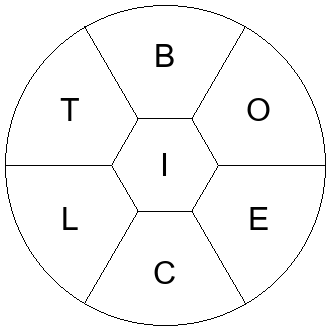
The official answers for today's puzzle are:

Click on the arrow to show the definition.
Click outside the pop-up to close it.


Number of Pangrams: 1

Maximum Puzzle Score: 204

Number of Answers: 46

Points Needed for Genius: 143

Genius requires between 21 and 40 words. You need at least a 7-letter word to reach genius. If you don't get the pangram, you need 77% of the total points to reach genius. If you get the pangram, you only need 67% of the remaining points to reach genius.

Other days with this pangram:

The button below will reveal a chart with the number of words by each letter. Red bars indicate that there is a pangram(s) starting with that letter.


How does this puzzle compare to other puzzles?

Today's score of 204 was in the 66th percentile of all puzzles.
The last time there was a score this high was on September 28, 2025.
The highest score ever was 537 on January 22, 2021.
The lowest score ever was 47 on March 27, 2023.

This puzzle's 46 possible answers rank it in the 66th percentile of all puzzles.
The last time there were more answers than this was on September 28, 2025.
The highest number of answers was 81 on June 8, 2019.
The lowest number of answers was 16 on March 27, 2023.

It takes a 7-letter word for genius.
The last time this happened was on September 28, 2025.

Today's puzzle has an average word length of 5.3.
For all Bees, the average word length has been 5.3.


Haven't I seen these letters before?

Hover over a letter to see its first and most recent appearance in the Bee!


Haven't I seen these words before?

The most common words in the Bee are:

  • noon 214
  • loll 203
  • toot 197
  • naan 180
  • nana 180
  • lilt 145
  • till 145
  • tilt 145
  • mama 139
  • mamma 139
  • nene 139
  • tint 139
  • acacia 133
  • acai 133
  • onto 131
  • toon 131
  • onion 127
  • anal 122
  • anon 121
  • dodo 119
  • tact 118
  • olio 117
  • boob 115
  • booboo 115
  • baba 114
  • papa 114
  • poop 114
  • lull 111
  • lulu 111
  • call 109
  • calla 109
  • mitt 108
  • cocci 107
  • mono 107
  • moon 107
  • ratatat 107
  • tart 107
  • tartar 107
  • tutu 107
  • allay 106
  • ally 106
  • attar 106
  • tattoo 106
  • ammo 105
  • loon 105
  • momma 105
  • tatty 105
  • epee 101
  • peep 101
  • roar 100


How long are words in the Bee?

There have been 107,452 answers ever accepted in the Bee - with 10,801 unique words.
Below are the distributions of the lengths of these words.


Valid dictionary words not in today's official answers

You may be wondering why these words aren't here*:

  • bibb
  • bibe
  • bibliotic
  • bice
  • bilbo
  • billetee
  • billie
  • biotite
  • biotitic
  • bitt
  • blite
  • blooie
  • boccie
  • boite
  • boleti
  • boobie
  • ceil
  • ceili
  • cibol
  • cilice
  • citole
  • clit
  • clitic
  • coccic
  • colitic
  • colobi
  • coolie
  • ecbolic
  • etic
  • etoile
  • ictic
  • illite
  • illitic
  • iolite
  • libeccio
  • libellee
  • lilo
  • litotic
  • locie
  • looie
  • loti
  • lotic
  • obeli
  • oboli
  • ocelli
  • ocotillo
  • oolite
  • oolitic
  • otic
  • otitic
  • tectite
  • telic
  • teloi
  • tictoc
  • tillite
  • titbit
  • titi
  • tittie
  • toit

*Because the New York Times considers them obscure or offensive.

belie

Etymology 1

verb
  1. To lie around; encompass.
  2. (of an army) To surround; beleaguer.

Etymology 2

verb
  1. To tell lies about.
  2. To give a false representation of.
  3. To contradict, to show (something) to be false.
  4. To conceal the contradictory or ironic presence of (something).
  5. To show, evince, demonstrate: to show (something) to be present, particularly something deemed contradictory or ironic.
  6. To mimic; to counterfeit.
  7. To fill with lies.

belittle

verb
  1. To knowingly say that something is smaller or less important than it actually is, especially as a way of showing contempt or deprecation.

bibelot

noun
  1. A bauble, knickknack or trinket.
  2. A miniature book of an elegant design.

bible

noun
  1. An exemplar of the Bible.
  2. A comprehensive manual that describes something. (e.g., handyman’s bible).
  3. (at certain US universities) A compilation of problems and solutions from previous years of a given course, used by some students to cheat on tests or assignments.
  4. Omasum, the third compartment of the stomach of ruminants
noun
  1. A piece of soft sandstone used for scouring the wooden decks of ships, usually with sand and seawater.
  2. A stone with a naturally-formed hole, used by Yorkshiremen for good luck.

bile

Etymology 1

noun
  1. A bitter brownish-yellow or greenish-yellow secretion produced by the liver, stored in the gall bladder, and discharged into the duodenum where it aids the process of digestion.
  2. Bitterness of temper; ill humour; irascibility.
  3. Two of the four humours, black bile or yellow bile, in ancient and medieval physiology.

Etymology 2

noun
  1. A boil (kind of swelling).
verb
  1. (of liquids) To heat to the point where it begins to turn into a gas.
  2. To cook in boiling water.
  3. (of liquids) To begin to turn into a gas, seethe.
  4. To bring to a boil, to heat so as to cause the contents to boil.
  5. (used only in progressive tenses, of weather) To be uncomfortably hot.
  6. (used only in progressive tenses) To feel uncomfortably hot.
  7. To form, or separate, by boiling or evaporation.
  8. To steep or soak in warm water.
  9. To be agitated like boiling water; to bubble; to effervesce.
  10. To be moved or excited with passion; to be hot or fervid.

bill

Etymology 1

noun
  1. Any of various bladed or pointed hand weapons, originally designating an Anglo-Saxon sword, and later a weapon of infantry, especially in the 14th and 15th centuries, commonly consisting of a broad, heavy, double-edged, hook-shaped blade, with a short pike at the back and another at the top, attached to the end of a long staff.
  2. A cutting instrument, with hook-shaped point, and fitted with a handle, used in pruning, etc.; a billhook.
  3. Somebody armed with a bill; a billman.
  4. A pickaxe, or mattock.
  5. The extremity of the arm of an anchor; the point of or beyond the fluke (also called the peak).
verb
  1. To dig, chop, etc., with a bill.

Etymology 2

noun
  1. The beak of a bird, especially when small or flattish; sometimes also used with reference to a platypus, turtle, or other animal.
  2. A beak-like projection, especially a promontory.
  3. Of a cap or hat: the brim or peak, serving as a shade to keep sun off the face and out of the eyes.
verb
  1. To peck
  2. To stroke bill against bill, with reference to doves; to caress in fondness

Etymology 3

noun
  1. A written list or inventory. (Now obsolete except in specific senses or set phrases; bill of lading, bill of goods, etc.)
  2. A document, originally sealed; a formal statement or official memorandum. (Now obsolete except with certain qualifying words; bill of health, bill of sale etc.)
  3. A draft of a law, presented to a legislature for enactment; a proposed or projected law.
  4. A declaration made in writing, stating some wrong the complainant has suffered from the defendant, or a fault committed by some person against a law.
  5. A piece of paper money; a banknote.
  6. A written note of goods sold, services rendered, or work done, with the price or charge; an invoice.
  7. A paper, written or printed, and posted up or given away, to advertise something, as a lecture, a play, or the sale of goods
  8. A writing binding the signer or signers to pay a certain sum at a future day or on demand, with or without interest, as may be stated in the document; a bill of exchange. In the United States, it is usually called a note, a note of hand, or a promissory note.
  9. A set of items presented together.
verb
  1. To advertise by a bill or public notice.
  2. To charge; to send a bill to.

Etymology 4

noun
  1. The bell, or boom, of the bittern.

billet

Etymology 1

noun
  1. A short informal letter.
  2. A written order to quarter soldiers.

Etymology 2

noun
  1. A place where a soldier is assigned to lodge.
  2. An allocated space or berth in a boat or ship.
  3. Berth; position.
verb
  1. (of a householder etc.) To lodge soldiers, or guests, usually by order.
  2. (of a soldier) To lodge, or be quartered, in a private house.
  3. To direct, by a ticket or note, where to lodge.

Etymology 3

noun
  1. A semi-finished length of metal.
  2. A short piece of wood, especially one used as firewood.
  3. A short cutting of sugar cane produced by a harvester or used for planting.
  4. A rectangle used as a charge on an escutcheon.
  5. An ornament in Norman work, resembling a billet of wood, either square or round.
  6. (saddlery) A strap that enters a buckle.
  7. A loop that receives the end of a buckled strap.

Etymology 4

noun
  1. An English fish, allied to the cod; the coalfish.

biotic

adjective
  1. Of, pertaining to, or produced by life or living organisms

bite

noun
  1. The act of biting.
  2. The wound left behind after having been bitten.
  3. The swelling of one's skin caused by an insect's mouthparts or sting.
  4. A piece of food of a size that would be produced by biting; a mouthful.
  5. Something unpleasant.
  6. An act of plagiarism.
  7. A small meal or snack.
  8. Aggression
  9. The hold which the short end of a lever has upon the thing to be lifted, or the hold which one part of a machine has upon another.
  10. A cheat; a trick; a fraud.
  11. A sharper; one who cheats.
  12. A blank on the edge or corner of a page, owing to a portion of the frisket, or something else, intervening between the type and paper.
  13. A cut, a proportion of profits; an amount of money.
verb
  1. To cut into something by clamping the teeth.
  2. To hold something by clamping one's teeth.
  3. To attack with the teeth.
  4. To behave aggressively; to reject advances.
  5. To take hold; to establish firm contact with.
  6. To have significant effect, often negative.
  7. (of a fish) To bite a baited hook or other lure and thus be caught.
  8. To accept something offered, often secretly or deceptively, to cause some action by the acceptor.
  9. (of an insect) To sting.
  10. To cause a smarting sensation; to have a property which causes such a sensation; to be pungent.
  11. (sometimes figurative) To cause sharp pain or damage to; to hurt or injure.
  12. To cause sharp pain; to produce anguish; to hurt or injure; to have the property of so doing.
  13. To take or keep a firm hold.
  14. To take hold of; to hold fast; to adhere to.
  15. To lack quality; to be worthy of derision; to suck.
  16. To perform oral sex on. Used in invective.
  17. To plagiarize, to imitate.
  18. To deceive or defraud; to take in.

bocci

noun
  1. A game, similar to bowls or pétanque, played on a long, narrow, dirt-covered court
  2. One of the eight balls that the player throws in a game of bocce.

boil

Etymology 1

noun
  1. A localized accumulation of pus in the skin, resulting from infection.

Etymology 2

noun
  1. The point at which fluid begins to change to a vapour.
  2. A dish of boiled food, especially based on seafood.
  3. The collective noun for a group of hawks.
verb
  1. (of liquids) To heat to the point where it begins to turn into a gas.
  2. To cook in boiling water.
  3. (of liquids) To begin to turn into a gas, seethe.
  4. To bring to a boil, to heat so as to cause the contents to boil.
  5. (used only in progressive tenses, of weather) To be uncomfortably hot.
  6. (used only in progressive tenses) To feel uncomfortably hot.
  7. To form, or separate, by boiling or evaporation.
  8. To steep or soak in warm water.
  9. To be agitated like boiling water; to bubble; to effervesce.
  10. To be moved or excited with passion; to be hot or fervid.

bootie

noun
  1. A soft, woolen shoe, usually knitted, for a baby or small pet.
  2. A thick sock worn under a wetsuit.
  3. An overshoe or sock worn to cover dirty shoes or feet.

celli

No Definition Found.

cite

Etymology 1

verb
  1. To quote; to repeat, as a passage from a book, or the words of another.
  2. To list the source(s) from which one took information, words or literary or verbal context.
  3. To summon officially or authoritatively to appear in court.

Etymology 2

noun
  1. A citation

cocci

Etymology 1

noun
  1. Any approximately spherical bacterium.
  2. One of the carpels or seed-vessels of a dry fruit.

Etymology 2

noun
  1. Coccidioidomycosis

coil

Etymology 1

noun
  1. Something wound in the form of a helix or spiral.
  2. Any intrauterine device (Abbreviation: IUD)—the first IUDs were coil-shaped.
  3. A coil of electrically conductive wire through which electricity can flow.
  4. Entanglement; perplexity.
verb
  1. To wind or reel e.g. a wire or rope into regular rings, often around a centerpiece.
  2. To wind into loops (roughly) around a common center.
  3. To wind cylindrically or spirally.
  4. To encircle and hold with, or as if with, coils.

Etymology 2

noun
  1. A noise, tumult, bustle, or turmoil.

colic

noun
  1. Severe pains that grip the abdomen or the disease that causes such pains (due to intestinal or bowel-related problems).
  2. A medicinal plant used to relieve such symptoms.
adjective
  1. Relating to the colon; colonic.

collectible

noun
  1. An object which someone might want to collect.
adjective
  1. Worthy or suitable for collecting on historical/financial grounds, or for meeting a personal aesthetic.
  2. Rightfully subject to payment.
  3. That is likely to be paid.

collie

noun
  1. Any of various breeds of dog originating in Scotland and England as sheepdogs

cootie

noun
  1. A louse (Pediculus humanus).
  2. A louse (Pediculus humanus).
  3. (usually in the plural) Any germ or contaminant, real or imagined, especially from the opposite gender (for pre-pubescent children).
  4. A nest-building female American coot (counterpart to cooter).
  5. A sideswiper, a type of telegraph key.

eclectic

noun
  1. Someone who selects according to the eclectic method.
adjective
  1. Selecting a mixture of what appears to be best of various doctrines, methods or styles.
  2. Unrelated and unspecialized; heterogeneous.

elicit

verb
  1. To evoke, educe (emotions, feelings, responses, etc.); to generate, obtain, or provoke as a response or answer.
  2. To draw out, bring out, bring forth (something latent); to obtain information from someone or something.
  3. To use logic to arrive at truth; to derive by reason
adjective
  1. Elicited; drawn out; made real; open; evident.

elite

noun
  1. A special group or social class of people which have a superior intellectual, social or economic status as, the elite of society.
  2. Someone who is among the best at a certain task.
adjective
  1. Of high birth or social position; aristocratic or patrician.
  2. Representing the choicest or most select of a group.

icicle

noun
  1. A drooping, tapering shape of ice.

illicit

noun
  1. A banned or unlawful item.
adjective
  1. Not approved by law, but not invalid.
  2. Breaking social norms.
  3. Unlawful.

libel

noun
  1. A written or pictorial false statement which unjustly seeks to damage someone's reputation.
  2. The act or crime of displaying such a statement publicly.
  3. Any defamatory writing; a lampoon; a satire.
  4. A written declaration or statement by the plaintiff of their cause of action, and of the relief they seek.
  5. A brief writing of any kind, especially a declaration, bill, certificate, request, supplication, etc.
verb
  1. To defame someone, especially in a manner that meets the legal definition of libel.
  2. To proceed against (a ship, goods, etc.) by filing a libel.

libelee

No Definition Found.

lice

noun
  1. A small parasitic wingless insect of the order Psocodea.
  2. (not usually used in plural form) A contemptible person; one who is deceitful or causes harm.

licit

adjective
  1. Not forbidden by formal or informal rules.
  2. Explicitly established or constituted by law.

lilt

noun
  1. Animated, brisk motion; spirited rhythm; sprightliness.
  2. A lively song or dance; a cheerful tune.
  3. A cheerful or melodious accent when speaking.
verb
  1. To do something rhythmically, with animation and quickness, usually of music.
  2. To sing cheerfully, especially in Gaelic.
  3. To utter with spirit, animation, or gaiety; to sing with spirit and liveliness.

lite

Etymology 1

noun
  1. Visible electromagnetic radiation. The human eye can typically detect radiation (light) in the wavelength range of about 400 to 750 nanometers. Nearby shorter and longer wavelength ranges, although not visible, are commonly called ultraviolet and infrared light.
  2. A source of illumination.
  3. Spiritual or mental illumination; enlightenment, useful information.
  4. (in the plural) Facts; pieces of information; ideas, concepts.
  5. A notable person within a specific field or discipline.
  6. The manner in which the light strikes a picture; that part of a picture which represents those objects upon which the light is supposed to fall; the more illuminated part of a landscape or other scene; opposed to shade.
  7. A point of view, or aspect from which a concept, person or thing is regarded.
  8. A flame or something used to create fire.
  9. A firework made by filling a case with a substance which burns brilliantly with a white or coloured flame.
  10. A window, or space for a window in architecture.
  11. The series of squares reserved for the answer to a crossword clue.
  12. A cross-light in a double acrostic or triple acrostic.
  13. Open view; a visible state or condition; public observation; publicity.
  14. The power of perception by vision.
  15. The brightness of the eye or eyes.
  16. A traffic light, or, by extension, an intersection controlled by one or more that will face a traveler who is receiving instructions.
adjective
  1. Having light; bright; clear; not dark or obscure.
  2. Pale or whitish in color; highly luminous and more or less deficient in chroma.
  3. (of coffee) Served with extra milk or cream.
noun
  1. A stone that is not thrown hard enough.
  2. See lights.
adjective
  1. Having little or relatively little actual weight; not cumbrous or unwieldy.
  2. Having little weight as compared with bulk; of little density or specific gravity.
  3. Of short or insufficient weight; weighing less than the legal, standard or proper amount; clipped or diminished.
  4. Lacking that which burdens or makes heavy.
  5. Not heavy or soggy; spongy; well raised.
  6. Gentle; having little force or momentum.
  7. Easy to endure or perform.
  8. Low in fat, calories, alcohol, salt, etc.
  9. Unimportant, trivial, having little value or significance.
  10. Unchaste, wanton.
  11. Not encumbered; unembarrassed; clear of impediments; hence, active; nimble; swift.
  12. Easily influenced by trifling considerations; unsteady; unsettled; volatile.
  13. Indulging in, or inclined to, levity; lacking dignity or solemnity; frivolous; airy.
  14. Not quite sound or normal; somewhat impaired or deranged; dizzy; giddy.
  15. Easily interrupted by stimulation.
adjective
  1. Light in composition, notably low in fat, calories etc. Most commonly used commercially.
  2. Lightweight
  3. (usually used postpositively) Lacking substance or seriousness; watered down.

Etymology 2

noun
  1. A little, bit.
adjective
  1. Few; little

Etymology 3

noun
  1. The act of waiting; a wait.
verb
  1. To expect; wait.
  2. To rely.

little

noun
  1. A small amount.
adjective
  1. Small in size.
  2. Insignificant, trivial.
  3. Very young.
  4. (of a sibling) Younger.
  5. (also Little) Used with the name of a place, especially of a country or its capital, to denote a neighborhood whose residents or storekeepers are from that place.
  6. Small in amount or number, having few members.
  7. Short in duration; brief.
  8. Small in extent of views or sympathies; narrow; shallow; contracted; mean; illiberal; ungenerous.
adverb
  1. Not much.
  2. Not at all.
pronoun
  1. Not much; not a large amount.

loci

noun
  1. A place or locality, especially a centre of activity or the scene of a crime.
  2. The set of all points whose coordinates satisfy a given equation or condition.
  3. A fixed position on a chromosome that may be occupied by one or more genes.
  4. (chiefly in the plural) A passage in writing, especially in a collection of ancient sacred writings arranged according to a theme.

obit

Etymology 1

noun
  1. Death of a person.
  2. A mass or other service held for the soul of a dead person.
  3. A record of a person's death.

Etymology 2

noun
  1. An obituary.

oleic

No Definition Found.

olio

noun
  1. A rich, thick, Spanish stew consisting of meat and vegetables.
  2. A medley or mixture; a hotchpotch.
  3. A collection of various musical, theatrical or other artistic works; a miscellany.
  4. (by extension) Vaudeville or similar miscellaneous musical or theatrical entertainment skits presented between the main acts of burlesque or minstrel shows.

ollie

noun
  1. An aerial maneuver in which one catches air by leaping off the ground with the skateboard and into the air.
verb
  1. To perform an ollie.

tile

Etymology 1

noun
  1. A regularly-shaped slab of clay or other material, affixed to cover or decorate a surface, as in a roof-tile, glazed tile, stove tile, carpet tile etc.
  2. A rectangular graphic.
  3. Any of various flat cuboid playing pieces used in certain games, such as dominoes, Scrabble, or mahjong.
  4. A stiff hat.
verb
  1. To cover with tiles.
  2. To arrange in a regular pattern, with adjoining edges (applied to tile-like objects, graphics, windows in a computer interface).
  3. To optimize (a loop in program code) by means of the tiling technique.

Etymology 2

verb
  1. To protect from the intrusion of the uninitiated.

till

Etymology 1

preposition
  1. Until; to, up to; as late as (a given time).
  2. To, up to (physically).
  3. To make it possible that.
conjunction
  1. Until, until the time that.

Etymology 2

noun
  1. A cash register.
  2. A removable box within a cash register containing the money.
  3. The contents of a cash register, for example at the beginning or end of the day or of a cashier's shift.
  4. A tray or drawer in a chest.

Etymology 3

verb
  1. To develop so as to improve or prepare for usage; to cultivate (said of knowledge, virtue, mind etc.).
  2. To work or cultivate or plough (soil); to prepare for growing vegetation and crops.
  3. To cultivate soil.
  4. To prepare; to get.

Etymology 4

noun
  1. Glacial drift consisting of a mixture of clay, sand, pebbles and boulders
  2. Manure or other material used to fertilize land

Etymology 5

noun
  1. A vetch; a tare.

tilt

Etymology 1

noun
  1. A slope or inclination.
  2. The inclination of part of the body, such as backbone, pelvis, head, etc.
  3. The controlled vertical movement of a camera, or a device to achieve this.
  4. A jousting contest.
  5. An attempt at something, such as a tilt at public office.
  6. A thrust, as with a lance.
  7. A tilt hammer.
verb
  1. To slope or incline (something); to slant.
  2. (jousting) To charge (at someone) with a lance.
  3. To be at an angle.
  4. To point or thrust a weapon at.
  5. To point or thrust (a weapon).
  6. To forge (something) with a tilt hammer.
  7. To play worse than usual (often as a result of previous bad luck or losses).
  8. (of a machine) To intentionally let the ball fall down to the drain by disabling flippers and most targets, done as a punishment to the player when the machine is nudged too violently or frequently.

Etymology 2

noun
  1. A canvas covering for carts, boats, etc.
  2. Any covering overhead; especially, a tent.
verb
  1. To cover with a tilt, or awning.

title

noun
  1. A prefix (honorific) or suffix (post-nominal) added to a person's name to signify either veneration, official position or a professional or academic qualification. See also
  2. Legal right to ownership of a property; a deed or other certificate proving this.
  3. In canon law, that by which a beneficiary holds a benefice.
  4. A church to which a priest was ordained, and where he was to reside.
  5. The name of a book, film, musical piece, painting, or other work of art.
  6. A publication.
  7. A section or division of a subject, as of a law or a book.
  8. (chiefly in the plural) A written title, credit, or caption shown with a film, video, or performance.
  9. The panel for the name, between the bands of the back of a book.
  10. The subject of a writing; a short phrase that summarizes the entire topic.
  11. A division of an act of law
  12. The recognition given to the winner of a championship in sports.
verb
  1. To assign a title to; to entitle.

tittle

Etymology 1

noun
  1. A small, insignificant amount (of something); a modicum or speck.
  2. Any small dot, stroke, or diacritical mark, especially if part of a letter, or if a letter-like abbreviation; in particular, the dots over the Latin letters i and j.

Etymology 2

verb
  1. To chatter.

toil

noun
  1. Labour, work, especially of a grueling nature.
  2. Trouble, strife.
  3. (usually in plural) A net or snare; any thread, web, or string spread for taking prey.
verb
  1. To labour; work.
  2. To struggle.
  3. To work (something); often with out.
  4. To weary through excessive labour.

toile

noun
  1. Plain or simple twilled fabric

toilet

noun
  1. A covering of linen, silk, or tapestry, spread over a dressing table in a chamber or dressing room.
  2. The table covered by such a cloth; a dressing table.
  3. Personal grooming; the process of washing, dressing and arranging the hair.
  4. One's style of dressing: dress, outfit.
  5. A dressing room.
  6. A room or enclosed area containing a toilet: a bathroom or water closet.
  7. A small secondary lavatory having a toilet and sink but no bathtub or shower.
  8. A chamber pot.
  9. A fixture used for urination and defecation, particularly those with a large bowl and ring-shaped seat which use water to flush the waste material into a septic tank or sewer system.
  10. A very shabby or dirty place.
verb
  1. To dress and groom oneself
  2. To use the toilet
  3. To assist another (a child etc.) in using the toilet

toilette

No Definition Found.