Friday, October 10, 2025

Answers to yesterday's Bee

Jump to answers for


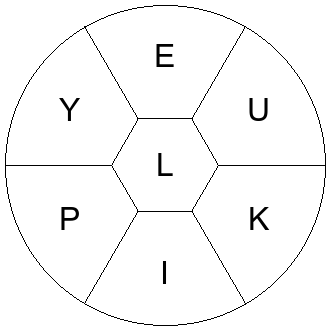
The official answers for today's puzzle are:

Click on the arrow to show the definition.
Click outside the pop-up to close it.


Number of Pangrams: 1

Maximum Puzzle Score: 84

Number of Answers: 31

Points Needed for Genius: 59

Genius requires between 9 and 29 words. You need at least a 6-letter word to reach genius. If you don't get the pangram, you need 87% of the total points to reach genius. If you get the pangram, you only need 63% of the remaining points to reach genius.

Other days with this pangram:

The button below will reveal a chart with the number of words by each letter. Red bars indicate that there is a pangram(s) starting with that letter.


How does this puzzle compare to other puzzles?

Today's score of 84 was in the 5th percentile of all puzzles.
The last time there was a score this low was on September 12, 2025.
The highest score ever was 537 on January 22, 2021.
The lowest score ever was 47 on March 27, 2023.

This puzzle's 31 possible answers rank it in the 28th percentile of all puzzles.
The last time there were fewer answers than this was on October 9, 2025.
The highest number of answers was 81 on June 8, 2019.
The lowest number of answers was 16 on March 27, 2023.

It takes a 6-letter word for genius.
The last time this happened was on October 7, 2025.

Today's puzzle has an average word length of 4.6.
For all Bees, the average word length has been 5.3.


Haven't I seen these letters before?

Hover over a letter to see its first and most recent appearance in the Bee!


Haven't I seen these words before?

The most common words in the Bee are:

  • noon 217
  • loll 203
  • toot 197
  • naan 181
  • nana 181
  • lilt 146
  • till 146
  • tilt 146
  • nene 141
  • tint 140
  • mama 139
  • mamma 139
  • acacia 133
  • acai 133
  • onto 132
  • toon 132
  • onion 129
  • anal 123
  • anon 121
  • dodo 119
  • tact 118
  • olio 117
  • boob 115
  • booboo 115
  • baba 114
  • papa 114
  • poop 114
  • lull 112
  • lulu 112
  • call 109
  • calla 109
  • mitt 108
  • mono 108
  • moon 108
  • ratatat 108
  • tart 108
  • tartar 108
  • attar 107
  • cocci 107
  • tutu 107
  • allay 106
  • ally 106
  • loon 106
  • tattoo 106
  • tatty 106
  • ammo 105
  • momma 105
  • epee 101
  • peep 101
  • roar 100


How long are words in the Bee?

There have been 107,878 answers ever accepted in the Bee - with 10,826 unique words.
Below are the distributions of the lengths of these words.


Valid dictionary words not in today's official answers

You may be wondering why these words aren't here*:

  • eellike
  • ekuele
  • eyelike
  • kelep
  • kelly
  • kelpy
  • killie
  • klik
  • leke
  • leku
  • lilylike
  • lipe
  • liplike
  • peepul
  • pele
  • peppily
  • pilei
  • pili
  • pilule
  • pily
  • pipelike
  • pulik
  • pulk
  • pullup
  • pulpily
  • ukelele
  • uppile
  • yelk
  • yill

*Because the New York Times considers them obscure or offensive.

eely

No Definition Found.

illy

No Definition Found.

keel

Etymology 1

noun
  1. Red chalk; ruddle.
verb
  1. To mark with ruddle.

Etymology 2

verb
  1. To put to death; to extinguish the life of.
  2. To render inoperative.
  3. To stop, cease or render void; to terminate.
  4. To amaze, exceed, stun or otherwise incapacitate.
  5. To cause great pain, discomfort or distress to.
  6. To produce feelings of dissatisfaction or revulsion in.
  7. To use up or to waste.
  8. To exert an overwhelming effect on.
  9. To overpower, overwhelm or defeat.
  10. To force a company out of business.
  11. To produce intense pain.
  12. To punish severely.
  13. To strike (a ball, etc.) with such force and placement as to make a shot that is impossible to defend against, usually winning a point.
  14. To cause (a ball, etc.) to be out of play, resulting in a stoppage of gameplay.
  15. To succeed with an audience, especially in comedy.
  16. To cause to assume the value zero.
  17. (IRC) To disconnect (a user) involuntarily from the network.
  18. To deadmelt.

kelp

noun
  1. Any of several large brown seaweeds (order Laminariales).
  2. The calcined ashes of seaweed, formerly used in glass and iodine manufacture.

kelpie

noun
  1. A malevolent shapeshifting spirit, most often in the form of a horse, believed to haunt the rivers and lochs of Scotland.
  2. An Australian breed of sheepdog.

kill

Etymology 1

noun
  1. The act of killing.
  2. Specifically, the death blow.
  3. The result of killing; that which has been killed.
  4. The grounding of the ball on the opponent's court, winning the rally.
verb
  1. To put to death; to extinguish the life of.
  2. To render inoperative.
  3. To stop, cease or render void; to terminate.
  4. To amaze, exceed, stun or otherwise incapacitate.
  5. To cause great pain, discomfort or distress to.
  6. To produce feelings of dissatisfaction or revulsion in.
  7. To use up or to waste.
  8. To exert an overwhelming effect on.
  9. To overpower, overwhelm or defeat.
  10. To force a company out of business.
  11. To produce intense pain.
  12. To punish severely.
  13. To strike (a ball, etc.) with such force and placement as to make a shot that is impossible to defend against, usually winning a point.
  14. To cause (a ball, etc.) to be out of play, resulting in a stoppage of gameplay.
  15. To succeed with an audience, especially in comedy.
  16. To cause to assume the value zero.
  17. (IRC) To disconnect (a user) involuntarily from the network.
  18. To deadmelt.

Etymology 2

noun
  1. (north-east US) A creek; a body of water; a channel or arm of the sea.

Etymology 3

noun
  1. A kiln.

leek

noun
  1. The vegetable Allium ampeloprasum var. porrum, having edible leaves and an onion-like bulb but with a milder flavour than the onion.
  2. Any of several species of Allium, broadly resembling the domesticated plant in appearance in the wild.

lieu

noun
  1. Place, stead; See in lieu or in lieu of

like

Etymology 1

noun
  1. (usually in the plural) Something that a person likes (prefers).
  2. An individual vote showing support for, or approval of, something posted on the Internet.
verb
  1. To enjoy, be pleased by; favor; be in favor of.
  2. To please.
  3. To derive pleasure of, by or with someone or something.
  4. To prefer and maintain (an action) as a regular habit or activity.
  5. To have an appearance or expression; to look; to seem to be (in a specified condition).
  6. To come near; to avoid with difficulty; to escape narrowly.
  7. To find attractive; to prefer the company of; to have mild romantic feelings for.
  8. To liken; to compare.
  9. To show support for, or approval of, something posted on the Internet by marking it with a vote.
  10. (with 'would' and in certain other phrases) To want, desire. See also would like.

Etymology 2

noun
  1. (sometimes as the likes of') Someone similar to a given person, or something similar to a given object; a comparative; a type; a sort.
  2. The stroke that equalizes the number of strokes played by the opposing player or side.
adjective
  1. Similar.
  2. Likely; probable.
adverb
  1. Likely.
  2. In a like or similar manner.
preposition
  1. Similar to, reminiscent of.
  2. Typical of
  3. Approximating
  4. In the manner of, similarly to.
  5. Such as
  6. As if there would be.
conjunction
  1. As, the way.
  2. As if; as though.
interjection
  1. Used to place emphasis upon a statement.

Etymology 3

verb
  1. To be likely.

likely

Etymology 1

noun
  1. Something or somebody considered likely.
adjective
  1. Probable; having a greater-than-even chance of occurring
  2. (as predicate, followed by to and infinitive) Reasonably to be expected; apparently destined, probable
  3. Appropriate, suitable; believable; having a good potential
  4. Plausible; within the realm of credibility
  5. Promising; apt to achieve success or yield a desired outcome
  6. Attractive; pleasant
  7. Similar; like; alike.

Etymology 2

adverb
  1. Similarly.
  2. Probably.

lily

noun
  1. Any of several flowers in the genus Lilium of the family Liliaceae, which includes a great many ornamental species.
  2. Any of several species of herbaceous flower which may or may not resemble the genus Lilium in some way, and which are not closely related to it or each other.
  3. The flower used as a heraldic charge; also commonly used to describe the fleur-de-lis.
  4. The end of a compass needle that should point north, traditionally often ornamented with the figure of a lily or fleur-de-lis.
  5. (usually in the plural) A royal spade in auction bridge.
  6. The thirtieth Lenormand card, representing calmness and maturity.
adjective
  1. White (as a racial epithet).

lippy

Etymology 1

adjective
  1. Having prominent lips.
  2. Having a tendency to talk back in a cheeky or impertinent manner.

Etymology 2

noun
  1. Lip gloss or lipstick; a stick of this product.

Etymology 3

noun
  1. An old dry measure amounting to one quarter of a peck (for goods sold by weight, 1¾ pounds or about four-fifths of a kilogram); also, a container of that capacity.

lull

noun
  1. A period of rest or soothing.
  2. A period of reduced activity; a respite
  3. A period without waves or wind.
  4. An extended pause between sets of waves.
verb
  1. To cause to rest by soothing influences; to compose; to calm
  2. To become gradually calm; to subside; to cease or abate.

lulu

noun
  1. A remarkable person, object or idea.
  2. A very attractive or alluring person.
  3. A very bad mistake or error.
  4. A fixed allowance paid to a legislator in lieu of reimbursement for actual expenses.

peel

Etymology 1

noun
  1. (usually uncountable) The skin or outer layer of a fruit, vegetable, etc.
  2. The action of peeling away from a formation.
  3. A cosmetic preparation designed to remove dead skin or to exfoliate.
verb
  1. To remove the skin or outer covering of.
  2. To remove something from the outer or top layer of.
  3. To become detached, come away, especially in flakes or strips; to shed skin in such a way.
  4. To remove one's clothing.
  5. To move, separate (off or away).

Etymology 2

noun
  1. A stake.
  2. A fence made of stakes; a stockade.
  3. A small tower, fort, or castle; a keep.

Etymology 3

noun
  1. A shovel or similar instrument, now especially a pole with a flat disc at the end used for removing pizza or loaves of bread from a baker's oven.
  2. A T-shaped implement used by printers and bookbinders for hanging wet sheets of paper on lines or poles to dry.
  3. The blade of an oar.

Etymology 4

noun
  1. An equal or match; a draw.
  2. A takeout which removes a stone from play as well as the delivered stone.
verb
  1. To play a peel shot.

Etymology 5

verb
  1. To send through a hoop (of a ball other than one's own).

Etymology 6

verb
  1. To plunder; to pillage, rob.

Etymology 7

noun
  1. A small salmon; a grilse; a sewin.

pile

Etymology 1

noun
  1. A mass of things heaped together; a heap.
  2. A group or list of related items up for consideration, especially in some kind of selection process.
  3. A mass formed in layers.
  4. A funeral pile; a pyre.
  5. A large amount of money.
  6. A large building, or mass of buildings.
  7. A bundle of pieces of wrought iron to be worked over into bars or other shapes by rolling or hammering at a welding heat; a fagot.
  8. A vertical series of alternate disks of two dissimilar metals (especially copper and zinc), laid up with disks of cloth or paper moistened with acid water between them, for producing a current of electricity; a voltaic pile, or galvanic pile.
  9. An atomic pile; an early form of nuclear reactor.
  10. The reverse (or tails) of a coin.
  11. A list or league
verb
  1. (often used with the preposition "up") To lay or throw into a pile or heap; to heap up; to collect into a mass; to accumulate
  2. To cover with heaps; or in great abundance; to fill or overfill; to load.
  3. To add something to a great number.
  4. (of vehicles) To create a hold-up.
  5. To place (guns, muskets, etc.) together in threes so that they can stand upright, supporting each other.

Etymology 2

noun
  1. A dart; an arrow.
  2. The head of an arrow or spear.
  3. A large stake, or piece of pointed timber, steel etc., driven into the earth or sea-bed for the support of a building, a pier, or other superstructure, or to form a cofferdam, etc.
  4. One of the ordinaries or subordinaries having the form of a wedge, usually placed palewise, with the broadest end uppermost.
verb
  1. To drive piles into; to fill with piles; to strengthen with piles.

Etymology 3

noun
  1. (usually in the plural) A hemorrhoid.

Etymology 4

noun
  1. Hair, especially when very fine or short; the fine underfur of certain animals. (Formerly countable, now treated as a collective singular.)
  2. The raised hairs, loops or strands of a fabric; the nap of a cloth.
verb
  1. To give a pile to; to make shaggy.

pileup

noun
  1. A pile, a group of people or things which have piled up on one another, especially
  2. An accumulation that occurs over time, especially one which is not welcome.

pill

Etymology 1

noun
  1. A small, usually round or cylindrical object designed for easy swallowing, usually containing some sort of medication.
  2. (definite, i.e. used with "the") Contraceptive medication, usually in the form of a pill to be taken by a woman; an oral contraceptive pill.
  3. A comical or entertaining person.
  4. A contemptible, annoying, or unpleasant person.
  5. A small piece of any substance, for example a ball of fibres formed on the surface of a textile by rubbing.
  6. A baseball.
  7. A bullet (projectile).
  8. A rounded rectangle indicating the tag or category that an item belongs to.
verb
  1. Of a woven fabric surface, to form small matted balls of fiber.
  2. To form into the shape of a pill.
  3. To medicate with pills.
  4. To persuade or convince someone of something.

Etymology 2

noun
  1. The peel or skin.
verb
  1. To peel; to remove the outer layer of hair, skin, or bark.
  2. To peel; to make by removing the skin.
  3. To be peeled; to peel off in flakes.
  4. To pillage; to despoil or impoverish.

Etymology 3

noun
  1. An inlet on the coast; a small tidal pool or bay.

plie

noun
  1. A smooth and continuous bending of the knees

pule

Etymology 1

noun
  1. A plaintive melancholy whine.
verb
  1. To whimper or whine.
  2. To pipe or chirp.

Etymology 2

noun
  1. A Serbian cheese made from donkey milk.

puli

noun
  1. One of a breed of Hungarian sheepdog with a distinctive thick, corded coat.

pull

noun
  1. An act of pulling (applying force)
  2. An attractive force which causes motion towards the source
  3. Any device meant to be pulled, as a lever, knob, handle, or rope
  4. Something in one's favour in a comparison or a contest; an advantage; means of influencing.
  5. Appeal or attraction (e.g. of a movie star)
  6. The situation where a client sends out a request for data from a server, as in server pull, pull technology
  7. A journey made by rowing
  8. A contest; a struggle.
  9. Loss or violence suffered.
  10. The act of drinking; a mouthful or swig of a drink.
  11. A kind of stroke by which a leg ball is sent to the off side, or an off ball to the side.
  12. A mishit shot which travels in a straight line and (for a right-handed player) left of the intended path.
  13. A single impression from a handpress.
verb
  1. To apply a force to (an object) so that it comes toward the person or thing applying the force.
  2. To gather with the hand, or by drawing toward oneself; to pluck.
  3. To attract or net; to pull in.
  4. To persuade (someone) to have sex with one.
  5. To remove (something), especially from public circulation or availability.
  6. To retrieve or generate for use.
  7. To do or perform.
  8. (with 'a' and the name of a person, place, event, etc.) To copy or emulate the actions or behaviour that is associated with the person or thing mentioned.
  9. To toss a frisbee with the intention of launching the disc across the length of a field.
  10. To row.
  11. To achieve by rowing on a rowing machine.
  12. To draw apart; to tear; to rend.
  13. To strain (a muscle, tendon, ligament, etc.).
  14. To draw (a hostile non-player character) into combat, or toward or away from some location or target.
  15. To score a certain number of points in a sport.
  16. To hold back, and so prevent from winning.
  17. To take or make (a proof or impression); so called because hand presses were worked by pulling a lever.
  18. To strike the ball in a particular manner. (See noun sense.)
  19. To draw beer from a pump, keg, or other source.
  20. (rail transportation, of a railroad car) To pull out from a yard or station; to leave.
  21. To pluck or pick (flowers, fruit etc.).
interjection
  1. Command used by a target shooter to request that the target be released/launched.

pulley

noun
  1. One of the simple machines; a sheave, a wheel with a grooved rim, in which a pulled rope or chain lifts an object (more useful when two or more pulleys are used together, as in a block and tackle arrangement, such that a small force moving through a greater distance can exert a larger force through a smaller distance).
verb
  1. To raise or lift by means of a pulley.

pulp

noun
  1. A soft, moist, shapeless mass or matter.
  2. A magazine or book containing lurid subject matter and characteristically printed on rough, unfinished paper.
verb
  1. To make or be made into pulp.
  2. To beat to a pulp.
  3. To deprive of pulp; to separate the pulp from.
adjective
  1. Of or pertaining to pulp magazines; in the style of a pulp magazine or the material printed within such a publication.

pulpy

adjective
  1. Having the characteristics of pulp
  2. Having the characteristics of pulp fiction; thus, having a garish focus on sex and violence

pupil

Etymology 1

noun
  1. A learner under the supervision of a teacher or professor.
  2. An orphan who is a minor and under the protection of the state.

Etymology 2

noun
  1. The hole in the middle of the iris of the eye, through which light passes to be focused on the retina.
  2. The central dark part of an ocellated spot.

puppylike

No Definition Found.

ukulele

noun
  1. A small four-stringed guitar.

yell

Etymology 1

noun
  1. A shout.
  2. A phrase to be shouted.
verb
  1. Shout; holler; make a loud sound with the voice.
  2. To convey by shouting
  3. To tell someone off (in a loud and angry manner)

Etymology 2

adjective
  1. Dry (of cow)

yelp

Etymology 1

noun
  1. An abrupt, high-pitched noise or utterance.
  2. A type of emergency vehicle siren sounding quicker and more intense than the wail.

Etymology 2

verb
  1. To utter an abrupt, high-pitched noise.

yule

noun
  1. Alternative letter-case form of Yule