Sunday, October 12, 2025

Answers to yesterday's Bee

Jump to answers for


The official answers for today's puzzle are:

Click on the arrow to show the definition.
Click outside the pop-up to close it.


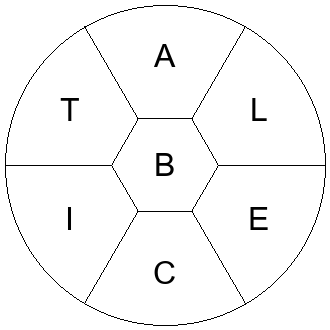
Number of Pangrams: 3

Maximum Puzzle Score: 322

Number of Answers: 65

Points Needed for Genius: 225

Genius requires between 31 and 56 words. You need at least a 7-letter word to reach genius. If you don't get the pangrams, you need 81% of the total points to reach genius. If you get the pangrams, you only need 65% of the remaining points to reach genius.

Other days with this pangram:

The button below will reveal a chart with the number of words by each letter. Red bars indicate that there is a pangram(s) starting with that letter.


How does this puzzle compare to other puzzles?

Today's score of 322 was in the 96th percentile of all puzzles.
The last time there was a score this high was on October 2, 2025.
The highest score ever was 537 on January 22, 2021.
The lowest score ever was 47 on March 27, 2023.

This puzzle's 65 possible answers rank it in the 96th percentile of all puzzles.
The last time there were more answers than this was on September 28, 2025.
The highest number of answers was 81 on June 8, 2019.
The lowest number of answers was 16 on March 27, 2023.

It takes a 7-letter word for genius.
The last time this happened was on October 11, 2025.

Today's puzzle has an average word length of 5.5.
For all Bees, the average word length has been 5.3.


Haven't I seen these letters before?

Hover over a letter to see its first and most recent appearance in the Bee!


Haven't I seen these words before?

The most common words in the Bee are:

  • noon 217
  • loll 203
  • toot 197
  • naan 181
  • nana 181
  • lilt 146
  • till 146
  • tilt 146
  • nene 141
  • tint 140
  • mama 139
  • mamma 139
  • acacia 133
  • acai 133
  • onto 132
  • toon 132
  • onion 129
  • anal 123
  • anon 121
  • dodo 119
  • tact 118
  • olio 117
  • baba 115
  • boob 115
  • booboo 115
  • papa 114
  • poop 114
  • lull 112
  • lulu 112
  • call 109
  • calla 109
  • mono 109
  • moon 109
  • mitt 108
  • ratatat 108
  • tart 108
  • tartar 108
  • attar 107
  • cocci 107
  • tutu 107
  • allay 106
  • ally 106
  • loon 106
  • tattoo 106
  • tatty 106
  • ammo 105
  • momma 105
  • epee 101
  • peep 101
  • meme 100


How long are words in the Bee?

There have been 107,997 answers ever accepted in the Bee - with 10,827 unique words.
Below are the distributions of the lengths of these words.


Valid dictionary words not in today's official answers

You may be wondering why these words aren't here*:

  • abaca
  • abatable
  • abba
  • abbatial
  • abbe
  • abele
  • abelia
  • abettal
  • actable
  • alba
  • albata
  • albite
  • albitic
  • albitical
  • alible
  • alliable
  • atabal
  • baal
  • babbitt
  • bacca
  • baccae
  • baccala
  • baccate
  • bailable
  • bailee
  • bailie
  • balata
  • balti
  • batata
  • batt
  • battalia
  • beal
  • beebee
  • belate
  • betta
  • biali
  • bibb
  • bibe
  • bice
  • bilabiate
  • billetee
  • billie
  • bitable
  • biteable
  • bitt
  • blae
  • blate
  • bleb
  • blet
  • blite
  • cabaletta
  • cabalette
  • cabbala
  • cablet
  • ceiba
  • celibatic
  • citeable
  • eatable
  • ebbet
  • labelable
  • labella
  • labellate
  • labiate
  • libellee
  • liblab
  • tabetic
  • tellable
  • tillable
  • tiltable
  • titbit

*Because the New York Times considers them obscure or offensive.

abaci

No Definition Found.

abate

Etymology 1

noun
  1. Abatement.
verb
  1. (obsolete outside law) To put an end to; to cause to cease.
  2. To become null and void.
  3. To nullify; make void.
  4. To humble; to lower in status; to bring someone down physically or mentally.
  5. To be humbled; to be brought down physically or mentally.
  6. To curtail; to deprive.
  7. To reduce in amount, size, or value.
  8. To decrease in size, value, or amount.
  9. To moderate; to lessen in force, intensity, to subside.
  10. To decrease in intensity or force; to subside.
  11. To deduct or omit.
  12. To bar or except.
  13. To cut away or hammer down, in such a way as to leave a figure in relief, as a sculpture, or in metalwork.
  14. To dull the edge or point of; to blunt.
  15. To destroy, or level to the ground.

Etymology 2

verb
  1. To enter a tenement without permission after the owner has died and before the heir takes possession.

Etymology 3

noun
  1. An Italian abbot, or other member of the clergy.

abet

noun
  1. Fraud or cunning.
  2. An act of abetting; of helping; of giving aid.
verb
  1. To urge on, stimulate (a person to do) something desirable.
  2. To incite; to assist or encourage by aid or countenance in crime.
  3. To support, countenance, maintain, uphold, or aid (any good cause, opinion, or action); to maintain.
  4. To back up one's forecast of a doubtful issue, by staking money, etc., to bet.

ablate

verb
  1. To remove or decrease something by cutting, erosion, melting, evaporation, or vaporization.
  2. To undergo ablation; to become melted or evaporated and removed at a high temperature.

able

Etymology 1

adjective
  1. Easy to use.
  2. Suitable; competent.
  3. Liable to.
  4. Having the necessary powers or the needed resources to accomplish a task.
  5. Free from constraints preventing completion of task; permitted to; not prevented from.
  6. Having the physical strength; robust; healthy.
  7. Rich; well-to-do.
  8. Gifted with skill, intelligence, knowledge, or competence.
  9. Legally qualified or competent.
  10. Capable of performing all the requisite duties; as an able seaman.

Etymology 2

verb
  1. To make ready.
  2. To make capable; to enable.
  3. To dress.
  4. To give power to; to reinforce; to confirm.
  5. To vouch for; to guarantee.

Etymology 3

noun
  1. The letter "A" in Navy Phonetic Alphabet.

albeit

conjunction
  1. Although, despite (it) being.

alibi

noun
  1. The plea or mode of defense under which a person on trial for a crime proves or attempts to prove being in another place when the alleged act was committed
verb
  1. To provide an alibi for.
  2. To provide an excuse for.

baba

noun
  1. A kind of sponge cake soaked in rum-flavoured syrup.
  2. (esp. among people of East European ancestry) A grandmother.
  3. An old woman, especially a traditional old woman from an eastern European culture.
  4. (esp. among people of Indian ancestry) A father.
  5. (Hinduism, Islam, Sikhism) A holy man, a spiritual leader.
  6. A baby, child.
  7. In baby talk, often used for a variety of words beginning with b, such as bottle or blanket.

babble

noun
  1. Idle talk; senseless prattle
  2. Inarticulate speech; constant or confused murmur.
  3. A sound like that of water gently flowing around obstructions.
verb
  1. To utter words indistinctly or unintelligibly; to utter inarticulate sounds
  2. To talk incoherently; to utter meaningless words.
  3. To talk too much; to chatter; to prattle.
  4. To make a continuous murmuring noise, like shallow water running over stones.
  5. To utter in an indistinct or incoherent way; to repeat words or sounds in a childish way without understanding.
  6. To reveal; to give away (a secret).

babe

noun
  1. A baby or infant; a very young human or animal.
  2. An attractive person, especially a young woman.
  3. Darling (term of endearment).

babel

noun
  1. A confused mixture of sounds and voices, especially in different languages.
  2. A place or scene of noise and confusion.
  3. A tall, looming structure.

bacilli

noun
  1. Any of various rod-shaped, spore-forming aerobic bacteria in the genus Bacillus, some of which cause disease.
  2. Any bacilliform (rod-shaped) bacterium.
  3. (by extension) Something which spreads like bacterial infection.

bail

Etymology 1

noun
  1. Security, usually a sum of money, exchanged for the release of an arrested person as a guarantee of that person's appearance for trial.
  2. Release from imprisonment on payment of such money.
  3. The person providing such payment.
  4. A bucket or scoop used for removing water from a boat etc.
  5. A person who bails water out of a boat.
  6. Custody; keeping.
verb
  1. To secure the release of an arrested person by providing bail.
  2. To release a person under such guarantee.
  3. To hand over personal property to be held temporarily by another as a bailment.
  4. To remove (water) from a boat by scooping it out.
  5. To remove water from (a boat) by scooping it out.
  6. To set free; to deliver; to release.

Etymology 2

verb
  1. To exit quickly.
  2. To fail to meet a commitment.

Etymology 3

noun
  1. A hoop, ring or handle (especially of a kettle or bucket).
  2. A stall for a cow (or other animal) (usually tethered with a semi-circular hoop).
  3. A hinged bar as a restraint for animals, or on a typewriter.
  4. A frame to restrain a cow during milking or feeding.
  5. A hoop, ring, or other object used to connect a pendant to a necklace.
  6. One of the two wooden crosspieces that rest on top of the stumps to form a wicket.
  7. (furniture) Normally curved handle suspended between sockets as a drawer pull. This may also be on a kettle or pail.
verb
  1. To secure the head of a cow during milking.

Etymology 4

verb
  1. To confine.
  2. To secure (a cow) by placing its head in a bail for milking.
  3. To keep (a traveller) detained in order to rob them; to corner (a wild animal); loosely, to detain, hold up. (Usually with up.)

bait

Etymology 1

noun
  1. Any substance, especially food, used in catching fish, or other animals, by alluring them to a hook, snare, trap, or net.
  2. Food containing poison or a harmful additive to kill animals that are pests.
  3. Anything which allures; something used to lure or entice someone or something into doing something
  4. A portion of food or drink, as a refreshment taken on a journey; also, a stop for rest and refreshment.
verb
  1. To attract with bait; to entice.
  2. To affix bait to a trap or a fishing hook or fishing line.

Etymology 2

verb
  1. To set dogs on (an animal etc.) to bite or worry; to attack with dogs, especially for sport.
  2. To intentionally annoy, torment, or threaten by constant rebukes or threats; to harass.
  3. To feed and water (a horse or other animal), especially during a journey.
  4. (of a horse or other animal) To take food, especially during a journey.
  5. (of a person) To stop to take a portion of food and drink for refreshment during a journey.

Etymology 3

verb
  1. To flap the wings; to flutter as if to fly; or to hover, as a hawk when she stoops to her prey.

Etymology 4

adjective
  1. Obvious; blatant.
  2. Well-known; famous; renowned.

bale

Etymology 1

noun
  1. Evil, especially considered as an active force for destruction or death.
  2. Suffering, woe, torment.

Etymology 2

noun
  1. A large fire, a conflagration or bonfire.
  2. A funeral pyre.
  3. A beacon-fire.

Etymology 3

noun
  1. A rounded bundle or package of goods in a cloth cover, and corded for storage or transportation.
  2. A bundle of compressed wool or hay, compacted for shipping and handling.
  3. A measurement of hay equal to 10 flakes. Approximately 70-90 lbs (32-41 kg).
  4. A measurement of paper equal to 10 reams.

Etymology 4

verb
  1. To remove water from a boat with buckets etc.

ball

Etymology 1

noun
  1. A solid or hollow sphere, or roughly spherical mass.
  2. A round or ellipsoidal object.
  3. (mildly, usually in the plural) A testicle.
  4. A leather-covered cushion, fastened to a handle called a ballstock; formerly used by printers for inking the form, then superseded by the roller.
  5. A large pill, a form in which medicine was given to horses; a bolus.
verb
  1. To form or wind into a ball.
  2. To heat in a furnace and form into balls for rolling.
  3. To have sexual intercourse with.
  4. To gather balls which cling to the feet, as of damp snow or clay; to gather into balls.
  5. (usually in present participle) To be hip or cool.
  6. To play basketball.
  7. To punish by affixing a ball and chain
interjection
  1. An appeal by the crowd for holding the ball against a tackled player. This is heard almost any time an opposition player is tackled, without regard to whether the rules about "prior opportunity" to dispose of the ball are fulfilled.

Etymology 2

noun
  1. A formal dance.
  2. A very enjoyable time.

ballet

noun
  1. A classical form of dance.
  2. A theatrical presentation of such dancing, usually with music, sometimes in the form of a story.
  3. The company of persons who perform this dance.
  4. A light part song, frequently with a fa-la-la chorus, common among Elizabethan and Italian Renaissance composers.
  5. A bearing in coats of arms representing one or more balls, called bezants, plates, etc., according to colour.
  6. Any intricate series of operations involving coordination between individuals.
verb
  1. To perform an action reminiscent of ballet dancing.

balletic

adjective
  1. Pertaining to or suitable for ballet.

bate

Etymology 1

verb
  1. To reduce the force of something; to abate.
  2. To restrain, usually with the sense of being in anticipation
  3. (sometimes figurative) To cut off, remove, take away.
  4. To leave out, except, bar.
  5. To waste away.
  6. To deprive of.
  7. To lessen by retrenching, deducting, or reducing; to abate; to beat down; to lower.
  8. To allow by way of abatement or deduction.

Etymology 2

noun
  1. Strife; contention.
verb
  1. To contend or strive with blows or arguments.
  2. Of a falcon: To flap the wings vigorously; to bait.

Etymology 3

noun
  1. An alkaline lye which neutralizes the effect of the previous application of lime, and makes hides supple in the process of tanning.
  2. A vat which contains this liquid.
verb
  1. To soak leather so as to remove chemicals used in tanning; to steep in bate.

Etymology 4

verb
  1. To hit; strike
  2. To strike or pound repeatedly, usually in some sort of rhythm.
  3. To strike repeatedly; to inflict repeated blows; to knock vigorously or loudly.
  4. To move with pulsation or throbbing.
  5. To win against; to defeat or overcome; to do better than, outdo, or excel (someone) in a particular, competitive event.
  6. To sail to windward using a series of alternate tacks across the wind.
  7. To strike (water, foliage etc.) in order to drive out game; to travel through (a forest etc.) for hunting.
  8. To mix food in a rapid fashion. Compare whip.
  9. (In haggling for a price) of a buyer, to persuade the seller to reduce a price
  10. To indicate by beating or drumming.
  11. To tread, as a path.
  12. To exercise severely; to perplex; to trouble.
  13. To be in agitation or doubt.
  14. To make a sound when struck.
  15. To make a succession of strokes on a drum.
  16. To sound with more or less rapid alternations of greater and less intensity, so as to produce a pulsating effect; said of instruments, tones, or vibrations, not perfectly in unison.
  17. To arrive at a place before someone.
  18. To have sexual intercourse.
  19. To rob.

Etymology 5

verb
  1. To masturbate.

battle

Etymology 1

noun
  1. A contest, a struggle.
  2. A general action, fight, or encounter, in which all the divisions of an army are or may be engaged; a combat, an engagement.
  3. A division of an army; a battalion.
  4. The main body of an army, as distinct from the vanguard and rear; the battalia.
verb
  1. To join in battle; to contend in fight
  2. To fight or struggle; to enter into a battle with.

Etymology 2

verb
  1. To nourish; feed.
  2. To render (for example soil) fertile or fruitful
adjective
  1. Improving; nutritious; fattening.
  2. Fertile; fruitful.

beat

Etymology 1

noun
  1. A stroke; a blow.
  2. A pulsation or throb.
  3. A pulse on the beat level, the metric level at which pulses are heard as the basic unit. Thus a beat is the basic time unit of a piece.
  4. A rhythm.
  5. The interference between two tones of almost equal frequency
  6. (authorship) A short pause in a play, screenplay, or teleplay, for dramatic or comedic effect; a plot point or story development.
  7. The route patrolled by a police officer or a guard.
  8. (by extension) An area of a person's responsibility, especially
  9. An act of reporting news or scientific results before a rival; a scoop.
  10. That which beats, or surpasses, another or others.
  11. A precinct.
  12. A place of habitual or frequent resort.
  13. A low cheat or swindler.
  14. The instrumental portion of a piece of hip-hop music.
  15. The act of scouring, or ranging over, a tract of land to rouse or drive out game; also, those so engaged, collectively.
  16. A smart tap on the adversary's blade.
verb
  1. To hit; strike
  2. To strike or pound repeatedly, usually in some sort of rhythm.
  3. To strike repeatedly; to inflict repeated blows; to knock vigorously or loudly.
  4. To move with pulsation or throbbing.
  5. To win against; to defeat or overcome; to do better than, outdo, or excel (someone) in a particular, competitive event.
  6. To sail to windward using a series of alternate tacks across the wind.
  7. To strike (water, foliage etc.) in order to drive out game; to travel through (a forest etc.) for hunting.
  8. To mix food in a rapid fashion. Compare whip.
  9. (In haggling for a price) of a buyer, to persuade the seller to reduce a price
  10. To indicate by beating or drumming.
  11. To tread, as a path.
  12. To exercise severely; to perplex; to trouble.
  13. To be in agitation or doubt.
  14. To make a sound when struck.
  15. To make a succession of strokes on a drum.
  16. To sound with more or less rapid alternations of greater and less intensity, so as to produce a pulsating effect; said of instruments, tones, or vibrations, not perfectly in unison.
  17. To arrive at a place before someone.
  18. To have sexual intercourse.
  19. To rob.
adjective
  1. Exhausted
  2. Dilapidated, beat up
  3. Fabulous
  4. Boring
  5. (of a person) ugly

Etymology 2

noun
  1. A beatnik.

beatable

adjective
  1. Able to be beaten.

beet

Etymology 1

noun
  1. Beta vulgaris, a plant with a swollen root which is eaten or used to make sugar.
  2. A beetroot, a swollen root of such a plant.

Etymology 2

verb
  1. To improve; to mend.
  2. To kindle a fire.
  3. To rouse.

beetle

Etymology 1

noun
  1. A small car, the Volkswagen Beetle (original version made 1938–2003, similar models made 1997–2010 and since 2011)
noun
  1. Any of numerous species of insect in the order Coleoptera characterized by a pair of hard, shell-like front wings which cover and protect a pair of rear wings when at rest.
  2. A game of chance in which players attempt to complete a drawing of a beetle, different dice rolls allowing them to add the various body parts.
verb
  1. To move away quickly, to scurry away.

Etymology 2

verb
  1. To loom over; to extend or jut.
adjective
  1. Protruding, jutting, overhanging. (As in beetle brows.)

Etymology 3

noun
  1. A type of mallet with a large wooden head, used to drive wedges, beat pavements, etc.
  2. A machine in which fabrics are subjected to a hammering process while passing over rollers, as in cotton mills; a beetling machine.
verb
  1. To beat with a heavy mallet.
  2. To finish by subjecting to a hammering process in a beetle or beetling machine.

belie

Etymology 1

verb
  1. To lie around; encompass.
  2. (of an army) To surround; beleaguer.

Etymology 2

verb
  1. To tell lies about.
  2. To give a false representation of.
  3. To contradict, to show (something) to be false.
  4. To conceal the contradictory or ironic presence of (something).
  5. To show, evince, demonstrate: to show (something) to be present, particularly something deemed contradictory or ironic.
  6. To mimic; to counterfeit.
  7. To fill with lies.

belittle

verb
  1. To knowingly say that something is smaller or less important than it actually is, especially as a way of showing contempt or deprecation.

bell

Etymology 1

noun
  1. A percussive instrument made of metal or other hard material, typically but not always in the shape of an inverted cup with a flared rim, which resonates when struck.
  2. The sounding of a bell as a signal.
  3. A telephone call.
  4. A signal at a school that tells the students when a class is starting or ending.
  5. The flared end of a brass or woodwind instrument.
  6. Any of a series of strokes on a bell (or similar), struck every half hour to indicate the time (within a four hour watch)
  7. The flared end of a pipe, designed to mate with a narrow spigot.
  8. A device control code that produces a beep (or rings a small electromechanical bell on older teleprinters etc.).
  9. Anything shaped like a bell, such as the cup or corolla of a flower.
  10. The part of the capital of a column included between the abacus and neck molding; also used for the naked core of nearly cylindrical shape, assumed to exist within the leafage of a capital.
  11. An instrument situated on a bicycle's handlebar, used by the cyclist to warn of his or her presence.
verb
  1. To attach a bell to.
  2. To shape so that it flares out like a bell.
  3. To telephone.
  4. To develop bells or corollas; to take the form of a bell; to blossom.

Etymology 2

noun
  1. The bellow or bay of certain animals, such as a hound on the hunt or a stag in rut.
verb
  1. To bellow or roar.
  2. To utter in a loud manner; to thunder forth.

belle

noun
  1. An attractive woman.

belt

noun
  1. A band worn around the waist to hold clothing to one's body (usually pants), hold weapons (such as a gun or sword), or serve as a decorative piece of clothing.
  2. A band used as a restraint for safety purposes, such as a seat belt.
  3. A band that is used in a machine to help transfer motion or power.
  4. Anything that resembles a belt, or that encircles or crosses like a belt; a strip or stripe.
  5. A trophy in the shape of a belt, generally awarded for martial arts.
  6. A collection of rocky-constituted bodies (such as asteroids) which orbit a star.
  7. One of certain girdles or zones on the surface of the planets Jupiter and Saturn, supposed to be of the nature of clouds.
  8. A powerful blow, often made with a fist or heavy object.
  9. A quick drink of liquor.
  10. (usually capitalized) A geographical region known for a particular product, feature or demographic (Corn Belt, Bible Belt, Black Belt, Green Belt).
  11. The part of the strike zone at the height of the batter's waist.
  12. Device that holds and feeds cartridges into a belt-fed weapon
verb
  1. To encircle.
  2. To fasten a belt on.
  3. To invest (a person) with a belt as part of a formal ceremony such as knighthood.
  4. To hit with a belt.
  5. To scream or sing in a loud manner.
  6. To drink quickly, often in gulps.
  7. To hit someone or something.
  8. To hit a pitched ball a long distance, usually for a home run.
  9. To move very fast

beta

noun
  1. The second letter of the Greek alphabet (Β, β), preceded by alpha (Α, α) and followed by gamma, (Γ, γ). In modern Greek it represents the voiced labiodental fricative sound of v found in the English words have and vase.
  2. Used in marking scheme: α, β, γ or α+, α, α-, β etc.
  3. Average sensitivity of a security's price to overall securities market prices.
  4. The phase of development after alpha testing and before launch, in which software, while not complete, has been released to potential users for testing.
  5. Software in such a phase; a preliminary version.
  6. Information about a route which may aid someone in climbing it.
  7. A beta particle or beta ray.
  8. In omegaverse fiction, a person of a (usually secondary) gender/sex that mirrors the biology of a normal human, being free from the biological drives of alphas and omegas but generally capable of bonding and mating with either.
verb
  1. To preliminarily release computer software for initial testing prior to final release.
  2. To beta-read a text.
adjective
  1. Identifying a molecular position in an organic chemical compound.
  2. Designates the second in an order of precedence.
  3. Preliminary; prerelease. Refers to an incomplete version of a product released for initial testing.
  4. (of a person, object or action) associated with the beta male/female archetype.
noun
  1. (manosphere, pickup community) A man who is less competent or desirable than an alpha male.
noun
  1. Any fish of the genus Betta, especially Betta splendens (the Siamese fighting fish).

betel

noun
  1. Either of two plants often used in combination:
  2. A quid (chewing preparation) containing these and other plant materials; paan.

bible

noun
  1. An exemplar of the Bible.
  2. A comprehensive manual that describes something. (e.g., handyman’s bible).
  3. (at certain US universities) A compilation of problems and solutions from previous years of a given course, used by some students to cheat on tests or assignments.
  4. Omasum, the third compartment of the stomach of ruminants
noun
  1. A piece of soft sandstone used for scouring the wooden decks of ships, usually with sand and seawater.
  2. A stone with a naturally-formed hole, used by Yorkshiremen for good luck.

biblical

adjective
  1. Of or relating to the Bible.
  2. In accordance with the teachings of the Bible (according to some interpretation of it).
  3. Very great; especially, exceeding previous records in scale.

bilabial

noun
  1. A speech sound articulated with both lips.
adjective
  1. Articulated with both lips.

bile

Etymology 1

noun
  1. A bitter brownish-yellow or greenish-yellow secretion produced by the liver, stored in the gall bladder, and discharged into the duodenum where it aids the process of digestion.
  2. Bitterness of temper; ill humour; irascibility.
  3. Two of the four humours, black bile or yellow bile, in ancient and medieval physiology.

Etymology 2

noun
  1. A boil (kind of swelling).
verb
  1. (of liquids) To heat to the point where it begins to turn into a gas.
  2. To cook in boiling water.
  3. (of liquids) To begin to turn into a gas, seethe.
  4. To bring to a boil, to heat so as to cause the contents to boil.
  5. (used only in progressive tenses, of weather) To be uncomfortably hot.
  6. (used only in progressive tenses) To feel uncomfortably hot.
  7. To form, or separate, by boiling or evaporation.
  8. To steep or soak in warm water.
  9. To be agitated like boiling water; to bubble; to effervesce.
  10. To be moved or excited with passion; to be hot or fervid.

bill

Etymology 1

noun
  1. Any of various bladed or pointed hand weapons, originally designating an Anglo-Saxon sword, and later a weapon of infantry, especially in the 14th and 15th centuries, commonly consisting of a broad, heavy, double-edged, hook-shaped blade, with a short pike at the back and another at the top, attached to the end of a long staff.
  2. A cutting instrument, with hook-shaped point, and fitted with a handle, used in pruning, etc.; a billhook.
  3. Somebody armed with a bill; a billman.
  4. A pickaxe, or mattock.
  5. The extremity of the arm of an anchor; the point of or beyond the fluke (also called the peak).
verb
  1. To dig, chop, etc., with a bill.

Etymology 2

noun
  1. The beak of a bird, especially when small or flattish; sometimes also used with reference to a platypus, turtle, or other animal.
  2. A beak-like projection, especially a promontory.
  3. Of a cap or hat: the brim or peak, serving as a shade to keep sun off the face and out of the eyes.
verb
  1. To peck
  2. To stroke bill against bill, with reference to doves; to caress in fondness

Etymology 3

noun
  1. A written list or inventory. (Now obsolete except in specific senses or set phrases; bill of lading, bill of goods, etc.)
  2. A document, originally sealed; a formal statement or official memorandum. (Now obsolete except with certain qualifying words; bill of health, bill of sale etc.)
  3. A draft of a law, presented to a legislature for enactment; a proposed or projected law.
  4. A declaration made in writing, stating some wrong the complainant has suffered from the defendant, or a fault committed by some person against a law.
  5. A piece of paper money; a banknote.
  6. A written note of goods sold, services rendered, or work done, with the price or charge; an invoice.
  7. A paper, written or printed, and posted up or given away, to advertise something, as a lecture, a play, or the sale of goods
  8. A writing binding the signer or signers to pay a certain sum at a future day or on demand, with or without interest, as may be stated in the document; a bill of exchange. In the United States, it is usually called a note, a note of hand, or a promissory note.
  9. A set of items presented together.
verb
  1. To advertise by a bill or public notice.
  2. To charge; to send a bill to.

Etymology 4

noun
  1. The bell, or boom, of the bittern.

billable

noun
  1. Something that is billed for.
adjective
  1. Capable of being billed for.

billet

Etymology 1

noun
  1. A short informal letter.
  2. A written order to quarter soldiers.

Etymology 2

noun
  1. A place where a soldier is assigned to lodge.
  2. An allocated space or berth in a boat or ship.
  3. Berth; position.
verb
  1. (of a householder etc.) To lodge soldiers, or guests, usually by order.
  2. (of a soldier) To lodge, or be quartered, in a private house.
  3. To direct, by a ticket or note, where to lodge.

Etymology 3

noun
  1. A semi-finished length of metal.
  2. A short piece of wood, especially one used as firewood.
  3. A short cutting of sugar cane produced by a harvester or used for planting.
  4. A rectangle used as a charge on an escutcheon.
  5. An ornament in Norman work, resembling a billet of wood, either square or round.
  6. (saddlery) A strap that enters a buckle.
  7. A loop that receives the end of a buckled strap.

Etymology 4

noun
  1. An English fish, allied to the cod; the coalfish.

bite

noun
  1. The act of biting.
  2. The wound left behind after having been bitten.
  3. The swelling of one's skin caused by an insect's mouthparts or sting.
  4. A piece of food of a size that would be produced by biting; a mouthful.
  5. Something unpleasant.
  6. An act of plagiarism.
  7. A small meal or snack.
  8. Aggression
  9. The hold which the short end of a lever has upon the thing to be lifted, or the hold which one part of a machine has upon another.
  10. A cheat; a trick; a fraud.
  11. A sharper; one who cheats.
  12. A blank on the edge or corner of a page, owing to a portion of the frisket, or something else, intervening between the type and paper.
  13. A cut, a proportion of profits; an amount of money.
verb
  1. To cut into something by clamping the teeth.
  2. To hold something by clamping one's teeth.
  3. To attack with the teeth.
  4. To behave aggressively; to reject advances.
  5. To take hold; to establish firm contact with.
  6. To have significant effect, often negative.
  7. (of a fish) To bite a baited hook or other lure and thus be caught.
  8. To accept something offered, often secretly or deceptively, to cause some action by the acceptor.
  9. (of an insect) To sting.
  10. To cause a smarting sensation; to have a property which causes such a sensation; to be pungent.
  11. (sometimes figurative) To cause sharp pain or damage to; to hurt or injure.
  12. To cause sharp pain; to produce anguish; to hurt or injure; to have the property of so doing.
  13. To take or keep a firm hold.
  14. To take hold of; to hold fast; to adhere to.
  15. To lack quality; to be worthy of derision; to suck.
  16. To perform oral sex on. Used in invective.
  17. To plagiarize, to imitate.
  18. To deceive or defraud; to take in.

blab

noun
  1. One who blabs; a babbler; a telltale; a gossip or gossiper.
  2. Gossip; prattle.
verb
  1. To tell tales; to gossip without reserve or discretion.

blat

Etymology 1

verb
  1. To cry, as a calf or sheep; to bleat.
  2. To make a senseless noise.
  3. To talk inconsiderately.
  4. To produce an overrich or overblown sound on a brass instrument such as a trumpet, trombone, or tuba.

Etymology 2

noun
  1. Connections; relationships; one's social or business network (in Russian or Soviet society).

bleat

noun
  1. The characteristic cry of a sheep or a goat.
verb
  1. Of a sheep or goat, to make its characteristic cry; of a human, to mimic this sound.
  2. Of a person, to complain.

cabal

noun
  1. # A putative, secret organization of individuals gathered for a political purpose.
  2. A secret plot.
  3. An identifiable group within the tradition of Discordianism.
verb
  1. To engage in the activities of a cabal.

cabala

proper noun
  1. A body of mystical Jewish teachings based on an esoteric reading of the Hebrew scriptures.

cabbie

noun
  1. A cabdriver, someone who drives a taxi.

cable

noun
  1. (material) A long object used to make a physical connection.
  2. (communications) A system for transmitting television or Internet services over a network of coaxial or fibreoptic cables.
  3. A telegram, notably when sent by (submarine) telegraph cable.
  4. A unit of length equal to one tenth of a nautical mile.
  5. (unit, chiefly nautical) 100 fathoms, 600 imperial feet, approximately 185 m.
  6. The currency pair British Pound against United States Dollar.
  7. A moulding, shaft of a column, or any other member of convex, rounded section, made to resemble the spiral twist of a rope.
  8. A textural pattern achieved by passing groups of stitches over one another.
verb
  1. To provide with cable(s)
  2. To fasten (as if) with cable(s)
  3. To wrap wires to form a cable
  4. To send a telegram by cable
  5. To communicate by cable
  6. To ornament with cabling.
  7. To create cable stitches.

callable

noun
  1. An object of a type that can be called, such as a function.
  2. A callable bond.
adjective
  1. That can be called.
  2. That may be redeemed by its holder before it matures.

celeb

noun
  1. A celebrity; a famous person.

celibate

noun
  1. One who is not married, especially one who has taken a religious vow not to get married, usually because of being a member of a religious community.
  2. A celibate state; celibacy.
verb
  1. To practice celibacy
adjective
  1. Not married.
  2. (by extension) Abstaining from sexual relations and pleasures.

ciabatta

noun
  1. A broad, flat, white Italian bread.

citable

No Definition Found.

electable

noun
  1. A person who is able or fit to be elected to office.
adjective
  1. Able to be elected to office

label

noun
  1. A small ticket or sign giving information about something to which it is attached or intended to be attached.
  2. A name given to something or someone to categorise them as part of a particular social group.
  3. A company that sells records.
  4. A user-defined alias for a numerical designation, the reverse of an enumeration.
  5. A named place in source code that can be jumped to using a GOTO or equivalent construct.
  6. A charge resembling the strap crossing the horse’s chest from which pendants are hung.
  7. A tassel.
  8. A piece of writing added to something, such as a codicil appended to a will.
  9. A brass rule with sights, formerly used with a circumferentor to take altitudes.
  10. The projecting moulding by the sides, and over the tops, of openings in mediaeval architecture.
  11. In mediaeval art, the representation of a band or scroll containing an inscription.
  12. A non-interactive control or widget displaying text, often used to describe the purpose of another control.
verb
  1. To put a label (a ticket or sign) on (something).
  2. (ditransitive) To give a label to (someone or something) in order to categorise that person or thing.
  3. To replace specific atoms by their isotope in order to track the presence or movement of this isotope through a reaction, metabolic pathway or cell.
  4. To add a detectable substance, either transiently or permanently, to a biological substance in order to track the presence of the label-substance combination either in situ or in vitro

labia

noun
  1. The folds of tissue at the opening of the vulva, at either side of the vagina.
noun
  1. A liplike structure; especially one of the two pairs of folds of skin either side of the vulva.
  2. The lip of a labiate corolla.
  3. The lip against which pressured air is driven to produce sound in a recorder and in a pipe organ with flue pipes.

labial

noun
  1. A consonant articulated by the lips.
  2. An organ pipe having a lip that influences its sound.
  3. Any of the scales bordering the mouth opening of a reptile.
adjective
  1. Of or pertaining to the lips or labia.
  2. Articulated by the lips, as the consonants b, m and w.
  3. Of an incisor or canine, on the side facing the lips. See mesial.
  4. Furnished with lips.

labile

adjective
  1. Liable to slip, err, fall, or apostatize.
  2. Apt or likely to change.
  3. (of a compound or bond) Kinetically unstable; rapidly cleaved (and possibly reformed).
  4. (of a verb) Able to change valency without changing its form; especially, able to be used both transitively and intransitively without changing its form.

liable

adjective
  1. Bound or obliged in law or equity; responsible; answerable.
  2. Subject; susceptible.
  3. Exposed to a certain contingency or causality, more or less probable.
  4. (as predicate, with "to" and an infinitive) likely.

libel

noun
  1. A written or pictorial false statement which unjustly seeks to damage someone's reputation.
  2. The act or crime of displaying such a statement publicly.
  3. Any defamatory writing; a lampoon; a satire.
  4. A written declaration or statement by the plaintiff of their cause of action, and of the relief they seek.
  5. A brief writing of any kind, especially a declaration, bill, certificate, request, supplication, etc.
verb
  1. To defame someone, especially in a manner that meets the legal definition of libel.
  2. To proceed against (a ship, goods, etc.) by filing a libel.

libelee

No Definition Found.

tabla

noun
  1. A pair of tuned hand drums, used in various musical genres of the Indian subcontinent, that are similar to bongos.

table

noun
  1. Furniture with a top surface to accommodate a variety of uses.
  2. A two-dimensional presentation of data.
  3. The top of a stringed instrument, particularly a member of the violin family: the side of the instrument against which the strings vibrate.
  4. One half of a backgammon board, which is divided into the inner and outer table.
  5. The flat topmost facet of a cut diamond.
verb
  1. To tabulate; to put into a table or grid.
  2. To supply (a guest, client etc.) with food at a table; to feed.
  3. To delineate; to represent, as in a picture; to depict.
  4. (non-US) To put on the table of a commission or legislative assembly; to propose for formal discussion or consideration, to put on the agenda.
  5. To remove from the agenda, to postpone dealing with; to shelve (to indefinitely postpone consideration or discussion of something).
  6. To join (pieces of timber) together using coaks.
  7. To put on a table.
  8. To make board hems in the skirts and bottoms of (sails) in order to strengthen them in the part attached to the bolt-rope.

tablet

noun
  1. A slab of clay used for inscription.
  2. A short scripture written by the founders of the Bahá'í faith.
  3. A pill; a small, easily swallowed portion of a substance.
  4. A block of several sheets of blank paper that are bound together at the top; pad of paper.
  5. A graphics tablet.
  6. A tablet computer, a type of portable computer.
  7. A confection made from sugar, condensed milk and butter, produced in flat slabs.
  8. A type of round token giving authority for a train to proceed over a single-track line.
verb
  1. To form (a drug, etc.) into tablets.

tibia

noun
  1. The inner and usually the larger of the two bones of the leg or hind limb below the knee, the shinbone
  2. The second segment from the end of an insect's leg, between the femur and tarsus.
  3. The third segment from the end of an arachnid's leg, between the patella and metatarsus.
  4. A musical instrument of the flute kind, originally made of the leg bone of an animal.

tibiae

noun
  1. The inner and usually the larger of the two bones of the leg or hind limb below the knee, the shinbone
  2. The second segment from the end of an insect's leg, between the femur and tarsus.
  3. The third segment from the end of an arachnid's leg, between the patella and metatarsus.
  4. A musical instrument of the flute kind, originally made of the leg bone of an animal.

tibial

No Definition Found.