Saturday, October 25, 2025

Answers to yesterday's Bee

Jump to answers for


The official answers for today's puzzle are:

Click on the arrow to show the definition.
Click outside the pop-up to close it.


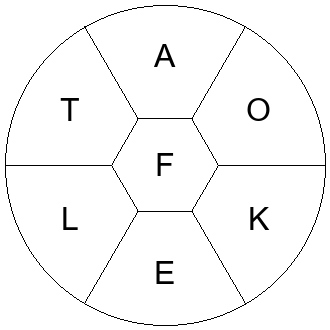
Number of Pangrams: 1

Maximum Puzzle Score: 197

Number of Answers: 51

Points Needed for Genius: 138

Genius requires between 20 and 45 words. You need at least a 7-letter word to reach genius. If you don't get the pangram, you need 76% of the total points to reach genius. If you get the pangram, you only need 68% of the remaining points to reach genius.

Other days with this pangram:

The button below will reveal a chart with the number of words by each letter. Red bars indicate that there is a pangram(s) starting with that letter.


How does this puzzle compare to other puzzles?

Today's score of 197 was in the 63rd percentile of all puzzles.
The last time there was a score this high was on October 24, 2025.
The highest score ever was 537 on January 22, 2021.
The lowest score ever was 47 on March 27, 2023.

This puzzle's 51 possible answers rank it in the 78th percentile of all puzzles.
The last time there were more answers than this was on October 24, 2025.
The highest number of answers was 81 on June 8, 2019.
The lowest number of answers was 16 on March 27, 2023.

It takes a 7-letter word for genius.
The last time this happened was on October 24, 2025.

Today's puzzle has an average word length of 5.1.
For all Bees, the average word length has been 5.3.


Haven't I seen these letters before?

Hover over a letter to see its first and most recent appearance in the Bee!


Haven't I seen these words before?

The most common words in the Bee are:

  • noon 219
  • loll 206
  • toot 200
  • naan 181
  • nana 181
  • lilt 146
  • till 146
  • tilt 146
  • nene 141
  • tint 141
  • mama 139
  • mamma 139
  • acacia 134
  • acai 134
  • onto 133
  • toon 133
  • onion 130
  • anal 123
  • anon 121
  • dodo 119
  • olio 119
  • tact 118
  • baba 116
  • boob 115
  • booboo 115
  • papa 114
  • poop 114
  • lull 112
  • lulu 112
  • call 110
  • calla 110
  • cocci 109
  • mitt 109
  • mono 109
  • moon 109
  • ratatat 108
  • tart 108
  • tartar 108
  • tutu 108
  • attar 107
  • loon 107
  • allay 106
  • ally 106
  • tattoo 106
  • tatty 106
  • ammo 105
  • momma 105
  • epee 102
  • peep 102
  • coot 100


How long are words in the Bee?

There have been 108,560 answers ever accepted in the Bee - with 10,846 unique words.
Below are the distributions of the lengths of these words.


Valid dictionary words not in today's official answers

You may be wondering why these words aren't here*:

  • alef
  • alfa
  • faff
  • fallal
  • feal
  • felafel
  • felloe
  • feoff
  • feoffee
  • flatlet
  • floatel
  • flota
  • flotel
  • foetal
  • footle
  • keef
  • kloof
  • kofta
  • loof
  • offa
  • toff
  • toft

*Because the New York Times considers them obscure or offensive.

afloat

adverb
  1. Floating
  2. Covered with water bearing floating articles; flooded.
  3. Out at sea.
  4. Making successful progress under one's own steam.

afoot

adjective
  1. (predicative) That is on foot, in motion, in action, in progress.
adverb
  1. On foot. (means of locomotion, walking)
  2. On foot. (support of the body, standing)
  3. In motion; in action; astir; stirring; in progress.

alfalfa

noun
  1. A plant, principally of Medicago sativa, grown as a pasture crop.
  2. A type or breed of this plant.

aloft

adverb
  1. At, to, or in the air or sky.
  2. Above, overhead, in a high place; up.
  3. In the top, at the masthead, or on the higher yards or rigging.

aloof

adjective
  1. Reserved and remote; either physically or emotionally distant; standoffish.
adverb
  1. At or from a distance, but within view, or at a small distance; apart; away.
  2. Without sympathy; unfavorably.
preposition
  1. Away from; clear of.

effete

adjective
  1. Of substances, quantities etc: exhausted, spent, worn-out.
  2. Lacking strength or vitality; feeble, powerless, impotent.
  3. Decadent, weak through self-indulgence.
  4. (of a person) Affected, overrefined

fake

Etymology 1

noun
  1. Something which is not genuine, or is presented fraudulently.
  2. A trick; a swindle.
  3. A move meant to deceive an opposing player, used for gaining advantage for example when dribbling an opponent.
verb
  1. To cheat; to swindle; to steal; to rob.
  2. To modify fraudulently, so as to make an object appear better or other than it really is
  3. To make a counterfeit, to counterfeit, to forge, to falsify.
  4. To make a false display of, to affect, to feign, to simulate.
adjective
  1. Not real; false, fraudulent.
  2. (of people) Insincere.

Etymology 2

noun
  1. One of the circles or windings of a cable or hawser, as it lies in a coil; a single turn or coil.
verb
  1. To coil (a rope, line, or hawser), by winding alternately in opposite directions, in layers usually of zigzag or figure of eight form, to prevent twisting when running out.

falafel

noun
  1. A Middle Eastern food in the form of balls made from chickpeas and other ingredients. Often served in a pita.
  2. A pita with falafel balls inside (like a sandwich or a wrap).
  3. A single falafel ball.

fall

Etymology 1

noun
  1. The act of moving to a lower position under the effect of gravity.
  2. A reduction in quantity, pitch, etc.
  3. The time of the year when the leaves typically fall from the trees; autumn; the season of the year between the autumnal equinox and the winter solstice.
  4. A loss of greatness or status.
  5. That which falls or cascades.
  6. A crucial event or circumstance.
  7. A hairpiece for women consisting of long strands of hair on a woven backing, intended primarily to cover hair loss.
  8. Blame or punishment for a failure or misdeed.
  9. The part of the rope of a tackle to which the power is applied in hoisting (usu. plural).
  10. An old Scots unit of measure equal to six ells.
  11. A short, flexible piece of leather forming part of a bullwhip, placed between the thong and the cracker.
  12. The lid, on a piano, that covers the keyboard
verb
  1. (heading) To be moved downwards.
  2. To move downwards.
  3. To happen, to change negatively.
  4. To be allotted to; to arrive through chance, fate, or inheritance.
  5. To diminish; to lessen or lower.
  6. To bring forth.
  7. To issue forth into life; to be brought forth; said of the young of certain animals.
  8. To descend in character or reputation; to become degraded; to sink into vice, error, or sin.
  9. To become ensnared or entrapped; to be worse off than before.
  10. To assume a look of shame or disappointment; to become or appear dejected; said of the face.
  11. To happen; to come to pass; to chance or light (upon).
  12. To begin with haste, ardour, or vehemence; to rush or hurry.
  13. To be dropped or uttered carelessly.
  14. (of a fabric) To hang down (under the influence of gravity).

Etymology 2

noun
  1. The chasing of a hunted whale.

falloff

noun
  1. A reduction or decline.

fatal

noun
  1. A fatality; an event that leads to death.
  2. A fatal error; a failure that causes a program to terminate.
adjective
  1. Proceeding from, or appointed by, fate or destiny.
  2. Foreboding death or great disaster.
  3. Causing death or destruction.
  4. Causing a sudden end to the running of a program.

fate

noun
  1. The presumed cause, force, principle, or divine will that predetermines events.
  2. The effect, consequence, outcome, or inevitable events predetermined by this cause.
  3. An event or a situation which is inevitable in the fullness of time.
  4. Destiny; often with a connotation of death, ruin, misfortune, etc.
  5. Alternative letter-case form of Fate (one of the goddesses said to control the destiny of human beings).
verb
  1. To foreordain or predetermine, to make inevitable.

feat

Etymology 1

noun
  1. A relatively rare or difficult accomplishment.
verb
  1. To form; to fashion.
adjective
  1. Dexterous in movements or service; skilful; neat; pretty.

Etymology 2

verb
  1. To feature. I

feel

Etymology 1

noun
  1. A quality of an object experienced by touch.
  2. A vague mental impression.
  3. An act of fondling.
  4. A vague understanding.
  5. An intuitive ability.
  6. Alternative form of feeling.
verb
  1. (heading) To use or experience the sense of touch.
  2. (heading) To sense or think emotionally or judgmentally.
  3. To be or become aware of.
  4. To experience the consequences of.
  5. To seem (through touch or otherwise).
  6. To understand.

Etymology 2

adjective
  1. Much; many.
adverb
  1. Greatly, much, very
pronoun
  1. Many (of).

feet

Etymology 1

noun
  1. A biological structure found in many animals that is used for locomotion and that is frequently a separate organ at the terminal part of the leg.
  2. Specifically, a human foot, which is found below the ankle and is used for standing and walking.
  3. (often used attributively) Travel by walking.
  4. The base or bottom of anything.
  5. The part of a flat surface on which the feet customarily rest.
  6. The end of a rectangular table opposite the head.
  7. A short foot-like projection on the bottom of an object to support it.
  8. A unit of measure equal to twelve inches or one third of a yard, equal to exactly 30.48 centimetres.
  9. A unit of measure for organ pipes equal to the wavelength of two octaves above middle C, approximately 328 mm.
  10. (collective) Foot soldiers; infantry.
  11. (cigars) The end of a cigar which is lit, and usually cut before lighting.
  12. The part of a sewing machine which presses downward on the fabric, and may also serve to move it forward.
  13. The bottommost part of a typed or printed page.
  14. The base of a piece of type, forming the sides of the groove.
  15. The basic measure of rhythm in a poem.
  16. The parsing of syllables into prosodic constituents, which are used to determine the placement of stress in languages along with the notions of constituent heads.
  17. The bottom edge of a sail.
  18. The end of a billiard or pool table behind the foot point where the balls are racked.
  19. In a bryophyte, that portion of a sporophyte which remains embedded within and attached to the parent gametophyte plant.
  20. The muscular part of a bivalve mollusc or a gastropod by which it moves or holds its position on a surface.
  21. The globular lower domain of a protein.
  22. The point of intersection of one line with another that is perpendicular to it.
  23. Fundamental principle; basis; plan.
  24. Recognized condition; rank; footing.

Etymology 2

noun
  1. Fact; performance; feat.

fell

Etymology 1

noun
  1. A cutting-down of timber.
  2. The stitching down of a fold of cloth; specifically, the portion of a kilt, from the waist to the seat, where the pleats are stitched down.
  3. The end of a web, formed by the last thread of the weft.
verb
  1. To make something fall; especially to chop down a tree.
  2. To strike down, kill, destroy.
  3. To stitch down a protruding flap of fabric, as a seam allowance, or pleat.

Etymology 2

noun
  1. An animal skin, hide, pelt.
  2. Human skin (now only as a metaphorical use of previous sense).

Etymology 3

noun
  1. (obsolete outside Britain) A rocky ridge or chain of mountains.
  2. (obsolete outside Britain) A wild field or upland moor.

Etymology 4

adjective
  1. Of a strong and cruel nature; eager and unsparing; grim; fierce; ruthless; savage.
  2. Strong and fiery; biting; keen; sharp; pungent
  3. Very large; huge.
  4. Eager; earnest; intent.
adverb
  1. Sharply; fiercely.

Etymology 5

noun
  1. Anger; gall; melancholy.

Etymology 6

noun
  1. The finer portions of ore, which go through the meshes when the ore is sorted by sifting.

Etymology 7

verb
  1. (heading) To be moved downwards.
  2. To move downwards.
  3. To happen, to change negatively.
  4. To be allotted to; to arrive through chance, fate, or inheritance.
  5. To diminish; to lessen or lower.
  6. To bring forth.
  7. To issue forth into life; to be brought forth; said of the young of certain animals.
  8. To descend in character or reputation; to become degraded; to sink into vice, error, or sin.
  9. To become ensnared or entrapped; to be worse off than before.
  10. To assume a look of shame or disappointment; to become or appear dejected; said of the face.
  11. To happen; to come to pass; to chance or light (upon).
  12. To begin with haste, ardour, or vehemence; to rush or hurry.
  13. To be dropped or uttered carelessly.
  14. (of a fabric) To hang down (under the influence of gravity).

fella

noun
  1. (chiefly South US) used to address a male
noun
  1. A colleague or partner.
  2. A companion; a comrade.
  3. A man without good breeding or worth; an ignoble or mean man.
  4. An equal in power, rank, character, etc.
  5. One of a pair, or of two things used together or suited to each other; a mate.
  6. A person with common characteristics, being of the same kind, or in the same group.
  7. A male person; a man.
  8. A person; an individual, male or female.
  9. A rank or title in the professional world, usually given as "Fellow".
  10. (Aboriginal English) Used as a general intensifier
noun
  1. A person who was a fellow attendee at one's school.

fellate

verb
  1. To perform oral sex on (a man); to stimulate (a penis or testicles) using the mouth.
  2. (by extension) To suck (something) in a manner suggestive of fellatio.
  3. To suck up to, to flatter or be shamefully subservient to.

felt

Etymology 1

noun
  1. A cloth or stuff made of matted fibres of wool, or wool and fur, fulled or wrought into a compact substance by rolling and pressure, with lees or size, without spinning or weaving.
  2. A hat made of felt.
  3. A skin or hide; a fell; a pelt.
verb
  1. To make into felt, or a feltlike substance; to cause to adhere and mat together.
  2. To cover with, or as if with, felt.
  3. To cause a player to lose all their chips.

Etymology 2

verb
  1. (heading) To use or experience the sense of touch.
  2. (heading) To sense or think emotionally or judgmentally.
  3. To be or become aware of.
  4. To experience the consequences of.
  5. To seem (through touch or otherwise).
  6. To understand.
adjective
  1. That has been experienced or perceived.

feta

noun
  1. A variety of curd cheese made from sheep’s or goat’s milk and originating from Greece.

fetal

adjective
  1. Pertaining to, or connected with, a fetus.

fete

noun
  1. A festival open to the public, the proceeds from which are often given to charity.
  2. A feast, celebration or carnival.
verb
  1. (usually in the passive) To celebrate (a person).

fettle

noun
  1. A state of proper physical condition; kilter or trim.
  2. One's mental state; spirits.
  3. Sand used to line a furnace.
  4. A person's mood or state, often assuming the worst.
  5. A seam line left by the meeting of mold pieces.
  6. The act of fettling.
verb
  1. To sort out, to fix, to mend, to repair.
  2. To make preparations; to put things in order; to do trifling business.
  3. To line the hearth of a furnace with sand prior to pouring molten metal.
  4. To be upset or in a bad mood.
  5. In ceramics, to remove (as by sanding) the seam lines left by the meeting of two molds.
  6. To prepare.

flak

noun
  1. Ground-based anti-aircraft guns firing explosive shells.
  2. Anti-aircraft shell fire.
  3. Adverse criticism.
  4. A public-relations spokesperson.

flake

Etymology 1

noun
  1. A loose filmy mass or a thin chiplike layer of anything
  2. A scale of a fish or similar animal
  3. A prehistoric tool chipped out of stone.
  4. A person who is impractical, flighty, unreliable, or inconsistent; especially with maintaining a living.
  5. A carnation with only two colours in the flower, the petals having large stripes.
  6. A flat turn or tier of rope.
verb
  1. To break or chip off in a flake.
  2. To prove unreliable or impractical; to abandon or desert, to fail to follow through.
  3. To store an item such as rope or sail in layers
  4. To hit (another person).

Etymology 2

noun
  1. Dogfish.
  2. The meat of the gummy shark.

Etymology 3

noun
  1. Something which is not genuine, or is presented fraudulently.
  2. A trick; a swindle.
  3. A move meant to deceive an opposing player, used for gaining advantage for example when dribbling an opponent.
noun
  1. One of the circles or windings of a cable or hawser, as it lies in a coil; a single turn or coil.
noun
  1. A paling; a hurdle.
  2. A platform of hurdles, or small sticks made fast or interwoven, supported by stanchions, for drying codfish and other things.
  3. A small stage hung over a vessel's side, for workmen to stand on while calking, etc.

flat

Etymology 1

noun
  1. An area of level ground.
  2. A note played a semitone lower than a natural, denoted by the symbol ♭ placed after the letter representing the note (e.g., B♭) or in front of the note symbol (e.g. ♭♪).
  3. A flat tyre/tire.
  4. (in the plural) A type of ladies' shoes with very low heels.
  5. (in the plural) A type of flat-soled running shoe without spikes.
  6. A thin, broad brush used in oil and watercolor/watercolour painting.
  7. The flat part of something:
  8. A wide, shallow container or pallet.
  9. (mail) A large mail piece measuring at least 8 1/2 by 11 inches, such as catalogs, magazines, and unfolded paper enclosed in large envelopes.
  10. A railroad car without a roof, and whose body is a platform without sides; a platform car or flatcar.
  11. A flat-bottomed boat, without keel, and of small draught.
  12. A subset of n-dimensional space that is congruent to a Euclidean space of lower dimension.
  13. A straw hat, broad-brimmed and low-crowned.
  14. A flat sheet for use on a bed.
  15. A platform on a wheel, upon which emblematic designs etc. are carried in processions.
  16. A horizontal vein or ore deposit auxiliary to a main vein; also, any horizontal portion of a vein not elsewhere horizontal.
  17. A dull fellow; a simpleton.
  18. (technical, theatre) A rectangular wooden structure covered with masonite, lauan, or muslin that depicts a building or other part of a scene, also called backcloth and backdrop.
  19. Any of various hesperiid butterflies that spread their wings open when they land.
  20. An early kind of toy soldier having a flat design.
verb
  1. To make a flat call; to call without raising.
  2. To become flat or flattened; to sink or fall to an even surface.
  3. To fall from the pitch.
  4. To depress in tone, as a musical note; especially, to lower in pitch by half a tone.
  5. To make flat; to flatten; to level.
  6. To render dull, insipid, or spiritless; to depress.
adjective
  1. Having no variations in height.
  2. (voice) Without variations in pitch.
  3. Having small or invisible breasts and/or buttocks.
  4. (note) Lowered by one semitone.
  5. Of a note or voice, lower in pitch than it should be.
  6. (of a tire or other inflated object) Deflated, especially because of a puncture.
  7. Uninteresting.
  8. (of a carbonated drink) With all or most of its carbon dioxide having come out of solution so that the drink no longer fizzes or contains any bubbles.
  9. Lacking acidity without being sweet.
  10. (of a battery) Unable to emit power; dead.
  11. (of a throw) Without spin; spinless.
  12. Lacking liveliness or action; depressed; dull and boring.
  13. Absolute; downright; peremptory.
  14. (of a consonant) sonant; vocal, as distinguished from a sharp (non-sonant) consonant
  15. (grammar) Not having an inflectional ending or sign, such as a noun used as an adjective, or an adjective as an adverb, without the addition of a formative suffix; or an infinitive without the sign "to".
  16. (of a golf club) Having a head at a very obtuse angle to the shaft.
  17. (of certain fruits) Flattening at the ends.
  18. (authorship, especially of a character) Lacking in depth, substance, or believability; underdeveloped; one-dimensional.
  19. Fixed; unvarying.
adverb
  1. So as to be flat.
  2. Bluntly.
  3. (with units of time, distance, etc) Not exceeding.
  4. Completely.
  5. Directly; flatly.
  6. Without allowance for accrued interest.

Etymology 2

noun
  1. An apartment, usually on one level and usually consisting of more than one room.

Etymology 3

verb
  1. To beat or strike; pound
  2. To dash or throw
  3. To dash, rush

flatfeet

noun
  1. (chiefly in the plural) A condition in which the arch of the foot makes contact with the ground
  2. A person having the above condition
  3. (law enforcement) (plural typically flatfoots) A policeman

flatfoot

noun
  1. (chiefly in the plural) A condition in which the arch of the foot makes contact with the ground
  2. A person having the above condition
  3. (law enforcement) (plural typically flatfoots) A policeman
verb
  1. To walk around in the course of work, especially when investigating.
  2. To dance in the style of Appalachian clogging.
  3. To gulp an entire drink (bottle, glass, can, etc.) without pausing between swallows.
  4. To perform an action inefficiently or awkwardly.
  5. To wrongfoot.

flea

Etymology 1

noun
  1. A small, wingless, parasitic insect of the order Siphonaptera, renowned for its bloodsucking habits and jumping abilities.
  2. A thing of no significance.
verb
  1. To remove fleas from (an animal).

Etymology 2

verb
  1. To cause to fly; put to flight; drive off (by frightening).
  2. To frighten; scare; terrify.
  3. To be fear-stricken.

flee

verb
  1. To run away; to escape.
  2. To escape from.
  3. To disappear quickly; to vanish.

fleet

Etymology 1

noun
  1. A group of vessels or vehicles.
  2. Any group of associated items.
  3. A large, coordinated group of people.
  4. A number of vessels in company, especially war vessels; also, the collective naval force of a country, etc.
  5. (British Royal Navy) Any command of vessels exceeding a squadron in size, or a rear admiral's command, composed of five sail-of-the-line, with any number of smaller vessels.

Etymology 2

noun
  1. An arm of the sea; a run of water, such as an inlet or a creek.
  2. A location, as on a navigable river, where barges are secured.

Etymology 3

verb
  1. To float.
  2. To pass over rapidly; to skim the surface of.
  3. To hasten over; to cause to pass away lightly, or in mirth and joy.
  4. To flee, to escape, to speed away.
  5. To evanesce, disappear, die out.
  6. To move up a rope, so as to haul to more advantage; especially to draw apart the blocks of a tackle.
  7. (of people) To move or change in position.
  8. To shift the position of dead-eyes when the shrouds are become too long.
  9. To cause to slip down the barrel of a capstan or windlass, as a rope or chain.
  10. To take the cream from; to skim.
adjective
  1. Swift in motion; light and quick in going from place to place.
  2. Light; superficially thin; not penetrating deep, as soil.

Etymology 4

noun
  1. Floor; bottom; lower surface.
  2. A house; home.

float

noun
  1. A buoyant device used to support something in water or another liquid.
  2. A mass of timber or boards fastened together, and conveyed down a stream by the current; a raft.
  3. A float board.
  4. A tool similar to a rasp, used in various trades.
  5. A sort of trowel used for finishing concrete surfaces or smoothing plaster.
  6. An elaborately decorated trailer or vehicle, intended for display in a parade or pageant.
  7. A small vehicle used for local deliveries, especially in the term milk float.
  8. Funds committed to be paid but not yet paid.
  9. (and other Commonwealth countries?) An offering of shares in a company (or units in a trust) to members of the public, normally followed by a listing on a stock exchange.
  10. The total amount of checks/cheques or other drafts written against a bank account but not yet cleared and charged against the account.
  11. Premiums taken in but not yet paid out.
  12. A floating-point number, especially one that has lower precision than a double.
  13. A soft beverage with a scoop of ice-cream floating in it.
  14. A small sum of money put in a cashier's till at the start of business to enable change to be made.
  15. A maneuver where a player calls on the flop or turn with a weak hand, with the intention of bluffing after a subsequent community card.
  16. One of the loose ends of yarn on an unfinished work.
  17. A car carrier or car transporter truck or truck-and-trailer combination
  18. A lowboy trailer
  19. (tempering) A device sending a copious stream of water to the heated surface of a bulky object, such as an anvil or die.
  20. The act of flowing; flux; flow.
  21. A quantity of earth, eighteen feet square and one foot deep.
  22. A polishing block used in marble working; a runner.
  23. A coal cart.
  24. A breakdancing move in which the body is held parallel to the floor while balancing on one or both hands.
  25. A visual style on a web page that causes the styled elements to float above or beside others.
verb
  1. Of an object or substance, to be supported by a liquid of greater density than the object so as that part of the object or substance remains above the surface.
  2. To cause something to be suspended in a liquid of greater density.
  3. To be capable of floating.
  4. To move in a particular direction with the liquid in which one is floating
  5. To drift or wander aimlessly.
  6. To drift gently through the air.
  7. To move in a fluid manner.
  8. To circulate.
  9. (of an idea or scheme) To be viable.
  10. To propose (an idea) for consideration.
  11. To automatically adjust a parameter as related parameters change.
  12. (of currencies) To have an exchange value determined by the markets as opposed to by rule.
  13. To allow (the exchange value of a currency) to be determined by the markets.
  14. To extend a short-term loan to.
  15. To issue or sell shares in a company (or units in a trust) to members of the public, followed by listing on a stock exchange.
  16. To spread plaster over (a surface), using the tool called a float.
  17. To use a float (rasp-like tool) upon.
  18. To transport by float (vehicular trailer).
  19. To perform a float.
  20. To cause (an element within a document) to float above or beside others.

floe

noun
  1. A low, flat mass of floating ice.

foal

noun
  1. A young horse or related animal, especially just after birth or less than a year old.
  2. A young boy who assisted the headsman by pushing or pulling the tub.
verb
  1. To give birth to (a foal); to bear offspring.

folate

noun
  1. A salt or ester of folic acid, especially one present in the vitamin B complex.

folk

noun
  1. A grouping of smaller peoples or tribes as a nation.
  2. The inhabitants of a region, especially the native inhabitants.
  3. (plural: folks) One’s relatives, especially one’s parents.
  4. Folk music.
  5. People in general.
  6. A particular group of people.
adjective
  1. Of or pertaining to the inhabitants of a land, their culture, tradition, or history.
  2. Of or pertaining to common people as opposed to ruling classes or elites.
  3. Of or related to local building materials and styles.
  4. Believed or transmitted by the common people; not academically correct or rigorous.

folktale

noun
  1. A tale or story that is part of the oral tradition of a people or a place.

fool

noun
  1. A person with poor judgment or little intelligence.
  2. A jester; a person whose role was to entertain a sovereign and the court (or lower personages).
  3. Someone who derives pleasure from something specified.
  4. Buddy, dude, man.
  5. A type of dessert made of puréed fruit and custard or cream.
  6. (often capitalized, Fool) A particular card in a tarot deck, representing a jester.
verb
  1. To trick; to deceive
  2. To act in an idiotic manner; to act foolishly
adjective
  1. Foolish.

foot

noun
  1. A biological structure found in many animals that is used for locomotion and that is frequently a separate organ at the terminal part of the leg.
  2. Specifically, a human foot, which is found below the ankle and is used for standing and walking.
  3. (often used attributively) Travel by walking.
  4. The base or bottom of anything.
  5. The part of a flat surface on which the feet customarily rest.
  6. The end of a rectangular table opposite the head.
  7. A short foot-like projection on the bottom of an object to support it.
  8. A unit of measure equal to twelve inches or one third of a yard, equal to exactly 30.48 centimetres.
  9. A unit of measure for organ pipes equal to the wavelength of two octaves above middle C, approximately 328 mm.
  10. (collective) Foot soldiers; infantry.
  11. (cigars) The end of a cigar which is lit, and usually cut before lighting.
  12. The part of a sewing machine which presses downward on the fabric, and may also serve to move it forward.
  13. The bottommost part of a typed or printed page.
  14. The base of a piece of type, forming the sides of the groove.
  15. The basic measure of rhythm in a poem.
  16. The parsing of syllables into prosodic constituents, which are used to determine the placement of stress in languages along with the notions of constituent heads.
  17. The bottom edge of a sail.
  18. The end of a billiard or pool table behind the foot point where the balls are racked.
  19. In a bryophyte, that portion of a sporophyte which remains embedded within and attached to the parent gametophyte plant.
  20. The muscular part of a bivalve mollusc or a gastropod by which it moves or holds its position on a surface.
  21. The globular lower domain of a protein.
  22. The point of intersection of one line with another that is perpendicular to it.
  23. Fundamental principle; basis; plan.
  24. Recognized condition; rank; footing.
verb
  1. To use the foot to kick (usually a ball).
  2. To pay (a bill).
  3. To tread to measure or music; to dance; to trip; to skip.
  4. To walk.
  5. To tread.
  6. To set on foot; to establish; to land.
  7. To renew the foot of (a stocking, etc.).
  8. To sum up, as the numbers in a column; sometimes with up.

footfall

noun
  1. The sound made by a footstep.
  2. Foot (pedestrian) traffic.

leaf

noun
  1. The usually green and flat organ that represents the most prominent feature of most vegetative plants.
  2. Anything resembling the leaf of a plant.
  3. A sheet of any substance beaten or rolled until very thin.
  4. A sheet of a book, magazine, etc (consisting of two pages, one on each face of the leaf).
  5. (in the plural) Tea leaves.
  6. A flat section used to extend the size of a table.
  7. A moveable panel, e.g. of a bridge or door, originally one that hinged but now also applied to other forms of movement.
  8. A foliage leaf or any of the many and often considerably different structures it can specialise into.
  9. In a tree, a node that has no descendants.
  10. The layer of fat supporting the kidneys of a pig, leaf fat.
  11. One of the teeth of a pinion, especially when small.
  12. Marijuana.
  13. (4chan) A Canadian person.
verb
  1. To produce leaves; put forth foliage.
  2. To divide (a vegetable) into separate leaves.

leaflet

noun
  1. One of the components of a compound leaf.
  2. A small plant leaf.
  3. A small sheet of paper containing information, used for dissemination of said information, often an advertisement.
  4. A flap of a valve of a heart or blood vessel.
verb
  1. To distribute leaflets to.
  2. To distribute leaflets.

left

Etymology 1

noun
  1. The left side or direction.
  2. The ensemble of left-wing political parties. Those holding left-wing views as a group.
  3. The left hand or fist.
  4. A punch delivered with the left fist.
  5. A wave breaking from left to right (viewed from the shore).
adjective
  1. The opposite of right; toward the west when one is facing north.
  2. Pertaining to the political left.
adverb
  1. On the left side.
  2. Towards the left side.
  3. Towards the political left.

Etymology 2

verb
  1. To have a consequence or remnant.
  2. To depart; to separate from.
  3. To transfer something.
  4. To remain (behind); to stay.
  5. To stop, desist from; to "leave off" (+ noun / gerund).
verb
  1. To give leave to; allow; permit; let; grant.

Etymology 3

verb
  1. To have a consequence or remnant.
  2. To depart; to separate from.
  3. To transfer something.
  4. To remain (behind); to stay.
  5. To stop, desist from; to "leave off" (+ noun / gerund).
verb
  1. To give leave to; allow; permit; let; grant.

loaf

Etymology 1

noun
  1. (also loaf of bread) A block of bread after baking.
  2. Any solid block of food, such as meat or sugar.
  3. Shortened from "loaf of bread", the brain or the head (mainly in the phrase use one's loaf).
  4. A solid block of soap, from which standard bars are cut.

Etymology 2

verb
  1. To do nothing, to be idle.
  2. (Cockney rhyming slang) To headbutt, (from loaf of bread)

loft

noun
  1. (except in derivatives) air, the air; the sky, the heavens.
  2. An attic or similar space (often used for storage) in the roof of a house or other building.
  3. The thickness of a soft object when not under pressure.
  4. A gallery or raised apartment in a church, hall, etc.
  5. The pitch or slope of the face of a golf club (tending to drive the ball upward).
  6. A floor or room placed above another.
verb
  1. To propel high into the air.
  2. To fly or travel through the air, as though propelled
  3. To throw the ball erroneously through the air instead of releasing it on the lane's surface.
  4. To furnish with a loft space.
adjective
  1. Lofty; proud; haughty

loofa

noun
  1. A tropical vine, of the genus Luffa, having almost cylindrical fruit with a spongy, fibrous interior; the dishcloth gourd
  2. The dried fibrous interior used as a sponge for bathing
  3. Any bathing sponge

offal

noun
  1. The internal organs of an animal, used as animal food.
  2. A by-product of the grain milling process, which may include bran, husks, etc.
  3. A dead body; carrion.
  4. That which is thrown away as worthless or unfit for use; refuse; rubbish.

taffeta

noun
  1. A crisp, smooth woven fabric made from silk or synthetic fibers.

takeoff

noun
  1. The rising or ascent of an aircraft or rocket into flight.
  2. A parody or lampoon of someone or something.
  3. A quantification, especially of building materials.
  4. The removal of sheets from the press.
  5. The spot from which one takes off; specifically, the place from which a jumper rises in leaping.

teff

noun
  1. A love grass, Eragrostis tef, with small seeds, grown as a cereal and for forage in Ethiopia and parts of Arabia.
  2. The fine grain of this plant.

toffee

noun
  1. A type of confectionery made by boiling sugar (or treacle, etc) with butter or milk, then cooling the mixture so that it becomes hard
  2. A small, individual piece of toffee
  3. Any kind of sweets; candy
verb
  1. To coat in toffee.