Tuesday, October 28, 2025

Answers to yesterday's Bee

Jump to answers for


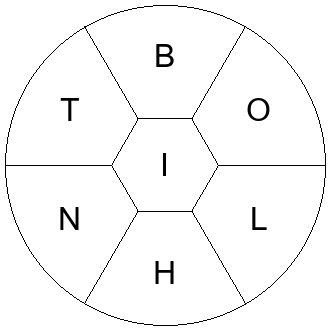
The official answers for today's puzzle are:

Click on the arrow to show the definition.
Click outside the pop-up to close it.


Number of Pangrams: 1

Maximum Puzzle Score: 128

Number of Answers: 34

Points Needed for Genius: 90

Genius requires between 12 and 31 words. You need at least a 7-letter word to reach genius. If you don't get the pangram, you need 80% of the total points to reach genius. If you get the pangram, you only need 66% of the remaining points to reach genius.

Other days with this pangram:

The button below will reveal a chart with the number of words by each letter. Red bars indicate that there is a pangram(s) starting with that letter.


How does this puzzle compare to other puzzles?

Today's score of 128 was in the 28th percentile of all puzzles.
The last time there was a score this low was on October 27, 2025.
The highest score ever was 537 on January 22, 2021.
The lowest score ever was 47 on March 27, 2023.

This puzzle's 34 possible answers rank it in the 36th percentile of all puzzles.
The last time there were fewer answers than this was on October 27, 2025.
The highest number of answers was 81 on June 8, 2019.
The lowest number of answers was 16 on March 27, 2023.

It takes a 7-letter word for genius.
The last time this happened was on October 26, 2025.

Today's puzzle has an average word length of 5.1.
For all Bees, the average word length has been 5.3.


Haven't I seen these letters before?

Hover over a letter to see its first and most recent appearance in the Bee!


Haven't I seen these words before?

The most common words in the Bee are:

  • noon 219
  • loll 206
  • toot 200
  • naan 181
  • nana 181
  • lilt 147
  • till 147
  • tilt 147
  • tint 142
  • nene 141
  • mama 140
  • mamma 140
  • acacia 134
  • acai 134
  • onto 133
  • toon 133
  • onion 131
  • anal 123
  • anon 121
  • olio 120
  • dodo 119
  • tact 118
  • baba 116
  • boob 115
  • booboo 115
  • papa 114
  • poop 114
  • lull 112
  • lulu 112
  • call 110
  • calla 110
  • mitt 110
  • cocci 109
  • mono 109
  • moon 109
  • ratatat 108
  • tart 108
  • tartar 108
  • tutu 108
  • attar 107
  • loon 107
  • allay 106
  • ally 106
  • tattoo 106
  • tatty 106
  • ammo 105
  • momma 105
  • epee 102
  • peep 102
  • meme 101


How long are words in the Bee?

There have been 108,686 answers ever accepted in the Bee - with 10,846 unique words.
Below are the distributions of the lengths of these words.


Valid dictionary words not in today's official answers

You may be wondering why these words aren't here*:

  • bibb
  • bilbo
  • billon
  • binit
  • bint
  • biont
  • bitt
  • hili
  • hillo
  • inhibin
  • inion
  • inti
  • lilo
  • linin
  • linn
  • lino
  • lintol
  • loti
  • nihil
  • nill
  • ninon
  • nitinol
  • niton
  • noil
  • nonillionth
  • oboli
  • oolith
  • otolith
  • thill
  • thio
  • thiol
  • thionin
  • tholoi
  • titbit
  • titi
  • toit

*Because the New York Times considers them obscure or offensive.

bill

Etymology 1

noun
  1. Any of various bladed or pointed hand weapons, originally designating an Anglo-Saxon sword, and later a weapon of infantry, especially in the 14th and 15th centuries, commonly consisting of a broad, heavy, double-edged, hook-shaped blade, with a short pike at the back and another at the top, attached to the end of a long staff.
  2. A cutting instrument, with hook-shaped point, and fitted with a handle, used in pruning, etc.; a billhook.
  3. Somebody armed with a bill; a billman.
  4. A pickaxe, or mattock.
  5. The extremity of the arm of an anchor; the point of or beyond the fluke (also called the peak).
verb
  1. To dig, chop, etc., with a bill.

Etymology 2

noun
  1. The beak of a bird, especially when small or flattish; sometimes also used with reference to a platypus, turtle, or other animal.
  2. A beak-like projection, especially a promontory.
  3. Of a cap or hat: the brim or peak, serving as a shade to keep sun off the face and out of the eyes.
verb
  1. To peck
  2. To stroke bill against bill, with reference to doves; to caress in fondness

Etymology 3

noun
  1. A written list or inventory. (Now obsolete except in specific senses or set phrases; bill of lading, bill of goods, etc.)
  2. A document, originally sealed; a formal statement or official memorandum. (Now obsolete except with certain qualifying words; bill of health, bill of sale etc.)
  3. A draft of a law, presented to a legislature for enactment; a proposed or projected law.
  4. A declaration made in writing, stating some wrong the complainant has suffered from the defendant, or a fault committed by some person against a law.
  5. A piece of paper money; a banknote.
  6. A written note of goods sold, services rendered, or work done, with the price or charge; an invoice.
  7. A paper, written or printed, and posted up or given away, to advertise something, as a lecture, a play, or the sale of goods
  8. A writing binding the signer or signers to pay a certain sum at a future day or on demand, with or without interest, as may be stated in the document; a bill of exchange. In the United States, it is usually called a note, a note of hand, or a promissory note.
  9. A set of items presented together.
verb
  1. To advertise by a bill or public notice.
  2. To charge; to send a bill to.

Etymology 4

noun
  1. The bell, or boom, of the bittern.

billion

noun
  1. (modern British & Australian, short scale) a thousand million (logic: 1,000 × 1,000^2): 1 followed by nine zeros, 109; a milliard
  2. (British & Australian, long scale) A million million (logic: 1,000,000^2): a 1 followed by twelve zeros; 1012
  3. An unspecified very large number.

billionth

noun
  1. The person or thing in the billionth position.
  2. One of a billion equal parts of a whole.
adjective
  1. The ordinal form of the number one billion.

biotin

noun
  1. A sulfur-containing member of the vitamin B complex, 5-[(3aS,4S,6aR)-2-oxohexahydro-1H-thieno[3,4-d]imidazol-4-yl]pentanoic acid, found in liver, egg yolk, milk and yeast, essential to the activity of multiple enzyme systems.

blin

Etymology 1

noun
  1. Cessation; end.
verb
  1. To cease (from); to stop; to desist, to let up.

Etymology 2

noun
  1. A blintz.

blini

noun
  1. A small pancake, of Russian origin, made from buckwheat flour; traditionally served with melted butter, sour cream and caviar or smoked salmon.

bobbin

noun
  1. A spool or cylinder around which wire is coiled.
  2. In a sewing machine, the small spool that holds the lower thread.
  3. The little rounded piece of wood at the end of a latch string, which is pulled to raise the latch.
  4. (haberdashery) A fine cord or narrow braid.

boil

Etymology 1

noun
  1. A localized accumulation of pus in the skin, resulting from infection.

Etymology 2

noun
  1. The point at which fluid begins to change to a vapour.
  2. A dish of boiled food, especially based on seafood.
  3. The collective noun for a group of hawks.
verb
  1. (of liquids) To heat to the point where it begins to turn into a gas.
  2. To cook in boiling water.
  3. (of liquids) To begin to turn into a gas, seethe.
  4. To bring to a boil, to heat so as to cause the contents to boil.
  5. (used only in progressive tenses, of weather) To be uncomfortably hot.
  6. (used only in progressive tenses) To feel uncomfortably hot.
  7. To form, or separate, by boiling or evaporation.
  8. To steep or soak in warm water.
  9. To be agitated like boiling water; to bubble; to effervesce.
  10. To be moved or excited with passion; to be hot or fervid.

bonito

noun
  1. Any of various marine fish of the genus Sarda, that are related to and resemble the tuna.
  2. A large tropical fish, the skipjack tuna, allied to the tunny, Katsuwonus pelamis.
  3. The medregal (Seriola fasciata), an edible fish of the southern of the United States and the West Indies.
  4. The cobia or crab eater (Rachycentron canadum), an edible fish of warm waters globally.

hill

noun
  1. An elevated location smaller than a mountain.
  2. A sloping road.
  3. A heap of earth surrounding a plant.
  4. A single cluster or group of plants growing close together, and having the earth heaped up about them.
  5. The pitcher’s mound.
verb
  1. To form into a heap or mound.
  2. To heap or draw earth around plants.

hilt

noun
  1. The handle of a sword, consisting of grip, guard, and pommel, designed to facilitate use of the blade and afford protection to the hand.
  2. The base of the penis.
verb
  1. To provide with a hilt.
  2. To insert (a bodily extremity) as far as it can go into a sexual orifice so that it is impeded by the wider base to which it is attached (finger until palm, penis until pelvis).

hint

noun
  1. A clue.
  2. A tacit suggestion that avoids a direct statement.
  3. A small, barely detectable amount of.
  4. Information in a computer-based font that suggests how the outlines of the font's glyphs should be distorted in order to produce, at specific sizes, a visually appealing pixel-based rendering. Also known as hinting.
  5. An opportunity; occasion; fit time.
verb
  1. To suggest tacitly without a direct statement; to provide a clue.
  2. To bring to mind by a slight mention or remote allusion; to suggest in an indirect manner.
  3. To develop and add hints to a font.

hobbit

noun
  1. A Welsh unit of weight, equal to four Welsh pecks, or 168 pounds
  2. An old unit of volume (2 1/2 bushels, the volume of 168 pounds of wheat).

inhibit

verb
  1. To hold in or hold back; to keep in check; restrain.
  2. To recuse.

inhibition

noun
  1. The act of inhibiting.
  2. A personal feeling of fear or embarrassment that stops one behaving naturally.
  3. The process of stopping or retarding a reaction.
  4. A writ from a higher court to an inferior judge to stay proceedings.
  5. A recusal.

into

preposition
  1. To or towards the inside of.
  2. To or towards the region of.
  3. Against, especially with force or violence.
  4. Indicates transition into another form or substance.
  5. After the start of.
  6. Interested in or attracted to.
  7. Expressing the operation of multiplication.
  8. Expressing the operation of division, with the denominator given first. Usually with "goes".
  9. Investigating the subject (of).

lilt

noun
  1. Animated, brisk motion; spirited rhythm; sprightliness.
  2. A lively song or dance; a cheerful tune.
  3. A cheerful or melodious accent when speaking.
verb
  1. To do something rhythmically, with animation and quickness, usually of music.
  2. To sing cheerfully, especially in Gaelic.
  3. To utter with spirit, animation, or gaiety; to sing with spirit and liveliness.

lint

Etymology 1

noun
  1. A fine material made by scraping cotton or linen cloth; used for dressing wounds.
  2. Clinging fuzzy fluff that clings to fabric or accumulates in one's pockets or navel etc.
  3. The fibrous coat of thick hairs covering the seeds of the cotton plant.
  4. Raw cotton ready for baling.

Etymology 2

verb
  1. To perform a static check on (source code) to detect stylistic or programmatic errors.

lion

noun
  1. A big cat, Panthera leo, native to Africa, India and formerly much of Europe.
  2. (by extension) Any of various extant and extinct big cats, especially the mountain lion.
  3. A Chinese foo dog.
  4. An individual who shows strength and courage, attributes associated with the lion.
  5. A famous person regarded with interest and curiosity.
  6. A light brown color that resembles the fur of a lion.
  7. An old Scottish coin, with a lion on the obverse, worth 74 shillings.
adjective
  1. Of the light brown color that resembles the fur of a lion.

litho

verb
  1. To lithograph.
adjective
  1. Related to the method of lithography.

loin

noun
  1. The part of the body (of humans and quadrupeds) at each side of the backbone, between the ribs and hips
  2. Any of several cuts of meat taken from this part of an animal

lotion

noun
  1. A low- to medium-viscosity topical preparation intended for application to unbroken skin.
  2. A washing, especially of the skin for the purpose of beautification.
verb
  1. To cover or treat with a lotion.

ninth

noun
  1. The person or thing in the ninth position.
  2. One of nine equal parts of a whole.
  3. The compound interval between any tone and the tone represented on the ninth degree of the staff above it, as between one of the scale and two of the octave above; the octave of the second, consisting of 13 or 14 semitones (called minor and major ninth).
verb
  1. To lose a ninth
  2. To divide by nine
adjective
  1. The ordinal form of the number nine.

nonillion

No Definition Found.

notion

noun
  1. Mental apprehension of whatever may be known, thought, or imagined; idea, concept.
  2. A sentiment; an opinion.
  3. Sense; mind.
  4. An invention; an ingenious device; a knickknack.
  5. Any small article used in sewing and haberdashery, either for attachment to garments or as a tool, such as a button, zipper, or thimble.
  6. Inclination; intention; disposition.

obit

Etymology 1

noun
  1. Death of a person.
  2. A mass or other service held for the soul of a dead person.
  3. A record of a person's death.

Etymology 2

noun
  1. An obituary.

olio

noun
  1. A rich, thick, Spanish stew consisting of meat and vegetables.
  2. A medley or mixture; a hotchpotch.
  3. A collection of various musical, theatrical or other artistic works; a miscellany.
  4. (by extension) Vaudeville or similar miscellaneous musical or theatrical entertainment skits presented between the main acts of burlesque or minstrel shows.

onion

noun
  1. A monocotyledonous plant (Allium cepa), allied to garlic, used as vegetable and spice.
  2. The bulb of such a plant.
  3. The genus as a whole.
  4. A ball.
  5. A person from Bermuda or of Bermudian descent.

thin

noun
  1. A loss or tearing of paper from the back of a stamp, although not sufficient to create a complete hole.
  2. Any food produced or served in thin slices.
verb
  1. To make thin or thinner.
  2. To become thin or thinner.
  3. To dilute.
  4. To remove some plants or parts of plants in order to improve the growth of what remains.
adjective
  1. Having little thickness or extent from one surface to its opposite.
  2. Very narrow in all diameters; having a cross section that is small in all directions.
  3. Having little body fat or flesh; slim; slender; lean; gaunt.
  4. Of low viscosity or low specific gravity.
  5. Scarce; not close, crowded, or numerous; not filling the space.
  6. Describing a poorly played golf shot where the ball is struck by the bottom part of the club head. See fat, shank, toe.
  7. Lacking body or volume; small; feeble; not full.
  8. Slight; small; slender; flimsy; superficial; inadequate; not sufficient for a covering.
adverb
  1. Not thickly or closely; in a scattered state.

till

Etymology 1

preposition
  1. Until; to, up to; as late as (a given time).
  2. To, up to (physically).
  3. To make it possible that.
conjunction
  1. Until, until the time that.

Etymology 2

noun
  1. A cash register.
  2. A removable box within a cash register containing the money.
  3. The contents of a cash register, for example at the beginning or end of the day or of a cashier's shift.
  4. A tray or drawer in a chest.

Etymology 3

verb
  1. To develop so as to improve or prepare for usage; to cultivate (said of knowledge, virtue, mind etc.).
  2. To work or cultivate or plough (soil); to prepare for growing vegetation and crops.
  3. To cultivate soil.
  4. To prepare; to get.

Etymology 4

noun
  1. Glacial drift consisting of a mixture of clay, sand, pebbles and boulders
  2. Manure or other material used to fertilize land

Etymology 5

noun
  1. A vetch; a tare.

tilt

Etymology 1

noun
  1. A slope or inclination.
  2. The inclination of part of the body, such as backbone, pelvis, head, etc.
  3. The controlled vertical movement of a camera, or a device to achieve this.
  4. A jousting contest.
  5. An attempt at something, such as a tilt at public office.
  6. A thrust, as with a lance.
  7. A tilt hammer.
verb
  1. To slope or incline (something); to slant.
  2. (jousting) To charge (at someone) with a lance.
  3. To be at an angle.
  4. To point or thrust a weapon at.
  5. To point or thrust (a weapon).
  6. To forge (something) with a tilt hammer.
  7. To play worse than usual (often as a result of previous bad luck or losses).
  8. (of a machine) To intentionally let the ball fall down to the drain by disabling flippers and most targets, done as a punishment to the player when the machine is nudged too violently or frequently.

Etymology 2

noun
  1. A canvas covering for carts, boats, etc.
  2. Any covering overhead; especially, a tent.
verb
  1. To cover with a tilt, or awning.

tilth

noun
  1. Agricultural labour; husbandry.
  2. The state of being tilled, or prepared for a crop; culture.
  3. Rich cultivated soil.

tint

noun
  1. A slight coloring.
  2. A pale or faint tinge of any color; especially, a variation of a color obtained by adding white (contrast shade)
  3. A color considered with reference to other very similar colors.
  4. A shaded effect in engraving, produced by the juxtaposition of many fine parallel lines.
verb
  1. To shade, to color.

toil

noun
  1. Labour, work, especially of a grueling nature.
  2. Trouble, strife.
  3. (usually in plural) A net or snare; any thread, web, or string spread for taking prey.
verb
  1. To labour; work.
  2. To struggle.
  3. To work (something); often with out.
  4. To weary through excessive labour.