Friday, October 31, 2025

Answers to yesterday's Bee

Jump to answers for


The official answers for today's puzzle are:

Click on the arrow to show the definition.
Click outside the pop-up to close it.


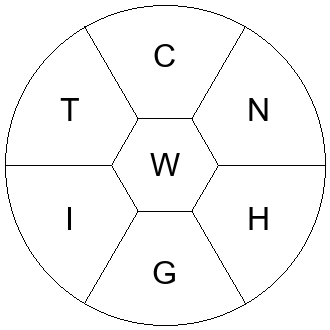
Number of Pangrams: 2

Maximum Puzzle Score: 161

Number of Answers: 27

Points Needed for Genius: 113

Genius requires between 14 and 23 words. You need at least an 8-letter word to reach genius. If you don't get the pangrams, you need 87% of the total points to reach genius. If you get the pangrams, you only need 63% of the remaining points to reach genius.

Other days with this pangram:

The button below will reveal a chart with the number of words by each letter. Red bars indicate that there is a pangram(s) starting with that letter.


How does this puzzle compare to other puzzles?

Today's score of 161 was in the 45th percentile of all puzzles.
The last time there was a score this low was on October 28, 2025.
The highest score ever was 537 on January 22, 2021.
The lowest score ever was 47 on March 27, 2023.

This puzzle's 27 possible answers rank it in the 17th percentile of all puzzles.
The last time there were fewer answers than this was on October 27, 2025.
The highest number of answers was 81 on June 8, 2019.
The lowest number of answers was 16 on March 27, 2023.

It takes an 8-letter word for genius.
The last time this happened was on October 23, 2025.

Today's puzzle has an average word length of 6.1.
For all Bees, the average word length has been 5.3.


Haven't I seen these letters before?

Hover over a letter to see its first and most recent appearance in the Bee!


Haven't I seen these words before?

The most common words in the Bee are:

  • noon 219
  • loll 206
  • toot 200
  • naan 181
  • nana 181
  • lilt 147
  • till 147
  • tilt 147
  • tint 142
  • nene 141
  • mama 140
  • mamma 140
  • acacia 134
  • acai 134
  • onto 133
  • toon 133
  • onion 131
  • anal 123
  • anon 121
  • olio 120
  • dodo 119
  • tact 118
  • baba 116
  • boob 115
  • booboo 115
  • papa 114
  • poop 114
  • lull 113
  • lulu 113
  • call 110
  • calla 110
  • mitt 110
  • cocci 109
  • mono 109
  • moon 109
  • ratatat 108
  • tart 108
  • tartar 108
  • tutu 108
  • attar 107
  • loon 107
  • allay 106
  • ally 106
  • tattoo 106
  • tatty 106
  • ammo 105
  • momma 105
  • epee 102
  • peep 102
  • meme 101


How long are words in the Bee?

There have been 108,817 answers ever accepted in the Bee - with 10,849 unique words.
Below are the distributions of the lengths of these words.


Valid dictionary words not in today's official answers

You may be wondering why these words aren't here*:

  • intwining
  • twigging
  • twinight
  • twitting
  • whig
  • whin
  • wich
  • winching
  • withing
  • witing

*Because the New York Times considers them obscure or offensive.

nitwit

noun
  1. A scatterbrained or stupid person.

twig

Etymology 1

noun
  1. A small thin branch of a tree or bush.
verb
  1. To beat with twigs.

Etymology 2

verb
  1. To realise something; to catch on; to recognize someone or something.
  2. To understand the meaning of (a person); to comprehend.
  3. To observe slyly; also, to perceive; to discover.

Etymology 3

verb
  1. To twitch; to pull; to tweak.

twin

Etymology 1

noun
  1. Either of two people (or, less commonly, animals) who shared the same uterus at the same time; one who was born at the same birth as a sibling.
  2. Either of two similar or closely related objects, entities etc.
  3. A room in a hotel, guesthouse, etc. with two beds; a twin room.
  4. A twin size mattress or a bed designed for such a mattress.
  5. A twin crystal.
verb
  1. (obsolete outside Scotland) To separate, divide.
  2. (obsolete outside Scotland) To split, part; to go away, depart.
  3. (usually in the passive) To join, unite; to form links between (now especially of two places in different countries).
  4. To be paired or suited.
  5. To give birth to twins.
  6. To be born at the same birth.

Etymology 2

adjective
  1. Double; dual; occurring as a matching pair
  2. Forming a pair of twins.

twinging

verb
  1. To pull with a twitch; to pinch; to tweak.
  2. To affect with a sharp, sudden pain; to torment with pinching or sharp pains.
  3. To have a sudden, sharp, local pain, like a twitch; to suffer a keen, darting, or shooting pain.

twining

verb
  1. (obsolete outside Scotland) To separate, divide.
  2. (obsolete outside Scotland) To split, part; to go away, depart.
  3. (usually in the passive) To join, unite; to form links between (now especially of two places in different countries).
  4. To be paired or suited.
  5. To give birth to twins.
  6. To be born at the same birth.
verb
  1. To weave together.
  2. To wind, as one thread around another, or as any flexible substance around another body.
  3. To wind about; to embrace; to entwine.
  4. To mutually twist together; to become mutually involved; to intertwine.
  5. To wind; to bend; to make turns; to meander.
  6. To ascend in spiral lines about a support; to climb spirally.
  7. To turn round; to revolve.
  8. To change the direction of.
  9. To mingle; to mix.
noun
  1. A layout or motion that twines.
  2. Complaining or grumbling

twinning

verb
  1. (obsolete outside Scotland) To separate, divide.
  2. (obsolete outside Scotland) To split, part; to go away, depart.
  3. (usually in the passive) To join, unite; to form links between (now especially of two places in different countries).
  4. To be paired or suited.
  5. To give birth to twins.
  6. To be born at the same birth.
noun
  1. Action of the verb to twin
  2. Giving birth to twins
  3. The pairing of similar objects (such as towns)
  4. The formation of twin crystals
  5. The conversion of a road into a dual carriageway
adjective
  1. Biparous

twit

noun
  1. A reproach, gibe or taunt.
  2. A foolish or annoying person.
  3. A euphemism for "twat", a contemptible or stupid person.
  4. A person who twitters, i.e. chatters inanely (see usage notes).
verb
  1. To reproach, blame; to ridicule or tease.
  2. To ignore or killfile (a user on a bulletin board system).

twitch

noun
  1. Couch grass (Elymus repens; a species of grass, often considered as a weed)

twitching

noun
  1. The motion of something that twitches.
  2. Compulsive birdwatching by people (twitchers) who travel long distances to see rare species.
adjective
  1. That twitches.

which

pronoun
  1. (interrogative) What one or ones (of those mentioned or implied).
  2. The/Any ones that; whichever.
  3. (relative) Introduces a relative clause giving further information about something previously mentioned.
  4. (relative) Used of people (now generally who, whom or that).

whinging

Etymology 1

verb
  1. To move with great force or speed.

Etymology 2

verb
  1. To complain, especially in an annoying or persistent manner.
  2. To whine.

whining

noun
  1. A long-drawn, high-pitched complaining cry or sound
  2. A complaint or criticism
verb
  1. To utter a high-pitched cry.
  2. To make a sound resembling such a cry.
  3. To complain or protest with a whine or as if with a whine.
  4. To move with a whining sound.
  5. To utter with the sound of a whine.

whit

Etymology 1

noun
  1. The smallest part or particle imaginable; an iota.

Etymology 2

preposition
  1. Against.
  2. In the company of; alongside, close to; near to.
  3. In addition to; as an accessory to.
  4. Used to indicate simultaneous happening, or immediate succession or consequence.
  5. In support of.
  6. In regard to.
  7. To denote the accomplishment of cause, means, instrument, etc; – sometimes equivalent to by.
  8. Using as an instrument; by means of.
  9. Using as nourishment; more recently replaced by on.
  10. Having, owning.
  11. Affected by (a certain emotion or condition).
  12. Prompted by (a certain emotion).

whiting

Etymology 1

verb
  1. To make white; to whiten; to bleach.
noun
  1. A fine white chalk used in paints, putty, whitewash etc.

Etymology 2

noun
  1. A fish, Merlangius merlangus, similar to cod, found in the North Atlantic; English whiting (US).
  2. Any fish of many species that resemble Merlangius merlangus:

wigging

verb
  1. To put on a wig; to provide with a wig (especially of an actor etc.).
  2. To upbraid, reprimand.
  3. To become extremely emotional or excitable; to lose control of one's emotions.
noun
  1. The action of the verb to wig.
  2. A telling-off or reprimand.
  3. The practice of male stuntmen performing for actresses.

wight

Etymology 1

noun
  1. A living creature, especially a human being.
  2. A being of one of the Nine Worlds of Heathen belief, especially a nature spirit, elf or ancestor.
  3. A ghost, deity or other supernatural entity.
  4. A wraith-like creature.

Etymology 2

adjective
  1. (except in dialects) Brave, valorous, strong.
  2. Strong; stout; active.

winch

Etymology 1

noun
  1. A machine consisting of a drum on an axle, a friction brake or ratchet and pawl, and a crank handle or prime mover (often an electric or hydraulic motor), with or without gearing, to give increased mechanical advantage when hauling on a rope or cable.
  2. A hoisting machine used for loading or discharging cargo, or for hauling in lines. (FM 55-501).
  3. A wince (machine used in dyeing or steeping cloth).
  4. A kick, as of an animal, from impatience or uneasiness.
verb
  1. To use a winch

Etymology 2

verb
  1. To wince; to shrink
  2. To kick with impatience or uneasiness.

wincing

verb
  1. To flinch as if in pain or distress.
  2. To wash (cloth), dip it in dye, etc., with the use of a wince.
  3. To kick or flounce when unsteady or impatient.
noun
  1. The act by which someone winces; a grimace.

wing

noun
  1. An appendage of an animal's (bird, bat, insect) body that enables it to fly; a similar fin at the side of a ray or similar fish
  2. Human arm.
  3. Part of an aircraft that produces the lift for rising into the air.
  4. One of the large pectoral fins of a flying fish.
  5. One of the broad, thin, anterior lobes of the foot of a pteropod, used as an organ in swimming.
  6. Any membranaceous expansion, such as that along the sides of certain stems, or of a fruit of the kind called samara.
  7. Either of the two side petals of a papilionaceous flower.
  8. A side shoot of a tree or plant; a branch growing up by the side of another.
  9. Passage by flying; flight.
  10. Motive or instrument of flight; means of flight or of rapid motion.
  11. A part of something that is lesser in size than the main body, such as an extension from the main building.
  12. Anything that agitates the air as a wing does, or is put in winglike motion by the action of the air, such as a fan or vane for winnowing grain, the vane or sail of a windmill, etc.
  13. A protruding piece of material on a tampon to hold it in place and prevent leakage.
  14. An ornament worn on the shoulder; a small epaulet or shoulder knot.
  15. A cosmetic effect where eyeliner curves outward and ends at a point.
  16. A fraction of a political movement. Usually implies a position apart from the mainstream center position.
  17. An organizational grouping in a military aviation service:
  18. A panel of a car which encloses the wheel area, especially the front wheels.
  19. A platform on either side of the bridge of a vessel, normally found in pairs.
  20. That part of the hold or orlop of a vessel which is nearest the sides. In a fleet, one of the extremities when the ships are drawn up in line, or when forming the two sides of a triangle.
  21. A position in several field games on either side of the field.
  22. A player occupying such a position, also called a winger
  23. A háček.
  24. One of the unseen areas on the side of the stage in a theatre.
  25. (in the plural) The insignia of a qualified pilot or aircrew member.
  26. A portable shelter consisting of a fabric roof on a frame, like a tent without sides.
  27. On the Enneagram, one of the two adjacent types to an enneatype that forms an individual's subtype of his or her enneatype
verb
  1. To injure slightly (as with a gunshot), especially in the wing or arm.
  2. To fly.
  3. (of a building) To add a wing (extra part) to.
  4. To act or speak extemporaneously; to improvise; to wing it.
  5. To throw.
  6. To furnish with wings.
  7. To transport with, or as if with, wings; to bear in flight, or speedily.
  8. To traverse by flying.

winging

verb
  1. To injure slightly (as with a gunshot), especially in the wing or arm.
  2. To fly.
  3. (of a building) To add a wing (extra part) to.
  4. To act or speak extemporaneously; to improvise; to wing it.
  5. To throw.
  6. To furnish with wings.
  7. To transport with, or as if with, wings; to bear in flight, or speedily.
  8. To traverse by flying.

wining

verb
  1. To entertain with wine.
  2. To drink wine.
noun
  1. A session of drinking wine socially.

winning

verb
  1. To conquer, defeat.
  2. To reach some destination or object, despite difficulty or toil (now usually intransitive, with preposition or locative adverb).
  3. To triumph or achieve victory in (a game, a war, etc.).
  4. To gain (a prize) by succeeding in competition or contest.
  5. To obtain (someone) by wooing; to make an ally or friend of (frequently with over).
  6. To achieve victory.
  7. To have power, coercion or control.
  8. To obtain (something desired).
  9. To cause a victory for someone.
  10. To extract (ore, coal, etc.).
noun
  1. The act of obtaining something, as in a contest or by competition.
  2. (chiefly in the plural) The money, etc., gained by success in competition or contest, especially in gambling.
  3. A new opening.
  4. The portion of a coalfield out for working.
adjective
  1. That constitutes a win.
  2. That leads to success.
  3. Attractive.

witch

Etymology 1

noun
  1. A person who practices witchcraft; a woman or man who practices witchcraft.
  2. An ugly or unpleasant woman.
  3. One who exercises more-than-common power of attraction; a charming or bewitching person.
  4. One given to mischief, especially a woman or child.
  5. A certain curve of the third order, described by Maria Agnesi under the name versiera.
  6. The stormy petrel.
  7. Any of a number of flatfish:
  8. The Indomalayan butterfly Araotes lapithis, of the family Lycaenidae.
verb
  1. To practise witchcraft.
  2. To bewitch.
  3. To dowse for water.

Etymology 2

noun
  1. A cone of paper which is placed in a vessel of lard or other fat and used as a taper.

witching

Etymology 1

verb
  1. To practise witchcraft.
  2. To bewitch.
  3. To dowse for water.
adjective
  1. Bewitching; enchanting

Etymology 2

noun
  1. An act of witchcraft.

with

Etymology 1

adverb
  1. Along, together with others, in a group, etc.
preposition
  1. Against.
  2. In the company of; alongside, close to; near to.
  3. In addition to; as an accessory to.
  4. Used to indicate simultaneous happening, or immediate succession or consequence.
  5. In support of.
  6. In regard to.
  7. To denote the accomplishment of cause, means, instrument, etc; – sometimes equivalent to by.
  8. Using as an instrument; by means of.
  9. Using as nourishment; more recently replaced by on.
  10. Having, owning.
  11. Affected by (a certain emotion or condition).
  12. Prompted by (a certain emotion).

Etymology 2

noun
  1. A flexible, slender twig or shoot, especially when used as a band or for binding; a withy.
  2. A band of twisted twigs.
  3. An elastic handle to a tool to save the hand from the shock of blows.
  4. An iron attachment on one end of a mast or boom, with a ring, through which another mast or boom is rigged out and secured.
  5. A partition between flues in a chimney.

within

adjective
  1. In the context of which the present document or ruling is made.
adverb
  1. In or into the interior; inside.
preposition
  1. In the inner part, spatially; physically inside.
  2. In the scope or range of.
  3. Before the specified duration ends.

witting

Etymology 1

noun
  1. Knowledge, awareness.

Etymology 2

adjective
  1. Aware, knowledgable