Thursday, November 6, 2025

Answers to yesterday's Bee

Jump to answers for


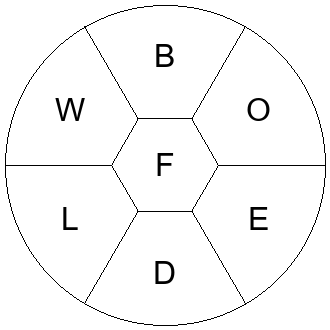
The official answers for today's puzzle are:

Click on the arrow to show the definition.
Click outside the pop-up to close it.


Number of Pangrams: 1

Maximum Puzzle Score: 140

Number of Answers: 35

Points Needed for Genius: 98

Genius requires between 15 and 31 words. You need at least a 6-letter word to reach genius. If you don't get the pangram, you need 79% of the total points to reach genius. If you get the pangram, you only need 66% of the remaining points to reach genius.

Other days with this pangram:

The button below will reveal a chart with the number of words by each letter. Red bars indicate that there is a pangram(s) starting with that letter.


How does this puzzle compare to other puzzles?

Today's score of 140 was in the 35th percentile of all puzzles.
The last time there was a score this low was on November 2, 2025.
The highest score ever was 537 on January 22, 2021.
The lowest score ever was 47 on March 27, 2023.

This puzzle's 35 possible answers rank it in the 39th percentile of all puzzles.
The last time there were fewer answers than this was on November 2, 2025.
The highest number of answers was 81 on June 8, 2019.
The lowest number of answers was 16 on March 27, 2023.

It takes a 6-letter word for genius.
The last time this happened was on November 2, 2025.

Today's puzzle has an average word length of 5.2.
For all Bees, the average word length has been 5.3.


Haven't I seen these letters before?

Hover over a letter to see its first and most recent appearance in the Bee!


Haven't I seen these words before?

The most common words in the Bee are:

  • noon 221
  • loll 206
  • toot 201
  • naan 182
  • nana 182
  • lilt 147
  • till 147
  • tilt 147
  • nene 142
  • tint 142
  • mama 140
  • mamma 140
  • acacia 134
  • acai 134
  • onto 134
  • toon 134
  • onion 131
  • anal 124
  • anon 122
  • olio 120
  • dodo 119
  • tact 118
  • baba 116
  • boob 115
  • booboo 115
  • lull 114
  • lulu 114
  • papa 114
  • poop 114
  • call 110
  • calla 110
  • mitt 110
  • mono 110
  • moon 110
  • cocci 109
  • tutu 109
  • ratatat 108
  • tart 108
  • tartar 108
  • attar 107
  • loon 107
  • allay 106
  • ally 106
  • tattoo 106
  • tatty 106
  • ammo 105
  • momma 105
  • epee 102
  • peep 102
  • meme 101


How long are words in the Bee?

There have been 109,094 answers ever accepted in the Bee - with 10,852 unique words.
Below are the distributions of the lengths of these words.


Valid dictionary words not in today's official answers

You may be wondering why these words aren't here*:

  • beefwood
  • befool
  • befooled
  • blowoff
  • boff
  • boffed
  • delf
  • feeb
  • felloe
  • fellowed
  • feod
  • feoff
  • feoffed
  • feoffee
  • fowled
  • loof
  • webfed
  • woolfell

*Because the New York Times considers them obscure or offensive.

bedfellow

noun
  1. One with whom one shares a bed.
  2. An associate, often an otherwise improbable one.

beef

noun
  1. The meat from a cow, bull or other bovine.
  2. (plural: beefs) A grudge; dislike (of something or someone); lack of faith or trust (in something or someone); a reason for a dislike or grudge. (often + with)
verb
  1. To complain.
  2. To add weight or strength to; to beef up.
  3. To fart; break wind.
  4. To feud or hold a grudge against.
  5. To cry
  6. To fail or mess up.
adjective
  1. Being a bovine animal that is being raised for its meat.
  2. Producing or known for raising lots of beef.
  3. Consisting of or containing beef as an ingredient.

beefed

verb
  1. To complain.
  2. To add weight or strength to; to beef up.
  3. To fart; break wind.
  4. To feud or hold a grudge against.
  5. To cry
  6. To fail or mess up.

befell

verb
  1. To fall upon; fall all over; overtake
  2. To happen.
  3. To happen to.
  4. To fall.

boffo

noun
  1. (chiefly in the world of entertainment) A great success; a hit.
adjective
  1. Outstanding; very good or successful.

doff

verb
  1. (clothing) To remove or take off, especially of clothing.
  2. To remove or tip a hat, as in greeting, salutation or as a mark of respect.
  3. To get rid of, to throw off.
  4. To strip; to divest; to undress.

doffed

verb
  1. (clothing) To remove or take off, especially of clothing.
  2. To remove or tip a hat, as in greeting, salutation or as a mark of respect.
  3. To get rid of, to throw off.
  4. To strip; to divest; to undress.

feeble

verb
  1. To make feeble; to enfeeble.
adjective
  1. Deficient in physical strength
  2. Lacking force, vigor, or efficiency in action or expression; faint.

feed

Etymology 1

noun
  1. Food given to (especially herbivorous) animals.
  2. Something supplied continuously.
  3. The part of a machine that supplies the material to be operated upon.
  4. The forward motion of the material fed into a machine.
  5. A meal.
  6. A gathering to eat, especially in quantity.
  7. Encapsulated online content, such as news or a blog, that can be subscribed to.
verb
  1. (ditransitive) To give (someone or something) food to eat.
  2. To eat (usually of animals).
  3. To give (someone or something) to (someone or something else) as food.
  4. To give to a machine to be processed.
  5. To satisfy, gratify, or minister to (a sense, taste, desire, etc.).
  6. To supply with something.
  7. To graze; to cause to be cropped by feeding, as herbage by cattle.
  8. To pass to.
  9. (of a phonological rule) To create the environment where another phonological rule can apply; to be applied before another rule.
  10. (of a syntactic rule) To create the syntactic environment in which another syntactic rule is applied; to be applied before another syntactic rule.

Etymology 2

verb
  1. To reward for services performed, or to be performed; to recompense; to hire or keep in hire; hence, to bribe.

feel

Etymology 1

noun
  1. A quality of an object experienced by touch.
  2. A vague mental impression.
  3. An act of fondling.
  4. A vague understanding.
  5. An intuitive ability.
  6. Alternative form of feeling.
verb
  1. (heading) To use or experience the sense of touch.
  2. (heading) To sense or think emotionally or judgmentally.
  3. To be or become aware of.
  4. To experience the consequences of.
  5. To seem (through touch or otherwise).
  6. To understand.

Etymology 2

adjective
  1. Much; many.
adverb
  1. Greatly, much, very
pronoun
  1. Many (of).

fell

Etymology 1

noun
  1. A cutting-down of timber.
  2. The stitching down of a fold of cloth; specifically, the portion of a kilt, from the waist to the seat, where the pleats are stitched down.
  3. The end of a web, formed by the last thread of the weft.
verb
  1. To make something fall; especially to chop down a tree.
  2. To strike down, kill, destroy.
  3. To stitch down a protruding flap of fabric, as a seam allowance, or pleat.

Etymology 2

noun
  1. An animal skin, hide, pelt.
  2. Human skin (now only as a metaphorical use of previous sense).

Etymology 3

noun
  1. (obsolete outside Britain) A rocky ridge or chain of mountains.
  2. (obsolete outside Britain) A wild field or upland moor.

Etymology 4

adjective
  1. Of a strong and cruel nature; eager and unsparing; grim; fierce; ruthless; savage.
  2. Strong and fiery; biting; keen; sharp; pungent
  3. Very large; huge.
  4. Eager; earnest; intent.
adverb
  1. Sharply; fiercely.

Etymology 5

noun
  1. Anger; gall; melancholy.

Etymology 6

noun
  1. The finer portions of ore, which go through the meshes when the ore is sorted by sifting.

Etymology 7

verb
  1. (heading) To be moved downwards.
  2. To move downwards.
  3. To happen, to change negatively.
  4. To be allotted to; to arrive through chance, fate, or inheritance.
  5. To diminish; to lessen or lower.
  6. To bring forth.
  7. To issue forth into life; to be brought forth; said of the young of certain animals.
  8. To descend in character or reputation; to become degraded; to sink into vice, error, or sin.
  9. To become ensnared or entrapped; to be worse off than before.
  10. To assume a look of shame or disappointment; to become or appear dejected; said of the face.
  11. To happen; to come to pass; to chance or light (upon).
  12. To begin with haste, ardour, or vehemence; to rush or hurry.
  13. To be dropped or uttered carelessly.
  14. (of a fabric) To hang down (under the influence of gravity).

felled

verb
  1. To make something fall; especially to chop down a tree.
  2. To strike down, kill, destroy.
  3. To stitch down a protruding flap of fabric, as a seam allowance, or pleat.

fellow

noun
  1. A colleague or partner.
  2. A companion; a comrade.
  3. A man without good breeding or worth; an ignoble or mean man.
  4. An equal in power, rank, character, etc.
  5. One of a pair, or of two things used together or suited to each other; a mate.
  6. A person with common characteristics, being of the same kind, or in the same group.
  7. A male person; a man.
  8. A person; an individual, male or female.
  9. A rank or title in the professional world, usually given as "Fellow".
  10. (Aboriginal English) Used as a general intensifier
verb
  1. To suit with; to pair with; to match.
noun
  1. A person who was a fellow attendee at one's school.

fled

verb
  1. To run away; to escape.
  2. To escape from.
  3. To disappear quickly; to vanish.

flee

verb
  1. To run away; to escape.
  2. To escape from.
  3. To disappear quickly; to vanish.

flew

Etymology 1

noun
  1. (chiefly plural) The thick, dangling upper lip of certain breeds of dog, or the canine equivalent of the upper lip.

Etymology 2

verb
  1. To travel through the air, another gas or a vacuum, without being in contact with a grounded surface.
  2. To flee, to escape (from).
  3. To cause to fly (travel or float in the air): to transport via air or the like.
  4. (of a proposal, project or idea) To be accepted, come about or work out.
  5. To travel very fast, hasten.
  6. To move suddenly, or with violence; to do an act suddenly or swiftly.
  7. To display (a flag) on a flagpole.
  8. To hunt with a hawk.

Etymology 3

adjective
  1. Shallow; flat

floe

noun
  1. A low, flat mass of floating ice.

flood

noun
  1. A (usually disastrous) overflow of water from a lake or other body of water due to excessive rainfall or other input of water.
  2. A large number or quantity of anything appearing more rapidly than can easily be dealt with.
  3. The flowing in of the tide, opposed to the ebb.
  4. A floodlight.
  5. Menstrual discharge; menses.
  6. Water as opposed to land.
verb
  1. To overflow, as by water from excessive rainfall.
  2. To cover or partly fill as if by a flood.
  3. To provide (someone or something) with a larger number or quantity of something than can easily be dealt with.
  4. To paste numerous lines of text to (a chat system) in order to disrupt the conversation.
  5. To bleed profusely, as after childbirth.

flooded

verb
  1. To overflow, as by water from excessive rainfall.
  2. To cover or partly fill as if by a flood.
  3. To provide (someone or something) with a larger number or quantity of something than can easily be dealt with.
  4. To paste numerous lines of text to (a chat system) in order to disrupt the conversation.
  5. To bleed profusely, as after childbirth.
adjective
  1. Filled with water from rain or rivers.
  2. Filled with too much fluid.
  3. (by extension) Overwhelmed with too much of something.

flow

Etymology 1

noun
  1. A movement in people or things with a particular way in large numbers or amounts
  2. The movement of a real or figurative fluid.
  3. A formalization of the idea of the motion of particles in a fluid, as a group action of the real numbers on a set.
  4. The rising movement of the tide.
  5. Smoothness or continuity.
  6. The amount of a fluid that moves or the rate of fluid movement.
  7. A flow pipe, carrying liquid away from a boiler or other central plant (compare with return pipe which returns fluid to central plant).
  8. A mental state characterized by concentration, focus and enjoyment of a given task.
  9. The emission of blood during menstruation.
  10. The ability to skilfully rap along to a beat.
verb
  1. To move as a fluid from one position to another.
  2. To proceed; to issue forth.
  3. To move or match smoothly, gracefully, or continuously.
  4. To have or be in abundance; to abound, so as to run or flow over.
  5. To hang loosely and wave.
  6. To rise, as the tide; opposed to ebb.
  7. To arrange (text in a wordprocessor, etc.) so that it wraps neatly into a designated space; to reflow.
  8. To cover with water or other liquid; to overflow; to inundate; to flood.
  9. To cover with varnish.
  10. To discharge excessive blood from the uterus.

Etymology 2

noun
  1. A morass or marsh.

flowed

verb
  1. To move as a fluid from one position to another.
  2. To proceed; to issue forth.
  3. To move or match smoothly, gracefully, or continuously.
  4. To have or be in abundance; to abound, so as to run or flow over.
  5. To hang loosely and wave.
  6. To rise, as the tide; opposed to ebb.
  7. To arrange (text in a wordprocessor, etc.) so that it wraps neatly into a designated space; to reflow.
  8. To cover with water or other liquid; to overflow; to inundate; to flood.
  9. To cover with varnish.
  10. To discharge excessive blood from the uterus.

fobbed

verb
  1. To cheat, to deceive, to trick, to take in, to impose upon someone.
  2. To beat; to maul.

fold

Etymology 1

noun
  1. An act of folding.
  2. A bend or crease.
  3. Any correct move in origami.
  4. (newspapers) The division between the top and bottom halves of a broadsheet: headlines above the fold will be readable in a newsstand display; usually the fold.
  5. (by extension) The division between the part of a web page visible in a web browser window without scrolling; usually the fold.
  6. That which is folded together, or which enfolds or envelops; embrace.
  7. The bending or curving of one or a stack of originally flat and planar surfaces, such as sedimentary strata, as a result of plastic (i.e. permanent) deformation.
  8. In functional programming, any of a family of higher-order functions that process a data structure recursively to build up a value.
  9. A section of source code that can be collapsed out of view in an editor to aid readability.
verb
  1. To bend (any thin material, such as paper) over so that it comes in contact with itself.
  2. To make the proper arrangement (in a thin material) by bending.
  3. To become folded; to form folds.
  4. To fall over; to be crushed.
  5. To enclose within folded arms (see also enfold).
  6. To give way on a point or in an argument.
  7. To withdraw from betting.
  8. (by extension) To withdraw or quit in general.
  9. To stir gently, with a folding action.
  10. Of a company, to cease to trade.
  11. To double or lay together, as the arms or the hands.
  12. To cover or wrap up; to conceal.

Etymology 2

noun
  1. A pen or enclosure for sheep or other domestic animals.
  2. (collective) A group of sheep or goats.
  3. Home, family.
  4. A church congregation, a group of people who adhere to a common faith and habitually attend a given church; the Christian church as a whole, the flock of Christ.
  5. A group of people with shared ideas or goals or who live or work together.
  6. A boundary or limit.
verb
  1. To confine animals in a fold.

Etymology 3

noun
  1. The Earth; earth; land, country.

folded

verb
  1. To bend (any thin material, such as paper) over so that it comes in contact with itself.
  2. To make the proper arrangement (in a thin material) by bending.
  3. To become folded; to form folds.
  4. To fall over; to be crushed.
  5. To enclose within folded arms (see also enfold).
  6. To give way on a point or in an argument.
  7. To withdraw from betting.
  8. (by extension) To withdraw or quit in general.
  9. To stir gently, with a folding action.
  10. Of a company, to cease to trade.
  11. To double or lay together, as the arms or the hands.
  12. To cover or wrap up; to conceal.
verb
  1. To confine animals in a fold.

follow

noun
  1. (sometimes attributive) In billiards and similar games, a stroke causing a ball to follow another ball after hitting it.
  2. The act of following another user's online activity.
verb
  1. To go after; to pursue; to move behind in the same path or direction.
  2. To go or come after in a sequence.
  3. To carry out (orders, instructions, etc.).
  4. To live one's life according to (religion, teachings, etc).
  5. To understand, to pay attention to.
  6. To watch, to keep track of (reports of) some event or person.
  7. To subscribe to see content from an account on a social media platform.
  8. To be a logical consequence of something.
  9. To walk in, as a road or course; to attend upon closely, as a profession or calling.

followed

verb
  1. To go after; to pursue; to move behind in the same path or direction.
  2. To go or come after in a sequence.
  3. To carry out (orders, instructions, etc.).
  4. To live one's life according to (religion, teachings, etc).
  5. To understand, to pay attention to.
  6. To watch, to keep track of (reports of) some event or person.
  7. To subscribe to see content from an account on a social media platform.
  8. To be a logical consequence of something.
  9. To walk in, as a road or course; to attend upon closely, as a profession or calling.

food

noun
  1. Any solid substance that can be consumed by living organisms, especially by eating, in order to sustain life.
  2. A foodstuff.
  3. Anything that nourishes or sustains.

fool

noun
  1. A person with poor judgment or little intelligence.
  2. A jester; a person whose role was to entertain a sovereign and the court (or lower personages).
  3. Someone who derives pleasure from something specified.
  4. Buddy, dude, man.
  5. A type of dessert made of puréed fruit and custard or cream.
  6. (often capitalized, Fool) A particular card in a tarot deck, representing a jester.
verb
  1. To trick; to deceive
  2. To act in an idiotic manner; to act foolishly
adjective
  1. Foolish.

fooled

verb
  1. To trick; to deceive
  2. To act in an idiotic manner; to act foolishly

fowl

Etymology 1

noun
  1. A bird.
  2. A bird of the order Galliformes, including chickens, turkeys, pheasant, partridges and quail.
  3. Birds which are hunted or kept for food, including Galliformes and also waterfowl of the order Anseriformes such as ducks, geese and swans.
verb
  1. To hunt fowl.

Etymology 2

adjective
  1. Foul

offed

verb
  1. To kill.
  2. To switch off.

wolf

noun
  1. The gray wolf, specifically all subspecies of the gray wolf (Canis lupus) that are not dingoes or dogs.
  2. A man who makes amorous advances to many women.
  3. A wolf tone or wolf note.
  4. Any very ravenous, rapacious, or destructive person or thing; especially, want; starvation.
  5. One of the destructive, and usually hairy, larvae of several species of beetles and grain moths.
  6. A white worm, or maggot, which infests granaries.
  7. An eating ulcer or sore. See lupus.
  8. A willying machine.
verb
  1. To devour; to gobble; to eat (something) voraciously.
  2. To make amorous advances to many women; to hit on women; to cruise for sex.
  3. To hunt for wolves.

wolfed

verb
  1. To devour; to gobble; to eat (something) voraciously.
  2. To make amorous advances to many women; to hit on women; to cruise for sex.
  3. To hunt for wolves.

woof

Etymology 1

noun
  1. The set of yarns placed crosswise in a loom, interlaced with the warp, carried by the shuttle; weft.
  2. A fabric; the texture of a fabric.

Etymology 2

noun
  1. The sound a dog makes when barking.
verb
  1. To make a woofing sound.
interjection
  1. The sound of a dog barking.
  2. Expression of strong physical attraction for someone.

Etymology 3

noun
  1. Initialism of well-off older folks.
  2. Initialism of work on an organic farm.

woofed

verb
  1. To make a woofing sound.