Wednesday, November 12, 2025

Answers to yesterday's Bee

Jump to answers for


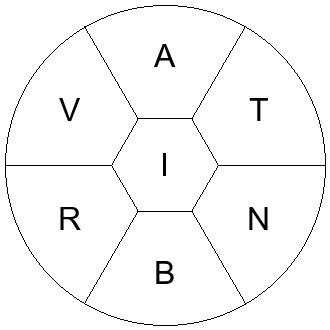
The official answers for today's puzzle are:

Click on the arrow to show the definition.
Click outside the pop-up to close it.


Number of Pangrams: 1

Maximum Puzzle Score: 157

Number of Answers: 31

Points Needed for Genius: 110

Genius requires between 16 and 26 words. You need at least a 7-letter word to reach genius. If you don't get the pangram, you need 77% of the total points to reach genius. If you get the pangram, you only need 67% of the remaining points to reach genius.

Other days with this pangram:

The button below will reveal a chart with the number of words by each letter. Red bars indicate that there is a pangram(s) starting with that letter.


How does this puzzle compare to other puzzles?

Today's score of 157 was in the 43rd percentile of all puzzles.
The last time there was a score this low was on November 8, 2025.
The highest score ever was 537 on January 22, 2021.
The lowest score ever was 47 on March 27, 2023.

This puzzle's 31 possible answers rank it in the 28th percentile of all puzzles.
The last time there were fewer answers than this was on November 7, 2025.
The highest number of answers was 81 on June 8, 2019.
The lowest number of answers was 16 on March 27, 2023.

It takes a 7-letter word for genius.
The last time this happened was on November 10, 2025.

Today's puzzle has an average word length of 5.5.
For all Bees, the average word length has been 5.3.


Haven't I seen these letters before?

Hover over a letter to see its first and most recent appearance in the Bee!


Haven't I seen these words before?

The most common words in the Bee are:

  • noon 221
  • loll 207
  • toot 201
  • naan 184
  • nana 184
  • lilt 147
  • till 147
  • tilt 147
  • tint 143
  • nene 142
  • mama 140
  • mamma 140
  • acacia 134
  • acai 134
  • onto 134
  • toon 134
  • onion 131
  • anal 126
  • anon 123
  • olio 121
  • dodo 119
  • tact 118
  • baba 116
  • boob 115
  • booboo 115
  • papa 115
  • lull 114
  • lulu 114
  • poop 114
  • mitt 111
  • call 110
  • calla 110
  • cocci 110
  • mono 110
  • moon 110
  • tutu 109
  • ratatat 108
  • tart 108
  • tartar 108
  • allay 107
  • ally 107
  • attar 107
  • loon 107
  • tattoo 106
  • tatty 106
  • ammo 105
  • momma 105
  • epee 102
  • peep 102
  • meme 101


How long are words in the Bee?

There have been 109,322 answers ever accepted in the Bee - with 10,857 unique words.
Below are the distributions of the lengths of these words.


Valid dictionary words not in today's official answers

You may be wondering why these words aren't here*:

  • abri
  • airn
  • airt
  • antiair
  • antiar
  • antiarin
  • arriba
  • attaint
  • attrit
  • babbitt
  • bairn
  • bani
  • banian
  • bibb
  • binit
  • bint
  • biriani
  • birr
  • bitt
  • bravi
  • brin
  • brit
  • britannia
  • britt
  • brittania
  • inia
  • inti
  • intrant
  • invar
  • naira
  • navarin
  • rabbin
  • raia
  • ravin
  • riant
  • riata
  • ribavirin
  • tain
  • tian
  • titania
  • titbit
  • titi
  • titian
  • titrant
  • trinitarian
  • vair
  • varia
  • vina
  • vita
  • vitrain
  • vitta
  • viva
  • vivaria
  • vivat

*Because the New York Times considers them obscure or offensive.

anti

noun
  1. A person opposed to a concept or principle.
adjective
  1. Opposed to something.
  2. That has a torsion angle between 90° and 180°
preposition
  1. Alternative form of anti-

aria

noun
  1. A musical piece written typically for a solo voice with orchestral accompaniment in an opera or cantata.

atria

noun
  1. A central room or space in ancient Roman homes, open to the sky in the middle; a similar space in other buildings.
  2. A square hall lit by daylight from above, into which rooms open at one or more levels.
  3. A cavity, entrance, or passage.
  4. Any enclosed sexine and nexine layers, widening toward the interior of the grain.

attain

verb
  1. To gain (an object or desired result).
  2. To reach or come to, by progression or motion; to arrive at (a place, time, state, etc.).
  3. To come or arrive, by motion, growth, bodily exertion, or efforts toward a place, object, state, etc.
  4. To get at the knowledge of.
  5. To reach in excellence or degree.
  6. To reach a person after being behind them.

avian

noun
  1. A bird.
  2. A bird-like or flying creature.
  3. (furry fandom) Someone who roleplays or describes themselves as being a bird or bird-like animal character with human characteristics.
adjective
  1. Characteristic of or pertaining to birds, or to bird-like or flying creatures.

bait

Etymology 1

noun
  1. Any substance, especially food, used in catching fish, or other animals, by alluring them to a hook, snare, trap, or net.
  2. Food containing poison or a harmful additive to kill animals that are pests.
  3. Anything which allures; something used to lure or entice someone or something into doing something
  4. A portion of food or drink, as a refreshment taken on a journey; also, a stop for rest and refreshment.
verb
  1. To attract with bait; to entice.
  2. To affix bait to a trap or a fishing hook or fishing line.

Etymology 2

verb
  1. To set dogs on (an animal etc.) to bite or worry; to attack with dogs, especially for sport.
  2. To intentionally annoy, torment, or threaten by constant rebukes or threats; to harass.
  3. To feed and water (a horse or other animal), especially during a journey.
  4. (of a horse or other animal) To take food, especially during a journey.
  5. (of a person) To stop to take a portion of food and drink for refreshment during a journey.

Etymology 3

verb
  1. To flap the wings; to flutter as if to fly; or to hover, as a hawk when she stoops to her prey.

Etymology 4

adjective
  1. Obvious; blatant.
  2. Well-known; famous; renowned.

barbarian

noun
  1. A non-Greek or a non-Roman.
  2. An uncivilized or uncultured person, originally compared to the hellenistic Greco-Roman civilisation; often associated with fighting or other such shows of strength.
  3. Someone from a developing country or backward culture.
  4. A warrior, clad in fur or leather, associated with sword and sorcery stories.
  5. A person destitute of culture; a Philistine.
  6. A cruel, savage, brutal person; one without pity or humanity.
  7. A foreigner, especially with barbaric qualities as in the above definitions.
adjective
  1. Relating to people, countries or customs perceived as uncivilized or inferior.

brain

noun
  1. The control center of the central nervous system of an animal located in the skull which is responsible for perception, cognition, attention, memory, emotion, and action.
  2. An intelligent person.
  3. (in the plural) Intellect.
  4. By analogy with a human brain, the part of a machine or computer that performs calculations.
  5. Oral sex.
  6. Mind.
verb
  1. To dash out the brains of; to kill by smashing the skull.
  2. To strike (someone) on the head.
  3. To destroy; to put an end to.
  4. To conceive in the mind; to understand.

briar

Etymology 1

noun
  1. Any of many plants with thorny stems growing in dense clusters, such as many in the Rosa, Rubus, and Smilax genera.
  2. Anything sharp or unpleasant to the feelings.

Etymology 2

noun
  1. The white heath, Erica arborea, a thorny Mediterranean shrub.
  2. A pipe for smoking, made from the roots of that shrub.

invariant

noun
  1. An invariant quantity, function etc.
adjective
  1. Not varying; constant
  2. Unaffected by a specified operation (especially by a transformation)
  3. Neither covariant nor contravariant.

irritant

noun
  1. Any medication designed to cause irritation
  2. A source of irritation.
adjective
  1. Causing irritation or inflammation.
  2. Rendering null and void; conditionally invalidating.

nirvana

noun
  1. Complete cessation of suffering; a blissful state attained through realization of sunyata; enlightened experience.
  2. (non-Buddhist) State of paradise; heightened or great pleasure.

rabbi

noun
  1. A Jewish scholar or teacher of halacha (Jewish law), capable of making halachic decisions.
  2. A Jew who is or is qualified to be the leader of a Jewish congregation.
  3. (police) A senior officer who acts as a mentor.

rabbit

Etymology 1

noun
  1. A mammal of the family Leporidae, with long ears, long hind legs and a short, fluffy tail.
  2. The meat from this animal.
  3. The fur of a rabbit typically used to imitate another animal's fur.
  4. A runner in a distance race whose goal is mainly to set the pace, either to tire a specific rival so that a teammate can win or to help another break a record; a pacesetter.
  5. A very poor batsman; selected as a bowler or wicket-keeper.
  6. A large element at the beginning of a list of items to be bubble sorted, and thus tending to be quickly swapped into its correct position. Compare turtle.
  7. Rarebit; Welsh rabbit or a similar dish: melted cheese served atop toast.
verb
  1. To hunt rabbits.
  2. To flee.

Etymology 2

verb
  1. To talk incessantly and in a childish manner; to babble annoyingly.

Etymology 3

verb
  1. Confound; damn; drat.

rain

noun
  1. Condensed water falling from a cloud.
  2. Any matter moving or falling, usually through air, and especially if liquid or otherwise figuratively identifiable with raindrops.
  3. An instance of particles or larger pieces of matter moving or falling through air.
verb
  1. To have rain fall from the sky.
  2. To fall as or like rain.
  3. To issue (something) in large quantities.
  4. To reign.

raita

noun
  1. A condiment used as a dip or sauce in the cuisine of southern Asia, made from seasoned yogurt.

rani

noun
  1. The wife of a rajah.
  2. A Hindu princess or female ruler in India.

ribbit

noun
  1. The vocal sound made by a frog or toad.
verb
  1. To make the sound of a frog or toad.
interjection
  1. The vocal sound made by a frog or toad.

taint

Etymology 1

noun
  1. A contamination, decay or putrefaction, especially in food
  2. A mark of disgrace, especially on one's character; blemish
  3. Tincture; hue; colour
  4. Infection; corruption; deprivation
  5. A marker indicating that a variable is unsafe and should be subjected to additional security checks.
verb
  1. To contaminate or corrupt (something) with an external agent, either physically or morally.
  2. To spoil (food) by contamination.
  3. To be infected or corrupted; to be touched by something corrupting.
  4. To be affected with incipient putrefaction.
  5. To mark (a variable) as unsafe, so that operations involving it are subject to additional security checks.
  6. To invalidate (a share capital account) by transferring profits into it.

Etymology 2

noun
  1. A thrust with a lance, which fails of its intended effect.
  2. An injury done to a lance in an encounter, without its being broken; also, a breaking of a lance in an encounter in a dishonorable or unscientific manner.
verb
  1. To damage, as a lance, without breaking it; also, to break, as a lance, but usually in an unknightly or unscientific manner.
  2. To hit or touch lightly, in tilting.
  3. To thrust ineffectually with a lance.

Etymology 3

noun
  1. The perineum.

tannin

noun
  1. Tannic acid or any of its derivatives.

tiara

noun
  1. The papal crown.
  2. An ornamental coronet.

tibia

noun
  1. The inner and usually the larger of the two bones of the leg or hind limb below the knee, the shinbone
  2. The second segment from the end of an insect's leg, between the femur and tarsus.
  3. The third segment from the end of an arachnid's leg, between the patella and metatarsus.
  4. A musical instrument of the flute kind, originally made of the leg bone of an animal.

tint

noun
  1. A slight coloring.
  2. A pale or faint tinge of any color; especially, a variation of a color obtained by adding white (contrast shade)
  3. A color considered with reference to other very similar colors.
  4. A shaded effect in engraving, produced by the juxtaposition of many fine parallel lines.
verb
  1. To shade, to color.

titan

noun
  1. Something or someone of very large stature, greatness, or godliness.

train

Etymology 1

noun
  1. Elongated portion.
  2. Connected sequence of people or things.
verb
  1. To practice an ability.
  2. To teach and form (someone) by practice; to educate (someone).
  3. To improve one's fitness.
  4. To proceed in sequence.
  5. To move (a gun) laterally so that it points in a different direction.
  6. To encourage (a plant or branch) to grow in a particular direction or shape, usually by pruning and bending.
  7. To trace (a lode or any mineral appearance) to its head.
  8. To create a trainer for; to apply cheats to (a game).
  9. To draw along; to trail; to drag.
  10. To draw by persuasion, artifice, or the like; to attract by stratagem; to entice; to allure.

Etymology 2

noun
  1. Treachery; deceit.
  2. A trick or stratagem.
  3. A trap for animals; a snare.
  4. A lure; a decoy.

trait

noun
  1. An identifying characteristic, habit or trend.
  2. An uninstantiable collection of methods that provides functionality to a class by using the class’s own interface.

trivia

Etymology 1

noun
  1. Insignificant trifles of little importance, especially items of unimportant information
  2. A quiz game that involves obscure facts.

Etymology 2

noun
  1. (in medieval universities) The lower division of the liberal arts; grammar, logic and rhetoric.
  2. The three anterior ambulacra of echinoderms, collectively.

vain

adjective
  1. Overly proud of oneself, especially concerning appearance; having a high opinion of one's own accomplishments with slight reason.
  2. Having no real substance, value, or importance; empty; void; worthless; unsatisfying.
  3. Effecting no purpose; pointless, futile.
  4. Showy; ostentatious.

variant

noun
  1. Something that is slightly different from a type or norm.
  2. A different sequence of a gene (locus).
  3. A variable that can hold any of various unrelated data types.
  4. One of a set of words or other linguistic forms that conveys the same meaning or serves the same function.
adjective
  1. Showing variety, diverse.
  2. Showing deviation or disagreement.
  3. Variable.
  4. Covariant and/or contravariant.

vibrant

adjective
  1. Pulsing with energy or activity.
  2. Lively and vigorous.
  3. Vibrating, resonant or resounding.
  4. (of a colour) Bright.

birria

No Definition Found.