Tuesday, November 25, 2025

Answers to yesterday's Bee

Jump to answers for


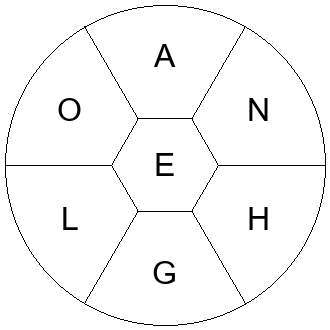
The official answers for today's puzzle are:

Click on the arrow to show the definition.
Click outside the pop-up to close it.


Number of Pangrams: 1

Maximum Puzzle Score: 172

Number of Answers: 51

Points Needed for Genius: 120

Genius requires between 19 and 45 words. You need at least a 6-letter word to reach genius. If you don't get the pangram, you need 76% of the total points to reach genius. If you get the pangram, you only need 67% of the remaining points to reach genius.

Other days with this pangram:

The button below will reveal a chart with the number of words by each letter. Red bars indicate that there is a pangram(s) starting with that letter.


How does this puzzle compare to other puzzles?

Today's score of 172 was in the 51st percentile of all puzzles.
The last time there was a score this high was on November 24, 2025.
The highest score ever was 537 on January 22, 2021.
The lowest score ever was 47 on March 27, 2023.

This puzzle's 51 possible answers rank it in the 78th percentile of all puzzles.
The last time there were more answers than this was on November 23, 2025.
The highest number of answers was 81 on June 8, 2019.
The lowest number of answers was 16 on March 27, 2023.

It takes a 6-letter word for genius.
The last time this happened was on November 24, 2025.

Today's puzzle has an average word length of 4.8.
For all Bees, the average word length has been 5.3.


Haven't I seen these letters before?

Hover over a letter to see its first and most recent appearance in the Bee!


Haven't I seen these words before?

The most common words in the Bee are:

  • noon 224
  • loll 208
  • toot 202
  • naan 184
  • nana 184
  • lilt 147
  • till 147
  • tilt 147
  • nene 144
  • tint 143
  • mama 141
  • mamma 141
  • onto 135
  • toon 135
  • acacia 134
  • acai 134
  • onion 134
  • anal 126
  • anon 125
  • olio 121
  • dodo 120
  • tact 118
  • baba 116
  • boob 116
  • booboo 116
  • papa 116
  • poop 115
  • lull 114
  • lulu 114
  • mitt 112
  • mono 112
  • moon 112
  • cocci 111
  • call 110
  • calla 110
  • ratatat 109
  • tart 109
  • tartar 109
  • tutu 109
  • attar 108
  • loon 108
  • allay 107
  • ally 107
  • ammo 107
  • momma 107
  • tattoo 106
  • tatty 106
  • epee 102
  • meme 102
  • peep 102


How long are words in the Bee?

There have been 109,935 answers ever accepted in the Bee - with 10,867 unique words.
Below are the distributions of the lengths of these words.


Valid dictionary words not in today's official answers

You may be wondering why these words aren't here*:

  • agee
  • agene
  • aglee
  • agone
  • alae
  • alane
  • alee
  • allee
  • allheal
  • allonge
  • anagoge
  • anele
  • anlage
  • anlagen
  • anole
  • egal
  • enhalo
  • enneagon
  • enol
  • gaen
  • galea
  • galeae
  • galena
  • gallonage
  • gane
  • gangle
  • gean
  • genoa
  • gleg
  • haen
  • hallel
  • haole
  • helo
  • leal
  • legong
  • leno
  • leone
  • loanee
  • longe
  • neogene
  • nonage
  • nonane
  • nonego
  • nonlegal
  • olea

*Because the New York Times considers them obscure or offensive.

aeon

noun
  1. (preferred spelling, with æon) A spirit being emanating from the Godhead.
  2. (Cosmology) Each universe in a series of universes, according to conformal cyclic cosmology.
noun
  1. Eternity.
  2. A period of 1,000,000,000 years.
  3. The longest time period used in geology.
  4. A long period of time.
  5. (usually spelled aeon or æon) A spirit being emanating from the Godhead.

agelong

adjective
  1. Lasting throughout all time; eternal

algae

noun
  1. Any of many aquatic photosynthetic organisms, including the seaweeds, whose size ranges from a single cell to giant kelps and whose biochemistry and forms are very diverse, some being eukaryotic.
noun
  1. Algal organisms viewed collectively or as a mass; algal growth.
  2. A particular kind of algae.

allege

Etymology 1

verb
  1. To state under oath, to plead.
  2. To cite or quote an author or his work for or against.
  3. To adduce (something) as a reason, excuse, support etc.
  4. To make a claim as justification or proof; to make an assertion without proof.

Etymology 2

verb
  1. To lighten, diminish.

allele

noun
  1. One of a number of alternative forms of the same gene occupying a given position, or locus, on a chromosome.

aloe

noun
  1. (in the plural) The resins of the tree Aquilaria malaccensis (syn. Aquilaria agallocha), known for their fragrant aroma, produced after infection by the fungus Phialophora parasitica.
  2. A plant of the genus Aloe.
  3. A strong, bitter drink made from the juice of such plants, used as a purgative.

alone

adjective
  1. By oneself, solitary.
  2. Apart from, or exclusive of, others.
  3. Considered separately.
  4. Without equal.
  5. Unique; rare; matchless.
adverb
  1. By oneself; apart from, or exclusive of, others; solo.
  2. Without outside help.
  3. Exclusively.

angel

Etymology 1

noun
  1. An incorporeal and sometimes divine messenger from a deity, or other divine entity, often depicted in art as a youthful winged figure in flowing robes.
  2. (Abrahamic tradition) One of the lowest order of such beings, below virtues.
  3. A person having the qualities attributed to angels, such as purity or selflessness.
  4. Attendant spirit; genius; demon.
  5. (possibly obsolete) An official (a bishop, or sometimes a minister) who heads a Christian church, especially a Catholic Apostolic church.
  6. An English gold coin, bearing the figure of the archangel Michael, circulated between the 15th and 17th centuries, and varying in value from six shillings and eightpence to ten shillings.
  7. (originally Royal Air Force) An altitude, measured in thousands of feet.
  8. An unidentified flying object detected by air traffic control radar.
  9. An affluent individual who provides capital for a startup, usually in exchange for convertible debt or ownership equity; an angel investor.
  10. The person who funds a show.
verb
  1. To support by donating money.

Etymology 2

noun
  1. A person who has Angelman syndrome.

angle

Etymology 1

noun
  1. A figure formed by two rays which start from a common point (a plane angle) or by three planes that intersect (a solid angle).
  2. The measure of such a figure. In the case of a plane angle, this is the ratio (or proportional to the ratio) of the arc length to the radius of a section of a circle cut by the two rays, centered at their common point. In the case of a solid angle, this is the ratio of the surface area to the square of the radius of the section of a sphere.
  3. A corner where two walls intersect.
  4. A change in direction.
  5. A viewpoint; a way of looking at something.
  6. The focus of a news story.
  7. Any of various hesperiid butterflies.
  8. A storyline between two wrestlers, providing the background for and approach to a feud.
  9. An ulterior motive; a scheme or means of benefitting from a situation, usually hidden, often immoral
  10. A projecting or sharp corner; an angular fragment.
  11. Any of the four cardinal points of an astrological chart: the Ascendant, the Midheaven, the Descendant and the Imum Coeli.
verb
  1. (often in the passive) To place (something) at an angle.
  2. To change direction rapidly.
  3. To present or argue something in a particular way or from a particular viewpoint.
  4. (cue sports) To hamper (oneself or one's opponent) by leaving the cue ball in the jaws of a pocket such that the surround of the pocket (the "angle") blocks the path from cue ball to object ball.

Etymology 2

noun
  1. A fishhook; tackle for catching fish, consisting of a line, hook, and bait, with or without a rod.
verb
  1. To try to catch fish with a hook and line.
  2. (with for) To attempt to subtly persuade someone to offer a desired thing.

anneal

noun
  1. An act of annealing.
verb
  1. To subject to great heat and then (often slow) cooling, and sometimes reheating and further cooling, for the purpose of rendering less brittle; to temper; to toughen.
  2. To cool glass slowly, to minimize internal stress.
  3. To burn colors onto a glass or other surface.
  4. To make a double-stranded nucleic acid by pairing a single strand with a complementary strand.
  5. To strengthen or harden.

eagle

noun
  1. Any of several large carnivorous and carrion-eating birds in the family Accipitridae, having a powerful hooked bill and keen vision.
  2. A gold coin with a face value of ten dollars, formerly used in the United States.
  3. A 13th-century coin minted in Europe and circulated in England as a debased sterling silver penny, outlawed under Edward I.
  4. A score of two under par for a hole.
verb
  1. To score an eagle.

eggnog

noun
  1. A beverage based on milk, eggs, sugar, and nutmeg; often made alcoholic with rum, brandy or whisky; popular at Christmas.

elan

noun
  1. Ardor or zeal inspired by passion or enthusiasm.

engage

verb
  1. (heading) To interact socially.
  2. (heading) To interact antagonistically.
  3. (heading) To interact contractually.
  4. (heading) To interact mechanically.
  5. To enter into (an activity), to participate (construed with in).
  6. To entangle.

gage

Etymology 1

noun
  1. Something, such as a glove or other pledge, thrown down as a challenge to combat (now usually figurative).
  2. Something valuable deposited as a guarantee or pledge; security, ransom.
verb
  1. To give or deposit as a pledge or security; to pawn.
  2. To wager, to bet.
  3. To bind by pledge, or security; to engage.

Etymology 2

noun
  1. A measure; a standard of measure; an instrument to determine dimensions, distance, or capacity; a standard
  2. An act of measuring.
  3. An estimate.
  4. Any instrument for ascertaining or regulating the level, state, dimensions or forms of things
  5. A thickness of sheet metal or wire designated by any of several numbering schemes.
  6. The distance between the rails of a railway.
  7. A semi-norm; a function that assigns a non-negative size to all vectors in a vector space.
  8. The number of stitches per inch, centimetre, or other unit of distance.
  9. Relative positions of two or more vessels with reference to the wind.
  10. The depth to which a vessel sinks in the water.
  11. (plastering) The quantity of plaster of Paris used with common plaster to make it set more quickly.
  12. That part of a shingle, slate, or tile, which is exposed to the weather, when laid; also, one course of such shingles, slates, or tiles.
  13. A unit of measurement which describes how many spheres of bore diameter of a shotgun can be had from one pound of lead; 12 gauge is roughly equivalent to .75 caliber.
  14. (by extension) A shotgun (synecdoche for 12 gauge shotgun, the most common chambering for combat and hunting shotguns).
  15. A tunnel-like ear piercing consisting of a hollow ring embedded in the lobe.
verb
  1. To measure or determine with a gauge; to measure the capacity of.
  2. To estimate.
  3. To appraise the character or ability of; to judge of.
  4. To draw into equidistant gathers by running a thread through it.
  5. To mix (a quantity of ordinary plaster) with a quantity of plaster of Paris.
  6. To chip, hew or polish (stones, bricks, etc) to a standard size and/or shape.

Etymology 3

noun
  1. A subspecies of plum, Prunus domestica subsp. italica.

Etymology 4

noun
  1. A quart pot.
  2. A pint pot.
  3. (metonymically) A drink.
  4. A tobacco pipe.
  5. A chamberpot.
  6. A small quantity of anything.
  7. Marijuana

gaggle

noun
  1. (collective) A group of geese when they are on the ground or on the water.
  2. (by extension) Any group or gathering of related things.
verb
  1. To make a noise like a goose; to cackle.

gale

Etymology 1

verb
  1. To sing; charm; enchant.
  2. To cry; groan; croak.
  3. (of a person) To talk.
  4. (of a bird) To call.
  5. To sing; utter with musical modulations.

Etymology 2

noun
  1. A very strong wind, more than a breeze, less than a storm; number 7 through to 9 winds on the 12-step Beaufort scale.
  2. An outburst, especially of laughter.
  3. A light breeze.
  4. A song or story.
verb
  1. To sail, or sail fast.

Etymology 3

noun
  1. A shrub, also called sweet gale or bog myrtle (Myrica gale), that grows on moors and fens.

Etymology 4

noun
  1. A periodic payment, such as is made of a rent or annuity.

galleon

noun
  1. A large, three masted, square rigged sailing ship with at least two decks.

gelee

No Definition Found.

gene

noun
  1. A theoretical unit of heredity of living organisms; a gene may take several values and in principle predetermines a precise trait of an organism's form (phenotype), such as hair color.
  2. A segment of DNA or RNA from a cell's or an organism's genome, that may take several forms and thus parameterizes a phenomenon, in general the structure of a protein; locus.

ghee

noun
  1. A type of clarified butter used in South Asian cooking; usli ghee.
  2. Vegetable oil for cooking.

glean

Etymology 1

noun
  1. A collection made by gleaning.
verb
  1. To collect (grain, grapes, etc.) left behind after the main harvest or gathering.
  2. To gather what is left in (a field or vineyard).
  3. To gather information in small amounts, with implied difficulty, bit by bit.
  4. To frugally accumulate resources from low-yield contexts.

Etymology 2

noun
  1. Cleaning; afterbirth

glee

noun
  1. Joy; happiness great delight, especially from one's own good fortune or from another's misfortune.
  2. Music; minstrelsy; entertainment.
  3. An unaccompanied part song for three or more solo voices, not necessarily merry.
verb
  1. To sing a glee (unaccompanied part song).

glen

noun
  1. A secluded and narrow valley, especially one with a river running through it; a dale; a depression between hills.

goggle

noun
  1. A wide-eyed stare or affected rolling of the eye.
  2. (in the plural) A pair of protective eyeglasses.
verb
  1. To stare (at something) with wide eyes.
  2. To roll the eyes.

gone

verb
  1. To move:
  2. (chiefly of a machine) To work or function (properly); to move or perform (as required).
  3. To start; to begin (an action or process).
  4. To take a turn, especially in a game.
  5. To attend.
  6. To proceed:
  7. To follow or travel along (a path):
  8. To extend (from one point in time or space to another).
  9. To lead (to a place); to give access to.
  10. To become. (The adjective that follows usually describes a negative state.)
  11. To assume the obligation or function of; to be, to serve as.
  12. To continuously or habitually be in a state.
  13. To come to (a certain condition or state).
  14. To change (from one value to another) in the meaning of wend.
  15. To turn out, to result; to come to (a certain result).
  16. To tend (toward a result).
  17. To contribute to a (specified) end product or result.
  18. To pass, to be used up:
  19. To die.
  20. To be discarded.
  21. To be lost or out:
  22. To break down or apart:
  23. To be sold.
  24. To be given, especially to be assigned or allotted.
  25. To survive or get by; to last or persist for a stated length of time.
  26. To have a certain record.
  27. To be authoritative, accepted, or valid:
  28. To say (something), to make a sound:
  29. To be expressed or composed (a certain way).
  30. To resort (to).
  31. To apply or subject oneself to:
  32. To fit (in a place, or together with something):
  33. To date.
  34. To attack:
  35. To be in general; to be usually.
  36. To take (a particular part or share); to participate in to the extent of.
  37. To yield or weigh.
  38. To offer, bid or bet an amount; to pay.
  39. To enjoy. (Compare go for.)
  40. To urinate or defecate.
adjective
  1. Away, having left.
  2. No longer part of the present situation.
  3. No longer existing, having passed.
  4. Used up.
  5. Dead.
  6. Intoxicated to the point of being unaware of one's surroundings.
  7. Entirely given up to; infatuated with; used with on.
  8. Excellent; wonderful.
  9. Ago (used post-positionally).
  10. Weak; faint; feeling a sense of goneness.
  11. Of an arrow: wide of the mark.
preposition
  1. Past, after, later than (a time).

google

Etymology 1

verb
  1. To deliver googlies.
  2. To move as a ball in a googly.

Etymology 2

noun
  1. An Internet search, such as those performed on the Google search engine.
  2. A match obtained by a query in the Google search engine.
verb
  1. To search for (something) on the Internet using the Google search engine.
  2. (by extension) To search for (something) on the Internet using any comprehensive search engine.
  3. To be locatable in a search of the Internet.

haggle

verb
  1. To argue for a better deal, especially over prices with a seller.
  2. To hack (cut crudely)
  3. To stick at small matters; to chaffer; to higgle.

hale

Etymology 1

noun
  1. Health, welfare.

Etymology 2

adjective
  1. Sound, entire, healthy; robust, not impaired.

Etymology 3

verb
  1. To drag or pull, especially forcibly.

halogen

noun
  1. Any element of group 17, i.e. fluorine, chlorine, bromine, iodine and astatine, which form a salt by direct union with a metal.
  2. A light fixture in which the filament is surrounded by an atmosphere of a halogen gas,

heal

Etymology 1

noun
  1. A spell or ability that restores hit points or removes a status ailment.
  2. Health
verb
  1. To make better from a disease, wound, etc.; to revive or cure.
  2. To become better or healthy again.
  3. To reconcile, as a breach or difference; to make whole; to free from guilt.

Etymology 2

verb
  1. To make better from a disease, wound, etc.; to revive or cure.
  2. To become better or healthy again.
  3. To reconcile, as a breach or difference; to make whole; to free from guilt.
verb
  1. To hide, conceal, and keep secret, especially for a secret society (such as the masons).
  2. (now especially in the phrase "hele in") To cover or conceal (a seedling, plant, roots, etc).

heel

Etymology 1

noun
  1. The rear part of the foot, where it joins the leg.
  2. The part of a shoe's sole which supports the foot's heel.
  3. The rear part of a sock or similar covering for the foot.
  4. The part of the palm of a hand closest to the wrist.
  5. (usually in the plural) A woman's high-heeled shoe.
  6. The back, upper part of the stock.
  7. The last or lowest part of anything.
  8. A crust end-piece of a loaf of bread.
  9. The base of a bun sliced in half lengthwise.
  10. A contemptible, inconsiderate or thoughtless person.
  11. A headlining wrestler regarded as a "bad guy," whose ring persona embodies villainous or reprehensible traits and demonstrates characteristics of a braggart and a bully.
  12. The cards set aside for later use in a patience or solitaire game.
  13. Anything resembling a human heel in shape; a protuberance; a knob.
  14. The lower end of a timber in a frame, as a post or rafter.
  15. (specifically) The obtuse angle of the lower end of a rafter set sloping.
  16. (workman slang) A cyma reversa.
  17. The short side of an angled cut.
  18. The part of a club head's face nearest the shaft.
  19. The lower end of the bit (cutting edge) of an axehead; as opposed to the toe (upper end).
  20. In a carding machine, the part of a flat nearest the cylinder.
verb
  1. To follow at somebody's heels; to chase closely.
  2. To add a heel to, or increase the size of the heel of (a shoe or boot).
  3. To kick with the heel.
  4. To perform by the use of the heels, as in dancing, running, etc.
  5. To arm with a gaff, as a cock for fighting.
  6. To hit (the ball) with the heel of the club.
  7. To make (a fair catch) standing with one foot forward, the heel on the ground and the toe up.

Etymology 2

noun
  1. The act of inclining or canting from a vertical position; a cant.
verb
  1. To incline to one side; to tilt.

Etymology 3

verb
  1. To make better from a disease, wound, etc.; to revive or cure.
  2. To become better or healthy again.
  3. To reconcile, as a breach or difference; to make whole; to free from guilt.
verb
  1. To hide, conceal, and keep secret, especially for a secret society (such as the masons).
  2. (now especially in the phrase "hele in") To cover or conceal (a seedling, plant, roots, etc).

hell

No Definition Found.

hellhole

noun
  1. A place of intense hatred, misery, or turmoil.

hello

noun
  1. "Hello!" or an equivalent greeting.
verb
  1. To greet with "hello".
interjection
  1. A greeting (salutation) said when meeting someone or acknowledging someone’s arrival or presence.
  2. A greeting used when answering the telephone.
  3. A call for response if it is not clear if anyone is present or listening, or if a telephone conversation may have been disconnected.
  4. Used sarcastically to imply that the person addressed or referred to has done something the speaker or writer considers to be foolish.
  5. An expression of puzzlement or discovery.

henge

noun
  1. A prehistoric enclosure in the form of a circle or circular arc defined by a raised circular bank and a circular ditch usually running inside the bank, with one or more entrances leading into the enclosed open space.

henna

noun
  1. A shrub, Lawsonia inermis, having fragrant reddish flowers
  2. A reddish plant substance, prepared from the dried leaves of this plant, used for temporary tattoos and hair coloring. Hair colorings range from bright red to earth brown to near black.
  3. A rich reddish-brown colour.
verb
  1. To dye or tattoo with henna.
adjective
  1. Of a rich reddish-brown colour.

hole

Etymology 1

noun
  1. A hollow place or cavity; an excavation; a pit; an opening in or through a solid body, a fabric, etc.; a perforation; a rent; a fissure.
  2. (heading) In games.
  3. An excavation pit or trench.
  4. A weakness; a flaw or ambiguity.
  5. A container or receptacle.
  6. In semiconductors, a lack of an electron in an occupied band behaving like a positively charged particle.
  7. A security vulnerability in software which can be taken advantage of by an exploit.
  8. An orifice, in particular the anus. When used with shut it always refers to the mouth.
  9. (particularly in the phrase "get one's hole") Sex, or a sex partner.
  10. (with "the") Solitary confinement, a high-security prison cell often used as punishment.
  11. An undesirable place to live or visit; a hovel.
  12. Difficulty, in particular, debt.
  13. A chordless cycle in a graph.
verb
  1. To make holes in (an object or surface).
  2. (by extension) To destroy.
  3. To go into a hole.
  4. To drive into a hole, as an animal, or a billiard ball or golf ball.
  5. To cut, dig, or bore a hole or holes in.

Etymology 2

adjective
  1. Entire, undivided.
  2. Sound, uninjured, healthy.
  3. (of food) From which none of its constituents has been removed.
  4. As yet unworked.

hone

Etymology 1

noun
  1. A sharpening stone composed of extra-fine grit used for removing the burr or curl from the blade of a razor or some other edge tool.
  2. A machine tool used in the manufacture of precision bores.
verb
  1. To sharpen with a hone; to whet.
  2. To use a hone to produce a precision bore.
  3. To refine or master (a skill).
  4. To make more acute, intense, or effective.

Etymology 2

noun
  1. A kind of swelling in the cheek.

Etymology 3

verb
  1. To grumble.
  2. To pine, lament, or long.

lane

noun
  1. (used in street names) A road, street, or similar thoroughfare.
  2. A narrow passageway between fences, walls, hedges or trees.
  3. A narrow road, as in the country.
  4. A lengthwise division of roadway intended for a single line of vehicles.
  5. A similar division of a racetrack to keep runners apart.
  6. A course designated for ships or aircrafts.
  7. An elongated wooden strip of floor along which a bowling ball is rolled.
  8. An empty space in the tableau, formed by the removal of an entire row of cards.
  9. Any of the parallel slots in which values can be stored in a SIMD architecture.
  10. In MOBA (multiplayer online battle arena) games, a particular path on the map that may be traversed by enemy characters.
  11. The homestretch.

lean

Etymology 1

noun
  1. (of an object taller than its width and depth) An inclination away from the vertical.
verb
  1. To incline, deviate, or bend, from a vertical position; to be in a position thus inclining or deviating.
  2. To incline in opinion or desire; to conform in conduct; often with to, toward, etc.
  3. Followed by against, on, or upon: to rest or rely, for support, comfort, etc.
  4. To hang outwards.
  5. To press against.

Etymology 2

noun
  1. Meat with no fat on it.
  2. An organism that is lean in stature.
verb
  1. To thin out (a fuel-air mixture): to reduce the fuel flow into the mixture so that there is more air or oxygen.
adjective
  1. (of a person or animal) Slim; not fleshy.
  2. (of meat) Having little fat.
  3. Having little extra or little to spare; scanty; meagre.
  4. Having a low proportion or concentration of a desired substance or ingredient.
  5. Of a character which prevents the compositor from earning the usual wages; opposed to fat.
  6. Efficient, economic, frugal, agile, slimmed-down; pertaining to the modern industrial principles of "lean manufacturing"

Etymology 3

verb
  1. To conceal.

Etymology 4

noun
  1. A recreational drug based on codeine-laced promethazine cough syrup, popular in the hip hop community in the southeastern United States.

loge

noun
  1. A booth or stall.
  2. The lodge of a concierge.
  3. An upscale seating region in a modern concert hall or sports venue, often in the back lower tier, or on a separate tier above the mezzanine.
  4. An exclusive box or seating region in older theaters and opera houses, having wider, softer, and more widely spaced seats than in the gallery.

lone

adjective
  1. Solitary; having no companion.
  2. Isolated or lonely; lacking companionship.
  3. Sole; being the only one of a type.
  4. Situated by itself or by oneself, with no neighbours.
  5. Unfrequented by human beings; solitary.
  6. Single; unmarried, or in widowhood.

nene

noun
  1. The Hawaiian goose, Branta sandvicensis, which was designated the state bird of Hawaii in 1957.

neon

noun
  1. The chemical element (symbol Ne) with an atomic number of 10. The lightest of the noble gases, it is a colourless, odorless inert gas.
  2. A form or sample of the element.
  3. Neon signs or lights, collectively.
  4. A neon tetra fish.
adjective
  1. (of a color) That resembles a neon light; extremely bright; fluorescent

noel

noun
  1. Christmas
  2. A kind of hymn, or canticle, of mediaeval origin, sung in honor of the birth of Christ; a Christmas carol.

none

Etymology 1

noun
  1. A person without religious affiliation.
adverb
  1. To no extent, in no way.
  2. Not at all, not very.
  3. No, not.
pronoun
  1. Not any of a given number or group.

Etymology 2

noun
  1. Those without any religious affiliation: atheists and others outside any organized religion.
noun
  1. A light meal usually eaten around midday, notably when not as main meal of the day.
  2. A break in play between the first and second sessions.
  3. (Minnesota) Any small meal, especially one eaten at a social gathering.
noun
  1. The middle of the afternoon, normally between 2 and 4 pm.
noun
  1. (often capitalized) The notional first-quarter day of a Roman month, occurring on the 7th day of the four original 31-day months (March, May, Quintilis or July, and October) and on the 5th day of all other months.
  2. (sometimes capitalized) The ninth hour after dawn (about 3 pm).
  3. The divine office appointed to the hour.
noun
  1. The ninth hour of the day counted from sunrise; around three o'clock in the afternoon.
  2. Time of day when the sun is in its zenith; twelve o'clock in the day, midday.
  3. The corresponding time in the middle of the night; midnight.
  4. The highest point; culmination.
noun
  1. The letter ن in the Arabic script.

ogee

noun
  1. A double curve in the shape of an elongated S; an object of that shape
  2. A pointed arch made from two ogees
  3. An inflection point.
  4. (aesthetic facial surgery) The malar or cheekbone prominence transitioning into the mid-cheek hollow.
  5. (distillation) The bubble-shaped chamber of a pot still that connects the swan neck to the pot and allows distillate to expand, condense, and fall back into the pot.

ogle

noun
  1. An impertinent, flirtatious, amorous or covetous stare.
  2. (usually in the plural) An eye.
verb
  1. To stare at (someone or something), especially impertinently, amorously, or covetously.

oleo

Etymology 1

noun
  1. The various fats and oils that go into the making of margarine.

Etymology 2

noun
  1. Margarine