Monday, December 1, 2025

Answers to yesterday's Bee

Jump to answers for


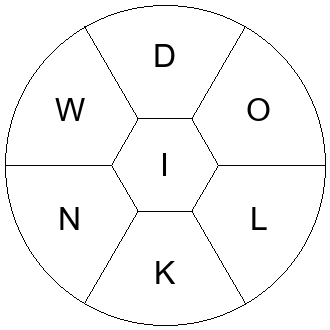
The official answers for today's puzzle are:

Click on the arrow to show the definition.
Click outside the pop-up to close it.


Number of Pangrams: 1

Maximum Puzzle Score: 107

Number of Answers: 33

Points Needed for Genius: 75

Genius requires between 10 and 30 words. You need at least an 8-letter word to reach genius. If you don't get the pangram, you need 82% of the total points to reach genius. If you get the pangram, you only need 65% of the remaining points to reach genius.

The button below will reveal a chart with the number of words by each letter. Red bars indicate that there is a pangram(s) starting with that letter.


How does this puzzle compare to other puzzles?

Today's score of 107 was in the 16th percentile of all puzzles.
The last time there was a score this low was on November 7, 2025.
The highest score ever was 537 on January 22, 2021.
The lowest score ever was 47 on March 27, 2023.

This puzzle's 33 possible answers rank it in the 33rd percentile of all puzzles.
The last time there were fewer answers than this was on November 21, 2025.
The highest number of answers was 81 on June 8, 2019.
The lowest number of answers was 16 on March 27, 2023.

It takes an 8-letter word for genius.
The last time this happened was on November 30, 2025.

Today's puzzle has an average word length of 4.9.
For all Bees, the average word length has been 5.3.


Haven't I seen these letters before?

Hover over a letter to see its first and most recent appearance in the Bee!


Haven't I seen these words before?

The most common words in the Bee are:

  • noon 225
  • loll 208
  • toot 202
  • naan 185
  • nana 185
  • lilt 148
  • till 148
  • tilt 148
  • nene 144
  • tint 144
  • mama 141
  • mamma 141
  • onion 136
  • onto 135
  • toon 135
  • acacia 134
  • acai 134
  • anal 126
  • anon 126
  • olio 122
  • dodo 120
  • tact 118
  • baba 116
  • boob 116
  • booboo 116
  • papa 116
  • poop 115
  • lull 114
  • lulu 114
  • cocci 112
  • mitt 112
  • mono 112
  • moon 112
  • call 110
  • calla 110
  • ratatat 109
  • tart 109
  • tartar 109
  • tutu 109
  • attar 108
  • loon 108
  • allay 107
  • ally 107
  • ammo 107
  • momma 107
  • tattoo 106
  • tatty 106
  • epee 103
  • peep 103
  • roar 103


How long are words in the Bee?

There have been 110,235 answers ever accepted in the Bee - with 10,869 unique words.
Below are the distributions of the lengths of these words.


Valid dictionary words not in today's official answers

You may be wondering why these words aren't here*:

  • dido
  • dikdik
  • diol
  • ikon
  • indol
  • indow
  • inion
  • inkwood
  • inwind
  • iodid
  • iodin
  • kinin
  • kino
  • klik
  • lido
  • lilo
  • linin
  • linn
  • lino
  • loid
  • nidi
  • nill
  • ninon
  • nodi
  • noil
  • oidioid

*Because the New York Times considers them obscure or offensive.

dildo

Etymology 1

noun
  1. An artificial phallus (penis) for sexual use.
  2. An idiot, a bore.
  3. A columnar cactaceous plant of the West Indies (Pilosocereus royenii).
verb
  1. To penetrate with a dildo or with another object as if it were a dildo.

Etymology 2

interjection
  1. A burden: a phrase or theme that recurs at the end of a verse of a folk song.

dill

Etymology 1

noun
  1. Anethum graveolens (the type species of the genus Anethum), a herb, the seeds of which are moderately warming, pungent, and aromatic, formerly used as a soothing medicine for children; also known as dillseed.
  2. A cucumber pickled with dill flavoring
  3. A fool.
verb
  1. To cook or flavor with dill

Etymology 2

verb
  1. To still; to assuage; to calm; to soothe, as one in pain.

dink

Etymology 1

noun
  1. A soft drop shot.
  2. A light chip; a chipped pass or shot
verb
  1. To play a soft drop shot.
  2. To chip lightly, to play a light chip shot.

Etymology 2

noun
  1. A ride on the crossbar or handlebars of a bicycle.
verb
  1. To carry someone on a pushbike: behind, on the crossbar or on the handlebar.

Etymology 3

noun
  1. A North Vietnamese soldier.

Etymology 4

noun
  1. Double Income No Kids - a childless couple with two jobs.

Etymology 5

noun
  1. Hard work, especially one's share of a task.
  2. A soldier from Australia or New Zealand, a member of the ANZAC forces during the First World War.
adjective
  1. Honest, fair, true.
  2. Genuine, proper, fair dinkum.
adverb
  1. Honestly, truly.

Etymology 6

noun
  1. A penis.
  2. A foolish person, a despised person.

Etymology 7

adjective
  1. Finely dressed, elegant; neat.

Etymology 8

adjective
  1. Not making a requisite amount of progress in one's qualifications.

dino

noun
  1. Dinosaur.

downwind

adverb
  1. In the same direction as the wind is blowing
  2. (+ from) positioned relative to something in such a way that it can be smelled in the wind
  3. In the direction opposite that of landing in a traffic pattern

idol

noun
  1. A graven image or representation of anything that is revered, or believed to convey spiritual power.
  2. A cultural icon, or especially popular person.
  3. (originally Japan) Popular entertainer; usually young, captivating, attractive; and often female, with an image of being close to fans.
  4. An eidolon or phantom; something misleading or elusive.

kiddo

noun
  1. A close friend; especially used as a form of address.
  2. A child.

kill

Etymology 1

noun
  1. The act of killing.
  2. Specifically, the death blow.
  3. The result of killing; that which has been killed.
  4. The grounding of the ball on the opponent's court, winning the rally.
verb
  1. To put to death; to extinguish the life of.
  2. To render inoperative.
  3. To stop, cease or render void; to terminate.
  4. To amaze, exceed, stun or otherwise incapacitate.
  5. To cause great pain, discomfort or distress to.
  6. To produce feelings of dissatisfaction or revulsion in.
  7. To use up or to waste.
  8. To exert an overwhelming effect on.
  9. To overpower, overwhelm or defeat.
  10. To force a company out of business.
  11. To produce intense pain.
  12. To punish severely.
  13. To strike (a ball, etc.) with such force and placement as to make a shot that is impossible to defend against, usually winning a point.
  14. To cause (a ball, etc.) to be out of play, resulting in a stoppage of gameplay.
  15. To succeed with an audience, especially in comedy.
  16. To cause to assume the value zero.
  17. (IRC) To disconnect (a user) involuntarily from the network.
  18. To deadmelt.

Etymology 2

noun
  1. (north-east US) A creek; a body of water; a channel or arm of the sea.

Etymology 3

noun
  1. A kiln.

kiln

noun
  1. An oven or furnace or a heated chamber, for the purpose of hardening, burning, calcining or drying anything; for example, firing ceramics, curing or preserving tobacco, or drying grain.
verb
  1. To bake in a kiln.

kilo

noun
  1. In the International System of Units, the base unit of mass; conceived of as the mass of one litre of water, but now defined by taking the fixed numerical value of the Planck constant h to be 6.626 070 15 × 10-34 when expressed in units of kg⋅m2⋅s−1. Symbol: kg
  2. The unit of weight such that a one-kilogram mass is also a one-kilogram weight.

kind

Etymology 1

noun
  1. A type, race or category; a group of entities that have common characteristics such that they may be grouped together.
  2. A makeshift or otherwise atypical specimen.
  3. One's inherent nature; character, natural disposition.
  4. Family, lineage.
  5. Manner.
  6. Goods or services used as payment, as e.g. in barter.
  7. Equivalent means used as response to an action.
  8. Each of the two elements of the communion service, bread and wine.

Etymology 2

adjective
  1. Having a benevolent, courteous, friendly, generous, gentle, liberal, sympathetic, or warm-hearted nature or disposition, marked by consideration for – and service to – others.
  2. Affectionate.
  3. Favorable.
  4. Mild, gentle, forgiving
  5. Gentle; tractable; easily governed.
  6. Characteristic of the species; belonging to one's nature; natural; native.

kink

Etymology 1

noun
  1. A convulsive fit of coughing or laughter; a sonorous indraft of breath; a whoop; a gasp of breath caused by laughing, coughing, or crying.
verb
  1. To laugh loudly.
  2. To gasp for breath as in a severe fit of coughing.

Etymology 2

noun
  1. A tight curl, twist, or bend in a length of thin material, hair etc.
  2. A difficulty or flaw that is likely to impede operation, as in a plan or system.
  3. An unreasonable notion; a crotchet; a whim; a caprice.
  4. Peculiarity or deviation in sexual behaviour or taste.
  5. A positive 1-soliton solution to the Sine–Gordon equation
verb
  1. To form a kink or twist.
  2. To be formed into a kink or twist.

kiwi

noun
  1. A New Zealander.
noun
  1. A flightless bird of the genus Apteryx native to New Zealand.
  2. A New Zealand dollar.
  3. A kiwi fruit.
  4. A green-yellow colour, like that of kiwi flesh (also called kiwi green).
  5. A member of the air force who does not fly.

lion

noun
  1. A big cat, Panthera leo, native to Africa, India and formerly much of Europe.
  2. (by extension) Any of various extant and extinct big cats, especially the mountain lion.
  3. A Chinese foo dog.
  4. An individual who shows strength and courage, attributes associated with the lion.
  5. A famous person regarded with interest and curiosity.
  6. A light brown color that resembles the fur of a lion.
  7. An old Scottish coin, with a lion on the obverse, worth 74 shillings.
adjective
  1. Of the light brown color that resembles the fur of a lion.

loin

noun
  1. The part of the body (of humans and quadrupeds) at each side of the backbone, between the ribs and hips
  2. Any of several cuts of meat taken from this part of an animal

nonillion

No Definition Found.

oink

noun
  1. The sound made by a pig, or an imitation thereof.
verb
  1. Of a pig or in imitation thereof, to make its characteristic sound.
interjection
  1. Representing the sound made by a pig.
  2. Drawing attention to male chauvinism (from the term male chauvinist pig).

olio

noun
  1. A rich, thick, Spanish stew consisting of meat and vegetables.
  2. A medley or mixture; a hotchpotch.
  3. A collection of various musical, theatrical or other artistic works; a miscellany.
  4. (by extension) Vaudeville or similar miscellaneous musical or theatrical entertainment skits presented between the main acts of burlesque or minstrel shows.

onion

noun
  1. A monocotyledonous plant (Allium cepa), allied to garlic, used as vegetable and spice.
  2. The bulb of such a plant.
  3. The genus as a whole.
  4. A ball.
  5. A person from Bermuda or of Bermudian descent.

widow

noun
  1. A woman whose spouse has died (and who has not remarried); feminine of widower.
  2. A person whose spouse has died (and who has not remarried).
  3. (in combination) A woman whose husband is often away pursuing a sport, etc.
  4. An additional hand of cards dealt face down in some card games, to be used by the highest bidder.
  5. A single line of type that ends a paragraph, carried over to the next page or column.
  6. A venomous spider, of the genus Latrodectus.
verb
  1. To make a widow or widower of someone; to cause the death of the spouse of.
  2. To strip of anything valued.
  3. To endow with a widow's right.
  4. To be widow to.

wiki

noun
  1. A collaborative website which can be directly edited merely by using a web browser, often by anyone with access to it.
verb
  1. To research on Wikipedia or some similar wiki.
  2. To contribute to a wiki.
  3. To participate in the wiki-based production of.

wild

Etymology 1

noun
  1. The undomesticated state of a wild animal
  2. (chiefly in the plural) a wilderness
verb
  1. To commit random acts of assault, robbery, and rape in an urban setting, especially as a gang.
adjective
  1. Untamed; not domesticated; specifically, in an unbroken line of undomesticated animals (as opposed to feral, referring to undomesticated animals whose ancestors were domesticated).
  2. From or relating to wild creatures.
  3. Unrestrained or uninhibited.
  4. Raucous, unruly, or licentious.
  5. Visibly and overtly anxious; frantic.
  6. Disheveled, tangled, or untidy.
  7. Enthusiastic.
  8. Inaccurate.
  9. Exposed to the wind and sea; unsheltered.
  10. Hard to steer; said of a vessel.
  11. (of a knot) Not capable of being represented as a finite closed polygonal chain.
  12. Amazing, awesome, unbelievable.
  13. Able to stand in for others, e.g. a card in games, or a text character in computer pattern matching.
adverb
  1. Inaccurately; not on target.

Etymology 2

noun
  1. A wood or forest
  2. An open country

wildwood

noun
  1. Woodland that has developed naturally, especially where a suitable climate has developed with it.

will

Etymology 1

verb
  1. (now uncommon or literary) To wish, desire (something).
  2. (nowadays rare) To wish or desire (that something happen); to intend (that).
  3. (auxiliary) To habitually do (a given action).
  4. (auxiliary) To choose to (do something); used to express intention but without any temporal connotations (+ bare infinitive), often in negation.
  5. (auxiliary) Used to express the future tense, sometimes with some implication of volition when used in the first person. Compare shall.
  6. (auxiliary) To be able to, to have the capacity to.
  7. (auxiliary) Expressing a present tense with some conditional or subjective weakening: "will turn out to", "must by inference".

Etymology 2

noun
  1. One's independent faculty of choice; the ability to be able to exercise one's choice or intention.
  2. One's intention or decision; someone's orders or commands.
  3. The act of choosing to do something; a person’s conscious intent or volition.
  4. Law A formal declaration of one's intent concerning the disposal of one's property and holdings after death; the legal document stating such wishes.
  5. That which is desired; one's wish.
  6. Desire, longing. (Now generally merged with later senses.)

Etymology 3

verb
  1. To wish, desire.
  2. To instruct (that something be done) in one's will.
  3. To try to make (something) happen by using one's will (intention).
  4. To bequeath (something) to someone in one's will (legal document).

willow

noun
  1. Any of various deciduous trees or shrubs in the genus Salix, in the willow family Salicaceae, found primarily on moist soils in cooler zones in the northern hemisphere.
  2. The wood of these trees.
  3. A cricket bat.
  4. (1800s) The baseball bat.
  5. A rotating spiked drum used to open and clean cotton heads.
verb
  1. To open and cleanse (cotton, flax, wool, etc.) by means of a willow.
  2. To form a shape or move in a way similar to the long, slender branches of a willow.

wind

Etymology 1

noun
  1. Real or perceived movement of atmospheric air usually caused by convection or differences in air pressure.
  2. Air artificially put in motion by any force or action.
  3. The ability to breathe easily.
  4. News of an event, especially by hearsay or gossip. (Used with catch, often in the past tense.)
  5. One of the five basic elements in Indian and Japanese models of the Classical elements).
  6. Flatus.
  7. Breath modulated by the respiratory and vocal organs, or by an instrument.
  8. The woodwind section of an orchestra. Occasionally also used to include the brass section.
  9. A direction from which the wind may blow; a point of the compass; especially, one of the cardinal points, which are often called the "four winds".
  10. Types of playing-tile in the game of mah-jongg, named after the four winds.
  11. A disease of sheep, in which the intestines are distended with air, or rather affected with a violent inflammation. It occurs immediately after shearing.
  12. Mere breath or talk; empty effort; idle words.
  13. A bird, the dotterel.
  14. The region of the solar plexus, where a blow may paralyze the diaphragm and cause temporary loss of breath or other injury.
verb
  1. To blow air through a wind instrument or horn to make a sound.
  2. To cause (someone) to become breathless, as by a blow to the abdomen, or by physical exertion, running, etc.
  3. To cause a baby to bring up wind by patting its back after being fed.
  4. To turn a boat or ship around, so that the wind strikes it on the opposite side.
  5. To expose to the wind; to winnow; to ventilate.
  6. To perceive or follow by scent.
  7. To rest (a horse, etc.) in order to allow the breath to be recovered; to breathe.
  8. To turn a windmill so that its sails face into the wind.

Etymology 2

noun
  1. The act of winding or turning; a turn; a bend; a twist.
verb
  1. To turn coils of (a cord or something similar) around something.
  2. To tighten the spring of a clockwork mechanism such as that of a clock.
  3. To entwist; to enfold; to encircle.
  4. To travel in a way that is not straight.
  5. To have complete control over; to turn and bend at one's pleasure; to vary or alter or will; to regulate; to govern.
  6. To introduce by insinuation; to insinuate.
  7. To cover or surround with something coiled about.
  8. To cause to move by exerting a winding force; to haul or hoist, as by a winch.
  9. To turn (a ship) around, end for end.

window

noun
  1. The inedible parts of a grain-producing plant.
  2. Straw or hay cut up fine for the food of cattle.
  3. Any excess or unwanted material, resource, or person; anything worthless.
  4. Light jesting talk; banter; raillery.
  5. Loose material, e.g. small strips of aluminum foil dropped from aircraft, intended to interfere with radar detection.
noun
  1. An opening, usually covered by one or more panes of clear glass, to allow light and air from outside to enter a building or vehicle.
  2. An opening, usually covered by glass, in a shop which allows people to view the shop and its products from outside; a shop window.
  3. The shutter, casement, sash with its fittings, or other framework, which closes a window opening.
  4. A period of time when something is available.
  5. A restricted range.
  6. A rectangular area on a computer terminal or screen containing some kind of user interface, displaying the output of and allowing input for one of a number of simultaneously running computer processes.
  7. A figure formed of lines crossing each other.
  8. The time between first infection and detectability.
verb
  1. To furnish with windows.
  2. To place at or in a window.

wink

Etymology 1

noun
  1. An act of winking (a blinking of only one eye), or a message sent by winking.
  2. A brief period of sleep; especially forty winks.
  3. A brief time; an instant.
  4. The smallest possible amount.
  5. A subtle allusion.
verb
  1. To close one's eyes in sleep.
  2. To close one's eyes.
  3. Usually followed by at: to look the other way, to turn a blind eye.
  4. To close one's eyes quickly and involuntarily; to blink.
  5. To blink with only one eye as a message, signal, or suggestion, usually with an implication of conspiracy. (When transitive, the object may be the eye being winked, or the message being conveyed.)
  6. To gleam fitfully or intermitently; to twinkle; to flicker.

Etymology 2

noun
  1. A disc used in the game of tiddlywinks.

Etymology 3

noun
  1. (Chiefly British) Periwinkle.

winnow

noun
  1. That which winnows or which is used in winnowing; a contrivance for fanning or winnowing grain.
verb
  1. To subject (granular material, especially food grain) to a current of air separating heavier and lighter components, as grain from chaff.
  2. To separate, sift, analyze, or test by separating items having different values.
  3. To blow upon or toss about by blowing; to set in motion as with a fan or wings.
  4. To move about with a flapping motion, as of wings; to flutter.

wino

Etymology 1

noun
  1. A chronic or heavy drinker of cheap wine or other alcohol; a drunk or drunkard.
  2. A wine enthusiast; an oenophile.

Etymology 2

noun
  1. A hypothetical particle that is the superpartner of the W boson.

woodwind

noun
  1. Any (typically wooden) musical instrument that produces sound by the player blowing into it, through a reed, or across an opening. Woodwind instruments include the recorder, flute, piccolo, clarinet, oboe, cor anglais and bassoon.