Saturday, December 6, 2025

Answers to yesterday's Bee

Jump to answers for


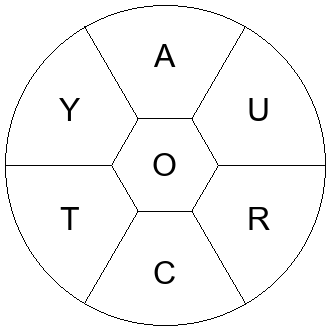
The official answers for today's puzzle are:

Click on the arrow to show the definition.
Click outside the pop-up to close it.


Number of Pangrams: 2

Maximum Puzzle Score: 248

Number of Answers: 56

Points Needed for Genius: 174

Genius requires between 24 and 49 words. You need at least a 7-letter word to reach genius. If you don't get the pangrams, you need 80% of the total points to reach genius. If you get the pangrams, you only need 66% of the remaining points to reach genius.

Other days with this pangram:

The button below will reveal a chart with the number of words by each letter. Red bars indicate that there is a pangram(s) starting with that letter.


How does this puzzle compare to other puzzles?

Today's score of 248 was in the 82nd percentile of all puzzles.
The last time there was a score this high was on November 29, 2025.
The highest score ever was 537 on January 22, 2021.
The lowest score ever was 47 on March 27, 2023.

This puzzle's 56 possible answers rank it in the 86th percentile of all puzzles.
The last time there were more answers than this was on November 29, 2025.
The highest number of answers was 81 on June 8, 2019.
The lowest number of answers was 16 on March 27, 2023.

It takes a 7-letter word for genius.
The last time this happened was on December 4, 2025.

Today's puzzle has an average word length of 5.4.
For all Bees, the average word length has been 5.3.


Haven't I seen these letters before?

Hover over a letter to see its first and most recent appearance in the Bee!


Haven't I seen these words before?

The most common words in the Bee are:

  • noon 225
  • loll 208
  • toot 203
  • naan 185
  • nana 185
  • lilt 148
  • till 148
  • tilt 148
  • nene 145
  • tint 144
  • mama 141
  • mamma 141
  • onion 136
  • onto 135
  • toon 135
  • acacia 134
  • acai 134
  • anal 126
  • anon 126
  • olio 122
  • dodo 120
  • tact 118
  • baba 116
  • boob 116
  • booboo 116
  • papa 116
  • poop 115
  • lull 114
  • lulu 114
  • cocci 112
  • mitt 112
  • mono 112
  • moon 112
  • call 111
  • calla 111
  • ratatat 109
  • tart 109
  • tartar 109
  • tutu 109
  • attar 108
  • loon 108
  • allay 107
  • ally 107
  • ammo 107
  • momma 107
  • tattoo 107
  • tatty 106
  • roar 104
  • epee 103
  • meme 103


How long are words in the Bee?

There have been 110,473 answers ever accepted in the Bee - with 10,873 unique words.
Below are the distributions of the lengths of these words.


Valid dictionary words not in today's official answers

You may be wondering why these words aren't here*:

  • acro
  • carroty
  • carrycot
  • coact
  • coactor
  • coco
  • cocurator
  • coocoo
  • cory
  • cotta
  • cottar
  • coyau
  • cruor
  • cuatro
  • curacoa
  • oracy
  • orra
  • ottar
  • otto
  • outa
  • outact
  • outroar
  • outroot
  • outta
  • outtrot
  • rato
  • rooty
  • rota
  • roto
  • ryot
  • taroc
  • tatouay
  • toco
  • tora
  • torc
  • torot
  • torr
  • tory
  • totty
  • touraco
  • toyo
  • trocar
  • trou
  • trouty
  • turaco
  • turacou

*Because the New York Times considers them obscure or offensive.

actor

noun
  1. A person who performs, plays a part in a theatrical play or film.
  2. One who acts; a doer.
  3. One who takes part in a situation.
  4. An advocate or proctor in civil courts or causes.
  5. One who institutes a suit; plaintiff or complainant.
  6. (policy debate) One who enacts a certain policy action.
  7. The entity that performs a role (in use case analysis).
  8. (grammar) The most agent-like argument of a clause, e.g. 'the torpedo' in "The torpedo sank the boat" and "The torpedo fired".

actuator

noun
  1. Something that actuates something else, especially a usually electric device that causes a mechanical device (i.e. a mechanism) to be switched on or off, for example an electric motor that opens and closes a valve
  2. The mechanism that moves the head assembly on a disk drive
  3. A relay that controls the flow of electricity

aorta

noun
  1. The great artery which carries the blood from the heart to all parts of the body except the lungs; the main trunk of the arterial system.
  2. The liveliest part of something.

arco

adverb
  1. A note in string instrument musical notation indicating that the bow is to be used in the usual way, usually following a passage that is played pizzicato.

arroyo

noun
  1. A dry creek or streambed, a gulch which temporarily or seasonally fills and flows (after sufficient rain).
  2. Any watercourse; any rivulet (whether it flows year-round or only seasonally).

attractor

No Definition Found.

aurora

noun
  1. An atmospheric phenomenon created by charged particles from the sun striking the upper atmosphere, creating coloured lights in the sky. It is usually named australis or borealis based on whether it is in the Southern or Northern Hemisphere respectively.

auto

Etymology 1

noun
  1. An automobile.
  2. A setting for automatic operation.
  3. An automatic gearbox / transmission.
  4. A car with an automatic gearbox / transmission.
verb
  1. To travel by automobile.
adjective
  1. Capable of operating without external control or intervention.
  2. Done out of habit or without conscious thought.
  3. Necessary, inevitable, prescribed by logic, law, etc.
  4. (of a firearm such as a machine gun) Firing continuously as long as the trigger is pressed until ammunition is exhausted.
  5. (of a handgun) An autoloader; a semi-automatic or self-loading pistol, as opposed to a revolver or other manually actuated handgun, which fires one shot per pull of the trigger; distinct from machine guns.
  6. (of a local variable) Automatically added to and removed from the stack during the course of function calls.
  7. (of a group) Having one or more finite-state automata

Etymology 2

noun
  1. An autorickshaw.

autocracy

noun
  1. A form of government in which unlimited power is held by a single individual.
  2. An instance of this government.

autocrat

noun
  1. An absolute ruler with infinite power.
  2. A title borne by some such monarchs, as in Byzantium and tsarist Russia.

cacao

noun
  1. A tree, Theobroma cacao, whose seed is used to make chocolate.
  2. This tree's seed, the cocoa bean.

carrot

noun
  1. A vegetable with a nutritious, juicy, sweet root that is often orange in colour, Daucus carota, especially the subspecies sativus in the family Apiaceae.
  2. A shade of orange similar to the flesh of most carrots (also called carrot orange).
  3. Any motivational tool.
verb
  1. To treat (an animal pelt) with a solution of mercuric nitrate as part of felt manufacture.

carryout

noun
  1. Food that is intended to be eaten outside the establishment from which it is bought.
  2. An establishment that prepares and sells food to be taken away on demand; a takeaway.

coat

noun
  1. An outer garment covering the upper torso and arms.Wp
  2. A covering of material, such as paint.Wp
  3. The fur or feathers covering an animal's skin.Wp
  4. Canvas painted with thick tar and secured round a mast or bowsprit to prevent water running down the sides into the hold (now made of rubber or leather).
  5. A petticoat.
  6. The habit or vesture of an order of men, indicating the order or office; cloth.
  7. A coat of arms.Wp
  8. A coat card.
verb
  1. To cover with a coating of some material.
  2. To cover like a coat.
  3. To clothe.

coca

Etymology 1

noun
  1. Any of the four cultivated plants which belong to the family Erythroxylaceae, native to western South America.
  2. The dried leaf of one of these plants, the South American shrub (Erythroxylum coca), widely cultivated in Andean countries, which is the source of cocaine.

Etymology 2

noun
  1. A pastry typically made and consumed in the Spanish Mediterranean coast.

cocoa

Etymology 1

noun
  1. The dried and partially fermented fatty seeds of the cacao tree from which chocolate is made.
  2. An unsweetened brown powder made from roasted, ground cocoa beans, used in making chocolate, and in cooking.
  3. A hot drink made with milk, cocoa powder, and sugar.
  4. A serving of this drink.
  5. A light to medium brown colour.
adjective
  1. Of a light to medium brown colour, like that of cocoa powder.

Etymology 2

noun
  1. Coconut palm.
  2. Coconut, the fruit of the coconut palm.

coot

noun
  1. Any of various aquatic birds of the genus Fulica that are mainly black with a prominent frontal shield on the forehead.
  2. A foolish or eccentric fellow
  3. (with the) A success; something excellent.
  4. Body louse (Pediculus humanus).

court

noun
  1. An enclosed space; a courtyard; an uncovered area shut in by the walls of a building, or by different buildings; also, a space opening from a street and nearly surrounded by houses; a blind alley.
  2. (social) Royal society.
  3. Attention directed to a person in power; behaviour designed to gain favor; politeness of manner; civility towards someone
  4. The administration of law.
  5. A place arranged for playing the games of tennis, basketball, squash, badminton, volleyball and some other games
verb
  1. To seek to achieve or win.
  2. To risk (a consequence, usually negative).
  3. To try to win a commitment to marry from.
  4. To engage in behavior leading to mating.
  5. To attempt to attract.
  6. To attempt to gain alliance with.
  7. To engage in activities intended to win someone's affections.
  8. To engage in courtship behavior.
  9. To invite by attractions; to allure; to attract.

croc

Etymology 1

noun
  1. A crocodile.

Etymology 2

noun
  1. A plastic slip-on shoe.

curacao

noun
  1. A liqueur, made from eau-de-vie, sugar and, as flavor, dried peel of sweet and sour oranges.

curator

noun
  1. A person who manages, administers or organizes a collection, either independently or employed by a museum, library, archive or zoo.
  2. One appointed to act as guardian of the estate of a person not legally competent to manage it, or of an absentee; a trustee.
  3. A member of a curatorium, a board for electing university professors, etc.

cutout

noun
  1. A hole or space produced when something is removed by cutting.
  2. A piece cut out of something.
  3. A trusted middleman or intermediary, especially in espionage.
  4. Clip art.
  5. Any of several devices that halts the flow of a current, especially an electric current; a trip-switch or trip.
  6. A switch that changes the current from one circuit to another, or for shortening a circuit.
  7. A railway cutting.
  8. The separation of a group of cattle from a herd; the place where they are collected.

oaty

No Definition Found.

occur

verb
  1. To happen or take place.
  2. To present or offer itself.
  3. To come or be presented to the mind; to suggest itself.
  4. To be present or found.

orator

noun
  1. Someone who orates or delivers an oration.
  2. A skilled and eloquent public speaker.

oratory

Etymology 1

noun
  1. A private chapel or prayer room.
  2. A large Roman Catholic church.

Etymology 2

noun
  1. The art of public speaking, especially in a formal, expressive, or forceful manner.
  2. Eloquence; the quality of artistry and persuasiveness in speech or writing.

orca

noun
  1. A sea mammal (Orcinus orca) related to dolphins and porpoises, commonly called the killer whale.

outcry

noun
  1. A loud cry or uproar.
  2. A strong protest.
  3. An auction.
verb
  1. To cry out.
  2. To cry louder than.

outro

noun
  1. A portion of music at the end of a song; like an intro, but at the end instead of the beginning.
  2. The closing sequence at the end of a film, television program, video game etc.

roar

noun
  1. A long, loud, deep shout, as of rage or laughter, made with the mouth wide open.
  2. The cry of the lion.
  3. The deep cry of the bull.
  4. A loud resounding noise.
  5. A show of strength or character.
verb
  1. To make a loud, deep cry, especially from pain, anger, or other strong emotion.
  2. To laugh in a particularly loud manner.
  3. Of animals (especially the lion), to make a loud deep noise.
  4. Generally, of inanimate objects etc., to make a loud resounding noise.
  5. To proceed vigorously.
  6. To cry aloud; to proclaim loudly.
  7. To be boisterous; to be disorderly.
  8. To make a loud noise in breathing, as horses do when they have a certain disease.
  9. (North Midlands) to cry

rococo

noun
  1. A style of baroque architecture and decorative art, from 18th-century France, having elaborate ornamentation.
adjective
  1. Of or relating to the rococo style.
  2. Over-elaborate or complicated; opulent.
  3. Old-fashioned.

root

Etymology 1

noun
  1. The part of a plant, generally underground, that anchors and supports the plant body, absorbs and stores water and nutrients, and in some plants is able to perform vegetative reproduction.
  2. A root vegetable.
  3. The part of a tooth extending into the bone holding the tooth in place.
  4. The part of a hair under the skin that holds the hair in place.
  5. The part of a hair near the skin that has not been dyed, permed, or otherwise treated.
  6. The primary source; origin.
  7. Of a number or expression, a number which, when raised to a specified power, yields the specified number or expression.
  8. A square root (understood if no power is specified; in which case, “the root of” is often abbreviated to “root”).
  9. A zero (of an equation).
  10. The single node of a tree that has no parent.
  11. The primary lexical unit of a word, which carries the most significant aspects of semantic content and cannot be reduced into smaller constituents. Inflectional stems often derive from roots.
  12. (philology) A word from which another word or words are derived.
  13. The fundamental tone of any chord; the tone from whose harmonics, or overtones, a chord is composed.
  14. The lowest place, position, or part.
  15. In UNIX terminology, the first user account with complete access to the operating system and its configuration, found at the root of the directory structure; the person who manages accounts on a UNIX system.
  16. The highest directory of a directory structure which may contain both files and subdirectories.
  17. A penis, especially the base of a penis.
verb
  1. To grow roots; to enter the earth, as roots; to take root and begin to grow.
  2. To prepare, oversee, or otherwise cause the rooting of cuttings
  3. To be firmly fixed; to be established.
  4. To get root or priviledged access on a computer system or mobile phone, often through bypassing some security mechanism.

Etymology 2

noun
  1. An act of sexual intercourse.
  2. A sexual partner.
verb
  1. To turn up or dig with the snout.
  2. (by extension) To seek favour or advancement by low arts or grovelling servility; to fawn.
  3. To rummage; to search as if by digging in soil.
  4. To root out; to abolish.
  5. To have sexual intercourse.

Etymology 3

verb
  1. (with "for" or "on") To cheer (on); to show support (for) and hope for the success of. (See root for.)

rotary

noun
  1. A traffic circle.
  2. (chiefly with initial capital) Any of the clubs making up the international Rotary International movement for community service.
adjective
  1. Capable of rotation.

rotator

noun
  1. One who or that which rotates.
  2. A muscle by which a joint can be rotated.
  3. A revolving reverberatory furnace.
  4. A banner ad that cycles through multiple advertisements.

rotatory

No Definition Found.

rotor

noun
  1. A rotating part of a mechanical device, for example in an electric motor, generator, alternator or pump.
  2. The wing of a helicopter or similar aircraft.
  3. A quantity having magnitude, direction and position.

rout

Etymology 1

noun
  1. A noise, especially a loud one
  2. A disturbance; tumult.
  3. Snoring.
verb
  1. To make a noise; roar; bellow; snort.
  2. To snore, especially loudly.
  3. To belch.
  4. To howl as the wind; make a roaring noise.

Etymology 2

noun
  1. A violent movement; a great or violent stir; a heavy blow; a stunning blow; a stroke.
verb
  1. To beat; strike; assail with blows.

Etymology 3

noun
  1. A troop or group, especially of a traveling company or throng.
  2. A disorderly and tumultuous crowd; a mob; hence, the rabble; the herd of common people.
  3. The state of being disorganized and thrown into confusion, especially when retreating from a fight.
  4. The act of defeating and breaking up an army or another opponent.
  5. A disturbance of the peace by persons assembled together with the intent to do a thing which, if executed, would make them rioters, and actually making a motion toward the executing thereof.
  6. A fashionable assembly, or large evening party.
verb
  1. To defeat completely, forcing into disorderly retreat.
  2. To retreat from a confrontation in disorder.
  3. To assemble in a crowd, whether orderly or disorderly; to collect in company.

Etymology 4

verb
  1. To search or root in the ground, like a pig.
  2. To scoop out with a gouge or other tool; to furrow.
  3. To use a router in woodworking.

Etymology 5

noun
  1. The brent goose.

taco

noun
  1. A Mexican snack food; a small tortilla (soft or hard shelled), with typically some type of meat, rice, beans, cheese, diced vegetables (usually tomatoes and lettuce, as served in the United States, and cilantro, onion, and avocado, as served in México) and salsa.
  2. The vulva.
  3. A yellow stain on a shirt armpit caused by sweat or deodorant.
verb
  1. To fold or cause to buckle in half, similar to the way a taco is folded.

taro

noun
  1. Colocasia esculenta, raised as a food primarily for its corm, which distantly resembles potato.
  2. Any of several other species with similar corms and growth habit in Colocasia, Alocasia etc.
  3. Food from a taro plant.

tarot

noun
  1. (singular or plural) A card game played in various different variations.
  2. Any of the set of 78 playing cards (divided into five suits, including one of permanent trumps), often used for mystical divination.

tattoo

Etymology 1

noun
  1. An image made in the skin with ink and a needle.
  2. A method of decorating the skin by inserting colored substances under the surface with a sharp instrument (usually a solenoid-driven needle).
verb
  1. To apply a tattoo to (someone or something).
  2. To hit the ball hard, as if to figuratively leave a tattoo on the ball.

Etymology 2

noun
  1. A signal played five minutes before taps (lights out).
  2. A signal by drum or bugle ordering soldiers to return to their quarters.
  3. A military display or pageant.
verb
  1. To tap rhythmically on, to drum.

Etymology 3

noun
  1. A breed of pony from India; a pony of that breed.

toccata

noun
  1. A piece of music (usually for a keyboard instrument) designed to emphasise the dexterity of the performer.

toot

Etymology 1

noun
  1. The noise of a horn or whistle.
  2. (by extension) A fart; flatus.
  3. Cocaine.
  4. A portion of cocaine that a person snorts.
  5. A spree of drunkness.
  6. (pronounced /tʊt/) Rubbish; tat.
  7. A message on the social networking software Mastodon.
verb
  1. To stand out, or be prominent.
  2. To peep; to look narrowly.
  3. To see; to spy.
  4. To flatulate.
  5. To make the sound of a horn or whistle.
  6. To cause a horn or whistle to make its sound.
  7. To go on a drinking binge.
  8. To snort (a recreational drug).
  9. To post a message on a Mastodon instance (a self-hosted version of the networking software).

Etymology 2

noun
  1. A toilet.

toro

Etymology 1

noun
  1. A traditional Japanese lantern.

Etymology 2

noun
  1. Rapanea salicina, a species of shrub or small tree native to New Zealand.

tort

Etymology 1

noun
  1. An injury or wrong.
  2. A wrongful act, whether intentional or negligent, which causes an injury and can be remedied in civil court, usually through the awarding of damages.
  3. (only in the plural torts) Tort law (the area of law dealing with such wrongful acts).

Etymology 2

adjective
  1. Tart; sharp.

Etymology 3

adjective
  1. Stretched tight; taut.

Etymology 4

noun
  1. A tortoise.

Etymology 5

noun
  1. A tortoiseshell (animal with coloured markings on fur).

torta

noun
  1. A sandwich, served either hot or cold, on an oblong white sandwich roll, derived from Mexican cuisine
  2. A Philippine omelette of ground meat and potatoes.
  3. A flat heap of moist, crushed silver ore, prepared for the patio process.

tour

Etymology 1

noun
  1. A journey through a particular building, estate, country, etc.
  2. A guided visit to a particular place, or virtual place.
  3. A journey through a given list of places, such as by an entertainer performing concerts.
  4. A trip taken to another country in which several matches are played.
  5. A street and road race, frequently multiday.
  6. A set of competitions which make up a championship.
  7. A tour of duty.
  8. A closed trail.
  9. A going round; a circuit.
  10. A turn; a revolution.
verb
  1. To make a journey
  2. To make a circuit of a place

Etymology 2

noun
  1. A tower.

Etymology 3

verb
  1. To toot a horn.

tout

Etymology 1

noun
  1. Someone advertising for customers in an aggressive way.
  2. A person, at a racecourse, who offers supposedly inside information on which horse is likely to win.
  3. A spy for a smuggler, thief, or similar.
  4. An informer in the Irish Republican Army.
verb
  1. To flaunt, to publicize/publicise; to boast or brag; to promote.
  2. To look upon or watch.
  3. To spy out information about (a horse, a racing stable, etc.).
  4. To give a tip on (a racehorse) to a person, with the expectation of sharing in any winnings.
  5. To spy out the movements of racehorses at their trials, or to get by stealth or other improper means the secrets of the stable, for betting purposes.
  6. To act as a tout; to give a tip on a racehorse.
  7. To look for, try to obtain; used with for.

Etymology 2

noun
  1. In the game of solo, a proposal to win all eight tricks.

tractor

noun
  1. A vehicle used in farms e.g. for pulling farm equipment and preparing the fields.
  2. A truck (or lorry) for pulling a semi-trailer or trailer.
  3. Any piece of machinery that pulls something.
  4. An airplane where the propeller is located in front of the fuselage
  5. (rail transportation) A British Rail Class 37 locomotive.
  6. A metal rod used in tractoration, or Perkinism.
verb
  1. To prepare (land) with a tractor.
  2. To move with a tractor beam.
  3. To treat by means of tractoration, or Perkinism.

trot

Etymology 1

noun
  1. Any of several animals related to Equus ferus caballus.
  2. Equipment with legs.
  3. Type of equipment.
  4. A mass of earthy matter, or rock of the same character as the wall rock, occurring in the course of a vein, as of coal or ore; hence, to take horse (said of a vein) is to divide into branches for a distance.
  5. The sedative, antidepressant, and anxiolytic drug morphine, chiefly when used illicitly.
  6. An informal variant of basketball in which players match shots made by their opponent(s), each miss adding a letter to the word "horse", with 5 misses spelling the whole word and eliminating a player, until only the winner is left. Also HORSE, H-O-R-S-E or H.O.R.S.E. (see Variations of basketball#H-O-R-S-E).
  7. (among students) A translation or other illegitimate aid in study or examination.
  8. (among students) horseplay; tomfoolery
noun
  1. Heroin (drug).
noun
  1. An ugly old woman, a hag.
  2. (chiefly of horses) A gait of a four-legged animal between walk and canter, a diagonal gait (in which diagonally opposite pairs of legs move together).
  3. A gait of a person or animal faster than a walk but slower than a run.
  4. A brisk journey or progression.
  5. A toddler.
  6. A young animal.
  7. A moderately rapid dance.
  8. A succession of heads thrown in a game of two-up.
  9. (with "good" or "bad") A run of luck or fortune.
  10. (as 'the trots') Diarrhoea.
verb
  1. To move along briskly; specifically, to move at a pace between a walk and a run.
  2. (of a horse) To move at a gait between a walk and a canter.
  3. To cause to move, as a horse or other animal, in the pace called a trot; to cause to run without galloping or cantering.

Etymology 2

noun
  1. A genre of Korean pop music employing repetitive rhythm and vocal inflections.

Etymology 3

noun
  1. A supporter of Trotskyism.

trout

noun
  1. Any of several species of fish in Salmonidae, closely related to salmon, and distinguished by spawning more than once.
  2. An objectionable elderly woman.
verb
  1. To (figuratively) slap someone with a slimy, stinky, wet trout; to admonish jocularly.

troy

adjective
  1. Of, or relating to, troy weight.

tryout

noun
  1. A test of the suitability or effectiveness of a person or thing, especially of a performer or athlete (an audition)

tutor

noun
  1. One who teaches another (usually called a student, learner, or tutee) in a one-on-one or small-group interaction.
  2. A university officer responsible for students in a particular hall.
  3. One who has the charge of a child or pupil and his estate; a guardian.
  4. (trading card games) A card that allows you to search your deck for one or more other cards.
verb
  1. To instruct or teach, especially an individual or small group.
  2. To treat with authority or sternness.

tyro

noun
  1. A beginner; a novice.

your

No Definition Found.