Friday, December 12, 2025

Answers to yesterday's Bee

Jump to answers for


The official answers for today's puzzle are:

Click on the arrow to show the definition.
Click outside the pop-up to close it.


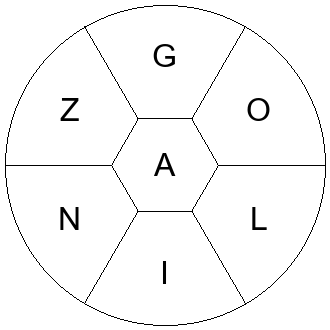
Number of Pangrams: 2

Maximum Puzzle Score: 334

Number of Answers: 62

Points Needed for Genius: 234

Genius requires between 30 and 53 words. You need at least a 7-letter word to reach genius. If you don't get the pangrams, you need 78% of the total points to reach genius. If you get the pangrams, you only need 67% of the remaining points to reach genius.

Other days with this pangram:

The button below will reveal a chart with the number of words by each letter. Red bars indicate that there is a pangram(s) starting with that letter.


How does this puzzle compare to other puzzles?

Today's score of 334 was in the 97th percentile of all puzzles.
The last time there was a score this high was on November 27, 2025.
The highest score ever was 537 on January 22, 2021.
The lowest score ever was 47 on March 27, 2023.

This puzzle's 62 possible answers rank it in the 93rd percentile of all puzzles.
The last time there were more answers than this was on November 29, 2025.
The highest number of answers was 81 on June 8, 2019.
The lowest number of answers was 16 on March 27, 2023.

It takes a 7-letter word for genius.
The last time this happened was on December 10, 2025.

Today's puzzle has an average word length of 5.9.
For all Bees, the average word length has been 5.3.


Haven't I seen these letters before?

Hover over a letter to see its first and most recent appearance in the Bee!


Haven't I seen these words before?

The most common words in the Bee are:

  • noon 225
  • loll 209
  • toot 203
  • naan 186
  • nana 186
  • lilt 149
  • till 149
  • tilt 149
  • nene 145
  • tint 144
  • mama 141
  • mamma 141
  • onion 136
  • onto 135
  • toon 135
  • acacia 134
  • acai 134
  • anal 128
  • anon 127
  • olio 122
  • dodo 120
  • tact 118
  • baba 117
  • papa 117
  • boob 116
  • booboo 116
  • poop 115
  • lull 114
  • lulu 114
  • call 112
  • calla 112
  • cocci 112
  • mitt 112
  • mono 112
  • moon 112
  • loon 109
  • ratatat 109
  • tart 109
  • tartar 109
  • tutu 109
  • allay 108
  • ally 108
  • attar 108
  • ammo 107
  • momma 107
  • tattoo 107
  • tatty 106
  • roar 104
  • epee 103
  • meme 103


How long are words in the Bee?

There have been 110,745 answers ever accepted in the Bee - with 10,875 unique words.
Below are the distributions of the lengths of these words.


Valid dictionary words not in today's official answers

You may be wondering why these words aren't here*:

  • aalii
  • agin
  • agio
  • agloo
  • agnail
  • agnizing
  • agon
  • agonal
  • alan
  • alang
  • alanin
  • algin
  • algolagnia
  • alining
  • aloin
  • analgia
  • anga
  • anginal
  • anglo
  • anil
  • anilin
  • anna
  • annona
  • anoa
  • azan
  • azlon
  • azon
  • azonal
  • gaggling
  • gaging
  • galago
  • galanga
  • galing
  • galloon
  • ganglial
  • gaol
  • gaoling
  • gazania
  • gazoo
  • giga
  • gingal
  • gingall
  • glial
  • goaling
  • goanna
  • gonia
  • ilia
  • ilial
  • inia
  • lagan
  • lagoonal
  • lall
  • lallan
  • lalling
  • lang
  • laogai
  • liana
  • liang
  • ligan
  • lignan
  • linalol
  • linalool
  • linga
  • logan
  • logania
  • logia
  • naga
  • nagana
  • nala
  • nanna
  • nano
  • naoi
  • nazi
  • nilgai
  • nona
  • olla
  • oogonia
  • oogonial
  • zanana
  • zanza
  • zingani
  • zingano
  • zona
  • zoonal

*Because the New York Times considers them obscure or offensive.

again

adverb
  1. Another time; once more.
  2. Over and above a factor of one.
  3. Used metalinguistically, with the repetition being in the discussion, or in the linguistic or pragmatic context of the discussion, rather than in the subject of discussion.
  4. Back in the reverse direction, or to an original starting point.
  5. Back (to a former place or state).
  6. In return, as a reciprocal action; back.
  7. In any other place.
  8. On the other hand.
  9. Moreover; besides; further.
preposition
  1. (obsolete or dialectal) Against.

aging

verb
  1. To cause to grow old; to impart the characteristics of age to.
  2. To postpone an action that would extinguish something, as a debt.
  3. To categorize by age.
  4. To grow aged; to become old; to show marks of age.
noun
  1. The process of becoming older or more mature.
  2. The deliberate process of making something (such as an antique) appear (or, in science fiction, become) older than it is.
  3. Becoming senescent; accumulating damage to macromolecules, cells, tissues and organs with the passage of time; progressing loss of health, mobility, vibrancy and body functionality, resulting in biological death.
  4. Wear, wear and tear.
adjective
  1. Becoming elderly.

agog

adjective
  1. In eager desire, eager, astir.
  2. (chiefly of eyes) Wide open.
adverb
  1. In a state of high anticipation, excitement, or interest.

agonizing

verb
  1. To writhe with agony; to suffer violent anguish.
  2. To struggle; to wrestle; to strive desperately, whether mentally or physically.
noun
  1. The act of one who agonizes.
adjective
  1. Causing physical or mental agony.

ailing

verb
  1. To cause to suffer; to trouble, afflict. (Now chiefly in interrogative or indefinite constructions.)
  2. To be ill; to suffer; to be troubled.
noun
  1. An ailment.
adjective
  1. Sickly; sick; ill; unwell.

aioli

noun
  1. A type of sauce, similar to mayonnaise, made from garlic, egg, lemon juice and olive oil.

alga

noun
  1. Any of many aquatic photosynthetic organisms, including the seaweeds, whose size ranges from a single cell to giant kelps and whose biochemistry and forms are very diverse, some being eukaryotic.

algal

noun
  1. An alga.
adjective
  1. Pertaining to, or like, algae

align

verb
  1. To form a line; to fall into line.
  2. To adjust or form to a line; to range or form in line; to bring into line.
  3. To store (data) in a way that is consistent with the memory architecture, i.e. by beginning each item at an offset equal to some multiple of the word size.
  4. To identify with or match the behaviour, thoughts, etc of another person.
  5. To organize a linear arrangement of DNA, RNA or protein sequences which have regions of similarity.

aligning

verb
  1. To form a line; to fall into line.
  2. To adjust or form to a line; to range or form in line; to bring into line.
  3. To store (data) in a way that is consistent with the memory architecture, i.e. by beginning each item at an offset equal to some multiple of the word size.
  4. To identify with or match the behaviour, thoughts, etc of another person.
  5. To organize a linear arrangement of DNA, RNA or protein sequences which have regions of similarity.

along

adverb
  1. In company; together.
  2. Onward, forward, with progressive action.
preposition
  1. By the length of; in a line with the length of; lengthwise next to.
  2. In a line with, with a progressive motion on; onward on; forward on.

anal

noun
  1. Any of the anal scales of a reptile.
  2. Anal sex.
adjective
  1. Of, related to, intended for or involving the anus.
  2. Of the stage in psychosexual development when the child's interest is alleged to be concentrated on the anal region.
  3. Of a person, compulsive and stubborn, obsessed with neatness and accuracy, supposedly from not having progressed beyond the anal stage.
  4. (of a vein) Proximate to the thorax.

analog

noun
  1. Something that bears an analogy to something else
  2. An organ or structure that is similar in function to one in another kind of organism but is of dissimilar evolutionary origin
  3. A structural derivative of a parent compound that often differs from it by a single element
adjective
  1. (of a device or system) in which the value of a data item (such as time) is represented by a continuous(ly) variable physical quantity that can be measured (such as the shadow of a sundial)

analogizing

verb
  1. To express as an analogy.
  2. To treat one thing as analogous to another.
noun
  1. The drawing of an analogy.

angina

noun
  1. An inflammatory infection of the throat, particularly quinsy.
  2. Short for angina pectoris.
  3. A chest pain or shortness of breath occurring with lesser degrees of arterial blockage.

angling

verb
  1. (often in the passive) To place (something) at an angle.
  2. To change direction rapidly.
  3. To present or argue something in a particular way or from a particular viewpoint.
  4. (cue sports) To hamper (oneself or one's opponent) by leaving the cue ball in the jaws of a pocket such that the surround of the pocket (the "angle") blocks the path from cue ball to object ball.
verb
  1. To try to catch fish with a hook and line.
  2. (with for) To attempt to subtly persuade someone to offer a desired thing.
noun
  1. A form of fishing, with a rod, line and angle (hook) for recreation or sport.

anion

noun
  1. A negatively charged ion.

annal

noun
  1. The record of a single event or item.

anon

Etymology 1

adverb
  1. Straight away; at once.
  2. Soon; in a little while.
  3. At another time; then; again.

Etymology 2

noun
  1. An anonymous person, especially an author.
  2. A work with an unknown author.
  3. A work without a title.
adjective
  1. Anonymous

gaga

Etymology 1

adjective
  1. Mentally senile.
  2. Crazy.
  3. Infatuated.

Etymology 2

noun
  1. A variant of dodgeball played inside a fenced area, usually a hexagon or octagon.

gagging

verb
  1. To experience the vomiting reflex.
  2. To cause to heave with nausea.
  3. To restrain someone's speech by blocking his or her mouth.
  4. To pry or hold open by means of a gag.
  5. To restrain someone's speech without using physical means.
  6. To choke; to retch.
  7. To deceive (someone); to con.
noun
  1. A gag motion or reflex.

gain

Etymology 1

noun
  1. The act of gaining; acquisition.
  2. What is gained.
  3. The factor by which a signal is multiplied.
verb
  1. To acquire possession of.
  2. To have or receive advantage or profit; to acquire gain; to grow rich; to advance in interest, health, or happiness; to make progress.
  3. To come off winner or victor in; to be successful in; to obtain by competition.
  4. To increase.
  5. To be more likely to catch or overtake an individual.
  6. To reach.
  7. To draw into any interest or party; to win to one's side; to conciliate.
  8. To put on weight.
  9. (of a clock or watch) To run fast.

Etymology 2

preposition
  1. Against.

Etymology 3

adjective
  1. Straight, direct; near; short.
  2. Suitable; convenient; ready.
  3. Easy; tolerable; handy, dexterous.
  4. Honest; respectable; moderate; cheap.
adverb
  1. Straightly; quickly; by the nearest way or means.
  2. Suitably; conveniently; dexterously; moderately.
  3. Tolerably; fairly.

Etymology 4

noun
  1. A square or bevelled notch cut out of a girder, binding joist, or other timber which supports a floor beam, so as to receive the end of the floor beam.

gaining

verb
  1. To acquire possession of.
  2. To have or receive advantage or profit; to acquire gain; to grow rich; to advance in interest, health, or happiness; to make progress.
  3. To come off winner or victor in; to be successful in; to obtain by competition.
  4. To increase.
  5. To be more likely to catch or overtake an individual.
  6. To reach.
  7. To draw into any interest or party; to win to one's side; to conciliate.
  8. To put on weight.
  9. (of a clock or watch) To run fast.
noun
  1. Gain; profit.

gala

Etymology 1

noun
  1. Pomp, show, or festivity.
  2. A showy and festive party.
adjective
  1. Celebratory; festive.

Etymology 2

noun
  1. A member of an androgynous class of priests of the Sumerian goddess Inanna.

galangal

noun
  1. Any of several east Asian plants of genera Alpinia and Kaempferia in the ginger family, used as a spice, but principally Alpinia galanga.

gall

Etymology 1

noun
  1. Bile, especially that of an animal; the greenish, profoundly bitter-tasting fluid found in bile ducts and gall bladders, structures associated with the liver.
  2. The gall bladder.
  3. Great misery or physical suffering, likened to the bitterest-tasting of substances.
  4. A feeling of exasperation.
  5. Impudence or brazenness; temerity, chutzpah.
  6. A sore or open wound caused by chafing, which may become infected, as with a blister.
  7. A sore on a horse caused by an ill-fitted or ill-adjusted saddle; a saddle sore.
  8. A pit on a surface being cut caused by the friction between the two surfaces exceeding the bond of the material at a point.
verb
  1. To bother or trouble.
  2. To harass, to harry, often with the intent to cause injury.
  3. To chafe, to rub or subject to friction; to create a sore on the skin.
  4. To exasperate.
  5. To cause pitting on a surface being cut from the friction between the two surfaces exceeding the bond of the material at a point.
  6. To scoff; to jeer.

Etymology 2

noun
  1. A blister or tumor-like growth found on the surface of plants, caused by burrowing of insect larvae into the living tissues, especially that of the common oak gall wasp Cynips quercusfolii.
  2. A bump-like imperfection resembling a gall.
verb
  1. To impregnate with a decoction of gallnuts in dyeing.

galling

verb
  1. To bother or trouble.
  2. To harass, to harry, often with the intent to cause injury.
  3. To chafe, to rub or subject to friction; to create a sore on the skin.
  4. To exasperate.
  5. To cause pitting on a surface being cut from the friction between the two surfaces exceeding the bond of the material at a point.
  6. To scoff; to jeer.
verb
  1. To impregnate with a decoction of gallnuts in dyeing.
noun
  1. Wear caused by adhesion between sliding surfaces.
adjective
  1. Vexing, humiliating

gallon

noun
  1. A unit of volume, equivalent to eight pints
  2. Exactly 4.54609 liters; an imperial gallon
  3. 231 cubic inches or approximately 3.785 liters for liquids (a "U.S. liquid gallon")
  4. One-eighth of a U.S. bushel or approximately 4.405 liters for dry goods (a "U.S. dry gallon").
  5. (in the plural) A large quantity (of any liquid).

gang

Etymology 1

verb
  1. To go; walk; proceed.

Etymology 2

noun
  1. A number going in company; a number of friends or persons associated for a particular purpose.
  2. A group of laborers under one foreman; a squad.
  3. A criminal group with a common cultural background and identifying features, often associated with a particular section of a city.
  4. A group of criminals or alleged criminals who band together for mutual protection and profit.
  5. A group of politicians united in furtherance of a political goal.
  6. A chain gang.
  7. A combination of similar tools or implements arranged so as, by acting together, to save time or labor; a set.
  8. A set; all required for an outfit.
  9. (electrics) A number of switches or other electrical devices wired into one unit and covered by one faceplate.
  10. (electrics) A group of wires attached as a bundle.
  11. A going, journey; a course, path, track.
  12. An outhouse: an outbuilding used as a lavatory.
verb
  1. To attach similar items together to form a larger unit.

Etymology 3

verb
  1. (obsolete outside Northumbria) To go.

Etymology 4

verb
  1. To participate in a gangbang.
  2. To beat one or a smaller amount of people as a gang.
  3. To belong to a gang; to commit criminal acts as part of a gang.

Etymology 5

noun
  1. The earthy waste substances occurring in metallic ore.

ganging

verb
  1. To go; walk; proceed.
verb
  1. To attach similar items together to form a larger unit.
verb
  1. To participate in a gangbang.
  2. To beat one or a smaller amount of people as a gang.
  3. To belong to a gang; to commit criminal acts as part of a gang.
noun
  1. A leader used to attach a fishhook to the main line, especially in commercial fishing

ganglia

noun
  1. An encapsulated collection of nerve-cell bodies, located outside the brain and spinal cord.
  2. Any of certain masses of gray matter in the brain, as the basal ganglia.
  3. (by extension) A centre of intellectual or industrial force, activity, etc.
  4. A cystic tumour on a tendon sheath or joint capsule; a ganglion cyst.

gangling

Etymology 1

adjective
  1. Awkwardly tall and thin, ungraceful.

Etymology 2

noun
  1. A member of a gang.

ganglion

noun
  1. An encapsulated collection of nerve-cell bodies, located outside the brain and spinal cord.
  2. Any of certain masses of gray matter in the brain, as the basal ganglia.
  3. (by extension) A centre of intellectual or industrial force, activity, etc.
  4. A cystic tumour on a tendon sheath or joint capsule; a ganglion cyst.

gazillion

noun
  1. An unspecified large number (of).

gazing

verb
  1. To stare intently or earnestly.
  2. To stare at.
noun
  1. The act by which somebody gazes.

glazing

verb
  1. To install windows.
  2. To apply a thin, transparent layer of coating.
  3. To become glazed or glassy.
  4. For eyes to take on an uninterested appearance.
noun
  1. The part of a window or wall made of glass or another transparent material.
  2. All the windows of a building.
  3. The art of covering with a vitreous substance.
  4. Semi-transparent colours painted thinly over others to modify the effect.

glia

noun
  1. The network of glial cells that supports nervous system tissue.

goal

noun
  1. A result that one is attempting to achieve.
  2. In many sports, an area into which the players attempt to put an object.
  3. The act of placing the object into the goal.
  4. A point scored in a game as a result of placing the object into the goal.
  5. A noun or noun phrase that receives the action of a verb. The subject of a passive verb or the direct object of an active verb. Also called a patient, target, or undergoer.
verb
  1. To score a goal.

lagging

verb
  1. To fail to keep up (the pace), to fall behind
  2. To cover (for example, pipes) with felt strips or similar material (referring to a time lag effect in thermal transfer)
  3. To transport as a punishment for crime.
  4. To cause to lag; to slacken.
noun
  1. The covering of something with strips of felt, wood etc, either as insulation or for protection.
  2. The material so used.
  3. A prison sentence.
adjective
  1. Falling behind, not keeping up the pace
  2. Occurring after; indicating the later phase of

lagoon

noun
  1. A shallow body of water separated from deeper sea by a bar.

lain

Etymology 1

verb
  1. To rest in a horizontal position on a surface.
  2. To be placed or situated.
  3. To abide; to remain for a longer or shorter time; to be in a certain state or condition.
  4. Used with in: to be or exist; to belong or pertain; to have an abiding place; to consist.
  5. Used with with: to have sexual relations with.
  6. Used with on/upon: to be incumbent (on); to be the responsibility of a person.
  7. To lodge; to sleep.
  8. To be still or quiet, like one lying down to rest.
  9. To be sustainable; to be capable of being maintained.

Etymology 2

verb
  1. To conceal, keep quiet about.

lanai

noun
  1. (Florida) A Hawaiian-style roofed patio.

lanolin

noun
  1. A greasy yellow substance chemically akin to wax that is secreted from wooly animals, with a variety of uses from rust prevention, lubrication and waterproofing to cosmetics and skin ointments.

lazing

verb
  1. To be lazy, waste time.
  2. To pass time relaxing; to relax, lounge.

llano

noun
  1. A plain or steppe in parts of Latin America.

loan

Etymology 1

noun
  1. An act or instance of lending, an act or instance of granting something for temporary use.
  2. A sum of money or other property that a natural or legal person borrows from another with the condition that it be returned or repaid over time or at a later date (sometimes with interest).
  3. The contract and array of legal or ethical obligations surrounding a loan.
  4. The permission to borrow any item.
verb
  1. To lend (something) to (someone).

Etymology 2

noun
  1. A lonnen.

loaning

Etymology 1

verb
  1. To lend (something) to (someone).
noun
  1. The action of, or an instance of the action of the verb to loan.

Etymology 2

noun
  1. (Scottish and Northern English) A lane

loggia

noun
  1. A roofed, open gallery, usually on an upper level.

longan

noun
  1. An evergreen tree, Dimocarpus longan, of the Sapindaceae family, native to southern China.
  2. The fruit from the longan tree.

naan

noun
  1. A type of round, flat bread baked in a tandoor popular in South and Central Asian cuisine.

nagging

verb
  1. To continuously remind or complain to (someone) in an annoying way, often about insignificant or unnecessary matters.
  2. To bother with persistent thoughts or memories.
  3. To bother or disturb persistently in any way.
noun
  1. The action of the verb nag.
adjective
  1. Causing persistent mild pain, or annoyance.

nail

Etymology 1

noun
  1. The thin, horny plate at the ends of fingers and toes on humans and some other animals.
  2. The basal thickened portion of the anterior wings of certain hemiptera.
  3. The terminal horny plate on the beak of ducks, and other allied birds.
  4. The claw of a bird or other animal.
  5. A spike-shaped metal fastener used for joining wood or similar materials. The nail is generally driven through two or more layers of material by means of impacts from a hammer or other device. It is then held in place by friction.
  6. A round pedestal on which merchants once carried out their business, such as the four nails outside The Exchange, Bristol.
  7. An archaic English unit of length equivalent to 1/20 of an ell or 1/16 of a yard (2 1/4 inches or 5.715 cm).

Etymology 2

verb
  1. To fix (an object) to another object using a nail.
  2. To drive a nail.
  3. To stud or boss with nails, or as if with nails.
  4. To catch.
  5. To expose as a sham.
  6. To accomplish (a task) completely and successfully.
  7. To hit (a target) effectively with some weapon.
  8. Of a male, to engage in sexual intercourse with.
  9. To spike, as a cannon.
  10. To nail down: to make certain, or confirm.

nailing

verb
  1. To fix (an object) to another object using a nail.
  2. To drive a nail.
  3. To stud or boss with nails, or as if with nails.
  4. To catch.
  5. To expose as a sham.
  6. To accomplish (a task) completely and successfully.
  7. To hit (a target) effectively with some weapon.
  8. Of a male, to engage in sexual intercourse with.
  9. To spike, as a cannon.
  10. To nail down: to make certain, or confirm.
noun
  1. A mechanical fastening by means of nails.

nana

Etymology 1

noun
  1. A banana
  2. A fool

Etymology 2

noun
  1. (term of endearment) one's grandmother
  2. A nanny

nonagon

noun
  1. A polygon with nine sides and nine angles; an enneagon

nonagonal

No Definition Found.

zagging

verb
  1. To move with a sharp turn or reversal.

zigzag

noun
  1. A line or path that proceeds by sharp turns in alternating directions
  2. One of such sharp turns
verb
  1. To move or to twist in a zigzag manner.
adjective
  1. Moving in, or having a zigzag.
adverb
  1. In a zigzag manner or pattern

zigzagging

verb
  1. To move or to twist in a zigzag manner.
noun
  1. The movement or layout of something that zigzags.
adjective
  1. Winding, twisting, turning or sinuous

zinnia

noun
  1. Any of several brightly coloured flowering plants, of the genus Zinnia, native to tropical America; old maid

zonal

adjective
  1. Divided into zones.
  2. Related to, associated with, or similar to zones.
  3. (of air or ocean currents) roughly longitudinal (east to west, or west to east)

gonna

No Definition Found.