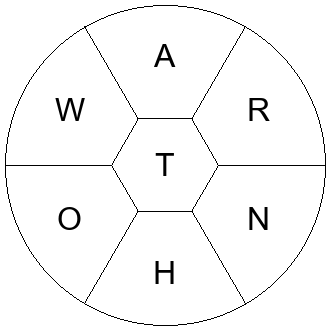
Tuesday, December 16, 2025

Answers to yesterday's Bee

Jump to answers for


The official answers for today's puzzle are:

Click on the arrow to show the definition.
Click outside the pop-up to close it.


Number of Pangrams: 1

Maximum Puzzle Score: 296

Number of Answers: 69

Points Needed for Genius: 207

Genius requires between 31 and 59 words. You need at least a 7-letter word to reach genius. If you don't get the pangram, you need 74% of the total points to reach genius. If you get the pangram, you only need 68% of the remaining points to reach genius.

Other days with this pangram:

The button below will reveal a chart with the number of words by each letter. Red bars indicate that there is a pangram(s) starting with that letter.


How does this puzzle compare to other puzzles?

Today's score of 296 was in the 93rd percentile of all puzzles.
The last time there was a score this high was on December 12, 2025.
The highest score ever was 537 on January 22, 2021.
The lowest score ever was 47 on March 27, 2023.

This puzzle's 69 possible answers rank it in the 98th percentile of all puzzles.
The last time there were more answers than this was on November 29, 2025.
The highest number of answers was 81 on June 8, 2019.
The lowest number of answers was 16 on March 27, 2023.

It takes a 7-letter word for genius.
The last time this happened was on December 15, 2025.

Today's puzzle has an average word length of 5.3.
For all Bees, the average word length has been 5.3.


Haven't I seen these letters before?

Hover over a letter to see its first and most recent appearance in the Bee!


Haven't I seen these words before?

The most common words in the Bee are:

  • noon 225
  • loll 209
  • toot 204
  • naan 186
  • nana 186
  • lilt 149
  • till 149
  • tilt 149
  • nene 145
  • tint 144
  • mama 141
  • mamma 141
  • onion 136
  • onto 136
  • toon 136
  • acacia 134
  • acai 134
  • anal 128
  • anon 127
  • olio 122
  • dodo 120
  • baba 118
  • tact 118
  • papa 117
  • boob 116
  • booboo 116
  • poop 115
  • lull 114
  • lulu 114
  • call 112
  • calla 112
  • cocci 112
  • mitt 112
  • mono 112
  • moon 112
  • ratatat 110
  • tart 110
  • tartar 110
  • tutu 110
  • attar 109
  • loon 109
  • allay 108
  • ally 108
  • tattoo 108
  • ammo 107
  • momma 107
  • tatty 106
  • roar 104
  • epee 103
  • meme 103


How long are words in the Bee?

There have been 110,941 answers ever accepted in the Bee - with 10,875 unique words.
Below are the distributions of the lengths of these words.


Valid dictionary words not in today's official answers

You may be wondering why these words aren't here*:

  • anatto
  • anta
  • anthro
  • antra
  • arnatto
  • arnotto
  • attorn
  • hant
  • hornwort
  • nanowatt
  • natron
  • nota
  • nowt
  • ortho
  • ottar
  • otto
  • ratan
  • rath
  • rato
  • ratoon
  • ratton
  • rattoon
  • rota
  • roto
  • rowth
  • tahr
  • tanto
  • tarn
  • tartana
  • tatar
  • tathata
  • thoro
  • thoron
  • thraw
  • thrawart
  • thrawn
  • thro
  • toothwort
  • tora
  • torot
  • toroth
  • torr
  • trona
  • trow
  • trowth
  • twat
  • whort

*Because the New York Times considers them obscure or offensive.

annatto

noun
  1. A tropical American evergreen shrub, Bixa orellana; the lipstick tree; the fruit of the tree.
  2. The seed of this tree used as a colouring or in Latin American cooking.
  3. An orange-red dye obtained from this seed.

annotator

No Definition Found.

aorta

noun
  1. The great artery which carries the blood from the heart to all parts of the body except the lungs; the main trunk of the arterial system.
  2. The liveliest part of something.

arhat

noun
  1. One who has attained enlightenment; a Buddhist saint.
  2. One of the stages of the ascetic's spiritual evolution, when all passions (anger, ego, deception, greed, attachment, hatred and ignorance) are destroyed; arhanta.

arrant

adjective
  1. Utter; complete (with a negative sense).
adjective
  1. Straying from the proper course or standard, or outside established limits.
  2. Wandering; roving around.
  3. Prone to making errors; misbehaved.
  4. Utter, complete (negative); arrant.

arrowroot

noun
  1. Maranta arundinacea from the Marantaceae family, a large perennial herb native to the Caribbean area with green leaves about 15 centimeters long.
  2. Usually preceded by an attributive word: some other plant the rhizomes of which are used to prepare a substance similar to arrowroot (sense 3), such as Zamia integrifolia (Florida arrowroot) or Pueraria montana var. lobata (Japanese arrowroot or kudzu).
  3. A starchy substance obtained from the rhizomes of an arrowroot plant used as a thickener.

athwart

adverb
  1. From side to side; across.
  2. Across the path (of something).
  3. Wrongly; perplexingly.
preposition
  1. From one side to the other side of.
  2. Across the line of a ship's course or across its deck.
  3. Across the path or course of; opposing.

attar

noun
  1. An essential oil extracted from flowers.
  2. A perfume made from this oil.

hart

Etymology 1

noun
  1. A male deer, especially the male of the red deer after his fifth year.
  2. A red deer or one of related species.

Etymology 2

noun
  1. A muscular organ that pumps blood through the body, traditionally thought to be the seat of emotion.
  2. Emotions, kindness, moral effort, or spirit in general.
  3. The seat of the affections or sensibilities, collectively or separately, as love, hate, joy, grief, courage, etc.; rarely, the seat of the understanding or will; usually in a good sense; personality.
  4. Courage; courageous purpose; spirit.
  5. Vigorous and efficient activity; power of fertile production; condition of the soil, whether good or bad.
  6. A term of affectionate or kindly and familiar address.
  7. Personality, disposition.
  8. A wight or being.
  9. A conventional shape or symbol used to represent the heart, love, or emotion: ♥ or sometimes <3.
  10. A playing card of the suit hearts featuring one or more heart-shaped symbols.
  11. The twenty-fourth Lenormand card.
  12. The centre, essence, or core.

hath

verb
  1. To possess, own.
  2. To hold, as something at someone's disposal.
  3. Used to state the existence or presence of someone in a specified relationship with the subject.
  4. To partake of (a particular substance, especially food or drink, or action or activity).
  5. To be scheduled to attend, undertake or participate in.
  6. To experience, go through, undergo.
  7. To be afflicted with, suffer from.
  8. (auxiliary verb, taking a past participle) Used in forming the perfect aspect.
  9. Used as an interrogative verb before a pronoun to form a tag question, echoing a previous use of 'have' as an auxiliary verb or, in certain cases, main verb. (For further discussion, see the appendix English tag questions.)
  10. (auxiliary verb, taking a to-infinitive) See have to.
  11. To give birth to.
  12. To engage in sexual intercourse with.
  13. To accept as a romantic partner.
  14. (transitive with bare infinitive) To cause to, by a command, request or invitation.
  15. (transitive with adjective or adjective-phrase complement) To cause to be.
  16. (transitive with bare infinitive) To be affected by an occurrence. (Used in supplying a topic that is not a verb argument.)
  17. (transitive with adjective or adjective-phrase complement) To depict as being.
  18. To defeat in a fight; take.
  19. (obsolete outside Ireland) To be able to speak (a language).
  20. To feel or be (especially painfully) aware of.
  21. To trick, to deceive.
  22. (often with present participle) To allow; to tolerate.
  23. (often used in the negative) To believe, buy, be taken in by.
  24. To host someone; to take in as a guest.
  25. To get a reading, measurement, or result from an instrument or calculation.
  26. (of a jury) To consider a court proceeding that has been completed; to begin deliberations on a case.
  27. To make an observation of (a bird species).

hawthorn

noun
  1. Any of various shrubs and small trees of the genus Crataegus having small, apple-like fruits and thorny branches

hoot

noun
  1. A derisive cry or shout.
  2. The cry of an owl.
  3. A fun event or person. (See hootenanny)
  4. A small particle.
verb
  1. To cry out or shout in contempt.
  2. To make the cry of an owl, a hoo.
  3. To assail with contemptuous cries or shouts; to follow with derisive shouts.
  4. To sound the horn of a vehicle

narrator

noun
  1. One who narrates or tells stories.
  2. The person or the "voice" whose viewpoint is used in telling a story.
  3. The person providing the voice-over in a documentary.

natant

adjective
  1. Floating or swimming (in water)
  2. In a horizontal position, as if swimming

nonart

noun
  1. That which is not art

north

noun
  1. One of the four major compass points, specifically 0°, directed toward the North Pole, and conventionally upwards on a map, abbreviated as N.
  2. The up or positive direction.
  3. The positive or north pole of a magnet, which seeks the magnetic pole near Earth's geographic North Pole (which, for its magnetic properties, is a south pole).
verb
  1. To turn or move toward the north.
adjective
  1. Of or pertaining to the north; northern.
  2. Toward the north; northward.
  3. Of wind, from the north.
  4. Pertaining to the part of a corridor used by northbound traffic.
  5. More or greater than.
adverb
  1. Toward the north; northward; northerly.

notator

No Definition Found.

oath

noun
  1. A solemn pledge or promise, appealing to a deity, a ruler, or another entity (not necessarily present) to attest to the truth of a statement or sincerity of one's desire to fulfill a contract or promise.
  2. A statement or promise which is strengthened (affirmed) by such a pledge.
  3. A light, irreverent or insulting appeal to a deity or other entity.
  4. A curse, a curse word.
verb
  1. To pledge.

onto

adjective
  1. (of a function) Assuming each of the values in its codomain; having its range equal to its codomain.
preposition
  1. Upon; on top of.
  2. Aware of.
  3. Being an onto function with a codomain of (see below).

orator

noun
  1. Someone who orates or delivers an oration.
  2. A skilled and eloquent public speaker.

rant

noun
  1. A criticism done by ranting.
  2. A wild, emotional, and sometimes incoherent articulation.
  3. A type of dance step usually performed in clogs, and particularly (but not exclusively) associated with the English North West Morris tradition. The rant step consists of alternately bringing one foot across and in front of the other and striking the ground, with the other foot making a little hop.
verb
  1. To speak or shout at length in uncontrollable anger.
  2. To criticize by ranting.
  3. To speak extravagantly, as in merriment.
  4. To dance rant steps.

ratatat

noun
  1. A swiftly repeated knocking sound.

rattan

noun
  1. Any of several species of climbing palm of the genus Calamus.
  2. The plant used as a material for making furniture, baskets etc.
  3. (by extension) A cane made from this material.
verb
  1. To beat with a rattan cane.

root

Etymology 1

noun
  1. The part of a plant, generally underground, that anchors and supports the plant body, absorbs and stores water and nutrients, and in some plants is able to perform vegetative reproduction.
  2. A root vegetable.
  3. The part of a tooth extending into the bone holding the tooth in place.
  4. The part of a hair under the skin that holds the hair in place.
  5. The part of a hair near the skin that has not been dyed, permed, or otherwise treated.
  6. The primary source; origin.
  7. Of a number or expression, a number which, when raised to a specified power, yields the specified number or expression.
  8. A square root (understood if no power is specified; in which case, “the root of” is often abbreviated to “root”).
  9. A zero (of an equation).
  10. The single node of a tree that has no parent.
  11. The primary lexical unit of a word, which carries the most significant aspects of semantic content and cannot be reduced into smaller constituents. Inflectional stems often derive from roots.
  12. (philology) A word from which another word or words are derived.
  13. The fundamental tone of any chord; the tone from whose harmonics, or overtones, a chord is composed.
  14. The lowest place, position, or part.
  15. In UNIX terminology, the first user account with complete access to the operating system and its configuration, found at the root of the directory structure; the person who manages accounts on a UNIX system.
  16. The highest directory of a directory structure which may contain both files and subdirectories.
  17. A penis, especially the base of a penis.
verb
  1. To grow roots; to enter the earth, as roots; to take root and begin to grow.
  2. To prepare, oversee, or otherwise cause the rooting of cuttings
  3. To be firmly fixed; to be established.
  4. To get root or priviledged access on a computer system or mobile phone, often through bypassing some security mechanism.

Etymology 2

noun
  1. An act of sexual intercourse.
  2. A sexual partner.
verb
  1. To turn up or dig with the snout.
  2. (by extension) To seek favour or advancement by low arts or grovelling servility; to fawn.
  3. To rummage; to search as if by digging in soil.
  4. To root out; to abolish.
  5. To have sexual intercourse.

Etymology 3

verb
  1. (with "for" or "on") To cheer (on); to show support (for) and hope for the success of. (See root for.)

rotator

noun
  1. One who or that which rotates.
  2. A muscle by which a joint can be rotated.
  3. A revolving reverberatory furnace.
  4. A banner ad that cycles through multiple advertisements.

rotor

noun
  1. A rotating part of a mechanical device, for example in an electric motor, generator, alternator or pump.
  2. The wing of a helicopter or similar aircraft.
  3. A quantity having magnitude, direction and position.

tantara

No Definition Found.

tantra

noun
  1. A Hindu or Buddhist religious or esoteric text.

taro

noun
  1. Colocasia esculenta, raised as a food primarily for its corm, which distantly resembles potato.
  2. Any of several other species with similar corms and growth habit in Colocasia, Alocasia etc.
  3. Food from a taro plant.

tarot

noun
  1. (singular or plural) A card game played in various different variations.
  2. Any of the set of 78 playing cards (divided into five suits, including one of permanent trumps), often used for mystical divination.

tart

Etymology 1

adjective
  1. Sharp to the taste; acid; sour.
  2. (of wine) high or too high in acidity.
  3. Sharp; keen; severe.

Etymology 2

noun
  1. A type of small open pie, or piece of pastry, containing jelly or conserve; a sort of fruit pie.

Etymology 3

noun
  1. A prostitute.
  2. By extension, any woman with loose sexual morals.
verb
  1. To practice prostitution
  2. To practice promiscuous sex
  3. To dress garishly, ostentatiously, whorishly, or sluttily

tartan

Etymology 1

noun
  1. A kind of woven woollen cloth with a distinctive pattern of coloured stripes intersecting at right angles, associated with Scottish Highlanders, different clans having their own distinctive patterns.
  2. The pattern associated with such material.
  3. An individual or a group wearing tartan; a Highlander or Scotsman in general.
  4. Trade name of a synthetic resin, used for surfacing tracks etc.
verb
  1. To clothe in tartan.
adjective
  1. Having a pattern like a tartan.
  2. Scottish.

Etymology 2

noun
  1. A type of one-masted vessel used in the Mediterranean.
  2. A kind of long covered carriage.

tartar

Etymology 1

noun
  1. A red compound deposited during wine making; mostly potassium hydrogen tartrate - a source of cream of tartar.
  2. A hard yellow deposit on the teeth.

Etymology 2

noun
  1. A fearsome or angrily violent person.

tattoo

Etymology 1

noun
  1. An image made in the skin with ink and a needle.
  2. A method of decorating the skin by inserting colored substances under the surface with a sharp instrument (usually a solenoid-driven needle).
verb
  1. To apply a tattoo to (someone or something).
  2. To hit the ball hard, as if to figuratively leave a tattoo on the ball.

Etymology 2

noun
  1. A signal played five minutes before taps (lights out).
  2. A signal by drum or bugle ordering soldiers to return to their quarters.
  3. A military display or pageant.
verb
  1. To tap rhythmically on, to drum.

Etymology 3

noun
  1. A breed of pony from India; a pony of that breed.

than

adverb
  1. At that time; then.
preposition
  1. Introduces a comparison, and is associated with comparatives, and with words such as more, less, and fewer. Typically, it seeks to measure the force of an adjective or similar description between two predicates.
conjunction
  1. Used in comparisons, to introduce the basis of comparison.
  2. (obsolete outside dialectal, usually used with for) Because; for.

that

noun
  1. Something being indicated that is there; one of those.
adverb
  1. (degree) To a given extent or degree.
  2. (degree) To a great extent or degree; very, particularly (in negative constructions).
  3. To such an extent; so. (in positive constructions).
pronoun
  1. (demonstrative) The thing, person, idea, quality, event, action or time indicated or understood from context, especially if more remote geographically, temporally or mentally than one designated as "this", or if expressing distinction.
  2. The known (thing); used to refer to something just said.
  3. (demonstrative) The aforementioned quality or proposition; used to emphatically affirm or deny a previous statement or question.
  4. (relative) (plural that) Which, who; representing a subject, direct object, indirect object, or object of a preposition.
  5. Used in place of relative adverbs such as where or when; often omitted.
conjunction
  1. Introducing a clause which is the subject or object of a verb (such as one involving reported speech), or which is a complement to a previous statement.
  2. Introducing a subordinate clause expressing a reason or cause: because, in that.
  3. Introducing a subordinate clause that expresses an aim, purpose or goal ("final"), and usually contains the auxiliaries may, might or should: so, so that.
  4. Introducing — especially, but not exclusively, with an antecedent like so or such — a subordinate clause expressing a result, consequence or effect.
  5. Introducing a premise or supposition for consideration: seeing as; inasmuch as; given that; as would appear from the fact that.
  6. Introducing a subordinate clause modifying an adverb.
  7. Introducing an exclamation expressing a desire or wish.
  8. Introducing an exclamation expressing a strong emotion such as sadness or surprise.

thaw

noun
  1. The melting of ice, snow, or other congealed matter; the resolution of ice, or the like, into the state of a fluid; liquefaction by heat of anything congealed by frost
  2. A warmth of weather sufficient to melt that which is frozen
verb
  1. To gradually melt, dissolve, or become fluid; to soften from frozen
  2. To become so warm as to melt ice and snow — said in reference to the weather, and used impersonally.
  3. To grow gentle or genial.
  4. To gradually cause frozen things (such as earth, snow, ice) to melt, soften, or dissolve.

thorn

noun
  1. A sharp protective spine of a plant.
  2. Any shrub or small tree that bears thorns, especially a hawthorn.
  3. That which pricks or annoys; anything troublesome.
  4. A letter of Latin script (capital: Þ, small: þ), borrowed from the futhark; today used only in Icelandic to represent the voiceless dental fricative, but originally used in several early Germanic scripts, including Old English where it represented the dental fricatives that are today written th (Old English did not have phonemic voicing distinctions for fricatives).
verb
  1. To pierce with, or as if with, a thorn

throat

noun
  1. The front part of the neck.
  2. The gullet or windpipe.
  3. A narrow opening in a vessel.
  4. Station throat.
  5. The part of a chimney between the gathering, or portion of the funnel which contracts in ascending, and the flue.
  6. The upper fore corner of a boom-and-gaff sail, or of a staysail.
  7. That end of a gaff which is next to the mast.
  8. The angle where the arm of an anchor is joined to the shank.
  9. The inside of a timber knee.
  10. The orifice of a tubular organ; the outer end of the tube of a monopetalous corolla; the faux, or fauces.
verb
  1. To utter in or with the throat.
  2. To take into the throat. (Compare deepthroat.)
  3. To mow (beans, etc.) in a direction against their bending.

throw

Etymology 1

verb
  1. To change place.
  2. To change in state or status
  3. To move through time.
  4. To be accepted.
  5. In any game, to decline to play in one's turn.
  6. To do or be better.
  7. To take heed.
noun
  1. The flight of a thrown object.
  2. The act of throwing something.
  3. One's ability to throw.
  4. A distance travelled; displacement.
  5. A piece of fabric used to cover a bed, sofa or other soft furnishing.
  6. A single instance, occurrence, venture, or chance.
  7. A violent effort.
verb
  1. To hurl; to cause an object to move rapidly through the air.
  2. To eject or cause to fall off.
  3. To move to another position or condition; to displace.
  4. To make (a pot) by shaping clay as it turns on a wheel.
  5. (of a bowler) to deliver (the ball) illegally by straightening the bowling arm during delivery.
  6. To send (an error) to an exception-handling mechanism in order to interrupt normal processing.
  7. To intentionally lose a game.
  8. To confuse or mislead.
  9. To send desperately.
  10. To imprison.
  11. To organize an event, especially a party.
  12. To roll (a die or dice).
  13. To cause a certain number on the die or dice to be shown after rolling it.
  14. To discard.
  15. To lift the opponent off the ground and bring him back down, especially into a position behind the thrower.
  16. (said of one's voice) To change in order to give the illusion that the voice is that of someone else.
  17. To show sudden emotion, especially anger.
  18. To project or send forth.
  19. To put on hastily; to spread carelessly.
  20. To twist two or more filaments of (silk, etc.) so as to form one thread; to twist together, as singles, in a direction contrary to the twist of the singles themselves; sometimes applied to the whole class of operations by which silk is prepared for the weaver.
  21. (of a team, a manager, etc.) To select (a pitcher); to assign a pitcher to a given role (such as starter or reliever).
  22. To install (a bridge).
  23. To twist or turn.

Etymology 2

noun
  1. Pain, especially pain associated with childbirth; throe.
  2. The act of giving birth in animals, especially in cows.
verb
  1. (said of animals) To give birth to.

Etymology 3

noun
  1. A moment, time, occasion.
  2. A period of time; a while.

thrown

verb
  1. To change place.
  2. To change in state or status
  3. To move through time.
  4. To be accepted.
  5. In any game, to decline to play in one's turn.
  6. To do or be better.
  7. To take heed.
verb
  1. To hurl; to cause an object to move rapidly through the air.
  2. To eject or cause to fall off.
  3. To move to another position or condition; to displace.
  4. To make (a pot) by shaping clay as it turns on a wheel.
  5. (of a bowler) to deliver (the ball) illegally by straightening the bowling arm during delivery.
  6. To send (an error) to an exception-handling mechanism in order to interrupt normal processing.
  7. To intentionally lose a game.
  8. To confuse or mislead.
  9. To send desperately.
  10. To imprison.
  11. To organize an event, especially a party.
  12. To roll (a die or dice).
  13. To cause a certain number on the die or dice to be shown after rolling it.
  14. To discard.
  15. To lift the opponent off the ground and bring him back down, especially into a position behind the thrower.
  16. (said of one's voice) To change in order to give the illusion that the voice is that of someone else.
  17. To show sudden emotion, especially anger.
  18. To project or send forth.
  19. To put on hastily; to spread carelessly.
  20. To twist two or more filaments of (silk, etc.) so as to form one thread; to twist together, as singles, in a direction contrary to the twist of the singles themselves; sometimes applied to the whole class of operations by which silk is prepared for the weaver.
  21. (of a team, a manager, etc.) To select (a pitcher); to assign a pitcher to a given role (such as starter or reliever).
  22. To install (a bridge).
  23. To twist or turn.
verb
  1. (said of animals) To give birth to.
adjective
  1. Launched by throwing.
  2. Twisted into a single thread, as silk or yarn.
  3. Confused; perplexed.

thwart

noun
  1. A seat across a boat on which a rower may sit.
  2. A brace, perpendicular to the keel, that helps maintain the beam of a marine vessel against external water pressure and that may serve to support the rail.
  3. An act of thwarting; something which thwarts; a hindrance, an obstacle.
verb
  1. To cause to fail; to frustrate, to prevent.
  2. To place (something) across (another thing); to position crosswise.
  3. To hinder or obstruct by placing (something) in the way of; to block, to impede, to oppose.
  4. To move (something) across or counter to; to cross.
adjective
  1. Placed or situated across something else; cross, oblique, transverse.
  2. Of people: having a tendency to oppose; obstinate, perverse, stubborn.
  3. Of situations or things: adverse, unfavourable, unlucky.
adverb
  1. Across the direction of travel or length of; athwart, crosswise, obliquely, transversely.
preposition
  1. Across, athwart.

toon

Etymology 1

noun
  1. A cartoon, especially an animated television show.
  2. A player's avatar or visible character in a massively multiplayer online role-playing game.

Etymology 2

noun
  1. A southeast Asian and Australian tree (Toona ciliata or Toona australis) of the mahogany family with fragrant dark red wood and flowers that yield a dye.
  2. The wood of this tree.

Etymology 3

noun
  1. A town.

Etymology 4

noun
  1. A melody.
  2. A song, or short musical composition.
  3. The act of tuning or maintenance.
  4. The state or condition of being correctly tuned.
  5. Temper; frame of mind.
  6. A sound; a note; a tone.
  7. Order; harmony; concord.

toot

Etymology 1

noun
  1. The noise of a horn or whistle.
  2. (by extension) A fart; flatus.
  3. Cocaine.
  4. A portion of cocaine that a person snorts.
  5. A spree of drunkness.
  6. (pronounced /tʊt/) Rubbish; tat.
  7. A message on the social networking software Mastodon.
verb
  1. To stand out, or be prominent.
  2. To peep; to look narrowly.
  3. To see; to spy.
  4. To flatulate.
  5. To make the sound of a horn or whistle.
  6. To cause a horn or whistle to make its sound.
  7. To go on a drinking binge.
  8. To snort (a recreational drug).
  9. To post a message on a Mastodon instance (a self-hosted version of the networking software).

Etymology 2

noun
  1. A toilet.

tooth

noun
  1. A hard, calcareous structure present in the mouth of many vertebrate animals, generally used for eating.
  2. A sharp projection on the blade of a saw or similar implement.
  3. A projection on the edge of a gear that meshes with similar projections on adjacent gears, or on the circumference of a cog that engages with a chain.
  4. A projection or point in other parts of the body resembling the tooth of a vertebrate animal.
  5. A pointed projection from the margin of a leaf.
  6. The rough surface of some kinds of cel or other films that allows better adhesion of artwork.
  7. Liking, fondness (compare toothsome).
  8. An irreducible component of a comb that intersects the handle in exactly one point, that point being distinct from the unique point of intersection for any other tooth of the comb.
verb
  1. To provide or furnish with teeth.
  2. To indent; to jag.
  3. To lock into each other, like gear wheels.

torah

No Definition Found.

torn

verb
  1. To rend (a solid material) by holding or restraining in two places and pulling apart, whether intentionally or not; to destroy or separate.
  2. To injure as if by pulling apart.
  3. To destroy or reduce abstract unity or coherence, such as social, political or emotional.
  4. To make (an opening) with force or energy.
  5. (often with off or out) To remove by tearing.
  6. (of structures, with down) To demolish
  7. To become torn, especially accidentally.
  8. To move or act with great speed, energy, or violence.
  9. To smash or enter something with great force.

toro

Etymology 1

noun
  1. A traditional Japanese lantern.

Etymology 2

noun
  1. Rapanea salicina, a species of shrub or small tree native to New Zealand.

tort

Etymology 1

noun
  1. An injury or wrong.
  2. A wrongful act, whether intentional or negligent, which causes an injury and can be remedied in civil court, usually through the awarding of damages.
  3. (only in the plural torts) Tort law (the area of law dealing with such wrongful acts).

Etymology 2

adjective
  1. Tart; sharp.

Etymology 3

adjective
  1. Stretched tight; taut.

Etymology 4

noun
  1. A tortoise.

Etymology 5

noun
  1. A tortoiseshell (animal with coloured markings on fur).

torta

noun
  1. A sandwich, served either hot or cold, on an oblong white sandwich roll, derived from Mexican cuisine
  2. A Philippine omelette of ground meat and potatoes.
  3. A flat heap of moist, crushed silver ore, prepared for the patio process.

town

noun
  1. A settlement; an area with residential districts, shops and amenities, and its own local government; especially one larger than a village and smaller than a city.
  2. Any more urbanized center than the place of reference.
  3. A rural settlement in which a market was held at least once a week.
  4. The residents (as opposed to gown: the students, faculty, etc.) of a community which is the site of a university.
  5. Used to refer to a town or similar entity under discussion.
  6. A major city, especially one where the speaker is located.
  7. A municipal organization, such as a corporation, defined by the laws of the entity of which it is a part.
  8. An enclosure which surrounded the mere homestead or dwelling of the lord of the manor.
  9. The whole of the land which constituted the domain.
  10. A collection of houses enclosed by fences or walls.
  11. A farm or farmstead; also, a court or farmyard.

trot

Etymology 1

noun
  1. Any of several animals related to Equus ferus caballus.
  2. Equipment with legs.
  3. Type of equipment.
  4. A mass of earthy matter, or rock of the same character as the wall rock, occurring in the course of a vein, as of coal or ore; hence, to take horse (said of a vein) is to divide into branches for a distance.
  5. The sedative, antidepressant, and anxiolytic drug morphine, chiefly when used illicitly.
  6. An informal variant of basketball in which players match shots made by their opponent(s), each miss adding a letter to the word "horse", with 5 misses spelling the whole word and eliminating a player, until only the winner is left. Also HORSE, H-O-R-S-E or H.O.R.S.E. (see Variations of basketball#H-O-R-S-E).
  7. (among students) A translation or other illegitimate aid in study or examination.
  8. (among students) horseplay; tomfoolery
noun
  1. Heroin (drug).
noun
  1. An ugly old woman, a hag.
  2. (chiefly of horses) A gait of a four-legged animal between walk and canter, a diagonal gait (in which diagonally opposite pairs of legs move together).
  3. A gait of a person or animal faster than a walk but slower than a run.
  4. A brisk journey or progression.
  5. A toddler.
  6. A young animal.
  7. A moderately rapid dance.
  8. A succession of heads thrown in a game of two-up.
  9. (with "good" or "bad") A run of luck or fortune.
  10. (as 'the trots') Diarrhoea.
verb
  1. To move along briskly; specifically, to move at a pace between a walk and a run.
  2. (of a horse) To move at a gait between a walk and a canter.
  3. To cause to move, as a horse or other animal, in the pace called a trot; to cause to run without galloping or cantering.

Etymology 2

noun
  1. A genre of Korean pop music employing repetitive rhythm and vocal inflections.

Etymology 3

noun
  1. A supporter of Trotskyism.

troth

noun
  1. An oath, pledge, or promise.
  2. Truth; something true.
verb
  1. To pledge to marry somebody.

want

noun
  1. A desire, wish, longing.
  2. (often followed by of) Lack, absence.
  3. Poverty.
  4. Something needed or desired; a thing of which the loss is felt.
  5. A depression in coal strata, hollowed out before the subsequent deposition took place.
verb
  1. To wish for or desire (something); to feel a need or desire for; to crave or demand.
  2. (in particular) To wish, desire or demand to see, have the presence of or do business with.
  3. To desire (to experience desire); to wish.
  4. (usually second person, often future tense) To be advised to do something (compare should, ought).
  5. (now colloquial) To lack and be in need of or require (something, such as a noun or verbal noun).
  6. (now rare) To have occasion for (something requisite or useful); to require or need.
  7. To be lacking or deficient or absent.
  8. To be in a state of destitution; to be needy; to lack.
  9. To lack and be without, to not have (something).
  10. (by extension) To lack and (be able to) do without.

wanton

noun
  1. A pampered or coddled person.
  2. An overly playful person; a trifler.
  3. A self-indulgent person, fond of excess.
  4. A lewd or immoral person, especially a prostitute.
verb
  1. To rove and ramble without restraint, rule, or limit; to revel; to play loosely; to frolic.
  2. To waste or squander, especially in pleasure (most often with away).
  3. To act wantonly; to be lewd or lascivious.
adjective
  1. Undisciplined, unruly; not able to be controlled.
  2. Playful, sportive; merry or carefree.
  3. Lewd, immoral; sexually open, unchaste.
  4. Capricious, reckless of morality, justice etc.; acting without regard for the law or the well-being of others; gratuitous.
  5. Extravagant, unrestrained, excessive.

warrant

noun
  1. Authorization or certification; a sanction, as given by a superior.
  2. Something that provides assurance or confirmation; a guarantee or proof.
  3. An order that serves as authorization; especially a voucher authorizing payment or receipt of money.
  4. An option, usually issued together with another security and with a term at issue greater than a year, to buy other securities of the issuer.
  5. A judicial writ authorizing an officer to make a search, seizure, or arrest, or to execute a judgment.
  6. Short for warrant officer.
  7. A document certifying that a motor vehicle meets certain standards of mechanical soundness and safety; a warrant of fitness.
  8. A defender, a protector.
  9. Underclay in a coal mine.
verb
  1. To protect, keep safe (from danger).
  2. To give (someone) an assurance or guarantee (of something); also, with a double object: to guarantee (someone something).
  3. To guarantee (something) to be (of a specified quality, value, etc.).
  4. To guarantee as being true; (colloquially) to believe strongly.
  5. To authorize; to give (someone) sanction or warrant (to do something).
  6. To justify; to give grounds for.

warrantor

noun
  1. One making a warrant to the benefit of a warrantee.

wart

noun
  1. A type of deformed growth occurring on the skin caused by the human papillomavirus (HPV).
  2. Any similar growth occurring in plants or animals, such as the parotoid glands in the back of toads.
  3. Any of the prefixes used in Hungarian notation.

watt

noun
  1. In the International System of Units, the derived unit of power; the power of a system in which one joule of energy is transferred per second. Symbol: W

what

adverb
  1. (Singlish) Used to contradict an underlying assumption held by the interlocutor.
noun
  1. Something; thing; stuff.
  2. The identity of a thing, as an answer to a question of what.
  3. Something that is addressed by what, as opposed to a person, addressed by who.
adverb
  1. (usually followed by "with," but also sometimes "would" or "might," especially in finance) In some manner or degree; in part; partly. See also what with
  2. Such.
  3. Why.
  4. Used to introduce each of two coordinate phrases or concepts; both…and.
pronoun
  1. (interrogative) Which thing, event, circumstance, etc.: used interrogatively in asking for the specification of an identity, quantity, quality, etc.
  2. That which; those that; the thing that.
  3. (relative) That; which; who.
  4. Whatever.
interjection
  1. An expression of surprise or disbelief.
  2. What do you want? An abrupt, usually unfriendly enquiry as to what a person desires.
  3. Clipping of what do you say?
  4. What did you say? I beg your pardon?
  5. (typically with a) An intensifier to an adjective phrase; used to begin a sentence.

whatnot

noun
  1. A small unspecified object; bric-a-brac (in plural)
  2. Other related objects or ideas.
  3. A freestanding set of shelves on which ornaments are displayed; an etagere.

wont

Etymology 1

noun
  1. One's habitual way of doing things; custom, habit, practice.

Etymology 2

verb
  1. To make (someone) used to; to accustom.
  2. To be accustomed (to something), to be in the habit (of doing something).
adjective
  1. Accustomed or used (to or with a thing), accustomed or apt (to do something).

wonton

noun
  1. A Chinese dumpling, often stuffed with varieties of meat or seafood and vegetables.
  2. Ovary.

wort

Etymology 1

noun
  1. A plant; herb; vegetable.
  2. Any of various plants or herbs, used in combination to refer to specific plants such as St. John's wort, or on its own as a generic term.

Etymology 2

noun
  1. Liquid extract from the ground malt and grain soaked in hot water, the mash, as one of the steps in making beer.

worth

Etymology 1

noun
  1. Value.
  2. Merit, excellence.
  3. Wealth, fortune, riches, property, possessions.
adjective
  1. Having a value of; proper to be exchanged for.
  2. Deserving of.
  3. (except in Scots) Valuable, worth while.
  4. Making a fair equivalent of, repaying or compensating.

Etymology 2

verb
  1. (except in set phrases) To be, become, betide.

wrath

noun
  1. Great anger.
  2. Punishment.
verb
  1. To anger; to enrage.
adjective
  1. Wrathful; wroth; very angry.

wroth

adjective
  1. Full of anger; wrathful.

woot

interjection
  1. (leet) Used to express joy, particularly that felt during success or victory.

hatha

No Definition Found.