Thursday, December 18, 2025

Answers to yesterday's Bee

Jump to answers for


The official answers for today's puzzle are:

Click on the arrow to show the definition.
Click outside the pop-up to close it.


Number of Pangrams: 2

Maximum Puzzle Score: 148

Number of Answers: 34

Points Needed for Genius: 104

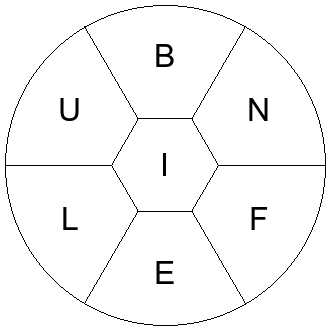
Genius requires between 14 and 30 words. You need at least a 7-letter word to reach genius. If you don't get the pangrams, you need 87% of the total points to reach genius. If you get the pangrams, you only need 63% of the remaining points to reach genius.

Other days with this pangram:

The button below will reveal a chart with the number of words by each letter. Red bars indicate that there is a pangram(s) starting with that letter.


How does this puzzle compare to other puzzles?

Today's score of 148 was in the 38th percentile of all puzzles.
The last time there was a score this low was on December 8, 2025.
The highest score ever was 537 on January 22, 2021.
The lowest score ever was 47 on March 27, 2023.

This puzzle's 34 possible answers rank it in the 36th percentile of all puzzles.
The last time there were fewer answers than this was on December 8, 2025.
The highest number of answers was 81 on June 8, 2019.
The lowest number of answers was 16 on March 27, 2023.

It takes a 7-letter word for genius.
The last time this happened was on December 17, 2025.

Today's puzzle has an average word length of 5.2.
For all Bees, the average word length has been 5.3.


Haven't I seen these letters before?

Hover over a letter to see its first and most recent appearance in the Bee!


Haven't I seen these words before?

The most common words in the Bee are:

  • noon 225
  • loll 209
  • toot 204
  • naan 186
  • nana 186
  • lilt 149
  • till 149
  • tilt 149
  • nene 145
  • tint 144
  • mama 141
  • mamma 141
  • onion 136
  • onto 136
  • toon 136
  • acacia 134
  • acai 134
  • anal 128
  • anon 127
  • olio 122
  • dodo 120
  • baba 118
  • papa 118
  • tact 118
  • boob 116
  • booboo 116
  • poop 115
  • lull 114
  • lulu 114
  • call 112
  • calla 112
  • cocci 112
  • mitt 112
  • mono 112
  • moon 112
  • ratatat 110
  • tart 110
  • tartar 110
  • tutu 110
  • attar 109
  • loon 109
  • allay 108
  • ally 108
  • tattoo 108
  • ammo 107
  • momma 107
  • tatty 106
  • roar 104
  • epee 103
  • meme 103


How long are words in the Bee?

There have been 111,012 answers ever accepted in the Bee - with 10,875 unique words.
Below are the distributions of the lengths of these words.


Valid dictionary words not in today's official answers

You may be wondering why these words aren't here*:

  • benni
  • bibb
  • bibe
  • biffin
  • billie
  • bine
  • bluebill
  • blueline
  • bubbie
  • buffi
  • bulbil
  • fille
  • fulfil
  • inulin
  • libellee
  • lief
  • lifeful
  • linin
  • linn
  • neif
  • nellie
  • nielli
  • niff
  • nill

*Because the New York Times considers them obscure or offensive.

beeline

noun
  1. A very direct or quick path or trip.
  2. A dynamite fuse made with a small quantity of dynamite powder along its length, so that the spark travels quickly and at a specific known rate.
verb
  1. To travel in a straight course, ignoring established paths of travel.

belie

Etymology 1

verb
  1. To lie around; encompass.
  2. (of an army) To surround; beleaguer.

Etymology 2

verb
  1. To tell lies about.
  2. To give a false representation of.
  3. To contradict, to show (something) to be false.
  4. To conceal the contradictory or ironic presence of (something).
  5. To show, evince, demonstrate: to show (something) to be present, particularly something deemed contradictory or ironic.
  6. To mimic; to counterfeit.
  7. To fill with lies.

belief

noun
  1. Mental acceptance of a claim as true.
  2. Faith or trust in the reality of something; often based upon one's own reasoning, trust in a claim, desire of actuality, and/or evidence considered.
  3. Something believed.
  4. The quality or state of believing.
  5. Religious faith.
  6. (in the plural) One's religious or moral convictions.

bible

noun
  1. An exemplar of the Bible.
  2. A comprehensive manual that describes something. (e.g., handyman’s bible).
  3. (at certain US universities) A compilation of problems and solutions from previous years of a given course, used by some students to cheat on tests or assignments.
  4. Omasum, the third compartment of the stomach of ruminants
noun
  1. A piece of soft sandstone used for scouring the wooden decks of ships, usually with sand and seawater.
  2. A stone with a naturally-formed hole, used by Yorkshiremen for good luck.

biff

noun
  1. A sudden, sharp blow or punch.
  2. A wipeout.
verb
  1. To punch or hit.
  2. To discard; to throw out; to throw away.
  3. To wipe out; to faceplant; to fall.

bile

Etymology 1

noun
  1. A bitter brownish-yellow or greenish-yellow secretion produced by the liver, stored in the gall bladder, and discharged into the duodenum where it aids the process of digestion.
  2. Bitterness of temper; ill humour; irascibility.
  3. Two of the four humours, black bile or yellow bile, in ancient and medieval physiology.

Etymology 2

noun
  1. A boil (kind of swelling).
verb
  1. (of liquids) To heat to the point where it begins to turn into a gas.
  2. To cook in boiling water.
  3. (of liquids) To begin to turn into a gas, seethe.
  4. To bring to a boil, to heat so as to cause the contents to boil.
  5. (used only in progressive tenses, of weather) To be uncomfortably hot.
  6. (used only in progressive tenses) To feel uncomfortably hot.
  7. To form, or separate, by boiling or evaporation.
  8. To steep or soak in warm water.
  9. To be agitated like boiling water; to bubble; to effervesce.
  10. To be moved or excited with passion; to be hot or fervid.

bill

Etymology 1

noun
  1. Any of various bladed or pointed hand weapons, originally designating an Anglo-Saxon sword, and later a weapon of infantry, especially in the 14th and 15th centuries, commonly consisting of a broad, heavy, double-edged, hook-shaped blade, with a short pike at the back and another at the top, attached to the end of a long staff.
  2. A cutting instrument, with hook-shaped point, and fitted with a handle, used in pruning, etc.; a billhook.
  3. Somebody armed with a bill; a billman.
  4. A pickaxe, or mattock.
  5. The extremity of the arm of an anchor; the point of or beyond the fluke (also called the peak).
verb
  1. To dig, chop, etc., with a bill.

Etymology 2

noun
  1. The beak of a bird, especially when small or flattish; sometimes also used with reference to a platypus, turtle, or other animal.
  2. A beak-like projection, especially a promontory.
  3. Of a cap or hat: the brim or peak, serving as a shade to keep sun off the face and out of the eyes.
verb
  1. To peck
  2. To stroke bill against bill, with reference to doves; to caress in fondness

Etymology 3

noun
  1. A written list or inventory. (Now obsolete except in specific senses or set phrases; bill of lading, bill of goods, etc.)
  2. A document, originally sealed; a formal statement or official memorandum. (Now obsolete except with certain qualifying words; bill of health, bill of sale etc.)
  3. A draft of a law, presented to a legislature for enactment; a proposed or projected law.
  4. A declaration made in writing, stating some wrong the complainant has suffered from the defendant, or a fault committed by some person against a law.
  5. A piece of paper money; a banknote.
  6. A written note of goods sold, services rendered, or work done, with the price or charge; an invoice.
  7. A paper, written or printed, and posted up or given away, to advertise something, as a lecture, a play, or the sale of goods
  8. A writing binding the signer or signers to pay a certain sum at a future day or on demand, with or without interest, as may be stated in the document; a bill of exchange. In the United States, it is usually called a note, a note of hand, or a promissory note.
  9. A set of items presented together.
verb
  1. To advertise by a bill or public notice.
  2. To charge; to send a bill to.

Etymology 4

noun
  1. The bell, or boom, of the bittern.

blin

Etymology 1

noun
  1. Cessation; end.
verb
  1. To cease (from); to stop; to desist, to let up.

Etymology 2

noun
  1. A blintz.

blini

noun
  1. A small pancake, of Russian origin, made from buckwheat flour; traditionally served with melted butter, sour cream and caviar or smoked salmon.

bluefin

noun
  1. Bluefin tuna, any of a number of types of tuna characterised by their blue fins.

elfin

Etymology 1

noun
  1. An elf; an inhabitant of fairy-land.
  2. A little urchin or child.
  3. Any of the butterflies in the subgenus Incisalia of the North American lycaenid genus Callophrys.

Etymology 2

adjective
  1. Relating to or resembling an elf or elves, especially in its tiny size or features.

ennui

noun
  1. A gripping listlessness or melancholia caused by boredom; depression.
verb
  1. To make bored or listless; to weary.

feline

Etymology 1

adjective
  1. Of or pertaining to cats.
  2. Catlike (resembling a cat)

Etymology 2

noun
  1. A cat; member of the cat family Felidae.

fief

noun
  1. An estate held by a person on condition of providing military service to a superior.
  2. Something over which one has rights or exercises control.
  3. An area of dominion, especially in a corporate or governmental bureaucracy.

fife

Etymology 1

noun
  1. A small shrill pipe, resembling the piccolo flute, used chiefly to accompany the drum in military music
verb
  1. To play this instrument.

Etymology 2

numeral
  1. Used instead of five in radio communications to avoid confusion.

file

Etymology 1

noun
  1. A collection of papers collated and archived together.
  2. A roll or list.
  3. Course of thought; thread of narration.
  4. An aggregation of data on a storage device, identified by a name.
verb
  1. To commit (official papers) to some office.
  2. To place in an archive in a logical place and order
  3. To store a file (aggregation of data) on a storage medium such as a disc or another computer.
  4. (with for) To submit a formal request to some office.
  5. To set in order; to arrange, or lay away.

Etymology 2

noun
  1. A column of people one behind another, whether "single file" or in a large group with many files side by side.
  2. A small detachment of soldiers.
  3. One of the eight vertical lines of squares on a chessboard (i.e., those identified by a letter). The analog horizontal lines are the ranks.
verb
  1. To move in a file.

Etymology 3

noun
  1. A hand tool consisting of a handle to which a block of coarse metal is attached, and used for removing sharp edges or for cutting, especially through metal.
  2. A cunning or resourceful person.
verb
  1. To smooth, grind, or cut with a file.

Etymology 4

verb
  1. To defile
  2. To corrupt

fill

Etymology 1

verb
  1. To occupy fully, to take up all of.
  2. To add contents to (a container, cavity or the like) so that it is full.
  3. To enter (something), making it full.
  4. To become full.
  5. To become pervaded with something.
  6. To satisfy or obey (an order, request or requirement).
  7. To install someone, or be installed, in (a position or office), eliminating a vacancy.
  8. To treat (a tooth) by adding a dental filling to it.
  9. To fill or supply fully with food; to feed; to satisfy.
  10. To trim (a yard) so that the wind blows on the after side of the sails.
  11. (of a male) To have sexual intercourse with (a female).

Etymology 2

noun
  1. (after a possessive) A sufficient or more than sufficient amount.
  2. An amount that fills a container.
  3. The filling of a container or area.
  4. Inexpensive material used to occupy empty spaces, especially in construction.
  5. Soil and/or human-created debris discovered within a cavity or cut in the layers and exposed by excavation; fill soil.
  6. An embankment, as in railroad construction, to fill a hollow or ravine; also, the place which is to be filled.
  7. A short passage, riff, or rhythmic sound that helps to keep the listener's attention during a break between the phrases of a melody.

Etymology 3

noun
  1. One of the thills or shafts of a carriage.

fine

Etymology 1

noun
  1. Fine champagne; French brandy.
  2. (usually in the plural) Something that is fine; fine particles.
verb
  1. To make finer, purer, or cleaner; to purify or clarify.
  2. To become finer, purer, or cleaner.
  3. To make finer, or less coarse, as in bulk, texture, etc.
  4. To change by fine gradations.
  5. To clarify (wine and beer) by filtration.
  6. To become gradually fine; to diminish; to dwindle (with away, down, or off).
adjective
  1. Senses referring to subjective quality.
  2. Senses referring to objective quality.
  3. Behind the batsman and at a small angle to the line between the wickets.
  4. Subtle; thin; tenuous.
adverb
  1. Expression of (typically) reluctant agreement.
  2. Well, nicely, in a positive way.
  3. Finely; elegantly; delicately.
  4. In a manner so that the driven ball strikes the object ball so far to one side as to be barely deflected, the object ball being driven to one side.

Etymology 2

noun
  1. A fee levied as punishment for breaking the law.
verb
  1. To issue a fine as punishment to (someone).
  2. To pay a fine.

Etymology 3

noun
  1. The end of a musical composition.
  2. The location in a musical score that indicates the end of the piece, particularly when the piece ends somewhere in the middle of the score due to a section of the music being repeated.

Etymology 4

noun
  1. End; conclusion; termination; extinction.
  2. A final agreement concerning lands or rents between persons, as the lord and his vassal.
  3. A sum of money or price paid for obtaining a benefit, favor, or privilege, as for admission to a copyhold, or for obtaining or renewing a lease.
verb
  1. To finish; to cease.
  2. To cause to cease; to stop.

fulfill

verb
  1. To satisfy, carry out, bring to completion (an obligation, a requirement, etc.).
  2. To emotionally or artistically satisfy; to develop one's gifts to the fullest.
  3. To obey, follow, comply with (a rule, requirement etc.).
  4. To package, distribute, or ship goods.
  5. To fill full; fill to the utmost capacity; fill up.

infill

Etymology 1

noun
  1. That which fills in a space, hole or gap.
  2. The redecoration of a fingernail or toenail after it has grown, to prevent an unsightly gap.
verb
  1. To fill in a space, hole or gap.
  2. To rededicate land in an urban environment to new construction.

Etymology 2

noun
  1. Infiltration, the act of going into a place.

libel

noun
  1. A written or pictorial false statement which unjustly seeks to damage someone's reputation.
  2. The act or crime of displaying such a statement publicly.
  3. Any defamatory writing; a lampoon; a satire.
  4. A written declaration or statement by the plaintiff of their cause of action, and of the relief they seek.
  5. A brief writing of any kind, especially a declaration, bill, certificate, request, supplication, etc.
verb
  1. To defame someone, especially in a manner that meets the legal definition of libel.
  2. To proceed against (a ship, goods, etc.) by filing a libel.

libelee

No Definition Found.

lien

Etymology 1

noun
  1. A tendon.
  2. A right to take possession of a debtor’s property as security until a debt or duty is discharged.

Etymology 2

noun
  1. (possibly obsolete) The spleen.

lieu

noun
  1. Place, stead; See in lieu or in lieu of

life

noun
  1. The state of organisms preceding their death, characterized by biological processes such as metabolism and reproduction and distinguishing them from inanimate objects; the state of being alive and living.
  2. The animating principle or force that keeps an inorganic thing or concept metaphorically alive (dynamic, relevant, etc) and makes it a "living document", "living constitution", etc.
  3. Lifeforms, generally or collectively.
  4. A living individual; the fact of a particular individual being alive. (Chiefly when indicating individuals were lost (died) or saved.)
  5. Existence.
  6. A period of time during which something has existence.
  7. Animation; spirit; vivacity.
  8. A biography.
  9. Nature, reality, and the forms that exist in it.
  10. An opportunity for existence.
  11. The life insurance industry.
  12. A life assured under a life assurance policy (equivalent to the policy itself for a single life contract).

lifeline

noun
  1. A line to which a drowning or falling victim may cling.
  2. (by extension) A source of salvation in a crisis.
  3. A means or route for transporting indispensable supplies.
  4. System or structure of vital importance to a community.
  5. On the deck of a boat, a line to which one can attach oneself to stay aboard on rough seas.
  6. A line from the diver to a tender at the surface control point.
  7. A particular crease in the palm.

line

Etymology 1

noun
  1. A path through two or more points (compare ‘segment’); a continuous mark, including as made by a pen; any path, curved or straight.
  2. A rope, cord, string, or thread, of any thickness.
  3. A hose or pipe, of any size.
  4. Direction, path.
  5. The wire connecting one telegraphic station with another, a telephone or internet cable between two points: a telephone or network connection.
  6. A clothesline.
  7. A letter, a written form of communication.
  8. A connected series of public conveyances, as a roadbed or railway track; and hence, an established arrangement for forwarding merchandise, etc.
  9. A trench or rampart, or the non-physical demarcation of the extent of the territory occupied by specified forces.
  10. The exterior limit of a figure or territory: a boundary, contour, or outline; a demarcation.
  11. A long tape or ribbon marked with units for measuring; a tape measure.
  12. A measuring line or cord.
  13. That which was measured by a line, such as a field or any piece of land set apart; hence, allotted place of abode.
  14. A threadlike crease or wrinkle marking the face, hand, or body; hence, a characteristic mark.
  15. Lineament; feature; figure (of one's body).
  16. A more-or-less straight sequence of people, objects, etc., either arranged as a queue or column and often waiting to be processed or dealt with, or arranged abreast of one another in a row (and contrasted with a column), as in a military formation.
  17. The regular infantry of an army, as distinguished from militia, guards, volunteer corps, cavalry, artillery etc.
  18. A series or succession of ancestors or descendants of a given person; a family or race; compare lineage.
  19. A small amount of text. Specifically:
  20. Course of conduct, thought, occupation, or policy; method of argument; department of industry, trade, or intellectual activity.
  21. The official, stated position (or set of positions) of an individual or group, particularly a political or religious faction.
  22. A set of products or services sold by a business, or by extension, the business itself.
  23. A number of shares taken by a jobber.
  24. A measure of length:
  25. A maxwell, a unit of magnetic flux.
  26. (1800s, with "the") The batter’s box.
  27. The position in which the fencers hold their swords.
  28. Proper relative position or adjustment (of parts, not as to design or proportion, but with reference to smooth working).
  29. A small path-shaped portion or serving of a powdery illegal drug, especially cocaine.
  30. Instruction; doctrine.
  31. Population of cells derived from a single cell and containing the same genetic makeup.
  32. (perfusion line) a set composed of a spike, a drip chamber, a clamp, a Y-injection site, a three-way stopcock and a catheter.
  33. A group of forwards that play together.
  34. A vascular catheter.
verb
  1. To place (objects) into a line (usually used with "up"); to form into a line; to align.
  2. To place persons or things along the side of for security or defense; to strengthen by adding; to fortify.
  3. To form a line along.
  4. To mark with a line or lines, to cover with lines.
  5. To represent by lines; to delineate; to portray.
  6. To read or repeat line by line.
  7. To hit a line drive; to hit a line drive which is caught for an out. Compare fly and ground.
  8. To track (wild bees) to their nest by following their line of flight.
  9. To measure.

Etymology 2

noun
  1. Flax; linen, particularly the longer fiber of flax.
verb
  1. To cover the inner surface of (something), originally especially with linen.
  2. To reinforce (the back of a book) with glue and glued scrap material such as fabric or paper.
  3. To fill or supply (something), as a purse with money.

Etymology 3

verb
  1. (of a dog) To copulate with, to impregnate.

linen

noun
  1. Thread or cloth made from flax fiber.
  2. Domestic textiles, such as tablecloths, bedding, towels, underclothes, etc., that are made of linen or linen-like fabrics of cotton or other fibers; linens.
  3. A light beige colour, like that of linen cloth undyed.
adjective
  1. Made from linen cloth or thread.
  2. Having the colour linen, light beige.

nibble

Etymology 1

noun
  1. A small, quick bite taken with the front teeth.
  2. (in the plural, nibbles) Small snacks such as crisps/potato chips or nuts, often eaten to accompany drinks.
verb
  1. To eat with small, quick bites.
  2. To bite lightly.
  3. To consume gradually.
  4. To find fault; to cavil.

Etymology 2

noun
  1. A unit of memory equal to half a byte, or four bits.

nine

noun
  1. The digit or figure 9.
  2. A playing card with nine pips.
  3. A nine-millimeter semi-automatic pistol.
  4. (usually in the plural) A statistical unit of proportion (of reliability, purity, etc.).
  5. A baseball club, team, or lineup (composed of nine players).
numeral
  1. A numerical value equal to 9; the number following eight and preceding ten.
  2. Describing a group or set with nine elements.

nubbin

noun
  1. A stub, especially a stub of undeveloped corn or fruit or nipple.
  2. A small protuberance, bud, bump or knob.
  3. The clitoris.

nubile

noun
  1. A young sexually attractive woman.
adjective
  1. Of an age suitable for marriage; marriageable (principally of a young woman).
  2. Sexually attractive (especially of a young woman).

unbelief

noun
  1. An absence (or rejection) of belief, especially religious belief

innie

noun
  1. A navel that is formed of a hollow in the abdomen (as opposed to one that protrudes from the abdomen).
  2. A vagina with inner labia minora