Monday, January 5, 2026

Answers to yesterday's Bee

Jump to answers for


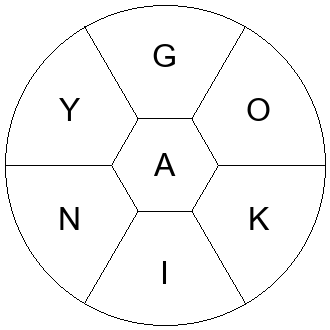
The official answers for today's puzzle are:

Click on the arrow to show the definition.
Click outside the pop-up to close it.


Number of Pangrams: 1

Maximum Puzzle Score: 152

Number of Answers: 35

Points Needed for Genius: 106

Genius requires between 15 and 30 words. You need at least a 7-letter word to reach genius. If you don't get the pangram, you need 77% of the total points to reach genius. If you get the pangram, you only need 67% of the remaining points to reach genius.

The button below will reveal a chart with the number of words by each letter. Red bars indicate that there is a pangram(s) starting with that letter.


How does this puzzle compare to other puzzles?

Today's score of 152 was in the 40th percentile of all puzzles.
The last time there was a score this low was on January 2, 2026.
The highest score ever was 537 on January 22, 2021.
The lowest score ever was 47 on March 27, 2023.

This puzzle's 35 possible answers rank it in the 38th percentile of all puzzles.
The last time there were fewer answers than this was on January 2, 2026.
The highest number of answers was 81 on June 8, 2019.
The lowest number of answers was 16 on March 27, 2023.

It takes a 7-letter word for genius.
The last time this happened was on January 4, 2026.

Today's puzzle has an average word length of 5.3.
For all Bees, the average word length has been 5.3.


Haven't I seen these letters before?

Hover over a letter to see its first and most recent appearance in the Bee!


Haven't I seen these words before?

The most common words in the Bee are:

  • noon 227
  • loll 209
  • toot 206
  • naan 189
  • nana 189
  • lilt 150
  • till 150
  • tilt 150
  • nene 148
  • tint 145
  • mama 141
  • mamma 141
  • onion 137
  • onto 136
  • toon 136
  • acacia 134
  • acai 134
  • anal 129
  • anon 128
  • olio 124
  • dodo 120
  • tact 120
  • baba 119
  • papa 119
  • boob 116
  • booboo 116
  • lull 116
  • lulu 116
  • poop 115
  • cocci 114
  • call 112
  • calla 112
  • mitt 112
  • mono 112
  • moon 112
  • tutu 112
  • ratatat 110
  • tart 110
  • tartar 110
  • tattoo 110
  • attar 109
  • loon 109
  • allay 108
  • ally 108
  • ammo 107
  • momma 107
  • tatty 106
  • roar 104
  • coot 103
  • epee 103


How long are words in the Bee?

There have been 111,802 answers ever accepted in the Bee - with 10,894 unique words.
Below are the distributions of the lengths of these words.


Valid dictionary words not in today's official answers

You may be wondering why these words aren't here*:

  • agin
  • agio
  • agon
  • anagogy
  • anga
  • angakok
  • anna
  • annona
  • anoa
  • anyon
  • ayaya
  • ayin
  • gaging
  • giga
  • goanna
  • gonia
  • inia
  • kaiak
  • kain
  • kaka
  • kaki
  • kana
  • kanaka
  • kaon
  • kayo
  • kayoing
  • kiang
  • kina
  • kyak
  • naga
  • nagana
  • nankin
  • nanna
  • nano
  • naoi
  • nona
  • nongay
  • oogonia
  • yagi
  • yingyang

*Because the New York Times considers them obscure or offensive.

again

adverb
  1. Another time; once more.
  2. Over and above a factor of one.
  3. Used metalinguistically, with the repetition being in the discussion, or in the linguistic or pragmatic context of the discussion, rather than in the subject of discussion.
  4. Back in the reverse direction, or to an original starting point.
  5. Back (to a former place or state).
  6. In return, as a reciprocal action; back.
  7. In any other place.
  8. On the other hand.
  9. Moreover; besides; further.
preposition
  1. (obsolete or dialectal) Against.

aging

verb
  1. To cause to grow old; to impart the characteristics of age to.
  2. To postpone an action that would extinguish something, as a debt.
  3. To categorize by age.
  4. To grow aged; to become old; to show marks of age.
noun
  1. The process of becoming older or more mature.
  2. The deliberate process of making something (such as an antique) appear (or, in science fiction, become) older than it is.
  3. Becoming senescent; accumulating damage to macromolecules, cells, tissues and organs with the passage of time; progressing loss of health, mobility, vibrancy and body functionality, resulting in biological death.
  4. Wear, wear and tear.
adjective
  1. Becoming elderly.

agog

adjective
  1. In eager desire, eager, astir.
  2. (chiefly of eyes) Wide open.
adverb
  1. In a state of high anticipation, excitement, or interest.

agony

noun
  1. Extreme pain.
  2. The sufferings of Jesus Christ in the garden of Gethsemane.
  3. Violent contest or striving.
  4. Paroxysm of joy; keen emotion.
  5. The last struggle of life; death struggle.

akin

adjective
  1. (of persons) Of the same kin; related by blood.
  2. (often followed by to) Allied by nature; similar; partaking of the same properties; of the same kind.

angina

noun
  1. An inflammatory infection of the throat, particularly quinsy.
  2. Short for angina pectoris.
  3. A chest pain or shortness of breath occurring with lesser degrees of arterial blockage.

anion

noun
  1. A negatively charged ion.

annoy

noun
  1. A feeling of discomfort or vexation caused by what one dislikes.
  2. That which causes such a feeling.
verb
  1. To disturb or irritate, especially by continued or repeated acts; to bother with unpleasant deeds.
  2. To do something to upset or anger someone; to be troublesome.
  3. To molest; to harm; to injure.

annoying

verb
  1. To disturb or irritate, especially by continued or repeated acts; to bother with unpleasant deeds.
  2. To do something to upset or anger someone; to be troublesome.
  3. To molest; to harm; to injure.
noun
  1. That which annoys; an annoyance.
adjective
  1. Causing irritation or annoyance; troublesome; vexatious.

anon

Etymology 1

adverb
  1. Straight away; at once.
  2. Soon; in a little while.
  3. At another time; then; again.

Etymology 2

noun
  1. An anonymous person, especially an author.
  2. A work with an unknown author.
  3. A work without a title.
adjective
  1. Anonymous

gaga

Etymology 1

adjective
  1. Mentally senile.
  2. Crazy.
  3. Infatuated.

Etymology 2

noun
  1. A variant of dodgeball played inside a fenced area, usually a hexagon or octagon.

gagging

verb
  1. To experience the vomiting reflex.
  2. To cause to heave with nausea.
  3. To restrain someone's speech by blocking his or her mouth.
  4. To pry or hold open by means of a gag.
  5. To restrain someone's speech without using physical means.
  6. To choke; to retch.
  7. To deceive (someone); to con.
noun
  1. A gag motion or reflex.

gain

Etymology 1

noun
  1. The act of gaining; acquisition.
  2. What is gained.
  3. The factor by which a signal is multiplied.
verb
  1. To acquire possession of.
  2. To have or receive advantage or profit; to acquire gain; to grow rich; to advance in interest, health, or happiness; to make progress.
  3. To come off winner or victor in; to be successful in; to obtain by competition.
  4. To increase.
  5. To be more likely to catch or overtake an individual.
  6. To reach.
  7. To draw into any interest or party; to win to one's side; to conciliate.
  8. To put on weight.
  9. (of a clock or watch) To run fast.

Etymology 2

preposition
  1. Against.

Etymology 3

adjective
  1. Straight, direct; near; short.
  2. Suitable; convenient; ready.
  3. Easy; tolerable; handy, dexterous.
  4. Honest; respectable; moderate; cheap.
adverb
  1. Straightly; quickly; by the nearest way or means.
  2. Suitably; conveniently; dexterously; moderately.
  3. Tolerably; fairly.

Etymology 4

noun
  1. A square or bevelled notch cut out of a girder, binding joist, or other timber which supports a floor beam, so as to receive the end of the floor beam.

gaining

verb
  1. To acquire possession of.
  2. To have or receive advantage or profit; to acquire gain; to grow rich; to advance in interest, health, or happiness; to make progress.
  3. To come off winner or victor in; to be successful in; to obtain by competition.
  4. To increase.
  5. To be more likely to catch or overtake an individual.
  6. To reach.
  7. To draw into any interest or party; to win to one's side; to conciliate.
  8. To put on weight.
  9. (of a clock or watch) To run fast.
noun
  1. Gain; profit.

gang

Etymology 1

verb
  1. To go; walk; proceed.

Etymology 2

noun
  1. A number going in company; a number of friends or persons associated for a particular purpose.
  2. A group of laborers under one foreman; a squad.
  3. A criminal group with a common cultural background and identifying features, often associated with a particular section of a city.
  4. A group of criminals or alleged criminals who band together for mutual protection and profit.
  5. A group of politicians united in furtherance of a political goal.
  6. A chain gang.
  7. A combination of similar tools or implements arranged so as, by acting together, to save time or labor; a set.
  8. A set; all required for an outfit.
  9. (electrics) A number of switches or other electrical devices wired into one unit and covered by one faceplate.
  10. (electrics) A group of wires attached as a bundle.
  11. A going, journey; a course, path, track.
  12. An outhouse: an outbuilding used as a lavatory.
verb
  1. To attach similar items together to form a larger unit.

Etymology 3

verb
  1. (obsolete outside Northumbria) To go.

Etymology 4

verb
  1. To participate in a gangbang.
  2. To beat one or a smaller amount of people as a gang.
  3. To belong to a gang; to commit criminal acts as part of a gang.

Etymology 5

noun
  1. The earthy waste substances occurring in metallic ore.

ganging

verb
  1. To go; walk; proceed.
verb
  1. To attach similar items together to form a larger unit.
verb
  1. To participate in a gangbang.
  2. To beat one or a smaller amount of people as a gang.
  3. To belong to a gang; to commit criminal acts as part of a gang.
noun
  1. A leader used to attach a fishhook to the main line, especially in commercial fishing

kayak

noun
  1. A type of small boat, covered over by a surface deck, powered by the occupant or occupants using a double-bladed paddle in a sitting position, from a hole in the surface deck
verb
  1. To use a kayak, to travel or race in a kayak.
  2. To traverse (a body of water) by kayak.

kayaking

verb
  1. To use a kayak, to travel or race in a kayak.
  2. To traverse (a body of water) by kayak.
noun
  1. A water sport involving racing, or doing tricks in, a kayak

koan

noun
  1. A story about a Zen master and his student, sometimes like a riddle, other times like a fable, which has become an object of Zen study, and which, when meditated upon, may unlock mechanisms in the Zen student’s mind leading to satori.
  2. A riddle with no solution, used to provoke reflection on the inadequacy of logical reasoning, and to lead to enlightenment.

naan

noun
  1. A type of round, flat bread baked in a tandoor popular in South and Central Asian cuisine.

nagging

verb
  1. To continuously remind or complain to (someone) in an annoying way, often about insignificant or unnecessary matters.
  2. To bother with persistent thoughts or memories.
  3. To bother or disturb persistently in any way.
noun
  1. The action of the verb nag.
adjective
  1. Causing persistent mild pain, or annoyance.

naggy

No Definition Found.

nana

Etymology 1

noun
  1. A banana
  2. A fool

Etymology 2

noun
  1. (term of endearment) one's grandmother
  2. A nanny

nanny

noun
  1. A child's nurse.
  2. A grandmother.
  3. A godmother.
  4. A female goat.
verb
  1. To serve as a nanny.
  2. To treat like a nanny's charges; to coddle.

nannying

verb
  1. To serve as a nanny.
  2. To treat like a nanny's charges; to coddle.
noun
  1. Behaving with an excess of protective concern.

nonagon

noun
  1. A polygon with nine sides and nine angles; an enneagon

oaky

No Definition Found.

okay

noun
  1. Endorsement; approval.
verb
  1. To approve.
  2. To confirm by activating a button marked OK.
adjective
  1. All right, permitted.
  2. Satisfactory, reasonably good; not exceptional.
  3. In good health or a good emotional state.
adverb
  1. Satisfactorily, sufficiently well.
interjection
  1. Used to indicate acknowledgement or acceptance.
  2. Used to introduce a sentence in order to draw attention to the importance of what is being said.
  3. Used in turn-taking, serving as a request to the speaker to grant the turn to the interrupter.

okaying

verb
  1. To approve.
  2. To confirm by activating a button marked OK.

yakking

verb
  1. To talk, particularly informally but persistently; to chatter or prattle.
  2. To vomit, usually as a result of excessive alcohol consumption.

yang

Etymology 1

noun
  1. A principle in Chinese and related East Asian philosophies associated with bright, hot, masculine, etc. elements of the natural world.

Etymology 2

noun
  1. The monetary unit of Korea from 1892 to 1902, divided into 100 pun.

Etymology 3

noun
  1. The cry of the wild goose; a honk.
verb
  1. To make the cry of the wild goose.

yank

Etymology 1

noun
  1. A sudden, vigorous pull (sometimes defined as mass times jerk, or rate of change of force).
  2. A masturbation session.
verb
  1. To pull (something) with a quick, strong action.
  2. To remove from distribution.

Etymology 2

noun
  1. A Yankee.

yanking

verb
  1. To pull (something) with a quick, strong action.
  2. To remove from distribution.

yoga

Etymology 1

noun
  1. Any of several Hindu or Buddhist disciplines aimed at training the consciousness for a state of perfect spiritual insight and tranquillity; especially a system of exercises practiced to promote control of the body and mind.

Etymology 2

noun
  1. The tree Elaeocarpus joga.

gonna

No Definition Found.