Saturday, January 10, 2026

Answers to yesterday's Bee

Jump to answers for


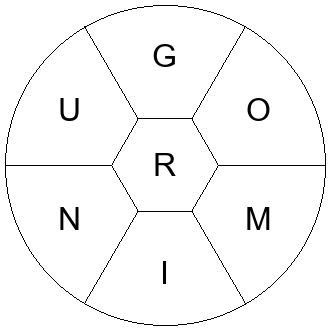
The official answers for today's puzzle are:

Click on the arrow to show the definition.
Click outside the pop-up to close it.


Number of Pangrams: 3

Maximum Puzzle Score: 320

Number of Answers: 57

Points Needed for Genius: 224

Genius requires between 28 and 49 words. You need at least an 8-letter word to reach genius. If you don't get the pangrams, you need 82% of the total points to reach genius. If you get the pangrams, you only need 65% of the remaining points to reach genius.

Other days with this pangram:

The button below will reveal a chart with the number of words by each letter. Red bars indicate that there is a pangram(s) starting with that letter.


How does this puzzle compare to other puzzles?

Today's score of 320 was in the 96th percentile of all puzzles.
The last time there was a score this high was on January 1, 2026.
The highest score ever was 537 on January 22, 2021.
The lowest score ever was 47 on March 27, 2023.

This puzzle's 57 possible answers rank it in the 87th percentile of all puzzles.
The last time there were more answers than this was on January 8, 2026.
The highest number of answers was 81 on June 8, 2019.
The lowest number of answers was 16 on March 27, 2023.

It takes an 8-letter word for genius.
The last time this happened was on January 1, 2026.

Today's puzzle has an average word length of 6.0.
For all Bees, the average word length has been 5.3.


Haven't I seen these letters before?

Hover over a letter to see its first and most recent appearance in the Bee!


Haven't I seen these words before?

The most common words in the Bee are:

  • noon 227
  • loll 209
  • toot 207
  • naan 189
  • nana 189
  • lilt 150
  • till 150
  • tilt 150
  • nene 148
  • tint 145
  • mama 142
  • mamma 142
  • onion 137
  • onto 136
  • toon 136
  • acacia 134
  • acai 134
  • anal 129
  • anon 128
  • olio 124
  • dodo 120
  • tact 120
  • baba 119
  • papa 119
  • boob 116
  • booboo 116
  • lull 116
  • lulu 116
  • poop 115
  • cocci 114
  • call 112
  • calla 112
  • mitt 112
  • mono 112
  • moon 112
  • tutu 112
  • ratatat 111
  • tart 111
  • tartar 111
  • tattoo 111
  • attar 110
  • loon 109
  • allay 108
  • ally 108
  • ammo 107
  • momma 107
  • tatty 107
  • epee 104
  • peep 104
  • roar 104


How long are words in the Bee?

There have been 112,069 answers ever accepted in the Bee - with 10,894 unique words.
Below are the distributions of the lengths of these words.


Valid dictionary words not in today's official answers

You may be wondering why these words aren't here*:

  • girn
  • girning
  • giro
  • giron
  • gorm
  • gorming
  • grig
  • grigri
  • griming
  • gringo
  • groining
  • grugru
  • grum
  • grunion
  • guiro
  • gunroom
  • gunrunning
  • gurging
  • immuring
  • inro
  • inrun
  • iring
  • miri
  • monuron
  • morion
  • morrion
  • morro
  • muggur
  • muring
  • murr
  • noniron
  • rigour
  • riming
  • rinning
  • roguing
  • ronin
  • ronion
  • rugging
  • rumour
  • rumouring

*Because the New York Times considers them obscure or offensive.

gorging

noun
  1. The act of one who gorges, or eats to satiety.

gorgon

noun
  1. A vicious female monster from Greek mythology with sharp fangs and hair of living, venomous snakes. One of the three sisters: Medusa, Stheno and Euryale
  2. An intimidating, ugly, or disgusting woman; anything hideous or horrid.
adjective
  1. Like a gorgon; very ugly or terrifying.

goring

verb
  1. (of an animal) To pierce with the horn.
  2. To pierce with anything pointed, such as a spear.
verb
  1. To cut in a triangular form.
  2. To provide with a gore.
noun
  1. The act by which something is gored; a wound inflicted by a horn, usually the horn of a bull in the context of bullfighting
  2. A piece of cloth cut diagonally to increase its apparent width.
adjective
  1. Cut gradually sloping, so as to be broader at the clew than at the earing of a sail.

grim

Etymology 1

noun
  1. Specter, ghost, haunting spirit
verb
  1. To make grim; to give a stern or forbidding aspect to.
adjective
  1. Dismal and gloomy, cold and forbidding
  2. Rigid and unrelenting
  3. Ghastly or sinister
  4. Disgusting; gross

Etymology 2

noun
  1. Anger, wrath.

grin

Etymology 1

noun
  1. A smile in which the lips are parted to reveal the teeth.
verb
  1. To smile, parting the lips so as to show the teeth.
  2. To express by grinning.
  3. To show the teeth, like a snarling dog.
  4. To grin as part of producing a particular facial expression, such as a smile or sneer.

Etymology 2

noun
  1. A snare; a gin.

grinning

verb
  1. To smile, parting the lips so as to show the teeth.
  2. To express by grinning.
  3. To show the teeth, like a snarling dog.
  4. To grin as part of producing a particular facial expression, such as a smile or sneer.
noun
  1. The act or expression of one who grins.

grog

noun
  1. (original meaning) An alcoholic beverage made with rum and water, especially that once issued to sailors of the Royal Navy.
  2. (by extension) Any alcoholic beverage.
  3. A glass or serving of an alcoholic beverage.
  4. An alcoholic beverage made with hot water or tea, sugar and rum, sometimes also with lemon or lime juice and spices, particularly cinnamon.
  5. A type of pre-fired clay that has been ground and screened to a specific particle size.

groin

Etymology 1

noun
  1. The crease or depression of the human body at the junction of the trunk and the thigh, together with the surrounding region.
  2. The area adjoining this fold or depression.
  3. The projecting solid angle formed by the meeting of two vaults
  4. The genitals.
  5. The surface formed by two such vaults.
verb
  1. To deliver a blow to the genitals of.
  2. To build with groins.
  3. (literary) To hollow out, to excavate.

Etymology 2

verb
  1. To grunt; to growl; to snarl; to murmur.

Etymology 3

noun
  1. An often wooden structure that projects from a coastline to prevent erosion, longshore drift etc.; a breakwater.

groom

Etymology 1

noun
  1. A man who is about to marry.

Etymology 2

noun
  1. A person who cares for horses.
  2. One of several officers of the English royal household, chiefly in the lord chamberlain's department.
  3. A brushing or cleaning, as of a dog or horse.
verb
  1. To attend to one's appearance and clothing.
  2. To care for (horses or other animals) by brushing and cleaning them.
  3. To prepare (someone) for election or appointment.
  4. To prepare (a ski slope) for skiers by packing down the snow.
  5. To attempt to gain the trust of (somebody, especially a minor) with the intention of subjecting them to abusive or exploitative behaviour such as sexual abuse or human trafficking.
  6. In agile software development, to review and prioritize the items in the development backlog.

grooming

verb
  1. To attend to one's appearance and clothing.
  2. To care for (horses or other animals) by brushing and cleaning them.
  3. To prepare (someone) for election or appointment.
  4. To prepare (a ski slope) for skiers by packing down the snow.
  5. To attempt to gain the trust of (somebody, especially a minor) with the intention of subjecting them to abusive or exploitative behaviour such as sexual abuse or human trafficking.
  6. In agile software development, to review and prioritize the items in the development backlog.
noun
  1. Care for one's personal appearance, hygiene, and clothing.
  2. The practice of primates picking through the hair of others, looking for insects etc.
  3. The act of teaching someone, often for advancement at work.
  4. Caring for horses or other animals by brushing and cleaning them.
  5. The act of attempting to gain the trust of a minor with the intention of having a sexual relationship with him or her.
  6. In agile software development, the reviewing and prioritization of items in the development backlog.

guru

noun
  1. A Hindu or Sikh spiritual teacher.
  2. (sometimes humorous) An influential advisor or mentor.

ignoring

verb
  1. To deliberately not listen or pay attention to.
  2. To pretend to not notice someone or something.
  3. Fail to notice.
  4. Not to know.
noun
  1. The act by which something is ignored.

inuring

verb
  1. To cause someone to become accustomed to something (usually) unpleasant.
  2. To take effect, to be operative.
  3. To commit.

inurn

verb
  1. To place (the remains of a person who has died) in an urn or other container.
  2. To hold or contain (the remains of a person who has died).

inurning

verb
  1. To place (the remains of a person who has died) in an urn or other container.
  2. To hold or contain (the remains of a person who has died).

iron

noun
  1. A common, inexpensive metal, silvery grey when untarnished, that rusts, is attracted by magnets, and is used in making steel.
  2. A metallic chemical element having atomic number 26 and symbol Fe.
  3. Any material, not a steel, predominantly made of elemental iron.
  4. A tool or appliance made of metal, which is heated and then used to transfer heat to something else; most often a thick piece of metal fitted with a handle and having a flat, roughly triangular bottom, which is heated and used to press wrinkles from clothing, and now usually containing an electrical heating apparatus.
  5. (usually plural, irons) Shackles.
  6. A firearm, either a long gun or a handgun.
  7. A dark shade of the colour/color silver.
  8. (shortened from iron hoof, rhyming with poof; countable) A male homosexual.
  9. A golf club used for middle-distance shots.
  10. Used as a symbol of great strength or toughness, or to signify a very strong or tough material.
  11. Weight used as resistance for the purpose of strength training.
  12. A safety curtain in a theatre.
  13. Dumb bombs, those without guidance systems.
verb
  1. To pass an iron over (clothing or some other item made of cloth) in order to remove creases.
  2. To shackle with irons; to fetter or handcuff.
  3. To furnish or arm with iron.
adjective
  1. Made of the metal iron.
  2. Strong (as of will), inflexible.

ironing

verb
  1. To pass an iron over (clothing or some other item made of cloth) in order to remove creases.
  2. To shackle with irons; to fetter or handcuff.
  3. To furnish or arm with iron.
noun
  1. The act of pressing clothes with an iron.
  2. Laundry that has been washed and is ready to be ironed.
  3. Laundry that has recently been ironed.

minor

noun
  1. A person who is below the age of majority, consent, criminal responsibility or other adult responsibilities and accountabilities.
  2. A subject area of secondary concentration of a student at a college or university, or the student who has chosen such a secondary concentration.
  3. Determinant of a square submatrix
  4. (British slang) A younger brother (especially at a public school).
  5. A small worker in a leaf-cutter ant colony, sized between a minim and a media.
  6. The term of a syllogism which forms the subject of the conclusion.
  7. (campanology) Bell changes rung on six bells.
verb
  1. To choose or have an area of secondary concentration as a student in a college or university.
adjective
  1. Of little significance or importance.
  2. Of a scale which has lowered scale degrees three, six, and seven relative to major, but with the sixth and seventh not always lowered
  3. Being the smaller of the two intervals denoted by the same ordinal number

minoring

verb
  1. To choose or have an area of secondary concentration as a student in a college or university.

mirin

noun
  1. A form of Japanese rice wine, less alcoholic than sake.

miring

verb
  1. To cause or permit to become stuck in mud; to plunge or fix in mud.
  2. To sink into mud.
  3. To weigh down.
  4. To soil with mud or foul matter.

mirror

noun
  1. A smooth surface, usually made of glass with reflective material painted on the underside, that reflects light so as to give an image of what is in front of it.
  2. An object, person, or event that reflects or gives a picture of another.
  3. A disk, website or other resource that contains replicated data.
  4. A mirror carp.
  5. A kind of political self-help book, advising kings, princes, etc. on how to behave.
verb
  1. Of an event, activity, behaviour, etc, to be identical to, to be a copy of.
  2. To create something identical to (a web site, etc.).
  3. To reflect, as in a mirror.

mirroring

verb
  1. Of an event, activity, behaviour, etc, to be identical to, to be a copy of.
  2. To create something identical to (a web site, etc.).
  3. To reflect, as in a mirror.
noun
  1. A reflection or inversion.

moor

Etymology 1

noun
  1. An extensive waste covered with patches of heath, and having a poor, light soil, but sometimes marshy, and abounding in peat; a heath
  2. A game preserve consisting of moorland.

Etymology 2

verb
  1. To cast anchor or become fastened.
  2. To fix or secure (e.g. a vessel) in a particular place by casting anchor, or by fastening with ropes, cables or chains or the like
  3. To secure or fix firmly.

mooring

verb
  1. To cast anchor or become fastened.
  2. To fix or secure (e.g. a vessel) in a particular place by casting anchor, or by fastening with ropes, cables or chains or the like
  3. To secure or fix firmly.
noun
  1. A place to moor a vessel.
  2. The act of securing a vessel with a cable or anchor etc.
  3. Something to which one adheres, or the means that helps one to maintain a stable position and keep one's identity - moral, intellectual, political, etc.

morn

noun
  1. Morning.

morning

noun
  1. The part of the day from dawn to noon.
  2. The part of the day between midnight and noon.
  3. The early part of anything.
  4. The first alcoholic drink of the day; a morning draught.
interjection
  1. A greeting said in the morning; shortening of good morning

moron

noun
  1. A stupid person; an idiot; a fool.
  2. A person of mild mental subnormality in the former classification of mental retardation, having an intelligence quotient of 50–70.

mourn

noun
  1. Sorrow, grief.
  2. A ring fitted upon the head of a lance to prevent wounding an adversary in tilting.
verb
  1. To express sadness or sorrow for; to grieve over (especially a death).
  2. To utter in a sorrowful manner.
  3. To wear mourning.

mourning

verb
  1. To express sadness or sorrow for; to grieve over (especially a death).
  2. To utter in a sorrowful manner.
  3. To wear mourning.
noun
  1. The act of expressing or feeling sorrow or regret; lamentation.
  2. Feeling or expressing sorrow over someone's death.
  3. The traditional clothes worn by those who mourn (in Western societies, typically coloured black).
  4. Drapes or coverings associated with mourning.

murmur

noun
  1. Any low, indistinct sound, like that of running water.
  2. Soft indistinct speech.
  3. The sound made by any condition which produces noisy, or turbulent, flow of blood through the heart.
  4. A muttered complaint or protest; the expression of dissatisfaction in a low muttering voice; any expression of complaint or discontent
verb
  1. To grumble; to complain in a low, muttering voice, or express discontent at or against someone or something.
  2. To speak or make low, indistinguishable noise; to mumble, mutter.
  3. To say (something) indistinctly, to mutter.

murmuring

verb
  1. To grumble; to complain in a low, muttering voice, or express discontent at or against someone or something.
  2. To speak or make low, indistinguishable noise; to mumble, mutter.
  3. To say (something) indistinctly, to mutter.
noun
  1. A sound that murmurs.
  2. A complaint against something.

noir

noun
  1. Film noir.
  2. A production in the style of film noir.
adjective
  1. Of or pertaining to film noir, or the atmosphere associated with that genre

nori

Etymology 1

noun
  1. A type of seaweed, a red alga, laver (genus Pyropia, including species P. yezoensis and P. tenera).
  2. The seaweed, chopped and formed into sheets, used in the preparation of sushi.

Etymology 2

noun
  1. An improvised rail vehicle from Cambodia; a bamboo train.

norm

Etymology 1

noun
  1. That which is normal or typical.
  2. A rule that is enforced by members of a community.
  3. A sentence with non-descriptive meaning, such as a command, permission or prohibition.
  4. A function, generally denoted v\mapsto\left|v\right| or v\mapsto\left\|v\right\|, that maps vectors to non-negative scalars and has the following properties:
  5. A high level of performance in a chess tournament, several of which are required for a player to receive a title.

Etymology 2

verb
  1. To endow (a vector space, etc) with a norm.

origin

noun
  1. The beginning of something.
  2. The source of a river, information, goods, etc.
  3. The point at which the axes of a coordinate system intersect.
  4. The proximal end of attachment of a muscle to a bone that will not be moved by the action of that muscle.
  5. An arbitrary point on Earth's surface, chosen as the zero for a system of coordinates.
  6. (in the plural) Ancestry.

rigging

verb
  1. To fit out with a harness or other equipment.
  2. To equip and fit (a ship) with sails, shrouds, and yards.
  3. To dress or clothe in some costume.
  4. To make or construct something in haste or in a makeshift manner.
  5. To manipulate something dishonestly for personal gain or discriminatory purposes.
  6. To make free with; hence, to steal; to pilfer.
  7. To outfit a model with controls for animation.
verb
  1. To play the wanton; to act in an unbecoming manner; to play tricks.
noun
  1. Dress; tackle; especially , the ropes, chains, etc., that support the masts and spars of a sailing vessel, and serve as purchases for adjusting the sails, etc.
  2. Similar supporting material used for construction work, or in film, theater, etc.

rigor

noun
  1. Short for rigor mortis.
noun
  1. Severity or strictness.
  2. Harshness, as of climate.
  3. A trembling or shivering response.
  4. Character of being unyielding or inflexible.
  5. Shrewd questioning.
  6. Higher level of difficulty.

rimming

verb
  1. To form a rim on.
  2. To follow the contours, possibly creating a circuit.
  3. (of a ball) To roll around a rim.
verb
  1. To lick the anus of a partner as a sexual act.
noun
  1. The act of performing a rim job; anilingus.

ring

Etymology 1

noun
  1. (physical) A solid object in the shape of a circle.
  2. (physical) A group of objects arranged in a circle.
  3. A piece of food in the shape of a ring.
  4. A place where some sports or exhibitions take place; notably a circular or comparable arena, such as a boxing ring or a circus ring; hence the field of a political contest.
  5. An exclusive group of people, usually involving some unethical or illegal practices.
  6. A group of atoms linked by bonds to form a closed chain in a molecule.
  7. A planar geometrical figure included between two concentric circles.
  8. A diacritical mark in the shape of a hollow circle placed above or under the letter; a kroužek.
  9. An old English measure of corn equal to the coomb or half a quarter.
  10. A hierarchical level of privilege in a computer system, usually at hardware level, used to protect data and functionality (also protection ring).
  11. Either of the pair of clamps used to hold a telescopic sight to a rifle.
  12. The twenty-fifth Lenormand card.
verb
  1. To enclose or surround.
  2. To make an incision around; to girdle.
  3. To attach a ring to, especially for identification.
  4. To surround or fit with a ring, or as if with a ring.
  5. To rise in the air spirally.
  6. To steal and change the identity of (cars) in order to resell them.

Etymology 2

noun
  1. The resonant sound of a bell, or a sound resembling it.
  2. A pleasant or correct sound.
  3. A sound or appearance that is characteristic of something.
  4. A telephone call.
  5. Any loud sound; the sound of numerous voices; a sound continued, repeated, or reverberated.
  6. A chime, or set of bells harmonically tuned.
verb
  1. Of a bell, etc., to produce a resonant sound.
  2. To make (a bell, etc.) produce a resonant sound.
  3. To produce (a sound) by ringing.
  4. To produce the sound of a bell or a similar sound.
  5. Of something spoken or written, to appear to be, to seem, to sound.
  6. To telephone (someone).
  7. To resound, reverberate, echo.
  8. To produce music with bells.
  9. To repeat often, loudly, or earnestly.

Etymology 3

noun
  1. An algebraic structure which consists of a set with two binary operations: an additive operation and a multiplicative operation, such that the set is an abelian group under the additive operation, a monoid under the multiplicative operation, and such that the multiplicative operation is distributive with respect to the additive operation.
  2. An algebraic structure as above, but only required to be a semigroup under the multiplicative operation, that is, there need not be a multiplicative identity element.

ringing

verb
  1. To enclose or surround.
  2. To make an incision around; to girdle.
  3. To attach a ring to, especially for identification.
  4. To surround or fit with a ring, or as if with a ring.
  5. To rise in the air spirally.
  6. To steal and change the identity of (cars) in order to resell them.
verb
  1. Of a bell, etc., to produce a resonant sound.
  2. To make (a bell, etc.) produce a resonant sound.
  3. To produce (a sound) by ringing.
  4. To produce the sound of a bell or a similar sound.
  5. Of something spoken or written, to appear to be, to seem, to sound.
  6. To telephone (someone).
  7. To resound, reverberate, echo.
  8. To produce music with bells.
  9. To repeat often, loudly, or earnestly.
noun
  1. The sound of something that rings.
  2. The quality of being resonant.
  3. A technique used in the study of wild birds, by attaching a small, individually numbered, metal or plastic tag to their legs or wings.
  4. The theft of cars and illegally changing their identities for resale.
adjective
  1. Loud and clear.
  2. Made forcefully; powerful.

room

Etymology 1

noun
  1. Opportunity or scope (to do something).
  2. Space for something, or to carry out an activity.
  3. A particular portion of space.
  4. Sufficient space for or to do something.
  5. A space between the timbers of a ship's frame.
  6. Place; stead.
  7. A separate part of a building, enclosed by walls, a floor and a ceiling.
  8. (with possessive pronoun) (One's) bedroom.
  9. (in the plural) A set of rooms inhabited by someone; one's lodgings.
  10. (always in the singular, metonymy) The people in a room.
  11. An area for working in a coal mine.
  12. A portion of a cave that is wider than a passage.
  13. A IRC or chat room.
  14. Place or position in society; office; rank; post, sometimes when vacated by its former occupant.
  15. Furniture sufficient to furnish a room.
verb
  1. To reside, especially as a boarder or tenant.
  2. To assign to a room; to allocate a room to.

Etymology 2

adjective
  1. Wide; spacious; roomy.

Etymology 3

adverb
  1. Far; at a distance; wide in space or extent.
  2. Off from the wind.

Etymology 4

noun
  1. A deep blue dye.

rooming

verb
  1. To reside, especially as a boarder or tenant.
  2. To assign to a room; to allocate a room to.

rouging

verb
  1. To apply rouge (makeup).

ruin

noun
  1. (sometimes in the plural) The remains of a destroyed or dilapidated construction, such as a house or castle.
  2. The state of being a ruin, destroyed or decayed.
  3. Something that leads to serious trouble or destruction.
  4. A fall or tumble.
  5. A change that destroys or defeats something; destruction; overthrow.
  6. Complete financial loss; bankruptcy.
verb
  1. To cause the fiscal ruin of.
  2. To destroy or make something no longer usable.
  3. To cause severe financial loss to; to bankrupt or drive out of business.
  4. To upset or overturn the plans or progress of, or to have a disastrous effect on something.
  5. To make something less enjoyable or likeable.
  6. To reveal the ending of (a story); to spoil.
  7. To fall into a state of decay.
  8. To seduce or debauch, and thus harm the social standing of.

ruing

verb
  1. To cause to repent of sin or regret some past action.
  2. To cause to feel sorrow or pity.
  3. To repent of or regret (some past action or event); to wish that a past action or event had not taken place.
  4. To feel compassion or pity.
  5. To feel sorrow or regret.

ruining

verb
  1. To cause the fiscal ruin of.
  2. To destroy or make something no longer usable.
  3. To cause severe financial loss to; to bankrupt or drive out of business.
  4. To upset or overturn the plans or progress of, or to have a disastrous effect on something.
  5. To make something less enjoyable or likeable.
  6. To reveal the ending of (a story); to spoil.
  7. To fall into a state of decay.
  8. To seduce or debauch, and thus harm the social standing of.
noun
  1. The act or process by which something is ruined.

rumor

noun
  1. A statement or claim of questionable accuracy, from no known reliable source, usually spread by word of mouth.
  2. Information or misinformation of the kind contained in such claims.
verb
  1. (usually used in the passive voice) To tell a rumor about; to gossip.

rumoring

verb
  1. (usually used in the passive voice) To tell a rumor about; to gossip.

rung

Etymology 1

noun
  1. A crosspiece forming a step of a ladder; a round.
  2. A crosspiece between legs of a chair.
  3. A position in a hierarchy.
  4. A floor timber in a ship.
  5. One of the stakes of a cart; a spar; a heavy staff.
  6. One of the radial handles projecting from the rim of a steering wheel.
  7. One of the pins or trundles of a lantern wheel.

Etymology 2

verb
  1. Of a bell, etc., to produce a resonant sound.
  2. To make (a bell, etc.) produce a resonant sound.
  3. To produce (a sound) by ringing.
  4. To produce the sound of a bell or a similar sound.
  5. Of something spoken or written, to appear to be, to seem, to sound.
  6. To telephone (someone).
  7. To resound, reverberate, echo.
  8. To produce music with bells.
  9. To repeat often, loudly, or earnestly.
adjective
  1. Of a pig: having a ring through the nose.

running

verb
  1. To move swiftly.
  2. (fluids) To flow.
  3. (of a vessel) To sail before the wind, in distinction from reaching or sailing close-hauled.
  4. To control or manage, be in charge of.
  5. To be a candidate in an election.
  6. To make run in a race or an election.
  7. To exert continuous activity; to proceed.
  8. To be presented in the media.
  9. To print or broadcast in the media.
  10. To smuggle (illegal goods).
  11. To sort through a large volume of produce in quality control.
  12. To extend or persist, statically or dynamically, through space or time.
  13. To execute or carry out a plan, procedure or program.
  14. To pass or go quickly in thought or conversation.
  15. To become different in a way mentioned (usually to become worse).
  16. To cost a large amount of money.
  17. Of stitches or stitched clothing, to unravel.
  18. To pursue in thought; to carry in contemplation.
  19. To cause to enter; to thrust.
  20. To drive or force; to cause, or permit, to be driven.
  21. To cause to be drawn; to mark out; to indicate; to determine.
  22. To encounter or incur (a danger or risk).
  23. To put at hazard; to venture; to risk.
  24. To tease with sarcasms and ridicule.
  25. To sew (a seam) by passing the needle through material in a continuous line, generally taking a series of stitches on the needle at the same time.
  26. To control or have precedence in a card game.
  27. To be in form thus, as a combination of words.
  28. To be popularly known; to be generally received.
  29. To have growth or development.
  30. To tend, as to an effect or consequence; to incline.
  31. To have a legal course; to be attached; to continue in force, effect, or operation; to follow; to go in company.
  32. To encounter or suffer (a particular, usually bad, fate or misfortune).
  33. To strike (the ball) in such a way as to cause it to run along the ground, as when approaching a hole.
  34. To speedrun.
noun
  1. The action of the verb to run.
  2. The activity of running as a form of exercise, as a sport, or for any other reason
  3. That which runs or flows; the quantity of a liquid which flows in a certain time or during a certain operation.
  4. The discharge from an ulcer or other sore.
adjective
  1. Moving or advancing at a run.
  2. Present, current.
  3. Flowing; easy; cursive.
  4. Continuous; ongoing; keeping along step by step.
  5. Having a continuous design or pattern.
  6. Consecutive.
  7. Extending by a slender climbing or trailing stem.
  8. Discharging pus.
  9. (of a nose) Discharging snot or mucus.
adverb
  1. Consecutively; in a row
preposition
  1. Approaching; about; roughly.

unmoor

verb
  1. To unfix or unsecure (a moored boat).
  2. To weigh anchor.

unmooring

verb
  1. To unfix or unsecure (a moored boat).
  2. To weigh anchor.

unrig

verb
  1. To remove the rigging from (a vessel, etc.).
  2. To disable.
  3. To undress (someone).

unrigging

verb
  1. To remove the rigging from (a vessel, etc.).
  2. To disable.
  3. To undress (someone).

urging

verb
  1. To press; to push; to drive; to impel; to force onward.
  2. To press the mind or will of; to ply with motives, arguments, persuasion, or importunity.
  3. To provoke; to exasperate.
  4. To press hard upon; to follow closely.
  5. To present in an urgent manner; to insist upon.
  6. To treat with forcible means; to take severe or violent measures with.
  7. To press onward or forward.
  8. To be pressing in argument; to insist; to persist.

nigiri

noun
  1. Regular sushi: a piece of raw fish (or other topping) on top of a small oblong brick of sticky white rice.