Wednesday, January 14, 2026

Answers to yesterday's Bee

Jump to answers for


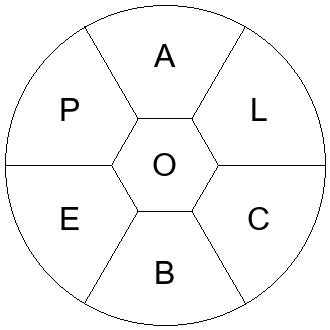
The official answers for today's puzzle are:

Click on the arrow to show the definition.
Click outside the pop-up to close it.


Number of Pangrams: 1

Maximum Puzzle Score: 175

Number of Answers: 56

Points Needed for Genius: 122

Genius requires between 19 and 50 words. You need at least a 6-letter word to reach genius. If you don't get the pangram, you need 76% of the total points to reach genius. If you get the pangram, you only need 67% of the remaining points to reach genius.

Other days with this pangram:

The button below will reveal a chart with the number of words by each letter. Red bars indicate that there is a pangram(s) starting with that letter.


How does this puzzle compare to other puzzles?

Today's score of 175 was in the 52nd percentile of all puzzles.
The last time there was a score this high was on January 13, 2026.
The highest score ever was 537 on January 22, 2021.
The lowest score ever was 47 on March 27, 2023.

This puzzle's 56 possible answers rank it in the 86th percentile of all puzzles.
The last time there were more answers than this was on January 10, 2026.
The highest number of answers was 81 on June 8, 2019.
The lowest number of answers was 16 on March 27, 2023.

It takes a 6-letter word for genius.
The last time this happened was on January 3, 2026.

Today's puzzle has an average word length of 4.8.
For all Bees, the average word length has been 5.3.


Haven't I seen these letters before?

Hover over a letter to see its first and most recent appearance in the Bee!


Haven't I seen these words before?

The most common words in the Bee are:

  • noon 227
  • loll 210
  • toot 207
  • naan 189
  • nana 189
  • lilt 151
  • till 151
  • tilt 151
  • nene 148
  • tint 145
  • mama 142
  • mamma 142
  • onion 137
  • onto 136
  • toon 136
  • acacia 135
  • acai 135
  • anal 129
  • anon 128
  • olio 124
  • dodo 120
  • papa 120
  • tact 120
  • baba 119
  • boob 117
  • booboo 117
  • poop 117
  • lull 116
  • lulu 116
  • cocci 114
  • mitt 113
  • call 112
  • calla 112
  • mono 112
  • moon 112
  • tutu 112
  • ratatat 111
  • tart 111
  • tartar 111
  • tattoo 111
  • attar 110
  • loon 109
  • allay 108
  • ally 108
  • ammo 107
  • momma 107
  • tatty 107
  • epee 104
  • meme 104
  • peep 104


How long are words in the Bee?

There have been 112,244 answers ever accepted in the Bee - with 10,894 unique words.
Below are the distributions of the lengths of these words.


Valid dictionary words not in today's official answers

You may be wondering why these words aren't here*:

  • abolla
  • abollae
  • alcool
  • apocope
  • apollo
  • baboo
  • babool
  • bacalao
  • balboa
  • bobo
  • bole
  • boocoo
  • bopeep
  • cabob
  • calo
  • cloacae
  • cloacal
  • coala
  • cobb
  • coble
  • coccal
  • coco
  • cocobola
  • cocobolo
  • cole
  • collop
  • coocoo
  • cooee
  • copal
  • epopee
  • loca
  • obol
  • obole
  • olea
  • olla
  • peepbo
  • pepo
  • poco
  • pollee
  • popple

*Because the New York Times considers them obscure or offensive.

alcopop

noun
  1. An alcoholic drink that looks and tastes like a soft drink.

allocable

No Definition Found.

aloe

noun
  1. (in the plural) The resins of the tree Aquilaria malaccensis (syn. Aquilaria agallocha), known for their fragrant aroma, produced after infection by the fungus Phialophora parasitica.
  2. A plant of the genus Aloe.
  3. A strong, bitter drink made from the juice of such plants, used as a purgative.

baobab

noun
  1. A tree, Adansonia digitata (and similar species), native to tropical Africa, having a broad swollen trunk and edible gourd-like hanging fruits.

bebop

noun
  1. An early form of modern jazz played by small groups and featuring driving rhythms and complex, often dissonant harmonies.
verb
  1. To participate in bebop jazz, such as by dancing in a way associated with the genre.
  2. (usually with a directional preposition) To walk in an easygoing, carefree manner.

blob

Etymology 1

noun
  1. A shapeless or amorphous mass; a vague shape or amount, especially of a liquid or semisolid substance; a clump, group or collection that lacks definite shape.
  2. In astronomy, a large cloud of gas. In particular, an extended Lyman-Alpha blob is a huge body of gas that may be the precursor to a galaxy.
  3. A bubble; a bleb.
  4. A small freshwater fish (Cottus bairdii); the miller's thumb.
  5. The partially inflated air bag used in the sport of blobbing.
  6. A score of zero.
verb
  1. To drop in the form of a blob or blobs
  2. To drop a blob or blobs onto, cover with blobs.
  3. To fall in the form of a blob or blobs.
  4. To relax idly and mindlessly; to veg out.

Etymology 2

noun
  1. Acronym of binary large object. (a data type that allows storage of binary data often of indeterminate length).

bloc

noun
  1. A group of voters or politicians who share common goals.
  2. A group of countries acting together for political or economic goals, an alliance: e.g., the eastern bloc, the western bloc, a trading bloc, the Eurozone, the European Union.

bloop

noun
  1. A low-pitched beeping sound.
verb
  1. To make a hit just beyond the infield.
  2. To produce a low-pitched beeping sound.
  3. To cover up splices in a soundtrack tape to eliminate the unwanted noise they may produce.

bobble

noun
  1. A furry ball attached on top of a hat.
  2. Elasticated band used for securing hair (for instance in a ponytail), a hair tie
  3. A pill (a ball formed on the surface of the fabric, as on laundered clothes).
  4. A localized set of stitches forming a raised bump.
  5. A wobbling motion.
verb
  1. To bob up and down.
  2. To make a mistake in.
  3. To roll slowly.

bocce

noun
  1. A game, similar to bowls or pétanque, played on a long, narrow, dirt-covered court
  2. One of the eight balls that the player throws in a game of bocce.

bola

noun
  1. A throwing weapon made of weights on the ends of a cord.

boll

noun
  1. The rounded seed-bearing capsule of a cotton or flax plant.
  2. An old dry measure equal to six bushels.
verb
  1. To form a boll or seed vessel; to go to seed.

bolo

Etymology 1

noun
  1. A long, heavy, single-edged machete.
  2. A type of punch; an uppercut.
verb
  1. To attack or despatch with a bolo knife.

Etymology 2

noun
  1. A soldier not capable of the minimum standards of marksmanship.
verb
  1. To fail to meet the minimum standards of marksmanship.

Etymology 3

noun
  1. A string or leather necktie secured with an ornamental slide.
verb
  1. To dress (somebody) in a bolo.

Etymology 4

noun
  1. A request for law enforcement officers to be on the lookout for a suspect.

boob

Etymology 1

noun
  1. Idiot, fool.
verb
  1. To behave stupidly; to act like a boob.
  2. To make a mistake
adjective
  1. Idiotic, foolish.

Etymology 2

noun
  1. A breast, especially that of an adult or adolescent human female.

Etymology 3

noun
  1. A prison; jail.

booboo

noun
  1. A mistake or error.
  2. (by or to young children) A minor injury, such as a cut or a bruise.
  3. (by or to young children) Feces.

cacao

noun
  1. A tree, Theobroma cacao, whose seed is used to make chocolate.
  2. This tree's seed, the cocoa bean.

callaloo

noun
  1. Any of various tropical plants grown in the Americas, especially of the genus Xanthosoma, cultivated for their edible leaves.
  2. A spicy soup or stew made from such leaves.

capo

Etymology 1

noun
  1. A movable bar placed across the fingerboard of a guitar used to raise the pitch of all strings.

Etymology 2

noun
  1. A leader in the Mafia; a caporegime.
  2. A leader and organizer of supporters at a sporting event, particularly association football matches.

cello

Etymology 1

noun
  1. A large stringed instrument of the violin family with four strings, tuned from lowest to highest C-G-D-A, and played with a bow, also possessing an endpin to support the instrument's weight.

Etymology 2

noun
  1. Cellophane

cloaca

noun
  1. (sometimes figurative) A sewer.
  2. The duct in reptiles, amphibians and birds, as well as most fish and some mammals, which serves as the common outlet for urination, defecation, and reproduction.
  3. An outhouse or lavatory.
  4. A duct through which gangrenous material escapes a body.

clop

noun
  1. The sound of a horse's shod hoof striking the ground.
  2. My Little Pony-themed pornography
verb
  1. To make this sound; to walk so as to make this sound.

coal

noun
  1. A black rock formed from prehistoric plant remains, composed largely of carbon and burned as a fuel.
  2. A piece of coal used for burning (this use is less common in American English)
  3. A type of coal, such as bituminous, anthracite, or lignite, and grades and varieties thereof.
  4. A glowing or charred piece of coal, wood, or other solid fuel.
  5. Charcoal.
verb
  1. To take on a supply of coal (usually of steam ships).
  2. To supply with coal.
  3. To be converted to charcoal.
  4. To burn to charcoal; to char.
  5. To mark or delineate with charcoal.

cobble

noun
  1. A cobblestone.
  2. A particle from 64 to 256 mm in diameter, following the Wentworth scale.
verb
  1. To make shoes (what a cobbler does).
  2. To assemble in an improvised way.
  3. To use cobblestones to pave a road, walkway, etc.
noun
  1. Small flat-bottomed fishing boat suitable for launching from a beach, found on the north-east coast of England and in Scotland.

coca

Etymology 1

noun
  1. Any of the four cultivated plants which belong to the family Erythroxylaceae, native to western South America.
  2. The dried leaf of one of these plants, the South American shrub (Erythroxylum coca), widely cultivated in Andean countries, which is the source of cocaine.

Etymology 2

noun
  1. A pastry typically made and consumed in the Spanish Mediterranean coast.

cocoa

Etymology 1

noun
  1. The dried and partially fermented fatty seeds of the cacao tree from which chocolate is made.
  2. An unsweetened brown powder made from roasted, ground cocoa beans, used in making chocolate, and in cooking.
  3. A hot drink made with milk, cocoa powder, and sugar.
  4. A serving of this drink.
  5. A light to medium brown colour.
adjective
  1. Of a light to medium brown colour, like that of cocoa powder.

Etymology 2

noun
  1. Coconut palm.
  2. Coconut, the fruit of the coconut palm.

cola

Etymology 1

noun
  1. The kola plant, genus Cola, famous for its nut, or one of these nuts.
  2. A beverage or a drink made with kola nut flavoring, caramel and carbonated water.

Etymology 2

noun
  1. The punctuation mark ":".
  2. The triangular colon (especially in context of not being able to type the actual triangular colon).
  3. A rhetorical figure consisting of a clause which is grammatically, but not logically, complete.
  4. A clause or group of clauses written as a line, or taken as a standard of measure in ancient manuscripts or texts.
noun
  1. Part of the large intestine; the final segment of the digestive system, after (distal to) the ileum and before (proximal to) the anus.

Etymology 3

noun
  1. A cluster of buds on a cannabis plant.

cool

Etymology 1

noun
  1. A moderate or refreshing state of cold; moderate temperature of the air between hot and cold; coolness.
  2. A calm temperament.
  3. The property of being cool, popular or in fashion.
adjective
  1. Having a slightly low temperature; mildly or pleasantly cold.
  2. Allowing or suggesting heat relief.
  3. Of a color, in the range of violet to green.
  4. Of a person, not showing emotion; calm and in control of oneself.
  5. Unenthusiastic, lukewarm, skeptical.
  6. Calmly audacious.
  7. Applied facetiously to a sum of money, commonly as if to give emphasis to the largeness of the amount.
  8. Of a person, knowing what to do and how to behave; considered popular by others.
  9. In fashion, part of or fitting the in crowd; originally hipster slang.
  10. Of an action, all right; acceptable; that does not present a problem.
  11. Of a person, not upset by circumstances that might ordinarily be upsetting.
  12. Quietly impudent, defiant, or selfish; deliberately presuming: said of persons and acts.

Etymology 2

verb
  1. To lose heat, to get colder.
  2. To make cooler, less warm.
  3. To become less intense, e.g. less amicable or passionate.
  4. To make less intense, e.g. less amicable or passionate.
  5. To kill.

coop

Etymology 1

noun
  1. A basket, pen or enclosure for birds or small animals.
  2. A wickerwork basket (kipe) or other enclosure for catching fish.
  3. A narrow place of confinement, a cage; a jail, a prison.
  4. A barrel or cask for holding liquids.
verb
  1. To keep in a coop.
  2. To shut up or confine in a narrow space; to cramp.
  3. To unlawfully confine one or more voters to prevent them from casting their ballots in an election.
  4. (law enforcement) Of a police officer: to sleep or relax while on duty.
  5. To make or repair barrels, casks and other wooden vessels; to work upon in the manner of a cooper.

Etymology 2

noun
  1. A cart with sides and ends made from boards, enabling it to carry manure, etc.
  2. A cart which opens at the back to release its load; a tumbril.

Etymology 3

noun
  1. A small heap.

Etymology 4

noun
  1. A unit of a housing co-operative; a purchased apartment where the apartment owners collectively are responsible for maintenance of common areas and upkeep.
  2. Any co-operative, including housing, retail, utility, agricultural, banking or worker cooperatives.
  3. Any shop owned by a co-operative.
  4. A co-operative game, as opposed to a competitive game or deathmatch.

cope

Etymology 1

verb
  1. To deal effectively with something, especially if difficult.
  2. To cut and form a mitred joint in wood or metal.
  3. To clip the beak or talons of a bird.

Etymology 2

noun
  1. A long, loose cloak worn by a priest, deacon, or bishop when presiding over a ceremony other than the Mass.
  2. Any covering such as a canopy or a mantle.
  3. The vault or canopy of the skies, heavens etc.
  4. A covering piece on top of a wall exposed to the weather, usually made of metal, masonry, or stone, and sloped to carry off water.
  5. (foundry) The top part of a sand casting mold.
  6. An ancient tribute due to the lord of the soil, out of the lead mines in Derbyshire, England.
verb
  1. To cover (a joint or structure) with coping.
  2. To form a cope or arch; to bend or arch; to bow.

Etymology 3

verb
  1. To bargain for; to buy.
  2. To exchange or barter.
  3. To make return for; to requite; to repay.
  4. To match oneself against; to meet; to encounter.
  5. To encounter; to meet; to have to do with.

elope

verb
  1. (of a married person) To run away from home with a paramour.
  2. (of an unmarried person) To run away secretly for the purpose of getting married with one's intended spouse; to marry in a quick or private fashion, especially without a public period of engagement.
  3. To run away from home (for any reason).

lobe

noun
  1. Any projection or division, especially one of a somewhat rounded form.
  2. A clear division of an organ that can be determined at the gross anatomy level, especially one of the parts of the brain, liver or lung.
  3. A semicircular pattern left on the ice as the skater travels across it.

lobo

noun
  1. A wolf.

local

noun
  1. A person who lives near a given place.
  2. A branch of a nationwide organization such as a trade union.
  3. A train that stops at all, or almost all, stations between its origin and destination, including very small ones.
  4. One's nearest or regularly frequented public house or bar.
  5. A locally scoped identifier.
  6. An item of news relating to the place where the newspaper is published.
adjective
  1. From or in a nearby location.
  2. (of a variable or identifier) Having limited scope (either lexical or dynamic); only being accessible within a certain portion of a program.
  3. (of a condition or state) Applying to each point in a space rather than the space as a whole.
  4. Of or pertaining to a restricted part of an organism.
  5. Descended from an indigenous population.
adverb
  1. In the local area; within a city, state, country, etc.
noun
  1. An anesthetic (anesthetic substance) that causes loss of sensation only to the area to which it is applied.

locale

noun
  1. The place where something happens.
  2. The set of settings related to the language and region in which a computer program executes. Examples are language, currency and time formats, character encoding etc.
  3. A partially ordered set with the following additional axiomatic properties: any finite subset of it has a meet, any arbitrary subset of it has a join, and distributivity, which states that a binary meet distributes with respect to an arbitrary join. (Note: locales are just like frames except that the category of locales is opposite to the category of frames.)

loco

Etymology 1

adverb
  1. A direction in written or printed music to be returning to the proper pitch after having played an octave higher or lower.

Etymology 2

noun
  1. A certain species of Astragalus or Oxytropis, capable of causing locoism.
verb
  1. To poison with the loco plant; to affect with locoism.
  2. (by extension) To render insane.
adjective
  1. Crazy.
  2. Intoxicated by eating locoweed.

Etymology 3

noun
  1. A locomotive.

loll

verb
  1. To act lazily or indolently while reclining; to lean; to lie at ease.
  2. To hang extended from the mouth, like the tongue of an animal heated from exertion.
  3. To let (the tongue) hang from the mouth in this way.

lollop

verb
  1. To walk or move with a bouncing or undulating motion and at an unhurried pace.
  2. To act lazily, loll, lie around.

loop

Etymology 1

noun
  1. A length of thread, line or rope that is doubled over to make an opening.
  2. The opening so formed.
  3. A shape produced by a curve that bends around and crosses itself.
  4. A ring road or beltway.
  5. An endless strip of tape or film allowing continuous repetition.
  6. A complete circuit for an electric current.
  7. A programmed sequence of instructions that is repeated until or while a particular condition is satisfied.
  8. An edge that begins and ends on the same vertex.
  9. A path that starts and ends at the same point.
  10. A bus or rail route, walking route, etc. that starts and ends at the same point.
  11. A place at a terminus where trains or trams can turn round and go back the other way without having to reverse; a balloon loop, turning loop, or reversing loop.
  12. A quasigroup with an identity element.
  13. A loop-shaped intrauterine device.
  14. An aerobatic maneuver in which an aircraft flies a circular path in a vertical plane.
  15. A small, narrow opening; a loophole.
  16. A flexible region in a protein's secondary structure.
noun
  1. A mass of iron in a pasty condition gathered into a ball for the tilt hammer or rolls.

Etymology 2

verb
  1. To form something into a loop.
  2. To fasten or encircle something with a loop.
  3. To fly an aircraft in a loop.
  4. To move something in a loop.
  5. To join electrical components to complete a circuit.
  6. To duplicate the route of a pipeline.
  7. To create an error in a computer program so that it runs in an endless loop and the computer freezes up.
  8. To form a loop.
  9. To move in a loop.

lope

noun
  1. An easy pace with long strides.
verb
  1. To travel an easy pace with long strides.
  2. To jump, leap.

oboe

noun
  1. A soprano and melody wind instrument in the modern orchestra and wind ensemble. It is a smaller instrument and generally made of grenadilla wood. It is a member of the double reed family.

oleo

Etymology 1

noun
  1. The various fats and oils that go into the making of margarine.

Etymology 2

noun
  1. Margarine

opal

noun
  1. A mineral consisting, like quartz, of silica, but inferior to quartz in hardness and specific gravity, of the chemical formula SiO2·nH2O.
  2. A colloquial name used in molecular biology referring to a particular stop codon sequence, "UGA."
  3. Any of various lycaenid butterflies of the genus Nesolycaena.

people

noun
  1. Used as plural of person; a body of human beings considered generally or collectively; a group of two or more persons.
  2. Persons forming or belonging to a particular group, such as a nation, class, ethnic group, country, family, etc.
  3. A group of persons regarded as being employees, followers, companions or subjects of a ruler.
  4. One's colleagues or employees.
  5. A person's ancestors, relatives or family.
  6. The mass of a community as distinguished from a special class (elite); the commonalty; the populace; the vulgar; the common crowd; the citizens.
verb
  1. To stock with people or inhabitants; to fill as with people; to populate.
  2. To become populous or populated.
  3. To inhabit; to occupy; to populate.
  4. To interact with people; to socialize.
noun
  1. An individual; usually a human being.
  2. The physical body of a being seen as distinct from the mind, character, etc.
  3. Any individual or formal organization with standing before the courts.
  4. The human genitalia; specifically, the penis.
  5. (grammar) A linguistic category used to distinguish between the speaker of an utterance and those to whom or about whom he or she is speaking. See grammatical person.
  6. A shoot or bud of a plant; a polyp or zooid of the compound Hydrozoa, Anthozoa, etc.; also, an individual, in the narrowest sense, among the higher animals.

placebo

noun
  1. A dummy medicine containing no active ingredients; an inert treatment.
  2. The vespers sung in the office for the dead.

plop

noun
  1. A sound or action like liquid hitting a hard surface, or an object falling into a body of water.
  2. Excrement; derived from the "plop" sound made when it hits water in a toilet.
verb
  1. To make the sound of an object dropping into a body of liquid.
  2. To land heavily or loosely.
  3. To defecate; derived from the "plop" sound made when excrement hits water in a toilet.

pole

Etymology 1

noun
  1. Originally, a stick; now specifically, a long and slender piece of metal or (especially) wood, used for various construction or support purposes.
  2. A type of basic fishing rod.
  3. A long sports implement used for pole-vaulting; now made of glassfiber or carbon fiber, formerly also metal, bamboo and wood have been used.
  4. (spotting) A telescope used to identify birds, aeroplanes or wildlife.
  5. A unit of length, equal to a rod (1/4 chain or 5 1/2 yards).
  6. Pole position.
  7. A gun.
  8. A penis
verb
  1. To propel by pushing with poles, to push with a pole.
  2. To identify something quite precisely using a telescope.
  3. To furnish with poles for support.
  4. To convey on poles.
  5. To stir, as molten glass, with a pole.
  6. To strike (the ball) very hard.

Etymology 2

noun
  1. Either of the two points on the earth's surface around which it rotates; also, similar points on any other rotating object.
  2. A point of magnetic focus, especially each of the two opposing such points of a magnet (designated north and south).
  3. A fixed point relative to other points or lines.
  4. A contact on an electrical device (such as a battery) at which electric current enters or leaves.
  5. For a meromorphic function f(z), any point a for which f(z) \rightarrow \infty as z \rightarrow a.
  6. The firmament; the sky.
  7. Either of the states that characterize a bipolar disorder.
verb
  1. To induce piezoelectricity in (a substance) by aligning the dipoles.

poll

Etymology 1

noun
  1. A survey of people, usually statistically analyzed to gauge wider public opinion.
  2. A formal election.
  3. A polling place (usually as plural, polling places)
  4. (now rare outside veterinary medicine contexts) The head, particularly the scalp or pate upon which hair (normally) grows.
  5. (in extended senses of the above) A mass of people, a mob or muster, considered as a head count.
  6. The broad or butt end of an axe or a hammer.
  7. The pollard or European chub, a kind of fish.
verb
  1. To take, record the votes of (an electorate).
  2. To solicit mock votes from (a person or group).
  3. To vote at an election.
  4. To register or deposit, as a vote; to elicit or call forth, as votes or voters.
  5. To cut off; to remove by clipping, shearing, etc.; to mow or crop.
  6. To cut the hair of (a creature).
  7. To remove the horns of (an animal).
  8. To remove the top or end of; to clip; to lop.
  9. (communication) To (repeatedly) request the status of something (such as a computer or printer on a network).
  10. (with adverb) To be judged in a poll.
  11. To extort from; to plunder; to strip.
  12. To impose a tax upon.
  13. To pay as one's personal tax.
  14. To enter, as polls or persons, in a list or register; to enroll, especially for purposes of taxation; to enumerate one by one.
  15. To cut or shave smooth or even; to cut in a straight line without indentation.
adjective
  1. (of kinds of livestock which typically have horns) Bred without horns, and thus hornless.

Etymology 2

noun
  1. A pet parrot.

Etymology 3

noun
  1. (Cambridge University) One who does not try for honors at university, but is content to take a degree merely; a passman.

polo

Etymology 1

noun
  1. A ball game where two teams of players on horseback use long-handled mallets to propel the ball along the ground and into their opponent's goal.
  2. The ice polo, one of the ancestors of ice hockey; a similar game played on the ice, or on a prepared floor, by players wearing skates.
  3. A polo shirt.

Etymology 2

noun
  1. A Spanish gypsy dance characterized by energetic movements of the body while the feet merely shuffle or glide, with unison singing and rhythmic clapping of hands.

Etymology 3

noun
  1. A dress shirt.

pool

Etymology 1

noun
  1. A small and rather deep collection of (usually) fresh water, as one supplied by a spring, or occurring in the course of a stream; a reservoir for water.
  2. A small body of standing or stagnant water; a puddle.
  3. A supply of resources.
  4. (by extension) A set of resources that are kept ready to use.
  5. A small amount of liquid on a surface.
  6. A localized glow of light.
verb
  1. (of a liquid) To form a pool.
noun
  1. A pool of water used for swimming, usually one which has been artificially constructed.

Etymology 2

noun
  1. (game) A game at billiards, in which each of the players stakes a certain sum, the winner taking the whole; also, in public billiard rooms, a game in which the loser pays the entrance fee for all who engage in the game.
  2. A cue sport played on a pool table. There are 15 balls, 7 of one colour, 7 of another, and the black ball (also called the 8 ball). A player must pocket all their own colour balls and then the black ball in order to win.
  3. In rifle shooting, a contest in which each competitor pays a certain sum for every shot he makes, the net proceeds being divided among the winners.
  4. Any gambling or commercial venture in which several persons join.
  5. The stake played for in certain games of cards, billiards, etc.; an aggregated stake to which each player has contributed a share; also, the receptacle for the stakes.
  6. A combination of persons contributing money to be used for the purpose of increasing or depressing the market price of stocks, grain, or other commodities; also, the aggregate of the sums so contributed.
  7. A set of players in quadrille etc.
  8. A mutual arrangement between competing lines, by which the receipts of all are aggregated, and then distributed pro rata according to agreement.
  9. An aggregation of properties or rights, belonging to different people in a community, in a common fund, to be charged with common liabilities.
verb
  1. To put together; contribute to a common fund, on the basis of a mutual division of profits or losses; to make a common interest of.
  2. To combine or contribute with others, as for a commercial, speculative, or gambling transaction.

poop

Etymology 1

noun
  1. Fecal matter, feces.
  2. The sound of a steam engine's whistle; typically low pitch.
verb
  1. To make a short blast on a horn
  2. To break wind.
  3. To defecate.

Etymology 2

noun
  1. A set of data or general information, written or spoken, usually concerning machinery or a process.

Etymology 3

verb
  1. To tire, exhaust. Often used with out.

Etymology 4

noun
  1. The stern of a ship.
  2. The poop deck.
verb
  1. To break seawater with the poop of a vessel, especially the poop deck.
  2. To embark a ship over the stern.

Etymology 5

noun
  1. A slothful person.

pope

Etymology 1

noun
  1. An honorary title of the Roman Catholic bishop of Rome as father and head of his church, a sovereign of the Vatican city state.
  2. (Coptic Church) An honorary title of the Coptic bishop of Alexandria as father and head of his church.
  3. An honorary title of the Orthodox bishop of Alexandria as father and head of his autocephalous church.
  4. Any bishop of the early Christian church.
  5. The ruffe, a small Eurasian freshwater fish (Gymnocephalus cernua); others of its genus.
  6. (Cumberland) The Atlantic puffin (Fratercula arctica).
  7. The painted bunting (Passerina ciris).
  8. The red-cowled cardinal (Paroaria dominicana).
verb
  1. To act as or like a pope.
  2. To convert to Roman Catholicism.

Etymology 2

noun
  1. (alcoholic beverages) Any mulled wine (traditionally including tokay) considered similar and superior to bishop.

Etymology 3

noun
  1. (Russian Orthodoxy) A Russian Orthodox priest; a parson.

Etymology 4

noun
  1. The whippoorwill (Caprimulgus vociferus).
  2. The nighthawk (Chordeiles minor).

poppa

noun
  1. (sometimes childish) father, papa.

boba

noun
  1. Short for boba tea.
noun
  1. A small edible ball made primarily from tapioca starch; used in bubble tea.

paleo

No Definition Found.

collab

noun
  1. A collaboration, especially a work produced by several musicians who do not usually work together.
verb
  1. To collaborate.

boop

No Definition Found.