Sunday, January 18, 2026

Answers to yesterday's Bee

Jump to answers for


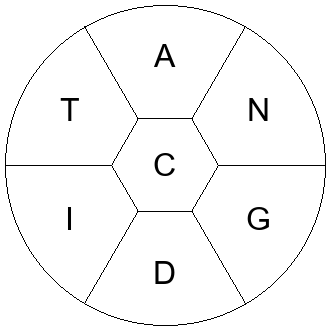
The official answers for today's puzzle are:

Click on the arrow to show the definition.
Click outside the pop-up to close it.


Number of Pangrams: 3

Maximum Puzzle Score: 324

Number of Answers: 50

Points Needed for Genius: 227

Genius requires between 29 and 42 words. You need at least an 8-letter word to reach genius. If you don't get the pangrams, you need 83% of the total points to reach genius. If you get the pangrams, you only need 65% of the remaining points to reach genius.

The button below will reveal a chart with the number of words by each letter. Red bars indicate that there is a pangram(s) starting with that letter.


How does this puzzle compare to other puzzles?

Today's score of 324 was in the 96th percentile of all puzzles.
The last time there was a score this high was on January 1, 2026.
The highest score ever was 537 on January 22, 2021.
The lowest score ever was 47 on March 27, 2023.

This puzzle's 50 possible answers rank it in the 75th percentile of all puzzles.
The last time there were more answers than this was on January 17, 2026.
The highest number of answers was 81 on June 8, 2019.
The lowest number of answers was 16 on March 27, 2023.

It takes an 8-letter word for genius.
The last time this happened was on January 13, 2026.

Today's puzzle has an average word length of 6.3.
For all Bees, the average word length has been 5.3.


Haven't I seen these letters before?

Hover over a letter to see its first and most recent appearance in the Bee!


Haven't I seen these words before?

The most common words in the Bee are:

  • noon 227
  • loll 210
  • toot 207
  • naan 189
  • nana 189
  • lilt 151
  • till 151
  • tilt 151
  • nene 148
  • tint 145
  • mama 142
  • mamma 142
  • acacia 137
  • acai 137
  • onion 137
  • onto 136
  • toon 136
  • anal 129
  • anon 128
  • olio 124
  • tact 121
  • dodo 120
  • papa 120
  • baba 119
  • boob 117
  • booboo 117
  • poop 117
  • lull 116
  • lulu 116
  • cocci 114
  • call 113
  • calla 113
  • mitt 113
  • mono 112
  • moon 112
  • tutu 112
  • ratatat 111
  • tart 111
  • tartar 111
  • tattoo 111
  • attar 110
  • allay 109
  • ally 109
  • loon 109
  • tatty 108
  • ammo 107
  • momma 107
  • epee 104
  • meme 104
  • peep 104


How long are words in the Bee?

There have been 112,435 answers ever accepted in the Bee - with 10,897 unique words.
Below are the distributions of the lengths of these words.


Valid dictionary words not in today's official answers

You may be wondering why these words aren't here*:

  • accidia
  • acini
  • acinic
  • acta
  • actin
  • actinia
  • actinian
  • actinic
  • aggadic
  • agnatic
  • atactic
  • caca
  • cadi
  • caid
  • cain
  • candida
  • cantic
  • canting
  • catting
  • cnida
  • diacid
  • diacidic
  • diactinic
  • ictic
  • incaging
  • incitant
  • indican
  • indicant
  • nicad
  • nictating
  • nictitant
  • nictitating
  • tacan
  • ticcing
  • tictac
  • tincting

*Because the New York Times considers them obscure or offensive.

acacia

Etymology 1

noun
  1. A shrub or tree of the tribe Acacieae.
  2. The thickened or dried juice of several species in Acacieae, in particular Vachellia nilotica (syn. Acacia nilotica), the Egyptian acacia.
  3. A false acacia; robinia tree, Robinia pseudoacacia.
  4. Gum arabic; gum acacia.
  5. Any of several related trees, such as the locust tree.
  6. A light to moderate greenish yellow with a hint of red.

Etymology 2

noun
  1. (history) A roll or bag, filled with dust, borne by Byzantine emperors, as a memento of mortality. It is represented on medals.

acai

noun
  1. Any of several South American palms, of the genus Euterpe, having a dark purple drupe.
  2. The fruit of these trees, harvested for its juice.

acid

noun
  1. A sour substance.
  2. Any of several classes of compound having the following properties:
  3. Lysergic acid diethylamide (LSD)
adjective
  1. Sour, sharp, or biting to the taste; tart; having the taste of vinegar.
  2. Sour-tempered.
  3. Of or pertaining to an acid; acidic.
  4. Denoting a musical genre that is a distortion (as if hallucinogenic) of an existing genre, as in acid house, acid jazz, acid rock.

acidic

adjective
  1. Having a pH less than 7, or being sour, or having the strength to neutralize alkalis, or turning a litmus paper red.
  2. Containing a high percentage of silica; opposed to basic.
  3. Of or relating to acid; having the character of an acid.

acing

verb
  1. (US) To pass (a test, interviews etc.) perfectly.
  2. To win a point by an ace.
  3. To make an ace (hole in one).

acting

verb
  1. To do something.
  2. To do (something); to perform.
  3. To perform a theatrical role.
  4. Of a play: to be acted out (well or badly).
  5. To behave in a certain manner for an indefinite length of time.
  6. To convey an appearance of being.
  7. To do something that causes a change binding on the doer.
  8. (construed with on or upon) To have an effect (on).
  9. To play (a role).
  10. To feign.
  11. (construed with on or upon, of a group) To map via a homomorphism to a group of automorphisms (of).
  12. To move to action; to actuate; to animate.
noun
  1. An action or deed.
  2. Something done by a party — so called to avoid confusion with the legal senses of deed and action.
  3. Pretending.
  4. The occupation of an actor.
adjective
  1. Temporarily assuming the duties or authority of another person when they are unable to do their job.

addict

noun
  1. A person who is addicted, especially to a harmful drug
  2. An adherent or fan (of something)
verb
  1. To deliver (someone or something) following a judicial decision.
  2. To devote (oneself) to a given activity, occupation, thing etc.
  3. To bind (a person or thing) to the service of something.
  4. To devote or pledge (oneself) to a given person, cause etc.
  5. To devote (one's mind, talent etc.) to a given activity, occupation, thing etc.
  6. To make (someone) become devoted to a given thing or activity; to cause to be addicted.

addicting

verb
  1. To deliver (someone or something) following a judicial decision.
  2. To devote (oneself) to a given activity, occupation, thing etc.
  3. To bind (a person or thing) to the service of something.
  4. To devote or pledge (oneself) to a given person, cause etc.
  5. To devote (one's mind, talent etc.) to a given activity, occupation, thing etc.
  6. To make (someone) become devoted to a given thing or activity; to cause to be addicted.
adjective
  1. Causing addiction.

antacid

noun
  1. An agent that counteracts or neutralizes acidity, especially in the stomach.
adjective
  1. Counteracting or neutralizing acidity, especially in the stomach.

antic

Etymology 1

noun
  1. A grotesque representation of a figure; a gargoyle.
  2. A caricature.
  3. (often in plural) A ludicrous gesture or act; ridiculous behaviour; caper.
  4. A grotesque performer or clown, buffoon.
verb
  1. To perform antics, caper.
  2. To make a fool of, to cause to look ridiculous.
  3. To perform (an action) as an antic; to mimic ridiculously.
adjective
  1. Playful, funny, absurd
  2. Grotesque, incongruous.
  3. Grotesque, bizarre
adjective
  1. Having existed in ancient times, descended from antiquity; used especially in reference to Greece and Rome.
  2. Belonging to former times, not modern, out of date, old-fashioned.
  3. Designating a style of type.
  4. Embossed without gilt.

Etymology 2

noun
  1. A pose, often exaggerated, in anticipation of an action; for example, a brief squat before jumping

attic

noun
  1. The space, often unfinished and with sloped walls, directly below the roof in the uppermost part of a house or other building, generally used for storage or habitation.

cacti

noun
  1. Any member of the family Cactaceae, a family of flowering New World succulent plants suited to a hot, semi-desert climate.
  2. Any succulent plant with a thick fleshy stem bearing spines but no leaves, such as euphorbs.

cadging

verb
  1. To beg.
  2. To obtain something by wit or guile; to convince people to do something they might not normally do.
  3. To carry hawks and other birds of prey.
  4. To carry, as a burden.
  5. To hawk or peddle, as fish, poultry, etc.
  6. To intrude or live on another meanly; to beg.

caging

verb
  1. To confine in a cage; to put into and keep in a cage.
  2. To restrict someone's movement or creativity.
  3. To track individual responses to direct mail, either to maintain and develop mailing lists or to identify people who are not eligible to vote because they do not reside at the registered addresses.
noun
  1. The act of placing or trapping something in a cage.

cancan

noun
  1. A high-kicking chorus line dance originating in France.
  2. (motocross) A trick where one leg is brought over the seat, so that both legs are on one side.
verb
  1. To dance the cancan.

candid

noun
  1. A spontaneous or unposed photograph.
adjective
  1. Impartial and free from prejudice.
  2. Straightforward, open and sincere.
  3. Not posed or rehearsed.

canid

noun
  1. Any member of the family Canidae, including dogs, wolves, foxes, coyotes and jackals.

caning

verb
  1. To strike or beat with a cane or similar implement
  2. To destroy; to comprehensively defeat
  3. To do something well, in a competent fashion
  4. To produce extreme pain
  5. To make or furnish with cane or rattan.
noun
  1. A beating with a cane.

canna

Etymology 1

noun
  1. Any member of the genus Canna of tropical plants with large leaves and often showy flowers.

Etymology 2

noun
  1. A measure of length in Italy, varying from six to seven feet.

canning

verb
  1. To seal in a can.
  2. To preserve by heating and sealing in a jar or can.
  3. To discard, scrap or terminate (an idea, project, etc.).
  4. To shut up.
  5. To fire or dismiss an employee.
  6. To hole the ball.
noun
  1. The process of preserving food by heat processing in a sealed vessel (a sealed jar or can).
  2. The practice of collecting aluminum cans or other recyclable objects; making money by collecting and selling such things.

cant

Etymology 1

noun
  1. An argot, the jargon of a particular class or subgroup.
  2. A private or secret language used by a religious sect, gang, or other group.
  3. A language spoken by some Irish Travellers; Shelta.
  4. Empty, hypocritical talk.
  5. Whining speech, such as that used by beggars.
  6. A blazon of a coat of arms that makes a pun upon the name (or, less often, some attribute or function) of the bearer, canting arms.
  7. A call for bidders at a public fair; an auction.
verb
  1. To speak with the jargon of a class or subgroup.
  2. To speak in set phrases.
  3. To preach in a singsong fashion, especially in a false or empty manner.
  4. Of a blazon, to make a pun that references the bearer of a coat of arms.
  5. To sell by auction, or bid at an auction.

Etymology 2

noun
  1. Side, edge, corner, niche.
  2. Slope, the angle at which something is set.
  3. A corner (of a building).
  4. An outer or external angle.
  5. An inclination from a horizontal or vertical line; a slope or bevel; a tilt.
  6. A movement or throw that overturns something.
  7. A sudden thrust, push, kick, or other impulse, producing a bias or change of direction; also, the bias or turn so given.
  8. (coopering) A segment forming a side piece in the head of a cask.
  9. A segment of the rim of a wooden cogwheel.
  10. A piece of wood laid upon the deck of a vessel to support the bulkheads.
verb
  1. To set (something) at an angle.
  2. To give a sudden turn or new direction to.
  3. To bevel an edge or corner.
  4. To overturn so that the contents are emptied.

Etymology 3

noun
  1. A parcel, a division.
verb
  1. To divide or parcel out.

Etymology 4

adjective
  1. Lively, lusty.

cantata

noun
  1. A vocal composition accompanied by instruments and generally containing more than one movement, typical of 17th and 18th century Italian music.

cantina

noun
  1. A drinking establishment, often specifically of the type found in Latin America.
  2. Abbreviated form of cantina truck, cantina wagon or cantina trailer

cicada

noun
  1. Any of several insects in the superfamily Cicadoidea, with small eyes wide apart on the head and transparent well-veined wings.

citing

verb
  1. To quote; to repeat, as a passage from a book, or the words of another.
  2. To list the source(s) from which one took information, words or literary or verbal context.
  3. To summon officially or authoritatively to appear in court.
noun
  1. Citation.

dancing

verb
  1. To move with rhythmic steps or movements, especially in time to music.
  2. To leap or move lightly and rapidly.
  3. To perform the steps to.
  4. To cause to dance, or move nimbly or merrily about.
  5. To make love or have sex.
noun
  1. The activity of taking part in a dance.
  2. A dance club in France.

dicing

verb
  1. To play dice.
  2. To cut into small cubes.
  3. To ornament with squares, diamonds, or cubes.
noun
  1. A game of dice.
  2. A fragment of diced food.

dicta

noun
  1. An authoritative statement; a dogmatic saying; a maxim, an apothegm.
  2. A judicial opinion expressed by judges on points that do not necessarily arise in the case, and are not involved in it.
  3. The report of a judgment made by one of the judges who has given it.
  4. An arbitrament or award.

dictating

verb
  1. To order, command, control.
  2. To speak in order for someone to write down the words.

didact

No Definition Found.

didactic

noun
  1. A treatise on teaching or education.
adjective
  1. Instructive or intended to teach or demonstrate, especially with regard to morality.
  2. Excessively moralizing.
  3. Teaching from textbooks rather than laboratory demonstration and clinical application.

gigantic

adjective
  1. Very large.
  2. In the manner of a giant.

icing

Etymology 1

noun
  1. A sweet glaze made primarily of sugar and often flavored, typically used for baked goods; frosting.
  2. A minor violation of ice hockey rules, occurring when a player shoots the puck from his/her side of the red line so that it crosses the goal line on the opponent's side. A team playing short-handed is not penalized for this.
  3. The process of forming a layer of ice on a surface.

Etymology 2

verb
  1. To cool with ice, as a beverage.
  2. To become ice; to freeze.
  3. To make icy; to freeze.
  4. To murder.
  5. To cover with icing (frosting made of sugar and milk or white of egg); to frost; as cakes, tarts, etc.
  6. To put out a team for a match.
  7. To shoot the puck the length of the playing surface, causing a stoppage in play called icing.

incant

verb
  1. To state solemnly, to chant.
  2. To recite an incantation.

incanting

No Definition Found.

inciting

verb
  1. To stir up or excite; to rouse or goad into action.

indicating

verb
  1. To point out; to discover; to direct to a knowledge of; to show; to make known.
  2. To show or manifest by symptoms; to point to as the proper remedies.
  3. To signal in a vehicle the desire to turn right or left.
  4. To investigate the condition or power of, as of steam engine, by means of an indicator.

indicia

noun
  1. A preprinted marking on a mailpiece which shows that postage has been paid by the sender.
noun
  1. An indication; a sign.

indict

verb
  1. To accuse of wrongdoing; charge.
  2. To make a formal accusation or indictment for a crime against (a party) by the findings of a jury, especially a grand jury.

indicting

verb
  1. To accuse of wrongdoing; charge.
  2. To make a formal accusation or indictment for a crime against (a party) by the findings of a jury, especially a grand jury.

intact

adjective
  1. Left complete or whole; not touched, defiled, sullied or otherwise damaged
  2. Of animals, not castrated: an intact bull.
  3. Uncircumcised; commonly used to describe a penis with a foreskin in intactivism.

niacin

noun
  1. A water-soluble vitamin, a component of vitamin B complex, found in meat, yeast, and dairy products; it is essential to metabolism.

tacit

adjective
  1. Expressed in silence; implied, but not made explicit; silent.
  2. Not derived from formal principles of reasoning; based on induction rather than deduction.

tact

noun
  1. The sense of touch; feeling.
  2. The stroke in beating time.
  3. Sensitive mental touch; special skill or faculty; keen perception or discernment; ready power of appreciating and doing what is required by circumstances; the ability to say the right thing.
  4. A verbal operant which is controlled by a nonverbal stimulus (such as an object, event, or property of an object) and is maintained by nonspecific social reinforcement (praise).
verb
  1. To use a tact (a kind of verbal operant; see noun sense).
noun
  1. A maneuver, or action calculated to achieve some end.
  2. A maneuver used against an enemy.
  3. A sequence of moves that limits the opponent's options and results in an immediate and tangible advantage, typically in the form of material.

tactic

noun
  1. A maneuver, or action calculated to achieve some end.
  2. A maneuver used against an enemy.
  3. A sequence of moves that limits the opponent's options and results in an immediate and tangible advantage, typically in the form of material.
adjective
  1. Tactical; of or relating to the art of military and naval tactics.
  2. Describing a polymer whose repeat units are identical.

tactician

noun
  1. A person skilled in the planning and execution of tactics.

tannic

adjective
  1. Pertaining to, containing, or obtained from tannin.

tinct

No Definition Found.

titanic

Etymology 1

adjective
  1. Having great size, or great strength, force or power.

Etymology 2

adjective
  1. Of or relating to titanium, especially tetravalent titanium

indica

noun
  1. Any of the indica subspecies of the rice Oryza sativa, which (unlike the japonica or sinica subspecies) are non-sticky and long-grained.
  2. Marijuana of the species Cannabis indica.