Thursday, January 29, 2026

Answers to yesterday's Bee

Jump to answers for


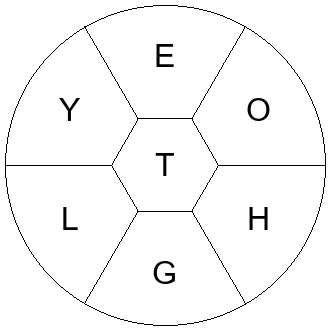
The official answers for today's puzzle are:

Click on the arrow to show the definition.
Click outside the pop-up to close it.


Number of Pangrams: 1

Maximum Puzzle Score: 125

Number of Answers: 29

Points Needed for Genius: 88

Genius requires between 12 and 26 words. You need at least an 8-letter word to reach genius. If you don't get the pangram, you need 80% of the total points to reach genius. If you get the pangram, you only need 66% of the remaining points to reach genius.

Other days with this pangram:

The button below will reveal a chart with the number of words by each letter. Red bars indicate that there is a pangram(s) starting with that letter.


How does this puzzle compare to other puzzles?

Today's score of 125 was in the 26th percentile of all puzzles.
The last time there was a score this low was on January 19, 2026.
The highest score ever was 537 on January 22, 2021.
The lowest score ever was 47 on March 27, 2023.

This puzzle's 29 possible answers rank it in the 21st percentile of all puzzles.
The last time there were fewer answers than this was on January 2, 2026.
The highest number of answers was 81 on June 8, 2019.
The lowest number of answers was 16 on March 27, 2023.

It takes an 8-letter word for genius.
The last time this happened was on January 27, 2026.

Today's puzzle has an average word length of 5.3.
For all Bees, the average word length has been 5.3.


Haven't I seen these letters before?

Hover over a letter to see its first and most recent appearance in the Bee!


Haven't I seen these words before?

The most common words in the Bee are:

  • noon 228
  • loll 212
  • toot 208
  • naan 190
  • nana 190
  • lilt 151
  • till 151
  • tilt 151
  • nene 149
  • tint 145
  • mama 142
  • mamma 142
  • acacia 137
  • acai 137
  • onion 137
  • onto 136
  • toon 136
  • anal 130
  • anon 129
  • olio 124
  • dodo 122
  • papa 121
  • tact 121
  • baba 119
  • poop 118
  • boob 117
  • booboo 117
  • lull 117
  • lulu 117
  • cocci 114
  • call 113
  • calla 113
  • mitt 113
  • mono 112
  • moon 112
  • tutu 112
  • ratatat 111
  • tart 111
  • tartar 111
  • tattoo 111
  • allay 110
  • ally 110
  • attar 110
  • loon 110
  • tatty 109
  • ammo 107
  • momma 107
  • epee 104
  • meme 104
  • peep 104


How long are words in the Bee?

There have been 112,953 answers ever accepted in the Bee - with 10,903 unique words.
Below are the distributions of the lengths of these words.


Valid dictionary words not in today's official answers

You may be wondering why these words aren't here*:

  • ethology
  • gleet
  • gleety
  • goeth
  • goglet
  • helot
  • heth
  • hogget
  • hooty
  • hotty
  • hyte
  • leet
  • lethe
  • loth
  • loto
  • lotte
  • otto
  • teel
  • tegg
  • tele
  • telly
  • teth
  • theelol
  • theolog
  • thole
  • tole
  • tolt
  • tolyl
  • totty
  • toyo
  • tyee
  • tythe
  • yett

*Because the New York Times considers them obscure or offensive.

ethyl

noun
  1. The univalent hydrocarbon radical, C2H5, formally derived from ethane by the loss of a hydrogen atom.

eyelet

noun
  1. An object that consists of a rim and small hole or perforation to receive a cord or fastener, as in garments, sails, etc. An eyelet may reinforce a hole.
  2. A shaped metal embellishment containing a hole, used in scrapbook. Eyelets are typically set by punching a hole in the page, placing the smooth side of the eyelet on a table, positioning the paper over protruding edge and curling the edge down using a hammer and eyelet setter.
  3. Cotton fabric with small holes.
  4. The contact tip of the base of a light bulb.
  5. A peephole.
  6. A little eye.
verb
  1. To make eyelets in.

eyeteeth

noun
  1. A canine tooth of the upper jaw in humans.

eyetooth

noun
  1. A canine tooth of the upper jaw in humans.

gelt

Etymology 1

noun
  1. A lunatic.

Etymology 2

noun
  1. Gilding; gilt.

Etymology 3

verb
  1. To castrate a male (usually an animal).
  2. To deprive of anything essential; to weaken.
noun
  1. A gelding.

Etymology 4

noun
  1. Money.
  2. Tribute; tax.

Etymology 5

noun
  1. Money, especially that given as a gift on Hanukkah or used in games of dreidel.
  2. Chocolate candy in the shape of coins, usually wrapped in metallic foil, usually eaten on Hanukkah and often used for games of dreidel.
  3. Money.

ghetto

noun
  1. An (often walled) area of a city in which Jews are concentrated by force and law. (Used particularly of areas in medieval Italy and in Nazi-controlled Europe.)
  2. An (often impoverished) area of a city inhabited predominantly by members of a specific nationality, ethnicity or race.
  3. An area in which people who are distinguished by sharing something other than ethnicity concentrate or are concentrated.
  4. (sometimes derogatory) An isolated, self-contained, segregated subsection, area or field of interest; often of minority or specialist interest.
verb
  1. To confine (a specified group of people) to a ghetto.
adjective
  1. Of or relating to a ghetto or to ghettos in general.
  2. Unseemly and indecorous or of low quality; cheap; shabby, crude.
  3. Characteristic of the style, speech, or behavior of residents of a predominantly black or other ghetto in the United States.
  4. Having been raised in a ghetto in the United States.

goth

noun
  1. A punk-derived subculture of people who predominantly dress in black, associated with mournful music and attitudes.
  2. A style of punk rock influenced by glam rock; gothic rock.
  3. A person who is part of the goth subculture.
adjective
  1. Relating to this music or these people.

holt

noun
  1. A small piece of woodland or a woody hill; a copse.
  2. The lair of an animal, especially of an otter.

hoot

noun
  1. A derisive cry or shout.
  2. The cry of an owl.
  3. A fun event or person. (See hootenanny)
  4. A small particle.
verb
  1. To cry out or shout in contempt.
  2. To make the cry of an owl, a hoo.
  3. To assail with contemptuous cries or shouts; to follow with derisive shouts.
  4. To sound the horn of a vehicle

hotel

noun
  1. A large town house or mansion; a grand private residence, especially in France.
  2. An establishment that provides accommodation and other services for paying guests; normally larger than a guesthouse, and often one of a chain.
  3. A restaurant; any dining establishment.
  4. The letter H in the ICAO spelling alphabet.
  5. The larger red property in the game of Monopoly, in contradistinction to houses.
  6. The guest accommodation and dining section of a cruise ship.

hotly

adverb
  1. With great amounts of heat
  2. In a heated manner; intensely or vehemently

loot

Etymology 1

noun
  1. A kind of scoop or ladle, chiefly used to remove the scum from brine-pans in saltworks.

Etymology 2

noun
  1. The act of plundering.
  2. Plunder, booty, especially from a ransacked city.
  3. Any prize or profit received for free, especially Christmas presents
  4. Items dropped by defeated enemies.
verb
  1. To steal, especially as part of war, riot or other group violence.
  2. To steal from.
  3. To examine the corpse of a fallen enemy for loot.

lotto

noun
  1. A game of chance similar to bingo
  2. A lottery

otology

noun
  1. The branch of medicine that deals with the ear, its structure, function and pathology.

teeth

noun
  1. The ability to be enforced, or to be enforced to any useful effect.
verb
  1. To grow teeth.
  2. To bite on something to relieve discomfort caused by growing teeth.
noun
  1. A hard, calcareous structure present in the mouth of many vertebrate animals, generally used for eating.
  2. A sharp projection on the blade of a saw or similar implement.
  3. A projection on the edge of a gear that meshes with similar projections on adjacent gears, or on the circumference of a cog that engages with a chain.
  4. A projection or point in other parts of the body resembling the tooth of a vertebrate animal.
  5. A pointed projection from the margin of a leaf.
  6. The rough surface of some kinds of cel or other films that allows better adhesion of artwork.
  7. Liking, fondness (compare toothsome).
  8. An irreducible component of a comb that intersects the handle in exactly one point, that point being distinct from the unique point of intersection for any other tooth of the comb.

teethe

verb
  1. To grow teeth.
  2. To bite on something to relieve discomfort caused by growing teeth.

teleology

noun
  1. The study of the purpose or design of natural occurrences.
  2. (by extension) An instance of such a design or purpose, usually in natural phenomena.
  3. The use of a purpose or design rather than the laws of nature to explain an occurrence.

tell

Etymology 1

noun
  1. A reflexive, often habitual behavior, especially one occurring in a context that often features attempts at deception by persons under psychological stress (such as a poker game or police interrogation), that reveals information that the person exhibiting the behavior is attempting to withhold.
  2. That which is told; a tale or account.
  3. A private message to an individual in a chat room; a whisper.
verb
  1. (archaic outside of idioms) To count, reckon, or enumerate.
  2. To narrate.
  3. To convey by speech; to say.
  4. To instruct or inform.
  5. To order; to direct, to say to someone.
  6. To discern, notice, identify or distinguish.
  7. To reveal.
  8. To be revealed.
  9. To have an effect, especially a noticeable one; to be apparent, to be demonstrated.
  10. To use (beads or similar objects) as an aid to prayer.
  11. To inform someone in authority about a wrongdoing.
  12. (authorship) To reveal information in prose through outright expository statement -- contrasted with show

Etymology 2

noun
  1. A hill or mound, originally and especially in the Middle East, over or consisting of the ruins of ancient settlements.

thee

Etymology 1

verb
  1. To address (a person) using the pronoun thee.
  2. To use the word thee.
pronoun
  1. Objective and reflexive case of thou.
  2. Thou.

Etymology 2

verb
  1. To thrive; prosper.

Etymology 3

noun
  1. The letter ⟨(⟩, which stands for the th sound /ð/ in Pitman shorthand.

theology

noun
  1. The study of God, a god, or gods; and of the truthfulness of religion in general.
  2. An organized method of interpreting spiritual works and beliefs into practical form.
  3. Subjective marginal details.

they

Etymology 1

pronoun
  1. (the third-person plural) A group of people, animals, plants or objects previously mentioned.
  2. (the third-person singular, sometimes proscribed) A single person, previously mentioned, especially if of unknown or non-binary gender, but typically not if previously named and identified as male or female.
  3. (indefinite pronoun, vague meaning) People; some people; people in general; someone, excluding the speaker.

Etymology 2

pronoun
  1. There (especially as an expletive subject of be).

toggle

noun
  1. A wooden or metal pin, short rod, crosspiece or similar, fixed transversely in the eye of a rope or chain to be secured to any other loop, ring, or bight, e.g. a sea painter to a lifeboat.
  2. (in particular) A rod-shaped button bound with slack to the fabric.
  3. A toggle switch.
  4. An appliance for transmitting force at right angles to its direction.
  5. A horizontal piece of wood that is placed on a door, flat, or other wooden structure, but is not on one of the edges of the structure.
  6. (skydiving) A loop of webbing or a dowel affixed to the end of the steering/brake lines of a parachute providing the pilot with a means of control.
verb
  1. To alternate between two positions using a single switch or lever.
  2. To switch between alternate states.
  3. To fix like a toggle iron; to fix fast.

toll

Etymology 1

noun
  1. Loss or damage incurred through a disaster.
  2. A fee paid for some liberty or privilege, particularly for the privilege of passing over a bridge or on a highway, or for that of vending goods in a fair, market, etc.
  3. A fee for using any kind of material processing service.
  4. A tollbooth.
  5. A liberty to buy and sell within the bounds of a manor.
  6. A portion of grain taken by a miller as a compensation for grinding.
verb
  1. To impose a fee for the use of.
  2. To levy a toll on (someone or something).
  3. To take as a toll.
  4. To pay a toll or tallage.

Etymology 2

noun
  1. The act or sound of tolling
verb
  1. To ring (a bell) slowly and repeatedly.
  2. To summon by ringing a bell.
  3. To announce by tolling.

Etymology 3

verb
  1. To draw; pull; tug; drag.
  2. To tear in pieces.
  3. To draw; entice; invite; allure.
  4. To lure with bait; tole (especially, fish and animals).

Etymology 4

verb
  1. To take away; to vacate; to annul.
  2. To suspend.

tool

noun
  1. A mechanical device intended to make a task easier.
  2. Equipment used in a profession, e.g., tools of the trade.
  3. Something to perform an operation; an instrument; a means.
  4. A piece of software used to develop software or hardware, or to perform low-level operations.
  5. A person or group which is used or controlled, usually unwittingly, by another person or group.
  6. Penis.
  7. (by extension) An obnoxious or uptight person.
verb
  1. To work on or shape with tools, e.g., hand-tooled leather.
  2. To equip with tools.
  3. To work very hard.
  4. To put down another person (possibly in a subtle, hidden way), and in that way to use him or her to meet a goal.
  5. To intentionally attack the ball so that it deflects off a blocker out of bounds.
  6. To drive (a coach or other vehicle).
  7. To carry or convey in a coach or other vehicle.
  8. To travel in a vehicle; to ride or drive.

toot

Etymology 1

noun
  1. The noise of a horn or whistle.
  2. (by extension) A fart; flatus.
  3. Cocaine.
  4. A portion of cocaine that a person snorts.
  5. A spree of drunkness.
  6. (pronounced /tʊt/) Rubbish; tat.
  7. A message on the social networking software Mastodon.
verb
  1. To stand out, or be prominent.
  2. To peep; to look narrowly.
  3. To see; to spy.
  4. To flatulate.
  5. To make the sound of a horn or whistle.
  6. To cause a horn or whistle to make its sound.
  7. To go on a drinking binge.
  8. To snort (a recreational drug).
  9. To post a message on a Mastodon instance (a self-hosted version of the networking software).

Etymology 2

noun
  1. A toilet.

tooth

noun
  1. A hard, calcareous structure present in the mouth of many vertebrate animals, generally used for eating.
  2. A sharp projection on the blade of a saw or similar implement.
  3. A projection on the edge of a gear that meshes with similar projections on adjacent gears, or on the circumference of a cog that engages with a chain.
  4. A projection or point in other parts of the body resembling the tooth of a vertebrate animal.
  5. A pointed projection from the margin of a leaf.
  6. The rough surface of some kinds of cel or other films that allows better adhesion of artwork.
  7. Liking, fondness (compare toothsome).
  8. An irreducible component of a comb that intersects the handle in exactly one point, that point being distinct from the unique point of intersection for any other tooth of the comb.
verb
  1. To provide or furnish with teeth.
  2. To indent; to jag.
  3. To lock into each other, like gear wheels.

toothy

adjective
  1. Having prominent teeth

tootle

noun
  1. A soft toot sound.
  2. A trip or excursion.
verb
  1. To make a soft toot sound.
  2. To play (a musical instrument) making such a sound.
  3. To go (somewhere); to amble aimlessly.
  4. To transport (someone somewhere).

tote

Etymology 1

noun
  1. A tote bag.
  2. A heavy burden.
  3. (logistics) A kind of plastic box used for transporting goods.
verb
  1. To carry or bear.

Etymology 2

verb
  1. To add up; to calculate a total.

Etymology 3

noun
  1. A pari-mutuel machine; a totalizator.
  2. Pari-mutuel betting.