Tuesday, February 3, 2026

Answers to yesterday's Bee

Jump to answers for


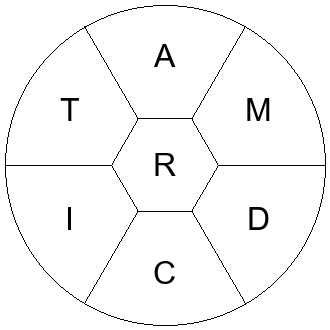
The official answers for today's puzzle are:

Click on the arrow to show the definition.
Click outside the pop-up to close it.


Number of Pangrams: 1

Maximum Puzzle Score: 222

Number of Answers: 48

Points Needed for Genius: 155

Genius requires between 23 and 41 words. You need at least a 7-letter word to reach genius. If you don't get the pangram, you need 75% of the total points to reach genius. If you get the pangram, you only need 68% of the remaining points to reach genius.

Other days with this pangram:

The button below will reveal a chart with the number of words by each letter. Red bars indicate that there is a pangram(s) starting with that letter.


How does this puzzle compare to other puzzles?

Today's score of 222 was in the 73rd percentile of all puzzles.
The last time there was a score this high was on February 1, 2026.
The highest score ever was 537 on January 22, 2021.
The lowest score ever was 47 on March 27, 2023.

This puzzle's 48 possible answers rank it in the 71st percentile of all puzzles.
The last time there were more answers than this was on February 1, 2026.
The highest number of answers was 81 on June 8, 2019.
The lowest number of answers was 16 on March 27, 2023.

It takes a 7-letter word for genius.
The last time this happened was on January 31, 2026.

Today's puzzle has an average word length of 5.4.
For all Bees, the average word length has been 5.3.


Haven't I seen these letters before?

Hover over a letter to see its first and most recent appearance in the Bee!


Haven't I seen these words before?

The most common words in the Bee are:

  • noon 228
  • loll 213
  • toot 208
  • naan 190
  • nana 190
  • lilt 151
  • till 151
  • tilt 151
  • nene 149
  • tint 145
  • mama 142
  • mamma 142
  • acacia 137
  • acai 137
  • onion 137
  • onto 136
  • toon 136
  • anal 130
  • anon 129
  • olio 124
  • dodo 122
  • papa 122
  • tact 121
  • baba 120
  • boob 118
  • booboo 118
  • lull 118
  • lulu 118
  • poop 118
  • cocci 114
  • call 113
  • calla 113
  • mitt 113
  • mono 112
  • moon 112
  • ratatat 112
  • tart 112
  • tartar 112
  • tutu 112
  • attar 111
  • loon 111
  • tattoo 111
  • allay 110
  • ally 110
  • tatty 109
  • ammo 107
  • momma 107
  • epee 105
  • peep 105
  • roar 105


How long are words in the Bee?

There have been 113,175 answers ever accepted in the Bee - with 10,906 unique words.
Below are the distributions of the lengths of these words.


Valid dictionary words not in today's official answers

You may be wondering why these words aren't here*:

  • acari
  • acarid
  • acratic
  • airt
  • airtram
  • amir
  • amrit
  • amrita
  • amtrac
  • aramid
  • ataractic
  • attrit
  • caird
  • caracara
  • cardia
  • carditic
  • carr
  • crit
  • damar
  • dammar
  • daric
  • diram
  • iatric
  • irid
  • iridic
  • iritic
  • maar
  • mair
  • mara
  • marc
  • maria
  • marram
  • matric
  • micra
  • miracidia
  • miri
  • mirid
  • raia
  • rami
  • riata
  • ricrac
  • ritard
  • tarama
  • tartaric
  • tatar
  • trad
  • triac
  • triacid
  • triadic
  • trictrac

*Because the New York Times considers them obscure or offensive.

acrid

adjective
  1. Sharp and harsh, or bitter and not to the taste.
  2. Causing heat and irritation.
  3. Caustic; bitter; bitterly irritating.

arcadia

No Definition Found.

arctic

noun
  1. A warm waterproof overshoe.
  2. Any of various butterflies of the genus Oeneis.
adjective
  1. (now only in compounds) Pertaining to the celestial north pole, or to the pole star.
  2. Pertaining to the northern polar region of the planet, characterised by extreme cold and an icy landscape.
  3. Extremely cold, snowy, or having other properties of extreme winter associated with the Arctic.
  4. Designed for use in very cold conditions.

aria

noun
  1. A musical piece written typically for a solo voice with orchestral accompaniment in an opera or cantata.

arid

adjective
  1. Very dry.
  2. Describing a very dry climate. Typically defined as less than 25 cm or 10 inches of rainfall annually.
  3. Devoid of value.

armada

noun
  1. A fleet of warships, especially with reference to the Spanish Armada.
  2. Any large army or fleet of military vessels.
  3. A large flock of anything.

atria

noun
  1. A central room or space in ancient Roman homes, open to the sky in the middle; a similar space in other buildings.
  2. A square hall lit by daylight from above, into which rooms open at one or more levels.
  3. A cavity, entrance, or passage.
  4. Any enclosed sexine and nexine layers, widening toward the interior of the grain.

attar

noun
  1. An essential oil extracted from flowers.
  2. A perfume made from this oil.

attract

verb
  1. To pull toward without touching.
  2. To arouse interest.
  3. To draw by moral, emotional or sexual influence; to engage or fix, as the mind, attention, etc.; to invite or allure.

carat

noun
  1. A unit of weight for precious stones and pearls, equivalent to 200 milligrams.
  2. Any of several units of weight, varying from 189 to 212 mg, the weight of a carob seed.
  3. A measure of the purity of gold, pure gold being 24 carats.

card

Etymology 1

noun
  1. A playing card.
  2. (in the plural) Any game using playing cards; a card game.
  3. A resource or an argument, used to achieve a purpose.
  4. Any flat, normally rectangular piece of stiff paper, plastic etc.
  5. A map or chart.
  6. An amusing or entertaining person, often slightly eccentrically so.
  7. A list of scheduled events or of performers or contestants.
  8. A tabular presentation of the key statistics of an innings or match: batsmen’s scores and how they were dismissed, extras, total score and bowling figures.
  9. A removable electronic device that may be inserted into a powered electronic device to provide additional capability.
  10. A greeting card.
  11. A business card.
  12. Title card / Intertitle: A piece of filmed, printed text edited into the midst of the photographed action at various points, generally to convey character dialogue or descriptive narrative material related to the plot.
  13. A test card.
  14. A published note, containing a brief statement, explanation, request, expression of thanks, etc.
  15. A printed programme.
  16. (by extension) An attraction or inducement.
  17. A paper on which the points of the compass are marked; the dial or face of the mariner's compass.
  18. A perforated pasteboard or sheet-metal plate for warp threads, making part of the Jacquard apparatus of a loom.
  19. An indicator card.
verb
  1. To check IDs, especially against a minimum age requirement.
  2. To play cards.
  3. To make (a stated score), as recorded on a scoring card.

Etymology 2

noun
  1. Material with embedded short wire bristles.
  2. A comb- or brush-like device or tool to raise the nap on a fabric.
  3. A hand-held tool formed similarly to a hairbrush but with bristles of wire or other rigid material. It is used principally with raw cotton, wool, hair, or other natural fibers to prepare these materials for spinning into yarn or thread on a spinning wheel, with a whorl or other hand-held spindle. The card serves to untangle, clean, remove debris from, and lay the fibers straight.
  4. A machine for disentangling the fibres of wool prior to spinning.
  5. A roll or sliver of fibre (as of wool) delivered from a carding machine.
verb
  1. To use a carding device to disentangle the fibres of wool prior to spinning.
  2. To scrape or tear someone’s flesh using a metal comb, as a form of torture.
  3. To comb with a card; to cleanse or disentangle by carding.
  4. To clean or clear, as if by using a card.
  5. To mix or mingle, as with an inferior or weaker article.

Etymology 3

noun
  1. One of the officials appointed by the pope in the Roman Catholic Church, ranking only below the pope and the patriarchs, constituting the special college which elects the pope. (See Wikipedia article on Catholic cardinals.)
  2. Any of a genus of songbirds of the finch family, Cardinalis.
  3. Any of various related passerine birds of the family Cardinalidae (See Wikipedia article on cardinals) and other similar birds that were once considered to be related.
  4. (color) A deep red color, somewhat less vivid than scarlet, the traditional colour of a Catholic cardinal's cassock. (same as cardinal red)
  5. Short for cardinal number, a number indicating quantity, or the size of a set (e.g., zero, one, two, three). (See Wikipedia article on Cardinal number.)
  6. (grammar) Short for cardinal numeral, a word used to represent a cardinal number.
  7. Short for cardinal flower (Lobelia cardinalis), a flowering plant.
  8. Short for cardinal tetra (Paracheirodon axelrodi), a freshwater fish.
  9. (bow) A woman's short cloak with a hood, originally made of scarlet cloth.
  10. Mulled red wine.

cardiac

noun
  1. A person with heart disease.
  2. Heart disease.
  3. A medicine that excites action in the stomach.
adjective
  1. Pertaining to the heart.
  2. Pertaining to the cardia.
  3. Exciting action in the heart, through the medium of the stomach; cordial; stimulant.

cart

Etymology 1

noun
  1. A small, open, wheeled vehicle, drawn or pushed by a person or animal, more often used for transporting goods than passengers.
  2. A small motor vehicle resembling a car; a go-cart.
  3. A shopping cart.
verb
  1. To carry goods.
  2. To carry or convey in a cart.
  3. To remove, especially involuntarily or for disposal.
  4. To expose in a cart by way of punishment.

Etymology 2

noun
  1. A tape cartridge used for pre-recorded material such as jingles and advertisements.
  2. A cartridge for a video game system.

cataract

noun
  1. A waterspout
  2. A large waterfall; steep rapids in a river.
  3. A flood of water
  4. An overwhelming downpour or rush
  5. A clouding of the lens in the eye leading to a decrease in vision.

circa

preposition
  1. Approximately, about, around (typically in relation to time)

cirri

noun
  1. A tendril.
  2. A thin tendril-like appendage.
  3. A principal high-level cloud type characterised by white, delicate filaments or wisps, of white (or mostly white) patches, or of narrow bands, found at an altitude of above 7000 metres.

citric

adjective
  1. Of, pertaining to, or derived from, the citron or lemon.

cram

noun
  1. The act of cramming (forcing or stuffing something).
  2. Information hastily memorized.
  3. A warp having more than two threads passing through each dent or split of the reed.
  4. (British slang) A lie; a falsehood.
  5. A mathematical board game in which players take turns placing dominoes horizontally or vertically until no more can be placed, the loser being the player who cannot continue.
  6. A small friendship book with limited space for people to enter their information.
verb
  1. To press, force, or drive, particularly in filling, or in thrusting one thing into another; to stuff; to fill to superfluity.
  2. To fill with food to satiety; to stuff.
  3. To put hastily through an extensive course of memorizing or study, as in preparation for an examination.
  4. To study hard; to swot.
  5. To eat greedily, and to satiety; to stuff oneself.
  6. (British slang) To lie; to intentionally not tell the truth.
  7. (British slang) To make (a person) believe false or exaggerated tales.

critic

noun
  1. A person who appraises the works of others.
  2. A specialist in judging works of art.
  3. One who criticizes; a person who finds fault.
  4. An opponent.
verb
  1. To criticise.
noun
  1. The art of criticism.
  2. An essay in which another piece of work is criticised, reviewed, etc.
  3. A point made to criticize something.
  4. A critic; one who criticises.

dart

Etymology 1

noun
  1. A pointed missile weapon, intended to be thrown by the hand, for example a short lance or javelin
  2. Any sharp-pointed missile weapon, such as an arrow.
  3. (sometimes figurative) Anything resembling such a missile; something that pierces or wounds like such a weapon.
  4. A small object with a pointed tip at one end and feathers at the other, which is thrown at a target in the game of darts.
  5. A dart-shaped target towed behind an aircraft to train shooters.
  6. A plan or scheme.
  7. A sudden or fast movement.
  8. A fold that is stitched on a garment.
  9. A fish, the dace.
  10. A cigarette.

Etymology 2

verb
  1. To throw with a sudden effort or thrust; to hurl or launch.
  2. To send forth suddenly or rapidly; to emit; to shoot
  3. To shoot with a dart, especially a tranquilizer dart
  4. To fly or pass swiftly, like a dart; to move rapidly in one direction; to shoot out quickly
  5. To start and run with speed; to shoot rapidly along

diacritic

noun
  1. A special mark added to a letter to indicate a different pronunciation, stress, tone, or meaning.
adjective
  1. Distinguishing
  2. Denoting a distinguishing mark applied to a letter or character.

dirt

noun
  1. Soil or earth.
  2. A stain or spot (on clothes etc); any foreign substance that worsens appearance.
  3. Previously unknown facts, or the invented "facts", about a person.
  4. Meanness; sordidness.
  5. In placer mining, earth, gravel, etc., before washing.
  6. Freckles
verb
  1. To make foul or filthy; soil; befoul; dirty

dram

Etymology 1

noun
  1. The currency of Greece in ancient times and again from 1832 until 2001, with the symbol ₯, since replaced by the euro.
  2. A coin worth one drachma.
  3. An Ancient Greek weight of about 66.5 grains, or 4.3 grams.
  4. A later Greek weight equal to a gram.
noun
  1. A small unit of weight, variously:
  2. Any similarly minute quantity, a small amount of strong alcohol or poison.
  3. A cart formerly used to haul coal in coal mines.
verb
  1. To drink drams.
  2. To ply with drams of drink.

Etymology 2

noun
  1. The currency of Armenia, divided into 100 luma.

drama

noun
  1. A composition, normally in prose, telling a story and intended to be represented by actors impersonating the characters and speaking the dialogue
  2. Such a work for television, radio or the cinema (usually one that is not a comedy)
  3. Theatrical plays in general
  4. A situation in real life that has the characteristics of such a theatrical play
  5. Rumor, lying or exaggerated reaction to life or online events; melodrama; an angry dispute or scene; a situation made more complicated or worse than it should be; intrigue or spiteful interpersonal maneuvering.

dramatic

adjective
  1. Of or relating to the drama.
  2. Striking in appearance or effect.
  3. Having a powerful, expressive singing voice.

drat

verb
  1. To damn or curse.
interjection
  1. Expressing anger, annoyance or frustration.

maraca

noun
  1. A Latin American percussion instrument consisting of a hollow-gourd rattle containing pebbles or beans and often played in pairs, as a rhythm instrument.
  2. (in the plural) breasts

mart

Etymology 1

noun
  1. A market.
  2. A bargain.
verb
  1. To buy or sell in, or as in a mart.
  2. To traffic.

Etymology 2

noun
  1. A license to pass the limits of a jurisdiction, or boundary of a country, for the purpose of making reprisals; a letter of marque.
  2. A brand or make of a manufactured product, especially of a motor car (in contradistinction to a model).
  3. A ship commissioned for making captures.
noun
  1. Battle; contest.

midair

noun
  1. A collision between two or more aerospace vehicles in flight.
adjective
  1. In the act of flight; airborne.

radar

noun
  1. A method of detecting distant objects and determining their position, velocity, or other characteristics by analysis of sent radio waves (usually microwaves) reflected from their surfaces
  2. A type of system using such method, differentiated by platform, configuration, frequency, power, and other technical attributes.
  3. An installation of such a system or of the transmitting and receiving apparatus.
  4. A superior ability to detect something.
verb
  1. To scan with radar, or as if with radar.

radii

noun
  1. The long bone in the forearm, on the side of the thumb.
  2. The lighter bone (or fused portion of bone) in the forelimb of an animal.
  3. One of the major veins of the insect wing, between the subcosta and the media; the vein running along the costal edge of the discal cell.
  4. A line segment between any point of a circle or sphere and its center.
  5. The length of this line segment.
  6. Anything resembling a radius, such as the spoke of a wheel, the movable arm of a sextant, or one of the radiating lines of a spider's web.

raid

noun
  1. A quick hostile or predatory incursion or invasion in a battle.
  2. An attack or invasion for the purpose of making arrests, seizing property, or plundering
  3. An attacking movement.
  4. An activity initiated at or towards the end of a live broadcast by the broadcaster that sends its viewers to a different broadcast, primarily intended to boost the viewership of the receiving broadcaster. This is frequently accompanied by a message in the form of a hashtag that is posted in the broadcast's chat by the viewers.
  5. A large group in a massively multiplayer online game, consisting of multiple parties who team up to defeat a powerful enemy.
verb
  1. To engage in a raid against.
  2. To lure from another; to entice away from.
  3. To indulge oneself by taking from.

raita

noun
  1. A condiment used as a dip or sauce in the cuisine of southern Asia, made from seasoned yogurt.

ramada

noun
  1. A simple arbour or open porch, typically roofed with branches.

ratatat

noun
  1. A swiftly repeated knocking sound.

tamari

noun
  1. A type of soy sauce made without wheat, having a rich flavor.

tarmac

noun
  1. Tarmacadam.
  2. Any bituminous road surfacing material.
  3. The driveable surface of a road.
  4. The area of an airport, other than the runway, where planes park or maneuver.
verb
  1. To pave with tarmacadam or a similar material.
  2. To spend time idling on a runway, usually waiting for takeoff clearance.

tarmacadam

noun
  1. A mixture of tar and small stones used in paving.
verb
  1. To cover or surface with tarmacadam.

tart

Etymology 1

adjective
  1. Sharp to the taste; acid; sour.
  2. (of wine) high or too high in acidity.
  3. Sharp; keen; severe.

Etymology 2

noun
  1. A type of small open pie, or piece of pastry, containing jelly or conserve; a sort of fruit pie.

Etymology 3

noun
  1. A prostitute.
  2. By extension, any woman with loose sexual morals.
verb
  1. To practice prostitution
  2. To practice promiscuous sex
  3. To dress garishly, ostentatiously, whorishly, or sluttily

tartar

Etymology 1

noun
  1. A red compound deposited during wine making; mostly potassium hydrogen tartrate - a source of cream of tartar.
  2. A hard yellow deposit on the teeth.

Etymology 2

noun
  1. A fearsome or angrily violent person.

tiara

noun
  1. The papal crown.
  2. An ornamental coronet.

tract

Etymology 1

noun
  1. An area or expanse.
  2. A series of connected body organs, as in the digestive tract.
  3. A small booklet such as a pamphlet, often for promotional or informational uses.
  4. A brief treatise or discourse on a subject.
  5. A commentator's view or perspective on a subject.
  6. Continued or protracted duration, length, extent
  7. Part of the proper of the liturgical celebration of the Eucharist for many Christian denominations, used instead of the alleluia during Lenten or pre-Lenten seasons, in a Requiem Mass, and on a few other penitential occasions.
  8. Continuity or extension of anything.
  9. Traits; features; lineaments.
  10. The footprint of a wild animal.
  11. Track; trace.
  12. Treatment; exposition.

Etymology 2

verb
  1. To pursue, follow; to track.
  2. To draw out; to protract.

trait

noun
  1. An identifying characteristic, habit or trend.
  2. An uninstantiable collection of methods that provides functionality to a class by using the class’s own interface.

tram

Etymology 1

noun
  1. A passenger vehicle for public use that runs on tracks in the road (called a streetcar or trolley in North America).
  2. A similar vehicle for carrying materials.
  3. A people mover.
  4. An aerial cable car.
  5. A train with wheels that runs on a road; a trackless train.
  6. A car on a horse railway or tramway (horse trams preceded electric trams).
  7. The shaft of a cart.
  8. One of the rails of a tramway.
verb
  1. To operate, or conduct the business of, a tramway.
  2. To travel by tram.
  3. To transport (material) by tram.
  4. To align a component in mechanical engineering or metalworking, particularly the head of a drill press.

Etymology 2

noun
  1. A silk thread formed of two or more threads twisted together, used especially for the weft, or cross threads, of the best quality of velvets and silk goods.

tramcar

noun
  1. A streetcar.
  2. A rail vehicle for carrying loads in a mine; a tram.

triad

noun
  1. A grouping of three.
  2. A word of three syllables.
  3. A branch of a Chinese underground criminal society, mostly based in Hong Kong.
  4. On a CRT display, a group of three neighbouring phosphor dots, coloured green, red, and blue.
  5. A chord consisting of a root tone, the tone two degrees higher, and the tone four degrees higher in a given scale.

trim

noun
  1. Decoration; especially, decoration placed along edges or borders.
  2. A haircut, especially a moderate one to touch up an existing style.
  3. Dress; gear; ornaments.
  4. The manner in which something is equipped or adorned; order; disposition.
  5. Sexual intercourse.
  6. The fore-and-aft angle of the vessel to the water, with reference to the cargo and ballast; the manner in which a vessel floats on the water, whether on an even keel or down by the head or stern.
  7. The arrangement of the sails with reference to the wind.
verb
  1. To reduce slightly; to cut; especially, to remove excess.
  2. To decorate or adorn; especially of a Christmas tree.
  3. (of an aircraft) To adjust pitch using trim tabs.
  4. (of a vessel) To modify the angle relative to the water by shifting cargo or ballast; to adjust for sailing; to assume, or cause to assume a certain position, or trim, in the water.
  5. (of a vessel's sails) To modify the angle (of the sails) relative to the wind, especially to set them at the most advantageous angle.
  6. To balance; to fluctuate between parties, so as to appear to favour each.
  7. To make trim; to put in due order for any purpose; to make right, neat, or pleasing; to adjust.
  8. (of timber) To dress; to make smooth.
  9. To rebuke; to reprove.
  10. To beat or thrash.
adjective
  1. Physically fit.
  2. Slender, lean.
  3. Neat or smart in appearance.
adverb
  1. In good order; properly managed or maintained.
  2. With sails well trimmed.

marm

noun
  1. Madam; a polite term of address for a lady.