Thursday, February 05, 2026

Answers to yesterday's Bee

Jump to answers for


The official answers for today's puzzle are:

Click on the arrow to show the definition.
Click outside the pop-up to close it.


Number of Pangrams: 1

Maximum Puzzle Score: 136

Number of Answers: 36

Points Needed for Genius: 95

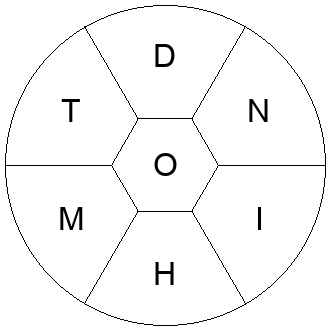
Genius requires between 15 and 32 words. You need at least a 6-letter word to reach genius. If you don't get the pangram, you need 79% of the total points to reach genius. If you get the pangram, you only need 66% of the remaining points to reach genius.

The button below will reveal a chart with the number of words by each letter. Red bars indicate that there is a pangram(s) starting with that letter.


How does this puzzle compare to other puzzles?

Today's score of 136 was in the 32nd percentile of all puzzles.
The last time there was a score this low was on January 29, 2026.
The highest score ever was 537 on January 22, 2021.
The lowest score ever was 47 on March 27, 2023.

This puzzle's 36 possible answers rank it in the 41st percentile of all puzzles.
The last time there were fewer answers than this was on January 29, 2026.
The highest number of answers was 81 on June 08, 2019.
The lowest number of answers was 16 on March 27, 2023.

It takes a 6-letter word for genius.
The last time this happened was on January 28, 2026.

Today's puzzle has an average word length of 5.0.
For all Bees, the average word length has been 5.3.


Haven't I seen these letters before?

Hover over a letter to see its first and most recent appearance in the Bee!


Haven't I seen these words before?

The most common words in the Bee are:

  • noon 229
  • loll 212
  • toot 209
  • nana 190
  • naan 190
  • tilt 151
  • till 151
  • lilt 151
  • nene 149
  • tint 145
  • mamma 142
  • mama 142
  • onion 138
  • toon 137
  • onto 137
  • acai 137
  • acacia 137
  • anal 130
  • anon 129
  • olio 124
  • dodo 123
  • tact 121
  • papa 121
  • baba 119
  • poop 118
  • lulu 117
  • lull 117
  • booboo 117
  • boob 117
  • cocci 114
  • moon 113
  • mono 113
  • mitt 113
  • calla 113
  • call 113
  • tutu 112
  • tattoo 111
  • tartar 111
  • tart 111
  • ratatat 111
  • loon 110
  • attar 110
  • ally 110
  • allay 110
  • tatty 109
  • momma 107
  • ammo 107
  • roar 104
  • peep 104
  • meme 104


How long are words in the Bee?

There have been 112,989 answers ever accepted in the Bee - with 10,906 unique words.
Below are the distributions of the lengths of these words.


Valid dictionary words not in today's official answers

You may be wondering why these words aren't here*:

  • dhooti
  • dido
  • doit
  • doodoo
  • hoddin
  • hominin
  • homo
  • imido
  • imino
  • inion
  • iodid
  • iodin
  • midnoon
  • modi
  • moho
  • momi
  • monition
  • monotint
  • motmot
  • mott
  • ninon
  • niton
  • nodi
  • nomoi
  • odontoid
  • oidioid
  • ootid
  • otto
  • thio
  • thionin
  • toit
  • tondi
  • tondo
  • toom

*Because the New York Times considers them obscure or offensive.

dhoti

noun
  1. A long loincloth worn by Hindu men in India.
  2. The cotton fabric used for such loincloths.

dino

noun
  1. Dinosaur.

ditto

noun
  1. That which was stated before, the aforesaid, the above, the same, likewise.
  2. A duplicate or copy of a document, particularly one created by a spirit duplicator.
  3. A copy; an imitation.
  4. A symbol, represented by two apostrophes, inverted commas, or quotation marks (" "), when indicating that the item preceding is to be repeated.
  5. (in the plural) A suit of clothes of the same colour throughout.
verb
  1. To repeat the aforesaid, the earlier action etc.
adverb
  1. As said before, likewise.
interjection
  1. Used as an expression of agreement with what another person has said, or to indicate that what they have said equally applies to the person being addressed.

dodo

Etymology 1

noun
  1. A large, flightless bird, †Raphus cucullatus, related to the pigeon, that is now extinct (since the 1600s) and was native to Mauritius.
  2. A person or organisation which is very old or has very old-fashioned views or is not willing to change and adapt.

Etymology 2

noun
  1. Fried plantain.

dominion

noun
  1. Power or the use of power; sovereignty over something; stewardship, supremacy.
  2. Predominance; ascendancy
  3. (sometimes figurative) A kingdom, nation, or other sphere of influence; governed territory.
  4. An order of angel in Christian angelology, ranked above virtues and below thrones.

domino

noun
  1. A tile divided into two squares, each having 0 to 6 (or sometimes more) dots or pips (as in dice), used in the game of dominoes.
  2. A country that is expected to react to events in a neighboring country, according to the domino effect.
  3. A masquerade costume consisting of a hooded robe and a mask covering the upper part of the face.
  4. The mask itself.
  5. The person wearing the costume.
  6. A polyomino made up of two squares.
  7. A mistake in performing.
verb
  1. To collapse in the manner of dominoes.
  2. To cause to collapse in the manner of dominoes.

doom

noun
  1. Destiny, especially terrible.
  2. An undesirable fate; an impending severe occurrence or danger that seems inevitable.
  3. A feeling of danger, impending danger, darkness or despair.
  4. A law.
  5. A judgment or decision.
  6. A sentence or penalty for illegal behaviour.
  7. Death.
  8. (sometimes capitalized) The Last Judgment; or, an artistic representation thereof.
verb
  1. To pronounce sentence or judgment on; to condemn.
  2. To destine; to fix irrevocably the ill fate of.
  3. To judge; to estimate or determine as a judge.
  4. To ordain as a penalty; hence, to mulct or fine.
  5. To assess a tax upon, by estimate or at discretion.

doth

verb
  1. (auxiliary) A syntactic marker.
  2. To perform; to execute.
  3. To cause, make (someone) (do something).
  4. To suffice.
  5. To be reasonable or acceptable.
  6. (ditransitive) To have (as an effect).
  7. To fare, perform (well or poorly).
  8. (chiefly in questions) To have as one's job.
  9. To perform the tasks or actions associated with (something).
  10. To cook.
  11. To travel in, to tour, to make a circuit of.
  12. To treat in a certain way.
  13. To work for or on, by way of caring for, looking after, preparing, cleaning, keeping in order, etc.
  14. To act or behave in a certain manner; to conduct oneself.
  15. To spend (time) in jail. (See also do time)
  16. To impersonate or depict.
  17. (with 'a' and the name of a person, place, event, etc.) To copy or emulate the actions or behaviour that is associated with the person or thing mentioned.
  18. To kill.
  19. To deal with for good and all; to finish up; to undo; to ruin; to do for.
  20. To punish for a misdemeanor.
  21. To have sex with. (See also do it)
  22. To cheat or swindle.
  23. To convert into a certain form; especially, to translate.
  24. To finish.
  25. To work as a domestic servant (with for).
  26. (auxiliary) Used to form the present progressive of verbs.
  27. To cash or to advance money for, as a bill or note.
  28. (ditransitive) To make or provide.
  29. To injure (one's own body part).
  30. To take drugs.
  31. (in the form be doing [somewhere]) To exist with a purpose or for a reason.

hominid

noun
  1. Any primate of the taxonomic family Hominidae. All the great apes (chimpanzees, gorillas, orangutans and humans).
adjective
  1. Of the Hominidae

hominoid

noun
  1. Any primate (including humans and apes) belonging to the superfamily Hominoidea

hood

Etymology 1

noun
  1. A covering for the head attached to a larger garment such as a jacket or cloak.
  2. A distinctively coloured fold of material, representing a university degree.
  3. An enclosure that protects something, especially from above.
  4. A soft top of a convertible car or carriage.
  5. The hinged cover over the engine of a motor vehicle: known as a bonnet in other countries.
  6. A metal covering that leads to a vent to suck away smoke or fumes.
verb
  1. To cover something with a hood.

Etymology 2

noun
  1. Gangster, thug.

Etymology 3

noun
  1. Neighborhood.
adjective
  1. Relating to inner-city everyday life, both positive and negative aspects; especially people’s attachment to and love for their neighborhoods.

Etymology 4

noun
  1. Person wearing a hoodie.

hoodoo

noun
  1. A practitioner of voodoo.
  2. Supernatural bad luck, or something or someone believed to bring bad luck.
  3. A tall thin spire of rock that protrudes from the bottom of arid basins and badlands.
verb
  1. To jinx; to bring bad luck or misfortune to.

hoot

noun
  1. A derisive cry or shout.
  2. The cry of an owl.
  3. A fun event or person. (See hootenanny)
  4. A small particle.
verb
  1. To cry out or shout in contempt.
  2. To make the cry of an owl, a hoo.
  3. To assail with contemptuous cries or shouts; to follow with derisive shouts.
  4. To sound the horn of a vehicle

idiom

noun
  1. A manner of speaking, a mode of expression peculiar to a language, person, or group of people.
  2. A language or language variety; specifically, a restricted dialect used in a given historical period, context etc.
  3. An established expression whose meaning is not deducible from the literal meanings of its component words, often peculiar to a given language.
  4. An artistic style (for example, in art, architecture, or music); an instance of such a style.
  5. A programming construct or phraseology that is characteristic of the language.

idiot

noun
  1. A person of low general intelligence.
  2. A person who makes stupid decisions; a fool.
  3. A person of the lowest intellectual standing, a person who lacks the capacity to develop beyond the mental age of a normal four-year-old; a person with an IQ below 30.
adjective
  1. Idiotic, stupid

into

preposition
  1. To or towards the inside of.
  2. To or towards the region of.
  3. Against, especially with force or violence.
  4. Indicates transition into another form or substance.
  5. After the start of.
  6. Interested in or attracted to.
  7. Expressing the operation of multiplication.
  8. Expressing the operation of division, with the denominator given first. Usually with "goes".
  9. Investigating the subject (of).

midmonth

No Definition Found.

minion

noun
  1. The lowest limit.
  2. The smallest amount.
  3. A period of minimum brightness or energy intensity (of a star).
  4. A lower bound of a set which is also an element of that set.
  5. The smallest member of a batch or sample or the lower bound of a probability distribution.
noun
  1. A loyal servant of another, usually a more powerful being.
  2. A sycophantic follower.
  3. A loved one; one highly esteemed and favoured.
  4. An ancient form of ordnance with a calibre of about three inches.
  5. The size of type between nonpareil and brevier, standardized as 7-point.
adjective
  1. Favoured, beloved; "pet".

mondo

Etymology 1

noun
  1. A dialogue between master and student designed to obtain an intuitive truth.

Etymology 2

adjective
  1. Big, large; major, significant.
adverb
  1. Very, extremely, really.

mono

Etymology 1

noun
  1. A viral infection marked by extreme fatigue, high fever, and swollen lymph nodes.

Etymology 2

noun
  1. A bicycle or motorcycle trick where the front wheel is lifted off the ground while riding

Etymology 3

adjective
  1. Monaural or monophonic; having only a single audio channel.

Etymology 4

adjective
  1. Monochrome.

Etymology 5

noun
  1. An injective homomorphism
  2. The absence of sexual dimorphism
  3. A morphism n such that for any other morphisms f and g, if n \circ f = n \circ g then f = g.

Etymology 6

noun
  1. A monogamous person.
adjective
  1. Monoamorous, monogamous.

Etymology 7

adjective
  1. Monosexual.

month

noun
  1. A period into which a year is divided, historically based on the phases of the moon.
  2. A period of 30 days, 31 days, or some alternation thereof.
  3. (in the plural) A woman's period; menstrual discharge.

mood

Etymology 1

noun
  1. A mental or emotional state, composure.
  2. Emotional character (of a work of music, literature, or other art).
  3. A sullen, gloomy or angry mental state; a bad mood.
  4. A disposition to do something, a state of mind receptive or disposed to do something.
  5. A prevalent atmosphere, attitude, or feeling.
  6. A familiar, relatable feeling, experience, or thing.
  7. Courage, heart, valor; also vim and vigor.

Etymology 2

noun
  1. (grammar) A verb form that depends on how its containing clause relates to the speaker’s or writer’s wish, intent, or assertion about reality.

moon

proper noun
  1. The Earth's moon Luna; the sole natural satellite of the Earth, represented in astronomy and astrology by ☾.
  2. The god of the Moon in Heathenry.
  3. A surname.
  4. The 54th sura (chapter) of the Qur'an.
noun
  1. (by extension of Moon) Any natural satellite of a planet.
  2. A month, particularly a lunar month.
  3. A crescent-like outwork in a fortification.
  4. The eighteenth trump/major arcana card of the Tarot.
  5. The thirty-second Lenormand card.
  6. In hearts, the action of taking all the point cards in one hand.
verb
  1. To display one's buttocks to, typically as a jest, insult, or protest.
  2. (usually followed by over or after) To fuss over something adoringly; to be infatuated with someone.
  3. To spend time idly, absent-mindedly.
  4. To expose to the rays of the Moon.
  5. To adorn with moons or crescents.
  6. (cryptocurrency) Of a coin or token: to rise in price rapidly.
  7. To shoot the moon.

moot

Etymology 1

noun
  1. A moot court.
  2. A system of arbitration in many areas of Africa in which the primary goal is to settle a dispute and reintegrate adversaries into society rather than assess penalties.
  3. A gathering of Rovers, usually in the form of a camp lasting 2 weeks.
  4. A social gathering of pagans, normally held in a public house.
  5. An assembly (usually for decision-making in a locality).
  6. A ring for gauging wooden pins.
adjective
  1. Subject to discussion (originally at a moot); arguable, debatable, unsolved or impossible to solve.
  2. Being an exercise of thought; academic.
  3. Having no practical impact or relevance.

Etymology 2

noun
  1. A whisper, or an insinuation, also gossip or rumors.
  2. (rural) Talk.
verb
  1. To bring up as a subject for debate, to propose.
  2. To discuss or debate.
  3. To make or declare irrelevant.
  4. To argue or plead in a supposed case.
  5. To talk or speak.
  6. To say, utter, also insinuate.

Etymology 3

noun
  1. Vagina.

Etymology 4

noun
  1. The stump of a tree; the roots and bottom end of a felled tree.
verb
  1. To take root and begin to grow.
  2. To turn up soil or dig up roots, especially an animal with the snout.

moth

Etymology 1

noun
  1. A usually nocturnal insect of the order Lepidoptera, distinguished from butterflies by feather-like antennae.
  2. Anything that gradually and silently eats, consumes, or wastes any other thing.
verb
  1. To hunt for moths.

Etymology 2

noun
  1. The plant Vigna aconitifolia, moth bean.

Etymology 3

noun
  1. A small particle; a speck.
noun
  1. A meeting for discussion.
  2. A body of persons who meet for discussion, especially about the management of affairs.
  3. A place of meeting for discussion.
noun
  1. A tiny computer for remote sensing; a component element of smartdust.
noun
  1. A liver spot, especially an irregular or feathery one.

motion

noun
  1. A state of progression from one place to another.
  2. A change of position with respect to time.
  3. A change from one place to another.
  4. A parliamentary action to propose something. A similar procedure in any official or business meeting.
  5. An entertainment or show, especially a puppet show.
  6. From κίνησις (kinesis); any change. Traditionally of four types: generation and corruption, alteration, augmentation and diminution, and change of place.
  7. Movement of the mind, desires, or passions; mental act, or impulse to any action; internal activity.
  8. A formal request, oral or written, made to a judge or court of law to obtain an official court ruling or order for a legal action to be taken by, or on behalf of, the movant.
  9. A movement of the bowels; the product of such movement.
  10. Change of pitch in successive sounds, whether in the same part or in groups of parts. (Conjunct motion is that by single degrees of the scale. Contrary motion is when parts move in opposite directions. Disjunct motion is motion by skips. Oblique motion is when one part is stationary while another moves. Similar or direct motion is when parts move in the same direction.)
  11. A puppet, or puppet show.
  12. A piece of moving mechanism, such as on a steam locomotive.
verb
  1. To gesture indicating a desired movement.
  2. To introduce a motion in parliamentary procedure.
  3. To make a proposal; to offer plans.

motto

noun
  1. A sentence, phrase, or word, forming part of an heraldic achievement.
  2. A sentence, phrase, or word, prefixed to an essay, discourse, chapter, canto, or the like, suggestive of its subject matter; a short, suggestive expression of a guiding principle; a maxim.
  3. A paper packet containing a sweetmeat, cracker, etc., together with a scrap of paper bearing a motto.

noon

Etymology 1

noun
  1. The ninth hour of the day counted from sunrise; around three o'clock in the afternoon.
  2. Time of day when the sun is in its zenith; twelve o'clock in the day, midday.
  3. The corresponding time in the middle of the night; midnight.
  4. The highest point; culmination.
verb
  1. To relax or sleep around midday

Etymology 2

noun
  1. The letter ن in the Arabic script.

notion

noun
  1. Mental apprehension of whatever may be known, thought, or imagined; idea, concept.
  2. A sentiment; an opinion.
  3. Sense; mind.
  4. An invention; an ingenious device; a knickknack.
  5. Any small article used in sewing and haberdashery, either for attachment to garments or as a tool, such as a button, zipper, or thimble.
  6. Inclination; intention; disposition.

omit

verb
  1. To leave out or exclude.
  2. To fail to perform.
  3. To neglect or take no notice of.

onion

noun
  1. A monocotyledonous plant (Allium cepa), allied to garlic, used as vegetable and spice.
  2. The bulb of such a plant.
  3. The genus as a whole.
  4. A ball.
  5. A person from Bermuda or of Bermudian descent.

onto

adjective
  1. (of a function) Assuming each of the values in its codomain; having its range equal to its codomain.
preposition
  1. Upon; on top of.
  2. Aware of.
  3. Being an onto function with a codomain of (see below).

tomtit

noun
  1. Petroica macrocephala, the miromiro or New Zealand tit, a bird of the Petroicidae (Australasian robin) family.

toon

Etymology 1

noun
  1. A cartoon, especially an animated television show.
  2. A player's avatar or visible character in a massively multiplayer online role-playing game.

Etymology 2

noun
  1. A southeast Asian and Australian tree (Toona ciliata or Toona australis) of the mahogany family with fragrant dark red wood and flowers that yield a dye.
  2. The wood of this tree.

Etymology 3

noun
  1. A town.

Etymology 4

noun
  1. A melody.
  2. A song, or short musical composition.
  3. The act of tuning or maintenance.
  4. The state or condition of being correctly tuned.
  5. Temper; frame of mind.
  6. A sound; a note; a tone.
  7. Order; harmony; concord.

toot

Etymology 1

noun
  1. The noise of a horn or whistle.
  2. (by extension) A fart; flatus.
  3. Cocaine.
  4. A portion of cocaine that a person snorts.
  5. A spree of drunkness.
  6. (pronounced /tʊt/) Rubbish; tat.
  7. A message on the social networking software Mastodon.
verb
  1. To stand out, or be prominent.
  2. To peep; to look narrowly.
  3. To see; to spy.
  4. To flatulate.
  5. To make the sound of a horn or whistle.
  6. To cause a horn or whistle to make its sound.
  7. To go on a drinking binge.
  8. To snort (a recreational drug).
  9. To post a message on a Mastodon instance (a self-hosted version of the networking software).

Etymology 2

noun
  1. A toilet.

tooth

noun
  1. A hard, calcareous structure present in the mouth of many vertebrate animals, generally used for eating.
  2. A sharp projection on the blade of a saw or similar implement.
  3. A projection on the edge of a gear that meshes with similar projections on adjacent gears, or on the circumference of a cog that engages with a chain.
  4. A projection or point in other parts of the body resembling the tooth of a vertebrate animal.
  5. A pointed projection from the margin of a leaf.
  6. The rough surface of some kinds of cel or other films that allows better adhesion of artwork.
  7. Liking, fondness (compare toothsome).
  8. An irreducible component of a comb that intersects the handle in exactly one point, that point being distinct from the unique point of intersection for any other tooth of the comb.
verb
  1. To provide or furnish with teeth.
  2. To indent; to jag.
  3. To lock into each other, like gear wheels.