Sunday, February 08, 2026

Answers to yesterday's Bee

Jump to answers for


The official answers for today's puzzle are:

Click on the arrow to show the definition.
Click outside the pop-up to close it.


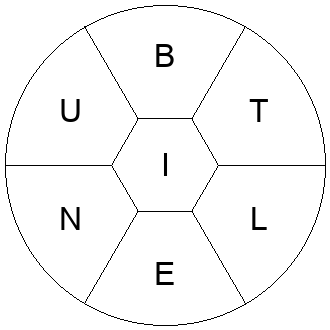
Number of Pangrams: 2

Maximum Puzzle Score: 284

Number of Answers: 60

Points Needed for Genius: 199

Genius requires between 29 and 51 words. You need at least a 7-letter word to reach genius. If you don't get the pangrams, you need 79% of the total points to reach genius. If you get the pangrams, you only need 66% of the remaining points to reach genius.

Other days with this pangram:

The button below will reveal a chart with the number of words by each letter. Red bars indicate that there is a pangram(s) starting with that letter.


How does this puzzle compare to other puzzles?

Today's score of 284 was in the 91st percentile of all puzzles.
The last time there was a score this high was on January 27, 2026.
The highest score ever was 537 on January 22, 2021.
The lowest score ever was 47 on March 27, 2023.

This puzzle's 60 possible answers rank it in the 91st percentile of all puzzles.
The last time there were more answers than this was on February 06, 2026.
The highest number of answers was 81 on June 08, 2019.
The lowest number of answers was 16 on March 27, 2023.

It takes a 7-letter word for genius.
The last time this happened was on February 07, 2026.

Today's puzzle has an average word length of 5.4.
For all Bees, the average word length has been 5.3.


Haven't I seen these letters before?

Hover over a letter to see its first and most recent appearance in the Bee!


Haven't I seen these words before?

The most common words in the Bee are:

  • noon 229
  • loll 212
  • toot 209
  • nana 190
  • naan 190
  • tilt 152
  • till 152
  • lilt 152
  • nene 150
  • tint 146
  • mamma 142
  • mama 142
  • onion 138
  • toon 137
  • onto 137
  • acai 137
  • acacia 137
  • anal 130
  • anon 129
  • olio 124
  • dodo 123
  • tact 121
  • papa 121
  • baba 119
  • poop 118
  • lulu 117
  • lull 117
  • booboo 117
  • boob 117
  • cocci 114
  • moon 113
  • mono 113
  • mitt 113
  • calla 113
  • call 113
  • tutu 112
  • tattoo 111
  • tartar 111
  • tart 111
  • ratatat 111
  • tatty 110
  • loon 110
  • attar 110
  • ally 110
  • allay 110
  • momma 107
  • ammo 107
  • meme 105
  • roar 104
  • peep 104


How long are words in the Bee?

There have been 113,149 answers ever accepted in the Bee - with 10,907 unique words.
Below are the distributions of the lengths of these words.


Valid dictionary words not in today's official answers

You may be wondering why these words aren't here*:

  • benni
  • bibb
  • bibe
  • billetee
  • billie
  • bine
  • binit
  • bint
  • bitt
  • blite
  • bluebill
  • blueline
  • bubbie
  • bulbil
  • buntline
  • elint
  • etui
  • illite
  • inti
  • intine
  • intitle
  • intitule
  • inulin
  • lenite
  • libellee
  • linin
  • linn
  • litten
  • litu
  • lutein
  • nellie
  • niblet
  • nielli
  • niente
  • nill
  • tein
  • tentie
  • tenuti
  • tillite
  • titbit
  • titi
  • tittie
  • tubulin
  • tuile
  • tuille
  • tullibee
  • unbitten

*Because the New York Times considers them obscure or offensive.

beeline

noun
  1. A very direct or quick path or trip.
  2. A dynamite fuse made with a small quantity of dynamite powder along its length, so that the spark travels quickly and at a specific known rate.
verb
  1. To travel in a straight course, ignoring established paths of travel.

belie

Etymology 1

verb
  1. To lie around; encompass.
  2. (of an army) To surround; beleaguer.

Etymology 2

verb
  1. To tell lies about.
  2. To give a false representation of.
  3. To contradict, to show (something) to be false.
  4. To conceal the contradictory or ironic presence of (something).
  5. To show, evince, demonstrate: to show (something) to be present, particularly something deemed contradictory or ironic.
  6. To mimic; to counterfeit.
  7. To fill with lies.

belittle

verb
  1. To knowingly say that something is smaller or less important than it actually is, especially as a way of showing contempt or deprecation.

beltline

noun
  1. The imaginary line marking the upper end of the lower body of an automobile, running just below the bottoms of the windows
  2. A beltway: a circular expressway around a city

bible

noun
  1. An exemplar of the Bible.
  2. A comprehensive manual that describes something. (e.g., handyman’s bible).
  3. (at certain US universities) A compilation of problems and solutions from previous years of a given course, used by some students to cheat on tests or assignments.
  4. Omasum, the third compartment of the stomach of ruminants
noun
  1. A piece of soft sandstone used for scouring the wooden decks of ships, usually with sand and seawater.
  2. A stone with a naturally-formed hole, used by Yorkshiremen for good luck.

bile

Etymology 1

noun
  1. A bitter brownish-yellow or greenish-yellow secretion produced by the liver, stored in the gall bladder, and discharged into the duodenum where it aids the process of digestion.
  2. Bitterness of temper; ill humour; irascibility.
  3. Two of the four humours, black bile or yellow bile, in ancient and medieval physiology.

Etymology 2

noun
  1. A boil (kind of swelling).
verb
  1. (of liquids) To heat to the point where it begins to turn into a gas.
  2. To cook in boiling water.
  3. (of liquids) To begin to turn into a gas, seethe.
  4. To bring to a boil, to heat so as to cause the contents to boil.
  5. (used only in progressive tenses, of weather) To be uncomfortably hot.
  6. (used only in progressive tenses) To feel uncomfortably hot.
  7. To form, or separate, by boiling or evaporation.
  8. To steep or soak in warm water.
  9. To be agitated like boiling water; to bubble; to effervesce.
  10. To be moved or excited with passion; to be hot or fervid.

bill

Etymology 1

noun
  1. Any of various bladed or pointed hand weapons, originally designating an Anglo-Saxon sword, and later a weapon of infantry, especially in the 14th and 15th centuries, commonly consisting of a broad, heavy, double-edged, hook-shaped blade, with a short pike at the back and another at the top, attached to the end of a long staff.
  2. A cutting instrument, with hook-shaped point, and fitted with a handle, used in pruning, etc.; a billhook.
  3. Somebody armed with a bill; a billman.
  4. A pickaxe, or mattock.
  5. The extremity of the arm of an anchor; the point of or beyond the fluke (also called the peak).
verb
  1. To dig, chop, etc., with a bill.

Etymology 2

noun
  1. The beak of a bird, especially when small or flattish; sometimes also used with reference to a platypus, turtle, or other animal.
  2. A beak-like projection, especially a promontory.
  3. Of a cap or hat: the brim or peak, serving as a shade to keep sun off the face and out of the eyes.
verb
  1. To peck
  2. To stroke bill against bill, with reference to doves; to caress in fondness

Etymology 3

noun
  1. A written list or inventory. (Now obsolete except in specific senses or set phrases; bill of lading, bill of goods, etc.)
  2. A document, originally sealed; a formal statement or official memorandum. (Now obsolete except with certain qualifying words; bill of health, bill of sale etc.)
  3. A draft of a law, presented to a legislature for enactment; a proposed or projected law.
  4. A declaration made in writing, stating some wrong the complainant has suffered from the defendant, or a fault committed by some person against a law.
  5. A piece of paper money; a banknote.
  6. A written note of goods sold, services rendered, or work done, with the price or charge; an invoice.
  7. A paper, written or printed, and posted up or given away, to advertise something, as a lecture, a play, or the sale of goods
  8. A writing binding the signer or signers to pay a certain sum at a future day or on demand, with or without interest, as may be stated in the document; a bill of exchange. In the United States, it is usually called a note, a note of hand, or a promissory note.
  9. A set of items presented together.
verb
  1. To advertise by a bill or public notice.
  2. To charge; to send a bill to.

Etymology 4

noun
  1. The bell, or boom, of the bittern.

billet

Etymology 1

noun
  1. A short informal letter.
  2. A written order to quarter soldiers.

Etymology 2

noun
  1. A place where a soldier is assigned to lodge.
  2. An allocated space or berth in a boat or ship.
  3. Berth; position.
verb
  1. (of a householder etc.) To lodge soldiers, or guests, usually by order.
  2. (of a soldier) To lodge, or be quartered, in a private house.
  3. To direct, by a ticket or note, where to lodge.

Etymology 3

noun
  1. A semi-finished length of metal.
  2. A short piece of wood, especially one used as firewood.
  3. A short cutting of sugar cane produced by a harvester or used for planting.
  4. A rectangle used as a charge on an escutcheon.
  5. An ornament in Norman work, resembling a billet of wood, either square or round.
  6. (saddlery) A strap that enters a buckle.
  7. A loop that receives the end of a buckled strap.

Etymology 4

noun
  1. An English fish, allied to the cod; the coalfish.

bite

noun
  1. The act of biting.
  2. The wound left behind after having been bitten.
  3. The swelling of one's skin caused by an insect's mouthparts or sting.
  4. A piece of food of a size that would be produced by biting; a mouthful.
  5. Something unpleasant.
  6. An act of plagiarism.
  7. A small meal or snack.
  8. Aggression
  9. The hold which the short end of a lever has upon the thing to be lifted, or the hold which one part of a machine has upon another.
  10. A cheat; a trick; a fraud.
  11. A sharper; one who cheats.
  12. A blank on the edge or corner of a page, owing to a portion of the frisket, or something else, intervening between the type and paper.
  13. A cut, a proportion of profits; an amount of money.
verb
  1. To cut into something by clamping the teeth.
  2. To hold something by clamping one's teeth.
  3. To attack with the teeth.
  4. To behave aggressively; to reject advances.
  5. To take hold; to establish firm contact with.
  6. To have significant effect, often negative.
  7. (of a fish) To bite a baited hook or other lure and thus be caught.
  8. To accept something offered, often secretly or deceptively, to cause some action by the acceptor.
  9. (of an insect) To sting.
  10. To cause a smarting sensation; to have a property which causes such a sensation; to be pungent.
  11. (sometimes figurative) To cause sharp pain or damage to; to hurt or injure.
  12. To cause sharp pain; to produce anguish; to hurt or injure; to have the property of so doing.
  13. To take or keep a firm hold.
  14. To take hold of; to hold fast; to adhere to.
  15. To lack quality; to be worthy of derision; to suck.
  16. To perform oral sex on. Used in invective.
  17. To plagiarize, to imitate.
  18. To deceive or defraud; to take in.

bitten

verb
  1. To cut into something by clamping the teeth.
  2. To hold something by clamping one's teeth.
  3. To attack with the teeth.
  4. To behave aggressively; to reject advances.
  5. To take hold; to establish firm contact with.
  6. To have significant effect, often negative.
  7. (of a fish) To bite a baited hook or other lure and thus be caught.
  8. To accept something offered, often secretly or deceptively, to cause some action by the acceptor.
  9. (of an insect) To sting.
  10. To cause a smarting sensation; to have a property which causes such a sensation; to be pungent.
  11. (sometimes figurative) To cause sharp pain or damage to; to hurt or injure.
  12. To cause sharp pain; to produce anguish; to hurt or injure; to have the property of so doing.
  13. To take or keep a firm hold.
  14. To take hold of; to hold fast; to adhere to.
  15. To lack quality; to be worthy of derision; to suck.
  16. To perform oral sex on. Used in invective.
  17. To plagiarize, to imitate.
  18. To deceive or defraud; to take in.

blin

Etymology 1

noun
  1. Cessation; end.
verb
  1. To cease (from); to stop; to desist, to let up.

Etymology 2

noun
  1. A blintz.

blini

noun
  1. A small pancake, of Russian origin, made from buckwheat flour; traditionally served with melted butter, sour cream and caviar or smoked salmon.

built

verb
  1. To form (something) by combining materials or parts.
  2. To develop or give form to (something) according to a plan or process.
  3. To increase or strengthen (something) by adding gradually to.
  4. To establish a basis for (something).
  5. To form by combining materials or parts.
  6. To develop in magnitude or extent.
  7. To construct (software) by compiling its source code.
  8. (of source code) To be converted into software by compilation, usually with minimal human intervention.
noun
  1. Shape; build; form of structure.
adjective
  1. Well-built, muscular or toned.

bulletin

noun
  1. A short report, especially one released through official channels to be broadcast or publicized.
  2. A short news report.
  3. A short printed publication, especially one produced by an organization.
verb
  1. To announce something by means of such a report or publication.

ebullient

adjective
  1. Enthusiastic; high-spirited.
  2. (of a liquid) Boiling or agitated as if boiling.

elite

noun
  1. A special group or social class of people which have a superior intellectual, social or economic status as, the elite of society.
  2. Someone who is among the best at a certain task.
adjective
  1. Of high birth or social position; aristocratic or patrician.
  2. Representing the choicest or most select of a group.

ennui

noun
  1. A gripping listlessness or melancholia caused by boredom; depression.
verb
  1. To make bored or listless; to weary.

entitle

verb
  1. To give a title to.
  2. To dignify by an honorary designation.
  3. To give power or authority (to do something).
  4. To give rightful ownership.
  5. To give a title to a book, film, play, etc.

inbuilt

adjective
  1. Existing as an essential constituent; built-in; inherent; integral.

inlet

Etymology 1

verb
  1. To let in; admit.
  2. To insert; inlay.

Etymology 2

noun
  1. A body of water let into a coast, such as a bay, cove, fjord or estuary.
  2. A passage that leads into a cavity.

intent

noun
  1. A purpose; something that is intended.
  2. The state of someone’s mind at the time of committing an offence.
adjective
  1. Firmly fixed or concentrated on something.
  2. Engrossed.
  3. Unwavering from a course of action.

intuit

verb
  1. To know intuitively or by immediate perception.

inutile

adjective
  1. Useless; unprofitable

lenient

noun
  1. A lenitive; an emollient.
adjective
  1. Lax; not strict; tolerant of dissent or deviation

lentil

noun
  1. Any of several plants of the genus Lens, especially Lens culinaris, from southwest Asia, that have edible, lens-shaped seeds within flattened pods.
  2. The seed of these plants, used as food.

libel

noun
  1. A written or pictorial false statement which unjustly seeks to damage someone's reputation.
  2. The act or crime of displaying such a statement publicly.
  3. Any defamatory writing; a lampoon; a satire.
  4. A written declaration or statement by the plaintiff of their cause of action, and of the relief they seek.
  5. A brief writing of any kind, especially a declaration, bill, certificate, request, supplication, etc.
verb
  1. To defame someone, especially in a manner that meets the legal definition of libel.
  2. To proceed against (a ship, goods, etc.) by filing a libel.

libelee

No Definition Found.

lien

Etymology 1

noun
  1. A tendon.
  2. A right to take possession of a debtor’s property as security until a debt or duty is discharged.

Etymology 2

noun
  1. (possibly obsolete) The spleen.

lieu

noun
  1. Place, stead; See in lieu or in lieu of

lilt

noun
  1. Animated, brisk motion; spirited rhythm; sprightliness.
  2. A lively song or dance; a cheerful tune.
  3. A cheerful or melodious accent when speaking.
verb
  1. To do something rhythmically, with animation and quickness, usually of music.
  2. To sing cheerfully, especially in Gaelic.
  3. To utter with spirit, animation, or gaiety; to sing with spirit and liveliness.

line

Etymology 1

noun
  1. A path through two or more points (compare ‘segment’); a continuous mark, including as made by a pen; any path, curved or straight.
  2. A rope, cord, string, or thread, of any thickness.
  3. A hose or pipe, of any size.
  4. Direction, path.
  5. The wire connecting one telegraphic station with another, a telephone or internet cable between two points: a telephone or network connection.
  6. A clothesline.
  7. A letter, a written form of communication.
  8. A connected series of public conveyances, as a roadbed or railway track; and hence, an established arrangement for forwarding merchandise, etc.
  9. A trench or rampart, or the non-physical demarcation of the extent of the territory occupied by specified forces.
  10. The exterior limit of a figure or territory: a boundary, contour, or outline; a demarcation.
  11. A long tape or ribbon marked with units for measuring; a tape measure.
  12. A measuring line or cord.
  13. That which was measured by a line, such as a field or any piece of land set apart; hence, allotted place of abode.
  14. A threadlike crease or wrinkle marking the face, hand, or body; hence, a characteristic mark.
  15. Lineament; feature; figure (of one's body).
  16. A more-or-less straight sequence of people, objects, etc., either arranged as a queue or column and often waiting to be processed or dealt with, or arranged abreast of one another in a row (and contrasted with a column), as in a military formation.
  17. The regular infantry of an army, as distinguished from militia, guards, volunteer corps, cavalry, artillery etc.
  18. A series or succession of ancestors or descendants of a given person; a family or race; compare lineage.
  19. A small amount of text. Specifically:
  20. Course of conduct, thought, occupation, or policy; method of argument; department of industry, trade, or intellectual activity.
  21. The official, stated position (or set of positions) of an individual or group, particularly a political or religious faction.
  22. A set of products or services sold by a business, or by extension, the business itself.
  23. A number of shares taken by a jobber.
  24. A measure of length:
  25. A maxwell, a unit of magnetic flux.
  26. (1800s, with "the") The batter’s box.
  27. The position in which the fencers hold their swords.
  28. Proper relative position or adjustment (of parts, not as to design or proportion, but with reference to smooth working).
  29. A small path-shaped portion or serving of a powdery illegal drug, especially cocaine.
  30. Instruction; doctrine.
  31. Population of cells derived from a single cell and containing the same genetic makeup.
  32. (perfusion line) a set composed of a spike, a drip chamber, a clamp, a Y-injection site, a three-way stopcock and a catheter.
  33. A group of forwards that play together.
  34. A vascular catheter.
verb
  1. To place (objects) into a line (usually used with "up"); to form into a line; to align.
  2. To place persons or things along the side of for security or defense; to strengthen by adding; to fortify.
  3. To form a line along.
  4. To mark with a line or lines, to cover with lines.
  5. To represent by lines; to delineate; to portray.
  6. To read or repeat line by line.
  7. To hit a line drive; to hit a line drive which is caught for an out. Compare fly and ground.
  8. To track (wild bees) to their nest by following their line of flight.
  9. To measure.

Etymology 2

noun
  1. Flax; linen, particularly the longer fiber of flax.
verb
  1. To cover the inner surface of (something), originally especially with linen.
  2. To reinforce (the back of a book) with glue and glued scrap material such as fabric or paper.
  3. To fill or supply (something), as a purse with money.

Etymology 3

verb
  1. (of a dog) To copulate with, to impregnate.

linen

noun
  1. Thread or cloth made from flax fiber.
  2. Domestic textiles, such as tablecloths, bedding, towels, underclothes, etc., that are made of linen or linen-like fabrics of cotton or other fibers; linens.
  3. A light beige colour, like that of linen cloth undyed.
adjective
  1. Made from linen cloth or thread.
  2. Having the colour linen, light beige.

linnet

noun
  1. A small passerine bird, the common linnet (Linaria cannabina, syn. Carduelis cannabina), in the finch family Fringillidae, native to Europe, western Asia, and north Africa.
  2. A house finch (Haemorhous mexicanus), of North America.

lint

Etymology 1

noun
  1. A fine material made by scraping cotton or linen cloth; used for dressing wounds.
  2. Clinging fuzzy fluff that clings to fabric or accumulates in one's pockets or navel etc.
  3. The fibrous coat of thick hairs covering the seeds of the cotton plant.
  4. Raw cotton ready for baling.

Etymology 2

verb
  1. To perform a static check on (source code) to detect stylistic or programmatic errors.

lintel

noun
  1. A horizontal structural beam spanning an opening, such as between the uprights of a door or a window, and which supports the wall above.

lite

Etymology 1

noun
  1. Visible electromagnetic radiation. The human eye can typically detect radiation (light) in the wavelength range of about 400 to 750 nanometers. Nearby shorter and longer wavelength ranges, although not visible, are commonly called ultraviolet and infrared light.
  2. A source of illumination.
  3. Spiritual or mental illumination; enlightenment, useful information.
  4. (in the plural) Facts; pieces of information; ideas, concepts.
  5. A notable person within a specific field or discipline.
  6. The manner in which the light strikes a picture; that part of a picture which represents those objects upon which the light is supposed to fall; the more illuminated part of a landscape or other scene; opposed to shade.
  7. A point of view, or aspect from which a concept, person or thing is regarded.
  8. A flame or something used to create fire.
  9. A firework made by filling a case with a substance which burns brilliantly with a white or coloured flame.
  10. A window, or space for a window in architecture.
  11. The series of squares reserved for the answer to a crossword clue.
  12. A cross-light in a double acrostic or triple acrostic.
  13. Open view; a visible state or condition; public observation; publicity.
  14. The power of perception by vision.
  15. The brightness of the eye or eyes.
  16. A traffic light, or, by extension, an intersection controlled by one or more that will face a traveler who is receiving instructions.
adjective
  1. Having light; bright; clear; not dark or obscure.
  2. Pale or whitish in color; highly luminous and more or less deficient in chroma.
  3. (of coffee) Served with extra milk or cream.
noun
  1. A stone that is not thrown hard enough.
  2. See lights.
adjective
  1. Having little or relatively little actual weight; not cumbrous or unwieldy.
  2. Having little weight as compared with bulk; of little density or specific gravity.
  3. Of short or insufficient weight; weighing less than the legal, standard or proper amount; clipped or diminished.
  4. Lacking that which burdens or makes heavy.
  5. Not heavy or soggy; spongy; well raised.
  6. Gentle; having little force or momentum.
  7. Easy to endure or perform.
  8. Low in fat, calories, alcohol, salt, etc.
  9. Unimportant, trivial, having little value or significance.
  10. Unchaste, wanton.
  11. Not encumbered; unembarrassed; clear of impediments; hence, active; nimble; swift.
  12. Easily influenced by trifling considerations; unsteady; unsettled; volatile.
  13. Indulging in, or inclined to, levity; lacking dignity or solemnity; frivolous; airy.
  14. Not quite sound or normal; somewhat impaired or deranged; dizzy; giddy.
  15. Easily interrupted by stimulation.
adjective
  1. Light in composition, notably low in fat, calories etc. Most commonly used commercially.
  2. Lightweight
  3. (usually used postpositively) Lacking substance or seriousness; watered down.

Etymology 2

noun
  1. A little, bit.
adjective
  1. Few; little

Etymology 3

noun
  1. The act of waiting; a wait.
verb
  1. To expect; wait.
  2. To rely.

little

noun
  1. A small amount.
adjective
  1. Small in size.
  2. Insignificant, trivial.
  3. Very young.
  4. (of a sibling) Younger.
  5. (also Little) Used with the name of a place, especially of a country or its capital, to denote a neighborhood whose residents or storekeepers are from that place.
  6. Small in amount or number, having few members.
  7. Short in duration; brief.
  8. Small in extent of views or sympathies; narrow; shallow; contracted; mean; illiberal; ungenerous.
adverb
  1. Not much.
  2. Not at all.
pronoun
  1. Not much; not a large amount.

nibble

Etymology 1

noun
  1. A small, quick bite taken with the front teeth.
  2. (in the plural, nibbles) Small snacks such as crisps/potato chips or nuts, often eaten to accompany drinks.
verb
  1. To eat with small, quick bites.
  2. To bite lightly.
  3. To consume gradually.
  4. To find fault; to cavil.

Etymology 2

noun
  1. A unit of memory equal to half a byte, or four bits.

nine

noun
  1. The digit or figure 9.
  2. A playing card with nine pips.
  3. A nine-millimeter semi-automatic pistol.
  4. (usually in the plural) A statistical unit of proportion (of reliability, purity, etc.).
  5. A baseball club, team, or lineup (composed of nine players).
numeral
  1. A numerical value equal to 9; the number following eight and preceding ten.
  2. Describing a group or set with nine elements.

nineteen

numeral
  1. The cardinal number occurring after eighteen and before twenty, represented in Roman numerals as XIX and in Arabic numerals as 19. It is the last/largest of the "teens".

nite

noun
  1. The period between sunset and sunrise, when a location faces far away from the sun, thus when the sky is dark.
  2. (Astronomy) The period of darkness beginning at the end of evening astronomical twilight when the sun is 18 degrees below the horizon, and ending at the beginning of morning astronomical twilight.
  3. (Legal) Often defined in the legal system as beginning 30 minutes after sunset, and ending 30 minutes before sunrise.
  4. An evening or night spent at a particular activity.
  5. A night (and part of the days before and after it) spent in a place away from home, e.g. a hotel.
  6. Nightfall.
  7. Darkness (due to it being nighttime).
  8. A dark blue colour, midnight blue.
  9. A night's worth of competitions, generally one game.

nubbin

noun
  1. A stub, especially a stub of undeveloped corn or fruit or nipple.
  2. A small protuberance, bud, bump or knob.
  3. The clitoris.

nubile

noun
  1. A young sexually attractive woman.
adjective
  1. Of an age suitable for marriage; marriageable (principally of a young woman).
  2. Sexually attractive (especially of a young woman).

tile

Etymology 1

noun
  1. A regularly-shaped slab of clay or other material, affixed to cover or decorate a surface, as in a roof-tile, glazed tile, stove tile, carpet tile etc.
  2. A rectangular graphic.
  3. Any of various flat cuboid playing pieces used in certain games, such as dominoes, Scrabble, or mahjong.
  4. A stiff hat.
verb
  1. To cover with tiles.
  2. To arrange in a regular pattern, with adjoining edges (applied to tile-like objects, graphics, windows in a computer interface).
  3. To optimize (a loop in program code) by means of the tiling technique.

Etymology 2

verb
  1. To protect from the intrusion of the uninitiated.

till

Etymology 1

preposition
  1. Until; to, up to; as late as (a given time).
  2. To, up to (physically).
  3. To make it possible that.
conjunction
  1. Until, until the time that.

Etymology 2

noun
  1. A cash register.
  2. A removable box within a cash register containing the money.
  3. The contents of a cash register, for example at the beginning or end of the day or of a cashier's shift.
  4. A tray or drawer in a chest.

Etymology 3

verb
  1. To develop so as to improve or prepare for usage; to cultivate (said of knowledge, virtue, mind etc.).
  2. To work or cultivate or plough (soil); to prepare for growing vegetation and crops.
  3. To cultivate soil.
  4. To prepare; to get.

Etymology 4

noun
  1. Glacial drift consisting of a mixture of clay, sand, pebbles and boulders
  2. Manure or other material used to fertilize land

Etymology 5

noun
  1. A vetch; a tare.

tilt

Etymology 1

noun
  1. A slope or inclination.
  2. The inclination of part of the body, such as backbone, pelvis, head, etc.
  3. The controlled vertical movement of a camera, or a device to achieve this.
  4. A jousting contest.
  5. An attempt at something, such as a tilt at public office.
  6. A thrust, as with a lance.
  7. A tilt hammer.
verb
  1. To slope or incline (something); to slant.
  2. (jousting) To charge (at someone) with a lance.
  3. To be at an angle.
  4. To point or thrust a weapon at.
  5. To point or thrust (a weapon).
  6. To forge (something) with a tilt hammer.
  7. To play worse than usual (often as a result of previous bad luck or losses).
  8. (of a machine) To intentionally let the ball fall down to the drain by disabling flippers and most targets, done as a punishment to the player when the machine is nudged too violently or frequently.

Etymology 2

noun
  1. A canvas covering for carts, boats, etc.
  2. Any covering overhead; especially, a tent.
verb
  1. To cover with a tilt, or awning.

tine

Etymology 1

noun
  1. A spike or point on an implement or tool, especially a prong of a fork or a tooth of a comb.
  2. A small branch, especially on an antler or horn.
  3. A wild vetch or tare.

Etymology 2

adjective
  1. Small, diminutive

Etymology 3

noun
  1. Trouble; distress; teen.

Etymology 4

verb
  1. To kindle; to set on fire.
  2. To rage; to smart.

Etymology 5

verb
  1. To shut in, or enclose.

tint

noun
  1. A slight coloring.
  2. A pale or faint tinge of any color; especially, a variation of a color obtained by adding white (contrast shade)
  3. A color considered with reference to other very similar colors.
  4. A shaded effect in engraving, produced by the juxtaposition of many fine parallel lines.
verb
  1. To shade, to color.

title

noun
  1. A prefix (honorific) or suffix (post-nominal) added to a person's name to signify either veneration, official position or a professional or academic qualification. See also
  2. Legal right to ownership of a property; a deed or other certificate proving this.
  3. In canon law, that by which a beneficiary holds a benefice.
  4. A church to which a priest was ordained, and where he was to reside.
  5. The name of a book, film, musical piece, painting, or other work of art.
  6. A publication.
  7. A section or division of a subject, as of a law or a book.
  8. (chiefly in the plural) A written title, credit, or caption shown with a film, video, or performance.
  9. The panel for the name, between the bands of the back of a book.
  10. The subject of a writing; a short phrase that summarizes the entire topic.
  11. A division of an act of law
  12. The recognition given to the winner of a championship in sports.
verb
  1. To assign a title to; to entitle.

tittle

Etymology 1

noun
  1. A small, insignificant amount (of something); a modicum or speck.
  2. Any small dot, stroke, or diacritical mark, especially if part of a letter, or if a letter-like abbreviation; in particular, the dots over the Latin letters i and j.

Etymology 2

verb
  1. To chatter.

tutti

noun
  1. A passage in which all members of an orchestra are playing
adjective
  1. All together; with all playing at once.
adverb
  1. All together. Indicates that the remainder of a group should join in playing after a solo or other passage with a reduced number of voices.

unbuilt

adjective
  1. Not built

unit

noun
  1. A particular, minute unit of mass, defined differently for different substances, but so that varying substances of the same general type have the property that one international unit of the one has the same effect on the human body as one international unit of the other.
noun
  1. Oneness, singularity, seen as a component of a whole number; a magnitude of one.
  2. A standard measure of a quantity.
  3. The number one.
  4. An organized group comprising people and/or equipment.
  5. A member of a military organization.
  6. Any military element whose structure is prescribed by competent authority, such as a table of organization and equipment; specifically, part of an organization.
  7. An organization title of a subdivision of a group in a task force.
  8. A standard or basic quantity into which an item of supply is divided, issued or detailed. In this meaning, also called unit of issue.
  9. With regard to Reserve Components of the Armed Forces, denotes a Selected Reserve unit organized, equipped, and trained for mobilization to serve on active duty as a unit or to augment or be augmented by another unit. Headquarters and support functions without wartime missions are not considered units.
  10. The identity element, neutral element.
  11. An element having an inverse, an invertible element; an associate of the unity.
  12. In an adjunction, a natural transformation from the identity functor of the domain of the left adjoint functor to the composition of the right adjoint functor with the left adjoint functor.
  13. A volume of rock or ice of identifiable origin and age range that is defined by the distinctive and dominant, easily mapped and recognizable petrographic, lithologic or paleontologic features (facies) that characterize it.
  14. An item which may be sold singly.
  15. A unit of alcohol.
  16. One kilowatt-hour (as recorded on an electricity meter).
  17. A measure of housing equivalent to the living quarters of one household; an apartment where a group of apartments is contained in one or more multi-storied buildings or a group of dwellings is in one or more single storey buildings, usually arranged around a driveway.
  18. A gold coin of the reign of James I, worth twenty shillings.
  19. A work unit.
  20. A physically large person.
adjective
  1. For each unit.
  2. Having a size or magnitude of one.

unite

noun
  1. A British gold coin worth 20 shillings, first produced during the reign of King James I, and bearing a legend indicating the king's intention of uniting the kingdoms of England and Scotland.
verb
  1. To bring together as one.
  2. To come together as one.

unlit

adjective
  1. Not lit

untie

verb
  1. To loosen, as something interlaced or knotted; to disengage the parts of.
  2. To free from fastening or from restraint; to let loose; to unbind.
  3. To resolve; to unfold; to clear.
  4. To become untied or loosed.
  5. In the Perl programming language, to undo the process of tying, so that a variable uses default instead of custom functionality.

until

preposition
  1. Up to the time of (something happening).
  2. Up to (a certain place)
  3. Before (a time).
  4. To; physically towards.
conjunction
  1. Up to the time that (a condition becomes true).
  2. Before (a condition becoming true).

utile

noun
  1. A theoretical unit of measure of utility, for indicating a supposed quantity of satisfaction derived from an economic transaction.
adjective
  1. Useful.

intel

noun
  1. Intelligence (secret information)

innie

noun
  1. A navel that is formed of a hollow in the abdomen (as opposed to one that protrudes from the abdomen).
  2. A vagina with inner labia minora