Thursday, February 19, 2026

Answers to yesterday's Bee

Jump to answers for


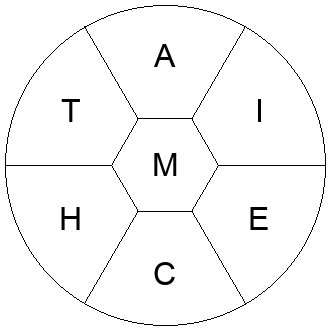
The official answers for today's puzzle are:

Click on the arrow to show the definition.
Click outside the pop-up to close it.


Number of Pangrams: 2

Maximum Puzzle Score: 213

Number of Answers: 55

Points Needed for Genius: 149

Genius requires between 19 and 49 words. You need at least a 7-letter word to reach genius. If you don't get the pangrams, you need 82% of the total points to reach genius. If you get the pangrams, you only need 65% of the remaining points to reach genius.

Other days with this pangram:

The button below will reveal a chart with the number of words by each letter. Red bars indicate that there is a pangram(s) starting with that letter.


How does this puzzle compare to other puzzles?

Today's score of 213 was in the 69th percentile of all puzzles.
The last time there was a score this high was on February 17, 2026.
The highest score ever was 537 on January 22, 2021.
The lowest score ever was 47 on March 27, 2023.

This puzzle's 55 possible answers rank it in the 84th percentile of all puzzles.
The last time there were more answers than this was on February 16, 2026.
The highest number of answers was 81 on June 08, 2019.
The lowest number of answers was 16 on March 27, 2023.

It takes a 7-letter word for genius.
The last time this happened was on February 17, 2026.

Today's puzzle has an average word length of 5.2.
For all Bees, the average word length has been 5.3.


Haven't I seen these letters before?

Hover over a letter to see its first and most recent appearance in the Bee!


Haven't I seen these words before?

The most common words in the Bee are:

  • noon 231
  • loll 214
  • toot 210
  • nana 192
  • naan 192
  • tilt 152
  • till 152
  • lilt 152
  • nene 150
  • tint 145
  • mamma 145
  • mama 145
  • toon 138
  • onto 138
  • onion 138
  • acai 137
  • acacia 137
  • anon 131
  • anal 130
  • olio 124
  • papa 123
  • dodo 123
  • tact 122
  • baba 121
  • poop 119
  • lulu 119
  • lull 119
  • booboo 118
  • boob 118
  • mitt 115
  • moon 114
  • mono 114
  • cocci 114
  • tartar 113
  • tart 113
  • ratatat 113
  • calla 113
  • call 113
  • tutu 112
  • tattoo 112
  • loon 112
  • attar 112
  • ally 110
  • allay 110
  • tatty 109
  • momma 108
  • meme 108
  • ammo 108
  • roar 106
  • peep 105


How long are words in the Bee?

There have been 113,855 answers ever accepted in the Bee - with 10,917 unique words.
Below are the distributions of the lengths of these words.


Valid dictionary words not in today's official answers

You may be wondering why these words aren't here*:

  • acmatic
  • acmic
  • amah
  • amia
  • amice
  • amici
  • amie
  • atma
  • cammie
  • catamite
  • chacma
  • cham
  • chem
  • chemic
  • emic
  • emmet
  • haem
  • haematic
  • haematite
  • haemic
  • hame
  • hammam
  • hematic
  • hematitic
  • hemic
  • himatia
  • hmmm
  • imamate
  • macchia
  • macchie
  • mach
  • machaca
  • mache
  • maihem
  • mamee
  • mamie
  • mammae
  • mammate
  • mammati
  • mammee
  • mammet
  • mammie
  • matt
  • mech
  • metate
  • metathetic
  • miche
  • mimetite
  • tacamahac
  • tammie
  • thema

*Because the New York Times considers them obscure or offensive.

acme

noun
  1. The top or highest point; pinnacle; culmination.
  2. The crisis or height of a disease.
  3. Mature age; full bloom of life.

ahem

noun
  1. A use of the interjection, ahem.
interjection
  1. The sound of a quiet cough or of clearing one's throat
  2. An exclamation or cough to get attention
  3. An exclamation of disapproval or annoyance
  4. An exclamation to indicate sarcasm

came

Etymology 1

preposition
  1. Used to indicate that the following event, period, or change in state occurred in the past, after a time of waiting, enduring, or anticipation
verb
  1. To move from further away to nearer to.
  2. To arrive.
  3. To appear, to manifest itself.
  4. (with an infinitive) To begin to have an opinion or feeling.
  5. (with an infinitive) To do something by chance, without intending to do it.
  6. To take a position relative to something else in a sequence.
  7. To achieve orgasm; to cum; to ejaculate.
  8. (with close) To approach a state of being or accomplishment.
  9. (with to) To take a particular approach or point of view in regard to something.
  10. (fossil word) To become, to turn out to be.
  11. To be supplied, or made available; to exist.
  12. To carry through; to succeed in.
  13. Happen.
  14. (with from or sometimes of) To have as an origin, originate.
  15. (of grain) To germinate.
  16. To pretend to be; to behave in the manner of.
verb
  1. To have an orgasm, to feel the sensation of an orgasm.
  2. To ejaculate.

Etymology 2

noun
  1. A grooved strip of lead used to hold panes of glass together.

cami

noun
  1. A camisole.

chime

Etymology 1

noun
  1. A musical instrument producing a sound when struck, similar to a bell (e.g. a tubular metal bar) or actually a bell. Often used in the plural to refer to the set: the chimes.
  2. An individual ringing component of such a set.
  3. A small bell or other ringing or tone-making device as a component of some other device.
  4. The sound of such an instrument or device.
  5. A small hammer or other device used to strike a bell.
verb
  1. To make the sound of a chime.
  2. To cause to sound in harmony; to play a tune, as upon a set of bells; to move or strike in harmony.
  3. To utter harmoniously; to recite rhythmically.
  4. To agree; to correspond.
  5. To make a rude correspondence of sounds; to jingle, as in rhyming.

Etymology 2

noun
  1. The top of a ridge.
  2. The spine of an animal.
  3. A piece of the backbone of an animal, with the adjoining parts, cut for cooking.
  4. A sharp angle in the cross section of a hull.
  5. A hollowed or bevelled channel in the waterway of a ship's deck.
  6. The edge or rim of a cask, etc., formed by the projecting ends of the staves; the chamfered end of a stave.
  7. The back of the blade on a scythe.

emaciate

No Definition Found.

emcee

noun
  1. A rapper.
  2. Initialism of main colour.
  3. Initialism of matching colour.
  4. Initialism of movie clip.
  5. Initialism of mail code.
  6. Initialism of main character.
  7. Initialism of military cross.
  8. Initialism of Member of Congress.
  9. Initialism of medical college.
  10. Initialism of Mars-crosser.
  11. Initialism of medium coeli, the midheaven or highest point in the sky. Contrasted to Imum Coeli.
noun
  1. A medical facility, such as a hospital, especially one for the treatment and diagnosis of outpatients.
  2. (by extension) A hospital session to diagnose or treat patients.
  3. A school, or a session of a school or class, in which medicine or surgery is taught by the examination and treatment of patients in the presence of the pupils.
  4. A group practice of several physicians.
  5. A meeting for the diagnosis of problems, or training, on a particular subject.
  6. A temporary office arranged on a regular basis to allow politicians to meet their constituents.
  7. A series of workouts used to build skills of practitioners regardless of team affiliation.
  8. One confined to bed by sickness.
  9. One who receives baptism on a sickbed.
verb
  1. To act as the master of ceremonies (for).
  2. To rap as part of a hip-hop performance.
noun
  1. A large medical facility, usually in a building with multiple floors, where seriously ill or injured patients are given extensive medical and/or surgical treatment.
  2. A building founded for the long-term care of its residents, such as an almshouse. The residents may have no physical ailments, but simply need financial support.
  3. A place of lodging.
noun
  1. Someone who acts as a host at a formal event.
  2. Someone who conducts a programme of varied entertainment, for example by introducing performers to the audience.
  3. A rapper.
noun
  1. Dichloromethane
noun
  1. A viral infection of the skin or (occasionally) mucous membranes, caused by Molluscum contagiosum virus (MCV), a DNA poxvirus.
noun
  1. A group of individuals whose primary interests and activities involve motorcycles.
noun
  1. A place used as a hospital on board a ship, on a spaceship (in science fiction).
  2. A room or area for the treatment of the sick or injured in a school.

emetic

noun
  1. An agent that induces vomiting
adjective
  1. (pharmaceutical effect) causing nausea and vomiting

emit

verb
  1. To send out or give off

hamate

noun
  1. The hamate bone.
adjective
  1. Hooked at the end.

hematite

noun
  1. An iron ore, mainly peroxide of iron, Fe2O3.

heme

noun
  1. The component of hemoglobin (and other hemoproteins) responsible for binding oxygen. It consists of an iron ion that binds oxygen and a porphyrin ring that binds the globin molecules; one molecule binds one molecule of oxygen.

imam

noun
  1. (usually capitalized) A Shi'ite Muslim leader.
  2. One who leads the salat prayers in a mosque.

imitate

verb
  1. To follow as a model or a pattern; to make a copy, counterpart or semblance of.

item

noun
  1. A distinct physical object.
  2. (by extension) An object that can be picked up for later use.
  3. A line of text having a legal or other meaning; a separate particular in an account.
  4. (psychometrics) A question on a test, which may include its answers.
  5. A matter for discussion in an agenda.
  6. Two people who are having a relationship with each other.
  7. A short article in a newspaper.
  8. A hint; an innuendo.
verb
  1. To make a note of.
adverb
  1. Likewise

mace

Etymology 1

noun
  1. A heavy fighting club.
  2. A ceremonial form of this weapon.
  3. A long baton used by some drum majors to keep time and lead a marching band. If this baton is referred to as a mace, by convention it has a ceremonial often decorative head, which, if of metal, usually is hollow and sometimes intricately worked.
  4. An officer who carries a mace as an emblem of authority.
  5. A knobbed mallet used by curriers in dressing leather to make it supple.
  6. A billiard cue.
verb
  1. To hit someone or something with a mace.

Etymology 2

noun
  1. An old money of account in China equal to one tenth of a tael.
  2. An old weight of 57.98 grains.

Etymology 3

noun
  1. A spice obtained from the outer layer of the kernel of the fruit of the nutmeg.

Etymology 4

noun
  1. Tear gas or pepper spray, especially for personal use.
verb
  1. To spray in defense or attack with mace (pepper spray or tear gas) using a hand-held device.
  2. To spray a similar noxious chemical in defense or attack using an available hand-held device such as an aerosol spray can.

machete

noun
  1. A sword-like tool used for cutting large plants with a chopping motion, or as a weapon. The blade is usually 50 to 65 centimeters long, and up to three millimeters thick.
verb
  1. To cut or chop with a machete.
  2. To hack or chop crudely with a blade other than a machete.

mahatma

noun
  1. An epithet granted in India and Tibet to people thought to have great knowledge and love of humanity
  2. Such a person.

mahimahi

noun
  1. A large food and game fish of the family Coryphaenidae which is commonly found in tropical and subtropical waters.

maim

noun
  1. A serious wound
verb
  1. To wound seriously; to cause permanent loss of function of a limb or part of the body.

mama

noun
  1. (hypocoristic, usually childish) Mother, female parent.

mamma

Etymology 1

noun
  1. The milk-secreting organ of female humans and other mammals which includes the mammary gland and the nipple or teat; a breast; an udder. (plural: mammae)
  2. An accessory cloud like a mammary in appearance, which can form on the underside of most cloud genera

Etymology 2

noun
  1. (hypocoristic, usually childish) Mother, female parent.

match

Etymology 1

noun
  1. A competitive sporting event such as a boxing meet, a baseball game, or a cricket match.
  2. Any contest or trial of strength or skill, or to determine superiority.
  3. Someone with a measure of an attribute equaling or exceeding the object of comparison.
  4. A marriage.
  5. A candidate for matrimony; one to be gained in marriage.
  6. Suitability.
  7. Equivalence; a state of correspondence.
  8. Equality of conditions in contest or competition.
  9. A pair of items or entities with mutually suitable characteristics.
  10. An agreement or compact.
  11. A perforated board, block of plaster, hardened sand, etc., in which a pattern is partly embedded when a mould is made, for giving shape to the surfaces of separation between the parts of the mould.
verb
  1. To agree; to be equal; to correspond.
  2. To agree with; to be equal to; to correspond to.
  3. To make a successful match or pairing.
  4. To equal or exceed in achievement.
  5. To unite in marriage, to mate.
  6. To fit together, or make suitable for fitting together; specifically, to furnish with a tongue and groove at the edges.

Etymology 2

noun
  1. A device made of wood or paper, at the tip coated with chemicals that ignite with the friction of being dragged (struck) against a rough dry surface.

mate

Etymology 1

noun
  1. A fellow, comrade, colleague, partner or someone with whom something is shared, e.g. shipmate, classmate.
  2. (especially of a non-human animal) A breeding partner.
  3. A friend, usually of the same sex.
  4. Friendly term of address to a stranger, usually male, of similar age
  5. In naval ranks, a non-commissioned officer or his subordinate (e.g. Boatswain's Mate, Gunner's Mate, Sailmaker's Mate, etc).
  6. A ship's officer, subordinate to the master on a commercial ship.
  7. A first mate.
  8. A technical assistant in certain trades (e.g. gasfitter's mate, plumber's mate); sometimes an apprentice.
  9. The other member of a matched pair of objects.
  10. A suitable companion; a match; an equal.
verb
  1. To match, fit together without space between.
  2. To copulate.
  3. To pair in order to raise offspring
  4. To arrange in matched pairs.
  5. To introduce (animals) together for the purpose of breeding.
  6. (of an animal) To copulate with.
  7. To marry; to match (a person).
  8. To match oneself against; to oppose as equal; to compete with.
  9. To fit (objects) together without space between.
  10. To move (a space shuttle orbiter) onto the back of an aircraft that can carry it.

Etymology 2

noun
  1. The conclusive victory in a game of chess that occurs when an opponent's king is threatened with unavoidable capture.
  2. (by extension) Any losing situation with no escape; utter defeat.
verb
  1. To put the king of an opponent into checkmate.
  2. (by extension) To place in a losing situation that has no escape.
verb
  1. To confuse; to confound.

Etymology 3

noun
  1. The abovementioned plant; the leaves and shoots used for the tea
noun
  1. An evergreen tree, Ilex paraquariensis, native to South America, cultivated for its leaves.
  2. A beverage, resembling tea, made from the dried leaves of this plant.
  3. A cup of this drink.

math

Etymology 1

noun
  1. A mowing; what is gathered from mowing.

Etymology 2

noun
  1. Arithmetic calculations; (see do the math).
  2. A math course.
verb
  1. To do mathematical calculations
noun
  1. An abstract representational system used in the study of numbers, shapes, structure, change and the relationships between these concepts.
  2. A person's ability to count, calculate, and use different systems of mathematics at differing levels.

Etymology 3

noun
  1. A monastic or similar religious establishment in Hinduism and Jainism, usually more formal and hierarchical than an ashram.

mathematic

adjective
  1. Mathematical

matte

noun
  1. A decorative border around a picture used to inset and center the contents of a frame.
  2. A background, often painted or created with computers
  3. (pyrometallurgy) The molten metal sulfide phases typically formed during smelting of copper, nickel, and other base metals.
adjective
  1. Dull; not reflective of light.

meat

noun
  1. The flesh (muscle tissue) of an animal used as food.
  2. A type of meat, by anatomic position and provenance.
  3. Food, for animals or humans, especially solid food. See also meat and drink.
  4. A type of food, a dish.
  5. A meal.
  6. Meal; flour.
  7. Any relatively thick, solid part of a fruit, nut etc.
  8. A penis.
  9. The best or most substantial part of something.
  10. The sweet spot of a bat or club (in cricket, golf, baseball etc.).
  11. A meathead.
  12. (Australian Aboriginal) A totem, or (by metonymy) a clan or clansman which uses it.

mecca

No Definition Found.

meet

Etymology 1

noun
  1. A sports competition, especially for track and field (a track meet) or swimming (a swim meet).
  2. A gathering of riders, horses and hounds for foxhunting; a field meet for hunting.
  3. A meeting of two trains in opposite directions on a single track, when one is put into a siding to let the other cross.
  4. A meeting.
  5. The greatest lower bound, an operation between pairs of elements in a lattice, denoted by the symbol ∧.
  6. An act of French kissing someone.
verb
  1. To make contact (with) while in proximity.
  2. (Of groups) To come together.
  3. To make physical or perceptual contact.
  4. To satisfy; to comply with.
  5. To balance or come out correct.
  6. To perceive; to come to a knowledge of; to have personal acquaintance with; to experience; to suffer.
  7. To be mixed with, to be combined with aspects of.

Etymology 2

adjective
  1. Suitable; right; proper.

meme

noun
  1. Any unit of cultural information, such as a practice or idea, that is transmitted verbally or by repeated action from one mind to another in a comparable way to the transmission of genes.
  2. Something, usually humorous, which is copied and circulated online with slight adaptations, including quizzes, basic pictures, video templates etc.
  3. A myth circulating as truth; something ineffective presented as effective, or similar.
verb
  1. To turn into a meme; to use a meme, especially to achieve something in real life.
  2. To create and use humorous memes.
  3. To joke around.

memetic

No Definition Found.

meta

Etymology 1

adjective
  1. Self-referential; structured analogously, but at a higher level.

Etymology 2

noun
  1. Boundary marker.
  2. Either of the conical columns at each end of an Ancient Roman circus.

Etymology 3

noun
  1. Metagame; the most effective tactics and strategies used in a competitive video game.
adjective
  1. Prominent in the metagame; effective and frequently used in competitive gameplay.

Etymology 4

noun
  1. Metoidioplasty.

mete

Etymology 1

verb
  1. To measure.
  2. (usually with “out”) To dispense, measure (out), allot (especially punishment, reward etc.).

Etymology 2

noun
  1. A boundary or other limit; a boundary-marker; mere.

Etymology 3

adjective
  1. Suitable; right; proper.

meth

Etymology 1

noun
  1. Methamphetamine, especially in the form of the crystalline hydrochloride.

Etymology 2

noun
  1. Methadone.

Etymology 3

noun
  1. (Mancunian) A tramp.

Etymology 4

noun
  1. A spiced mead, originally from Wales.

mica

noun
  1. Any of a group of hydrous aluminosilicate minerals characterized by highly perfect cleavage, so that they readily separate into very thin leaves, more or less elastic.

mice

noun
  1. Any small rodent of the genus Mus.
  2. A member of the many small rodent and marsupial species resembling such a rodent.
  3. A quiet or shy person.
  4. (plural mice or, rarely, mouses) An input device that is moved over a pad or other flat surface to produce a corresponding movement of a pointer on a graphical display.
  5. Hematoma.
  6. A turn or lashing of spun yarn or small stuff, or a metallic clasp or fastening, uniting the point and shank of a hook to prevent its unhooking or straightening out.
  7. A familiar term of endearment.
  8. A match used in firing guns or blasting.
  9. A small model of (a fragment of) Zermelo-Fraenkel set theory with desirable properties (depending on the context).
  10. A small cushion for a woman's hair.

mime

noun
  1. A form of acting without words; pantomime.
  2. A pantomime actor.
  3. A classical theatrical entertainment in the form of farce.
  4. A performer of such a farce.
  5. A person who mimics others in a comical manner.
  6. Any of various papilionid butterflies of the genus Chilasa or Papilio, that mimic other species in appearance.
verb
  1. To mimic.
  2. To act without words.
  3. To represent an action or object through gesture, without the use of sound.

mimetic

noun
  1. Something mimetic or imitative.
  2. A type of mnemonic in the form of a picture.
  3. (pharmaceutical effect) A substance with similar pharmacological effects to another substance.
adjective
  1. Exhibiting mimesis.

mimic

noun
  1. A person who practices mimicry, or mime.
  2. An imitation.
verb
  1. To imitate, especially in order to ridicule.
  2. To take on the appearance of another, for protection or camouflage.
adjective
  1. Pertaining to mimicry; imitative.
  2. Mock, pretended.
  3. Imitative; characterized by resemblance to other forms; applied to crystals which by twinning resemble simple forms of a higher grade of symmetry.

mite

noun
  1. Any of many minute arachnids which, along with the ticks, comprise subclass Acarina (aka Acari).
  2. A small coin formerly circulated in England, rated at about a third of a farthing.
  3. A lepton, a small coin used in Palestine in the time of Christ.
  4. A small weight; one twentieth of a grain.
  5. (sometimes used adverbially) Anything very small; a minute object; a very little quantity or particle
  6. (often used affectionately) A small or naughty person, or one you take pity on; rascal

mitt

noun
  1. A mitten
  2. An oversized, protective glove such as an oven mitt or a baseball mitt.
  3. (especially in plural) A hand.

tame

Etymology 1

verb
  1. To make (an animal) tame; to domesticate.
  2. To become tame or domesticated.
  3. To make gentle or meek.
adjective
  1. Not or no longer wild; domesticated
  2. (chiefly of animals) Mild and well-behaved; accustomed to human contact
  3. Not exciting.
  4. Crushed; subdued; depressed; spiritless.
  5. (of a knot) Capable of being represented as a finite closed polygonal chain.

Etymology 2

verb
  1. To broach or enter upon; to taste, as a liquor; to divide; to distribute; to deal out.

tatami

noun
  1. Straw matting, in a standard size, used as a floor covering in Japanese houses

team

noun
  1. A set of draught animals, such as two horses in front of a carriage.
  2. Any group of people involved in the same activity, especially sports or work.
  3. A group of animals moving together, especially young ducks.
  4. A royalty or privilege granted by royal charter to a lord of a manor, of having, keeping, and judging in his court, his bondmen, neifes, and villains, and their offspring, or suit, that is, goods and chattels, and appurtenances thereto.
verb
  1. To form a group, as for sports or work.
  2. (by extension) To go together well; to harmonize.
  3. To convey or haul with a team.
  4. To form together into a team.
  5. To give work to a gang under a subcontractor.

teammate

noun
  1. One who is on the same team.

teatime

noun
  1. The traditional time, in the late afternoon, for serving tea (the meal).

teem

Etymology 1

verb
  1. To be stocked to overflowing.
  2. To be prolific; to abound; to be rife.
  3. To bring forth young, as an animal; to produce fruit, as a plant; to bear; to be pregnant; to conceive; to multiply.

Etymology 2

verb
  1. To empty.
  2. To pour (especially with rain)
  3. To pour, as steel, from a melting pot; to fill, as a mould, with molten metal.

Etymology 3

verb
  1. To think fit.

them

pronoun
  1. (plural) Those ones.
  2. (singular) Him, her, or it; that one.

thematic

noun
  1. A postage stamp that is part of a thematic collection.
adjective
  1. Relating to, or having a theme or a topic.
  2. Relating to a melodic subject.
  3. Of a word stem, ending in a vowel that appears in or otherwise influences the noun or verb's inflection.
  4. (history) Of or relating to a theme.

theme

noun
  1. A subject of a talk or an artistic piece; a topic.
  2. A recurring idea; a motif.
  3. An essay written for school.
  4. The main melody of a piece of music, especially one that is the source of variations.
  5. A song, or a snippet of a song, that identifies a film, a TV program, a character, etc. by playing at the appropriate time.
  6. The collection of color schemes, sounds, artwork etc., that "skin" an environment towards a particular motif.
  7. (grammar) The stem of a word.
  8. Thematic relation of a noun phrase to a verb.
  9. Theta role in generative grammar and government and binding theory.
  10. Topic, what is generally being talked about, as opposed to rheme.
  11. A regional unit of organisation in the Byzantine empire.
verb
  1. To give a theme to.
  2. To apply a theme to; to change the visual appearance and/or layout of (software).

time

noun
  1. The inevitable progression into the future with the passing of present and past events.
  2. A duration of time.
  3. An instant of time.
  4. The measurement under some system of region of day or moment.
  5. Ratio of comparison.
  6. (grammar) Tense.
  7. The measured duration of sounds; measure; tempo; rate of movement; rhythmical division.
verb
  1. To measure or record the time, duration, or rate of.
  2. To choose when something begins or how long it lasts.
  3. To keep or beat time; to proceed or move in time.
  4. To pass time; to delay.
  5. To regulate as to time; to accompany, or agree with, in time of movement.
  6. To measure, as in music or harmony.
interjection
  1. Reminder by the umpire for the players to continue playing after their pause.
  2. The umpire's call in prizefights, etc.
  3. A call by a bartender to warn patrons that the establishment is closing and no more drinks will be served.

titmice

noun
  1. Any small passerine bird of the family Paridae, which are found in the woods of the Northern Hemisphere and of Africa.

matcha

noun
  1. A type of powdered green tea, traditionally used in Japanese tea ceremonies.

hamachi

noun
  1. Japanese amberjack, Pacific yellowtail (Seriola quinqueradiata)