Thursday, February 26, 2026

Answers to yesterday's Bee

Jump to answers for


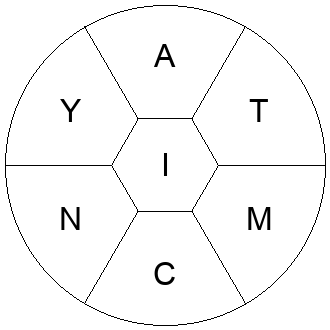
The official answers for today's puzzle are:

Click on the arrow to show the definition.
Click outside the pop-up to close it.


Number of Pangrams: 1

Maximum Puzzle Score: 238

Number of Answers: 51

Points Needed for Genius: 167

Genius requires between 26 and 43 words. You need at least a 6-letter word to reach genius. If you don't get the pangram, you need 75% of the total points to reach genius. If you get the pangram, you only need 68% of the remaining points to reach genius.

Other days with this pangram:

The button below will reveal a chart with the number of words by each letter. Red bars indicate that there is a pangram(s) starting with that letter.


How does this puzzle compare to other puzzles?

Today's score of 238 was in the 78th percentile of all puzzles.
The last time there was a score this high was on February 24, 2026.
The highest score ever was 537 on January 22, 2021.
The lowest score ever was 47 on March 27, 2023.

This puzzle's 51 possible answers rank it in the 77th percentile of all puzzles.
The last time there were more answers than this was on February 24, 2026.
The highest number of answers was 81 on June 08, 2019.
The lowest number of answers was 16 on March 27, 2023.

It takes a 6-letter word for genius.
The last time this happened was on February 20, 2026.

Today's puzzle has an average word length of 5.4.
For all Bees, the average word length has been 5.3.


Haven't I seen these letters before?

Hover over a letter to see its first and most recent appearance in the Bee!


Haven't I seen these words before?

The most common words in the Bee are:

  • noon 232
  • loll 215
  • toot 211
  • nana 192
  • naan 192
  • tilt 152
  • till 152
  • lilt 152
  • nene 150
  • tint 146
  • mamma 146
  • mama 146
  • toon 139
  • onto 139
  • onion 139
  • acai 138
  • acacia 138
  • anon 131
  • anal 130
  • olio 125
  • papa 123
  • dodo 123
  • tact 122
  • lulu 121
  • lull 121
  • baba 121
  • poop 119
  • booboo 118
  • boob 118
  • mitt 117
  • moon 115
  • mono 115
  • cocci 115
  • tartar 113
  • tart 113
  • ratatat 113
  • loon 113
  • calla 113
  • call 113
  • tutu 112
  • tattoo 112
  • attar 112
  • ally 110
  • allay 110
  • tatty 109
  • momma 109
  • ammo 109
  • meme 108
  • roar 106
  • peep 105


How long are words in the Bee?

There have been 114,153 answers ever accepted in the Bee - with 10,927 unique words.
Below are the distributions of the lengths of these words.


Valid dictionary words not in today's official answers

You may be wondering why these words aren't here*:

  • acini
  • acinic
  • acmatic
  • acmic
  • actin
  • actinia
  • actinian
  • actinic
  • amain
  • amanita
  • amanitin
  • amia
  • amici
  • amin
  • aminic
  • aminity
  • amnia
  • amnic
  • animacy
  • animati
  • animi
  • anticity
  • antiman
  • antimycin
  • atactic
  • attaint
  • ayin
  • cain
  • caninity
  • cantic
  • cinnamic
  • cyanic
  • cyanin
  • cyanitic
  • cymatia
  • ictic
  • immy
  • incitant
  • inia
  • inti
  • intima
  • mammati
  • mannitic
  • mantic
  • matin
  • mattin
  • mina
  • minacity
  • mincy
  • minny
  • minyan
  • minyanim
  • mity
  • nictitant
  • nitty
  • tain
  • tian
  • tictac
  • tinman
  • titania
  • titi
  • titian
  • titman
  • titty
  • tiyin
  • tiyn
  • tyin
  • tyiyn

*Because the New York Times considers them obscure or offensive.

acacia

Etymology 1

noun
  1. A shrub or tree of the tribe Acacieae.
  2. The thickened or dried juice of several species in Acacieae, in particular Vachellia nilotica (syn. Acacia nilotica), the Egyptian acacia.
  3. A false acacia; robinia tree, Robinia pseudoacacia.
  4. Gum arabic; gum acacia.
  5. Any of several related trees, such as the locust tree.
  6. A light to moderate greenish yellow with a hint of red.

Etymology 2

noun
  1. (history) A roll or bag, filled with dust, borne by Byzantine emperors, as a memento of mortality. It is represented on medals.

acai

noun
  1. Any of several South American palms, of the genus Euterpe, having a dark purple drupe.
  2. The fruit of these trees, harvested for its juice.

amity

noun
  1. Friendship. The cooperative and supportive relationship between people, or animals. In this sense, the term connotes a relationship which involves mutual knowledge, esteem, affection, and respect along with a degree of rendering service to friends in times of need or crisis.
  2. Mutual understanding and a peaceful relationship, especially between nations; peace; accord.

anima

noun
  1. The soul or animating principle of a living thing, especially as contrasted with the animus.
  2. (Jungian psychology) The inner self (not the external persona) of a person that is in touch with the unconscious as opposed to the persona.
  3. (Jungian psychology) The unconscious feminine aspect of a person.

anti

noun
  1. A person opposed to a concept or principle.
adjective
  1. Opposed to something.
  2. That has a torsion angle between 90° and 180°
preposition
  1. Alternative form of anti-

antic

Etymology 1

noun
  1. A grotesque representation of a figure; a gargoyle.
  2. A caricature.
  3. (often in plural) A ludicrous gesture or act; ridiculous behaviour; caper.
  4. A grotesque performer or clown, buffoon.
verb
  1. To perform antics, caper.
  2. To make a fool of, to cause to look ridiculous.
  3. To perform (an action) as an antic; to mimic ridiculously.
adjective
  1. Playful, funny, absurd
  2. Grotesque, incongruous.
  3. Grotesque, bizarre
adjective
  1. Having existed in ancient times, descended from antiquity; used especially in reference to Greece and Rome.
  2. Belonging to former times, not modern, out of date, old-fashioned.
  3. Designating a style of type.
  4. Embossed without gilt.

Etymology 2

noun
  1. A pose, often exaggerated, in anticipation of an action; for example, a brief squat before jumping

attain

verb
  1. To gain (an object or desired result).
  2. To reach or come to, by progression or motion; to arrive at (a place, time, state, etc.).
  3. To come or arrive, by motion, growth, bodily exertion, or efforts toward a place, object, state, etc.
  4. To get at the knowledge of.
  5. To reach in excellence or degree.
  6. To reach a person after being behind them.

attic

noun
  1. The space, often unfinished and with sloped walls, directly below the roof in the uppermost part of a house or other building, generally used for storage or habitation.

cacti

noun
  1. Any member of the family Cactaceae, a family of flowering New World succulent plants suited to a hot, semi-desert climate.
  2. Any succulent plant with a thick fleshy stem bearing spines but no leaves, such as euphorbs.

caiman

noun
  1. Any of the relatively small crocodilians of genus Caiman, within family Alligatoridae.
  2. A semi-aquatic lizard, of the genus Dracaena, found in South America. To differentiate from caimans, they are referred to as caiman lizards.

cami

noun
  1. A camisole.

cantina

noun
  1. A drinking establishment, often specifically of the type found in Latin America.
  2. Abbreviated form of cantina truck, cantina wagon or cantina trailer

catmint

noun
  1. Any of the about 250 species of flowering plant of the genus Nepeta, family Lamiaceae, certain of which are said to have medicinal qualities.
  2. Something that causes excitement or interest.

city

noun
  1. A large settlement, bigger than a town; sometimes with a specific legal definition, depending on the place.
  2. A settlement granted special status by royal charter or letters patent; traditionally, a settlement with a cathedral regardless of size.
  3. The central business district; downtown.
  4. A large amount of something (used after the noun).

cynic

noun
  1. A person who believes that all people are motivated by selfishness.
  2. A person whose outlook is scornfully negative.
adjective
  1. Cynical (in all senses)
  2. Relating to the Dog Star.

imam

noun
  1. (usually capitalized) A Shi'ite Muslim leader.
  2. One who leads the salat prayers in a mosque.

inanity

noun
  1. The property of being inane, of lacking material of interest or satisfaction, emptiness.
  2. Something that is inane.

incant

verb
  1. To state solemnly, to chant.
  2. To recite an incantation.

intact

adjective
  1. Left complete or whole; not touched, defiled, sullied or otherwise damaged
  2. Of animals, not castrated: an intact bull.
  3. Uncircumcised; commonly used to describe a penis with a foreskin in intactivism.

intimacy

noun
  1. Feeling or atmosphere of closeness and openness towards someone else, not necessarily involving sexuality.
  2. Intimate relationship.
  3. (especially plural) Intimate detail, (item of) intimate information.

maim

noun
  1. A serious wound
verb
  1. To wound seriously; to cause permanent loss of function of a limb or part of the body.

main

Etymology 1

verb
  1. Short for mainline.
  2. To mainly play a specific character, or side, during a game.
  3. Of a road: to convert into a main or primary road.
adjective
  1. Of chief or leading importance; prime, principal.
  2. Chief, most important, or principal in extent, size, or strength; consisting of the largest part.
  3. (of force, strength, etc.) Full, sheer, undivided.
  4. Big; angry.
  5. Belonging to or connected with the principal mast in a vessel.
  6. Great in size or degree; important, powerful, strong, vast.
adverb
  1. Exceedingly, extremely, greatly, mightily, very, very much.

Etymology 2

noun
  1. That which is chief or principal; the chief or main portion; the bulk, the greater part, gross.
  2. A large cable or pipe providing utility service to an area or a building, such as a water main or electric main.
  3. Short for main course.
  4. The high seas.
  5. The mainland.
  6. Short for mainsail.
  7. (except in might and main) Force, power, strength, violent effort.

Etymology 3

noun
  1. A hand or match in a game of dice.
  2. The largest throw in a match at dice; in the game of hazard, a number from one to nine called out by a person before the dice are thrown.
  3. A stake played for at dice.
  4. A sporting contest or match, especially a cockfighting match.
  5. A banker's shovel for coins.

Etymology 4

noun
  1. A basket for gathering grapes.

maintain

verb
  1. To support (someone), to back up or assist (someone) in an action.
  2. To keep up; to preserve; to uphold (a state, condition etc.).
  3. To declare or affirm (a clause) to be true; to assert.

mania

noun
  1. Violent derangement of mind; madness; insanity.
  2. Excessive or unreasonable desire; insane passion affecting one or many people; fanaticism.
  3. The state of abnormally elevated or irritable mood, arousal, and/or energy levels.

maniac

noun
  1. An insane person, especially one who suffers from a mania.
  2. A fanatic, a person with an obsession.

manic

adjective
  1. Of or pertaining to someone who exhibits mania or craziness; wicked.
  2. Suffering from mania, the state of an abnormally elevated or irritable mood, arousal, and/or energy levels.

mica

noun
  1. Any of a group of hydrous aluminosilicate minerals characterized by highly perfect cleavage, so that they readily separate into very thin leaves, more or less elastic.

mimic

noun
  1. A person who practices mimicry, or mime.
  2. An imitation.
verb
  1. To imitate, especially in order to ridicule.
  2. To take on the appearance of another, for protection or camouflage.
adjective
  1. Pertaining to mimicry; imitative.
  2. Mock, pretended.
  3. Imitative; characterized by resemblance to other forms; applied to crystals which by twinning resemble simple forms of a higher grade of symmetry.

mini

Etymology 1

adjective
  1. Miniature, tiny, small.

Etymology 2

noun
  1. A miniskirt.
  2. A minicomputer.

minicam

noun
  1. A small movie camera.

minim

noun
  1. A half note, drawn as a semibreve with a stem.
  2. A unit of volume, in the Imperial and U.S. customary systems, 1/60 fluid drachm. Approximately equal to 1 drop, 62 μL or 0.9 grain (weight) of water.
  3. A short vertical stroke used in handwriting.
  4. Anything very minute; applied to animalcula and the like.
  5. The smallest kind of worker in a leaf-cutter ant colony.
  6. A little man or being; a dwarf.
  7. A small fish; a minnow.
  8. A short poetical encomium.

minima

noun
  1. The lowest limit.
  2. The smallest amount.
  3. A period of minimum brightness or energy intensity (of a star).
  4. A lower bound of a set which is also an element of that set.
  5. The smallest member of a batch or sample or the lower bound of a probability distribution.

mint

Etymology 1

noun
  1. A building or institution where money (originally, only coins) is produced under government licence.
  2. A large amount of money. A vast sum or amount, etc.
  3. Any place regarded as a source of unlimited supply; the supply itself.
verb
  1. To reproduce (coins), usually en masse, under licence.
  2. To invent; to forge; to fabricate; to fashion.
adjective
  1. (with condition) Like new.
  2. In near-perfect condition; uncirculated.
  3. Unused with original gum; as issued originally.
  4. Very good.
  5. Attractive; beautiful; handsome.

Etymology 2

noun
  1. Any plant in the genus Mentha in the family Lamiaceae, typically aromatic with square stems.
  2. The flavouring of the plant, either a sweet, a jelly or sauce.
  3. Any plant in the mint family, Lamiaceae.
  4. A green colour, like that of mint.
  5. A mint-flavored candy, often eaten to sweeten the smell of the breath.
adjective
  1. Of a green colour, like that of the mint plant.

Etymology 3

noun
  1. (provincial) Intent, purpose; an attempt, try; effort, endeavor.
verb
  1. (provincial) To try, attempt; take aim.
  2. (provincial) To try, attempt, endeavor; to take aim at; to try to hit; to purpose.
  3. To hint; suggest; insinuate.

minty

No Definition Found.

mitt

noun
  1. A mitten
  2. An oversized, protective glove such as an oven mitt or a baseball mitt.
  3. (especially in plural) A hand.

niacin

noun
  1. A water-soluble vitamin, a component of vitamin B complex, found in meat, yeast, and dairy products; it is essential to metabolism.

ninny

noun
  1. A silly or foolish person.

tacit

adjective
  1. Expressed in silence; implied, but not made explicit; silent.
  2. Not derived from formal principles of reasoning; based on induction rather than deduction.

tactic

noun
  1. A maneuver, or action calculated to achieve some end.
  2. A maneuver used against an enemy.
  3. A sequence of moves that limits the opponent's options and results in an immediate and tangible advantage, typically in the form of material.
adjective
  1. Tactical; of or relating to the art of military and naval tactics.
  2. Describing a polymer whose repeat units are identical.

tactician

noun
  1. A person skilled in the planning and execution of tactics.

taint

Etymology 1

noun
  1. A contamination, decay or putrefaction, especially in food
  2. A mark of disgrace, especially on one's character; blemish
  3. Tincture; hue; colour
  4. Infection; corruption; deprivation
  5. A marker indicating that a variable is unsafe and should be subjected to additional security checks.
verb
  1. To contaminate or corrupt (something) with an external agent, either physically or morally.
  2. To spoil (food) by contamination.
  3. To be infected or corrupted; to be touched by something corrupting.
  4. To be affected with incipient putrefaction.
  5. To mark (a variable) as unsafe, so that operations involving it are subject to additional security checks.
  6. To invalidate (a share capital account) by transferring profits into it.

Etymology 2

noun
  1. A thrust with a lance, which fails of its intended effect.
  2. An injury done to a lance in an encounter, without its being broken; also, a breaking of a lance in an encounter in a dishonorable or unscientific manner.
verb
  1. To damage, as a lance, without breaking it; also, to break, as a lance, but usually in an unknightly or unscientific manner.
  2. To hit or touch lightly, in tilting.
  3. To thrust ineffectually with a lance.

Etymology 3

noun
  1. The perineum.

tannic

adjective
  1. Pertaining to, containing, or obtained from tannin.

tannin

noun
  1. Tannic acid or any of its derivatives.

tatami

noun
  1. Straw matting, in a standard size, used as a floor covering in Japanese houses

tinct

No Definition Found.

tinny

Etymology 1

adjective
  1. Of or pertaining to or resembling tin.
  2. Pertaining to the thinness and cheapness of tin or similar-looking metals, in contrast to a heavier, more valuable metal.
  3. Pertaining to a thin, unpleasant sound recalling that of tin being rapped.

Etymology 2

noun
  1. A can of beer.
  2. A small open aluminium boat.
  3. Small package of drugs wrapped in foil.

tint

noun
  1. A slight coloring.
  2. A pale or faint tinge of any color; especially, a variation of a color obtained by adding white (contrast shade)
  3. A color considered with reference to other very similar colors.
  4. A shaded effect in engraving, produced by the juxtaposition of many fine parallel lines.
verb
  1. To shade, to color.

tiny

noun
  1. A small child; an infant.
  2. Anything very small.
adjective
  1. Very small.

titan

noun
  1. Something or someone of very large stature, greatness, or godliness.

titanic

Etymology 1

adjective
  1. Having great size, or great strength, force or power.

Etymology 2

adjective
  1. Of or relating to titanium, especially tetravalent titanium

itty

No Definition Found.