Saturday, March 07, 2026

Answers to yesterday's Bee

Jump to answers for


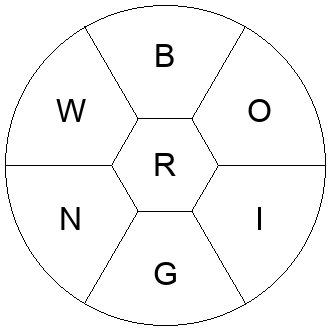
The official answers for today's puzzle are:

Click on the arrow to show the definition.
Click outside the pop-up to close it.


Number of Pangrams: 2

Maximum Puzzle Score: 274

Number of Answers: 51

Points Needed for Genius: 192

Genius requires between 25 and 43 words. You need at least a 7-letter word to reach genius. If you don't get the pangrams, you need 79% of the total points to reach genius. If you get the pangrams, you only need 66% of the remaining points to reach genius.

Other days with this pangram:

The button below will reveal a chart with the number of words by each letter. Red bars indicate that there is a pangram(s) starting with that letter.


How does this puzzle compare to other puzzles?

Today's score of 274 was in the 89th percentile of all puzzles.
The last time there was a score this high was on March 01, 2026.
The highest score ever was 537 on January 22, 2021.
The lowest score ever was 47 on March 27, 2023.

This puzzle's 51 possible answers rank it in the 77th percentile of all puzzles.
The last time there were more answers than this was on March 03, 2026.
The highest number of answers was 81 on June 08, 2019.
The lowest number of answers was 16 on March 27, 2023.

It takes a 7-letter word for genius.
The last time this happened was on March 05, 2026.

Today's puzzle has an average word length of 5.9.
For all Bees, the average word length has been 5.3.


Haven't I seen these letters before?

Hover over a letter to see its first and most recent appearance in the Bee!


Haven't I seen these words before?

The most common words in the Bee are:

  • noon 233
  • loll 216
  • toot 211
  • nana 192
  • naan 192
  • tilt 152
  • till 152
  • lilt 152
  • nene 150
  • tint 147
  • mamma 147
  • mama 147
  • toon 140
  • onto 140
  • onion 140
  • acai 138
  • acacia 138
  • anon 131
  • anal 130
  • olio 126
  • papa 124
  • dodo 123
  • tact 122
  • lulu 122
  • lull 122
  • baba 122
  • poop 119
  • booboo 118
  • boob 118
  • mitt 117
  • moon 115
  • mono 115
  • cocci 115
  • calla 114
  • call 114
  • tartar 113
  • tart 113
  • ratatat 113
  • loon 113
  • tutu 112
  • tattoo 112
  • attar 112
  • ally 110
  • allay 110
  • tatty 109
  • momma 109
  • ammo 109
  • meme 108
  • roar 107
  • peep 106


How long are words in the Bee?

There have been 114,574 answers ever accepted in the Bee - with 10,927 unique words.
Below are the distributions of the lengths of these words.


Valid dictionary words not in today's official answers

You may be wondering why these words aren't here*:

  • biro
  • birr
  • birring
  • brin
  • broo
  • brrr
  • girn
  • girning
  • giro
  • giron
  • grig
  • grigri
  • gringo
  • groining
  • ingrowing
  • inro
  • iring
  • nongrowing
  • noniron
  • orbing
  • oribi
  • rinning
  • robbin
  • ronin
  • ronion

*Because the New York Times considers them obscure or offensive.

boor

noun
  1. A peasant.
  2. A Boer, white South African of Dutch or Huguenot descent.
  3. A yokel, country bumpkin.
  4. An uncultured person.

boring

verb
  1. To inspire boredom in somebody.
  2. To make a hole through something.
  3. To make a hole with, or as if with, a boring instrument; to cut a circular hole by the rotary motion of a tool.
  4. To form or enlarge (something) by means of a boring instrument or apparatus.
  5. To make (a passage) by laborious effort, as in boring; to force a narrow and difficult passage through.
  6. To be pierced or penetrated by an instrument that cuts as it turns.
  7. To push forward in a certain direction with laborious effort.
  8. (of a horse) To shoot out the nose or toss it in the air.
  9. To fool; to trick.
noun
  1. A pit or hole which has been bored.
  2. Fragments thrown up when something is bored or drilled.
  3. Any organism that bores into a hard surface
adjective
  1. Causing boredom; unable to engage or hold the interest.
  2. Used, or designed to be used, to drill holes.
  3. Capable of penetrating; piercing.

born

Etymology 1

verb
  1. To carry or convey, literally or figuratively.
  2. To support, sustain, or endure.
  3. To support, keep up, or maintain.
  4. To press or impinge upon.
  5. To produce, yield, give birth to.
  6. (originally nautical) To be, or head, in a specific direction or azimuth (from somewhere).
  7. To gain or win.
adjective
  1. Having from birth (or as if from birth) a certain quality or character; innate; inherited.

Etymology 2

noun
  1. A physical injury caused by heat, cold, electricity, radiation or caustic chemicals.
  2. A sensation resembling such an injury.
  3. The act of burning something with fire.
  4. An intense non-physical sting, as left by shame or an effective insult.
  5. An effective insult, often in the expression sick burn (excellent or badass insult).
  6. Physical sensation in the muscles following strenuous exercise, caused by build-up of lactic acid.
  7. Tobacco.
  8. The writing of data to a permanent storage medium like a compact disc or a ROM chip.
  9. The operation or result of burning or baking, as in brickmaking.
  10. A disease in vegetables; brand.
verb
  1. To cause to be consumed by fire.
  2. To be consumed by fire, or in flames.
  3. To overheat so as to make unusable.
  4. To become overheated to the point of being unusable.
  5. To make or produce by the application of fire or burning heat.
  6. To injure (a person or animal) with heat or chemicals that produce similar damage.
  7. To cauterize.
  8. To sunburn.
  9. To consume, injure, or change the condition of, as if by action of fire or heat; to affect as fire or heat does.
  10. To be hot, e.g. due to embarrassment.
  11. To cause to combine with oxygen or other active agent, with evolution of heat; to consume; to oxidize.
  12. To combine energetically, with evolution of heat.
  13. To write data to a permanent storage medium like a compact disc or a ROM chip.
  14. To betray.
  15. To insult or defeat.
  16. To waste (time); to waste money or other resources.
  17. In certain games, to approach near to a concealed object which is sought.
  18. To accidentally touch a moving stone.
  19. In pontoon, to swap a pair of cards for another pair, or to deal a dead card.
  20. To increase the exposure for certain areas of a print in order to make them lighter (compare dodge).
  21. (of an element) To be converted to another element in a nuclear fusion reaction, especially in a star
  22. To discard.
  23. To shoot someone with a firearm.
noun
  1. A stream.

boron

noun
  1. The chemical element (symbol B) with an atomic number of 5, which is a metalloid found in its pure form as a dark amorphous powder.
  2. A single atom of this element.

borrow

Etymology 1

noun
  1. Deviation of the path of a rolling ball from a straight line; slope; slant.
  2. A borrow pit.
  3. In the Rust programming language, the situation where the ownership of a value is temporarily transferred to another region of code.
verb
  1. To receive (something) from somebody temporarily, expecting to return it.
  2. To take money from a bank under the agreement that the bank will be paid over the course of time.
  3. To adopt (an idea) as one's own.
  4. To adopt a word from another language.
  5. In a subtraction, to deduct (one) from a digit of the minuend and add ten to the following digit, in order that the subtraction of a larger digit in the subtrahend from the digit in the minuend to which ten is added gives a positive result.
  6. (Upper Midwestern United States) To lend.
  7. To temporarily obtain (something) for (someone).
  8. To feign or counterfeit.
  9. (obsolete except in ballads) To secure the release of (someone) from prison.
  10. To receive (something) from somebody, with little possibility of returning it.

Etymology 2

noun
  1. A ransom; a pledge or guarantee.
  2. A surety; someone standing bail.

borrowing

verb
  1. To receive (something) from somebody temporarily, expecting to return it.
  2. To take money from a bank under the agreement that the bank will be paid over the course of time.
  3. To adopt (an idea) as one's own.
  4. To adopt a word from another language.
  5. In a subtraction, to deduct (one) from a digit of the minuend and add ten to the following digit, in order that the subtraction of a larger digit in the subtrahend from the digit in the minuend to which ten is added gives a positive result.
  6. (Upper Midwestern United States) To lend.
  7. To temporarily obtain (something) for (someone).
  8. To feign or counterfeit.
  9. (obsolete except in ballads) To secure the release of (someone) from prison.
  10. To receive (something) from somebody, with little possibility of returning it.
noun
  1. An instance of something being borrowed.
  2. A borrowed word, adopted from a foreign language; loanword.

bribing

verb
  1. To give a bribe to; specifically, to ask a person to do something, usually against his/her will, in exchange for some type of reward or relief from potential trouble.
  2. To gain by a bribe; to induce as by a bribe.
noun
  1. Bribery.

brig

Etymology 1

noun
  1. A two-masted vessel, square-rigged on both foremast and mainmast
  2. A jail or guardhouse, especially in a naval military prison or jail on a ship, navy base, or (in fiction) spacecraft.

Etymology 2

noun
  1. Bridge.

Etymology 3

noun
  1. Brigadier.

bring

Etymology 1

verb
  1. (ditransitive) To transport toward somebody/somewhere.
  2. To supply or contribute.
  3. To occasion or bring about.
  4. To raise (a lawsuit, charges, etc.) against somebody.
  5. To persuade; to induce; to draw; to lead; to guide.
  6. To produce in exchange; to sell for; to fetch.
  7. To pitch, often referring to a particularly hard thrown fastball.

Etymology 2

interjection
  1. The sound of a telephone ringing.

bringing

verb
  1. (ditransitive) To transport toward somebody/somewhere.
  2. To supply or contribute.
  3. To occasion or bring about.
  4. To raise (a lawsuit, charges, etc.) against somebody.
  5. To persuade; to induce; to draw; to lead; to guide.
  6. To produce in exchange; to sell for; to fetch.
  7. To pitch, often referring to a particularly hard thrown fastball.
noun
  1. The act by which something is brought.

brining

verb
  1. To preserve food in a salt solution.
  2. To prepare and flavor food (especially meat) for cooking by soaking in a salt solution.

brio

noun
  1. Vigour or vivacity.

brow

noun
  1. The ridge over the eyes; the eyebrow.
  2. The first tine of an antler's beam.
  3. The forehead.
  4. The projecting upper edge of a steep place such as a hill.
  5. A gallery in a coal mine running across the face of the coal.
  6. Aspect; appearance.
  7. The gangway from ship to shore when a ship is lying alongside a quay.
  8. The hinged part of a landing craft or ferry which is lowered to form a landing platform; a ramp.
verb
  1. To bound or limit; to be at, or form, the edge of.

brown

noun
  1. A colour like that of chocolate or coffee.
  2. One of the colour balls used in snooker, with a value of 4 points.
  3. Black tar heroin.
  4. A copper coin.
  5. A brown horse or other animal.
  6. (sometimes capitalised) A person of Middle Eastern, Latino or South Asian descent; a brown-skinned person; someone of mulatto or biracial appearance.
  7. Any of various nymphalid butterflies of subfamily Satyrinae (formerly the family Satyridae).
  8. Any of certain species of nymphalid butterflies of subfamily Satyrinae, such as those of the genera Heteronympha and Melanitis.
  9. A brown trout (Salmo trutta).
verb
  1. To become brown.
  2. To cook something until it becomes brown.
  3. To tan.
  4. To make brown or dusky.
  5. To give a bright brown colour to, as to gun barrels, by forming a thin coating of oxide on their surface.
  6. (usually derogatory) To turn progressively more Middle Eastern, Hispanic or Latino, in the context of the population of a geographic region.
  7. To treat with deference, or respect.
adjective
  1. Having a brown colour.
  2. Gloomy.
  3. (sometimes capitalized) Of or relating to any of various ethnic groups having dark pigmentation of the skin.

browning

verb
  1. To become brown.
  2. To cook something until it becomes brown.
  3. To tan.
  4. To make brown or dusky.
  5. To give a bright brown colour to, as to gun barrels, by forming a thin coating of oxide on their surface.
  6. (usually derogatory) To turn progressively more Middle Eastern, Hispanic or Latino, in the context of the population of a geographic region.
  7. To treat with deference, or respect.
noun
  1. The act or operation of giving a brown colour, as to gun barrels, cooked food, etc.
  2. Any of various preparations used to impart a brown colour to gravy, leather, etc.
  3. A smooth coat of brown mortar, usually the second coat, and the preparation for the finishing coat of plaster.
  4. A brown-skinned person.

gorging

noun
  1. The act of one who gorges, or eats to satiety.

gorgon

noun
  1. A vicious female monster from Greek mythology with sharp fangs and hair of living, venomous snakes. One of the three sisters: Medusa, Stheno and Euryale
  2. An intimidating, ugly, or disgusting woman; anything hideous or horrid.
adjective
  1. Like a gorgon; very ugly or terrifying.

goring

verb
  1. (of an animal) To pierce with the horn.
  2. To pierce with anything pointed, such as a spear.
verb
  1. To cut in a triangular form.
  2. To provide with a gore.
noun
  1. The act by which something is gored; a wound inflicted by a horn, usually the horn of a bull in the context of bullfighting
  2. A piece of cloth cut diagonally to increase its apparent width.
adjective
  1. Cut gradually sloping, so as to be broader at the clew than at the earing of a sail.

grin

Etymology 1

noun
  1. A smile in which the lips are parted to reveal the teeth.
verb
  1. To smile, parting the lips so as to show the teeth.
  2. To express by grinning.
  3. To show the teeth, like a snarling dog.
  4. To grin as part of producing a particular facial expression, such as a smile or sneer.

Etymology 2

noun
  1. A snare; a gin.

grinning

verb
  1. To smile, parting the lips so as to show the teeth.
  2. To express by grinning.
  3. To show the teeth, like a snarling dog.
  4. To grin as part of producing a particular facial expression, such as a smile or sneer.
noun
  1. The act or expression of one who grins.

grog

noun
  1. (original meaning) An alcoholic beverage made with rum and water, especially that once issued to sailors of the Royal Navy.
  2. (by extension) Any alcoholic beverage.
  3. A glass or serving of an alcoholic beverage.
  4. An alcoholic beverage made with hot water or tea, sugar and rum, sometimes also with lemon or lime juice and spices, particularly cinnamon.
  5. A type of pre-fired clay that has been ground and screened to a specific particle size.

groin

Etymology 1

noun
  1. The crease or depression of the human body at the junction of the trunk and the thigh, together with the surrounding region.
  2. The area adjoining this fold or depression.
  3. The projecting solid angle formed by the meeting of two vaults
  4. The genitals.
  5. The surface formed by two such vaults.
verb
  1. To deliver a blow to the genitals of.
  2. To build with groins.
  3. (literary) To hollow out, to excavate.

Etymology 2

verb
  1. To grunt; to growl; to snarl; to murmur.

Etymology 3

noun
  1. An often wooden structure that projects from a coastline to prevent erosion, longshore drift etc.; a breakwater.

grow

verb
  1. To become larger, to increase in magnitude.
  2. To appear or sprout.
  3. To develop, to mature.
  4. To cause or allow something to become bigger, especially to cultivate plants.
  5. To assume a condition or quality over time.
  6. To become attached or fixed; to adhere.

growing

verb
  1. To become larger, to increase in magnitude.
  2. To appear or sprout.
  3. To develop, to mature.
  4. To cause or allow something to become bigger, especially to cultivate plants.
  5. To assume a condition or quality over time.
  6. To become attached or fixed; to adhere.
noun
  1. Growth; increase
  2. (attributive) Connected with growing
adjective
  1. That grows.

grown

verb
  1. To become larger, to increase in magnitude.
  2. To appear or sprout.
  3. To develop, to mature.
  4. To cause or allow something to become bigger, especially to cultivate plants.
  5. To assume a condition or quality over time.
  6. To become attached or fixed; to adhere.
adjective
  1. Covered by growth; overgrown.
  2. Of a person: adult.

ignoring

verb
  1. To deliberately not listen or pay attention to.
  2. To pretend to not notice someone or something.
  3. Fail to notice.
  4. Not to know.
noun
  1. The act by which something is ignored.

inborn

adjective
  1. Innate, possessed by an organism at birth.
  2. Inherited or hereditary.

ingrown

adjective
  1. That has grown inwards or abnormally towards (a part of the body)

iron

noun
  1. A common, inexpensive metal, silvery grey when untarnished, that rusts, is attracted by magnets, and is used in making steel.
  2. A metallic chemical element having atomic number 26 and symbol Fe.
  3. Any material, not a steel, predominantly made of elemental iron.
  4. A tool or appliance made of metal, which is heated and then used to transfer heat to something else; most often a thick piece of metal fitted with a handle and having a flat, roughly triangular bottom, which is heated and used to press wrinkles from clothing, and now usually containing an electrical heating apparatus.
  5. (usually plural, irons) Shackles.
  6. A firearm, either a long gun or a handgun.
  7. A dark shade of the colour/color silver.
  8. (shortened from iron hoof, rhyming with poof; countable) A male homosexual.
  9. A golf club used for middle-distance shots.
  10. Used as a symbol of great strength or toughness, or to signify a very strong or tough material.
  11. Weight used as resistance for the purpose of strength training.
  12. A safety curtain in a theatre.
  13. Dumb bombs, those without guidance systems.
verb
  1. To pass an iron over (clothing or some other item made of cloth) in order to remove creases.
  2. To shackle with irons; to fetter or handcuff.
  3. To furnish or arm with iron.
adjective
  1. Made of the metal iron.
  2. Strong (as of will), inflexible.

ironing

verb
  1. To pass an iron over (clothing or some other item made of cloth) in order to remove creases.
  2. To shackle with irons; to fetter or handcuff.
  3. To furnish or arm with iron.
noun
  1. The act of pressing clothes with an iron.
  2. Laundry that has been washed and is ready to be ironed.
  3. Laundry that has recently been ironed.

noir

noun
  1. Film noir.
  2. A production in the style of film noir.
adjective
  1. Of or pertaining to film noir, or the atmosphere associated with that genre

nori

Etymology 1

noun
  1. A type of seaweed, a red alga, laver (genus Pyropia, including species P. yezoensis and P. tenera).
  2. The seaweed, chopped and formed into sheets, used in the preparation of sushi.

Etymology 2

noun
  1. An improvised rail vehicle from Cambodia; a bamboo train.

origin

noun
  1. The beginning of something.
  2. The source of a river, information, goods, etc.
  3. The point at which the axes of a coordinate system intersect.
  4. The proximal end of attachment of a muscle to a bone that will not be moved by the action of that muscle.
  5. An arbitrary point on Earth's surface, chosen as the zero for a system of coordinates.
  6. (in the plural) Ancestry.

ribbing

verb
  1. To shape, support, or provide something with a rib or ribs.
  2. To tease or make fun of someone in a good-natured way.
  3. To enclose, as if with ribs, and protect; to shut in.
  4. To leave strips of undisturbed ground between the furrows in ploughing (land).
noun
  1. The action of the verb to rib.
  2. A rib, or the collective ribs, on an object.
  3. An instance of teasing.

ribbon

noun
  1. A long, narrow strip of timber bent and bolted longitudinally to the ribs of a vessel, to hold them in position and give rigidity to the framework.
noun
  1. A ribbon.
noun
  1. A long, narrow strip of material used for decoration of clothing or the hair or gift wrapping.
  2. An awareness ribbon.
  3. An inked strip of material against which type is pressed to print letters in a typewriter or printer.
  4. A narrow strip or shred.
  5. A painted moulding on the side of a ship.
  6. A watchspring.
  7. A bandsaw.
  8. (in the plural) Reins for a horse.
  9. A bearing similar to the bend, but only one eighth as wide.
  10. (spinning) A sliver.
  11. A subheadline presented above its parent headline.
  12. A toolbar that incorporates tabs and menus.
verb
  1. To decorate with ribbon.
  2. To stripe or streak.

ribboning

verb
  1. To decorate with ribbon.
  2. To stripe or streak.

rigging

verb
  1. To fit out with a harness or other equipment.
  2. To equip and fit (a ship) with sails, shrouds, and yards.
  3. To dress or clothe in some costume.
  4. To make or construct something in haste or in a makeshift manner.
  5. To manipulate something dishonestly for personal gain or discriminatory purposes.
  6. To make free with; hence, to steal; to pilfer.
  7. To outfit a model with controls for animation.
verb
  1. To play the wanton; to act in an unbecoming manner; to play tricks.
noun
  1. Dress; tackle; especially , the ropes, chains, etc., that support the masts and spars of a sailing vessel, and serve as purchases for adjusting the sails, etc.
  2. Similar supporting material used for construction work, or in film, theater, etc.

rigor

noun
  1. Short for rigor mortis.
noun
  1. Severity or strictness.
  2. Harshness, as of climate.
  3. A trembling or shivering response.
  4. Character of being unyielding or inflexible.
  5. Shrewd questioning.
  6. Higher level of difficulty.

ring

Etymology 1

noun
  1. (physical) A solid object in the shape of a circle.
  2. (physical) A group of objects arranged in a circle.
  3. A piece of food in the shape of a ring.
  4. A place where some sports or exhibitions take place; notably a circular or comparable arena, such as a boxing ring or a circus ring; hence the field of a political contest.
  5. An exclusive group of people, usually involving some unethical or illegal practices.
  6. A group of atoms linked by bonds to form a closed chain in a molecule.
  7. A planar geometrical figure included between two concentric circles.
  8. A diacritical mark in the shape of a hollow circle placed above or under the letter; a kroužek.
  9. An old English measure of corn equal to the coomb or half a quarter.
  10. A hierarchical level of privilege in a computer system, usually at hardware level, used to protect data and functionality (also protection ring).
  11. Either of the pair of clamps used to hold a telescopic sight to a rifle.
  12. The twenty-fifth Lenormand card.
verb
  1. To enclose or surround.
  2. To make an incision around; to girdle.
  3. To attach a ring to, especially for identification.
  4. To surround or fit with a ring, or as if with a ring.
  5. To rise in the air spirally.
  6. To steal and change the identity of (cars) in order to resell them.

Etymology 2

noun
  1. The resonant sound of a bell, or a sound resembling it.
  2. A pleasant or correct sound.
  3. A sound or appearance that is characteristic of something.
  4. A telephone call.
  5. Any loud sound; the sound of numerous voices; a sound continued, repeated, or reverberated.
  6. A chime, or set of bells harmonically tuned.
verb
  1. Of a bell, etc., to produce a resonant sound.
  2. To make (a bell, etc.) produce a resonant sound.
  3. To produce (a sound) by ringing.
  4. To produce the sound of a bell or a similar sound.
  5. Of something spoken or written, to appear to be, to seem, to sound.
  6. To telephone (someone).
  7. To resound, reverberate, echo.
  8. To produce music with bells.
  9. To repeat often, loudly, or earnestly.

Etymology 3

noun
  1. An algebraic structure which consists of a set with two binary operations: an additive operation and a multiplicative operation, such that the set is an abelian group under the additive operation, a monoid under the multiplicative operation, and such that the multiplicative operation is distributive with respect to the additive operation.
  2. An algebraic structure as above, but only required to be a semigroup under the multiplicative operation, that is, there need not be a multiplicative identity element.

ringing

verb
  1. To enclose or surround.
  2. To make an incision around; to girdle.
  3. To attach a ring to, especially for identification.
  4. To surround or fit with a ring, or as if with a ring.
  5. To rise in the air spirally.
  6. To steal and change the identity of (cars) in order to resell them.
verb
  1. Of a bell, etc., to produce a resonant sound.
  2. To make (a bell, etc.) produce a resonant sound.
  3. To produce (a sound) by ringing.
  4. To produce the sound of a bell or a similar sound.
  5. Of something spoken or written, to appear to be, to seem, to sound.
  6. To telephone (someone).
  7. To resound, reverberate, echo.
  8. To produce music with bells.
  9. To repeat often, loudly, or earnestly.
noun
  1. The sound of something that rings.
  2. The quality of being resonant.
  3. A technique used in the study of wild birds, by attaching a small, individually numbered, metal or plastic tag to their legs or wings.
  4. The theft of cars and illegally changing their identities for resale.
adjective
  1. Loud and clear.
  2. Made forcefully; powerful.

robbing

verb
  1. To steal from, especially using force or violence.
  2. To deprive of, or withhold from, unjustly or injuriously; to defraud.
  3. (used with "of") To deprive (of).
  4. To burgle.
  5. To steal.
  6. To commit robbery.
  7. To take possession of the ball, puck etc. from.
noun
  1. Robbery

robin

noun
  1. Any of various passerine birds (about 100 species) of the families Muscicapidae, Turdidae and Petroicidae (formerly Eopsaltriidae), typically with a red breast.
  2. A trimming in front of a dress.

robing

verb
  1. To clothe; to dress.
  2. To put on official vestments.
noun
  1. The act of putting on ceremonial clothing.
  2. (usually plural) The trimmings around the neck and bodice of a gown.

rowing

verb
  1. To propel (a boat or other craft) over water using oars.
  2. To transport in a boat propelled with oars.
  3. To be moved by oars.
verb
  1. To argue noisily
noun
  1. The action of the verb to row.
  2. The action of propelling a boat with oars.
  3. The rowing of boats as a competitive sport.
  4. The act of having a row, or argument.

wiring

verb
  1. To fasten with wire, especially with reference to wine bottles, corks, or fencing.
  2. To string on a wire.
  3. To equip with wires for use with electricity.
  4. To add something into an electrical system by means of wiring; to incorporate or include something.
  5. (usually passive) To fix or predetermine (someone's personality or behaviour) in a particular way.
  6. To send a message or monetary funds to another person through a telecommunications system, formerly predominantly by telegraph.
  7. To make someone tense or psyched up. See also adjective wired.
  8. To install eavesdropping equipment.
  9. To snare by means of a wire or wires.
  10. To place (a ball) so that the wire of a wicket prevents a successful shot.
noun
  1. A mass of electric wires.

worn

verb
  1. To carry or have equipped on or about one's body, as an item of clothing, equipment, decoration, etc.
  2. To have or carry on one's person habitually, consistently; or, to maintain in a particular fashion or manner.
  3. To bear or display in one's aspect or appearance.
  4. (with "it") To overcome one's reluctance and endure a (previously specified) situation.
  5. To eat away at, erode, diminish, or consume gradually; to cause a gradual deterioration in; to produce (some change) through attrition, exposure, or constant use.
  6. To undergo gradual deterioration; become impaired; be reduced or consumed gradually due to any continued process, activity, or use.
  7. To exhaust, fatigue, expend, or weary.
  8. To last or remain durable under hard use or over time; to retain usefulness, value, or desirable qualities under any continued strain or long period of time; sometimes said of a person, regarding the quality of being easy or difficult to tolerate.
  9. (in the phrase "wearing on (someone)") To cause annoyance, irritation, fatigue, or weariness near the point of an exhaustion of patience.
  10. (of time) To pass slowly, gradually or tediously.
  11. To bring (a sailing vessel) onto the other tack by bringing the wind around the stern (as opposed to tacking when the wind is brought around the bow); to come round on another tack by turning away from the wind. Also written "ware". Past: weared, or wore/worn.
verb
  1. To guard; watch; keep watch, especially from entry or invasion.
  2. To defend; protect.
  3. To ward off; prevent from approaching or entering; drive off; repel.
  4. To conduct or guide with care or caution, as into a fold or place of safety.
adjective
  1. Damaged and shabby as a result of much use

wring

Etymology 1

noun
  1. A powerful squeezing or twisting action.
  2. Pain or distress.
verb
  1. To squeeze or twist (something) tightly so that liquid is forced out. See also wring out.
  2. To extract (a liquid) from something wet, especially cloth, by squeezing and twisting it.
  3. To obtain (something from or out of someone or something) by force.
  4. To draw (something from or out of someone); to generate (something) as a response.
  5. To hold (something) tightly and press or twist.
  6. To cause pain or distress to (someone / one's heart, soul, etc.).
  7. To slide two ultraflat surfaces together such that their faces bond.
  8. To twist, as if in pain.
  9. To give an incorrect meaning to (words, teachings, etc.).
  10. To subject (someone) to extortion; to afflict or oppress in order to enforce compliance.
  11. To bend or strain out of its position.

Etymology 2

noun
  1. A device for pressing or compressing, especially for cider.

wringing

verb
  1. To squeeze or twist (something) tightly so that liquid is forced out. See also wring out.
  2. To extract (a liquid) from something wet, especially cloth, by squeezing and twisting it.
  3. To obtain (something from or out of someone or something) by force.
  4. To draw (something from or out of someone); to generate (something) as a response.
  5. To hold (something) tightly and press or twist.
  6. To cause pain or distress to (someone / one's heart, soul, etc.).
  7. To slide two ultraflat surfaces together such that their faces bond.
  8. To twist, as if in pain.
  9. To give an incorrect meaning to (words, teachings, etc.).
  10. To subject (someone) to extortion; to afflict or oppress in order to enforce compliance.
  11. To bend or strain out of its position.
noun
  1. The act by which something is wrung.

wrong

noun
  1. Something that is immoral or not good.
  2. An instance of wronging someone (sometimes with possessive to indicate the wrongdoer).
  3. The incorrect or unjust position or opinion.
  4. The opposite of right; the concept of badness.
verb
  1. To treat unjustly; to injure or harm.
  2. To deprive of some right, or to withhold some act of justice.
  3. To slander; to impute evil to unjustly.
adjective
  1. Incorrect or untrue.
  2. Asserting something incorrect or untrue.
  3. Immoral, not good, bad.
  4. Improper; unfit; unsuitable.
  5. Not working; out of order.
  6. Designed to be worn or placed inward; as, the wrong side of a garment or of a piece of cloth.
  7. Twisted; wry.
adverb
  1. In a way that isn't right; incorrectly, wrongly.

wronging

verb
  1. To treat unjustly; to injure or harm.
  2. To deprive of some right, or to withhold some act of justice.
  3. To slander; to impute evil to unjustly.
noun
  1. An act by which somebody is wronged.

nigiri

noun
  1. Regular sushi: a piece of raw fish (or other topping) on top of a small oblong brick of sticky white rice.