Tuesday, March 17, 2026

Answers to yesterday's Bee

Jump to answers for


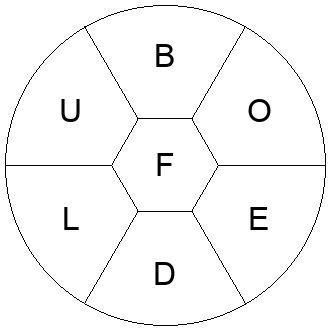
The official answers for today's puzzle are:

Click on the arrow to show the definition.
Click outside the pop-up to close it.


Number of Pangrams: 1

Maximum Puzzle Score: 215

Number of Answers: 50

Points Needed for Genius: 151

Genius requires between 22 and 43 words. You need at least a 7-letter word to reach genius. If you don't get the pangram, you need 76% of the total points to reach genius. If you get the pangram, you only need 68% of the remaining points to reach genius.

The button below will reveal a chart with the number of words by each letter. Red bars indicate that there is a pangram(s) starting with that letter.


How does this puzzle compare to other puzzles?

Today's score of 215 was in the 70th percentile of all puzzles.
The last time there was a score this high was on March 16, 2026.
The highest score ever was 537 on January 22, 2021.
The lowest score ever was 47 on March 27, 2023.

This puzzle's 50 possible answers rank it in the 75th percentile of all puzzles.
The last time there were more answers than this was on March 15, 2026.
The highest number of answers was 81 on June 08, 2019.
The lowest number of answers was 16 on March 27, 2023.

It takes a 7-letter word for genius.
The last time this happened was on March 15, 2026.

Today's puzzle has an average word length of 5.4.
For all Bees, the average word length has been 5.3.


Haven't I seen these letters before?

Hover over a letter to see its first and most recent appearance in the Bee!


Haven't I seen these words before?

The most common words in the Bee are:

  • noon 234
  • loll 216
  • toot 211
  • nana 192
  • naan 192
  • tilt 152
  • till 152
  • nene 152
  • lilt 152
  • tint 148
  • mamma 148
  • mama 148
  • toon 141
  • onto 141
  • onion 141
  • acai 140
  • acacia 140
  • anon 131
  • anal 130
  • olio 126
  • papa 124
  • dodo 123
  • baba 123
  • tact 122
  • lulu 122
  • lull 122
  • poop 119
  • booboo 118
  • boob 118
  • mitt 117
  • cocci 117
  • moon 116
  • mono 116
  • calla 115
  • call 115
  • loon 114
  • tartar 113
  • tart 113
  • ratatat 113
  • tutu 112
  • tattoo 112
  • attar 112
  • ally 111
  • allay 111
  • momma 110
  • ammo 110
  • tatty 109
  • meme 108
  • roar 107
  • peep 106


How long are words in the Bee?

There have been 115,071 answers ever accepted in the Bee - with 10,941 unique words.
Below are the distributions of the lengths of these words.


Valid dictionary words not in today's official answers

You may be wondering why these words aren't here*:

  • befool
  • befooled
  • boeuf
  • boff
  • boffed
  • bouffe
  • buffo
  • defuel
  • defueled
  • defuelled
  • delf
  • duffed
  • feeb
  • felloe
  • feod
  • feoff
  • feoffed
  • feoffee
  • feued
  • flubdub
  • flued
  • fubbed
  • fuelled
  • fullblood
  • fulled
  • loof
  • luffed

*Because the New York Times considers them obscure or offensive.

beef

noun
  1. The meat from a cow, bull or other bovine.
  2. (plural: beefs) A grudge; dislike (of something or someone); lack of faith or trust (in something or someone); a reason for a dislike or grudge. (often + with)
verb
  1. To complain.
  2. To add weight or strength to; to beef up.
  3. To fart; break wind.
  4. To feud or hold a grudge against.
  5. To cry
  6. To fail or mess up.
adjective
  1. Being a bovine animal that is being raised for its meat.
  2. Producing or known for raising lots of beef.
  3. Consisting of or containing beef as an ingredient.

beefed

verb
  1. To complain.
  2. To add weight or strength to; to beef up.
  3. To fart; break wind.
  4. To feud or hold a grudge against.
  5. To cry
  6. To fail or mess up.

befell

verb
  1. To fall upon; fall all over; overtake
  2. To happen.
  3. To happen to.
  4. To fall.

befoul

verb
  1. To make foul; to soil; to contaminate, pollute.
  2. (specifically) To defecate on, to soil with excrement.
  3. To stain or mar (for example with infamy or disgrace).
  4. To entangle or run against so as to impede motion.

befouled

verb
  1. To make foul; to soil; to contaminate, pollute.
  2. (specifically) To defecate on, to soil with excrement.
  3. To stain or mar (for example with infamy or disgrace).
  4. To entangle or run against so as to impede motion.

befuddle

verb
  1. To perplex, confuse (someone).
  2. To stupefy (someone), especially with alcohol.

befuddled

verb
  1. To perplex, confuse (someone).
  2. To stupefy (someone), especially with alcohol.
adjective
  1. Confused or perplexed
  2. Drunk

bluff

Etymology 1

noun
  1. An act of bluffing; a false expression of the strength of one's position in order to intimidate; braggadocio.
  2. An attempt to represent oneself as holding a stronger hand than one actually does.
  3. The card game poker.
  4. One who bluffs; a bluffer.
  5. An excuse.
verb
  1. To make a bluff; to give the impression that one's hand is stronger than it is.
  2. (by analogy) To frighten or deter with a false show of strength or confidence; to give a false impression of strength or temerity in order to intimidate and gain some advantage.
  3. To take advantage by bluffing.

Etymology 2

noun
  1. A high, steep bank, for example by a river or the sea, or beside a ravine or plain; a cliff with a broad face.
  2. A small wood or stand of trees, typically poplar or willow.
adjective
  1. Having a broad, flattened front.
  2. Rising steeply with a flat or rounded front.
  3. Surly; churlish; gruff; rough.
  4. Roughly frank and hearty in one's manners.

Etymology 3

verb
  1. To fluff, puff or swell up.

bluffed

verb
  1. To make a bluff; to give the impression that one's hand is stronger than it is.
  2. (by analogy) To frighten or deter with a false show of strength or confidence; to give a false impression of strength or temerity in order to intimidate and gain some advantage.
  3. To take advantage by bluffing.
verb
  1. To fluff, puff or swell up.

boffo

noun
  1. (chiefly in the world of entertainment) A great success; a hit.
adjective
  1. Outstanding; very good or successful.

buff

Etymology 1

noun
  1. Undyed leather from the skin of buffalo or similar animals.
  2. A tool, often one covered with buff leather, used for polishing.
  3. A brownish yellow colour.
  4. A military coat made of buff leather.
  5. A person who is very interested in a particular subject; an enthusiast.
  6. An effect that makes a character or item stronger.
  7. Compressive coupler force that occurs during a slack bunched condition.
  8. The bare skin.
  9. The greyish viscid substance constituting the buffy coat.
  10. A substance used to dilute (street) drugs in order to increase profits.
verb
  1. To polish and make shiny by rubbing.
  2. To make a character or an item stronger.
  3. To modify a medical chart, especially in a dishonest manner.
adjective
  1. Of the color of buff leather, a brownish yellow.
  2. Unusually muscular. (also buffed or buffed out)
  3. Physically attractive.

Etymology 2

noun
  1. A buffet; a blow.
verb
  1. To strike.

Etymology 3

noun
  1. A buffalo, or the meat of a buffalo.

buffed

verb
  1. To polish and make shiny by rubbing.
  2. To make a character or an item stronger.
  3. To modify a medical chart, especially in a dishonest manner.
verb
  1. To strike.

doff

verb
  1. (clothing) To remove or take off, especially of clothing.
  2. To remove or tip a hat, as in greeting, salutation or as a mark of respect.
  3. To get rid of, to throw off.
  4. To strip; to divest; to undress.

doffed

verb
  1. (clothing) To remove or take off, especially of clothing.
  2. To remove or tip a hat, as in greeting, salutation or as a mark of respect.
  3. To get rid of, to throw off.
  4. To strip; to divest; to undress.

doleful

adjective
  1. Filled with grief, mournful, bringing feelings of sadness.

duff

Etymology 1

noun
  1. Dough.
  2. A stiff flour pudding, often with dried fruit, boiled in a cloth bag, or steamed.
  3. A pudding-style dessert, especially one made with plums.

Etymology 2

noun
  1. Decaying vegetable matter on the forest floor.
  2. Coal dust, especially that left after screening or combined with other small, unsaleable bits of coal.
  3. Fine and dry coal in small pieces, usually anthracite.
  4. A mixture of coal and rock.
  5. The bits left in the bottom of the bag after the booty has been consumed, like crumbs.
  6. Something spurious or fake; a counterfeit, a worthless thing.
  7. (1800s) An error.
adjective
  1. Worthless; not working properly, defective.

Etymology 3

noun
  1. The buttocks.

Etymology 4

verb
  1. To disguise something to make it look new.
  2. To alter the branding of stolen cattle; to steal cattle.
  3. (with "up") To beat up.
  4. To hit the ground behind the ball.

Etymology 5

noun
  1. A large frame drum, resembling a tambourine, used to accompany popular and classical music in the Middle East.

duffel

noun
  1. A kind of coarse woolen cloth, having a thick nap or frieze.
  2. Outfit or supplies, collectively; kit.

duffle

noun
  1. A kind of coarse woolen cloth, having a thick nap or frieze.
  2. Outfit or supplies, collectively; kit.

feeble

verb
  1. To make feeble; to enfeeble.
adjective
  1. Deficient in physical strength
  2. Lacking force, vigor, or efficiency in action or expression; faint.

feed

Etymology 1

noun
  1. Food given to (especially herbivorous) animals.
  2. Something supplied continuously.
  3. The part of a machine that supplies the material to be operated upon.
  4. The forward motion of the material fed into a machine.
  5. A meal.
  6. A gathering to eat, especially in quantity.
  7. Encapsulated online content, such as news or a blog, that can be subscribed to.
verb
  1. (ditransitive) To give (someone or something) food to eat.
  2. To eat (usually of animals).
  3. To give (someone or something) to (someone or something else) as food.
  4. To give to a machine to be processed.
  5. To satisfy, gratify, or minister to (a sense, taste, desire, etc.).
  6. To supply with something.
  7. To graze; to cause to be cropped by feeding, as herbage by cattle.
  8. To pass to.
  9. (of a phonological rule) To create the environment where another phonological rule can apply; to be applied before another rule.
  10. (of a syntactic rule) To create the syntactic environment in which another syntactic rule is applied; to be applied before another syntactic rule.

Etymology 2

verb
  1. To reward for services performed, or to be performed; to recompense; to hire or keep in hire; hence, to bribe.

feel

Etymology 1

noun
  1. A quality of an object experienced by touch.
  2. A vague mental impression.
  3. An act of fondling.
  4. A vague understanding.
  5. An intuitive ability.
  6. Alternative form of feeling.
verb
  1. (heading) To use or experience the sense of touch.
  2. (heading) To sense or think emotionally or judgmentally.
  3. To be or become aware of.
  4. To experience the consequences of.
  5. To seem (through touch or otherwise).
  6. To understand.

Etymology 2

adjective
  1. Much; many.
adverb
  1. Greatly, much, very
pronoun
  1. Many (of).

fell

Etymology 1

noun
  1. A cutting-down of timber.
  2. The stitching down of a fold of cloth; specifically, the portion of a kilt, from the waist to the seat, where the pleats are stitched down.
  3. The end of a web, formed by the last thread of the weft.
verb
  1. To make something fall; especially to chop down a tree.
  2. To strike down, kill, destroy.
  3. To stitch down a protruding flap of fabric, as a seam allowance, or pleat.

Etymology 2

noun
  1. An animal skin, hide, pelt.
  2. Human skin (now only as a metaphorical use of previous sense).

Etymology 3

noun
  1. (obsolete outside Britain) A rocky ridge or chain of mountains.
  2. (obsolete outside Britain) A wild field or upland moor.

Etymology 4

adjective
  1. Of a strong and cruel nature; eager and unsparing; grim; fierce; ruthless; savage.
  2. Strong and fiery; biting; keen; sharp; pungent
  3. Very large; huge.
  4. Eager; earnest; intent.
adverb
  1. Sharply; fiercely.

Etymology 5

noun
  1. Anger; gall; melancholy.

Etymology 6

noun
  1. The finer portions of ore, which go through the meshes when the ore is sorted by sifting.

Etymology 7

verb
  1. (heading) To be moved downwards.
  2. To move downwards.
  3. To happen, to change negatively.
  4. To be allotted to; to arrive through chance, fate, or inheritance.
  5. To diminish; to lessen or lower.
  6. To bring forth.
  7. To issue forth into life; to be brought forth; said of the young of certain animals.
  8. To descend in character or reputation; to become degraded; to sink into vice, error, or sin.
  9. To become ensnared or entrapped; to be worse off than before.
  10. To assume a look of shame or disappointment; to become or appear dejected; said of the face.
  11. To happen; to come to pass; to chance or light (upon).
  12. To begin with haste, ardour, or vehemence; to rush or hurry.
  13. To be dropped or uttered carelessly.
  14. (of a fabric) To hang down (under the influence of gravity).

felled

verb
  1. To make something fall; especially to chop down a tree.
  2. To strike down, kill, destroy.
  3. To stitch down a protruding flap of fabric, as a seam allowance, or pleat.

feud

Etymology 1

noun
  1. A state of long-standing mutual hostility.
  2. A staged rivalry between wrestlers.
  3. A combination of kindred to avenge injuries or affronts, done or offered to any of their blood, on the offender and all his race.
verb
  1. To carry on a feud.

Etymology 2

noun
  1. An estate granted to a vassal by a feudal lord in exchange for service.

feuded

verb
  1. To carry on a feud.

fled

verb
  1. To run away; to escape.
  2. To escape from.
  3. To disappear quickly; to vanish.

flee

verb
  1. To run away; to escape.
  2. To escape from.
  3. To disappear quickly; to vanish.

floe

noun
  1. A low, flat mass of floating ice.

flood

noun
  1. A (usually disastrous) overflow of water from a lake or other body of water due to excessive rainfall or other input of water.
  2. A large number or quantity of anything appearing more rapidly than can easily be dealt with.
  3. The flowing in of the tide, opposed to the ebb.
  4. A floodlight.
  5. Menstrual discharge; menses.
  6. Water as opposed to land.
verb
  1. To overflow, as by water from excessive rainfall.
  2. To cover or partly fill as if by a flood.
  3. To provide (someone or something) with a larger number or quantity of something than can easily be dealt with.
  4. To paste numerous lines of text to (a chat system) in order to disrupt the conversation.
  5. To bleed profusely, as after childbirth.

flooded

verb
  1. To overflow, as by water from excessive rainfall.
  2. To cover or partly fill as if by a flood.
  3. To provide (someone or something) with a larger number or quantity of something than can easily be dealt with.
  4. To paste numerous lines of text to (a chat system) in order to disrupt the conversation.
  5. To bleed profusely, as after childbirth.
adjective
  1. Filled with water from rain or rivers.
  2. Filled with too much fluid.
  3. (by extension) Overwhelmed with too much of something.

flub

noun
  1. An error; a mistake in the performance of an action.
verb
  1. To goof, fumble, or err in the performance of an action.

flubbed

verb
  1. To goof, fumble, or err in the performance of an action.

flue

Etymology 1

noun
  1. A pipe or duct that carries gaseous combustion products away from the point of combustion (such as a furnace).
  2. An enclosed passageway in which to direct air or other gaseous current along.
  3. A woolly or downy substance; down, nap; a piece of this.
  4. In an organ flue pipe, the opening between the lower lip and the languet.

Etymology 2

adjective
  1. Shallow; flat

fluff

noun
  1. Anything light, soft or fuzzy, especially fur, hair, feathers.
  2. Anything inconsequential or superficial.
  3. A lapse or mistake, especially a mistake in an actor's lines.
  4. Marshmallow creme.
  5. A passive partner in a lesbian relationship.
  6. A fart.
verb
  1. To make something fluffy.
  2. To become fluffy, puff up.
  3. To move lightly like fluff.
  4. (of an actor or announcer) To make a mistake in one's lines.
  5. To do incorrectly, for example mishit, miskick, miscue etc.
  6. To fart.
  7. To arouse (a male pornographic actor) before filming.

fluffed

verb
  1. To make something fluffy.
  2. To become fluffy, puff up.
  3. To move lightly like fluff.
  4. (of an actor or announcer) To make a mistake in one's lines.
  5. To do incorrectly, for example mishit, miskick, miscue etc.
  6. To fart.
  7. To arouse (a male pornographic actor) before filming.

fobbed

verb
  1. To cheat, to deceive, to trick, to take in, to impose upon someone.
  2. To beat; to maul.

fold

Etymology 1

noun
  1. An act of folding.
  2. A bend or crease.
  3. Any correct move in origami.
  4. (newspapers) The division between the top and bottom halves of a broadsheet: headlines above the fold will be readable in a newsstand display; usually the fold.
  5. (by extension) The division between the part of a web page visible in a web browser window without scrolling; usually the fold.
  6. That which is folded together, or which enfolds or envelops; embrace.
  7. The bending or curving of one or a stack of originally flat and planar surfaces, such as sedimentary strata, as a result of plastic (i.e. permanent) deformation.
  8. In functional programming, any of a family of higher-order functions that process a data structure recursively to build up a value.
  9. A section of source code that can be collapsed out of view in an editor to aid readability.
verb
  1. To bend (any thin material, such as paper) over so that it comes in contact with itself.
  2. To make the proper arrangement (in a thin material) by bending.
  3. To become folded; to form folds.
  4. To fall over; to be crushed.
  5. To enclose within folded arms (see also enfold).
  6. To give way on a point or in an argument.
  7. To withdraw from betting.
  8. (by extension) To withdraw or quit in general.
  9. To stir gently, with a folding action.
  10. Of a company, to cease to trade.
  11. To double or lay together, as the arms or the hands.
  12. To cover or wrap up; to conceal.

Etymology 2

noun
  1. A pen or enclosure for sheep or other domestic animals.
  2. (collective) A group of sheep or goats.
  3. Home, family.
  4. A church congregation, a group of people who adhere to a common faith and habitually attend a given church; the Christian church as a whole, the flock of Christ.
  5. A group of people with shared ideas or goals or who live or work together.
  6. A boundary or limit.
verb
  1. To confine animals in a fold.

Etymology 3

noun
  1. The Earth; earth; land, country.

folded

verb
  1. To bend (any thin material, such as paper) over so that it comes in contact with itself.
  2. To make the proper arrangement (in a thin material) by bending.
  3. To become folded; to form folds.
  4. To fall over; to be crushed.
  5. To enclose within folded arms (see also enfold).
  6. To give way on a point or in an argument.
  7. To withdraw from betting.
  8. (by extension) To withdraw or quit in general.
  9. To stir gently, with a folding action.
  10. Of a company, to cease to trade.
  11. To double or lay together, as the arms or the hands.
  12. To cover or wrap up; to conceal.
verb
  1. To confine animals in a fold.

food

noun
  1. Any solid substance that can be consumed by living organisms, especially by eating, in order to sustain life.
  2. A foodstuff.
  3. Anything that nourishes or sustains.

fool

noun
  1. A person with poor judgment or little intelligence.
  2. A jester; a person whose role was to entertain a sovereign and the court (or lower personages).
  3. Someone who derives pleasure from something specified.
  4. Buddy, dude, man.
  5. A type of dessert made of puréed fruit and custard or cream.
  6. (often capitalized, Fool) A particular card in a tarot deck, representing a jester.
verb
  1. To trick; to deceive
  2. To act in an idiotic manner; to act foolishly
adjective
  1. Foolish.

fooled

verb
  1. To trick; to deceive
  2. To act in an idiotic manner; to act foolishly

foul

Etymology 1

adjective
  1. Covered with, or containing unclean matter; dirty.
  2. (of words or a way of speaking) obscene, vulgar or abusive.
  3. Detestable, unpleasant, loathsome.
  4. Disgusting, repulsive; causing disgust.
  5. Ugly; homely; poor.
  6. (of the weather) Unpleasant, stormy or rainy.
  7. Dishonest or not conforming to the established rules and customs of a game, conflict, test, etc.
  8. Entangled and therefore restricting free movement, not clear.
  9. Outside of the base lines; in foul territory.

Etymology 2

noun
  1. A breach of the rules of a game, especially one involving inappropriate contact with an opposing player in order to gain an advantage; for example, tripping someone up in soccer, or contact of any kind in basketball.
  2. A (usually accidental) contact between a bowler and the lane before the bowler has released the ball.
  3. A foul ball, a ball which has been hit outside of the base lines.
verb
  1. To make dirty.
  2. To besmirch.
  3. To clog or obstruct.
  4. To entangle.
  5. To make contact with an opposing player in order to gain advantage.
  6. To hit outside of the baselines.
  7. To become clogged.
  8. To become entangled.
  9. To commit a foul.
  10. To hit a ball outside of the baselines.

fouled

verb
  1. To make dirty.
  2. To besmirch.
  3. To clog or obstruct.
  4. To entangle.
  5. To make contact with an opposing player in order to gain advantage.
  6. To hit outside of the baselines.
  7. To become clogged.
  8. To become entangled.
  9. To commit a foul.
  10. To hit a ball outside of the baselines.

fuddle

noun
  1. Intoxication.
  2. Intoxicating drink; liquor.
  3. Muddle, confusion.
  4. A party or picnic where attendees bring food and wine; a kind of potluck.
verb
  1. To confuse or befuddle.
  2. To intoxicate.
  3. To become intoxicated; to get drunk.

fuddled

verb
  1. To confuse or befuddle.
  2. To intoxicate.
  3. To become intoxicated; to get drunk.

fuel

noun
  1. Substance consumed to provide energy through combustion, or through chemical or nuclear reaction.
  2. Substance that provides nourishment for a living organism; food.
  3. Something that stimulates, encourages or maintains an action.
verb
  1. To provide with fuel.
  2. To exacerbate, to cause to grow or become greater.

fueled

verb
  1. To provide with fuel.
  2. To exacerbate, to cause to grow or become greater.

full

Etymology 1

adjective
  1. Containing the maximum possible amount that can fit in the space available.
  2. Complete; with nothing omitted.
  3. Total, entire.
  4. Having eaten to satisfaction, having a "full" stomach; replete.
  5. (with of) Replete, abounding with.
  6. (of physical features) Plump, round.
  7. Of a garment, of a size that is ample, wide, or having ample folds or pleats to be comfortable.
  8. Having depth and body; rich.
  9. Having the mind filled with ideas; stocked with knowledge; stored with information.
  10. Having the attention, thoughts, etc., absorbed in any matter, and the feelings more or less excited by it.
  11. Filled with emotions.
  12. Impregnated; made pregnant.
  13. (postnominal) Said of the three cards of the same rank in a full house.
  14. Drunk, intoxicated.
adverb
  1. Fully; quite; very; thoroughly; completely; exactly; entirely.

Etymology 2

noun
  1. Utmost measure or extent; highest state or degree; the state, position, or moment of fullness; fill.
  2. (of the moon) The phase of the moon when its entire face is illuminated, full moon.
  3. (freestyle skiing) An aerialist maneuver consisting of a backflip in conjunction and simultaneous with a complete twist.
verb
  1. (of the moon) To become full or wholly illuminated.

Etymology 3

verb
  1. To baptise.

Etymology 4

verb
  1. To make cloth denser and firmer by soaking, beating and pressing, to waulk, walk

luff

noun
  1. The vertical edge of a sail that is closest to the direction of the wind.
  2. The act of sailing a ship close to the wind.
  3. The roundest part of a ship's bow.
  4. The forward or weather leech of a sail, especially of the jib, spanker, and other fore-and-aft sails.
verb
  1. (of a sail) To shake due to being trimmed improperly.
  2. (of a boat) To alter course to windward so that the sails luff. (Alternatively luff up)
  3. To let out (a sail) so that it luffs.
  4. To alter the vertical angle of the jib of a crane so as to bring it level with the load.

offed

verb
  1. To kill.
  2. To switch off.