Sunday, March 22, 2026

Answers to yesterday's Bee

Jump to answers for


The official answers for today's puzzle are:

Click on the arrow to show the definition.
Click outside the pop-up to close it.


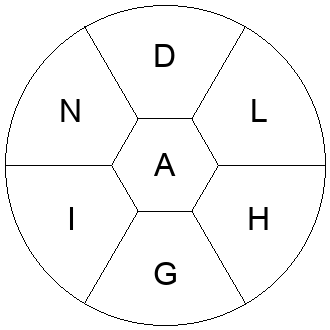
Number of Pangrams: 3

Maximum Puzzle Score: 362

Number of Answers: 69

Points Needed for Genius: 253

Genius requires between 31 and 59 words. You need at least an 8-letter word to reach genius. If you don't get the pangrams, you need 81% of the total points to reach genius. If you get the pangrams, you only need 65% of the remaining points to reach genius.

Other days with this pangram:

The button below will reveal a chart with the number of words by each letter. Red bars indicate that there is a pangram(s) starting with that letter.


How does this puzzle compare to other puzzles?

Today's score of 362 was in the 98th percentile of all puzzles.
The last time there was a score this high was on March 08, 2026.
The highest score ever was 537 on January 22, 2021.
The lowest score ever was 47 on March 27, 2023.

This puzzle's 69 possible answers rank it in the 98th percentile of all puzzles.
The last time there were more answers than this was on March 11, 2026.
The highest number of answers was 81 on June 08, 2019.
The lowest number of answers was 16 on March 27, 2023.

It takes an 8-letter word for genius.
The last time this happened was on March 19, 2026.

Today's puzzle has an average word length of 5.9.
For all Bees, the average word length has been 5.3.


Haven't I seen these letters before?

Hover over a letter to see its first and most recent appearance in the Bee!


Haven't I seen these words before?

The most common words in the Bee are:

  • noon 235
  • loll 216
  • toot 211
  • nana 193
  • naan 193
  • nene 154
  • tilt 152
  • till 152
  • lilt 152
  • mamma 149
  • mama 149
  • tint 148
  • toon 141
  • onto 141
  • onion 141
  • acai 140
  • acacia 140
  • anon 131
  • anal 131
  • olio 126
  • papa 124
  • dodo 123
  • baba 123
  • tact 122
  • lulu 122
  • lull 122
  • poop 119
  • booboo 118
  • boob 118
  • moon 117
  • mono 117
  • mitt 117
  • cocci 117
  • calla 115
  • call 115
  • tartar 114
  • tart 114
  • ratatat 114
  • loon 114
  • attar 113
  • tutu 112
  • tattoo 112
  • ally 111
  • allay 111
  • momma 110
  • ammo 110
  • tatty 109
  • meme 109
  • roar 108
  • peep 107


How long are words in the Bee?

There have been 115,344 answers ever accepted in the Bee - with 10,945 unique words.
Below are the distributions of the lengths of these words.


Valid dictionary words not in today's official answers

You may be wondering why these words aren't here*:

  • aahing
  • aalii
  • adagial
  • adland
  • aggada
  • aggadah
  • agha
  • agin
  • agnail
  • ahing
  • alan
  • aland
  • alang
  • alanin
  • algid
  • algin
  • alidad
  • alining
  • analgia
  • ananda
  • anga
  • anginal
  • anhinga
  • anil
  • anilin
  • anna
  • dada
  • daddling
  • dagga
  • daggling
  • dahl
  • danging
  • dhal
  • dialling
  • gaddi
  • gadi
  • gadid
  • gaggling
  • gaging
  • galah
  • galanga
  • galing
  • ganglial
  • giga
  • gildhall
  • gingal
  • gingall
  • gladding
  • gliadin
  • glial
  • hadal
  • hading
  • haggada
  • haggadah
  • hagging
  • haha
  • halala
  • halalah
  • halalling
  • halid
  • haling
  • hallah
  • hallal
  • hallalling
  • hila
  • ilia
  • iliad
  • ilial
  • inia
  • lagan
  • lahal
  • laigh
  • lall
  • lallan
  • lalland
  • lalling
  • lang
  • liana
  • liang
  • ligan
  • ligand
  • lignan
  • linga
  • naga
  • nagana
  • nala
  • nandin
  • nandina
  • nanna
  • nidal
  • nilgai
  • nilghai

*Because the New York Times considers them obscure or offensive.

adding

verb
  1. To join or unite (e.g. one thing to another, or as several particulars) so as to increase the number, augment the quantity or enlarge the magnitude, or so as to form into one aggregate.
  2. To sum up; to put together mentally.
  3. To combine elements of (something) into one quantity.
  4. To give by way of increased possession (to someone); to bestow (on).
  5. To append (e,g, a statement); to say further information.
  6. To make an addition; to augment; to increase.
  7. To perform the arithmetical operation of addition.
  8. To summon minions or reinforcements.

addling

Etymology 1

noun
  1. (provincial) Earnings.

Etymology 2

verb
  1. (provincial) To earn, earn by labor; earn money or one's living.
  2. (provincial) To thrive or grow; to ripen.
verb
  1. To make addle; to grow addle; to muddle
  2. To cause fertilised eggs to lose viability, by killing the developing embryo within through shaking, piercing, freezing or oiling, without breaking the shell.
noun
  1. The act of causing fertilised eggs to lose viability, by killing the developing embryo within through shaking, piercing, freezing or oiling, without breaking the shell or other outer layer.

again

adverb
  1. Another time; once more.
  2. Over and above a factor of one.
  3. Used metalinguistically, with the repetition being in the discussion, or in the linguistic or pragmatic context of the discussion, rather than in the subject of discussion.
  4. Back in the reverse direction, or to an original starting point.
  5. Back (to a former place or state).
  6. In return, as a reciprocal action; back.
  7. In any other place.
  8. On the other hand.
  9. Moreover; besides; further.
preposition
  1. (obsolete or dialectal) Against.

aging

verb
  1. To cause to grow old; to impart the characteristics of age to.
  2. To postpone an action that would extinguish something, as a debt.
  3. To categorize by age.
  4. To grow aged; to become old; to show marks of age.
noun
  1. The process of becoming older or more mature.
  2. The deliberate process of making something (such as an antique) appear (or, in science fiction, become) older than it is.
  3. Becoming senescent; accumulating damage to macromolecules, cells, tissues and organs with the passage of time; progressing loss of health, mobility, vibrancy and body functionality, resulting in biological death.
  4. Wear, wear and tear.
adjective
  1. Becoming elderly.

aiding

verb
  1. To provide support to; to further the progress of; to help; to assist.
  2. To climb with the use of aids such as pitons.
noun
  1. The act of one who aids or assists.

ailing

verb
  1. To cause to suffer; to trouble, afflict. (Now chiefly in interrogative or indefinite constructions.)
  2. To be ill; to suffer; to be troubled.
noun
  1. An ailment.
adjective
  1. Sickly; sick; ill; unwell.

alga

noun
  1. Any of many aquatic photosynthetic organisms, including the seaweeds, whose size ranges from a single cell to giant kelps and whose biochemistry and forms are very diverse, some being eukaryotic.

algal

noun
  1. An alga.
adjective
  1. Pertaining to, or like, algae

align

verb
  1. To form a line; to fall into line.
  2. To adjust or form to a line; to range or form in line; to bring into line.
  3. To store (data) in a way that is consistent with the memory architecture, i.e. by beginning each item at an offset equal to some multiple of the word size.
  4. To identify with or match the behaviour, thoughts, etc of another person.
  5. To organize a linear arrangement of DNA, RNA or protein sequences which have regions of similarity.

aligning

verb
  1. To form a line; to fall into line.
  2. To adjust or form to a line; to range or form in line; to bring into line.
  3. To store (data) in a way that is consistent with the memory architecture, i.e. by beginning each item at an offset equal to some multiple of the word size.
  4. To identify with or match the behaviour, thoughts, etc of another person.
  5. To organize a linear arrangement of DNA, RNA or protein sequences which have regions of similarity.

anal

noun
  1. Any of the anal scales of a reptile.
  2. Anal sex.
adjective
  1. Of, related to, intended for or involving the anus.
  2. Of the stage in psychosexual development when the child's interest is alleged to be concentrated on the anal region.
  3. Of a person, compulsive and stubborn, obsessed with neatness and accuracy, supposedly from not having progressed beyond the anal stage.
  4. (of a vein) Proximate to the thorax.

angina

noun
  1. An inflammatory infection of the throat, particularly quinsy.
  2. Short for angina pectoris.
  3. A chest pain or shortness of breath occurring with lesser degrees of arterial blockage.

angling

verb
  1. (often in the passive) To place (something) at an angle.
  2. To change direction rapidly.
  3. To present or argue something in a particular way or from a particular viewpoint.
  4. (cue sports) To hamper (oneself or one's opponent) by leaving the cue ball in the jaws of a pocket such that the surround of the pocket (the "angle") blocks the path from cue ball to object ball.
verb
  1. To try to catch fish with a hook and line.
  2. (with for) To attempt to subtly persuade someone to offer a desired thing.
noun
  1. A form of fishing, with a rod, line and angle (hook) for recreation or sport.

annal

noun
  1. The record of a single event or item.

dahlia

noun
  1. Any plant of the genus Dahlia, tuberous perennial flowering plants native to Mexico.

dandling

verb
  1. To move up and down on one's knee or in one's arms, in affectionate play, as an infant.
  2. To treat with fondness, as if a child; to fondle; to toy with; to pet.
  3. To play with; to put off or delay by trifles; to wheedle.
noun
  1. The act by which somebody is dandled.

dang

Etymology 1

noun
  1. A damn, a negligible quantity, minimal consideration.
verb
  1. Damn.
adjective
  1. Damn.
interjection
  1. Damn.

Etymology 2

verb
  1. To hit or strike.
  2. To dash; to throw violently.
  3. To inflict minor damage upon, especially by hitting or striking.
  4. To fire or reject.
  5. To deduct, as points, from another, in the manner of a penalty; to penalize.
  6. To mishit (a golf ball).

Etymology 3

verb
  1. To dash.

dangling

verb
  1. To hang loosely with the ability to swing.
  2. The action of performing a move or deke with the puck in order to get past a defender or goalie; perhaps because of the resemblance to dangling the puck on a string.
  3. To hang or trail something loosely.
  4. To trail or follow around.
  5. Of a patient: to be positioned with the legs hanging over the edge of the bed.
  6. To position (a patient) in this way.
noun
  1. The act of hanging something so that it can move freely; suspension.
  2. The act of following or trailing around.
  3. All out, open throttle, with all you have.
adjective
  1. Suspended from above.

dial

noun
  1. A graduated, circular scale over which a needle moves to show a measurement (such as speed).
  2. A clock face.
  3. A sundial.
  4. A panel on a radio etc showing wavelengths or channels; a knob that is turned to change the wavelength etc.
  5. A disk with finger holes on a telephone; used to select the number to be called.
  6. A person's face.
  7. A miner's compass.
verb
  1. To control or select something with a dial, or (figuratively) as if with a dial.
  2. To select a number, or to call someone, on a telephone.
  3. To use a dial or a telephone.

dialing

verb
  1. To control or select something with a dial, or (figuratively) as if with a dial.
  2. To select a number, or to call someone, on a telephone.
  3. To use a dial or a telephone.
noun
  1. The act by which a number is dialed.
  2. The art of constructing dials; the science of measuring time by dials.
  3. A method of surveying, especially in mines, in which the bearings of the courses, or the angles which they make with each other, are determined by means of the circumferentor; the use of a miner's dial.

gadding

verb
  1. To move from one location to another in an apparently random and frivolous manner.
noun
  1. The act of one who gads, or moves about frivolously.

gaga

Etymology 1

adjective
  1. Mentally senile.
  2. Crazy.
  3. Infatuated.

Etymology 2

noun
  1. A variant of dodgeball played inside a fenced area, usually a hexagon or octagon.

gagging

verb
  1. To experience the vomiting reflex.
  2. To cause to heave with nausea.
  3. To restrain someone's speech by blocking his or her mouth.
  4. To pry or hold open by means of a gag.
  5. To restrain someone's speech without using physical means.
  6. To choke; to retch.
  7. To deceive (someone); to con.
noun
  1. A gag motion or reflex.

gain

Etymology 1

noun
  1. The act of gaining; acquisition.
  2. What is gained.
  3. The factor by which a signal is multiplied.
verb
  1. To acquire possession of.
  2. To have or receive advantage or profit; to acquire gain; to grow rich; to advance in interest, health, or happiness; to make progress.
  3. To come off winner or victor in; to be successful in; to obtain by competition.
  4. To increase.
  5. To be more likely to catch or overtake an individual.
  6. To reach.
  7. To draw into any interest or party; to win to one's side; to conciliate.
  8. To put on weight.
  9. (of a clock or watch) To run fast.

Etymology 2

preposition
  1. Against.

Etymology 3

adjective
  1. Straight, direct; near; short.
  2. Suitable; convenient; ready.
  3. Easy; tolerable; handy, dexterous.
  4. Honest; respectable; moderate; cheap.
adverb
  1. Straightly; quickly; by the nearest way or means.
  2. Suitably; conveniently; dexterously; moderately.
  3. Tolerably; fairly.

Etymology 4

noun
  1. A square or bevelled notch cut out of a girder, binding joist, or other timber which supports a floor beam, so as to receive the end of the floor beam.

gaining

verb
  1. To acquire possession of.
  2. To have or receive advantage or profit; to acquire gain; to grow rich; to advance in interest, health, or happiness; to make progress.
  3. To come off winner or victor in; to be successful in; to obtain by competition.
  4. To increase.
  5. To be more likely to catch or overtake an individual.
  6. To reach.
  7. To draw into any interest or party; to win to one's side; to conciliate.
  8. To put on weight.
  9. (of a clock or watch) To run fast.
noun
  1. Gain; profit.

gala

Etymology 1

noun
  1. Pomp, show, or festivity.
  2. A showy and festive party.
adjective
  1. Celebratory; festive.

Etymology 2

noun
  1. A member of an androgynous class of priests of the Sumerian goddess Inanna.

galangal

noun
  1. Any of several east Asian plants of genera Alpinia and Kaempferia in the ginger family, used as a spice, but principally Alpinia galanga.

gall

Etymology 1

noun
  1. Bile, especially that of an animal; the greenish, profoundly bitter-tasting fluid found in bile ducts and gall bladders, structures associated with the liver.
  2. The gall bladder.
  3. Great misery or physical suffering, likened to the bitterest-tasting of substances.
  4. A feeling of exasperation.
  5. Impudence or brazenness; temerity, chutzpah.
  6. A sore or open wound caused by chafing, which may become infected, as with a blister.
  7. A sore on a horse caused by an ill-fitted or ill-adjusted saddle; a saddle sore.
  8. A pit on a surface being cut caused by the friction between the two surfaces exceeding the bond of the material at a point.
verb
  1. To bother or trouble.
  2. To harass, to harry, often with the intent to cause injury.
  3. To chafe, to rub or subject to friction; to create a sore on the skin.
  4. To exasperate.
  5. To cause pitting on a surface being cut from the friction between the two surfaces exceeding the bond of the material at a point.
  6. To scoff; to jeer.

Etymology 2

noun
  1. A blister or tumor-like growth found on the surface of plants, caused by burrowing of insect larvae into the living tissues, especially that of the common oak gall wasp Cynips quercusfolii.
  2. A bump-like imperfection resembling a gall.
verb
  1. To impregnate with a decoction of gallnuts in dyeing.

galling

verb
  1. To bother or trouble.
  2. To harass, to harry, often with the intent to cause injury.
  3. To chafe, to rub or subject to friction; to create a sore on the skin.
  4. To exasperate.
  5. To cause pitting on a surface being cut from the friction between the two surfaces exceeding the bond of the material at a point.
  6. To scoff; to jeer.
verb
  1. To impregnate with a decoction of gallnuts in dyeing.
noun
  1. Wear caused by adhesion between sliding surfaces.
adjective
  1. Vexing, humiliating

gang

Etymology 1

verb
  1. To go; walk; proceed.

Etymology 2

noun
  1. A number going in company; a number of friends or persons associated for a particular purpose.
  2. A group of laborers under one foreman; a squad.
  3. A criminal group with a common cultural background and identifying features, often associated with a particular section of a city.
  4. A group of criminals or alleged criminals who band together for mutual protection and profit.
  5. A group of politicians united in furtherance of a political goal.
  6. A chain gang.
  7. A combination of similar tools or implements arranged so as, by acting together, to save time or labor; a set.
  8. A set; all required for an outfit.
  9. (electrics) A number of switches or other electrical devices wired into one unit and covered by one faceplate.
  10. (electrics) A group of wires attached as a bundle.
  11. A going, journey; a course, path, track.
  12. An outhouse: an outbuilding used as a lavatory.
verb
  1. To attach similar items together to form a larger unit.

Etymology 3

verb
  1. (obsolete outside Northumbria) To go.

Etymology 4

verb
  1. To participate in a gangbang.
  2. To beat one or a smaller amount of people as a gang.
  3. To belong to a gang; to commit criminal acts as part of a gang.

Etymology 5

noun
  1. The earthy waste substances occurring in metallic ore.

ganging

verb
  1. To go; walk; proceed.
verb
  1. To attach similar items together to form a larger unit.
verb
  1. To participate in a gangbang.
  2. To beat one or a smaller amount of people as a gang.
  3. To belong to a gang; to commit criminal acts as part of a gang.
noun
  1. A leader used to attach a fishhook to the main line, especially in commercial fishing

gangland

noun
  1. The underworld of organized crime.

ganglia

noun
  1. An encapsulated collection of nerve-cell bodies, located outside the brain and spinal cord.
  2. Any of certain masses of gray matter in the brain, as the basal ganglia.
  3. (by extension) A centre of intellectual or industrial force, activity, etc.
  4. A cystic tumour on a tendon sheath or joint capsule; a ganglion cyst.

gangling

Etymology 1

adjective
  1. Awkwardly tall and thin, ungraceful.

Etymology 2

noun
  1. A member of a gang.

glad

verb
  1. To make glad
adjective
  1. Pleased, happy, gratified.
  2. Having a bright or cheerful appearance; expressing or exciting joy; producing gladness.

gland

Etymology 1

noun
  1. An organ that synthesizes a substance, such as hormones or breast milk, and releases it, often into the bloodstream (endocrine gland) or into cavities inside the body or its outer surface (exocrine gland).
  2. A secretory structure on the surface of an organ.

Etymology 2

noun
  1. A compressable cylindrical case and its contents around a shaft where it passes through a barrier, intended to prevent the passage of a fluid past the barrier, such as:

glia

noun
  1. The network of glial cells that supports nervous system tissue.

haggling

verb
  1. To argue for a better deal, especially over prices with a seller.
  2. To hack (cut crudely)
  3. To stick at small matters; to chaffer; to higgle.
noun
  1. The act of one who haggles.

hail

Etymology 1

noun
  1. Balls or pieces of ice falling as precipitation, often in connection with a thunderstorm.
verb
  1. Of hail, to fall from the sky.
  2. To send or release hail.
  3. To pour down in rapid succession.

Etymology 2

verb
  1. To greet; give salutation to; salute.
  2. To name; to designate; to call.
  3. To call out loudly in order to gain the attention of
  4. To signal in order to initiate communication with.
adjective
  1. Healthy, whole, safe.

hailing

verb
  1. Of hail, to fall from the sky.
  2. To send or release hail.
  3. To pour down in rapid succession.
verb
  1. To greet; give salutation to; salute.
  2. To name; to designate; to call.
  3. To call out loudly in order to gain the attention of
  4. To signal in order to initiate communication with.
noun
  1. The act by which somebody is hailed.

halal

verb
  1. To make halal.
adjective
  1. Permissible, according to Muslim religious customs, to have or do.
  2. (of food) Fit to eat according to Muslim religious customs.
adverb
  1. In a halal manner; in accordance with Muslim religious customs.

hall

noun
  1. A corridor; a hallway.
  2. A meeting room.
  3. A manor house (originally because a magistrate's court was held in the hall of his mansion).
  4. A building providing student accommodation at a university.
  5. The principal room of a secular medieval building.
  6. Cleared passageway through a crowd, as for dancing.
  7. A place for special professional education, or for conferring professional degrees or licences.
  8. A living room.

hand

noun
  1. The part of the forelimb below the forearm or wrist in a human, and the corresponding part in many other animals.
  2. That which resembles, or to some extent performs the office of, a human hand.
  3. In linear measurement:
  4. A side; part, camp; direction, either right or left.
  5. Power of performance; means of execution; ability; skill; dexterity.
  6. An agent; a servant, or manual laborer, especially in compounds; a workman, trained or competent for special service or duty; a performer more or less skillful.
  7. An instance of helping.
  8. Handwriting; style of penmanship.
  9. A person's autograph or signature.
  10. Personal possession; ownership.
  11. (usually in the plural, hands) Management, domain, control.
  12. That which is, or may be, held in a hand at once.
  13. Applause.
  14. A Native American gambling game, involving guessing the whereabouts of bits of ivory or similar, which are passed rapidly from hand to hand.
  15. The small part of a gunstock near the lock, which is grasped by the hand in taking aim.
  16. A whole rhizome of ginger.
  17. The feel of a fabric; the impression or quality of the fabric as judged qualitatively by the sense of touch.
  18. Actual performance; deed; act; workmanship; agency; hence, manner of performance.
  19. Agency in transmission from one person to another.
  20. Rate; price.
verb
  1. To give, pass, or transmit with the hand, literally or figuratively.
  2. To lead, guide, or assist with the hand; to conduct.
  3. To manage.
  4. To seize; to lay hands on.
  5. To pledge by the hand; to handfast.
  6. (said of a sail) To furl.
  7. To cooperate.

handing

verb
  1. To give, pass, or transmit with the hand, literally or figuratively.
  2. To lead, guide, or assist with the hand; to conduct.
  3. To manage.
  4. To seize; to lay hands on.
  5. To pledge by the hand; to handfast.
  6. (said of a sail) To furl.
  7. To cooperate.
noun
  1. The act by which something is handed to somebody.

handling

Etymology 1

noun
  1. A touching, controlling, managing, using, take care of, etc., with the hand or hands, or as with the hands.
  2. The mode of using the pencil or brush; style of touch.
  3. A criminal offence, the trade in stolen goods.

Etymology 2

verb
  1. To touch; to feel or hold with the hand(s).
  2. To accustom to the hand; to take care of with the hands.
  3. To manage, use, or wield with the hands.
  4. To manage, control, or direct.
  5. To treat, to deal with (in a specified way).
  6. To deal with (a subject, argument, topic, or theme) in speaking, in writing, or in art.
  7. To receive and transfer; to have pass through one's hands; hence, to buy and sell.
  8. To be concerned with; to be an expert in.
  9. To put up with; to endure (and continue to function).
  10. To use the hands.
  11. To illegally touch the ball with the hand or arm; to commit handball.
  12. To behave in a particular way when handled (managed, controlled, directed).

hang

Etymology 1

noun
  1. The way in which something hangs.
  2. A grip, understanding.
  3. An instance of ceasing to respond to input.
  4. A sharp or steep declivity or slope.
  5. A mass of hanging material.
  6. The smallest amount of concern or consideration; a damn.
verb
  1. To be or remain suspended.
  2. To float, as if suspended.
  3. (of a ball in cricket, tennis, etc.) To rebound unexpectedly or unusually slowly, due to backward spin on the ball or imperfections of the ground.
  4. To hold or bear in a suspended or inclined manner or position instead of erect.
  5. To cause (something) to be suspended, as from a hook, hanger, hinges or the like.
  6. To execute (someone) by suspension from the neck.
  7. To be executed by suspension by one's neck from a gallows, a tree, or other raised bar, attached by a rope tied into a noose.
  8. (used in maledictions) To damn.
  9. To loiter, hang around, to spend time idly.
  10. To exhibit (an object) by hanging.
  11. To apply (wallpaper or drywall to a wall).
  12. To decorate (something) with hanging objects.
  13. To remain persistently in one's thoughts.
  14. To prevent from reaching a decision, especially by refusing to join in a verdict that must be unanimous.
  15. To stop responding to manual input devices such as keyboard and mouse.
  16. To cause (a program or computer) to stop responding.
  17. To cause (a piece) to become vulnerable to capture.
  18. To be vulnerable to capture.
  19. Of a pitcher, to throw a hittable off-speed pitch.

Etymology 2

noun
  1. Cheap processed ham (cured pork), often made specially for sandwiches.

Etymology 3

noun
  1. Name and trademark of a musical instrument invented and built by PANArt Hangbau AG.

hanging

Etymology 1

verb
  1. To be or remain suspended.
  2. To float, as if suspended.
  3. (of a ball in cricket, tennis, etc.) To rebound unexpectedly or unusually slowly, due to backward spin on the ball or imperfections of the ground.
  4. To hold or bear in a suspended or inclined manner or position instead of erect.
  5. To cause (something) to be suspended, as from a hook, hanger, hinges or the like.
  6. To execute (someone) by suspension from the neck.
  7. To be executed by suspension by one's neck from a gallows, a tree, or other raised bar, attached by a rope tied into a noose.
  8. (used in maledictions) To damn.
  9. To loiter, hang around, to spend time idly.
  10. To exhibit (an object) by hanging.
  11. To apply (wallpaper or drywall to a wall).
  12. To decorate (something) with hanging objects.
  13. To remain persistently in one's thoughts.
  14. To prevent from reaching a decision, especially by refusing to join in a verdict that must be unanimous.
  15. To stop responding to manual input devices such as keyboard and mouse.
  16. To cause (a program or computer) to stop responding.
  17. To cause (a piece) to become vulnerable to capture.
  18. To be vulnerable to capture.
  19. Of a pitcher, to throw a hittable off-speed pitch.
adjective
  1. Suspended.
  2. (of a piece) Unprotected and exposed to capture.
  3. (of an off-speed pitch) Hittable; poorly executed by the pitcher hence relatively easy to hit.
  4. (of a person) ugly; very unattractive

Etymology 2

noun
  1. The act of hanging a person (or oneself) by the neck in order to kill that person (or to commit suicide).
  2. A sometimes public event at which a person is hanged.
  3. Anything that is hung as a decorative element (such as curtains, gobelins or posters).
  4. The way in which hangings (decorations) are arranged.

hangnail

noun
  1. A loose, narrow strip of nail tissue protruding from the side edge and anchored near the base of a fingernail or toenail.
  2. A pointed upper corner of the toenail (often created by improperly trimming by rounding the corner) that, as the nail grows, presses into the flesh or protrudes so that it may catch (“hang”) on stockings or shoes.

highland

noun
  1. An area of land that is at elevation; mountainous land.
adjective
  1. Relating to highlands.

inhaling

verb
  1. To draw air into the lungs, through the nose or mouth by action of the diaphragm.
  2. To draw air or any form of gas (either in a pure form, or mixed with small particles in form of aerosols/smoke -sometimes stemming from a medicament) into the lungs, through the nose or mouth by action of the diaphragm.
  3. To eat very quickly.
noun
  1. Inhalation

inlaid

adjective
  1. (of a design) Set into a surface in a decorative pattern.
  2. (of the surface of an item) Having an inset decorative pattern.
verb
  1. To place (pieces of a foreign material) within another material to form a decorative design.
  2. To place an inlay in a tooth.

inland

noun
  1. The interior part of a country.
adjective
  1. Within the land; relatively remote from the ocean or from open water; interior
  2. Limited to the land, or to inland routes; within the seashore boundary; not passing on, or over, the sea
  3. Confined to a country or state; domestic; not foreign.
adverb
  1. Into, or towards, the interior of the land, away from the coast.

lading

verb
  1. To fill or load (related to cargo or a shipment).
  2. To weigh down, oppress, or burden.
  3. To use a ladle or dipper to remove something (generally water).
  4. To transfer (molten glass) from the pot to the forming table, in making plate glass.
  5. To admit water by leakage.
noun
  1. The action of loading.
  2. Shipment, cargo, freight.

ladling

verb
  1. To pour or serve something with a ladle.

lagging

verb
  1. To fail to keep up (the pace), to fall behind
  2. To cover (for example, pipes) with felt strips or similar material (referring to a time lag effect in thermal transfer)
  3. To transport as a punishment for crime.
  4. To cause to lag; to slacken.
noun
  1. The covering of something with strips of felt, wood etc, either as insulation or for protection.
  2. The material so used.
  3. A prison sentence.
adjective
  1. Falling behind, not keeping up the pace
  2. Occurring after; indicating the later phase of

laid

adjective
  1. (of paper) Marked with parallel lines, as if ribbed, from wires in the mould.
verb
  1. To place down in a position of rest, or in a horizontal position.
  2. To cause to subside or abate.
  3. To prepare (a plan, project etc.); to set out, establish (a law, principle).
  4. To install certain building materials, laying one thing on top of another.
  5. To produce and deposit an egg.
  6. To bet (that something is or is not the case).
  7. To deposit (a stake) as a wager; to stake; to risk.
  8. To have sex with.
  9. To take a position; to come or go.
  10. To state; to allege.
  11. To point; to aim.
  12. (ropemaking) To put the strands of (a rope, a cable, etc.) in their proper places and twist or unite them.
  13. To place and arrange (pages) for a form upon the imposing stone.
  14. To place (new type) properly in the cases.
  15. To apply; to put.
  16. To impose (a burden, punishment, command, tax, etc.).
  17. To impute; to charge; to allege.
  18. To present or offer.
verb
  1. To don or put on (tefillin (phylacteries)).

lain

Etymology 1

verb
  1. To rest in a horizontal position on a surface.
  2. To be placed or situated.
  3. To abide; to remain for a longer or shorter time; to be in a certain state or condition.
  4. Used with in: to be or exist; to belong or pertain; to have an abiding place; to consist.
  5. Used with with: to have sexual relations with.
  6. Used with on/upon: to be incumbent (on); to be the responsibility of a person.
  7. To lodge; to sleep.
  8. To be still or quiet, like one lying down to rest.
  9. To be sustainable; to be capable of being maintained.

Etymology 2

verb
  1. To conceal, keep quiet about.

lanai

noun
  1. (Florida) A Hawaiian-style roofed patio.

land

Etymology 1

noun
  1. The part of Earth which is not covered by oceans or other bodies of water.
  2. Real estate or landed property; a partitioned and measurable area which is owned and on which buildings can be erected.
  3. A country or region.
  4. A person's country of origin and/or homeplace; homeland.
  5. The soil, in respect to its nature or quality for farming.
  6. (often in combination) realm, domain.
  7. The ground left unploughed between furrows; any of several portions into which a field is divided for ploughing.
  8. A shock or fright.
  9. A conducting area on a board or chip which can be used for connecting wires.
  10. In a compact disc or similar recording medium, an area of the medium which does not have pits.
  11. (travel) The non-airline portion of an itinerary. Hotel, tours, cruises, etc.
  12. The ground or floor.
  13. The lap of the strakes in a clinker-built boat; the lap of plates in an iron vessel; called also landing.
  14. In any surface prepared with indentations, perforations, or grooves, that part of the surface which is not so treated, such as the level part of a millstone between the furrows.
  15. A group of dwellings or tenements under one roof and having a common entry.
verb
  1. To descend to a surface, especially from the air.
  2. To alight, to descend from a vehicle.
  3. To come into rest.
  4. To arrive at land, especially a shore, or a dock, from a body of water.
  5. To bring to land.
  6. To acquire; to secure.
  7. To deliver.
adjective
  1. Of or relating to land.
  2. Residing or growing on land.

Etymology 2

noun
  1. Lant; urine

landing

verb
  1. To descend to a surface, especially from the air.
  2. To alight, to descend from a vehicle.
  3. To come into rest.
  4. To arrive at land, especially a shore, or a dock, from a body of water.
  5. To bring to land.
  6. To acquire; to secure.
  7. To deliver.
noun
  1. Corridor.
  2. Coming to a surface, as of an airplane or any descending object.
  3. A place on a shoreline where a boat lands.
  4. A level area at the top of a flight of stairs, or connecting one flight with another.

naan

noun
  1. A type of round, flat bread baked in a tandoor popular in South and Central Asian cuisine.

nada

pronoun
  1. Nothing.

nagging

verb
  1. To continuously remind or complain to (someone) in an annoying way, often about insignificant or unnecessary matters.
  2. To bother with persistent thoughts or memories.
  3. To bother or disturb persistently in any way.
noun
  1. The action of the verb nag.
adjective
  1. Causing persistent mild pain, or annoyance.

naiad

noun
  1. A female deity (nymph) associated with water, especially a spring, stream, or other fresh water.
  2. The aquatic larva (nymph) of a dragonfly or damselfly.
  3. Any of various aquatic plants of the genus Najas.

nail

Etymology 1

noun
  1. The thin, horny plate at the ends of fingers and toes on humans and some other animals.
  2. The basal thickened portion of the anterior wings of certain hemiptera.
  3. The terminal horny plate on the beak of ducks, and other allied birds.
  4. The claw of a bird or other animal.
  5. A spike-shaped metal fastener used for joining wood or similar materials. The nail is generally driven through two or more layers of material by means of impacts from a hammer or other device. It is then held in place by friction.
  6. A round pedestal on which merchants once carried out their business, such as the four nails outside The Exchange, Bristol.
  7. An archaic English unit of length equivalent to 1/20 of an ell or 1/16 of a yard (2 1/4 inches or 5.715 cm).

Etymology 2

verb
  1. To fix (an object) to another object using a nail.
  2. To drive a nail.
  3. To stud or boss with nails, or as if with nails.
  4. To catch.
  5. To expose as a sham.
  6. To accomplish (a task) completely and successfully.
  7. To hit (a target) effectively with some weapon.
  8. Of a male, to engage in sexual intercourse with.
  9. To spike, as a cannon.
  10. To nail down: to make certain, or confirm.

nailing

verb
  1. To fix (an object) to another object using a nail.
  2. To drive a nail.
  3. To stud or boss with nails, or as if with nails.
  4. To catch.
  5. To expose as a sham.
  6. To accomplish (a task) completely and successfully.
  7. To hit (a target) effectively with some weapon.
  8. Of a male, to engage in sexual intercourse with.
  9. To spike, as a cannon.
  10. To nail down: to make certain, or confirm.
noun
  1. A mechanical fastening by means of nails.

nana

Etymology 1

noun
  1. A banana
  2. A fool

Etymology 2

noun
  1. (term of endearment) one's grandmother
  2. A nanny

gladhanding

verb
  1. To be overly friendly with (a stranger) in order to gain an advantage.
  2. To extend a glad hand (to someone); to welcome warmly.
noun
  1. The act of one who glad-hands.

gladhand

verb
  1. To be overly friendly with (a stranger) in order to gain an advantage.
  2. To extend a glad hand (to someone); to welcome warmly.