Wednesday, March 25, 2026

Answers to yesterday's Bee

Jump to answers for


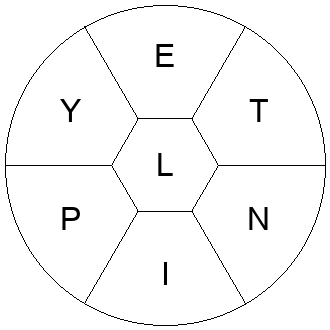
The official answers for today's puzzle are:

Click on the arrow to show the definition.
Click outside the pop-up to close it.


Number of Pangrams: 2

Maximum Puzzle Score: 224

Number of Answers: 50

Points Needed for Genius: 157

Genius requires between 21 and 44 words. You need at least a 7-letter word to reach genius. If you don't get the pangrams, you need 81% of the total points to reach genius. If you get the pangrams, you only need 65% of the remaining points to reach genius.

Other days with this pangram:

The button below will reveal a chart with the number of words by each letter. Red bars indicate that there is a pangram(s) starting with that letter.


How does this puzzle compare to other puzzles?

Today's score of 224 was in the 73rd percentile of all puzzles.
The last time there was a score this high was on March 23, 2026.
The highest score ever was 537 on January 22, 2021.
The lowest score ever was 47 on March 27, 2023.

This puzzle's 50 possible answers rank it in the 75th percentile of all puzzles.
The last time there were more answers than this was on March 23, 2026.
The highest number of answers was 81 on June 08, 2019.
The lowest number of answers was 16 on March 27, 2023.

It takes a 7-letter word for genius.
The last time this happened was on March 23, 2026.

Today's puzzle has an average word length of 5.4.
For all Bees, the average word length has been 5.3.


Haven't I seen these letters before?

Hover over a letter to see its first and most recent appearance in the Bee!


Haven't I seen these words before?

The most common words in the Bee are:

  • noon 235
  • loll 216
  • toot 211
  • nana 193
  • naan 193
  • nene 154
  • tilt 153
  • till 153
  • lilt 153
  • mamma 149
  • mama 149
  • tint 148
  • toon 141
  • onto 141
  • onion 141
  • acai 140
  • acacia 140
  • anon 131
  • anal 131
  • olio 126
  • papa 124
  • lulu 123
  • lull 123
  • dodo 123
  • baba 123
  • tact 122
  • poop 119
  • booboo 118
  • boob 118
  • moon 117
  • mono 117
  • mitt 117
  • cocci 117
  • calla 115
  • call 115
  • tartar 114
  • tart 114
  • ratatat 114
  • loon 114
  • attar 113
  • tutu 112
  • tattoo 112
  • ally 111
  • allay 111
  • momma 110
  • ammo 110
  • tatty 109
  • meme 109
  • roar 108
  • aria 108


How long are words in the Bee?

There have been 115,467 answers ever accepted in the Bee - with 10,945 unique words.
Below are the distributions of the lengths of these words.


Valid dictionary words not in today's official answers

You may be wondering why these words aren't here*:

  • elint
  • illite
  • inly
  • intitle
  • leet
  • lenite
  • lenten
  • lept
  • leptin
  • lineny
  • liney
  • linin
  • linn
  • linney
  • linny
  • liny
  • lipe
  • lipin
  • lippen
  • litten
  • nellie
  • nelly
  • nettly
  • nielli
  • nill
  • nippily
  • pele
  • pelite
  • penlite
  • pentyl
  • peppily
  • pettle
  • pilei
  • pili
  • pily
  • pintle
  • teel
  • tele
  • telly
  • telnet
  • tillite
  • tinnily
  • yeelin
  • yill

*Because the New York Times considers them obscure or offensive.

eely

No Definition Found.

elite

noun
  1. A special group or social class of people which have a superior intellectual, social or economic status as, the elite of society.
  2. Someone who is among the best at a certain task.
adjective
  1. Of high birth or social position; aristocratic or patrician.
  2. Representing the choicest or most select of a group.

entitle

verb
  1. To give a title to.
  2. To dignify by an honorary designation.
  3. To give power or authority (to do something).
  4. To give rightful ownership.
  5. To give a title to a book, film, play, etc.

eyelet

noun
  1. An object that consists of a rim and small hole or perforation to receive a cord or fastener, as in garments, sails, etc. An eyelet may reinforce a hole.
  2. A shaped metal embellishment containing a hole, used in scrapbook. Eyelets are typically set by punching a hole in the page, placing the smooth side of the eyelet on a table, positioning the paper over protruding edge and curling the edge down using a hammer and eyelet setter.
  3. Cotton fabric with small holes.
  4. The contact tip of the base of a light bulb.
  5. A peephole.
  6. A little eye.
verb
  1. To make eyelets in.

illy

No Definition Found.

ineptly

No Definition Found.

inlet

Etymology 1

verb
  1. To let in; admit.
  2. To insert; inlay.

Etymology 2

noun
  1. A body of water let into a coast, such as a bay, cove, fjord or estuary.
  2. A passage that leads into a cavity.

intently

adverb
  1. In an intent or focused manner.

lenient

noun
  1. A lenitive; an emollient.
adjective
  1. Lax; not strict; tolerant of dissent or deviation

leniently

No Definition Found.

lenity

noun
  1. Leniency
  2. Mercy
  3. Forgiveness

lent

noun
  1. A period of the ecclesiastical year preceding Easter, traditionally involving temporary abstention from certain foods and pleasures.
  2. The second term of the academic year at some British schools.
verb
  1. To allow to be used by someone temporarily, on condition that it or its equivalent will be returned.
  2. To make a loan.
  3. To be suitable or applicable, to fit.
  4. To afford; to grant or furnish in general.
  5. To borrow.

lentil

noun
  1. Any of several plants of the genus Lens, especially Lens culinaris, from southwest Asia, that have edible, lens-shaped seeds within flattened pods.
  2. The seed of these plants, used as food.

lien

Etymology 1

noun
  1. A tendon.
  2. A right to take possession of a debtor’s property as security until a debt or duty is discharged.

Etymology 2

noun
  1. (possibly obsolete) The spleen.

lilt

noun
  1. Animated, brisk motion; spirited rhythm; sprightliness.
  2. A lively song or dance; a cheerful tune.
  3. A cheerful or melodious accent when speaking.
verb
  1. To do something rhythmically, with animation and quickness, usually of music.
  2. To sing cheerfully, especially in Gaelic.
  3. To utter with spirit, animation, or gaiety; to sing with spirit and liveliness.

lily

noun
  1. Any of several flowers in the genus Lilium of the family Liliaceae, which includes a great many ornamental species.
  2. Any of several species of herbaceous flower which may or may not resemble the genus Lilium in some way, and which are not closely related to it or each other.
  3. The flower used as a heraldic charge; also commonly used to describe the fleur-de-lis.
  4. The end of a compass needle that should point north, traditionally often ornamented with the figure of a lily or fleur-de-lis.
  5. (usually in the plural) A royal spade in auction bridge.
  6. The thirtieth Lenormand card, representing calmness and maturity.
adjective
  1. White (as a racial epithet).

line

Etymology 1

noun
  1. A path through two or more points (compare ‘segment’); a continuous mark, including as made by a pen; any path, curved or straight.
  2. A rope, cord, string, or thread, of any thickness.
  3. A hose or pipe, of any size.
  4. Direction, path.
  5. The wire connecting one telegraphic station with another, a telephone or internet cable between two points: a telephone or network connection.
  6. A clothesline.
  7. A letter, a written form of communication.
  8. A connected series of public conveyances, as a roadbed or railway track; and hence, an established arrangement for forwarding merchandise, etc.
  9. A trench or rampart, or the non-physical demarcation of the extent of the territory occupied by specified forces.
  10. The exterior limit of a figure or territory: a boundary, contour, or outline; a demarcation.
  11. A long tape or ribbon marked with units for measuring; a tape measure.
  12. A measuring line or cord.
  13. That which was measured by a line, such as a field or any piece of land set apart; hence, allotted place of abode.
  14. A threadlike crease or wrinkle marking the face, hand, or body; hence, a characteristic mark.
  15. Lineament; feature; figure (of one's body).
  16. A more-or-less straight sequence of people, objects, etc., either arranged as a queue or column and often waiting to be processed or dealt with, or arranged abreast of one another in a row (and contrasted with a column), as in a military formation.
  17. The regular infantry of an army, as distinguished from militia, guards, volunteer corps, cavalry, artillery etc.
  18. A series or succession of ancestors or descendants of a given person; a family or race; compare lineage.
  19. A small amount of text. Specifically:
  20. Course of conduct, thought, occupation, or policy; method of argument; department of industry, trade, or intellectual activity.
  21. The official, stated position (or set of positions) of an individual or group, particularly a political or religious faction.
  22. A set of products or services sold by a business, or by extension, the business itself.
  23. A number of shares taken by a jobber.
  24. A measure of length:
  25. A maxwell, a unit of magnetic flux.
  26. (1800s, with "the") The batter’s box.
  27. The position in which the fencers hold their swords.
  28. Proper relative position or adjustment (of parts, not as to design or proportion, but with reference to smooth working).
  29. A small path-shaped portion or serving of a powdery illegal drug, especially cocaine.
  30. Instruction; doctrine.
  31. Population of cells derived from a single cell and containing the same genetic makeup.
  32. (perfusion line) a set composed of a spike, a drip chamber, a clamp, a Y-injection site, a three-way stopcock and a catheter.
  33. A group of forwards that play together.
  34. A vascular catheter.
verb
  1. To place (objects) into a line (usually used with "up"); to form into a line; to align.
  2. To place persons or things along the side of for security or defense; to strengthen by adding; to fortify.
  3. To form a line along.
  4. To mark with a line or lines, to cover with lines.
  5. To represent by lines; to delineate; to portray.
  6. To read or repeat line by line.
  7. To hit a line drive; to hit a line drive which is caught for an out. Compare fly and ground.
  8. To track (wild bees) to their nest by following their line of flight.
  9. To measure.

Etymology 2

noun
  1. Flax; linen, particularly the longer fiber of flax.
verb
  1. To cover the inner surface of (something), originally especially with linen.
  2. To reinforce (the back of a book) with glue and glued scrap material such as fabric or paper.
  3. To fill or supply (something), as a purse with money.

Etymology 3

verb
  1. (of a dog) To copulate with, to impregnate.

linen

noun
  1. Thread or cloth made from flax fiber.
  2. Domestic textiles, such as tablecloths, bedding, towels, underclothes, etc., that are made of linen or linen-like fabrics of cotton or other fibers; linens.
  3. A light beige colour, like that of linen cloth undyed.
adjective
  1. Made from linen cloth or thread.
  2. Having the colour linen, light beige.

linnet

noun
  1. A small passerine bird, the common linnet (Linaria cannabina, syn. Carduelis cannabina), in the finch family Fringillidae, native to Europe, western Asia, and north Africa.
  2. A house finch (Haemorhous mexicanus), of North America.

lint

Etymology 1

noun
  1. A fine material made by scraping cotton or linen cloth; used for dressing wounds.
  2. Clinging fuzzy fluff that clings to fabric or accumulates in one's pockets or navel etc.
  3. The fibrous coat of thick hairs covering the seeds of the cotton plant.
  4. Raw cotton ready for baling.

Etymology 2

verb
  1. To perform a static check on (source code) to detect stylistic or programmatic errors.

lintel

noun
  1. A horizontal structural beam spanning an opening, such as between the uprights of a door or a window, and which supports the wall above.

linty

No Definition Found.

lippy

Etymology 1

adjective
  1. Having prominent lips.
  2. Having a tendency to talk back in a cheeky or impertinent manner.

Etymology 2

noun
  1. Lip gloss or lipstick; a stick of this product.

Etymology 3

noun
  1. An old dry measure amounting to one quarter of a peck (for goods sold by weight, 1¾ pounds or about four-fifths of a kilogram); also, a container of that capacity.

lite

Etymology 1

noun
  1. Visible electromagnetic radiation. The human eye can typically detect radiation (light) in the wavelength range of about 400 to 750 nanometers. Nearby shorter and longer wavelength ranges, although not visible, are commonly called ultraviolet and infrared light.
  2. A source of illumination.
  3. Spiritual or mental illumination; enlightenment, useful information.
  4. (in the plural) Facts; pieces of information; ideas, concepts.
  5. A notable person within a specific field or discipline.
  6. The manner in which the light strikes a picture; that part of a picture which represents those objects upon which the light is supposed to fall; the more illuminated part of a landscape or other scene; opposed to shade.
  7. A point of view, or aspect from which a concept, person or thing is regarded.
  8. A flame or something used to create fire.
  9. A firework made by filling a case with a substance which burns brilliantly with a white or coloured flame.
  10. A window, or space for a window in architecture.
  11. The series of squares reserved for the answer to a crossword clue.
  12. A cross-light in a double acrostic or triple acrostic.
  13. Open view; a visible state or condition; public observation; publicity.
  14. The power of perception by vision.
  15. The brightness of the eye or eyes.
  16. A traffic light, or, by extension, an intersection controlled by one or more that will face a traveler who is receiving instructions.
adjective
  1. Having light; bright; clear; not dark or obscure.
  2. Pale or whitish in color; highly luminous and more or less deficient in chroma.
  3. (of coffee) Served with extra milk or cream.
noun
  1. A stone that is not thrown hard enough.
  2. See lights.
adjective
  1. Having little or relatively little actual weight; not cumbrous or unwieldy.
  2. Having little weight as compared with bulk; of little density or specific gravity.
  3. Of short or insufficient weight; weighing less than the legal, standard or proper amount; clipped or diminished.
  4. Lacking that which burdens or makes heavy.
  5. Not heavy or soggy; spongy; well raised.
  6. Gentle; having little force or momentum.
  7. Easy to endure or perform.
  8. Low in fat, calories, alcohol, salt, etc.
  9. Unimportant, trivial, having little value or significance.
  10. Unchaste, wanton.
  11. Not encumbered; unembarrassed; clear of impediments; hence, active; nimble; swift.
  12. Easily influenced by trifling considerations; unsteady; unsettled; volatile.
  13. Indulging in, or inclined to, levity; lacking dignity or solemnity; frivolous; airy.
  14. Not quite sound or normal; somewhat impaired or deranged; dizzy; giddy.
  15. Easily interrupted by stimulation.
adjective
  1. Light in composition, notably low in fat, calories etc. Most commonly used commercially.
  2. Lightweight
  3. (usually used postpositively) Lacking substance or seriousness; watered down.

Etymology 2

noun
  1. A little, bit.
adjective
  1. Few; little

Etymology 3

noun
  1. The act of waiting; a wait.
verb
  1. To expect; wait.
  2. To rely.

little

noun
  1. A small amount.
adjective
  1. Small in size.
  2. Insignificant, trivial.
  3. Very young.
  4. (of a sibling) Younger.
  5. (also Little) Used with the name of a place, especially of a country or its capital, to denote a neighborhood whose residents or storekeepers are from that place.
  6. Small in amount or number, having few members.
  7. Short in duration; brief.
  8. Small in extent of views or sympathies; narrow; shallow; contracted; mean; illiberal; ungenerous.
adverb
  1. Not much.
  2. Not at all.
pronoun
  1. Not much; not a large amount.

nettle

noun
  1. Any plant whose foliage is covered with stinging, mildly poisonous hairs, causing an instant rash.
  2. Certain plants that have spines or prickles:
  3. Certain non-stinging plants, mostly in the family Lamiaceae, that resemble the species of Urtica:
  4. Loosely, anything which causes a similarly stinging rash, such as a jellyfish or sea nettle.
verb
  1. Of the nettle plant and similar physical causes, to sting, causing a rash in someone.
  2. To pique, irritate, vex or provoke.

nipple

noun
  1. The projection of a mammary gland from which, on female mammals, milk is secreted.
  2. A mechanical device through which liquids or gases can be passed in a regulated manner.
  3. An artificial nipple (definition 1) used for bottle-feeding infants.
  4. Any small physical protrusion, such as the lumps on the F and J keys on computer keyboards.
  5. Any small physical protrusion on an automotive, a machine part or any other part that fits into a groove on another part.
  6. A perforated segment that fits into part of the breech of a muzzle-loading gun, on which the percussion cap is fixed.
  7. A short tube threaded at both ends, used as a connector.
  8. An internally threaded piece which holds a bicycle spoke in place on the rim.
verb
  1. To fit (a baby's bottle, etc.) with a nipple.
  2. To give one's nipple to (a baby) to allow breastfeeding.

peel

Etymology 1

noun
  1. (usually uncountable) The skin or outer layer of a fruit, vegetable, etc.
  2. The action of peeling away from a formation.
  3. A cosmetic preparation designed to remove dead skin or to exfoliate.
verb
  1. To remove the skin or outer covering of.
  2. To remove something from the outer or top layer of.
  3. To become detached, come away, especially in flakes or strips; to shed skin in such a way.
  4. To remove one's clothing.
  5. To move, separate (off or away).

Etymology 2

noun
  1. A stake.
  2. A fence made of stakes; a stockade.
  3. A small tower, fort, or castle; a keep.

Etymology 3

noun
  1. A shovel or similar instrument, now especially a pole with a flat disc at the end used for removing pizza or loaves of bread from a baker's oven.
  2. A T-shaped implement used by printers and bookbinders for hanging wet sheets of paper on lines or poles to dry.
  3. The blade of an oar.

Etymology 4

noun
  1. An equal or match; a draw.
  2. A takeout which removes a stone from play as well as the delivered stone.
verb
  1. To play a peel shot.

Etymology 5

verb
  1. To send through a hoop (of a ball other than one's own).

Etymology 6

verb
  1. To plunder; to pillage, rob.

Etymology 7

noun
  1. A small salmon; a grilse; a sewin.

pellet

noun
  1. A small, compressed, hard chunk of matter.
  2. A lead projectile used as ammunition in rifled air guns.
  3. Compressed byproduct of digestion regurgitated by owls. Serves as a waste disposal mechanism for indigestible parts of food, such as fur and bones.
  4. A roundel sable (black circular spot; also called ogress).
  5. One of the short conductive tubes in a Pelletron particle accelerator.
verb
  1. To form into pellets.
  2. To strike with pellets.

pelt

noun
  1. A blow or stroke from something thrown.
verb
  1. To bombard, as with missiles.
  2. To throw; to use as a missile.
  3. To rain or hail heavily.
  4. To beat or hit, especially repeatedly.
  5. To move rapidly, especially in or on a conveyance.
  6. To throw out words.

penile

adjective
  1. Pertaining to the penis.

penitently

No Definition Found.

pettily

No Definition Found.

pile

Etymology 1

noun
  1. A mass of things heaped together; a heap.
  2. A group or list of related items up for consideration, especially in some kind of selection process.
  3. A mass formed in layers.
  4. A funeral pile; a pyre.
  5. A large amount of money.
  6. A large building, or mass of buildings.
  7. A bundle of pieces of wrought iron to be worked over into bars or other shapes by rolling or hammering at a welding heat; a fagot.
  8. A vertical series of alternate disks of two dissimilar metals (especially copper and zinc), laid up with disks of cloth or paper moistened with acid water between them, for producing a current of electricity; a voltaic pile, or galvanic pile.
  9. An atomic pile; an early form of nuclear reactor.
  10. The reverse (or tails) of a coin.
  11. A list or league
verb
  1. (often used with the preposition "up") To lay or throw into a pile or heap; to heap up; to collect into a mass; to accumulate
  2. To cover with heaps; or in great abundance; to fill or overfill; to load.
  3. To add something to a great number.
  4. (of vehicles) To create a hold-up.
  5. To place (guns, muskets, etc.) together in threes so that they can stand upright, supporting each other.

Etymology 2

noun
  1. A dart; an arrow.
  2. The head of an arrow or spear.
  3. A large stake, or piece of pointed timber, steel etc., driven into the earth or sea-bed for the support of a building, a pier, or other superstructure, or to form a cofferdam, etc.
  4. One of the ordinaries or subordinaries having the form of a wedge, usually placed palewise, with the broadest end uppermost.
verb
  1. To drive piles into; to fill with piles; to strengthen with piles.

Etymology 3

noun
  1. (usually in the plural) A hemorrhoid.

Etymology 4

noun
  1. Hair, especially when very fine or short; the fine underfur of certain animals. (Formerly countable, now treated as a collective singular.)
  2. The raised hairs, loops or strands of a fabric; the nap of a cloth.
verb
  1. To give a pile to; to make shaggy.

pill

Etymology 1

noun
  1. A small, usually round or cylindrical object designed for easy swallowing, usually containing some sort of medication.
  2. (definite, i.e. used with "the") Contraceptive medication, usually in the form of a pill to be taken by a woman; an oral contraceptive pill.
  3. A comical or entertaining person.
  4. A contemptible, annoying, or unpleasant person.
  5. A small piece of any substance, for example a ball of fibres formed on the surface of a textile by rubbing.
  6. A baseball.
  7. A bullet (projectile).
  8. A rounded rectangle indicating the tag or category that an item belongs to.
verb
  1. Of a woven fabric surface, to form small matted balls of fiber.
  2. To form into the shape of a pill.
  3. To medicate with pills.
  4. To persuade or convince someone of something.

Etymology 2

noun
  1. The peel or skin.
verb
  1. To peel; to remove the outer layer of hair, skin, or bark.
  2. To peel; to make by removing the skin.
  3. To be peeled; to peel off in flakes.
  4. To pillage; to despoil or impoverish.

Etymology 3

noun
  1. An inlet on the coast; a small tidal pool or bay.

pipeline

noun
  1. A conduit made of pipes used to convey water, gas or petroleum etc.
  2. A channel (either physical or logical) by which information is transmitted sequentially (that is, the first information in is the first information out).
  3. A system or process through which something is conducted.
  4. The inside of a wave that a surfer is riding, when the wave has started closing over it.
verb
  1. To design (a microchip etc.) so that processing takes place in efficient stages, the output of each stage being fed as input to the next.
  2. To convey something by a system of pipes
  3. To lay a system of pipes through something

plenty

noun
  1. A more-than-adequate amount.
adjective
  1. Plentiful
adverb
  1. More than sufficiently.
  2. Used as an intensifier, very.
pronoun
  1. More than enough.

plie

noun
  1. A smooth and continuous bending of the knees

teletype

noun
  1. A teleprinter
  2. A message printed by a teleprinter
  3. An early input/output device for mainframe computers
verb
  1. To operate a teleprinter
  2. To send a message via teleprinter

tell

Etymology 1

noun
  1. A reflexive, often habitual behavior, especially one occurring in a context that often features attempts at deception by persons under psychological stress (such as a poker game or police interrogation), that reveals information that the person exhibiting the behavior is attempting to withhold.
  2. That which is told; a tale or account.
  3. A private message to an individual in a chat room; a whisper.
verb
  1. (archaic outside of idioms) To count, reckon, or enumerate.
  2. To narrate.
  3. To convey by speech; to say.
  4. To instruct or inform.
  5. To order; to direct, to say to someone.
  6. To discern, notice, identify or distinguish.
  7. To reveal.
  8. To be revealed.
  9. To have an effect, especially a noticeable one; to be apparent, to be demonstrated.
  10. To use (beads or similar objects) as an aid to prayer.
  11. To inform someone in authority about a wrongdoing.
  12. (authorship) To reveal information in prose through outright expository statement -- contrasted with show

Etymology 2

noun
  1. A hill or mound, originally and especially in the Middle East, over or consisting of the ruins of ancient settlements.

tile

Etymology 1

noun
  1. A regularly-shaped slab of clay or other material, affixed to cover or decorate a surface, as in a roof-tile, glazed tile, stove tile, carpet tile etc.
  2. A rectangular graphic.
  3. Any of various flat cuboid playing pieces used in certain games, such as dominoes, Scrabble, or mahjong.
  4. A stiff hat.
verb
  1. To cover with tiles.
  2. To arrange in a regular pattern, with adjoining edges (applied to tile-like objects, graphics, windows in a computer interface).
  3. To optimize (a loop in program code) by means of the tiling technique.

Etymology 2

verb
  1. To protect from the intrusion of the uninitiated.

till

Etymology 1

preposition
  1. Until; to, up to; as late as (a given time).
  2. To, up to (physically).
  3. To make it possible that.
conjunction
  1. Until, until the time that.

Etymology 2

noun
  1. A cash register.
  2. A removable box within a cash register containing the money.
  3. The contents of a cash register, for example at the beginning or end of the day or of a cashier's shift.
  4. A tray or drawer in a chest.

Etymology 3

verb
  1. To develop so as to improve or prepare for usage; to cultivate (said of knowledge, virtue, mind etc.).
  2. To work or cultivate or plough (soil); to prepare for growing vegetation and crops.
  3. To cultivate soil.
  4. To prepare; to get.

Etymology 4

noun
  1. Glacial drift consisting of a mixture of clay, sand, pebbles and boulders
  2. Manure or other material used to fertilize land

Etymology 5

noun
  1. A vetch; a tare.

tilt

Etymology 1

noun
  1. A slope or inclination.
  2. The inclination of part of the body, such as backbone, pelvis, head, etc.
  3. The controlled vertical movement of a camera, or a device to achieve this.
  4. A jousting contest.
  5. An attempt at something, such as a tilt at public office.
  6. A thrust, as with a lance.
  7. A tilt hammer.
verb
  1. To slope or incline (something); to slant.
  2. (jousting) To charge (at someone) with a lance.
  3. To be at an angle.
  4. To point or thrust a weapon at.
  5. To point or thrust (a weapon).
  6. To forge (something) with a tilt hammer.
  7. To play worse than usual (often as a result of previous bad luck or losses).
  8. (of a machine) To intentionally let the ball fall down to the drain by disabling flippers and most targets, done as a punishment to the player when the machine is nudged too violently or frequently.

Etymology 2

noun
  1. A canvas covering for carts, boats, etc.
  2. Any covering overhead; especially, a tent.
verb
  1. To cover with a tilt, or awning.

tinily

No Definition Found.

tipple

noun
  1. An area near the entrance of mines which is used to load and unload coal.
  2. An apparatus for unloading railroad freight cars by tipping them; the place where this is done.
  3. Any alcoholic drink.
verb
  1. To sell alcoholic liquor by retail.
  2. To drink too much alcohol.
  3. To drink alcohol regularly or habitually, but not to excess.
  4. To put up (hay, etc.) in bundles in order to dry it.
  5. To fall over; to topple.

title

noun
  1. A prefix (honorific) or suffix (post-nominal) added to a person's name to signify either veneration, official position or a professional or academic qualification. See also
  2. Legal right to ownership of a property; a deed or other certificate proving this.
  3. In canon law, that by which a beneficiary holds a benefice.
  4. A church to which a priest was ordained, and where he was to reside.
  5. The name of a book, film, musical piece, painting, or other work of art.
  6. A publication.
  7. A section or division of a subject, as of a law or a book.
  8. (chiefly in the plural) A written title, credit, or caption shown with a film, video, or performance.
  9. The panel for the name, between the bands of the back of a book.
  10. The subject of a writing; a short phrase that summarizes the entire topic.
  11. A division of an act of law
  12. The recognition given to the winner of a championship in sports.
verb
  1. To assign a title to; to entitle.

tittle

Etymology 1

noun
  1. A small, insignificant amount (of something); a modicum or speck.
  2. Any small dot, stroke, or diacritical mark, especially if part of a letter, or if a letter-like abbreviation; in particular, the dots over the Latin letters i and j.

Etymology 2

verb
  1. To chatter.

yell

Etymology 1

noun
  1. A shout.
  2. A phrase to be shouted.
verb
  1. Shout; holler; make a loud sound with the voice.
  2. To convey by shouting
  3. To tell someone off (in a loud and angry manner)

Etymology 2

adjective
  1. Dry (of cow)

yelp

Etymology 1

noun
  1. An abrupt, high-pitched noise or utterance.
  2. A type of emergency vehicle siren sounding quicker and more intense than the wail.

Etymology 2

verb
  1. To utter an abrupt, high-pitched noise.

intel

noun
  1. Intelligence (secret information)