Sunday, April 05, 2026

Answers to yesterday's Bee

Jump to answers for


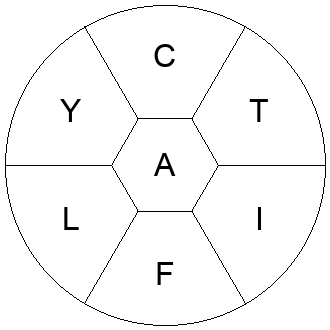
The official answers for today's puzzle are:

Click on the arrow to show the definition.
Click outside the pop-up to close it.


Number of Pangrams: 1

Maximum Puzzle Score: 348

Number of Answers: 68

Points Needed for Genius: 244

Genius requires between 32 and 58 words. You need at least an 8-letter word to reach genius. If you don't get the pangram, you need 73% of the total points to reach genius. If you get the pangram, you only need 69% of the remaining points to reach genius.

Other days with this pangram:

The button below will reveal a chart with the number of words by each letter. Red bars indicate that there is a pangram(s) starting with that letter.


How does this puzzle compare to other puzzles?

Today's score of 348 was in the 98th percentile of all puzzles.
The last time there was a score this high was on March 22, 2026.
The highest score ever was 537 on January 22, 2021.
The lowest score ever was 47 on March 27, 2023.

This puzzle's 68 possible answers rank it in the 97th percentile of all puzzles.
The last time there were more answers than this was on March 22, 2026.
The highest number of answers was 81 on June 08, 2019.
The lowest number of answers was 16 on March 27, 2023.

It takes an 8-letter word for genius.
The last time this happened was on March 22, 2026.

Today's puzzle has an average word length of 5.9.
For all Bees, the average word length has been 5.3.


Haven't I seen these letters before?

Hover over a letter to see its first and most recent appearance in the Bee!


Haven't I seen these words before?

The most common words in the Bee are:

  • noon 236
  • loll 217
  • toot 213
  • nana 195
  • naan 195
  • nene 155
  • tilt 153
  • till 153
  • lilt 153
  • mamma 149
  • mama 149
  • tint 148
  • toon 143
  • onto 143
  • onion 143
  • acai 141
  • acacia 141
  • anon 132
  • anal 131
  • olio 128
  • papa 124
  • lulu 124
  • lull 124
  • baba 124
  • tact 123
  • dodo 123
  • poop 119
  • booboo 119
  • boob 119
  • moon 118
  • mono 118
  • mitt 117
  • cocci 117
  • calla 116
  • call 116
  • tartar 114
  • tart 114
  • ratatat 114
  • loon 114
  • tattoo 113
  • attar 113
  • tutu 112
  • ally 112
  • allay 112
  • momma 111
  • ammo 111
  • tatty 110
  • meme 109
  • roar 108
  • aria 108


How long are words in the Bee?

There have been 115,979 answers ever accepted in the Bee - with 10,954 unique words.
Below are the distributions of the lengths of these words.


Valid dictionary words not in today's official answers

You may be wondering why these words aren't here*:

  • aalii
  • acta
  • acyl
  • alcaic
  • alfa
  • alicyclic
  • alif
  • aliya
  • allyl
  • allylic
  • atactic
  • atalaya
  • atlatl
  • ayaya
  • caca
  • caff
  • caitiff
  • calcic
  • calcific
  • calcitic
  • calif
  • catalatic
  • catfall
  • cicala
  • cyclicality
  • facia
  • facta
  • faff
  • fallal
  • fattily
  • fila
  • ilia
  • ilial
  • lacily
  • laically
  • lall
  • lati
  • latilla
  • litai
  • lytically
  • lytta
  • taffia
  • tafia
  • tala
  • talcy
  • tattily
  • tical
  • tictac
  • yaff

*Because the New York Times considers them obscure or offensive.

acacia

Etymology 1

noun
  1. A shrub or tree of the tribe Acacieae.
  2. The thickened or dried juice of several species in Acacieae, in particular Vachellia nilotica (syn. Acacia nilotica), the Egyptian acacia.
  3. A false acacia; robinia tree, Robinia pseudoacacia.
  4. Gum arabic; gum acacia.
  5. Any of several related trees, such as the locust tree.
  6. A light to moderate greenish yellow with a hint of red.

Etymology 2

noun
  1. (history) A roll or bag, filled with dust, borne by Byzantine emperors, as a memento of mortality. It is represented on medals.

acai

noun
  1. Any of several South American palms, of the genus Euterpe, having a dark purple drupe.
  2. The fruit of these trees, harvested for its juice.

acyclic

adjective
  1. Not cyclic; having an open chain structure.
  2. (of a graph) Containing no cycles.
  3. Of a flower, having its parts inserted spirally on the receptacle.

afflict

verb
  1. To cause (someone) pain, suffering or distress.
  2. To strike or cast down; to overthrow.
  3. To make low or humble.

alfalfa

noun
  1. A plant, principally of Medicago sativa, grown as a pasture crop.
  2. A type or breed of this plant.

alit

No Definition Found.

allay

noun
  1. Alleviation; abatement; check.
  2. An alloy.
verb
  1. To make quiet or put at rest; to pacify or appease; to quell; to calm.
  2. To alleviate; to abate; to mitigate.
  3. To subside, abate, become peaceful.
  4. To mix (metals); to mix with a baser metal; to alloy; to deteriorate.
  5. (by extension) To make worse by the introduction of inferior elements.

ally

Etymology 1

noun
  1. A person, group, or state (etc) which is associated with another for a common cause; one united to another by treaty or common purpose; a confederate.
  2. A person, group, concept (etc) which is associated with another as a helper; a supporter; an auxiliary.
  3. Anything akin to something else by structure, etc.
  4. A closely related species, usually within the same family.
  5. A relative; a kinsman.
verb
  1. To unite, or form a connection between, as between families by marriage, or between princes and states by treaty, league, or confederacy.
  2. To connect or form a relation between by similitude, resemblance, friendship, or love.

Etymology 2

noun
  1. A narrow street or passageway, especially one through the middle of a block giving access to the rear of lots or buildings.
  2. The area between the outfielders.
  3. An establishment where bowling is played.
  4. An elongated wooden strip of floor along which a bowling ball is rolled.
  5. The extra area between the sidelines or tramlines on a tennis court that is used for doubles matches.
  6. A walk or passage in a garden or park, bordered by rows of trees or bushes.
  7. A passageway between rows of pews in a church.
  8. (perspective drawing) Any passage having the entrance represented as wider than the exit, so as to give the appearance of length.
  9. The space between two rows of compositors' stands in a printing office.
noun
  1. A glass marble or taw.

atilt

adjective
  1. At an angle from the vertical or horizontal.
adverb
  1. At an angle from the vertical or horizontal; at the point of falling over.
  2. Tilting or as if tilting (charging with a lance, like a knight on horseback in a joust).
preposition
  1. Diagonally over or across.

attic

noun
  1. The space, often unfinished and with sloped walls, directly below the roof in the uppermost part of a house or other building, generally used for storage or habitation.

cacti

noun
  1. Any member of the family Cactaceae, a family of flowering New World succulent plants suited to a hot, semi-desert climate.
  2. Any succulent plant with a thick fleshy stem bearing spines but no leaves, such as euphorbs.

calcify

verb
  1. To make something hard and stony by impregnating with calcium salts.
  2. To become hard and stony by impregnation with calcium salts.

calf

Etymology 1

noun
  1. A young cow or bull.
  2. Leather made of the skin of the calf; especially, a fine, light-coloured leather used in bookbinding.
  3. A young deer, elephant, seal, whale or giraffe (also used of some other animals).
  4. A chunk of ice broken from a larger glacier, ice shelf, or iceberg.
  5. A small island, near a larger island.
  6. A cabless railroad engine.
  7. An awkward or silly boy or young man; any silly person; a dolt.

Etymology 2

noun
  1. The back of the leg below the knee.
  2. The muscle in the back of the leg below the knee.

call

noun
  1. A telephone conversation.
  2. A short visit, usually for social purposes.
  3. A visit by a ship or boat to a port.
  4. A cry or shout.
  5. A decision or judgement.
  6. The characteristic cry of a bird or other animal.
  7. A beckoning or summoning.
  8. The right to speak at a given time during a debate or other public event; the floor.
  9. An option to buy stock at a specified price during or at a specified time.
  10. The act of calling to the other batsman.
  11. The state of being the batsman whose role it is to call (depends on where the ball goes.)
  12. A work shift which requires one to be available when requested (see on call).
  13. The act of jumping to a subprogram, saving the means to return to the original point.
  14. A statement of a particular state, or rule, made in many games such as bridge, craps, jacks, and so on.
  15. The act of matching a bet made by a player who has previously bet in the same round of betting.
  16. A note blown on the horn to encourage the dogs in a hunt.
  17. A whistle or pipe, used by the boatswain and his mate to summon the sailors to duty.
  18. A pipe or other instrument to call birds or animals by imitating their note or cry. A game call.
  19. An invitation to take charge of or serve a church as its pastor.
  20. Vocation; employment; calling.
  21. A reference to, or statement of, an object, course, distance, or other matter of description in a survey or grant requiring or calling for a corresponding object, etc., on the land.
  22. (prostitution) A meeting with a client for paid sex; hookup; job.
verb
  1. (heading) To use one's voice.
  2. (heading) To visit.
  3. (heading) To name, identify or describe.
  4. (heading) Direct or indirect use of the voice.
  5. (sometimes with for) To require, demand.
  6. To announce the early extinction of a debt by prepayment, usually at a premium.
  7. To demand repayment of a loan.
  8. To jump to (another part of a program) to perform some operation, returning to the original point on completion.

calla

noun
  1. A marsh plant native to cooler areas throughout the northern hemisphere, Calla palustris, having pale green flowers in a white spathe.
  2. The calla lily, Zantedeschia aethiopica.

catalytic

adjective
  1. Of or relating to a catalyst; having properties facilitating chemical reaction or change.

catalytically

No Definition Found.

catcall

Etymology 1

noun
  1. A shout or whistle expressing dislike, especially from a crowd or audience; a jeer, a boo.
  2. A shout, whistle, or comment of a sexual nature, usually made toward a passing woman.
  3. A whistle blown by a theatre-goer to express disapproval.
verb
  1. To make such an exclamation.

Etymology 2

noun
  1. In the Eiffel programming language, a run-time error caused by use of the wrong data type.

cattail

noun
  1. Any of several perennial herbs, of the genus Typha, that have long flat leaves, and grow in marshy places

cattily

No Definition Found.

catty

Etymology 1

adjective
  1. (of a person or remark) With subtle hostility in an effort to hurt, annoy or upset, particularly among women.
  2. Resembling or characteristic of a cat.

Etymology 2

noun
  1. A (unit of) weight used in China, generally standardized as half a kilogram.

cilia

noun
  1. Hairs or similar protrusions along the margin of a plant organ.
  2. A hairlike organelle projecting from a eukaryotic cell (such as a unicellular organism or one cell of a multicelled organism). These structures serve either for locomotion by moving or as sensors.
  3. One of the fine hairs along an insect's wing.

clay

noun
  1. A mineral substance made up of small crystals of silica and alumina, that is ductile when moist; the material of pre-fired ceramics.
  2. An earth material with ductile qualities.
  3. A tennis court surface made of crushed stone, brick, shale, or other unbound mineral aggregate.
  4. The material of the human body.
  5. A particle less than 3.9 microns in diameter, following the Wentworth scale.
  6. A clay pipe for smoking tobacco.
  7. A clay pigeon.
  8. Land or territory of a country or other political region, especially when subject to territorial claims
verb
  1. To add clay to, to spread clay onto.
  2. (of sugar) To purify using clay.

cyclical

adjective
  1. Recurring at regular intervals

cyclically

No Definition Found.

facial

noun
  1. A personal care beauty treatment which involves cleansing and moisturizing of the human face.
  2. A kind of early silent film focusing on the facial expressions of the actor.
  3. (in some contact sports) A foul play which involves one player hitting another in the face.
  4. A sex act of male ejaculation onto another person's face.
adjective
  1. Of or affecting the face.
  2. (by extension) (of a law or regulation validity) on its face; as it appears (as opposed to as it is applied)

facially

No Definition Found.

facility

noun
  1. The fact of being easy, or easily done; absence of difficulty, simplicity.
  2. Dexterity of speech or action; skill, talent.
  3. The physical means or contrivances to make something (especially a public service) possible; the required equipment, infrastructure, location etc.
  4. An institution specially designed for a specific purpose, such as incarceration, military use, or scientific experimentation.
  5. (in the plural) A toilet.
  6. A condition of mental weakness less than idiocy, but enough to make a person easily persuaded to do something against their better interest.
  7. Affability.

fact

noun
  1. Something actual as opposed to invented.
  2. Something which is real.
  3. Something concrete used as a basis for further interpretation.
  4. An objective consensus on a fundamental reality that has been agreed upon by a substantial number of experts.
  5. Information about a particular subject, especially actual conditions and/or circumstances.
  6. An individual value or measurement at the lowest level of granularity in a data warehouse.
  7. Action; the realm of action.
  8. A wrongful or criminal deed.
  9. A feat or meritorious deed.
interjection
  1. Used before making a statement to introduce it as a trustworthy one.

facticity

noun
  1. The quality or state of being a fact.
  2. (specifically) In existentialism, the state of being in the world without any knowable reason for such existence, or of being in a particular state of affairs which one has no control over.
  3. A fact that is not changeable or that is assumed to be true without further evaluation.

fail

Etymology 1

noun
  1. Poor quality; substandard workmanship.
  2. A failure (condition of being unsuccessful)
  3. A failure (something incapable of success)
  4. A failure, especially of a financial transaction (a termination of an action).
  5. A failing grade in an academic examination.
verb
  1. To be unsuccessful.
  2. Not to achieve a particular stated goal. (Usage note: The direct object of this word is usually an infinitive.)
  3. To neglect.
  4. Of a machine, etc.: to cease to operate correctly.
  5. To be wanting to, to be insufficient for, to disappoint, to desert.
  6. To receive one or more non-passing grades in academic pursuits.
  7. To give a student a non-passing grade in an academic endeavour.
  8. To miss attaining; to lose.
  9. To be wanting; to fall short; to be or become deficient in any measure or degree up to total absence.
  10. To be affected with want; to come short; to lack; to be deficient or unprovided; used with of.
  11. To fall away; to become diminished; to decline; to decay; to sink.
  12. To deteriorate in respect to vigour, activity, resources, etc.; to become weaker.
  13. To perish; to die; used of a person.
  14. To err in judgment; to be mistaken.
  15. To become unable to meet one's engagements; especially, to be unable to pay one's debts or discharge one's business obligation; to become bankrupt or insolvent.
adjective
  1. That is a failure.

Etymology 2

noun
  1. A piece of turf cut from grassland.

fall

Etymology 1

noun
  1. The act of moving to a lower position under the effect of gravity.
  2. A reduction in quantity, pitch, etc.
  3. The time of the year when the leaves typically fall from the trees; autumn; the season of the year between the autumnal equinox and the winter solstice.
  4. A loss of greatness or status.
  5. That which falls or cascades.
  6. A crucial event or circumstance.
  7. A hairpiece for women consisting of long strands of hair on a woven backing, intended primarily to cover hair loss.
  8. Blame or punishment for a failure or misdeed.
  9. The part of the rope of a tackle to which the power is applied in hoisting (usu. plural).
  10. An old Scots unit of measure equal to six ells.
  11. A short, flexible piece of leather forming part of a bullwhip, placed between the thong and the cracker.
  12. The lid, on a piano, that covers the keyboard
verb
  1. (heading) To be moved downwards.
  2. To move downwards.
  3. To happen, to change negatively.
  4. To be allotted to; to arrive through chance, fate, or inheritance.
  5. To diminish; to lessen or lower.
  6. To bring forth.
  7. To issue forth into life; to be brought forth; said of the young of certain animals.
  8. To descend in character or reputation; to become degraded; to sink into vice, error, or sin.
  9. To become ensnared or entrapped; to be worse off than before.
  10. To assume a look of shame or disappointment; to become or appear dejected; said of the face.
  11. To happen; to come to pass; to chance or light (upon).
  12. To begin with haste, ardour, or vehemence; to rush or hurry.
  13. To be dropped or uttered carelessly.
  14. (of a fabric) To hang down (under the influence of gravity).

Etymology 2

noun
  1. The chasing of a hunted whale.

fallacy

noun
  1. Deceptive or false appearance; that which misleads the eye or the mind.
  2. An argument, or apparent argument, which professes to be decisive of the matter at issue, while in reality it is not. A specious argument.

fatal

noun
  1. A fatality; an event that leads to death.
  2. A fatal error; a failure that causes a program to terminate.
adjective
  1. Proceeding from, or appointed by, fate or destiny.
  2. Foreboding death or great disaster.
  3. Causing death or destruction.
  4. Causing a sudden end to the running of a program.

fatality

noun
  1. The state proceeding from destiny; invincible necessity, superior to, and independent of, free and rational control.
  2. Tendency to death, destruction or danger, as if by decree of fate.
  3. That which is decreed by fate or which is fatal; a fatal event.
  4. Death.
  5. An accident that causes death.
  6. A person killed.
  7. A move where one character kills another.

fatally

adverb
  1. In a fatal manner; lethally.
  2. Ultimately, with finality or irrevocability, moving towards the demise of something.
  3. Fatedly; according to the dictates of fate or doom.

fatly

No Definition Found.

fatty

Etymology 1

adjective
  1. Containing, composed of, or consisting of fat.
  2. Like fat; greasy.
  3. Literally or figuratively large.

Etymology 2

noun
  1. An obese person.
  2. A large marijuana cigar; a blunt.

fiat

noun
  1. An arbitrary or authoritative command or order to do something; an effectual decree.
  2. Authorization, permission or (official) sanction.
  3. (English law) A warrant of a judge for certain processes.
  4. (English law) An authority for certain proceedings given by the Lord Chancellor's signature.
verb
  1. (used in academic debate and role-playing games) To make (something) happen.

filial

adjective
  1. Pertaining to or befitting a son or daughter.
  2. Respectful of the duties and attitudes of a son or daughter toward their parents.
  3. Of a generation or generations descending from a specific previous one.

filially

No Definition Found.

flail

noun
  1. A tool used for threshing, consisting of a long handle with a shorter stick attached with a short piece of chain, thong or similar material.
  2. A weapon which has the (usually spherical) striking part attached to the handle with a flexible joint such as a chain.
verb
  1. To beat using a flail or similar implement.
  2. To wave or swing vigorously
  3. To thresh.
  4. To move like a flail.

flat

Etymology 1

noun
  1. An area of level ground.
  2. A note played a semitone lower than a natural, denoted by the symbol ♭ placed after the letter representing the note (e.g., B♭) or in front of the note symbol (e.g. ♭♪).
  3. A flat tyre/tire.
  4. (in the plural) A type of ladies' shoes with very low heels.
  5. (in the plural) A type of flat-soled running shoe without spikes.
  6. A thin, broad brush used in oil and watercolor/watercolour painting.
  7. The flat part of something:
  8. A wide, shallow container or pallet.
  9. (mail) A large mail piece measuring at least 8 1/2 by 11 inches, such as catalogs, magazines, and unfolded paper enclosed in large envelopes.
  10. A railroad car without a roof, and whose body is a platform without sides; a platform car or flatcar.
  11. A flat-bottomed boat, without keel, and of small draught.
  12. A subset of n-dimensional space that is congruent to a Euclidean space of lower dimension.
  13. A straw hat, broad-brimmed and low-crowned.
  14. A flat sheet for use on a bed.
  15. A platform on a wheel, upon which emblematic designs etc. are carried in processions.
  16. A horizontal vein or ore deposit auxiliary to a main vein; also, any horizontal portion of a vein not elsewhere horizontal.
  17. A dull fellow; a simpleton.
  18. (technical, theatre) A rectangular wooden structure covered with masonite, lauan, or muslin that depicts a building or other part of a scene, also called backcloth and backdrop.
  19. Any of various hesperiid butterflies that spread their wings open when they land.
  20. An early kind of toy soldier having a flat design.
verb
  1. To make a flat call; to call without raising.
  2. To become flat or flattened; to sink or fall to an even surface.
  3. To fall from the pitch.
  4. To depress in tone, as a musical note; especially, to lower in pitch by half a tone.
  5. To make flat; to flatten; to level.
  6. To render dull, insipid, or spiritless; to depress.
adjective
  1. Having no variations in height.
  2. (voice) Without variations in pitch.
  3. Having small or invisible breasts and/or buttocks.
  4. (note) Lowered by one semitone.
  5. Of a note or voice, lower in pitch than it should be.
  6. (of a tire or other inflated object) Deflated, especially because of a puncture.
  7. Uninteresting.
  8. (of a carbonated drink) With all or most of its carbon dioxide having come out of solution so that the drink no longer fizzes or contains any bubbles.
  9. Lacking acidity without being sweet.
  10. (of a battery) Unable to emit power; dead.
  11. (of a throw) Without spin; spinless.
  12. Lacking liveliness or action; depressed; dull and boring.
  13. Absolute; downright; peremptory.
  14. (of a consonant) sonant; vocal, as distinguished from a sharp (non-sonant) consonant
  15. (grammar) Not having an inflectional ending or sign, such as a noun used as an adjective, or an adjective as an adverb, without the addition of a formative suffix; or an infinitive without the sign "to".
  16. (of a golf club) Having a head at a very obtuse angle to the shaft.
  17. (of certain fruits) Flattening at the ends.
  18. (authorship, especially of a character) Lacking in depth, substance, or believability; underdeveloped; one-dimensional.
  19. Fixed; unvarying.
adverb
  1. So as to be flat.
  2. Bluntly.
  3. (with units of time, distance, etc) Not exceeding.
  4. Completely.
  5. Directly; flatly.
  6. Without allowance for accrued interest.

Etymology 2

noun
  1. An apartment, usually on one level and usually consisting of more than one room.

Etymology 3

verb
  1. To beat or strike; pound
  2. To dash or throw
  3. To dash, rush

flatly

adverb
  1. In a physically flat or level manner.
  2. In a definite manner; in a manner showing complete certainty.
  3. In a manner that shows no emotion.

flay

Etymology 1

noun
  1. A fright; a scare.
  2. Fear; a source of fear; a formidable matter; a fearsome or repellent-looking individual.
verb
  1. To cause to fly; put to flight; drive off (by frightening).
  2. To frighten; scare; terrify.
  3. To be fear-stricken.

Etymology 2

verb
  1. To strip skin off
  2. To lash

iliac

adjective
  1. Of or pertaining to the ilium.

italic

noun
  1. A typeface in which the letters slant to the right.
  2. An oblique handwriting style, such as used by Italian calligraphers of the Renaissance.
adjective
  1. (of a typeface or font) Designed to resemble a handwriting style developed in Italy in the 16th century.
  2. (of a typeface or font) Having letters that slant or lean to the right; oblique.

lactic

adjective
  1. Of, relating to, or derived from milk
  2. (of fermentation) That produces lactic acid

lacy

adjective
  1. Made of lace or decorated with it.
  2. Looking like lace.

laic

noun
  1. A layperson, as opposed to a member of the clergy.
adjective
  1. Lay, relating to laypersons, as opposed to clerical.

laical

No Definition Found.

laity

noun
  1. People of a church who are not ordained clergy or clerics.
  2. The common man or woman.
  3. The unlearned, untrained or ignorant.

lilac

noun
  1. A large shrub of the genus Syringa, especially Syringa vulgaris, bearing white, pale-pink or purple flowers.
  2. A flower of the lilac shrub.
  3. (color) A pale purple color, the color of some lilac flowers.
adjective
  1. Having a pale purple colour.

tacit

adjective
  1. Expressed in silence; implied, but not made explicit; silent.
  2. Not derived from formal principles of reasoning; based on induction rather than deduction.

tacitly

adverb
  1. In a tacit manner; done in silence or implied.

tact

noun
  1. The sense of touch; feeling.
  2. The stroke in beating time.
  3. Sensitive mental touch; special skill or faculty; keen perception or discernment; ready power of appreciating and doing what is required by circumstances; the ability to say the right thing.
  4. A verbal operant which is controlled by a nonverbal stimulus (such as an object, event, or property of an object) and is maintained by nonspecific social reinforcement (praise).
verb
  1. To use a tact (a kind of verbal operant; see noun sense).
noun
  1. A maneuver, or action calculated to achieve some end.
  2. A maneuver used against an enemy.
  3. A sequence of moves that limits the opponent's options and results in an immediate and tangible advantage, typically in the form of material.

tactic

noun
  1. A maneuver, or action calculated to achieve some end.
  2. A maneuver used against an enemy.
  3. A sequence of moves that limits the opponent's options and results in an immediate and tangible advantage, typically in the form of material.
adjective
  1. Tactical; of or relating to the art of military and naval tactics.
  2. Describing a polymer whose repeat units are identical.

tactical

noun
  1. A combinator of proof tactics.
  2. A private war reenactment event involving mock battles or skirmishes.
adjective
  1. Of, or relating to tactics
  2. Of, or relating to military operations that are smaller or more local than strategic ones
  3. Adroit, skilful or ingenious
  4. Having a military appearance, typically with accessories such as a bipod, adjustable stock, detachable magazine or black coloration

tactically

adverb
  1. In a tactical manner; in a manner calculated to achieve some end.
  2. Using tactics

tactility

No Definition Found.

taffy

noun
  1. A soft, chewy candy made from boiled molasses or brown sugar.
  2. Flattery.

tail

Etymology 1

noun
  1. The caudal appendage of an animal that is attached to its posterior and near the anus.
  2. An object or part of an object resembling a tail in shape, such as the thongs on a cat-o'-nine-tails.
  3. The back, last, lower, or inferior part of anything.
  4. The feathers attached to the pygostyle of a bird.
  5. The tail-end of an object, e.g. the rear of an aircraft's fuselage, containing the tailfin.
  6. The rear structure of an aircraft, the empennage.
  7. The visible stream of dust and gases blown from a comet by the solar wind.
  8. The latter part of a time period or event, or (collectively) persons or objects represented in this part.
  9. The part of a distribution most distant from the mode; as, a long tail.
  10. One who surreptitiously follows another.
  11. The lower order of batsmen in the batting order, usually specialist bowlers.
  12. The lower loop of the letters in the Roman alphabet, as in g, q or y.
  13. (chiefly in the plural) The side of a coin not bearing the head; normally the side on which the monetary value of the coin is indicated; the reverse.
  14. All the last terms of a sequence, from some term on.
  15. The buttocks or backside.
  16. The penis of a person or animal.
  17. Sexual intercourse.
  18. (kayaking) The stern; the back of the kayak.
  19. A train or company of attendants; a retinue.
  20. The distal tendon of a muscle.
  21. A filamentous projection on the tornal section of each hind wing of certain butterflies.
  22. A downy or feathery appendage of certain achens, formed of the permanent elongated style.
  23. A portion of an incision, at its beginning or end, which does not go through the whole thickness of the skin, and is more painful than a complete incision; called also tailing.
  24. One of the strips at the end of a bandage formed by splitting the bandage one or more times.
  25. A rope spliced to the strap of a block, by which it may be lashed to anything.
  26. The part of a note which runs perpendicularly upward or downward from the head; the stem.
  27. A tailing.
  28. The bottom or lower portion of a member or part such as a slate or tile.
  29. A tailcoat.
verb
  1. To follow and observe surreptitiously.
  2. To hold by the end; said of a timber when it rests upon a wall or other support; with in or into
  3. To swing with the stern in a certain direction; said of a vessel at anchor.
  4. To follow or hang to, like a tail; to be attached closely to, as that which can not be evaded.
  5. To pull or draw by the tail.

Etymology 2

noun
  1. Limitation of inheritance to certain heirs.
adjective
  1. Limited; abridged; reduced; curtailed.

talc

noun
  1. Originally a large range of transparent or glistening foliated minerals. Examples include mica, selenite and the hydrated magnesium silicate that the term talc generally has referred to in modern times (see below). Also an item made of such a mineral and depending for its function on the special nature of the mineral (see next). Mediaeval writers adopted the term from the Arabic.
  2. A microscope slide made of a plate of mica, generally in use from the start of modern microscopy until the early nineteenth century, after which glass slides became the standard medium.
  3. A soft mineral, composed of hydrated magnesium silicate, that has a soapy feel and a greenish, whitish, or grayish color, and usually occurs in foliated masses.
  4. Talcum powder.
verb
  1. To apply talc to.

tali

noun
  1. The bone of the ankle.

tall

noun
  1. (possibly nonstandard) Someone or something that is tall.
adjective
  1. (of a person) Having a vertical extent greater than the average. For example, somebody with a height of over 6 feet would generally be considered to be tall.
  2. (of a building, etc.) Having its top a long way up; having a great vertical (and often greater than horizontal) extent; high.
  3. (of a story) Hard to believe, such as a tall story or a tall tale.
  4. (of a cup of coffee) A cup of coffee smaller than grande, usually 8 ounces.
  5. Obsequious; obedient.
  6. Seemly; suitable; fitting, becoming, comely; attractive, handsome.
  7. Bold; brave; courageous; valiant.
  8. Fine; proper; admirable; great; excellent.

tallit

No Definition Found.

tally

Etymology 1

interjection
  1. Target sighted.

Etymology 2

noun
  1. (by extension) One of two books, sheets of paper, etc., on which corresponding accounts were kept.
  2. (by extension) Any account or score kept by notches or marks, whether on wood or paper, or in a book, especially one kept in duplicate.
  3. One thing made to suit another; a match; a mate.
  4. A notch, mark, or score made on or in a tally; as, to make or earn a score or tally in a game.
  5. A tally shop.
  6. A ribbon on a sailor's cap bearing the name of the ship or the (part of) the navy to which they belong.
  7. A state of cohabitation, living with another individual in an intimate relationship outside of marriage.
noun
  1. A bone, or piece of wood, on which notches or scores are cut, as the marks of number, for account keeping.

Etymology 3

verb
  1. To count something.
  2. To record something by making marks.
  3. To make things correspond or agree with each other.
  4. To keep score.
  5. To correspond or agree.
  6. To check off, as parcels of freight going inboard or outboard.

Etymology 4

adverb
  1. In a tall way; stoutly; with spirit.

tatty

Etymology 1

noun
  1. Potato

Etymology 2

adjective
  1. Tattered; dilapidated, distressed, worn-out, torn

Etymology 3

noun
  1. A woven mat or screen hung at a door or window and kept wet to moisten and cool the air as it enters.