Friday, April 24, 2026

Answers to yesterday's Bee

Jump to answers for


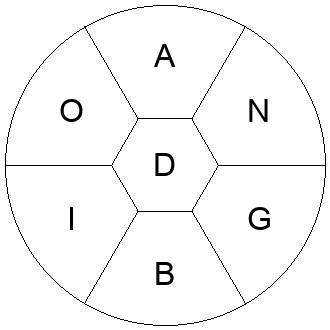
The official answers for today's puzzle are:

Click on the arrow to show the definition.
Click outside the pop-up to close it.


Number of Pangrams: 1

Maximum Puzzle Score: 257

Number of Answers: 47

Points Needed for Genius: 180

Genius requires between 24 and 39 words. You need at least a 7-letter word to reach genius. If you don't get the pangram, you need 75% of the total points to reach genius. If you get the pangram, you only need 68% of the remaining points to reach genius.

Other days with this pangram:

The button below will reveal a chart with the number of words by each letter. Red bars indicate that there is a pangram(s) starting with that letter.


How does this puzzle compare to other puzzles?

Today's score of 257 was in the 84th percentile of all puzzles.
The last time there was a score this high was on April 23, 2026.
The highest score ever was 537 on January 22, 2021.
The lowest score ever was 47 on March 27, 2023.

This puzzle's 47 possible answers rank it in the 68th percentile of all puzzles.
The last time there were more answers than this was on April 23, 2026.
The highest number of answers was 81 on June 08, 2019.
The lowest number of answers was 16 on March 27, 2023.

It takes a 7-letter word for genius.
The last time this happened was on April 23, 2026.

Today's puzzle has an average word length of 6.0.
For all Bees, the average word length has been 5.3.


Haven't I seen these letters before?

Hover over a letter to see its first and most recent appearance in the Bee!


Haven't I seen these words before?

The most common words in the Bee are:

  • noon 238
  • loll 217
  • toot 214
  • nana 198
  • naan 198
  • nene 157
  • tilt 155
  • till 155
  • lilt 155
  • mamma 151
  • mama 151
  • tint 149
  • toon 144
  • onto 144
  • onion 144
  • acai 141
  • acacia 141
  • anal 134
  • anon 133
  • olio 128
  • papa 125
  • baba 125
  • tact 124
  • lulu 124
  • lull 124
  • dodo 124
  • booboo 120
  • boob 120
  • poop 119
  • moon 118
  • mono 118
  • mitt 118
  • cocci 117
  • calla 116
  • call 116
  • loon 115
  • tattoo 114
  • tartar 114
  • tart 114
  • ratatat 114
  • attar 113
  • ally 113
  • allay 113
  • tutu 112
  • momma 111
  • ammo 111
  • tatty 110
  • meme 109
  • aria 109
  • roar 108


How long are words in the Bee?

There have been 116,844 answers ever accepted in the Bee - with 10,970 unique words.
Below are the distributions of the lengths of these words.


Valid dictionary words not in today's official answers

You may be wondering why these words aren't here*:

  • aboding
  • aggada
  • ananda
  • badinaging
  • banda
  • bandaid
  • bandog
  • bidi
  • dada
  • dado
  • dadoing
  • dagga
  • dago
  • dagoba
  • danging
  • danio
  • dibbing
  • dido
  • dingdong
  • dingdonging
  • dinning
  • dobbin
  • dogan
  • doggoning
  • dona
  • donga
  • donging
  • donna
  • doob
  • doodoo
  • gaddi
  • gadi
  • gadid
  • gadoid
  • ganoid
  • gobioid
  • godding
  • gonidia
  • goonda
  • indaba
  • indign
  • indigoid
  • iodid
  • iodin
  • nandin
  • nandina
  • nidi
  • niding
  • nodi
  • nonbonding
  • noodging
  • ogdoad
  • oidia
  • oidioid

*Because the New York Times considers them obscure or offensive.

abandon

Etymology 1

verb
  1. To give up or relinquish control of, to surrender or to give oneself over, or to yield to one's emotions.
  2. To desist in doing, practicing, following, holding, or adhering to; to turn away from; to permit to lapse; to renounce; to discontinue.
  3. To leave behind; to desert as in a ship or a position, typically in response to overwhelming odds or impending dangers; to forsake, in spite of a duty or responsibility.
  4. To subdue; to take control of.
  5. To cast out; to banish; to expel; to reject.
  6. To no longer exercise a right, title, or interest, especially with no interest of reclaiming it again; to yield; to relinquish.
  7. To surrender to the insurer (an insured item), so as to claim a total loss.

Etymology 2

noun
  1. A yielding to natural impulses or inhibitions; freedom from artificial constraint, with loss of appreciation of consequences.
  2. Abandonment; relinquishment.

abandoning

verb
  1. To give up or relinquish control of, to surrender or to give oneself over, or to yield to one's emotions.
  2. To desist in doing, practicing, following, holding, or adhering to; to turn away from; to permit to lapse; to renounce; to discontinue.
  3. To leave behind; to desert as in a ship or a position, typically in response to overwhelming odds or impending dangers; to forsake, in spite of a duty or responsibility.
  4. To subdue; to take control of.
  5. To cast out; to banish; to expel; to reject.
  6. To no longer exercise a right, title, or interest, especially with no interest of reclaiming it again; to yield; to relinquish.
  7. To surrender to the insurer (an insured item), so as to claim a total loss.
noun
  1. An act in which something or someone is abandoned; abandonment, neglect

abiding

Etymology 1

verb
  1. To endure without yielding; to withstand; await defiantly; to encounter; to persevere.
  2. To bear patiently; to tolerate; to put up with; stand.
  3. To pay for; to stand the consequences of; to answer for; to suffer for; to atone for.
  4. To wait in expectation.
  5. To pause; to delay.
  6. To stay; to continue in a place; to remain stable or fixed in some state or condition; to be left.
  7. To have one's abode; to dwell; to reside; to sojourn.
  8. To endure; to remain; to last.
  9. To stand ready for; to await for someone; watch for.
  10. To endure or undergo a hard trial or a task; to stand up under.
  11. To await submissively; accept without question; submit to.
adjective
  1. Continuing or persisting in the same state: lasting, enduring; steadfast.

Etymology 2

noun
  1. The action of one who abides; the state of an abider.
  2. An abode.

adagio

noun
  1. A tempo mark directing that a passage is to be played rather slowly, leisurely and gracefully.
  2. A passage having this mark.
  3. A male-female duet or mixed trio ballet displaying demanding balance, spins and/or lifts.
adjective
  1. Describing a passage having this mark.
adverb
  1. Played rather slowly.

adding

verb
  1. To join or unite (e.g. one thing to another, or as several particulars) so as to increase the number, augment the quantity or enlarge the magnitude, or so as to form into one aggregate.
  2. To sum up; to put together mentally.
  3. To combine elements of (something) into one quantity.
  4. To give by way of increased possession (to someone); to bestow (on).
  5. To append (e,g, a statement); to say further information.
  6. To make an addition; to augment; to increase.
  7. To perform the arithmetical operation of addition.
  8. To summon minions or reinforcements.

adobo

noun
  1. A Philippine dish in which pork or chicken is slowly cooked in a sauce including soy sauce, vinegar, and crushed garlic.
  2. A marinade.

aiding

verb
  1. To provide support to; to further the progress of; to help; to assist.
  2. To climb with the use of aids such as pitons.
noun
  1. The act of one who aids or assists.

badging

verb
  1. To mark or distinguish with a badge.
  2. To show a badge to.
  3. To enter a restricted area by showing one's badge.

band

Etymology 1

noun
  1. A strip of material used for strengthening or coupling.
  2. A long strip of material, color, etc, that is different from the surrounding area.
  3. A strip of decoration.
  4. That which serves as the means of union or connection between persons; a tie.
  5. A linen collar or ruff worn in the 16th and 17th centuries.
  6. (in the plural) Two strips of linen hanging from the neck in front as part of a clerical, legal, or academic dress.
  7. A part of the electromagnetic spectrum.
  8. A group of energy levels in a solid state material.
  9. A bond.
  10. Pledge; security.
  11. A ring, such as a wedding ring (wedding band), or a ring put on a bird's leg to identify it.
  12. Any distinguishing line formed by chromatography, electrophoresis etc
  13. Short for band cell.
  14. (hiphop, often in the plural) A wad of money totaling $1K, held together by a band; (by extension) money
verb
  1. To fasten with a band.
  2. To fasten an identifying band around the leg of (a bird).

Etymology 2

noun
  1. A group of musicians who perform together as an ensemble, usually for a professional recording artist.
  2. A type of orchestra originally playing janissary music.
  3. A marching band.
  4. A group of people loosely united for a common purpose (a band of thieves).
  5. A small group of people living in a simple society, contrasted with tribes, chiefdoms, and states.
  6. A group of aboriginals that has official recognition as an organized unit by the federal government of Canada.
verb
  1. To group together for a common purpose; to confederate.
  2. To group (students) together by perceived ability; to stream.

Etymology 3

verb
  1. To tie; to confine by any ligature.
  2. To cohere or stick together in a mass.
  3. To be restrained from motion, or from customary or natural action, as by friction.
  4. To exert a binding or restraining influence.
  5. To tie or fasten tightly together, with a cord, band, ligature, chain, etc.
  6. To confine, restrain, or hold by physical force or influence of any kind.
  7. To couple.
  8. To oblige, restrain, or hold, by authority, law, duty, promise, vow, affection, or other social tie.
  9. To put (a person) under definite legal obligations, especially, under the obligation of a bond or covenant.
  10. To place under legal obligation to serve.
  11. To protect or strengthen by applying a band or binding, as the edge of a carpet or garment.
  12. To make fast (a thing) about or upon something, as by tying; to encircle with something.
  13. To cover, as with a bandage.
  14. To prevent or restrain from customary or natural action, as by producing constipation.
  15. To put together in a cover, as of books.
  16. To make two or more elements stick together.
  17. To associate an identifier with a value; to associate a variable name, method name, etc. with the content of a storage location.
  18. To complain; to whine about something.

bandaging

verb
  1. To apply a bandage to something.
noun
  1. Strips of cloth or other material used to create a bandage.

bandana

noun
  1. A large kerchief, usually colourful and used either as headgear or as a handkerchief, neckerchief, bikini, or sweatband.
  2. A style of calico printing, in which white or bright spots are produced upon cloth previously dyed a uniform red or dark colour, by discharging portions of the color by chemical means, while the rest of the cloth is under pressure.

bandanna

noun
  1. A large kerchief, usually colourful and used either as headgear or as a handkerchief, neckerchief, bikini, or sweatband.
  2. A style of calico printing, in which white or bright spots are produced upon cloth previously dyed a uniform red or dark colour, by discharging portions of the color by chemical means, while the rest of the cloth is under pressure.

banding

verb
  1. To fasten with a band.
  2. To fasten an identifying band around the leg of (a bird).
verb
  1. To group together for a common purpose; to confederate.
  2. To group (students) together by perceived ability; to stream.
noun
  1. A pattern of band-like markings.
  2. A technique used in the study of wild birds, by attaching a small, individually numbered, metal or plastic tag to their legs or wings.
  3. A division into bands or brackets.
  4. The formation of a band or brigade.

bidding

verb
  1. To issue a command; to tell.
  2. To invite; to summon.
  3. To utter a greeting or salutation.
verb
  1. To make an offer to pay or accept a certain price.
  2. To offer as a price.
  3. To make an attempt.
  4. To announce (one's goal), before starting play.
  5. To proclaim (a bede, prayer); to pray.
noun
  1. That which one is bidden to do; a command.
  2. The act of placing a bid.

biding

Etymology 1

noun
  1. An awaiting; expectation.
  2. Residence; habitation.

Etymology 2

verb
  1. To bear; to endure; to tolerate.
  2. To dwell or reside in a location; to abide.
  3. To wait; to be in expectation; to stay; to remain.
  4. To wait for; to await.

bind

noun
  1. That which binds or ties.
  2. A troublesome situation; a problem; a predicament or quandary.
  3. Any twining or climbing plant or stem, especially a hop vine; a bine.
  4. A ligature or tie for grouping notes.
  5. A strong grip or stranglehold on a position that is difficult for the opponent to break.
  6. The indurated clay of coal mines.
verb
  1. To tie; to confine by any ligature.
  2. To cohere or stick together in a mass.
  3. To be restrained from motion, or from customary or natural action, as by friction.
  4. To exert a binding or restraining influence.
  5. To tie or fasten tightly together, with a cord, band, ligature, chain, etc.
  6. To confine, restrain, or hold by physical force or influence of any kind.
  7. To couple.
  8. To oblige, restrain, or hold, by authority, law, duty, promise, vow, affection, or other social tie.
  9. To put (a person) under definite legal obligations, especially, under the obligation of a bond or covenant.
  10. To place under legal obligation to serve.
  11. To protect or strengthen by applying a band or binding, as the edge of a carpet or garment.
  12. To make fast (a thing) about or upon something, as by tying; to encircle with something.
  13. To cover, as with a bandage.
  14. To prevent or restrain from customary or natural action, as by producing constipation.
  15. To put together in a cover, as of books.
  16. To make two or more elements stick together.
  17. To associate an identifier with a value; to associate a variable name, method name, etc. with the content of a storage location.
  18. To complain; to whine about something.

bindi

Etymology 1

noun
  1. The “holy dot” traditionally worn on the forehead of married Hindu women.
  2. Makeup or jewellery worn in imitation of such a dot.

Etymology 2

noun
  1. The common lawn weed, Soliva sessilis, introduced to Australia from South America.
  2. A seed of this plant, having small sharp spines which stick painfully into bare feet.
  3. Any of a number of plants of the genus Calotis which have small burrs with fine barbed awns.
  4. Any of a various plants of the genus Sclerolaena.

binding

verb
  1. To tie; to confine by any ligature.
  2. To cohere or stick together in a mass.
  3. To be restrained from motion, or from customary or natural action, as by friction.
  4. To exert a binding or restraining influence.
  5. To tie or fasten tightly together, with a cord, band, ligature, chain, etc.
  6. To confine, restrain, or hold by physical force or influence of any kind.
  7. To couple.
  8. To oblige, restrain, or hold, by authority, law, duty, promise, vow, affection, or other social tie.
  9. To put (a person) under definite legal obligations, especially, under the obligation of a bond or covenant.
  10. To place under legal obligation to serve.
  11. To protect or strengthen by applying a band or binding, as the edge of a carpet or garment.
  12. To make fast (a thing) about or upon something, as by tying; to encircle with something.
  13. To cover, as with a bandage.
  14. To prevent or restrain from customary or natural action, as by producing constipation.
  15. To put together in a cover, as of books.
  16. To make two or more elements stick together.
  17. To associate an identifier with a value; to associate a variable name, method name, etc. with the content of a storage location.
  18. To complain; to whine about something.
noun
  1. An item (usually rope, tape, or string) used to hold two or more things together.
  2. The spine of a book where the pages are held together.
  3. A finishing on a seam or hem of a garment.
  4. The association of a named item with an element of a program.
  5. The interface of a library with a programming language other than one it is written in.
  6. The action or result of making two or more molecules stick together.
adjective
  1. (of an agreement, contract, etc.) Imposing stipulations or requirements that must be honoured.
  2. (of food) Having the effect of counteracting diarrhea.

boding

verb
  1. To indicate by signs, as future events; to be an omen of; to portend or foretell.
  2. (followed by "well", "ill", "no good", etc.) To betoken or augur something good or bad that will happen in the future.
noun
  1. An omen, a prediction of disaster, a portent.
adjective
  1. Portending, ominous.

bond

Etymology 1

noun
  1. Evidence of a long-term debt, by which the bond issuer (the borrower) is obliged to pay interest when due, and repay the principal at maturity, as specified on the face of the bond certificate. The rights of the holder are specified in the bond indenture, which contains the legal terms and conditions under which the bond was issued. Bonds are available in two forms: registered bonds, and bearer bonds.
  2. A documentary obligation to pay a sum or to perform a contract; a debenture.
  3. A partial payment made to show a provider that the customer is sincere about buying a product or a service. If the product or service is not purchased the customer then forfeits the bond.
  4. (often in the plural) A physical connection which binds, a band.
  5. An emotional link, connection or union; that which holds two or more people together, as in a friendship; a tie.
  6. Moral or political duty or obligation.
  7. A link or force between neighbouring atoms in a molecule.
  8. A binding agreement, a covenant.
  9. A bail bond.
  10. Any constraining or cementing force or material.
  11. In building, a specific pattern of bricklaying.
  12. In Scotland, a mortgage.
  13. A heavy copper wire or rod connecting adjacent rails of an electric railway track when used as a part of the electric circuit.
verb
  1. To connect, secure or tie with a bond; to bind.
  2. To cause to adhere (one material with another).
  3. To form a chemical compound with.
  4. To guarantee or secure a financial risk.
  5. To form a friendship or emotional connection.
  6. To put in a bonded warehouse; to secure (goods) until the associated duties are paid.
  7. To lay bricks in a specific pattern.
  8. To make a reliable electrical connection between two conductors (or any pieces of metal that may potentially become conductors).
  9. To bail out by means of a bail bond.

Etymology 2

noun
  1. A peasant; churl.
  2. A vassal; serf; one held in bondage to a superior.
adjective
  1. Subject to the tenure called bondage.
  2. In a state of servitude or slavedom; not free.
  3. Servile; slavish; pertaining to or befitting a slave.

bonding

verb
  1. To connect, secure or tie with a bond; to bind.
  2. To cause to adhere (one material with another).
  3. To form a chemical compound with.
  4. To guarantee or secure a financial risk.
  5. To form a friendship or emotional connection.
  6. To put in a bonded warehouse; to secure (goods) until the associated duties are paid.
  7. To lay bricks in a specific pattern.
  8. To make a reliable electrical connection between two conductors (or any pieces of metal that may potentially become conductors).
  9. To bail out by means of a bail bond.
noun
  1. The act by which something is bonded or joined together.
  2. A relationship between a parent and offspring that establishes the basis for an ongoing mutual attachment.
  3. A close friendship that develops between adults, often as a result of intense experiences, as those shared in military combat.
  4. A method of aggregating multiple network interfaces on a computer into a single logical interface
  5. An arrangement by which goods remain in the customs warehouses until the duties are paid.

dabbing

verb
  1. To press lightly in a repetitive motion with a soft object without rubbing.
  2. To apply a substance in this way.
  3. To strike by a thrust; to hit with a sudden blow or thrust.
  4. To apply hash oil to a heated surface for the purpose of efficient combustion.
  5. To perform the dab dance move, by moving both arms to one side of the body parallel with your head.
noun
  1. The act by which something is dabbed.

dang

Etymology 1

noun
  1. A damn, a negligible quantity, minimal consideration.
verb
  1. Damn.
adjective
  1. Damn.
interjection
  1. Damn.

Etymology 2

verb
  1. To hit or strike.
  2. To dash; to throw violently.
  3. To inflict minor damage upon, especially by hitting or striking.
  4. To fire or reject.
  5. To deduct, as points, from another, in the manner of a penalty; to penalize.
  6. To mishit (a golf ball).

Etymology 3

verb
  1. To dash.

digging

verb
  1. To move hard-packed earth out of the way, especially downward to make a hole with a shovel. Or to drill, or the like, through rocks, roads, or the like. More generally, to make any similar hole by moving material out of the way.
  2. To get by digging; to take from the ground; often with up.
  3. To take ore from its bed, in distinction from making excavations in search of ore.
  4. To work like a digger; to study ploddingly and laboriously.
  5. To investigate, to research, often followed by out or up.
  6. To thrust; to poke.
  7. To defend against an attack hit by the opposing team by successfully passing the ball
verb
  1. To understand or show interest in.
  2. To appreciate, or like.
noun
  1. The action performed by a person or thing that digs.
  2. A place where ore is dug, especially certain localities in California, Australia, etc. where gold is obtained.
  3. Region; locality

ding

Etymology 1

noun
  1. Very minor damage, a small dent or chip.
  2. A rejection.
verb
  1. To hit or strike.
  2. To dash; to throw violently.
  3. To inflict minor damage upon, especially by hitting or striking.
  4. To fire or reject.
  5. To deduct, as points, from another, in the manner of a penalty; to penalize.
  6. To mishit (a golf ball).

Etymology 2

noun
  1. The high-pitched resonant sound of a bell.
  2. The act of levelling up.
verb
  1. To make high-pitched sound like a bell.
  2. To keep repeating; impress by reiteration, with reference to the monotonous striking of a bell.
  3. To level up.

Etymology 3

noun
  1. An ancient Chinese vessel with legs and a lid.

dinging

verb
  1. To hit or strike.
  2. To dash; to throw violently.
  3. To inflict minor damage upon, especially by hitting or striking.
  4. To fire or reject.
  5. To deduct, as points, from another, in the manner of a penalty; to penalize.
  6. To mishit (a golf ball).
verb
  1. To make high-pitched sound like a bell.
  2. To keep repeating; impress by reiteration, with reference to the monotonous striking of a bell.
  3. To level up.

dingo

noun
  1. Canis lupus dingo, a wild dog native to Australia.

dining

verb
  1. To eat; to eat dinner or supper.
  2. To give a dinner to; to furnish with the chief meal; to feed.
  3. To dine upon; to have to eat.
noun
  1. Eating dinner as a social function.
  2. Entertaining someone to dinner.

dino

noun
  1. Dinosaur.

dodging

verb
  1. To avoid (something) by moving suddenly out of the way.
  2. To avoid; to sidestep.
  3. To go hither and thither.
  4. (videography) To decrease the exposure for certain areas of an image in order to make them darker (compare burn).
  5. To follow by dodging, or suddenly shifting from place to place.
  6. To trick somebody.
noun
  1. The act of dodging; a dodge.

dodo

Etymology 1

noun
  1. A large, flightless bird, †Raphus cucullatus, related to the pigeon, that is now extinct (since the 1600s) and was native to Mauritius.
  2. A person or organisation which is very old or has very old-fashioned views or is not willing to change and adapt.

Etymology 2

noun
  1. Fried plantain.

dogging

verb
  1. To pursue with the intent to catch.
  2. To follow in an annoying or harassing way.
  3. To fasten a hatch securely.
  4. To watch, or participate, in sexual activity in a public place.
  5. To intentionally restrict one's productivity as employee; to work at the slowest rate that goes unpunished.
  6. To criticize.
  7. To divide (a watch) with a comrade.
noun
  1. The act of one who dogs or harasses.
  2. The practice of having sexual intercourse in public places, especially parks, deliberately taking the chance of being watched.

doggo

noun
  1. A dog.

doing

Etymology 1

verb
  1. (auxiliary) A syntactic marker.
  2. To perform; to execute.
  3. To cause, make (someone) (do something).
  4. To suffice.
  5. To be reasonable or acceptable.
  6. (ditransitive) To have (as an effect).
  7. To fare, perform (well or poorly).
  8. (chiefly in questions) To have as one's job.
  9. To perform the tasks or actions associated with (something).
  10. To cook.
  11. To travel in, to tour, to make a circuit of.
  12. To treat in a certain way.
  13. To work for or on, by way of caring for, looking after, preparing, cleaning, keeping in order, etc.
  14. To act or behave in a certain manner; to conduct oneself.
  15. To spend (time) in jail. (See also do time)
  16. To impersonate or depict.
  17. (with 'a' and the name of a person, place, event, etc.) To copy or emulate the actions or behaviour that is associated with the person or thing mentioned.
  18. To kill.
  19. To deal with for good and all; to finish up; to undo; to ruin; to do for.
  20. To punish for a misdemeanor.
  21. To have sex with. (See also do it)
  22. To cheat or swindle.
  23. To convert into a certain form; especially, to translate.
  24. To finish.
  25. To work as a domestic servant (with for).
  26. (auxiliary) Used to form the present progressive of verbs.
  27. To cash or to advance money for, as a bill or note.
  28. (ditransitive) To make or provide.
  29. To injure (one's own body part).
  30. To take drugs.
  31. (in the form be doing [somewhere]) To exist with a purpose or for a reason.
noun
  1. A deed or action, especially when somebody is held responsible for it.

Etymology 2

interjection
  1. The sound made by an elastic object when struck by or striking a hard object.

dong

Etymology 1

noun
  1. The currency of Vietnam, 100 xus. Symbol: ₫

Etymology 2

noun
  1. A penis.
  2. (by extension) A dildo, specifically a synthetic anatomical replica of the penis.

Etymology 3

noun
  1. Onomatopoeia for the ringing sound made by a bell with a low pitch.
verb
  1. Of a bell: to make a low-pitched ringing sound.

Etymology 4

noun
  1. A submunicipal administrative unit of a city in North or South Korea.

donning

verb
  1. (clothing) To put on, to dress in.

doodad

noun
  1. A thing (used in a vague way to refer to something whose name one cannot recall); especially an unspecified gadget, device, or part.

gadding

verb
  1. To move from one location to another in an apparently random and frivolous manner.
noun
  1. The act of one who gads, or moves about frivolously.

goad

noun
  1. A long, pointed stick used to prod animals.
  2. That which goads or incites; a stimulus.
verb
  1. To prod with a goad.
  2. To encourage or stimulate.
  3. To incite or provoke.

goading

verb
  1. To prod with a goad.
  2. To encourage or stimulate.
  3. To incite or provoke.
noun
  1. The act by which somebody is goaded.

gonad

noun
  1. A sex organ that produces gametes; specifically, a testicle or ovary.
  2. (chiefly in the plural) The testicles.

good

Etymology 1

adjective
  1. (of people)
  2. (of capabilities)
  3. (properties and qualities)
  4. (when with and) Very, extremely. See good and.
  5. Holy (especially when capitalized) .
  6. (of quantities)
interjection
  1. That is good; an elliptical exclamation of satisfaction or commendation.

Etymology 2

adverb
  1. Well; satisfactorily or thoroughly.

Etymology 3

noun
  1. The forces or behaviours that are the enemy of evil. Usually consists of helping others and general benevolence.
  2. A result that is positive in the view of the speaker.
  3. The abstract instantiation of goodness; that which possesses desirable qualities, promotes success, welfare, or happiness, is serviceable, fit, excellent, kind, benevolent, etc.
  4. (usually in the plural) An item of merchandise.

Etymology 4

verb
  1. To thrive; fatten; prosper; improve.
  2. To make good; turn to good; improve.
  3. To make improvements or repairs.
  4. To benefit; gain.
  5. To do good to (someone); benefit; cause to improve or gain.
  6. To satisfy; indulge; gratify.
  7. To flatter; congratulate oneself; anticipate.

Etymology 5

verb
  1. To furnish with dung; manure; fatten with manure; fertilise.

indigo

noun
  1. A purplish-blue colour
  2. An indigo-colored dye obtained from certain plants (the indigo plant or woad), or a similar synthetic dye.
  3. An indigo plant, such as from species in genera Indigofera, Amorpha (false indigo), Baptisia (wild indigo), and Psorothamnus and Dalea (indigo bush).
adjective
  1. Having a deep purplish-blue colour

nada

pronoun
  1. Nothing.

naiad

noun
  1. A female deity (nymph) associated with water, especially a spring, stream, or other fresh water.
  2. The aquatic larva (nymph) of a dragonfly or damselfly.
  3. Any of various aquatic plants of the genus Najas.

nodding

verb
  1. To incline the head up and down, as to indicate agreement.
  2. To briefly incline the head downwards as a cursory greeting.
  3. To sway, move up and down.
  4. To gradually fall asleep.
  5. To signify by a nod.
  6. To make a mistake by being temporarily inattentive or tired
  7. To head; to strike the ball with one's head.
  8. To allude to something.
  9. To fall asleep while under the influence of opiates.
noun
  1. The act by which one nods.
adjective
  1. Having the flower facing downwards.

nonbinding

No Definition Found.